A tropical tank lives or dies on water quality, and water quality is mostly the work of one component. Choosing an aquarium filter for tropical fish is less about brand loyalty than about matching three numbers: tank volume, flow rate, and the waste load your stock actually produces. Most beginners buy the glass first and treat filtration as an afterthought, then wonder why the water clouds, ammonia climbs, and fish hang near the surface. What follows is the aquarium filter for tropical fish explained in plain terms: what each filtration stage removes, how gallons per hour translate into real turnover, and where a starter kit already includes the pump and where you will need to add one. It is written for the reader who wants the reasoning behind a purchase rather than a slogan.
Quick answer
Buy filtration for the tank you have, not the tank you might upgrade to later. For a lightly stocked 10 gallon tropical tank, a small internal or hang-on filter that turns the water over several times per hour is enough, provided it holds enough media for a stable bacterial colony. For a 20 gallon community, aim higher on flow rate and on media volume. The ideal aquarium filter for tropical fish keeps ammonia and nitrite at zero, disturbs the surface enough for gas exchange, and does not create a current your fish have to swim against all day. Two of the tanks below ship with a quiet filter pump included. The two rimless tanks do not, so budget for a filter, a heater, and a light separately.
Four useful options
| Model | Best fit | What stands out |
|---|---|---|
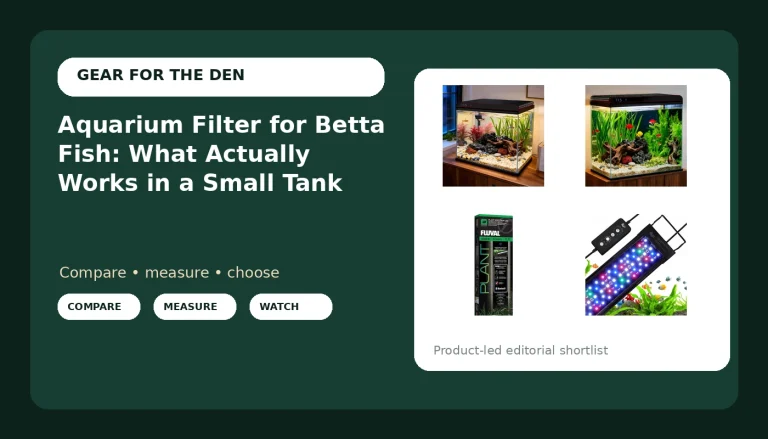
| Coospider 20 Gallon Glass Fish Tank, Aquarium Starter Kit | A small tropical community with the fewest separate purchases | Includes a quiet filter pump, 3-color LED lights, and temperature monitoring |
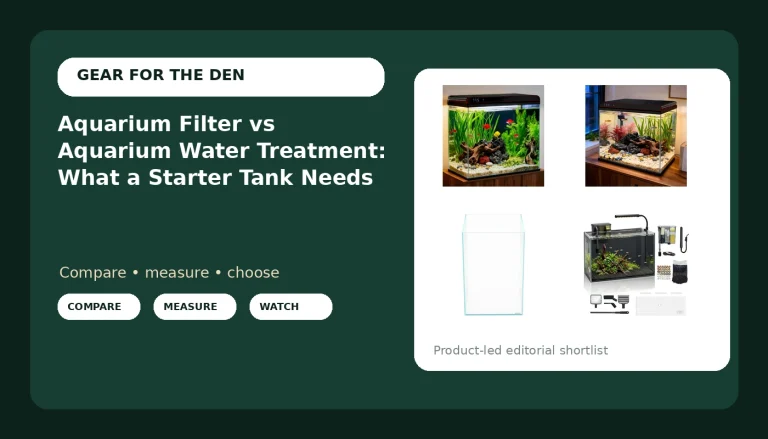
| Coospider 10 Gallon Glass Fish Tank, Aquarium Starter Kit | A first tropical tank on a shelf or desk | Same kit approach in a 10 gallon size with a quiet filter pump |
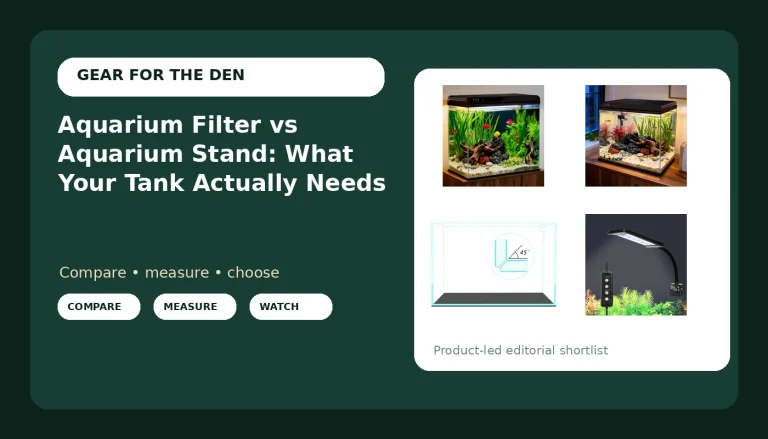
| LAQUAL 10 Gallon Ultra Clear Glass Fish Tank | A rimless planted or aquascaped 10 gallon build | Low iron glass with cover set, feeding ring, and cleaning tools |
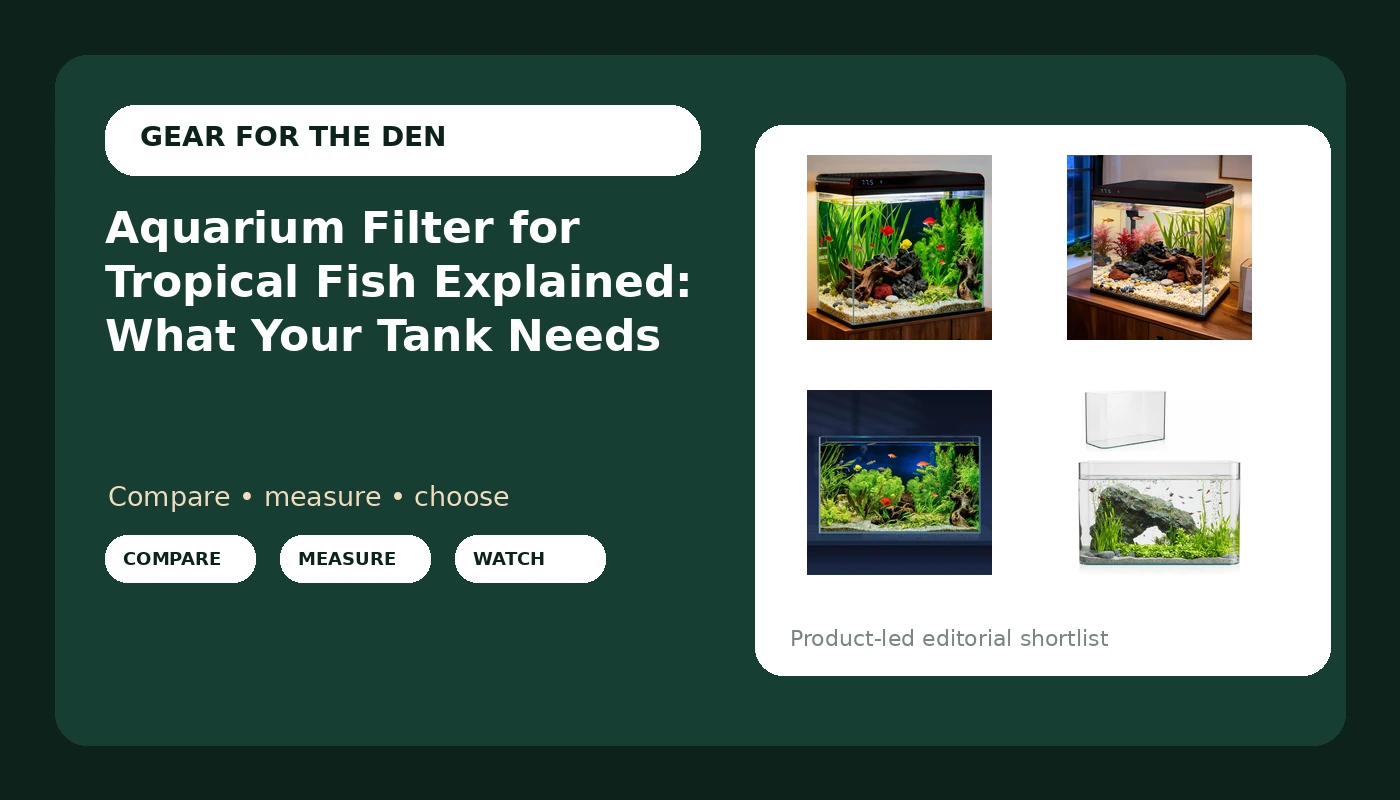
| 10 Gallon Ultra Clear Glass Fish Tank, Rimless Curved Edge | A curved desktop display for betta or shrimp | Thermal bending gives a seamless curved profile in low iron glass |
Filtration included at the largest volume: Coospider 20 Gallon Glass Fish Tank, Aquarium Starter Kit
Volume is the quiet advantage here. A 20 gallon tank dilutes the same fish waste across twice the water of a 10 gallon, so ammonia rises more slowly between water changes and a single missed maintenance day is less likely to become a crisis. That matters more than any badge on the pump. The included unit handles the mechanical and biological work, but the tank volume is what buys you time. Two phrases in the listing are worth reading as claims rather than specifications: the pump is described as quiet, and the tank as self-cleaning. Quiet is relative in a bedroom, and self-cleaning generally means the pump moves debris toward the intake rather than replacing water changes. The 3-color LED lighting is a convenience rather than a plant-grade fixture, so check the kelvin rating and output before planning a demanding planted scape. Temperature monitoring is genuinely useful in a tropical tank, where a heater fault can swing a tank several degrees overnight.
The same kit in a smaller footprint: Coospider 10 Gallon Glass Fish Tank, Aquarium Starter Kit
A 10 gallon tank is the smallest size most tropical keepers recommend starting with, and it is also where filtration choices start to matter more, not less. Less water means a smaller buffer: the fish load a 20 gallon absorbs will push ammonia up faster here, so the flow rate and the media volume of the included pump carry more weight. For a single betta or a small shrimp group, the stock pump is likely adequate alongside weekly partial water changes. For a school of tetras plus a cleanup crew, either stock lightly or plan to add a second filter. Wattage is worth a glance too, though the heater you add later will usually draw more than the pump in a tank this size. Substrate grain changes the maintenance picture as well, since fine sand traps less debris than coarse gravel, which affects how often you need to siphon.
Rimless glass with filtration chosen separately: LAQUAL 10 Gallon Ultra Clear Glass Fish Tank
This is the option for the reader who already knows which filter they want. Low iron glass removes the green tint of ordinary aquarium glass, which matters most on a shallow, well lit tank viewed through the long side. The trade off is that everything the kits bundle has to be bought and matched by hand: a filter sized to the tank volume, a heater with a thermostat range that covers tropical temperatures, and lighting with a kelvin rating you chose rather than accepted. For a betta, a snail, or a shrimp colony, a small sponge filter driven by an air pump is a common low flow approach, and its gentle current suits long finned fish. For a planted tank, a hang-on or canister filter with room for more media is usually easier to live with. Buying glass and filter separately often costs more in total, but it lets you spend where it counts. If you are starting from scratch, how to cycle a new aquarium covers the part that matters before any fish go in.
Curved rimless glass for a desktop display: 10 Gallon Ultra Clear Glass Fish Tank, Rimless Curved Edge
The curved front is a viewing decision, not a filtration one, but it does shape what you can hang on the tank. Rimless curved glass often leaves less room for the lip a hang-on filter needs, so an internal filter, a sponge filter, or a small canister tends to be the cleaner pairing. Thermal bending means the corners are formed from a single sheet rather than joined, which produces the seamless look and also means the tank wants a flat, fully supported surface. One stocking note matters here: the listing names goldfish, and goldfish are not tropical fish and produce far more waste than their size suggests. A single fancy goldfish in 10 gallons is already a heavy load for a small filter, so if goldfish are the plan, size the filtration for the waste rather than the water volume. For betta, shrimp, or a planted nano, the same tank asks far less of its filter.
Prices and availability may change. Product images, names, and retailer links are matched to verified listings. No current price, rating, stock status, or measured result is stated here without current evidence.
What an aquarium filter for tropical fish actually does
Filtration is three jobs wearing one name. Mechanical filtration traps visible debris, fish waste, and uneaten food in a sponge, floss, or pad so it can be rinsed away. Biological filtration is the part that keeps fish alive: nitrifying bacteria colonise media surfaces and convert toxic ammonia into nitrite and then into far less harmful nitrate, which water changes remove. Chemical filtration, usually carbon or a resin, polishes water and lifts odors, medication, or discoloration, and it is optional in most tropical tanks. A filter that only does mechanical work is a strainer. A filter with enough media volume covers all three.
That is why media volume matters as much as flow rate. A pump rated at a high number of gallons per hour through a thin slice of foam will not hold the bacterial colony a stocked tank needs. The other half of the equation is gas exchange. Surface agitation from the filter return lets oxygen in and carbon dioxide out, which is work a fully submerged, gentle unit may not do.
A third consideration is current. Tropical fish come from very different waters, from slow, plant choked pools to flowing streams. A pump that turns the tank over many times an hour can be right for one species and exhausting for another. If the flow is adjustable, or can be diffused across a spray bar or a sponge, you gain room to tune it.
Matching flow rate and tank volume to your stock
Work through the same five steps for any tank and the correct aquarium filter for tropical fish stops being a matter of opinion.
- Write down the tank volume and the adult size of every fish you plan to keep, because fish grow into their waste output.
- Choose a filter rated in gallons per hour above that volume, then check how much media it holds, since media volume sustains the bacterial colony.
- Decide which filtration stages you need. Mechanical and biological are the baseline, chemical is optional.
- Check the current the filter creates and whether it can be adjusted or diffused for long finned or slow swimming fish.
- Plan the rest of the equipment around it: a heater with a thermostat range covering the mid seventies to low eighties Fahrenheit, lighting with a kelvin rating suited to your plants, and a substrate grain that does not trap excessive debris.
Run those five steps before you buy anything and the tank choice usually becomes obvious. A reader who wants one box and one decision is better served by a kit that includes its pump. A reader who wants a specific filter, a specific light, and a specific aquascape should buy glass only and build the equipment list themselves.
Practical guidance for tropical tank filtration
- Rinse new media in tank water rather than tap water, and never replace all of it at once, because that discards the bacterial colony.
- Match turnover to tank volume rather than to fish count alone, and recheck it as fish grow.
- Keep the filter running during water changes, and top off evaporation with dechlorinated water so the pump never runs dry.
- Weigh pump wattage against the rest of the setup, since the heater usually draws more than the filter in a small tropical tank.
- Clean the filter when flow visibly drops, and treat a sudden drop as maintenance due rather than as a reason to buy a larger unit.
Which option should you choose?
Choose the Coospider 20 Gallon Glass Fish Tank, Aquarium Starter Kit when you want the most water volume and a filter pump already in the box. Choose the Coospider 10 Gallon Glass Fish Tank, Aquarium Starter Kit when the same one box approach fits a smaller shelf or a first tank for a child. Choose the LAQUAL 10 Gallon Ultra Clear Glass Fish Tank when you want low iron rimless glass and intend to pick your own filter, heater, and light. Choose the 10 Gallon Ultra Clear Glass Fish Tank, Rimless Curved Edge when a curved desktop display matters more than bundled equipment.
One caveat applies to all four. The listings describe what is in the box, not how any of it will perform in your water. Pump noise, flow, and media capacity are claims until you run them, and the numbers that actually decide success, tank volume, gallons per hour, and stocking level, are the ones you control. Verify the details on the listing before you buy, and expect to adjust after the tank cycles.
The bottom line
The aquarium filter for tropical fish explained in this guide comes down to one rule: match the filter to the tank it sits in. Two of the tanks above include a quiet filter pump and remove that decision, and two give you rimless low iron glass and leave the equipment list to you. Whichever route you take, buy an aquarium filter for tropical fish by water volume and waste load, keep enough media for bacteria to live in, and let the flow suit the fish rather than the spec sheet.