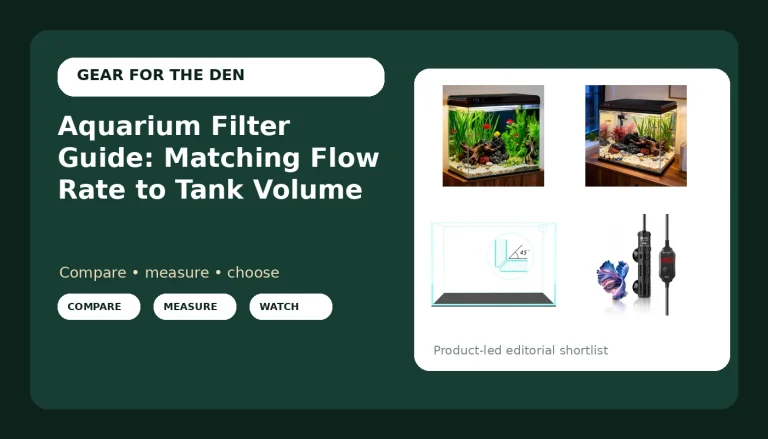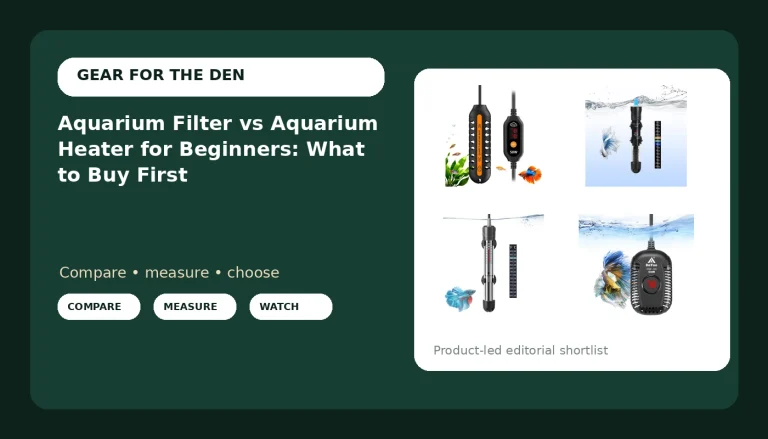
Most first tanks stall in the same place. The shopping list gets long, the budget gets short, and you end up comparing two purchases that do completely different jobs: the thing that keeps the water clean and the thing the tank sits on. That is why the aquarium filter vs aquarium stand question lands in my inbox more often than almost any other, and why these four products are worth sorting before you spend anything. One keeps fish alive. The other keeps the tank level, quiet, and off your floor. Only one of them can wait a month.
For most people the filter comes first and the stand follows, and the fastest route is a starter kit with filtration already in the box. The Coospider 10 and 20 gallon kits cover that. The FZONE rimless tank is the pick if you would rather choose your own equipment, and the fishkeeper clip on light is the piece that makes a rimless build look finished.
This is not a ranking of the best aquarium ever built. It is a sorting exercise for one specific decision: whether the money in your first month goes toward filtration or toward furniture, and which of these four products makes that choice easier. Two of them answer it by bundling the filtration. One answers it by leaving everything open. One is an accessory that only matters after the decision is already made.
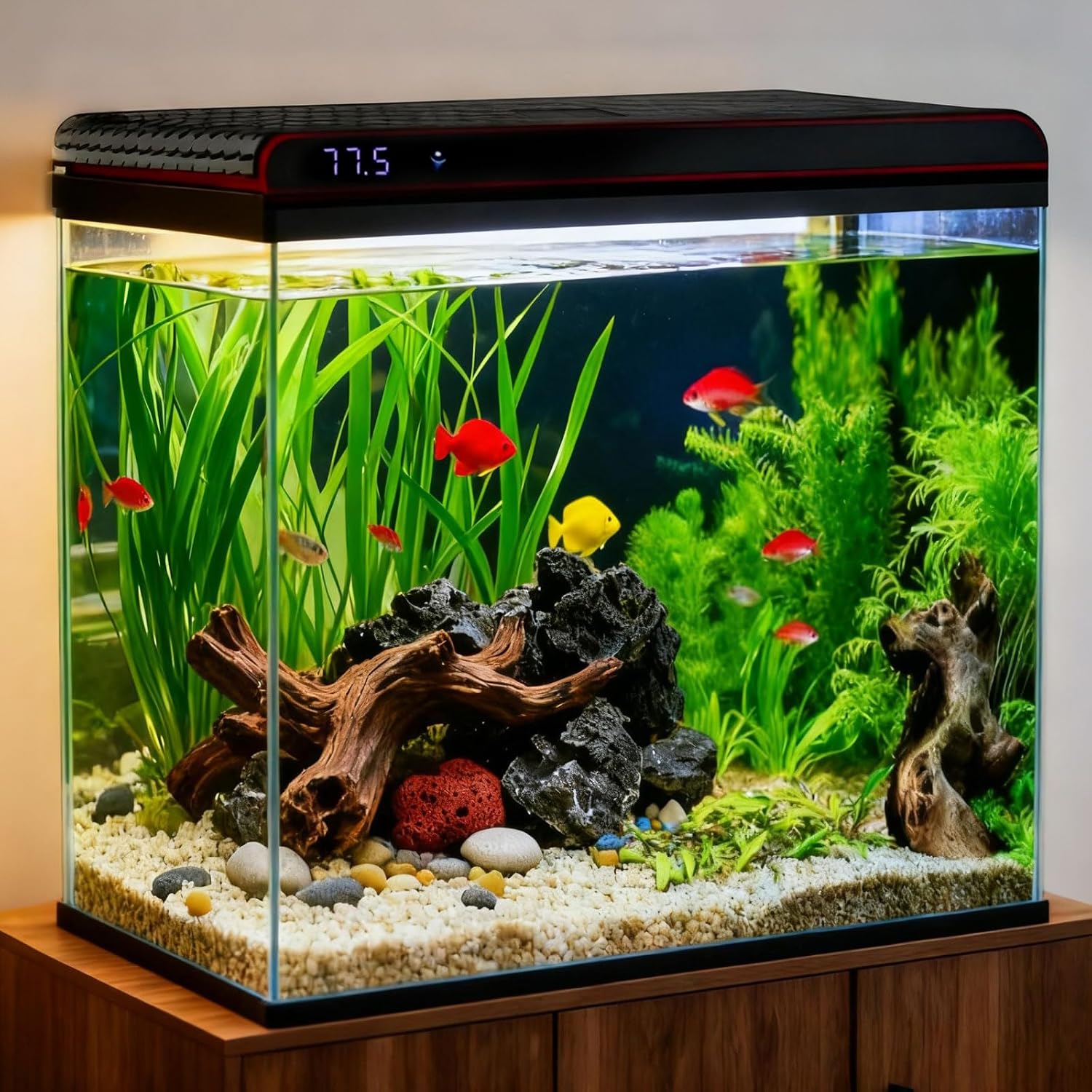
Coospider 20 Gallon Glass Fish Tank
Filtration, lighting, and temperature monitoring in one box, plus the most forgiving water volume here
Largest footprint, and it genuinely needs a real stand under it
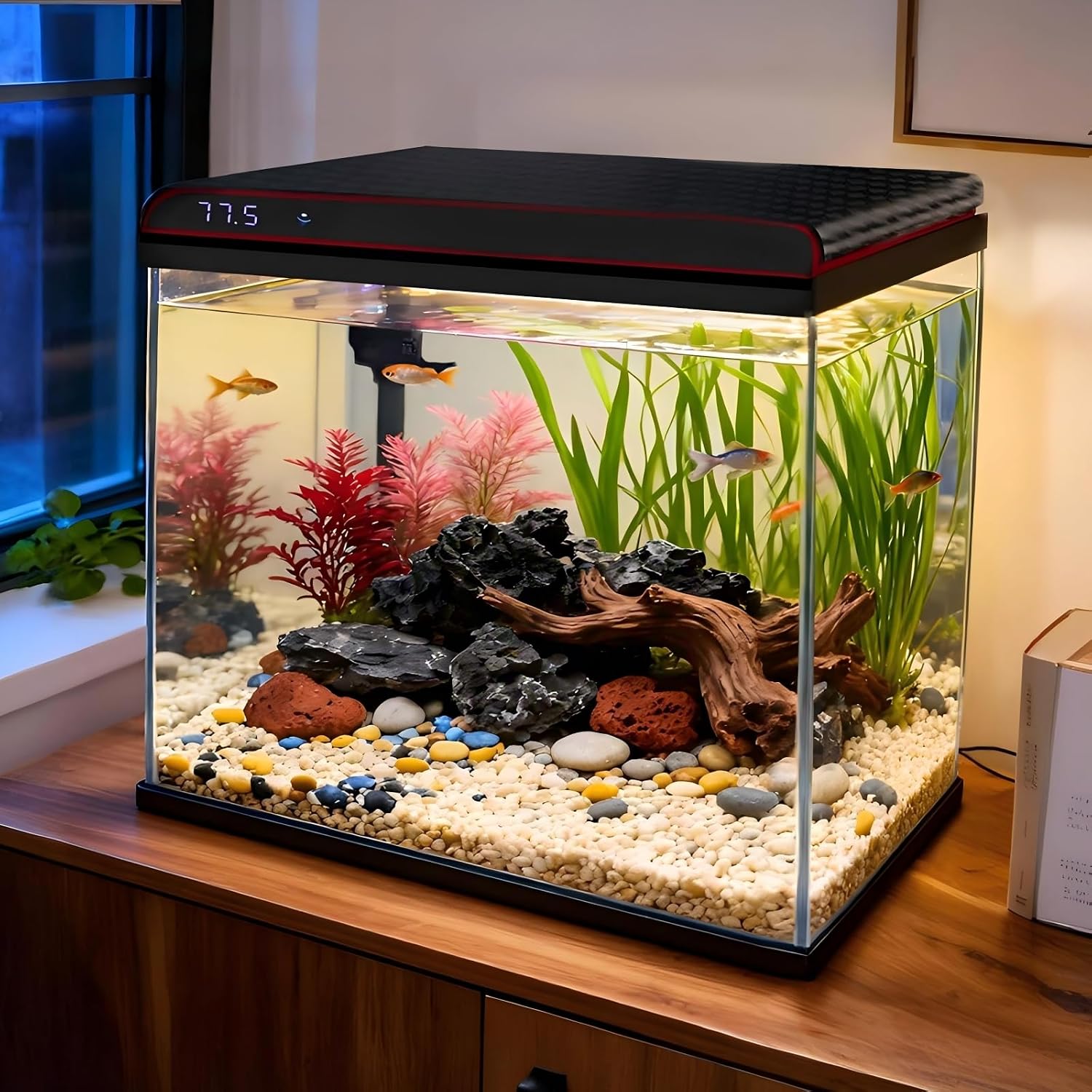
Coospider 10 Gallon Glass Fish Tank
Same kit contents as the 20 gallon in a size that fits a dresser
Smaller volume means less room for error
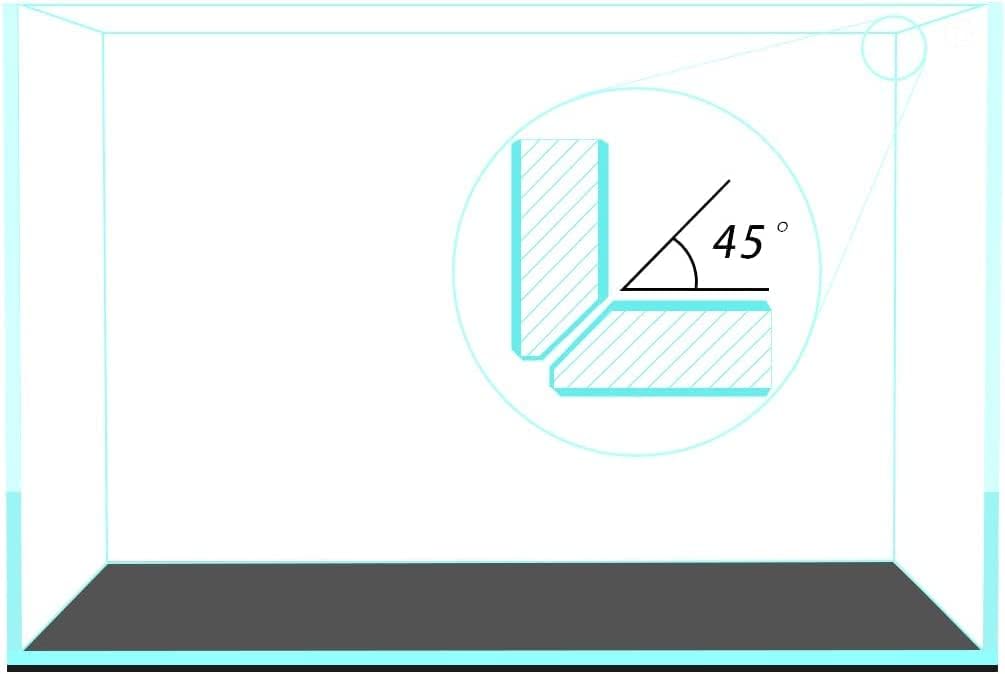
FZONE 10Gal Rimless Aquarium
Low iron glass and mitered edges that look like furniture, not a fish box
No filter, no light, no lid, so the cost of finishing it lands on you
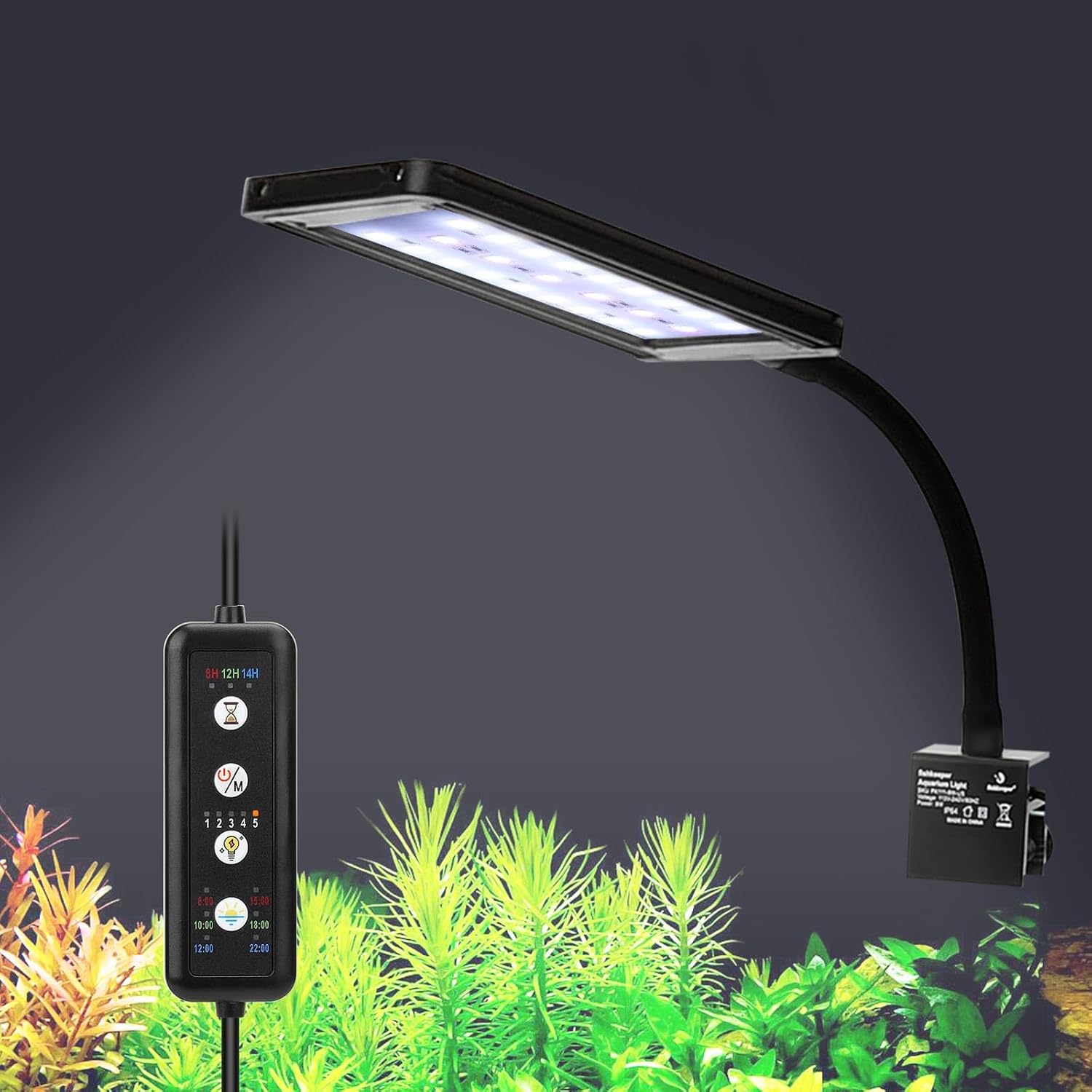
fishkeeper Clip On Aquarium Light
24/7 mode with a built-in timer, and it clips straight to an open rim
Redundant if your tank already has a hood and an LED
Prices and availability may change.
How I sorted these four tanks
Four products, two very different jobs. Two are complete starter kits with a quiet filter pump, three-color LED lighting, and temperature monitoring already in the box. One is a bare rimless tank that arrives as glass and nothing else. One is a clip on light built to finish a tank someone else assembled. So the sorting criteria stayed simple: tank volume, what ships in the box, what you still have to buy, and whether the included equipment is the kind you would have chosen anyway. A kit that removes most of the decisions is worth more than a kit that forces an upgrade in six months, and that rule does most of the work here.
I also weighted what happens after month one. A kit that includes a pump but no clear path to replacement media is a kit you outgrow. A bare tank with no plan for filtration is a tank that sits empty on a shelf. Every product here was judged on whether it moves you toward a running, cycled aquarium or toward a second shopping trip.
The other thing worth saying out loud is that these products are not competitors in the usual sense. A 20 gallon kit and a 10 gallon rimless tank solve different problems for different people, and pretending otherwise is how beginners end up with a tank, a filter, a light, and no plan for any of them.
Aquarium Filter vs Aquarium Stand: which purchase comes first
The aquarium filter vs aquarium stand order stops being a debate once you look at what actually fails. An unfiltered, uncycled tank kills fish in days. A tank on a wobbly dresser kills fish in seconds, but only if it genuinely falls, and most do not. Filtration keeps livestock alive, so it comes first, and that is exactly why the two Coospider kits are the easy recommendation for a first setup: the pump, the lighting, and the temperature monitoring are already inside the box. You are not weighing an aquarium stand vs aquarium filter while an empty tank sits in the corner. The stand still has to happen, just later, once you know the footprint and the weight you are supporting.
The Coospider 10 gallon kit
The smaller Coospider kit is the one I would hand to a family setting up a first tank. It is a glass tank with three-color LED lighting, a quiet filter pump, and temperature monitoring, sold as a simple self-cleaning starter kit for fish, shrimp, or a kid's bedroom setup. A 10 gallon tank volume is the practical floor for a beginner: big enough that a small mistake does not crash the water, small enough that a water change takes ten minutes with a bucket. The included pump means you are not shopping for a filtration stage on day one, and the monitoring takes one more guess out of the equation.
Placement matters more than people expect at this size, because a 10 gallon tank is light enough to move and heavy enough that you will not want to once it is full. Pick the spot before you fill it, keep it out of direct afternoon sun to slow algae, and keep it near an outlet for the pump. What the kit does not include is a stand, and at this size that is a fair trade, because a sturdy dresser or countertop will carry it. Visit on Amazon
The Coospider 20 gallon kit
The 20 gallon version is the same idea with more water, and more water is the single best buffer a new keeper can buy. Temperature swings slower, waste dilutes further, and a slightly overfed fish does less damage. It ships with the same three-color LED lighting, quiet filter pump, and temperature monitoring, so the decision you are making is about space rather than features.
The self-cleaning framing on both kits is worth reading carefully: it describes the pump and flow design, not a tank that never needs a water change. You will still be changing water and rinsing media, just less often than on an unfiltered bowl, and anyone who tells you otherwise is selling something. This is also the tank that pushes you toward a real stand, because a filled 20 gallon is not something you balance on a side table. If you have the room, start here and skip the upgrade later. Visit on Amazon
The FZONE rimless tank
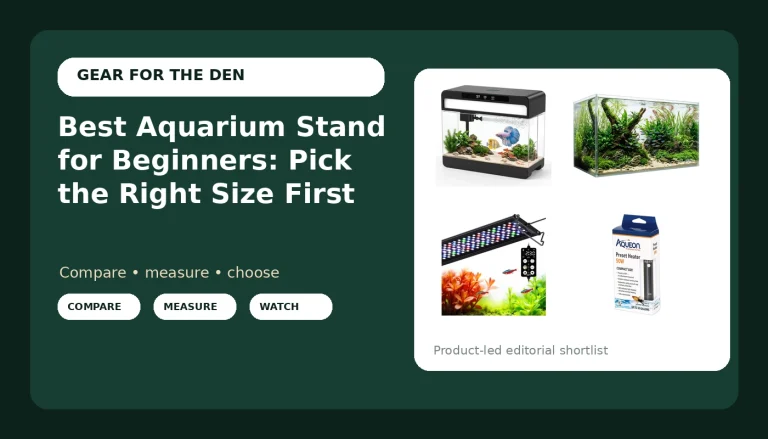
The FZONE 10 gallon is the opposite philosophy: low iron glass, 45 degree mitered edges, and nothing else. No filter, no light, no lid, no pump. That is not a flaw, it is the entire point. Low iron glass removes the green tint you get from ordinary aquarium glass, and mitered corners look like furniture instead of a fish box.
What it means practically is that you choose the filtration, the lighting, and the heater yourself, which is exactly what an aquascaper wants and exactly what a beginner should avoid. Pair it with a canister or a quality hang-on filter, add the light below, and plan the stand before the tank arrives, because this one is meant to be looked at. The mitered edges are a build detail you notice at eye level, and they are also part of why this costs more than an ordinary 10 gallon. If it sits on a shelf at knee height, you are paying for something nobody sees. Visit on Amazon
The fishkeeper clip on light
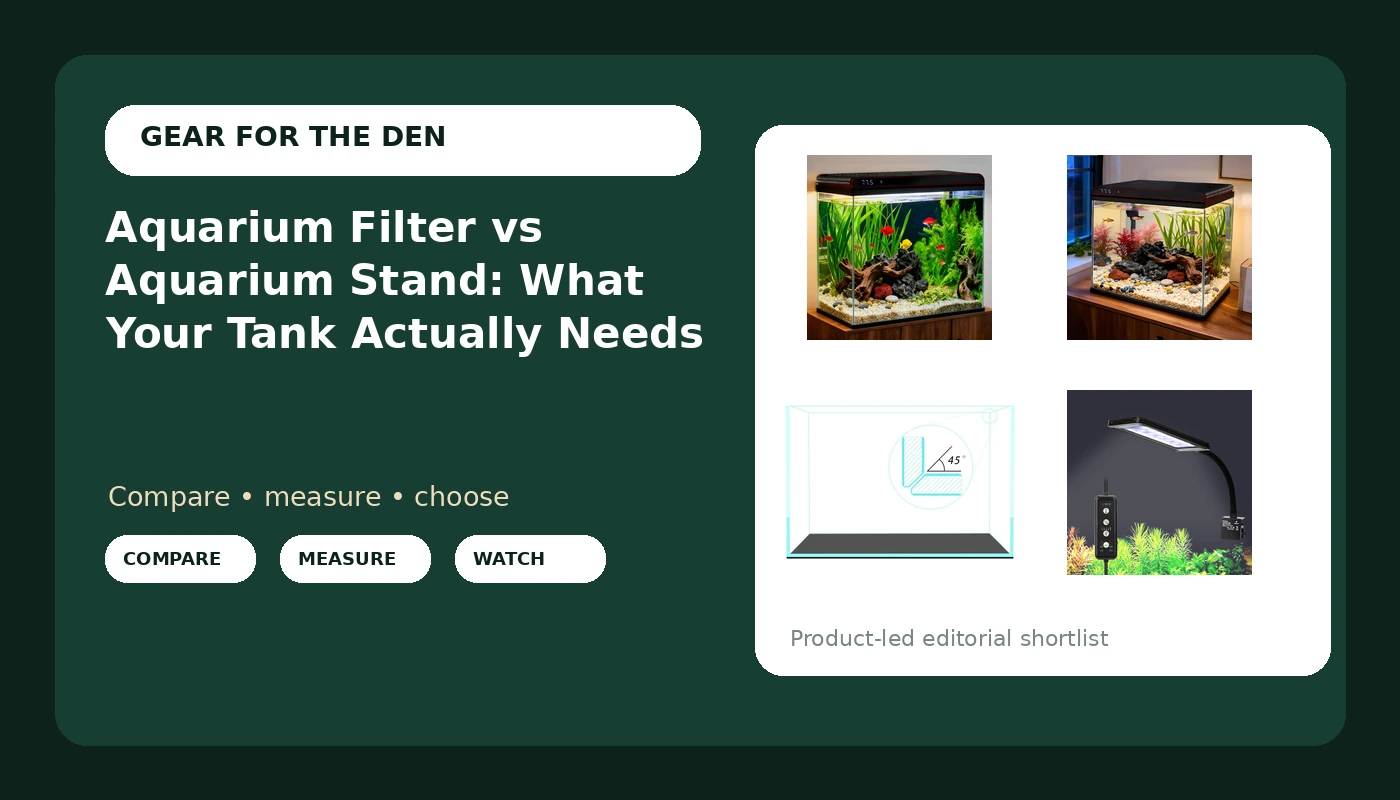
The clip on light is the accessory that ties a rimless tank together. It clips to the rim, runs a 24/7 mode with a built-in timer, and removes the need for a separate outlet timer cluttering your power strip. On a tank with a hood and a built-in LED, this is redundant. On an open rimless tank, it is the difference between a tank that looks intentional and one that looks unfinished.
The 24/7 mode is the feature that earns its place. A timer that lives inside the light means one less plug and one less thing to remember, and a consistent photoperiod does more for plant health than a slightly brighter fixture run on an irregular schedule. Kelvin rating is the spec to check before you buy, because it decides whether plants grow and whether fish colors read the way you want them to. Visit on Amazon
What the specs actually tell you
Spec sheets for aquarium gear are written to sell, not to inform, so here is what each line is really telling you.
Tank volume is the number that decides everything else. It sets how much water you change, how much livestock the tank supports, and how forgiving the whole system is. Ten gallons is a starter size, twenty is comfortable, and anything under five is a specialist's tank.
Flow rate, usually quoted in gallons per hour, tells you how much water the filter moves. More is not automatically better. A filter that turns the tank over too fast will push small fish around and stress anything that prefers calm water, while too little leaves waste sitting in the water column.
Filtration stage describes what the filter actually does. Mechanical filtration catches particles, biological filtration hosts the bacteria that process ammonia, and chemical filtration removes dissolved compounds. A kit pump usually handles mechanical and biological, which is enough for a first tank.
Wattage matters for two things: how much heat a light or pump adds to the water, and what the electricity looks like over a year. Heaters and lights are the two biggest draws, and a pump rated in single-digit watts is quiet in every sense of the word.
Kelvin rating describes the color of a light, from warm to cool. Freshwater plants generally want a cooler, brighter white, and a fixture that lets you schedule intensity is worth more than one that only offers a fixed color.
Thermostat range matters if you keep anything beyond hardy community fish. A heater that holds a steady range is doing more for your tank than any decoration you can buy.
Substrate grain sounds cosmetic and is not. Fine grains suit rooting plants and bottom dwellers, coarse gravel suits fish that sift, and the wrong choice makes planting miserable for years.
The trade-offs nobody mentions
The difference between aquarium filter and aquarium stand is not really about importance, it is about timing and consequence. Filtration is a recurring cost: media, cartridges, replacement parts, and the electricity to run the pump. A stand is a one-time purchase that you either get right or regret every time the tank rocks. Kits hide the first cost inside the purchase price, which is why they feel cheaper than they are and why they are still usually the right call for a beginner.
The other trade-off is aesthetic. A rimless tank with a good light and a decent stand looks like a piece of furniture, and it costs more than a kit to get there, because you are buying the glass, the filter, the light, and the stand separately. If you are deciding between an aquarium filter or aquarium stand first, buy the filter, because a tank on a milk crate still supports fish and a tank with no filtration does not. That is the whole aquarium filter vs aquarium stand argument in one line.
Should you buy a kit or build from parts?
Buy the kit if this is your first tank. Not because the included equipment is the best available, but because it removes four decisions at once and gets water in the tank this weekend. The Coospider kits are the version of that I would point a beginner toward, especially the 20 gallon if there is space for it.
Build from parts if you already know what you want. The FZONE rimless tank plus the fishkeeper clip on light is a small, deliberate build with better glass and better lighting than any kit at that size, and it rewards someone who has already kept fish before. Just budget for the filter and the stand, because neither comes in the box, and plan the order of purchases before the tank arrives.
The mistake in the middle is buying a rimless tank as a first tank, then discovering that bare glass, an empty filter slot, and a bulb do not add up to a working aquarium.
What I'm watching next
Two things. First, starter kits keep adding monitoring, and the useful version of that trend is gear that tells you when something is wrong rather than gear that shows you a number and lets you guess. Second, rimless tanks are getting cheaper, which means more beginners will start with bare glass and a separate filter, and more of them will underestimate what finishing that build costs. I will keep tracking both as the next batch of tanks lands.