The cat water fountain vs cat water bowl question sounds like a debate about a dish, but it is really a debate about how often your cat drinks, how often you refill, and how much cleaning you are willing to do. A bowl is the cheapest answer and the easiest thing in the house to keep spotless. A fountain trades that simplicity for circulating water, a larger reservoir, and a small pump that has to be maintained for as long as you own it. This comparison puts four stainless steel fountains against the bowl that is probably already sitting on your kitchen floor, so you can match the gear to your household instead of to the loudest product listing.
For most indoor cats, a stainless steel fountain is the better default. Moving water stays more inviting than a still bowl, and a 3 to 4 liter reservoir buys several days between refills. A bowl wins in multi-cat homes where one cat guards the water, in rooms with no spare outlet, and for anyone who will not commit to a weekly pump cleaning.
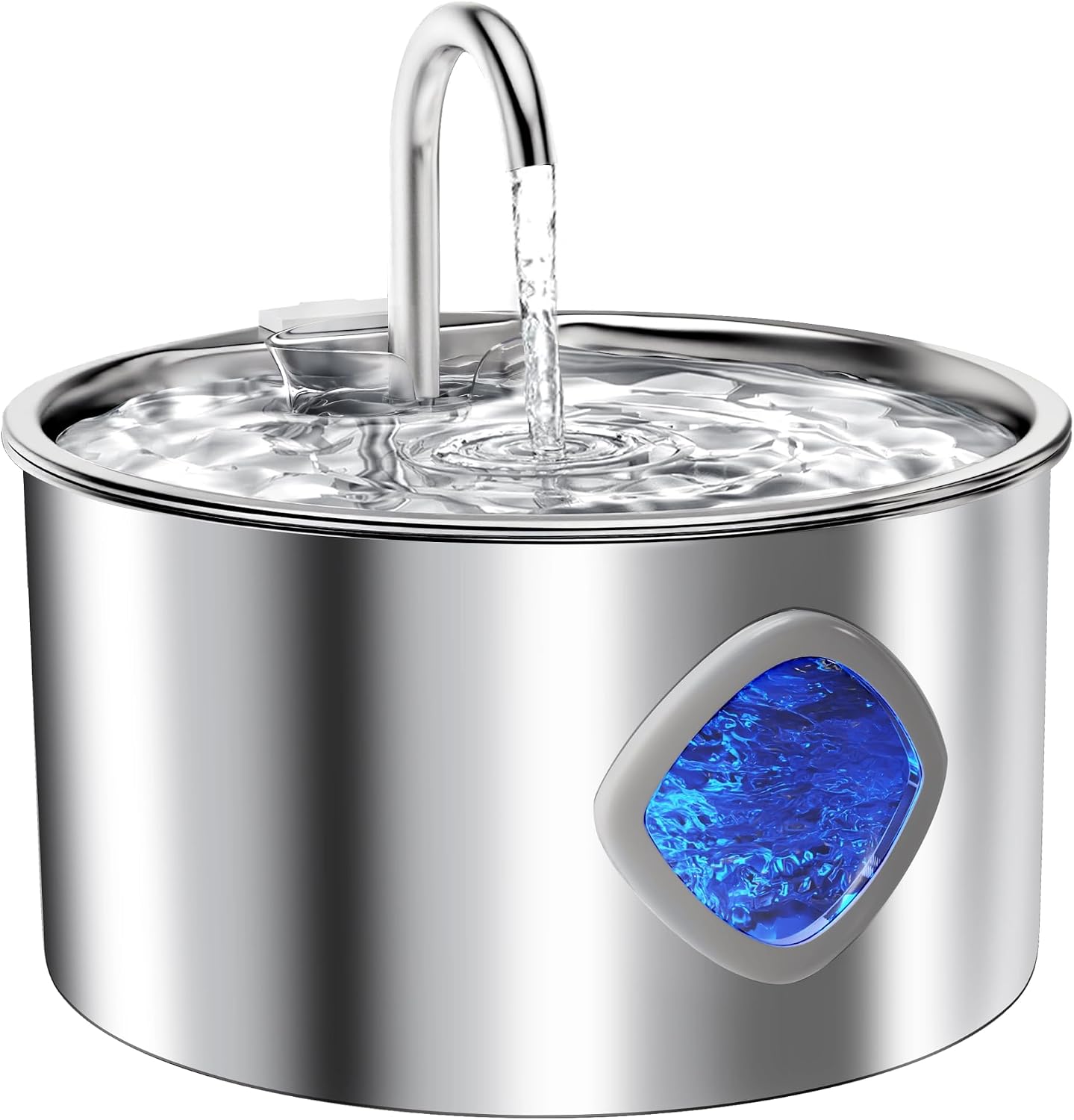
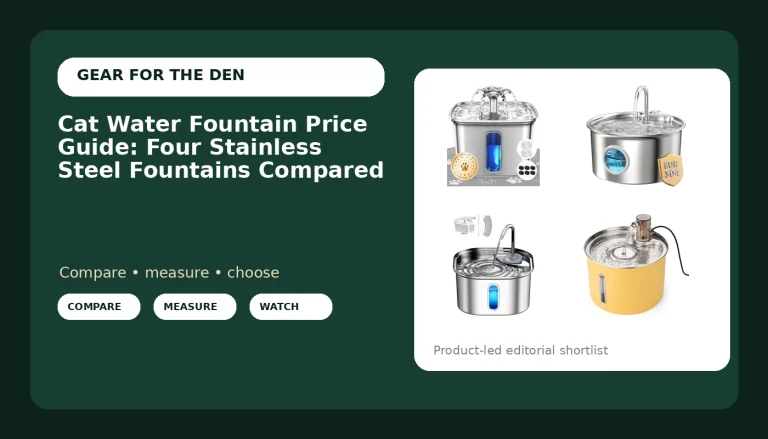
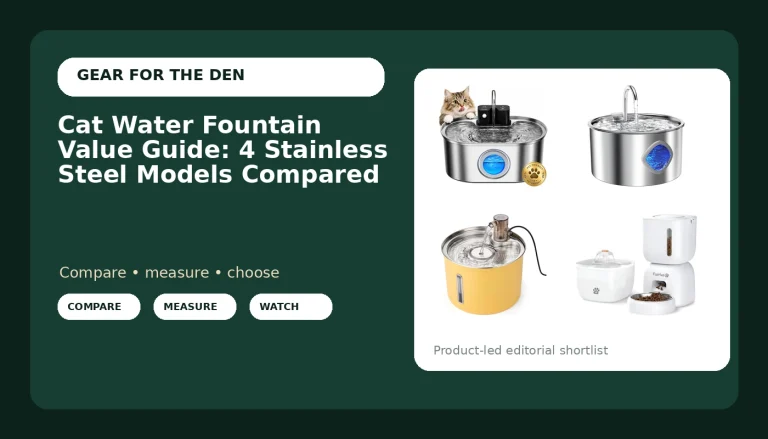
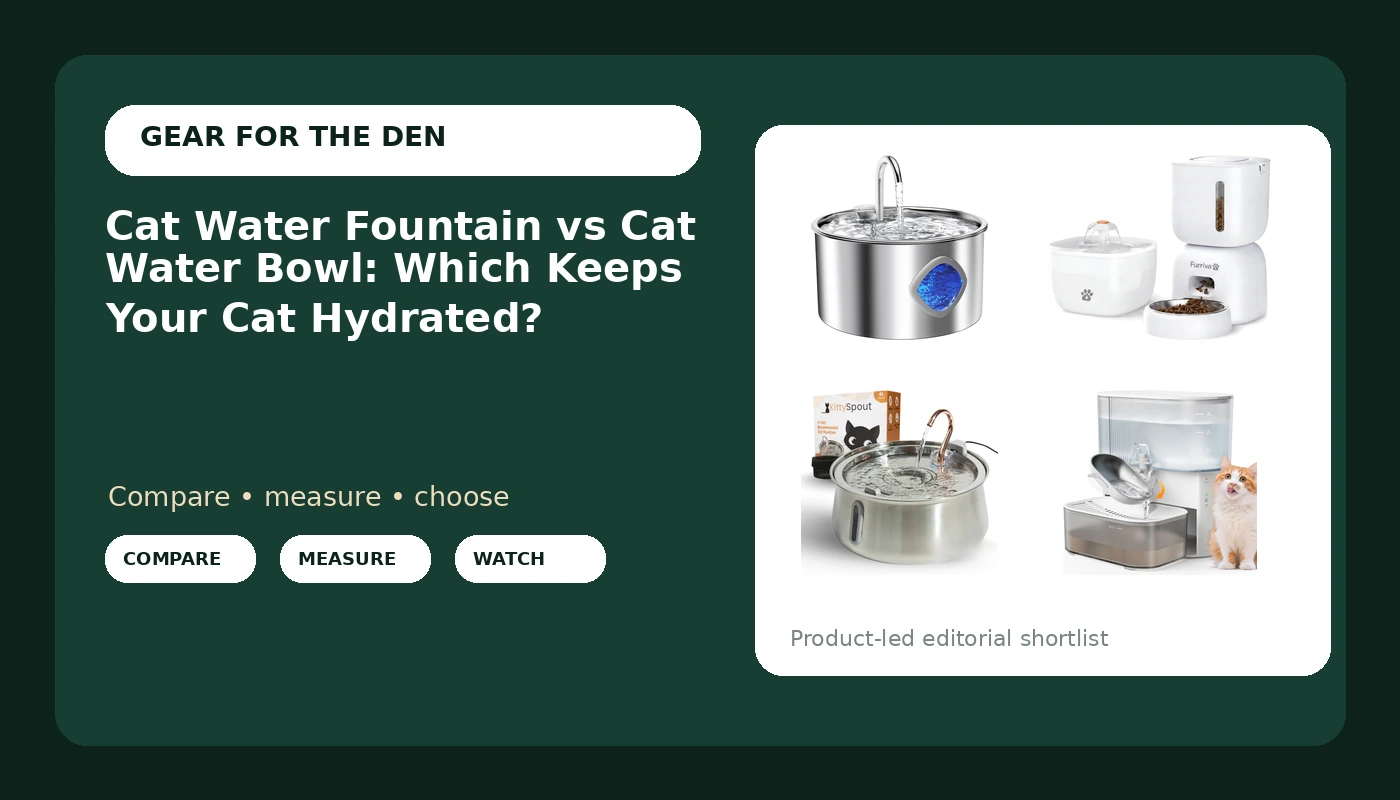
Cat Water Fountain Stainless Steel: 108oz/3.2L Cat Fountain for Drinking – Pet Water Fountains for Cats Indoor – Cat Water Bowl Dispenser – Pets Feeding & Watering Supplies – Water Level Window
Lowest-cost way to test whether your cat will use a fountain, with a visible level window that prevents dry-run pump noise
Smallest capacity here after the combo unit, and it still needs filter replacements
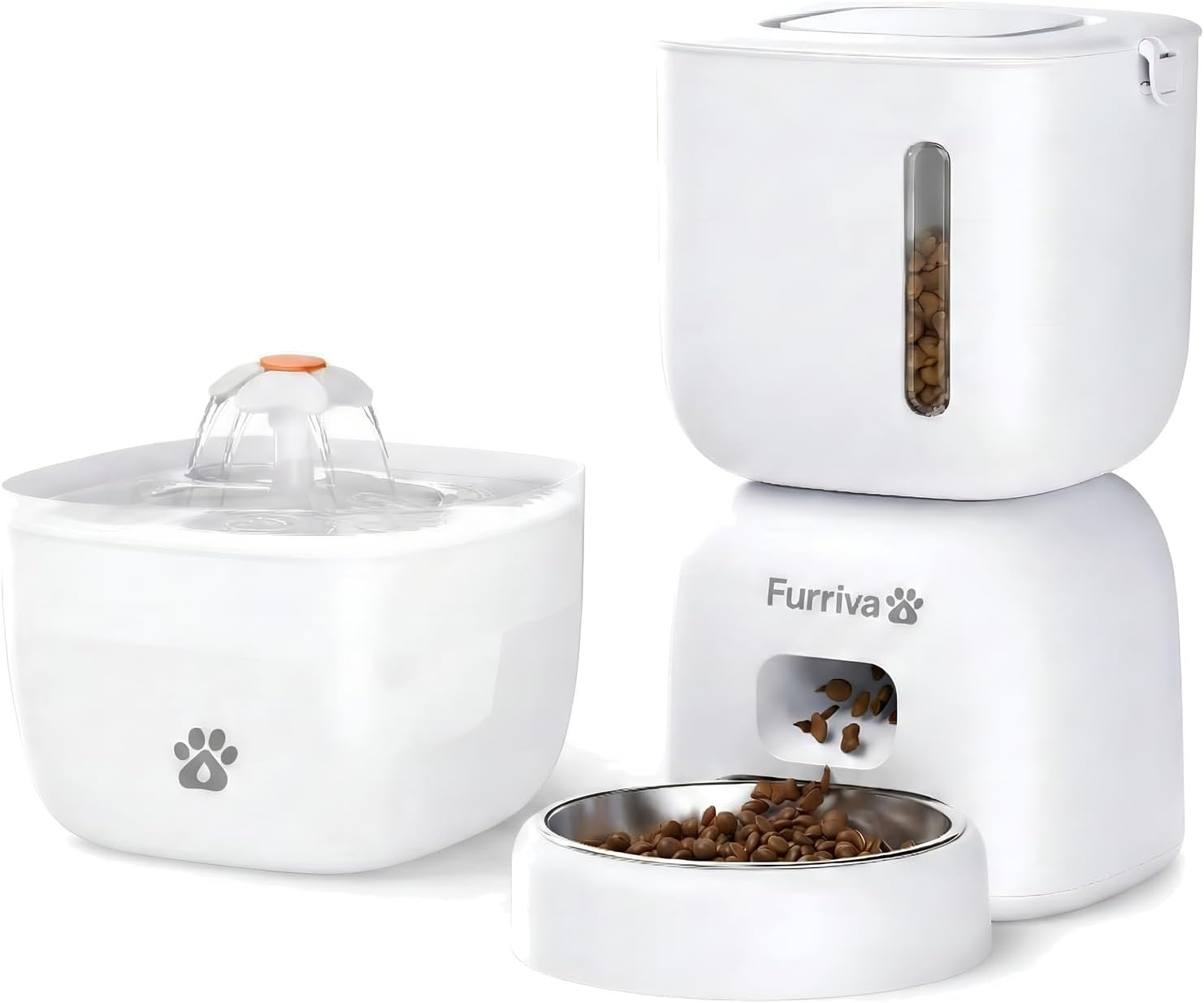
Automatic Cat Feeder and Water Fountain Set, White – 3L Feeder & 2L Fountain, Stainless Steel Bowl, Locking Lid, Plug-in/Battery Powered, 4 Meals/Day, 10s Voice Recorder for Cats and Small Dogs
One footprint for food and water, four scheduled meals a day, locking lid, and a voice recorder that calls your cat
Only a 2 liter fountain, no microchip detection, and more surfaces to wash than a standalone fountain
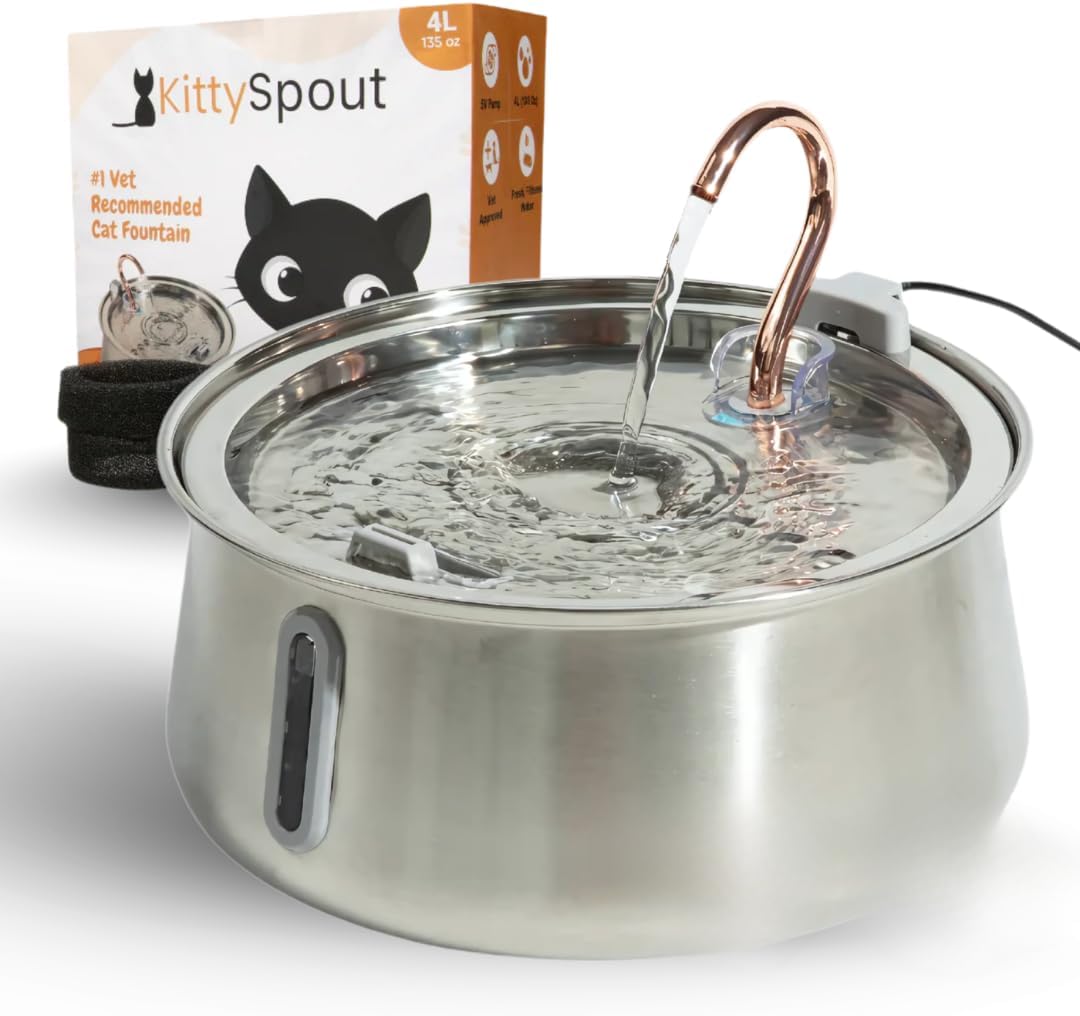
KittySpout Stainless Steel Cat Water Fountain Automatic Drinking Fountain, Quiet Circulating Water Bowl, Dishwasher Safe, Indoor Pet Fountain for Hydrated Healthy Cats (Stainless Steel, 4L Corded)
Largest reservoir in this group at 4L, quiet circulating design, dishwasher safe stainless steel body
Corded only, and a full 4L reservoir is heavy to lift and rinse
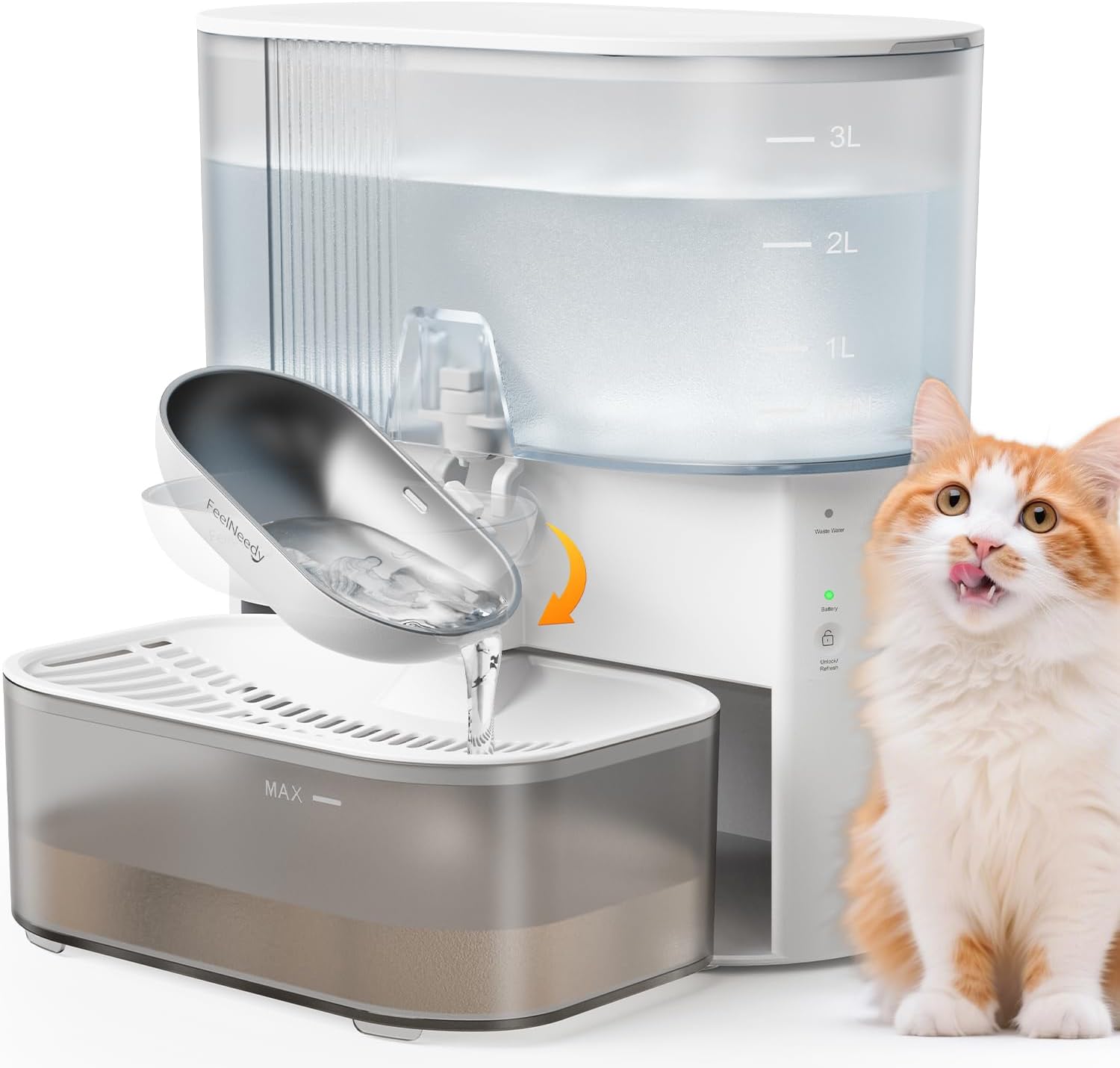
Wireless Cat Water Fountain No Filters, Wastewater Separation, FEELNEEDY Stainless Steel Bowl, 3.5L Pet Water Fountain for Cats & Dogs Dispenser, White
No cord to route and no filters to buy, with wastewater separation keeping the drinking side cleaner
Battery power means charging on a schedule, and the wastewater chamber still needs regular rinsing
Prices and availability may change.
Cat Water Fountain vs Cat Water Bowl: The Core Differences
Understanding the difference between cat water fountain and cat water bowl comes down to three things: motion, volume, and maintenance.
A bowl holds a fixed pool of still water. Whatever lands in it stays there, including dust, fur, food crumbs, and saliva from the last cat that drank. Still water also picks up whatever the room smells like as it sits, which is one reason some cats drink less from a bowl that has been out for two days. A fountain keeps the surface moving, aerates the water as it falls, and routes it through a filter or a settling chamber before it comes back to the drinking area.
Motion is the part cats care about most. Many cats show a clear preference for running water, which is why they drink from taps, shower floors, and dripping faucets while ignoring the bowl you washed that morning. A fountain puts that running water in one predictable place and keeps it there.
Volume is the second difference. A bowl holds what you pour into it, usually a cup or two, and a cat that drinks heavily can work through that in a day. A reservoir measured in liters holds several days of water, which matters in a household that sits empty for ten hours at a stretch.
Maintenance is where the fountain gives ground back. A bowl is a five-second rinse. A fountain has a pump, an impeller, tubing, and often a filter, and every one of those surfaces collects biofilm if you ignore it. That is the honest trade: better water, more of it, and a cleaning routine you cannot skip.
Water capacity, bowl width, and whisker clearance
Water capacity across these four units runs from 2 liters in the feeder combo up to 4 liters in the corded KittySpout, with 3.2 and 3.5 liter models in the middle. For one or two cats, anything from about 3 liters up is a comfortable buffer.
Bowl width and whisker clearance matter more than most shoppers expect. Cats have sensitive whiskers, and a narrow, deep bowl forces them to press their face against the sides to reach the water. Some cats respond by drinking less, and others scoop water onto the floor with a paw. A wide, shallow bowl with low sides solves that for almost nothing. Fountains have their own version of the problem: the drinking area is often a small basin or a spout, and a broad-faced cat may not enjoy a narrow channel. When you compare models, look at how wide the drinking surface is, not just how much the reservoir holds.
Elevation angle is the third variable. A fountain that lifts the water surface a few inches off the floor can be easier on an older cat's neck and joints than a bowl on the ground, and it keeps the drinking area out of the path of a dog or a toddler.
Pump noise, filter type, and the upkeep nobody mentions
Pump noise is the most common complaint in fountain reviews, and it is usually a maintenance symptom rather than a design flaw. A pump that has run low on water gets louder and then dies, which is why a visible water level window is worth having. If you can see the level without lifting the lid, you top it up before the pump starts sucking air.
In any cat water fountain vs cat water bowl comparison, filter type is where the running costs hide. Most fountains use a carbon or foam cartridge that traps hair and debris and needs replacing on a schedule, which turns into a recurring expense and one more thing to remember. The filter-free designs use wastewater separation instead: the pump lifts water to the drinking area, and the water that runs back is kept apart from the fresh supply, so the cat drinks from the cleaner side of the loop. You buy nothing extra, but you rinse more.
Stainless steel is the surface to look for either way. It does not hold odors the way plastic does, and some models are dishwasher safe, which turns a twenty-minute scrub into a rack load.
The corded 4 liter option: KittySpout
The KittySpout Stainless Steel Cat Water Fountain is the largest reservoir in this group at 4 liters, and it is the model to look at first if you want to fill the fountain and forget it for the better part of a week. It is a corded unit with a quiet circulating bowl design, a stainless steel drinking surface, and a dishwasher safe body, so the weekly teardown is less of a chore than it is on plastic fountains.
The trade-off is the cord. It has to live near an outlet, and you have to route the cable so it is not a chew toy or a trip hazard. Some cats will investigate any new cable in their territory, and a cord protector is cheap insurance.
If your cats are heavy drinkers or you are away from home for long stretches, the 4 liter capacity is the feature that earns its keep. You can Check current Amazon price if you want to see the current listing.
The wireless, filter-free option: FEELNEEDY
The FEELNEEDY Wireless Cat Water Fountain removes two of the most common objections at once. There is no cord to route, because the unit runs on its own power, and there are no filters to buy, because it uses wastewater separation to keep the returning water away from the drinking supply. The reservoir holds 3.5 liters, and the drinking surface is stainless steel.
For an apartment where the only outlet is across the room, or a home with a cat that chews cables, the wireless design is the whole argument. The catch is charging. A battery-powered fountain has to be topped up on a schedule, and if you let it run dry you are back to a bowl until it is charged again. It also does not solve the cleaning question; the wastewater chamber and the pump still need a rinse.
This is the pick for someone who wants a fountain but does not want a filter subscription, and it is the one to Check current Amazon price on if the cordless idea is what sold you.
The budget fountain with a water level window
The Cat Water Fountain Stainless Steel with a water level window is the lowest-commitment way into this category. It holds 108 ounces, or about 3.2 liters, which is plenty for a single cat and workable for two. The window on the front shows the level at a glance, which addresses the single most common cause of pump noise and pump death.
There is nothing exotic here: a stainless steel drinking surface, a circulating pump, a reservoir, and a filter you replace periodically. It is the model to buy if you want to test whether your cat will actually use a fountain before you spend more on capacity or wireless convenience. Cats are individuals, and a few of them will ignore a fountain entirely and keep drinking from the bowl. Finding that out on the cheaper unit is the smart order of operations, and you can Check current Amazon price before you decide.
The feeder and fountain combo
The Automatic Cat Feeder and Water Fountain Set bundles a 3 liter dry food hopper with a 2 liter fountain, a stainless steel bowl, a locking lid, and a 10 second voice recorder that calls your cat to meals. It runs from a plug or batteries and can dispense up to four meals a day.
This is the unit for someone who wants one footprint instead of two, or who is away from home at unpredictable hours. Portion size is adjustable per meal, which matters if your cat is on a measured diet, and the locking lid keeps a determined cat out of the hopper between meals.
The 2 liter fountain is the smallest reservoir in this comparison, so you will refill it more often than the 4 liter KittySpout, and the food side means more cleaning surfaces overall. One thing this set does not do is microchip range detection, so it cannot lock out a second cat the way a microchip-activated feeder can. In a two-cat home where one cat steals food, that limitation matters. If your cats share peacefully, the combo is a tidy solution and you can Check current Amazon price to compare it against buying the two pieces separately.
Where a bowl still wins
A bowl is not obsolete, and pretending otherwise would be dishonest. There are real situations where it is the better answer.
Multi-cat households with a resource guarder are the clearest case. One cat camps the fountain, and the others stop drinking. Two or three widely separated bowls solve that better than one central fountain, and they cost almost nothing.
Power outages are the second case. A corded fountain is a pump and a motor, and when the power goes out it becomes a still bowl with a filter in it. A plain bowl keeps working.
Senior cats and cats with arthritis sometimes prefer a bowl they do not have to reach into, and some cats are simply unsettled by the sound of moving water. If your cat drinks well from a bowl, drinks enough, and the bowl gets washed daily, you do not have a problem to solve.
The maintenance math is the other honest point. Fountains add filters, pump cleaning, and occasional pump replacement to your routine, and if you will not do that work, a dirty fountain is worse than a clean bowl. If you are still weighing a cat water fountain or cat water bowl after all of this, the tiebreaker is usually that question: will you actually clean it?
Choosing between them
The cat water bowl vs cat water fountain decision comes down to three questions. How many cats are drinking, how often are you home to refill, and how much weekly maintenance will you genuinely do?
One cat, a busy schedule, and a willingness to rinse a pump once a week: buy the fountain with the largest reservoir you can stand to lift, which in this group is the corded 4 liter KittySpout.
One cat, no outlet nearby, and a dislike of filter subscriptions: the wireless FEELNEEDY model.
Two cats who share nicely and a tighter budget: the 3.2 liter fountain with the water level window.
A cat who needs meals on a schedule as well as water: the feeder and fountain set, with the caveat about its 2 liter reservoir.
And if the answer to the maintenance question is "none," buy a wide stainless steel bowl, wash it daily, and put the money you saved toward something your cat will actually use. The cat water fountain vs cat water bowl choice is not about which product is better in the abstract. It is about which one your household will keep clean and full.