The aquarium filter vs aquarium heater question lands in my inbox every October, usually from someone standing in a pet store aisle with a gift card and an empty ten gallon tank. Both devices plug into a wall, both sit in the water, and both show up in every starter kit description, so it is easy to assume they are two versions of the same purchase. They are not. A filter keeps the water safe to live in. A heater keeps it comfortable. Spend your money in the wrong order and you will spend the next month fighting either cloudy water or a fish that hides in the corner all day.
If you can only buy one thing this month, buy the filter. Filtration is what keeps ammonia and nitrite from building up between water changes, and no heater on the market fixes bad water. Once the tank is cycled and the filter is running, a heater becomes the next purchase, and for tanks in the six to fifteen gallon range the PULACO 50W is the one I would grab first, because the thermometer strip and suction cup come in the box. Everything below explains why the two devices are not competitors, then compares the four submersible heaters readers ask about most.
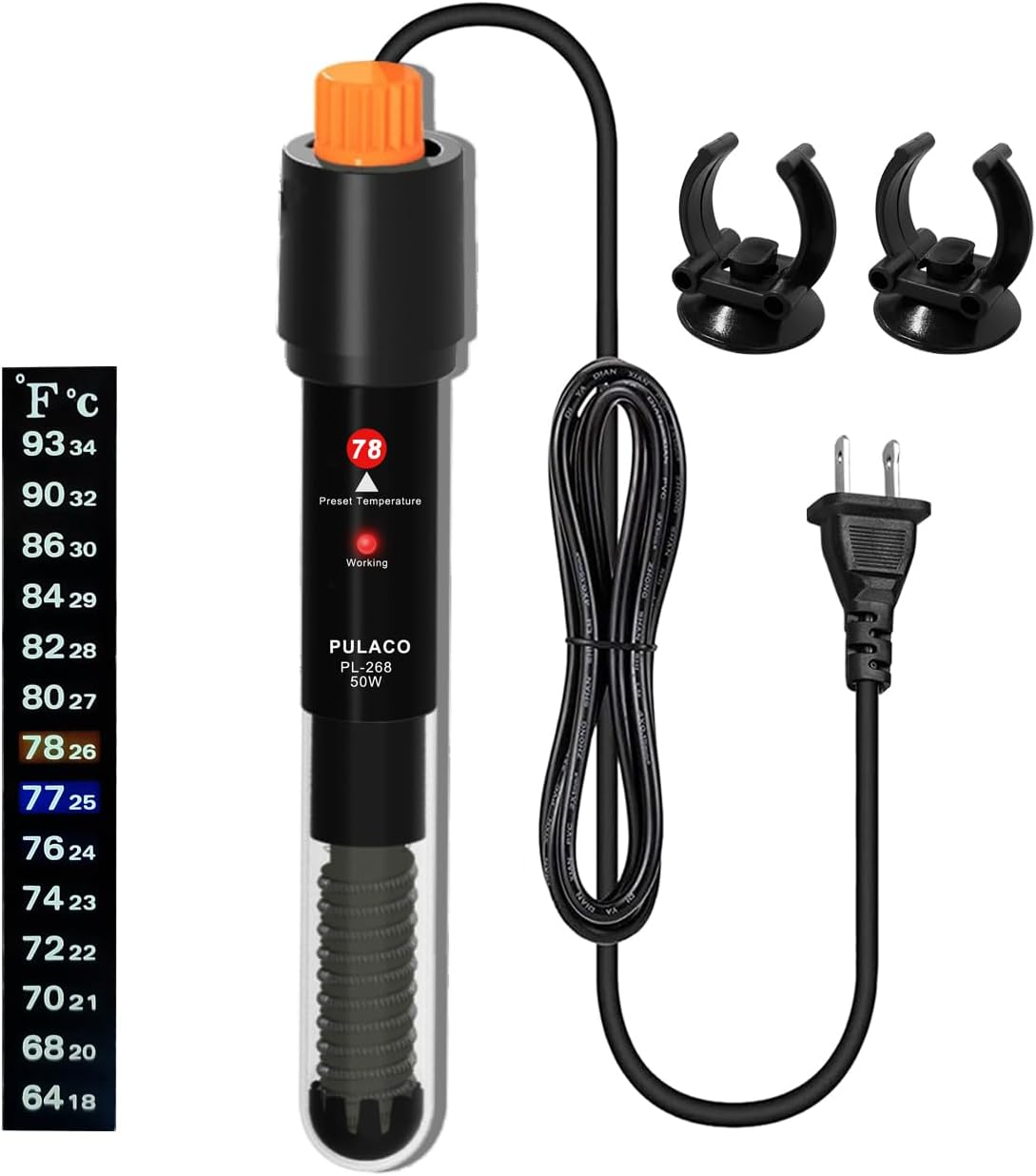
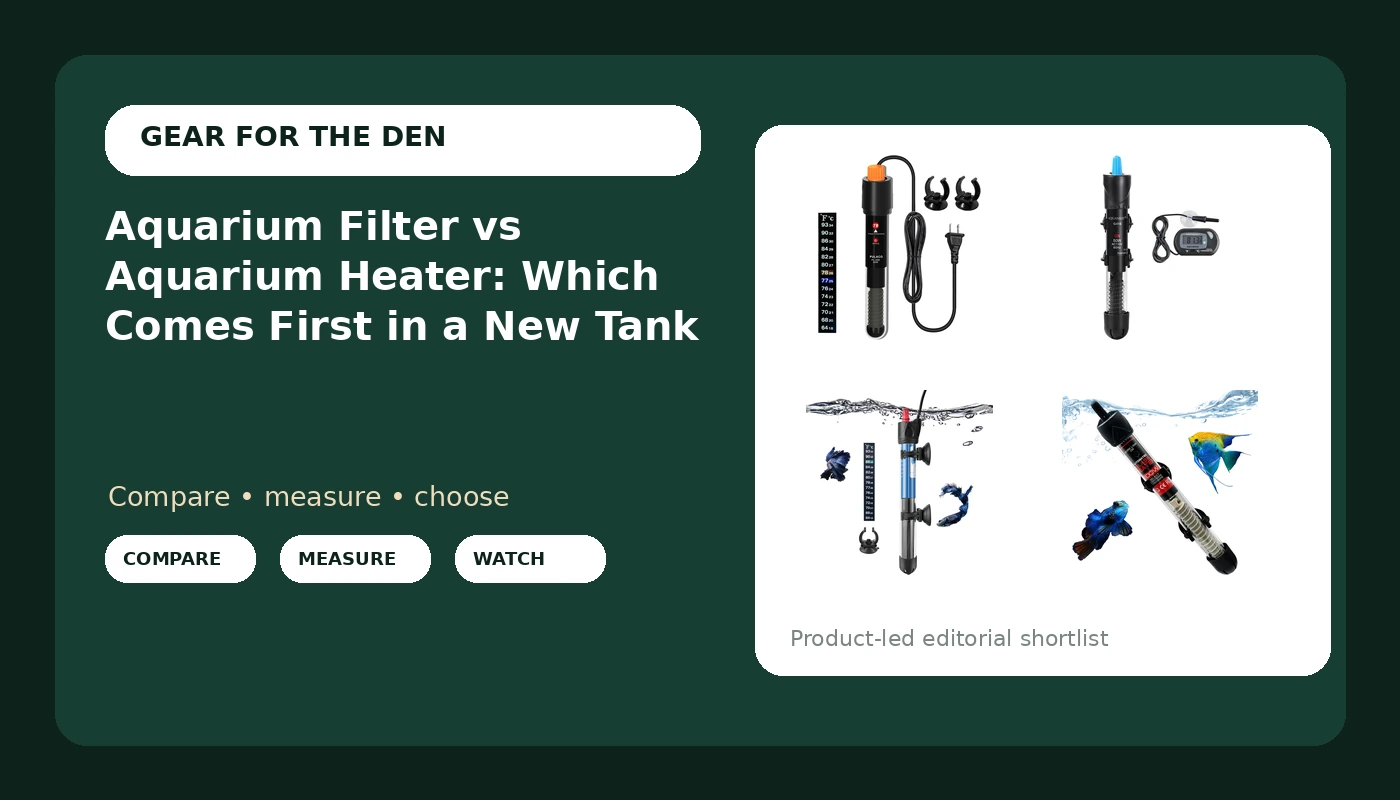
PULACO 50W Aquarium Heater
Built for 6 to 15 gallon tanks, and the thermometer strip plus suction cup are included
50W is the ceiling, so there is no room to grow into a bigger tank
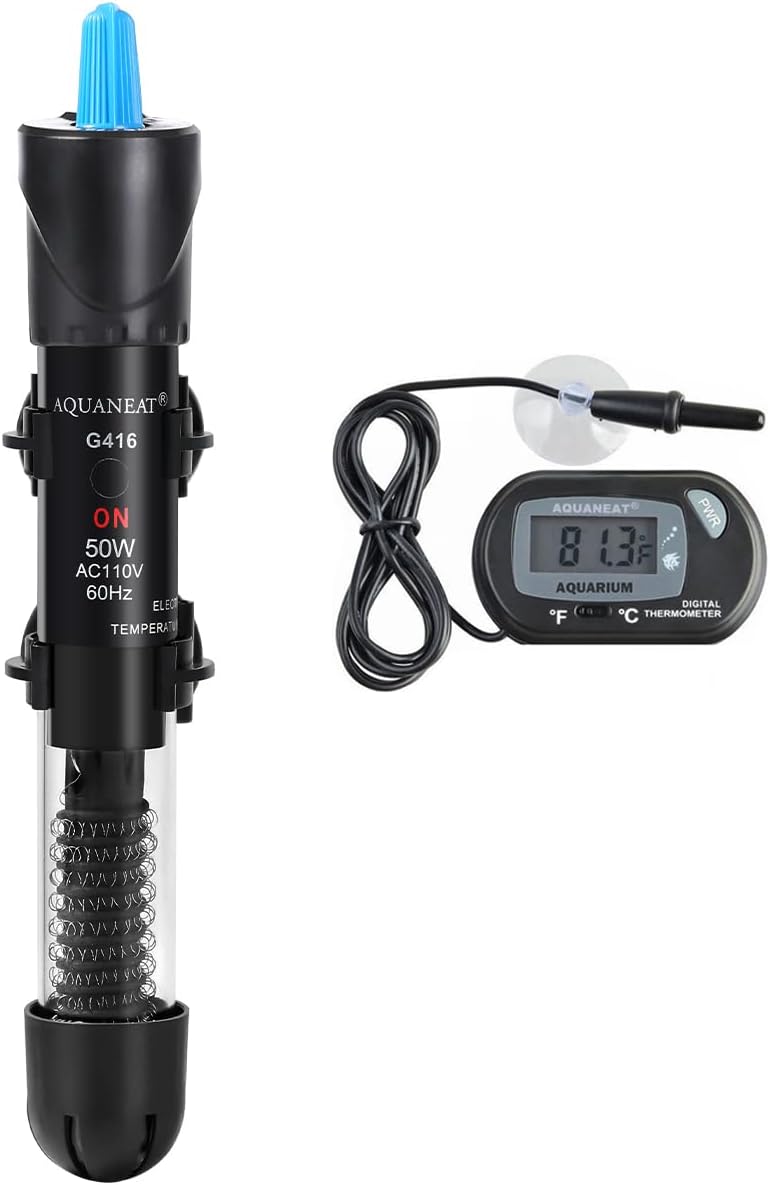
AQUANEAT 50W Aquarium Heater
Digital thermometer reads at a glance instead of by color band
Two pieces of gear in the tank instead of one, and still a small tank size
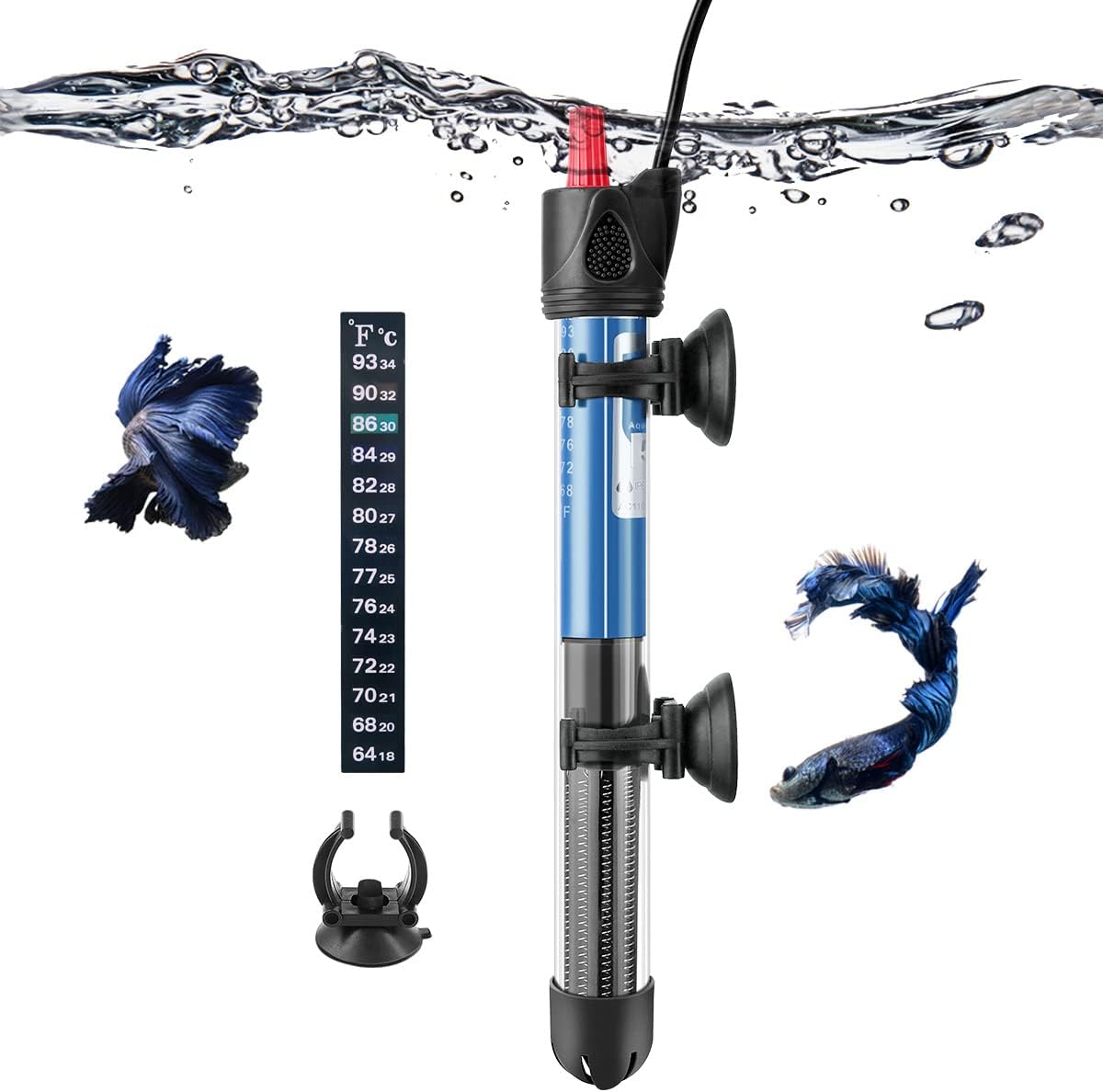
Hitop Adjustable Aquarium Heater (50W)
Glass body is easy to inspect, and the line spans 25W to 300W for 5 to 70 gallon tanks
Glass is the part that chips or shatters if you knock it during maintenance
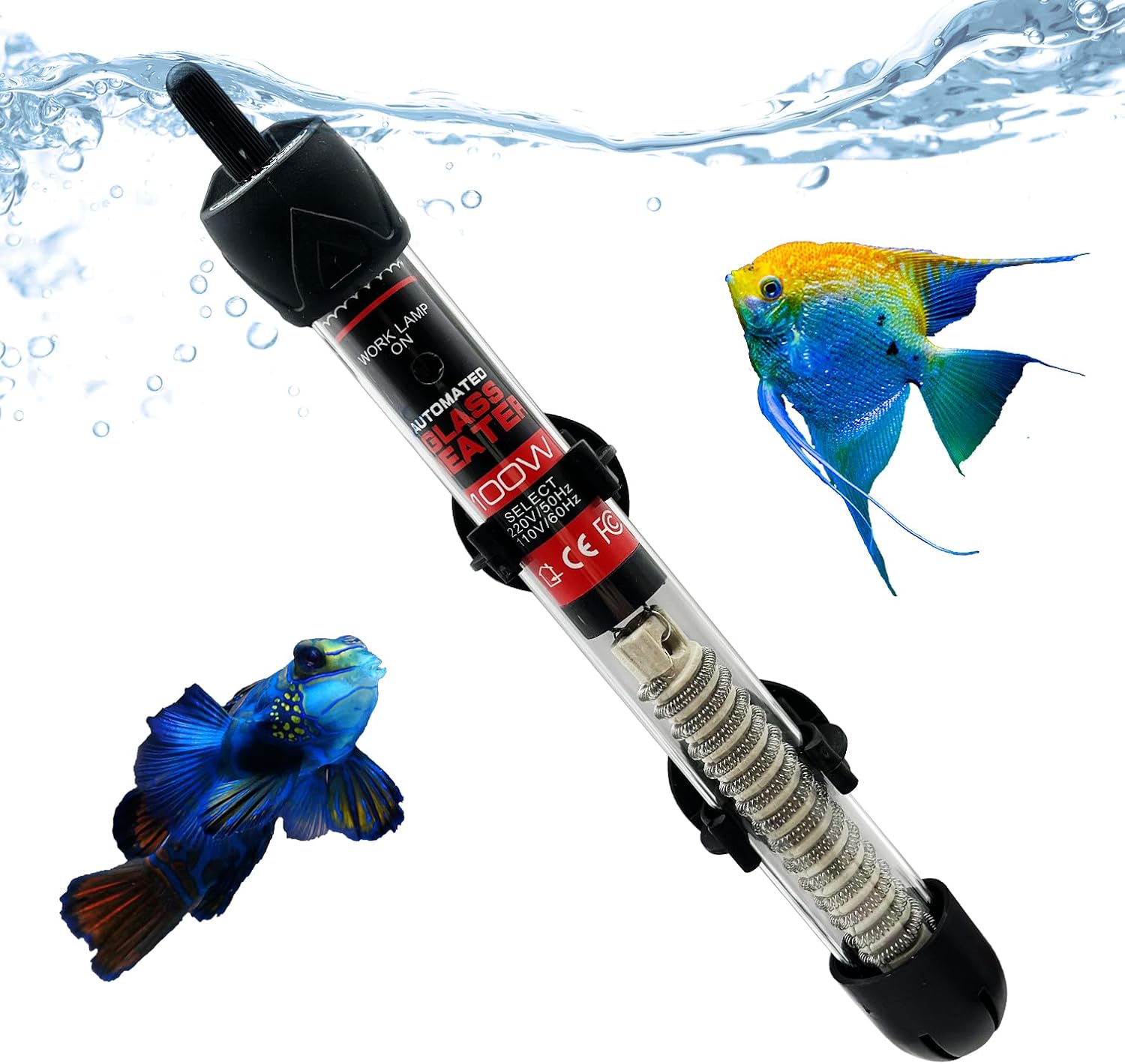
Fish Tank Aquarium Heater, Adjustable Submersible Thermostat
Widest range of the group, 25W through 300W, so one line covers every tank you own
No thermometer included, so you buy that separately
Prices and availability may change.
Why the aquarium filter vs aquarium heater question misses the point
Search aquarium filter vs aquarium heater and you will find a wall of forum threads arguing about which one a new tank needs first. The argument only exists because the two devices get lumped together as tank equipment. A filter moves water through filtration stages: mechanical media catches particles, biological media houses the bacteria that convert ammonia into nitrate, and chemical media such as carbon pulls out odors and discoloration. Its headline number is flow rate, measured in gallons per hour, and it has to be matched to tank volume so the water turns over often enough to stay clear. A heater has no flow rate and no media. Its specs are wattage and thermostat range, and its only job is holding the water at the temperature your fish need.
That is the entire distinction. Kelvin rating is a lighting number, not a heater or filter number, which is why it shows up in confused threads about planted tanks. Substrate grain matters to how mulm settles and how easily a siphon cleans the bottom, and it can matter to where you place a heater, but it does not decide between the two devices. The real question is not which one is better. It is which one your tank is missing, and for a new tank that answer is almost always the filter.
The four 50W heaters, compared
All four of the heaters below are adjustable, submersible, and built for freshwater tanks, so the differences come down to tank size, mounting hardware, and what ships in the box.
PULACO 50W Aquarium Heater. PULACO 50W Aquarium Heater is built for 6 to 15 gallon tanks, which covers most nano and starter setups. The adjustable thermostat dial lets you set the temperature you want, and the box includes a thermometer strip and a suction cup, so you can mount the heater and monitor the water without buying anything extra. The limitation is the size: 50W is plenty for a small tank and nowhere near enough for a 40 gallon breeder.
AQUANEAT 50W Aquarium Heater. AQUANEAT 50W Aquarium Heater takes the same approach but swaps the stick-on strip for a digital thermometer, which is easier to read across the room and gives you a number instead of a color band. It is adjustable and submersible like the others. The catch is that the digital thermometer is a separate unit that sits in the tank, so you are placing, wiping, and keeping track of two pieces of gear instead of one.
Hitop Adjustable Aquarium Heater (50W). Hitop Adjustable Aquarium Heater is sold in 25W, 50W, 100W, and 300W versions, and the listing covers tanks from 5 up to 70 gallons, so you can match wattage to tank volume as your setup grows. The 50W version is the small tank pick. It is a glass bodied submersible heater, which makes the element easy to see and easy to inspect for cracks, but glass is also the part that breaks if you bump it against the rim during a water change.
Fish Tank Aquarium Heater, Adjustable Submersible Thermostat. Fish Tank Aquarium Heater has the widest spread of the group: 25W, 50W, 100W, 150W, 200W, and 300W in a single listing, with an adjustable temperature dial and a fully submersible body. If you run several tanks and want one heater line you already know how to set, that range is the reason to pick it. It does not include a thermometer, so plan on buying one separately if you want to confirm the temperature you dialed in.
Ranked by what comes in the box, the PULACO and AQUANEAT units are the friendliest for a first tank because the thermometer is included. Ranked by room to grow, the Fish Tank Aquarium Heater line wins outright. Ranked by pure simplicity of inspection, the Hitop glass body is the easiest to look over at a glance.
Sizing wattage and thermostat range to your tank
Before you buy any of them, know your tank volume and the temperature your fish need. The rule of thumb most heater makers publish is about five watts per gallon in a room kept around 70 degrees Fahrenheit, with more wattage if the room runs cold or the tank sits near a drafty window. That puts a 10 gallon tank at 50W, a 20 gallon at 100W, and a 55 gallon in the 200W to 300W range. It also explains why three of the four heaters here are 50W units: that is the size that fits the small tanks most people start with.
Thermostat range is the second number to check. Tropical community fish generally want water in the mid 70s to low 80s Fahrenheit, so an adjustable heater that covers that band with room on either side is what you want, while a preset heater locks you into one temperature. If you keep goldfish or another cool water species, the math changes and you may not need a heater at all. Wattage buys you recovery speed after a water change. The thermostat range decides whether the heater can hold the temperature you actually want.
What a filter has to handle first
The reason the filter comes first is that it does the job a heater cannot touch. A filter's flow rate, measured in gallons per hour, determines how many times per hour the tank volume passes through the media. Under filtered tanks build up waste faster than the bacteria can process it, and the result is cloudy water, algae, and fish that gasp at the surface. Over filtered tanks are mostly a problem for weak swimmers and for shrimp, which do not appreciate a jet of water blasting across the tank.
When you size a filter, match the gallons per hour rating to the tank volume and the stocking level, then pick media that suits the setup. A sponge and ceramic rings cover the first two filtration stages for most freshwater tanks, and you can add carbon later if you want to polish the water. Substrate grain matters here too: fine sand packs tighter and holds more mulm, while gravel lets more debris fall through to the siphon. None of this changes because a heater is sitting in the tank.
If you are still choosing a filter, my breakdown of how filter media works in a freshwater tank covers the stages in more detail than I can fit here.
Aquarium heater vs aquarium filter: how to spend your first hundred dollars
Read enough beginner threads and the aquarium heater vs aquarium filter argument starts to sound like a rivalry between two products that never compete. The difference between aquarium filter and aquarium heater comes down to what each one controls: water quality versus water temperature. You cannot trade one for the other, and you cannot skip the first one because you already bought the second.
So here is the order I would spend in. Filter and media first, because the tank cannot cycle without them. Dechlorinator and a liquid test kit next, because you need to know when the cycle finishes. Heater after that, sized by wattage and tank volume. Light and decor last, since neither keeps a fish alive. If your budget forces you to pick an aquarium filter or aquarium heater this month, take the filter, every time. A tank with a filter and no heater will hold a cool water species just fine while you save for the next purchase. A tank with a heater and no filter is a countdown.
Questions I get about running both together
Can a filter and a heater run in the same tank? Yes, and they should. They occupy different parts of the water column and do not interfere with each other. Keep the heater fully submerged and in moving water rather than tucked into a dead corner behind a decoration.
Where should a submersible heater sit? Somewhere with water flow around it, away from where your hands go during a water change, and low enough that a partial drain does not expose the glass. That is also why glass heaters deserve a little extra care when you are moving plants or vacuuming substrate.
Do you need a heater if the room stays warm? That depends on the species and on how stable the room temperature is overnight. A thermometer in the tank answers the question in a day, which is the argument for the bundled strips and digital units in this comparison.
Does the filter have to run all the time? Yes. The bacteria in the media need continuous flow and oxygen, and a filter that gets switched off for hours loses ground every time.
Both devices earn their place, just not at the same moment. Cycle the tank with the filter running, watch the temperature for a week, and then buy the heater that matches your tank volume. Do it in that order and the aquarium filter vs aquarium heater question stops being a debate and becomes a shopping list.