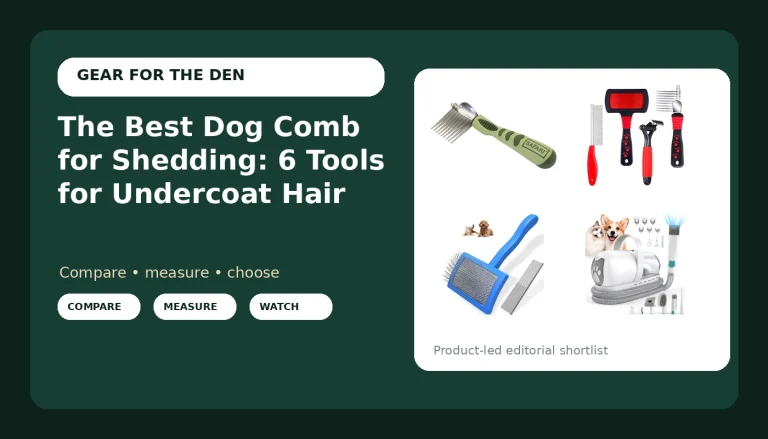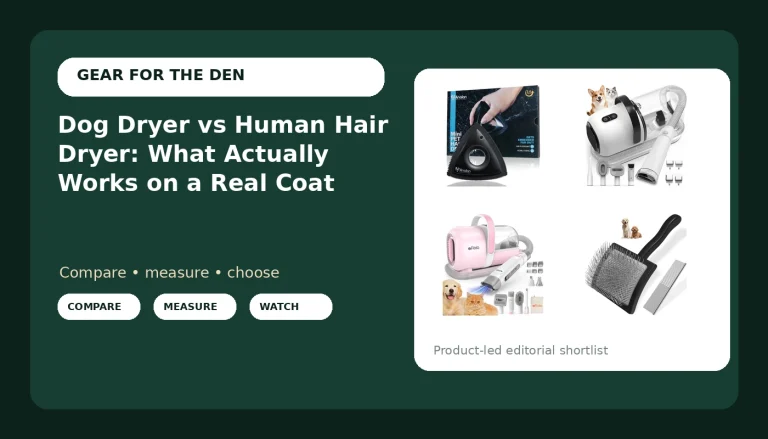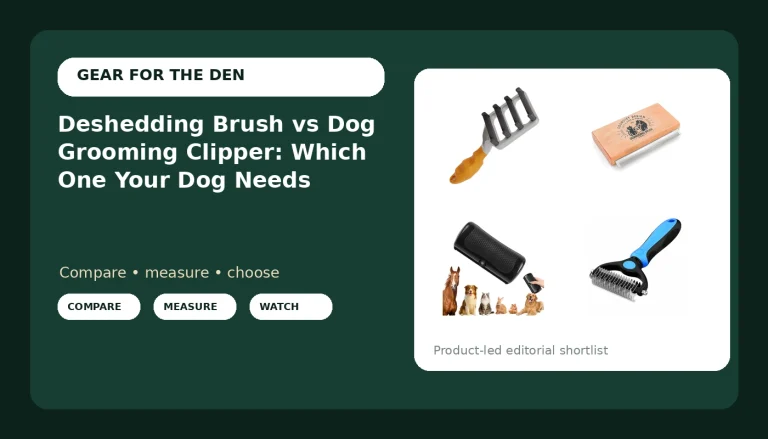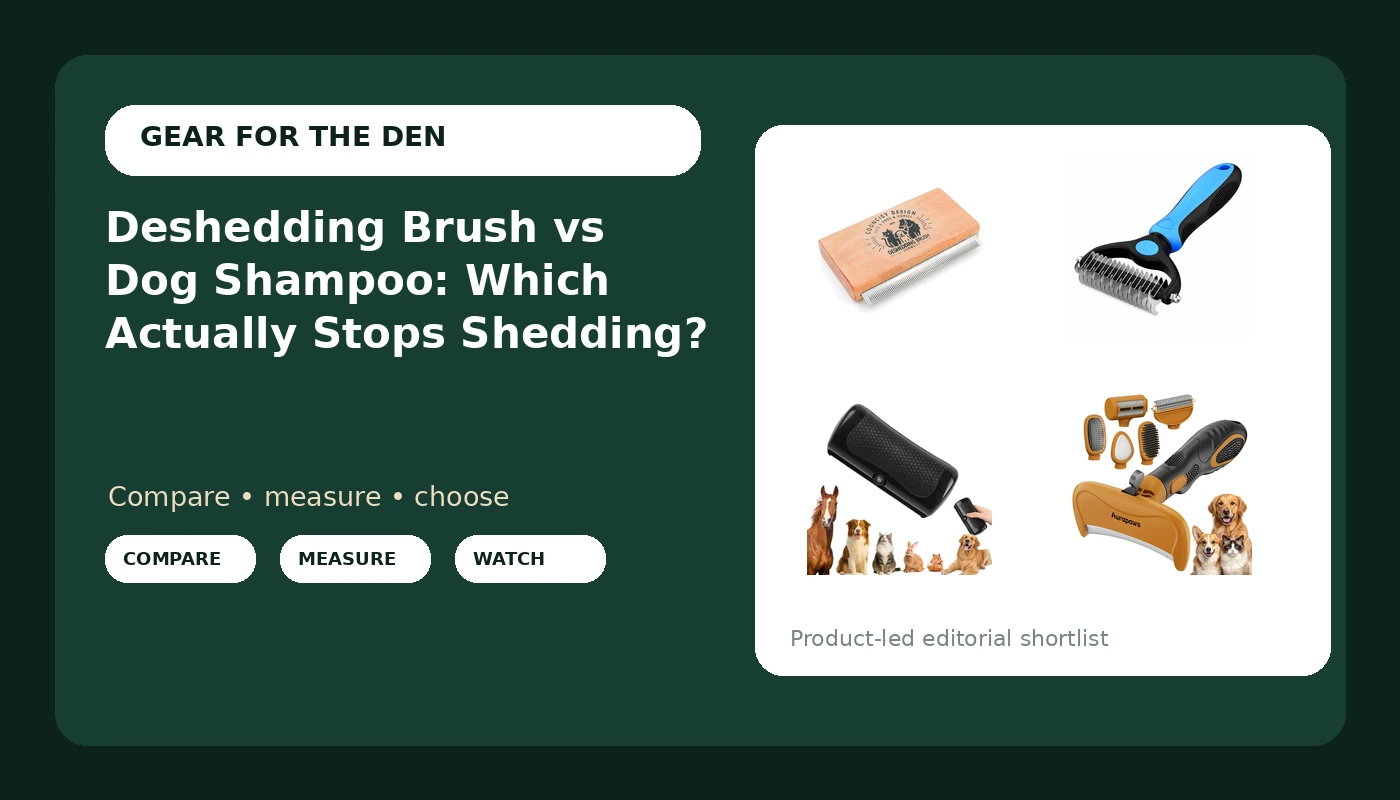
If you typed deshedding brush vs dog shampoo into a search box, you are probably standing in a room with fur on every surface and wondering which purchase actually fixes it. The short answer is that a deshedding brush pulls out the loose undercoat hair that is already dead and sitting in the coat, while a dog shampoo lifts oil, dander, and odor from the skin and from the hair that is still attached. Those are two different jobs, and most heavy-shedding dogs need both at different points in the year.
For most owners, buy the brush first. A deshedding brush works on a dry dog in ten minutes, and you can use it two or three times a week without turning grooming into an event. A shampoo earns its place when the coat is greasy, when the smell has become a whole-house problem, or when the skin is flaky and itchy. Buying shampoo to solve shedding is a bit like buying a mop to fix a dripping pipe.
Four brushes are compared below, and they sit at very different points on the price and complexity scale, from a simple wood-handled tool to a patented interchangeable system. The table is the summary. The sections after it explain where each design helps you and where it costs you something.
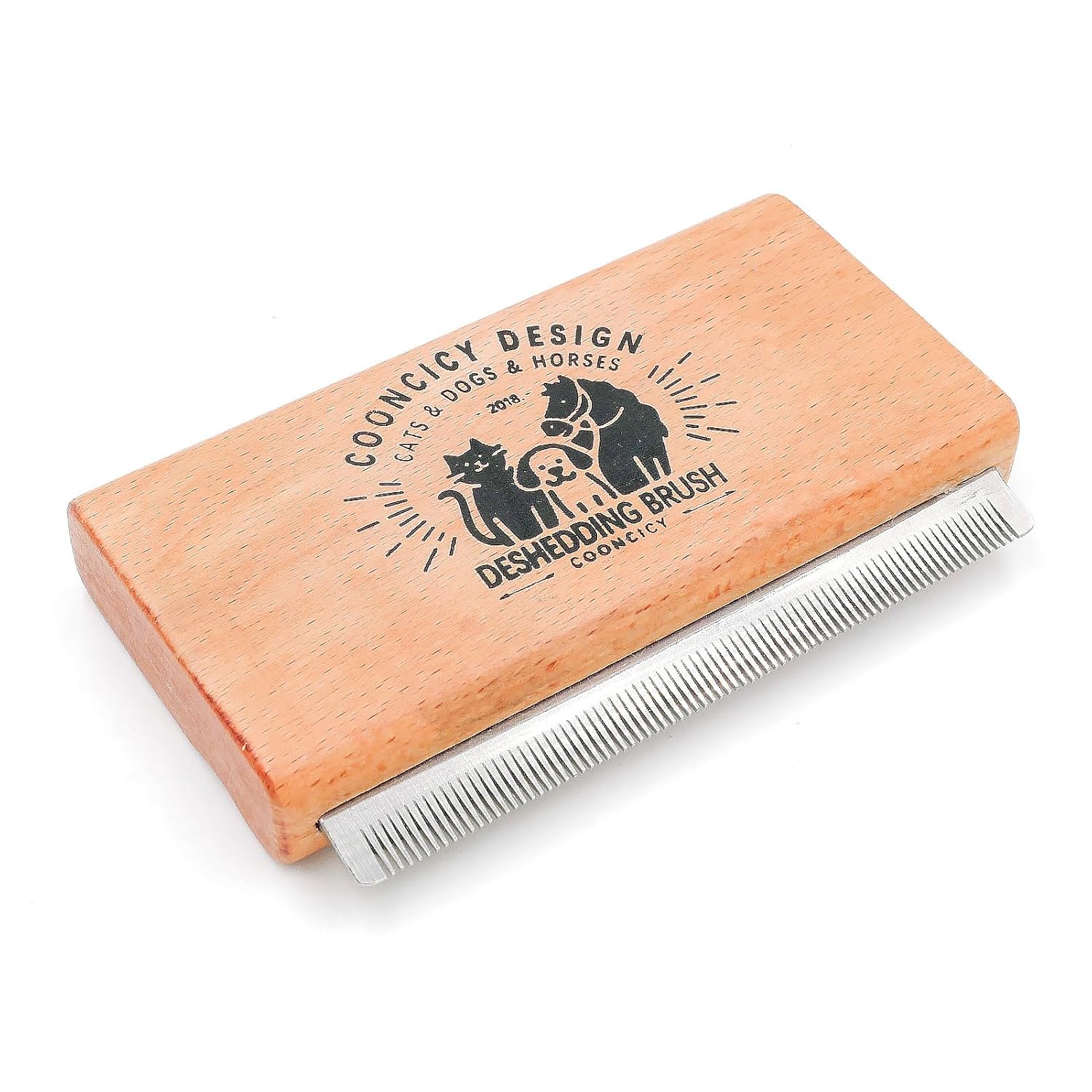
Cooncicy Deshedding Dog Brush with Wood Handle
A wood grip stays stable in a damp hand, and the single deshedding head is easy to understand on day one
Nothing swaps or converts, so mats and knots remain a separate job
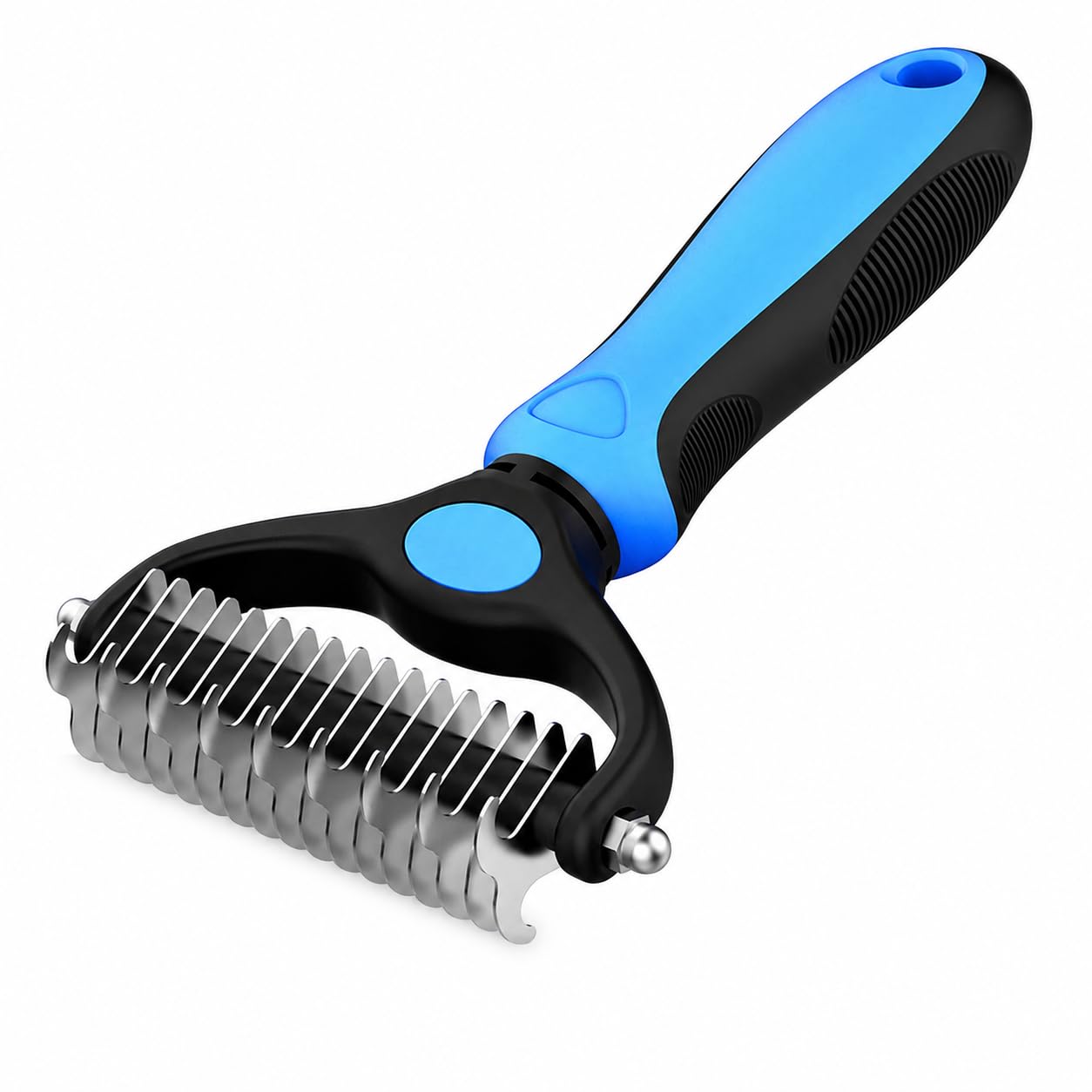
Pet Grooming Tool,Dog Brush For Shedding,Deshedding Dog Brush
The plainest shedding brush of the four, which makes it the easiest one to hand to a beginner or a pet sitter
No stated specialty and no second head, so it is a starter tool rather than a coat-specific fit
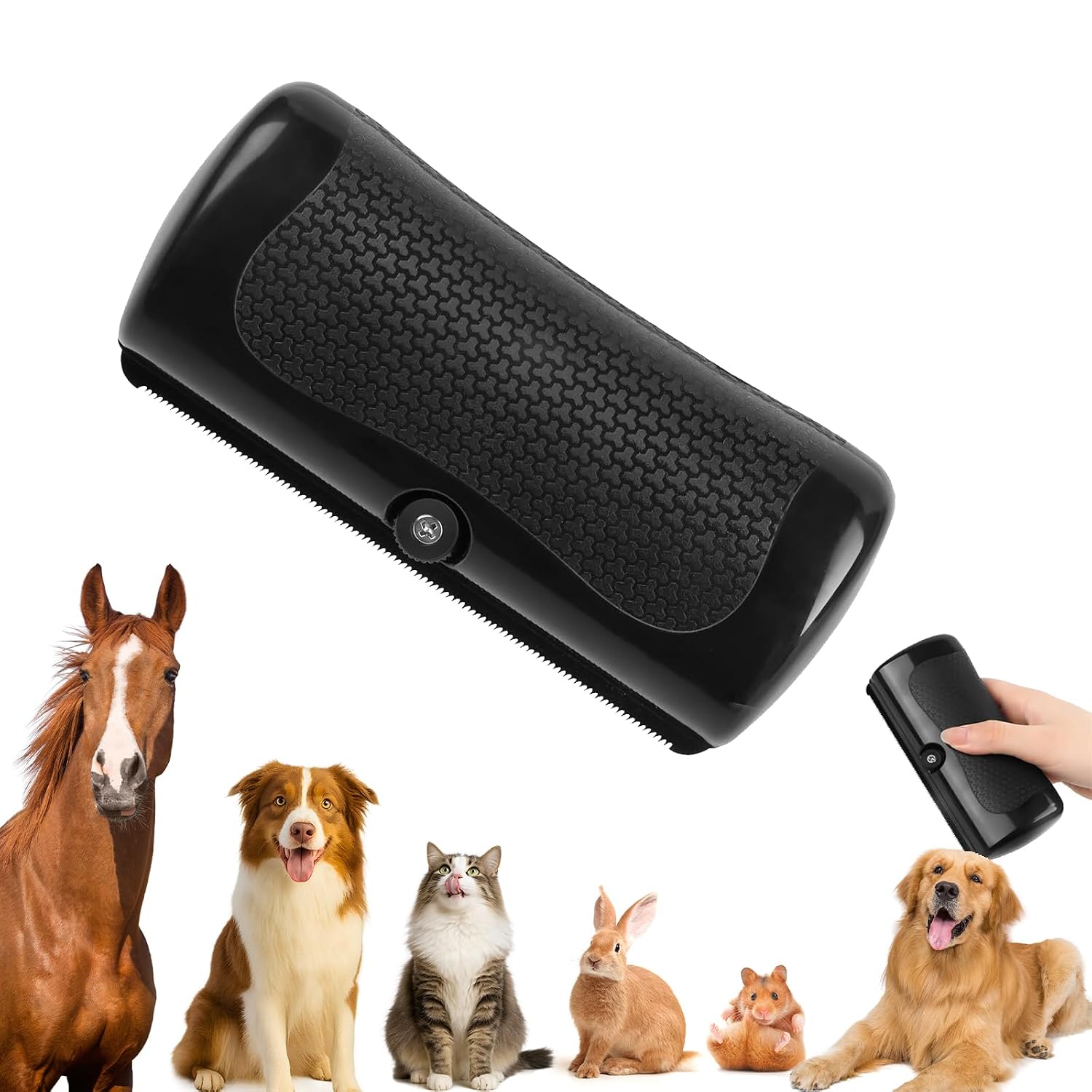
Deshedding Brush for Pets, Easy Hair Removal Tool,Dog Brush for Shedding,Shedding brush for Dogs,Cats, Rabbits, Horses
Listed for dogs, cats, rabbits, and horses, so it is the one brush here that can serve a multi-pet household
A tool that claims to suit every coat type is usually a compromise on the fine detail a single coat type wants
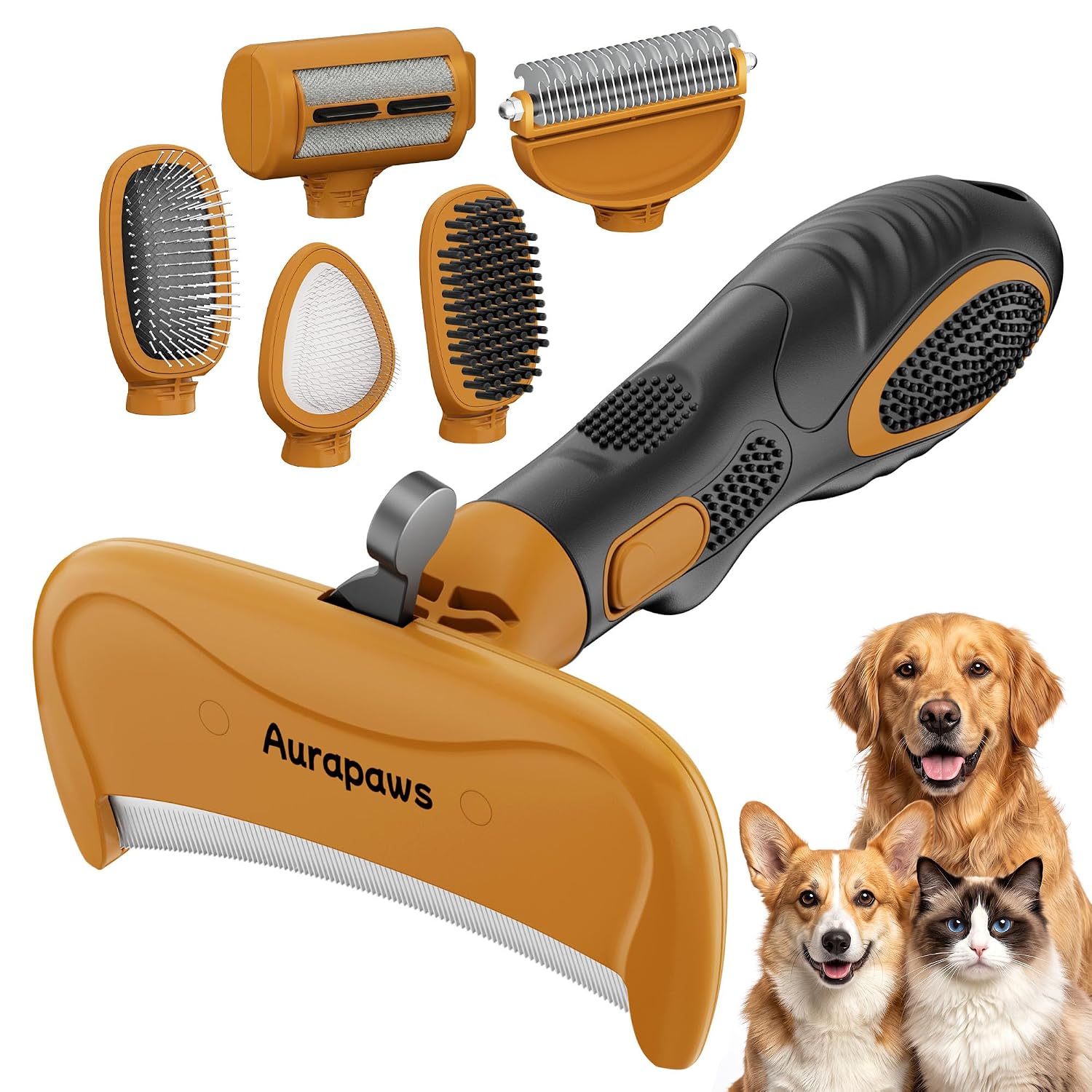
Aurapaws 6-in-1 Deshedding Dog Brush for Shedding, Undercoat Rake Grooming Combo, Patented Interchangeable Brush, Safe and Comfortable, Reduces Shedding, Undercoat & Knot Dematting, for Dogs & Cats
Six interchangeable heads cover shedding, undercoat rake work, and dematting from one handle
The most involved tool in this batch, and more heads mean more parts to store and swap mid-groom
Prices and availability may change.
What actually matters in a deshedding tool
Four details separate a brush your dog tolerates from one that ends up in a drawer.
The blade guard and the tooth tips. A deshedding head is a row of fine metal teeth that reaches into the coat and drags dead hair out. Good teeth have rounded or coated tips so they glide over skin instead of scraping it. Stamped teeth with sharp corners are the reason some dogs flinch the moment a brush appears. If you have a thin-skinned breed, a puppy, or a senior dog, check this first.
Bristle type and tooth spacing. Closely spaced fine teeth suit short and medium coats. Wider teeth and rake-style heads suit dense double coats where the undercoat is packed tight against the skin. If a tool has a rubber-nub side, treat it as a finishing surface for lifting loose top hairs, not as the part that reaches the undercoat.
Undercoat reach. Getting past the topcoat is the entire point. A brush that only skims the surface leaves the dog looking tidy and does nothing about the fur on your floor. Technique matters here too: short strokes that follow the direction of the coat reach deeper than long drags across the body.
Grip handle. Grooming normally happens with one hand on the dog and one hand on the tool, often with damp hands after a walk or a bath. A wood handle or a rubberized grip keeps the brush from rotating in your palm mid-stroke, and mid-stroke is exactly when a knot gets yanked.
Two things outside the product photo matter just as much: your dog's coat type and your dog's patience. Five minutes on a short-coated, cooperative dog is a different job from twenty minutes on a husky who has decided the brush is a toy.
The real deshedding brush vs dog shampoo split
Strip the marketing away and deshedding brush vs dog shampoo is a question about mechanics.
A brush is mechanical. It removes hair that has already finished its life cycle and is sitting in the undercoat, waiting to land on your sofa. It cannot clean skin, it cannot change how much hair your dog grows, and it cannot help a coat that is greasy to the touch. What it does extremely well is reduce the volume of hair that reaches your floors, your car seats, and your clothes, and it does that in a few minutes with no water involved.
Shampoo is chemical and physical at the same time. Surfactants break down oils and lift dirt, warm water opens the coat so product can reach the skin, and the rinse carries the loosened grime away. A bath also has a mechanical side effect people underestimate: while the coat is wet and then dried with airflow, a good amount of the loose undercoat that the brush missed comes free. If you use a forced-air dryer, that airflow is doing undercoat work, and its motor noise decides whether your dog stands still for it or hides under the bed.
Where the two overlap is the greasy coat. A dog with an oily, slightly waxy coat transfers hair onto everything, because the hair sticks. Shampoo removes that film, and for a week or so afterward the shedding looks dramatically better even though the shed rate has not changed at all.
What a deshedding brush does better
- Speed on a dry dog. Ten minutes with a brush and you are finished. A bath takes setup, product, rinse, and drying time.
- Frequency. You can brush every other day through a shedding season. You cannot and should not bathe that often.
- Undercoat volume. For double-coated breeds blowing coat twice a year, brushing is the only realistic way to keep up.
- Predictability. A brush does not depend on water temperature, rinse quality, or how well your dog tolerates a dryer.
Among the four tools here, the split is mostly about how much coat work you want in one handle. The Cooncicy Deshedding Dog Brush with Wood Handle is the straightforward version: a wood handle for a stable grip and a single deshedding head that does not ask you to learn a system. The Pet Grooming Tool, Dog Brush For Shedding is the plainest of the batch, which is a virtue if you want one simple tool for a short-coated dog and nothing else.
Then there is the Aurapaws 6-in-1 Deshedding Dog Brush, which bundles shedding, undercoat rake work, and knot dematting into one handle with interchangeable heads. If your dog has a dense coat plus the occasional mat behind the ears, that combination replaces two or three separate tools. The Deshedding Brush for Pets is the multi-pet option, listed for dogs, cats, rabbits, and horses rather than one species.
What dog shampoo does that a brush cannot
Flip the search around to dog shampoo vs deshedding brush and the conclusion does not change: the brush handles volume, the shampoo handles condition.
A brush never touches the skin, and the skin is where most of the problems that bother your dog actually start. Dandruff, a yeasty smell, itchiness after a swim, that greasy film on a dog that has been lying in the sun: none of those respond to a deshedding tool.
This is where oatmeal concentration becomes a real specification rather than a label word. Oatmeal-based shampoos are formulated for dogs with dry or irritated skin, and a higher concentration of colloidal oatmeal generally means more of the soothing ingredient reaches the coat. If your dog is simply dirty, a basic gentle shampoo does the job. If your dog scratches, the formula matters more than the scent.
Two practical points. First, rinse longer than feels necessary, because leftover shampoo residue is a common cause of the itching people blame on allergies. Second, match your drying method to your dog. Towel drying leaves the undercoat damp and clumped, which is why a bath without airflow often seems to make shedding worse for a day. A forced-air dryer pushes loose undercoat out while it dries, but motor noise is the trade-off, and a dryer your dog refuses to stand near does no good at all.
Coat type is the tiebreaker
The difference between deshedding brush and dog shampoo matters far less than the coat in front of you.
Double coats. Huskies, shepherds, retrievers, and most spitz types carry a dense undercoat that blows out seasonally. These dogs need a brush with real undercoat reach and, in peak season, brushing several times a week. Shampoo helps with odor and skin, but no shampoo stops a double coat from blowing.
Short single coats. Boxers, beagles, and similar short-haired dogs shed small, stiff hairs that embed in fabric. A fine-toothed deshedding head plus a rubber finishing surface handles this well, and shampoo matters mainly for skin condition.
Curly and wool coats. Poodles and doodles need regular brushing to prevent mats, and a tool with a dematting head earns its keep. Shampoo and conditioner do more visible work on these coats than on any other type, because the coat holds oil and product.
Thin or senior coats. Older dogs and fine-haired breeds often have less undercoat and more sensitive skin. A gentle blade guard matters more here than tooth count. For more on picking tools for older dogs, see grooming tools for senior dogs.
The trade-offs in this batch
Every one of these tools is a compromise, and the right one depends on how you answered the deshedding brush or dog shampoo question for your own dog.
The Cooncicy brush is a one-job tool. It will not demat a knot, and it will not convert into a rake when the undercoat gets thick. What you get instead is a stable wood grip and a head that does not need a manual. For a short-coated dog with a mild shedding habit, that is plenty.
The Pet Grooming Tool is even simpler, and it is the least specialized entry in the table. Treat it as the brush you keep by the back door for a quick pass after a walk, not as the tool you reach for when a double coat is blowing.
The Deshedding Brush for Pets sits in the middle. Its multi-species listing makes it a reasonable single purchase for a household with a dog, a cat, and maybe a rabbit, but broad compatibility usually means the tooth geometry is a middle-ground compromise rather than a perfect fit for one coat type.
The Aurapaws 6-in-1 is the opposite approach: one handle, six interchangeable heads, and the ability to switch between shedding work, rake work, and dematting without buying three tools. The cost is complexity. Heads have to be stored, swapped, and kept track of, and a system with that many parts rewards an owner who will actually use them.
How I would sequence the purchases
If you are still weighing deshedding brush vs dog shampoo, buy the brush first. It is the tool that changes what you find on your floor this week, and the simple wood-handled option costs less than most shampoos plus a towel upgrade. Add a shampoo when the coat is greasy, smelly, or itchy, and pick an oatmeal formula if your dog scratches.
Only after those two purchases would I consider the interchangeable system. It makes sense for a dense-coated dog that mats, or for an owner who wants one storage spot instead of three. And when you do use both tools in the same session, brush first, then bathe. The brush takes the bulk of the dead undercoat out while the coat is dry, and the bath plus airflow finishes the job on the hair you could not reach.