The aquarium filter vs aquarium water treatment question turns up in every beginner thread, usually about a week after a new tank goes cloudy and the keeper starts panicking. The two products sit on the same shelf at the pet store, both promise clearer water, and they cost wildly different amounts of money. They also do completely different jobs, and neither one covers for the other, no matter how faithfully you dose or how often you rinse a cartridge.
Here is the short answer before the table. A filter is a machine that moves water through media, and water treatment is chemistry you add to the water. A filter traps the physical waste that clouds a tank and houses the bacteria that process fish waste. Water treatment neutralizes the chlorine and chloramine in tap water before that water ever reaches a fish. You need both, but you need to know which one you are buying and why.
That distinction matters for the four tanks below, because two of them ship with a filter pump already in the box and two do not. At the starter-kit end of the market, the presence of a pump is often the single biggest difference between one box and another. The rest comes down to glass quality, lighting, tank volume, and how much of the setup work the manufacturer has already done for you.
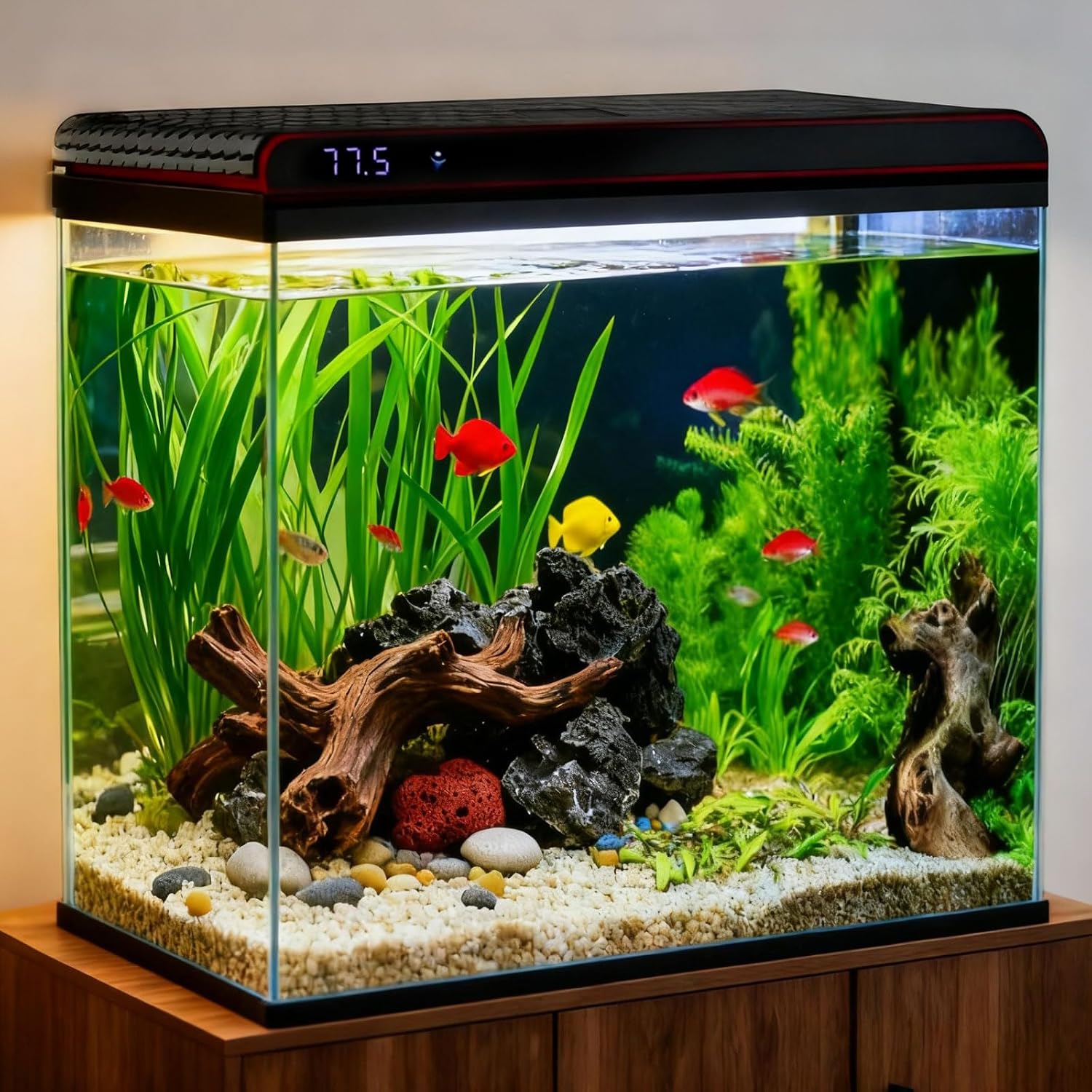
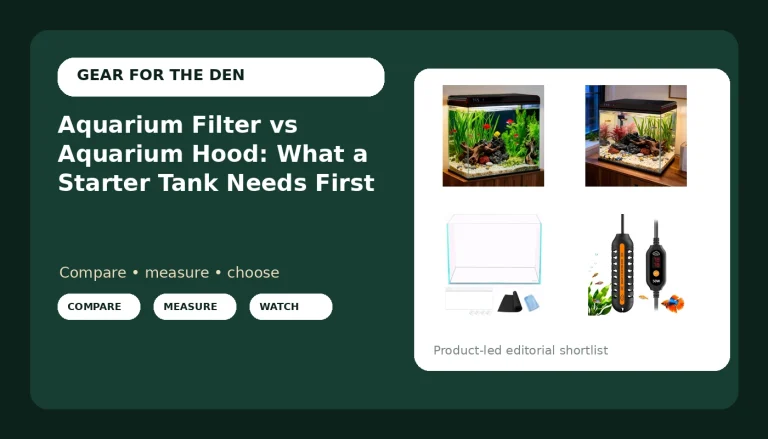
Coospider 20 Gallon Glass Fish Tank, Aquarium Starter Kit, Simple Self-Cleaning Aquarium with 3-Color LED Lights, with Quiet Filter Pump, with Temperature Monitoring for Fish, Shrimp, Kids Gift Ideas
The largest tank volume in this group, and one of the two kits that name a quiet filter pump, 3-color LED lighting, and temperature monitoring in the same box
The most expensive of the four, and 20 gallons means more substrate to buy and bigger water changes to carry
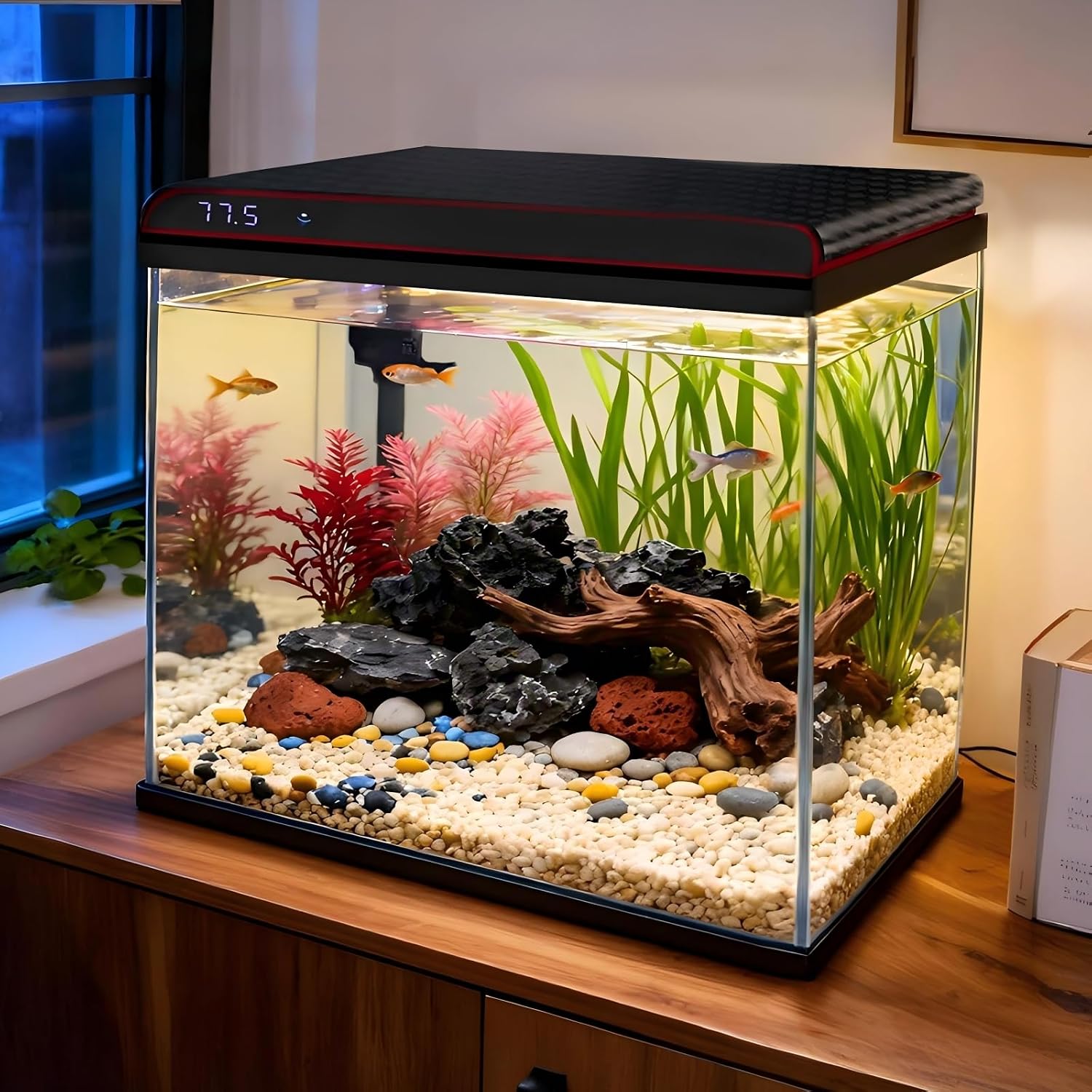
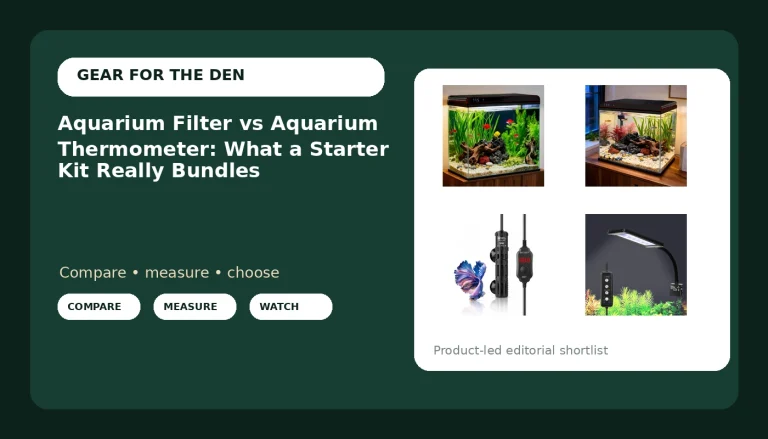
Coospider 10 Gallon Glass Fish Tank, Aquarium Starter Kit, Simple Self-Cleaning Aquarium with 3-Color LED Lights, Quiet Filter Pump, Temperature Monitoring for Fish, Shrimp, Kids Gift Ideas
Same kit contents as the 20 gallon version in a smaller tank volume, which suits a desk, a classroom, or a kid's room
Costs more than the rimless tank here while using standard glass, so your money goes to the electronics rather than the aquarium

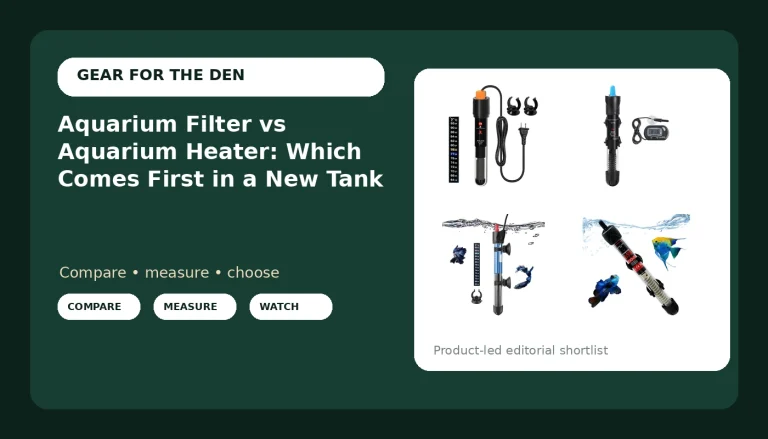
LANDEN Aquarium Tall 10 Gallon Ultra Clear Glass Rimless Fish Tank 30T
Rimless ultra clear glass in a tall 10 gallon footprint, the display tank of the group
No filter pump, no light, and no heater in the listing, so the entire filtration and treatment budget lands on you
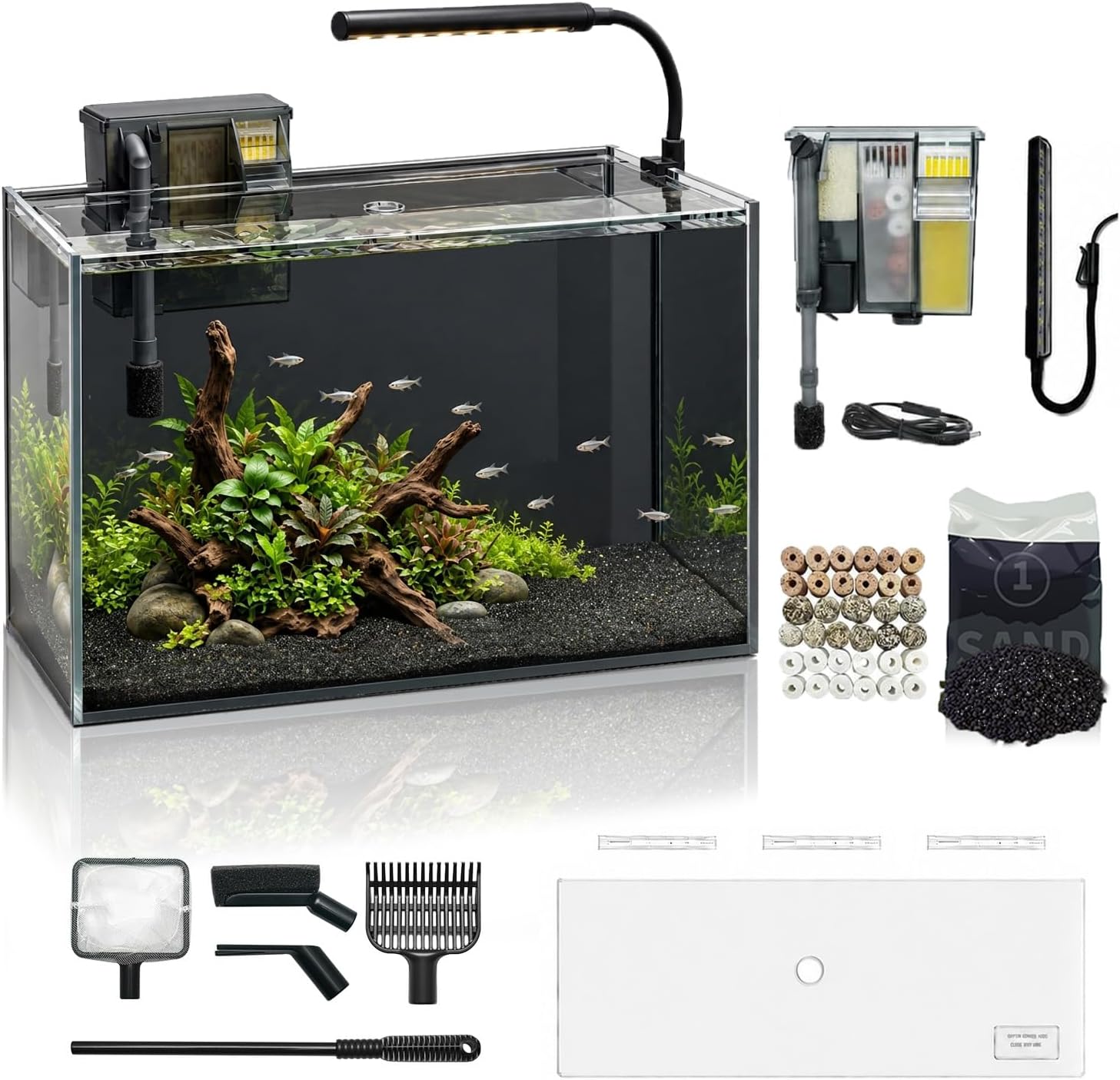
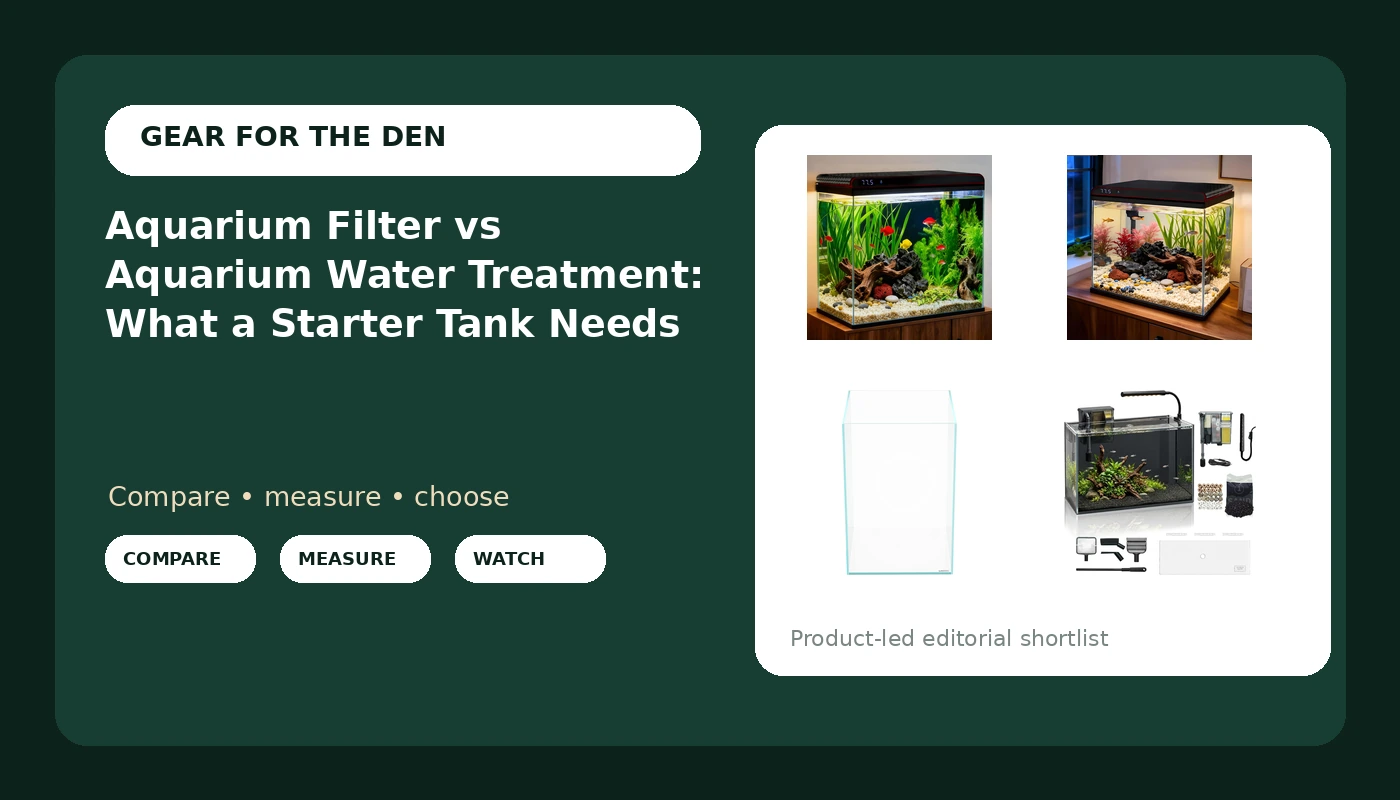
10 Gallon Fish Tank Set Glass Dark Aquarium Kit Starter Set
The least expensive way into the hobby here, and the dark glass and kit format keep the initial shopping list short
The listing names the fewest extras, so budget for a filter, a light, and a heater on top of the tank
Prices and availability may change.
Why the aquarium filter vs aquarium water treatment debate misses the point
People frame this as a choice because both products are sold to fix the same complaint: water that looks wrong. The difference between aquarium filter and aquarium water treatment is the difference between a machine and a bottle. A filter is hardware. It pulls tank water through a mechanical filtration stage that traps debris, and it holds the media where nitrifying bacteria colonize. A water treatment is a liquid or powder you measure into a bucket or straight into the tank. It strips chlorine and chloramine, binds heavy metals, and in some formulas adds a starter culture of bacteria to speed up the cycle.
Neither one covers for the other. Run a filter on untreated tap water and you kill the bacteria colony you spent three weeks growing. Treat the water perfectly and skip the filter, and uneaten food and waste still settle into the substrate grain until ammonia climbs. That is the whole argument, and it is not really an argument at all.
Search results for aquarium water treatment vs aquarium filter make it worse, because half of them are written by people selling one product or the other. A filter company will tell you that media is the answer to every water problem. A treatment brand will tell you that a bottle fixes what the pump misses. The honest version is that they operate in different lanes, and your tank needs a resident in both.
How I evaluate a starter aquarium kit
When I compare starter kits, the box contents matter more than the glass. Four things decide whether a kit is a bargain or a down payment. First, tank volume: a 10 gallon tank is far less forgiving of a missed water change than a 20 gallon, because the same amount of waste is diluted into half the water. Second, whether a filter pump is included, and whether the listing tells you anything about its flow rate. Third, the light: a 3-color LED array is not a plant-growing fixture, but it tells you the manufacturer thought about viewing, and the kelvin rating matters if you ever want live plants. Fourth, whether a heater is included, and if it is, the thermostat range it can hold.
None of the four tanks here names a heater in its listing, which is worth knowing before you assume that "starter kit" means "everything." In a room that stays warm, a betta or a school of white cloud minnows can manage without one. In a cold room, you are buying a heater separately no matter which box you choose, so budget for it.
Beyond the contents, I look at the shape of the tank and what it asks of you later. A rimless tank needs a level stand and a little more care with the water line. A tall tank gives you more viewing height for the same tank volume. Neither is better, but they suit different rooms and different keepers.
Filtration stages: what the pump in the box actually does
A filter does three jobs, and only one of them is about clarity. Mechanical filtration catches particles: fish waste, uneaten food, decaying plant matter. Chemical filtration, usually carbon, pulls discoloration and odor out of the water. Biological filtration is the important one. Beneficial bacteria colonize the media and convert ammonia into nitrite and then into nitrate, which you remove with water changes.
The spec that tells you whether a filter can keep up is flow rate, usually published in gallons per hour. The old rule of thumb is to turn the tank volume over four to six times per hour, which means a 20 gallon tank wants something in the neighborhood of 80 to 120 gallons per hour. A 10 gallon tank can get away with less, and that is one reason small kits are popular: the pump does not have to work as hard.
Wattage is the other number worth checking, mostly because it predicts noise and heat. A quiet filter pump in a starter kit is usually a small internal unit, and those run warm, which is a mild plus in a cold room and a mild minus in a heat wave. Whichever kit you buy, plan on rinsing mechanical media in old tank water rather than replacing cartridges on a schedule. Replacing media throws away the bacteria you need.
Water treatment: the chemistry half of the pair
Water treatment is the half of the pair people skip because the bottle is boring. A basic dechlorinator costs less than a bag of gravel and it takes about ten seconds to dose. What it buys you is a tank that does not kill its own bacteria on water change day. Municipal water carries chlorine or chloramine, and both will wipe out a filter's bacterial colony if you pour untreated water straight in.
Beyond dechlorination, treatments do a few other jobs. Some bind heavy metals that come through older pipes. Some detoxify ammonia temporarily while a tank finishes cycling, which is genuinely useful if you have fish in the tank already. Some are bottled bacteria cultures that shorten the cycle from weeks to days. None of them remove debris from the water column, and none of them replace the filtration stage that does.
The practical way to think about cost: a filter is a one-time purchase that you maintain, and water treatment is a consumable you rebuy. A bottle of dechlorinator is the cheapest line item in the entire hobby, and skipping it is the fastest way to lose a tank.
The tanks that make you buy both separately
Two of the four tanks here are glass-first purchases. The LANDEN Aquarium Tall 10 Gallon Ultra Clear Glass Rimless Fish Tank 30T is the display piece of the group: rimless, ultra clear glass, and a tall footprint that shows off a planted scape or a single betta. What it does not include is a filter pump, a light, or a heater. If you choose it, you are choosing the tank and then building the system around it, which is exactly what an experienced keeper wants and exactly what a first-timer should think twice about.
The 10 Gallon Fish Tank Set Glass Dark Aquarium Kit Starter Set sits between the two approaches. It is a glass kit with a dark tint, and the listing names the fewest extras of the four, so it is best read as a tank and a lid with a shorter shopping list. You will still be buying a filter and a treatment, but the entry price leaves room in the budget for both.
Neither of these is a bad buy. They are just the options that put the aquarium filter or aquarium water treatment decision back in your hands instead of making it for you.
Why a filter pump in the box decides the purchase
The two Coospider kits are the ones that arrive mostly assembled. The Coospider 20 Gallon Glass Fish Tank starter kit names a quiet filter pump, 3-color LED lights, and temperature monitoring in the box, and the Coospider 10 Gallon Glass Fish Tank is the same package in a smaller tank volume. For a beginner, that combination removes three separate purchases and three separate chances to buy the wrong thing.
What the listings do not publish is wattage or flow rate, and those are the numbers that decide how well the pump handles a given tank volume. A 20 gallon tank with a pump rated for a 10 gallon tank is a slow-motion algae problem, so it is worth checking the flow rate in gallons per hour before you commit, or asking the seller directly. The temperature monitoring is a nice touch for a shrimp tank or a nursery, where a swing of a few degrees matters more than it does for a hardy community fish.
The trade-off is price and glass. You pay more for the electronics, and the glass is standard rather than ultra clear. If your priority is a clean rimless look with the best glass in the group, the LANDEN is the better tank. If your priority is a system that works the day it arrives, the Coospider kits are the ones that show up ready.
What the specs tell you before you buy
The aquarium filter vs aquarium water treatment split comes down to a short list of numbers worth more than any marketing line on a product page.
Tank volume sets everything else. Ten gallons is the practical floor for a beginner, and 20 gallons is meaningfully easier to keep stable because the water chemistry moves more slowly.
Flow rate, in gallons per hour, tells you whether the included pump can turn the tank over often enough. Compare it to the tank volume and aim for four to six turns per hour.
Wattage matters for running cost and for how warm the pump runs. It also hints at noise, though only a review or a video will tell you the truth on that.
Kelvin rating applies to the light. A 3-color LED array is a viewing light first and a plant light second. If you want live plants, check the kelvin rating and the actual output rather than the color count.
Thermostat range applies if you add a heater. Most budget heaters hold a range of a few degrees, and the tank volume determines how much wattage you need to hold it.
Substrate grain is the last one. Fine grains suit rooted plants and look tidy but compact over time. Coarse grains are easier to vacuum. Either way, a new tank needs enough of it to give bacteria somewhere to live beyond the filter media.
Do you need a water test kit before the tank?
Yes, and it belongs in the budget next to the dechlorinator. A liquid test kit for ammonia, nitrite, and nitrate tells you whether the filter is actually cycled, and it is the only way to know whether a cloudy tank is a bacterial bloom, a mechanical debris problem, or a chemistry problem. Without one, you are guessing, and guessing is how beginners end up dosing a treatment they did not need or replacing filter media they should have kept.
The order of operations for a new tank is simple. Set it up with treated water, run the filter, test every couple of days, and do water changes when nitrate climbs. Add fish slowly. That is the entire method, and it holds whether you bought a 10 gallon kit with a pump already in the box or a rimless tank you are building out piece by piece.
What I'm watching next
The self-cleaning claims on starter kits are the thing I want more detail on. Every kit in this group that mentions filtration also mentions a self-cleaning feature of some kind, and the term means different things to different manufacturers. In some designs it refers to a drain or a removable tray that makes water changes tidier. In others it is a marketing label on a standard pump. Until a listing spells out the mechanism, treat the phrase as a convenience claim rather than a maintenance-free promise.
The other trend worth watching is the rimless ultra clear tank moving down in price. The LANDEN shows how much display quality you can get in a 10 gallon footprint, and if that glass keeps getting cheaper, more beginners will start with a bare tank and buy filtration separately. That is a good outcome for the hobby, as long as those keepers understand the aquarium filter vs aquarium water treatment balance and budget for the filter first.