The aquarium filter vs aquarium hood question is the first fork in the road for most new freshwater keepers, and it usually arrives framed as a budget fight: there is the quoted price in the pot, not everything fits, so which box gets opened first? The honest answer is that the two do different jobs, and the order you buy them in depends on whether your problem is water quality or light. Filtration keeps fish alive. A hood keeps the tank contained, stable, and lit. One is biology, the other is hardware, and only one of those is genuinely optional in week one.
The best first purchase for most people is the Coospider 20 Gallon Glass Fish Tank starter kit, because it bundles a filter pump, 3-color LED lighting, and temperature monitoring in a single box, and its larger tank volume is far more forgiving of a beginner's mistakes than a 10 gallon tank. That said, the rimless glass option is the better buy for a keeper who already knows which filter and which light they want, and the small heater on this list covers the gap that every kit leaves open.
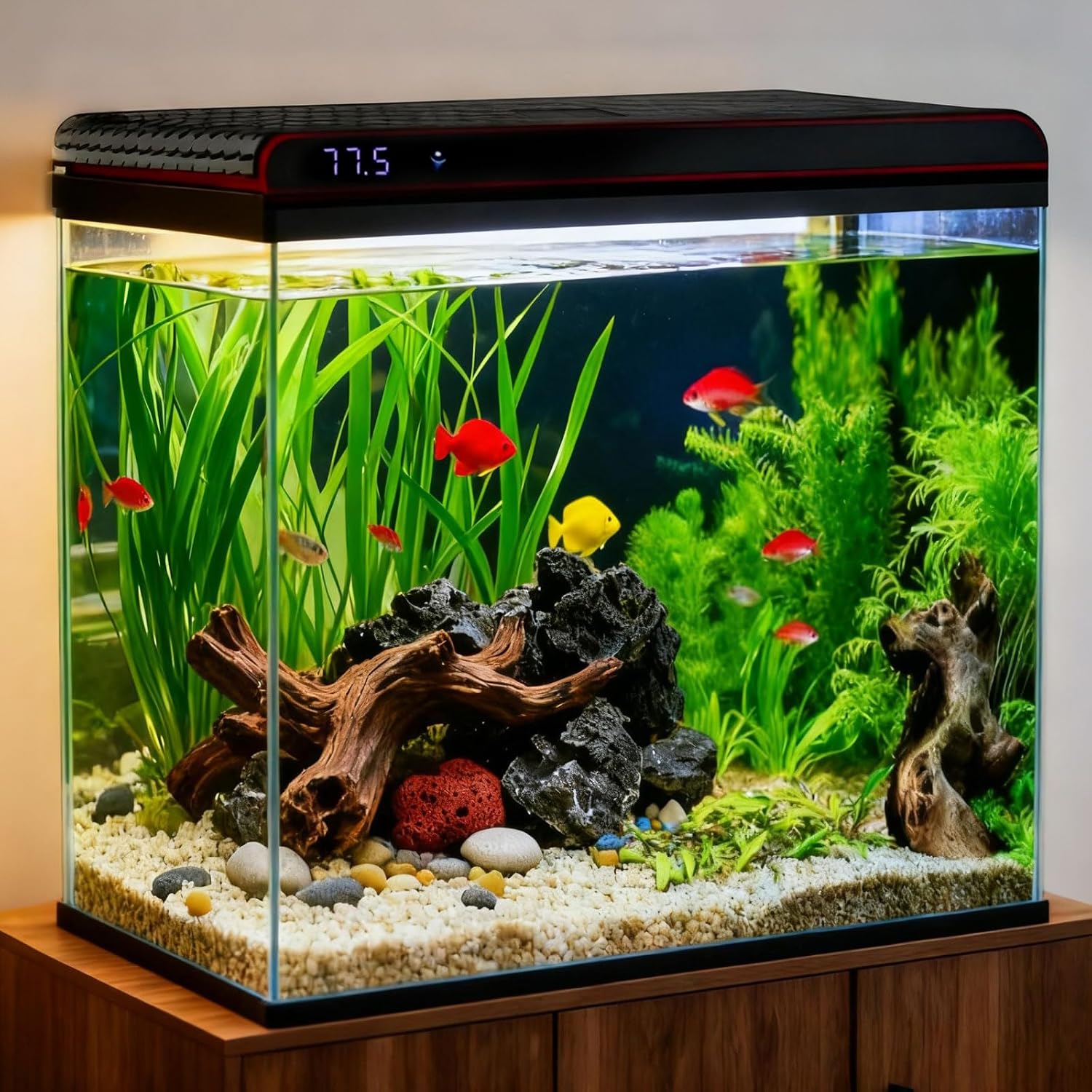
Coospider 20 Gallon Glass Fish Tank, Aquarium Starter Kit
Filter pump, 3-color LED lights, and temperature monitoring in one box, plus 20 gallons of forgiving tank volume
The bundled pump limits later upgrades, and "self-cleaning" oversells routine maintenance
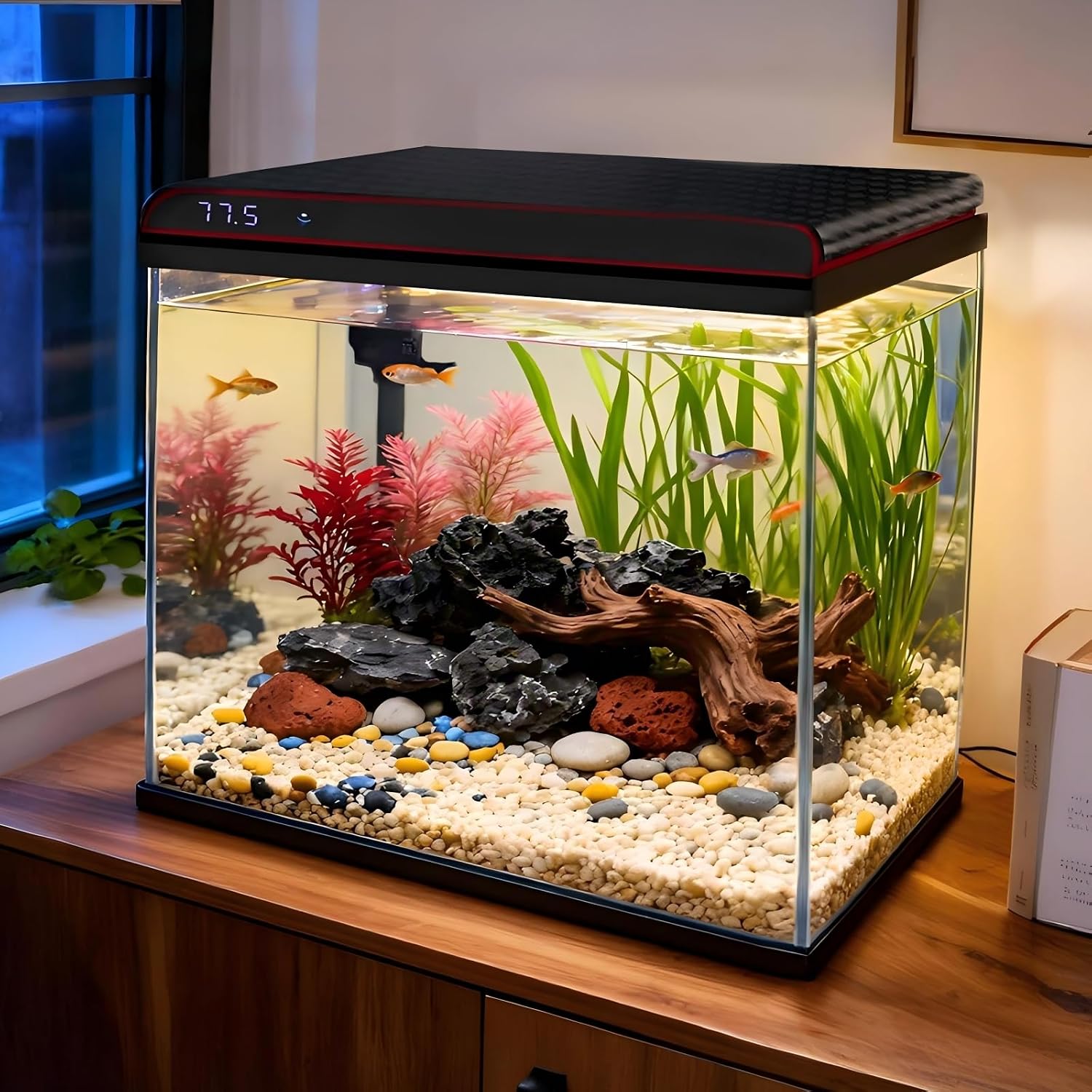
Coospider 10 Gallon Glass Fish Tank, Aquarium Starter Kit
Same bundle in a smaller footprint, easy to place on a desk or in a kid's room
Less water volume means faster chemistry swings, and no heater is included
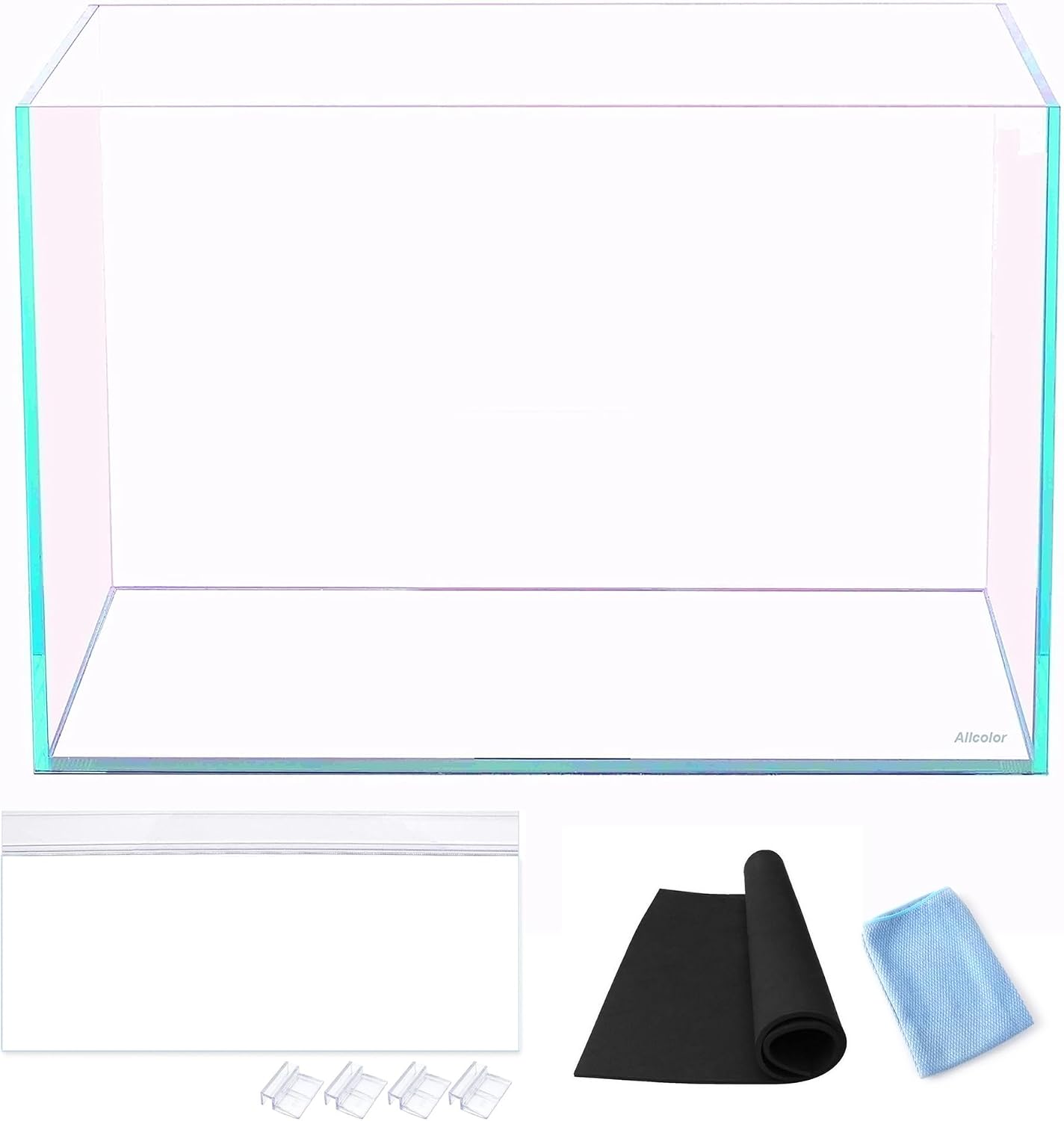
Low Iron Glass Ultra Clear Rimless Aquarium Tank, Classic Silhouette (10Gal)
Clearest glass on this list, no trim, and total freedom over the light and filter you add
No filter, no light, no lid, so every other system is a separate purchase
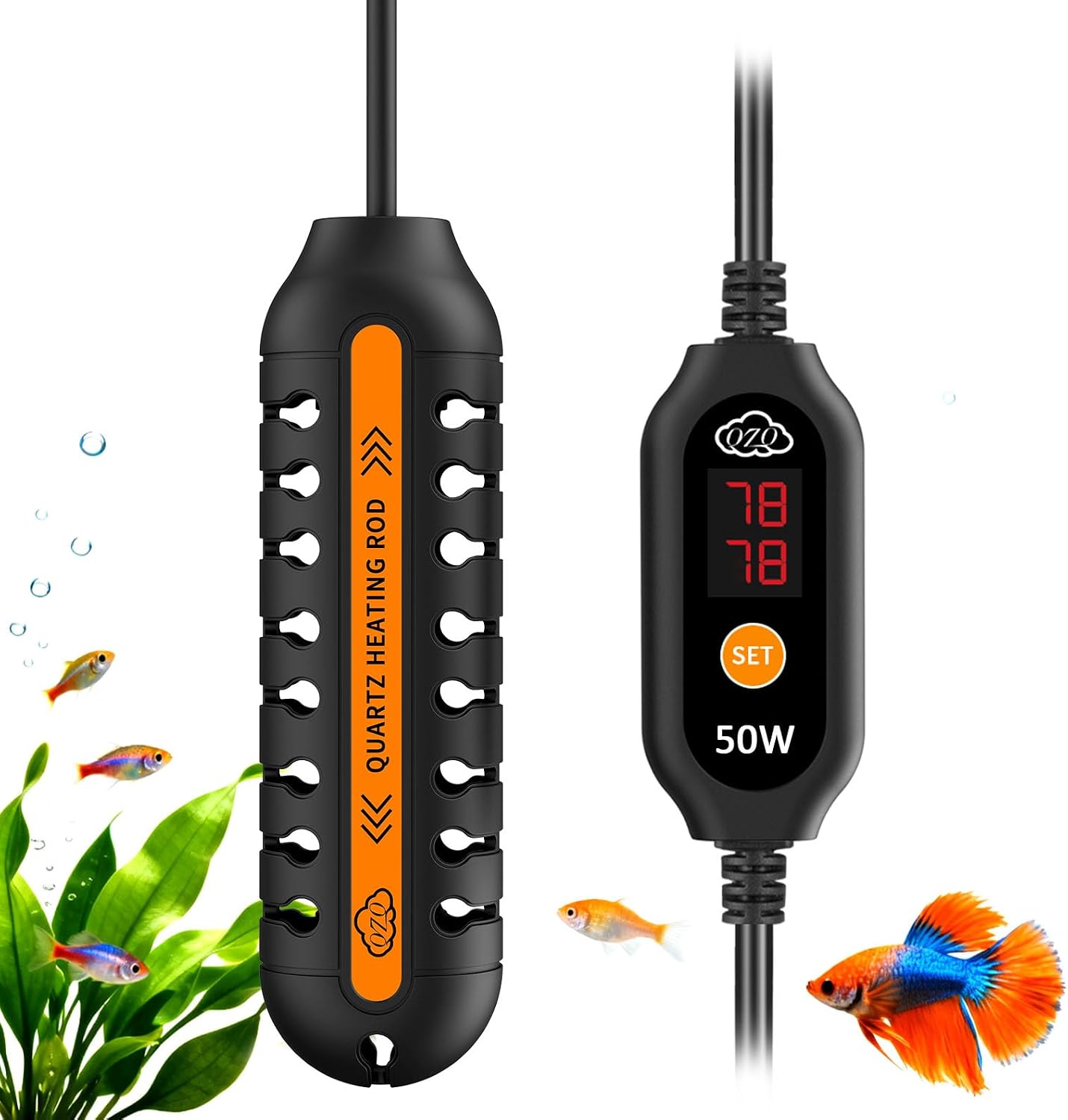
QZQ Aquarium Heater, 50W Adjustable Fish Tank Heater with Digital Display
Adjustable setpoint with a readable display solves the cold-room problem the kits ignore
50W suits small tanks only, and it is neither a filter nor a light
Prices and availability may change.
How I judge a freshwater setup
Every setup here gets judged on the same six things, and none of them are marketing words.
Tank volume comes first, because volume is stability. A larger body of water dilutes waste, slows temperature swings, and gives a beginner room to make a mistake without killing anything.
Filtration stage comes second. Mechanical filtration traps particles, chemical filtration removes dissolved compounds, and biological filtration, the one that actually matters, houses the bacteria that convert ammonia into something less toxic. A kit that claims filtration but only moves water is not filtering.
Flow rate, quoted in gallons per hour, tells you whether a pump can turn the tank over often enough to keep waste moving toward the media.
Lighting matters more than most beginners expect, and the number that describes it is the kelvin rating, which sets how white or blue the output looks and whether plants get a usable spectrum.
Heat is the fourth system, and it is usually the one people forget. Wattage and thermostat range decide whether a heater can hold a steady temperature in a cold room.
Substrate grain is the small detail that changes everything downstream. Fine grains suit rooted plants and shrimp, coarse gravel suits a quick siphon, and neither choice fixes a missing filter.
I do not have a lab bench. What I have is a list of specs, a sense of how these pieces interact, and no patience for a listing that hides its flow rate.
Aquarium filter vs aquarium hood: which comes first?
The difference between aquarium filter and aquarium hood is simple once you strip the packaging away. A filter processes water. A hood sits on top of it.
A filter runs water through media, usually in three stages, and returns it to the tank. It is the system that makes fishkeeping possible in a closed glass box. Without it, ammonia from fish waste and uneaten food climbs until the fish suffer. Nothing else in this hobby compensates for a missing filter. Not plants, not water changes alone, not a bigger tank.
A hood, or a lid with a light built in, does a different set of jobs. It slows evaporation, which matters more than people think, because evaporation concentrates everything dissolved in the water. It keeps jumpers in the tank, and shrimp keepers learn that lesson the hard way. It holds a light fixture above the water at a fixed height. It also keeps dust, pet hair, and the occasional toy out of the tank, which is worth more than it sounds in a house with animals.
So if the question is which one a tank cannot live without, the filter wins without much of a fight. A tank with a filter and no hood is a working aquarium with an evaporation problem. A tank with a hood and no filter is a glass box of increasingly bad water.
The exception is a planted tank. If you are growing plants that need serious light, the hood stops being optional and becomes part of the life support, because light is the plant's food.
Starter kits: filtration and lighting in one box
This is where the Coospider kits earn their place. The 20 gallon version is a glass tank with a quiet filter pump, 3-color LED lights, and temperature monitoring built into the package. That combination answers both halves of the aquarium filter vs aquarium hood question in one purchase, which is exactly what a first-time keeper needs.
The case for the 20 gallon kit is tank volume. Twenty gallons is the size where a beginner's mistakes stop being fatal. Miss a water change, overfeed once, let the room get warm on a July afternoon, and a 20 gallon tank absorbs it. The 10 gallon version is the same bundle in a smaller footprint, and it is the better pick for a desk, a dorm room, or a kid's bedroom, but the smaller tank volume cuts both ways. Less water means chemistry moves faster, and every error is amplified.
Two honest criticisms. First, bundled filtration is fixed filtration. The pump that comes in a starter kit is sized for the tank and the stock it ships with, and once you add more fish or a heavier bioload you may want a bigger filter, and the kit does not always make that upgrade graceful.
Second, the phrase self-cleaning deserves skepticism. In a starter kit it usually means the design makes water changes and gravel vacuuming easier, not that the tank cleans itself. The biological filtration stage still needs you to remove waste, and the filter media still needs rinsing in old tank water.
Neither kit includes a heater, which matters in any room that drops below about 72 degrees at night. That is the gap the last two products on this list fill.
The rimless route: buy the glass, choose the rest
The Low Iron Glass Ultra Clear Rimless Aquarium Tank is the opposite approach. You get a 10 gallon tank made from low iron glass, which means less of the green tint that ordinary glass adds to the view, and a rimless, classic silhouette with no black plastic frame.
What you do not get is a filter, a light, or a lid. Every system that the Coospider kits bundle has to be bought separately, and the bill adds up fast. This is the route for a keeper who already knows what they want: a specific light with a specific kelvin rating, a filter sized to a specific flow rate, and a scape built around a chosen substrate grain rather than whatever comes in the box.
The rimless design has real trade-offs beyond price. No lid means faster evaporation, so top-offs become a routine rather than an occasional chore, and evaporation concentrates minerals in the water. No lid also means no barrier for jumpers, and a rimless tank with an open top looks great right up until a shrimp or a small fish is on the floor.
The clarity is the payoff. Low iron glass is noticeably clearer than standard glass, and in a small tank where you sit close to the front pane, that difference is the whole point of paying more. If you keep shrimp, or you are building a planted scape you plan to photograph, the glass is worth it. If you want a tank that runs itself, it is the wrong purchase.
Heaters: the third system that isn't in the question
The QZQ Aquarium Heater is a 50W adjustable unit with a digital display, and it exists because the aquarium filter vs aquarium hood framing leaves out the system that fails first in most homes.
Tropical fish need stable temperature, and a room that swings with the seasons will swing the tank with it. The usual rule of thumb for heater sizing is roughly 2.5 to 5 watts per gallon, which puts a 50W heater in the small tank range. That makes it a sensible match for either of the 10 gallon setups here, and for the 20 gallon kit in a room that stays warm.
The adjustable setpoint is the feature that matters. A preset heater is a fixed bet on one temperature, and an adjustable one lets you dial in a number and check it against a thermometer. The digital display makes the setpoint visible without a separate tool, which is a small convenience that becomes a real one when you are troubleshooting.
Criticisms, because there are two. A 50W heater is not the right call for a large tank, no matter how good the display looks, because wattage has to match tank volume. And a heater does not replace filtration or lighting, so it never answers the original question. It just sits underneath it, quietly keeping the water where the fish need it.
Buy the heater with the tank, not after the first cold night.
What the specs actually tell you
When you compare these four on paper, the useful numbers are not the marketing ones. Here is what to look for and why.
Tank volume sets the ceiling on everything else. Twenty gallons holds more fish, more plants, and more mistakes than ten. It also takes more space and more water to change.
Flow rate, in gallons per hour, tells you how many times the filter turns the tank over in an hour. A pump that moves water without enough turnover leaves waste sitting on the substrate.
Filtration stage tells you what the media is doing. Mechanical and chemical stages are easy to see. The biological stage is invisible and is the one that keeps fish alive, so a kit that does not give bacteria somewhere to live is a kit with a problem.
Kelvin rating describes the color of the light, and it decides whether the tank looks like bright noon or blue dusk. Plants care about spectrum too, and a 3-color LED is a fixed choice rather than a tunable one.
Wattage and thermostat range are the heater's two numbers. Wattage has to match tank volume, and the thermostat range has to cover the temperature your fish actually need.
Substrate grain changes how you clean the tank and what you can plant. Fine grain holds root feeders. Coarse gravel siphons clean in seconds.
A starter kit gives you a working version of most of these. A rimless tank gives you almost none of them and asks you to choose. Neither is wrong, but you should know which one you are buying.
The trade-offs nobody lists
Here are the compromises that do not make it onto the product page.
A bundled kit trades flexibility for convenience. The pump, the light, and the tank are matched to each other, and that is a feature until the day you want more filtration. Upgrading a starter kit often means running a second filter alongside the built-in one, or accepting the flow rate you have.
A rimless tank trades convenience for control, and the cost of control is everything you have to buy afterward. The glass is the cheapest part of a rimless build, which is a sentence that surprises people every time.
The aquarium hood vs aquarium filter comparison also hides a lighting question. If the hood is just a lid, it is cheap and simple. If it carries the light, it becomes the most expensive piece of equipment on the tank, and the kelvin rating suddenly matters as much as the flow rate.
Heaters get undersized because wattage looks like a number you can save money on. It is not. An undersized heater runs constantly and still loses ground on a cold night.
Self-cleaning language sets an expectation that no tank meets. Every aquarium needs water changes, and every filter needs media rinsing. The design might make those chores easier, and that is a real benefit, but it is not the same as maintenance-free.
Finally, the kid-friendly framing on the starter kits is accurate but incomplete. A ten gallon tank in a child's room still needs an adult to handle water changes, test the water, and manage the heater. The kit lowers the barrier to entry. It does not remove the work.
Should you buy the filter or the hood first?
If you are choosing between an aquarium filter or aquarium hood as your next purchase and you only have the budget for one, buy the filter. That is the whole answer for a tank with fish already in it.
Here is the order that works for most people. Start with the tank and a filter. Add a heater if the room drops below about 72 degrees at night, which is most rooms in winter. Add the hood or light when you have the budget and a reason, either because evaporation is annoying you, because something in the tank keeps testing the floor, or because you want to grow plants.
There is one scenario where the hood comes first. If you are setting up a planted tank from scratch and you already have filtration sorted, the light is what limits growth, so the hood moves up the list. That is a narrow case, and it assumes the filter is handled.
For a beginner buying a first setup, the bundled route removes the ordering problem entirely. A Coospider kit with a filter pump, lighting, and temperature monitoring in the box gets you a running tank on day one, and you can add the QZQ heater to cover the cold months. The rimless tank is the pick for the keeper who already knows exactly which filter and which light they want, and who is willing to pay for the glass and then pay again for everything else.
What I'm watching next
The next thing worth watching in freshwater gear is filtration that fits inside the footprint of a small tank without stealing swimming space. Starter kits keep improving their bundled pumps, and rimless tanks keep pushing glass clarity, but the awkward middle is still the upgrade path: what do you do when a 10 gallon kit is running well and you want more filtration without more noise?
I am also watching heaters with better visible setpoints, because the digital display on the QZQ unit is the kind of small feature that prevents big problems. A heater you can read at a glance is a heater you will actually check.
Until then, the ranking in this comparison holds. Filter first, heat second, light third, and a hood when you have a reason for one.