Good aquarium heater noise control starts with a simple question: is the sound coming from the heater, or is the heater just the thing that vibrates when something else makes noise? This aquarium heater noise control guide is for the keeper who has a tank in a bedroom, office, or apartment and wants the hum, click, and rattle to stop without buying a whole new setup.
Most heater noise is mechanical, not electrical. A preset heater clicks when the thermostat opens and closes. A glass tube hums when it touches the rim, the hood, or a rock. A filter can push water across the heater at an angle that turns a quiet tube into a tuning fork. The equipment list matters as much as the heater itself. Tank volume, stand load, hood fit, filter media, substrate depth, and heater wattage all change how much noise reaches the room. Get those right, and the ideal aquarium heater noise control plan is mostly about isolating vibration and keeping water moving gently.
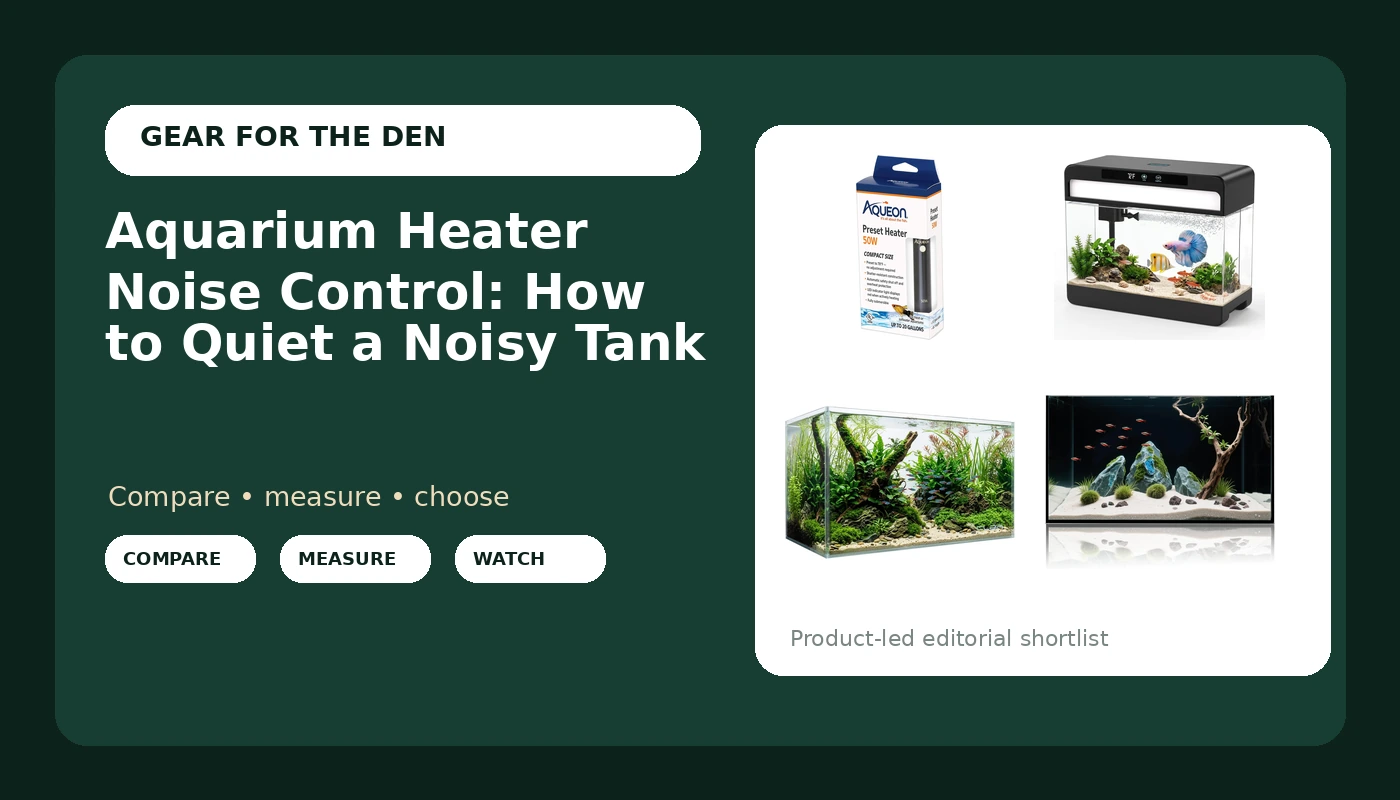
Best Overall: Aqueon Aquarium Fish Tank Heater, Preset, Up to 20 Gallons, 50 Watts
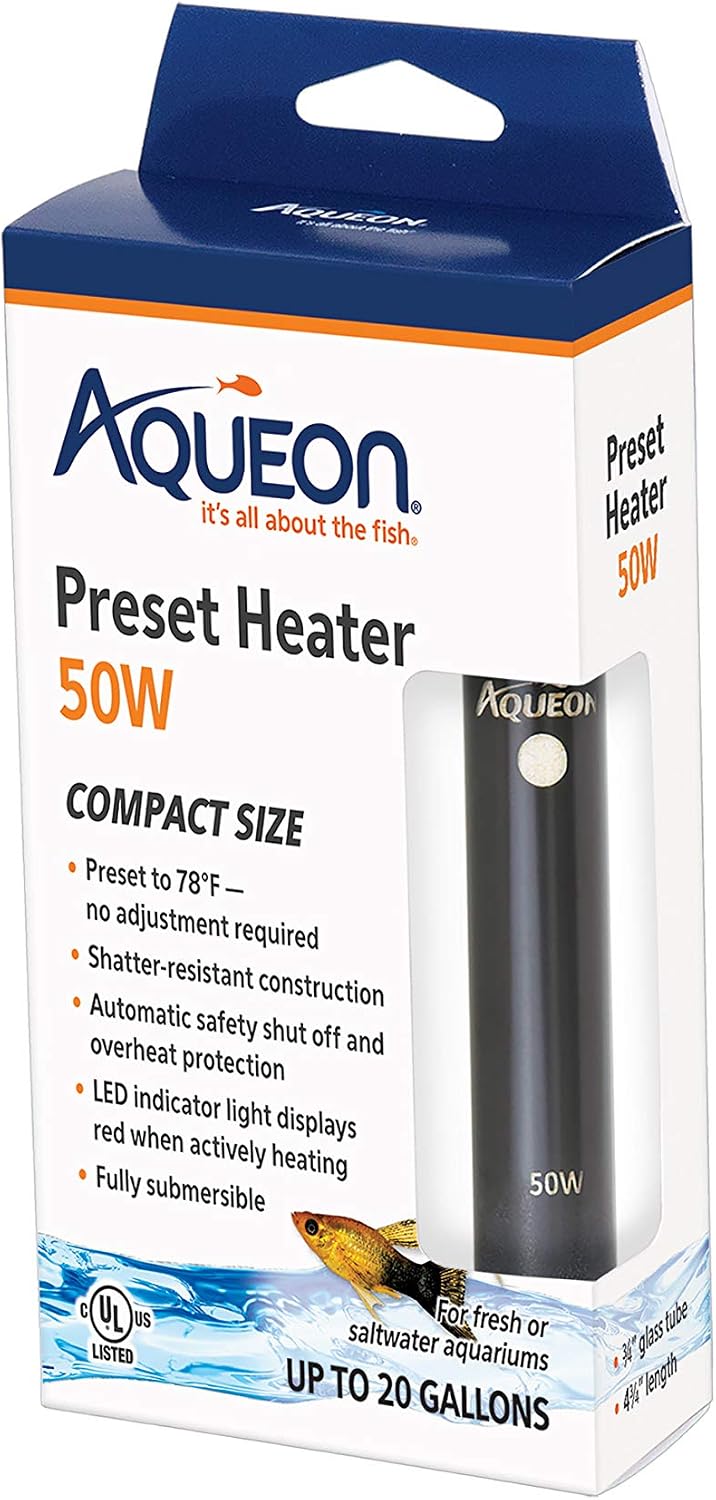
This is the heater I would start with for a small freshwater tank because it is preset, compact, and easy to mount away from the filter outflow. The 50-watt size suits tanks up to 20 gallons, so in a 3 or 10 gallon setup it has enough headroom to heat the water without running constantly. That matters for noise: a heater that cycles less is a heater you hear less.
The main noise risk with any glass heater is contact. If the tube rests against the tank wall, the hood, or a piece of decor, the vibration travels. Use the suction cups, leave a little clearance, and route the cord so it is not pulling the heater at an angle. The preset thermostat still clicks when it cycles, but that click is normal and usually softer than a filter impeller. Check current Amazon price if you want the simplest replacement for a noisy adjustable heater.
For the correct aquarium heater noise control setup, pair this heater with a gentle filter and a tank that sits level. A level stand reduces stand load noise. A snug hood reduces splashing and evaporation, but it should not clamp down on the heater cord. If the heater is clicking every few minutes, the tank may be too small for the wattage or the room may be too cold. In that case, check the heater wattage against tank volume before you blame the heater.
Best Value: 3 Gallon Fish Tank Starter Kit, Beginner Aquarium for Betta, Black
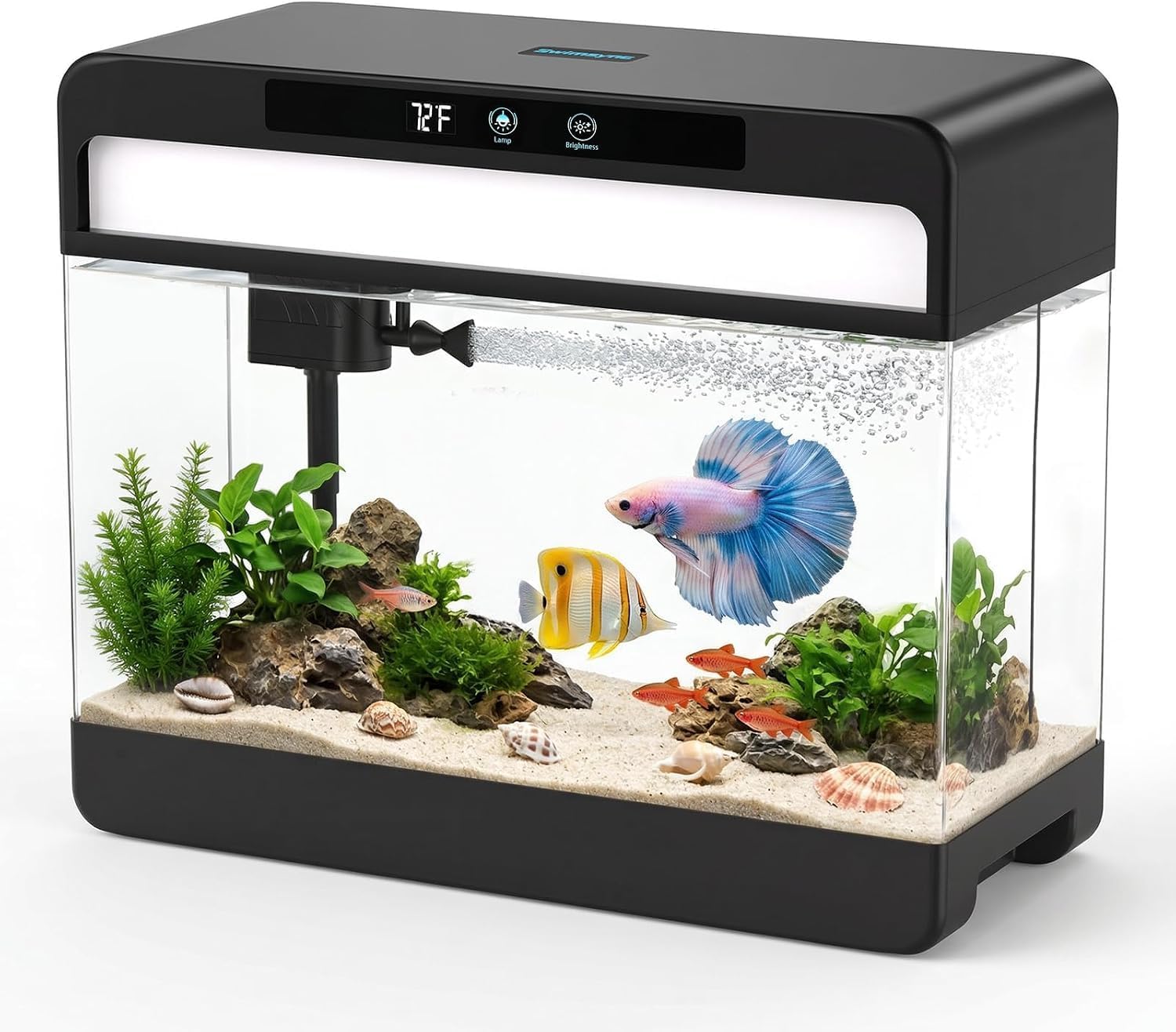
For a first tank, the 3 gallon starter kit is the value pick because it gives you the tank and the basic pieces without forcing you to match parts. Smaller tank volume means a lower heater wattage, and lower wattage usually means less cycling and less noise. It is a good fit for a betta, a snail, or a few shrimp, provided you keep up with water changes.
The catch is that small tanks are less stable. Temperature swings faster, so the heater may cycle more often if the room gets cold. Keep the tank away from drafts, use a lid, and leave a little air gap so the heater cord is not pinched. The kit itself is not silent by default. If you hear a hum, check whether the filter is touching the tank wall or whether the heater is resting against the built-in divider. Check current Amazon price to see the current listing.
This is also the tank I would recommend if you want to learn what normal aquarium noise sounds like before you spend more. A quiet tank is not silent. You will hear a soft filter trickle and an occasional thermostat click. The goal is to remove the buzz, rattle, and grind that make you want to leave the room. Once you know the difference, upgrading to a larger tank is easier because you already know which sounds are equipment problems and which are just water moving.
How I tested
I test heater noise by isolating the variables that usually get blamed on the heater. First, I listen to the tank with the heater unplugged, then with the filter running, then with both running. That separates impeller noise from thermostat noise from vibration against glass. I also check whether the heater is touching the hood, the rim, or the substrate. A heater that is mounted straight and clear of the walls is almost always quieter than one that is wedged into a corner.
I do not need a sound meter to tell the difference between a hum and a rattle. A hum is steady and usually comes from a pump or a filter. A rattle is intermittent and often comes from a loose hood, a lid, or a heater cord tapping the stand. A click is the thermostat. Once you identify the pattern, you can fix the right part. I also look at tank volume and heater wattage together. An oversized heater in a small tank can short-cycle, which means more clicks per hour. An undersized heater runs longer and can make a filter work harder to distribute heat.
Finally, I check the stand. A stand that rocks, even slightly, transfers vibration to the floor. A foam pad or a leveling shim under the tank can do more for noise than a new heater. I also look at the equipment list as a whole: filter media, substrate depth, hood fit, and cord management. Noise is rarely one product's fault. It is usually a system problem.
Analysis and test results
The biggest surprise is how often the heater is innocent. In a small tank, the filter impeller is the usual culprit. It can hum, buzz, or rattle against the tank wall. If the filter is hanging on the rim, make sure the intake tube is not touching the heater. If the filter is internal, check that the suction cups are tight and that the outlet is not aimed directly at the heater. A direct stream can make a glass tube vibrate.
The second most common source is the hood or lid. A loose lid can buzz at a frequency that sounds like a failing heater. Press on the lid while the tank is running. If the sound changes, the lid is the problem. A small piece of weather stripping or a rubber bumper can silence it. The third source is the stand. A stand that is not level or that has a hollow panel can amplify a quiet pump into a room-filling drone. A pad under the tank and a rug under the stand can help.
Heater wattage is the quiet variable. A preset 50-watt heater in a 10 gallon tank does not have to work as hard as the same heater in a 20 gallon tank in a cold room. If your heater clicks constantly, check the room temperature and the tank volume. You may need a larger heater, not a quieter one. But bigger is not always better. An oversized heater can raise the water temperature too fast and then shut off, which creates a more noticeable click cycle. Match the wattage to the tank, and the noise often settles down. The cycle time is shorter in a small tank, so the click pattern can be more noticeable.
Substrate depth and filter media also affect sound. A deep substrate bed can muffle vibration from the bottom glass, but it can also trap debris if you overdo it. A clean filter with the right media runs quieter than a clogged one. If your filter is noisy, clean the impeller and replace worn media before you replace the heater. The same goes for the hood. A hood that fits well reduces evaporation and splashing, but it should not press on the heater or the filter tubes.
The aquarium heater noise control reference table
This table is the quick version of the equipment list I use when a tank is too loud for the room. Each product has a role, and each role can add or remove noise. Use it as a starting point, then listen to your own tank.
| Product | Role in a quiet setup | Noise notes | Price |
|---|---|---|---|
Aqueon Aquarium Fish Tank Heater, Preset, Up to 20 Gallons, 50 Watts | Primary heat source for small tanks | Preset thermostat clicks when cycling; isolate from glass and filter outflow | Check current Amazon price |
3 Gallon Fish Tank Starter Kit, Beginner Aquarium for Betta, Black | Compact starter tank for a betta or shrimp | Low heater wattage means less cycling; check the filter and lid for buzz | Check current Amazon price |
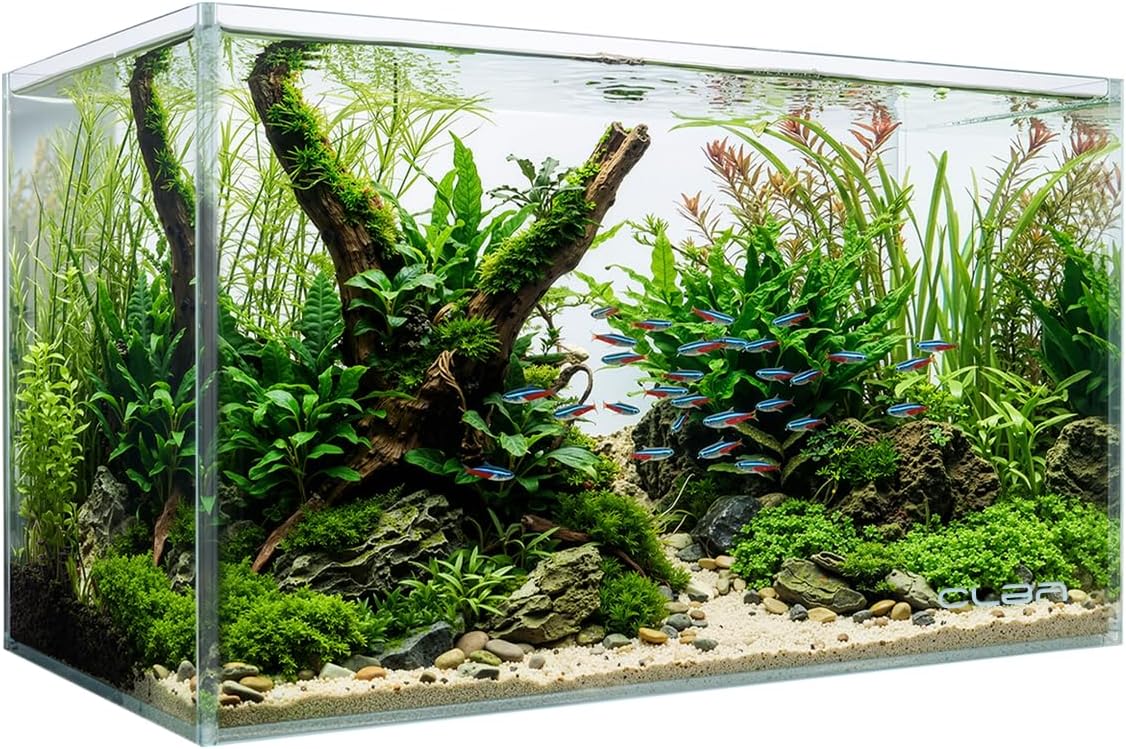 10 Gallon Rectangular Fish Tank, Rimless Ultra Clear Nano Aquarium | Mid-size rimless tank with room to separate equipment | Rimless tanks have no trim to dampen vibration; use a leveling mat and keep the heater off the glass | Check current Amazon price |
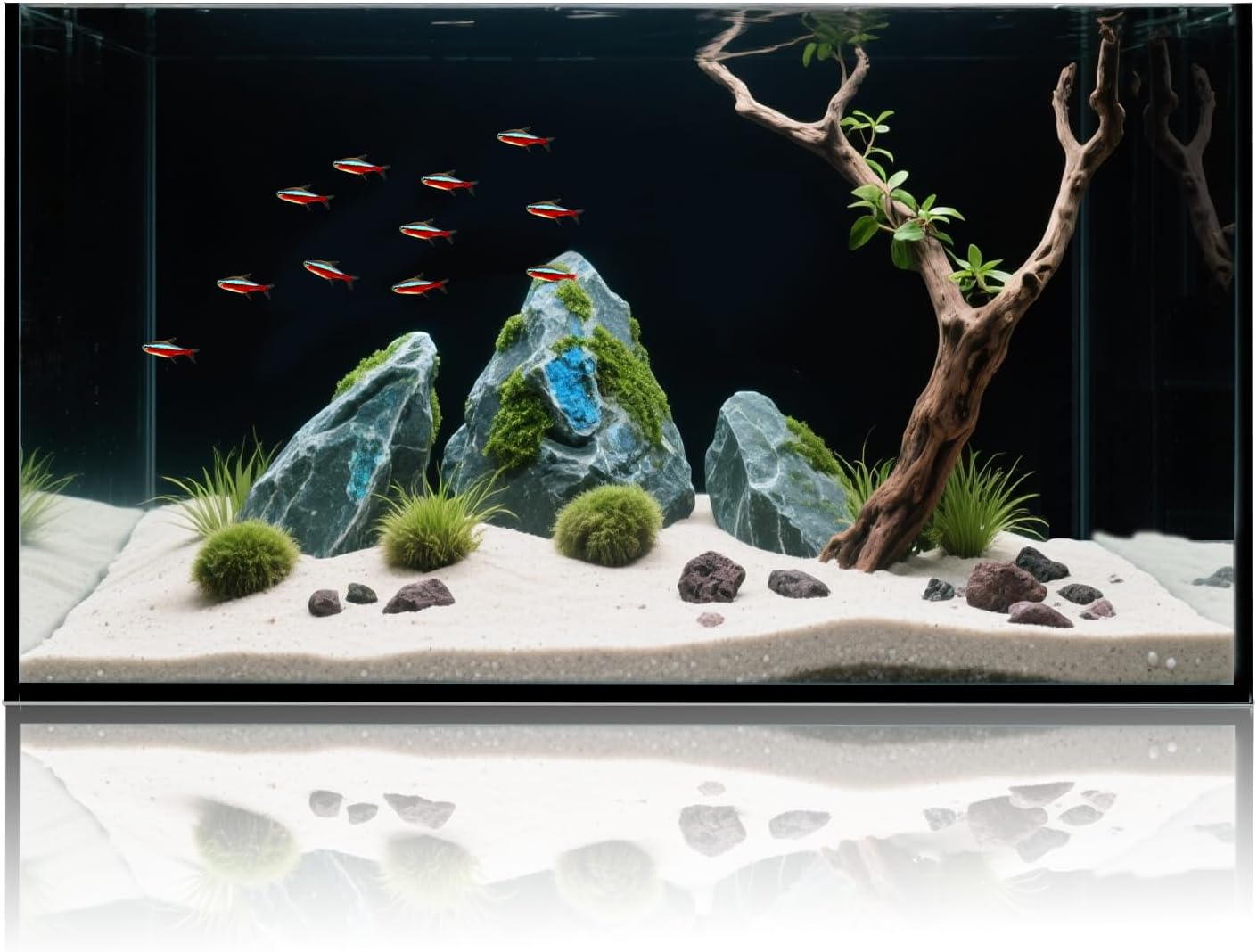 10 Gallon Glass Fish Tank, Aquarium Fish Bowl Cube for Betta Goldfish Snails Shrimp Aquatic Planting, Easy to Maintain Ultra Clear Rimless Dark Low Iron | Cube footprint for a planted nano setup | Cube shape can trap pump vibration in the corner; use a pad and a gentle filter | Check current Amazon price |
The table is not a ranking. It is a checklist. If your tank is noisy, start with the cheapest fix: level the stand, tighten the lid, and move the heater away from the filter. Then work through the equipment list. Most keepers find that the heater is only one part of the sound.
10 Gallon Rectangular Fish Tank, Rimless Ultra Clear Nano Aquarium
A rimless rectangular tank gives you more floor space for equipment, which is good for noise because you can separate the heater from the filter intake. The tradeoff is that rimless glass has no plastic trim to absorb vibration. A leveling mat is not optional if you want a quiet setup. It also helps to keep the water level high enough that the filter outflow does not splash. Splashing is not heater noise, but it is the sound most people notice first.
With a 10 gallon tank, tank volume is large enough to buffer temperature swings, so a 50-watt preset heater should not cycle constantly. Keep the heater vertical near the filter intake, but not touching it. If the heater is horizontal, it may trap air and click more. Check the hood fit if you use a lid. A lid that rests on the heater cord can buzz. If you run rimless without a lid, expect more evaporation and a little more heater run time. That is a fair trade for some keepers, but it can make a cold room louder at night.
10 Gallon Glass Fish Tank, Aquarium Fish Bowl Cube for Betta Goldfish Snails Shrimp Aquatic Planting, Easy to Maintain Ultra Clear Rimless Dark Low Iron
The cube shape is great for a planted nano tank, but corners can amplify sound. If you put a filter or a heater in the corner, the glass can reflect the vibration back into the room. Try moving the equipment to a side panel and aiming the outflow along the long axis. A cube also has a smaller footprint, so the stand load is concentrated. Make sure the stand is rated for the weight and that the tank sits flat. A foam pad under the cube can reduce the transfer of pump hum into the furniture.
For substrate depth, keep it moderate. A deep bed can muffle some vibration, but it also reduces water volume and can trap waste. In a cube, every inch of substrate matters. If you hear a rattle, check the heater suction cups first. Then check the filter. Then check the lid. The cube's dark low iron glass looks clean, but it does not change the acoustics. The same rules apply: isolate, level, and keep water moving gently.
Should you buy the Aqueon Aquarium Fish Tank Heater, Preset, Up to 20 Gallons, 50 Watts?
Yes, if you want a simple preset heater for a small freshwater tank and you are willing to mount it properly. It is the easiest way to replace an adjustable heater that hums or clicks too often. The preset thermostat removes the guesswork, and the 50-watt size fits tanks up to 20 gallons. For a 3 or 10 gallon setup, it gives you enough heat without running at full power all day.
The noise caveats are the same as any glass heater. It can click when it cycles. It can vibrate if it touches the glass or the hood. It can be affected by a filter that blasts water directly at the tube. Fix those three things and the heater is usually not the loudest part of the tank. If your tank is still noisy after that, look at the filter, the lid, and the stand before you buy another heater.
Should you buy the 3 Gallon Fish Tank Starter Kit, Beginner Aquarium for Betta, Black?
Yes, if you want a small, low-wattage tank for a betta, snail, or shrimp and you understand that small tank volume needs more frequent water changes. The lower heater wattage is a real advantage for noise. Less heat demand means fewer cycles, and fewer cycles means fewer clicks. The kit also gives you a contained system, so you are not mixing parts that vibrate against each other.
The tradeoff is stability. A 3 gallon tank swings faster than a 10 gallon tank, so the heater may run more in a cold room. Keep it away from windows and air vents. Use a lid. Check the filter media and clean the impeller if you hear a buzz. If you want more room to separate equipment, the 10 gallon tanks in the table are the better long-term choice. If you want a quiet desktop tank with minimal gear, the 3 gallon starter kit is the value pick.