Nobody buys a filter because they want a filter. You buy one because you want clear water, a stable nitrogen cycle, and fish that are still swimming next month. The problem is that an aquarium filter wide enough for a 20 gallon tank is wasted on a 10, and a pump that looks generous on the box can fall flat once you add substrate, plants, and a real bioload. This aquarium filter wide guide starts with the sizing math, then covers the two starter kits that ship with a quiet filter pump already in the box, then the heaters that hold those tanks steady through a cold room.
Two numbers drive everything: tank volume and flow rate. Tank volume sets your ceiling for fish, and flow rate, quoted in gallons per hour, sets how fast waste moves through each filtration stage. The old rule of thumb still holds, you want to turn the whole tank over four to five times an hour, which means roughly 40 to 50 gallons per hour at the outlet for a 10 gallon tank and 80 to 100 for a 20. The ideal aquarium filter wide enough to hit that target is not the same product at both sizes, which is why the kit you pick matters more than the brand of media you stuff into it.
Best Overall: Coospider 20 Gallon Glass Fish Tank Starter Kit
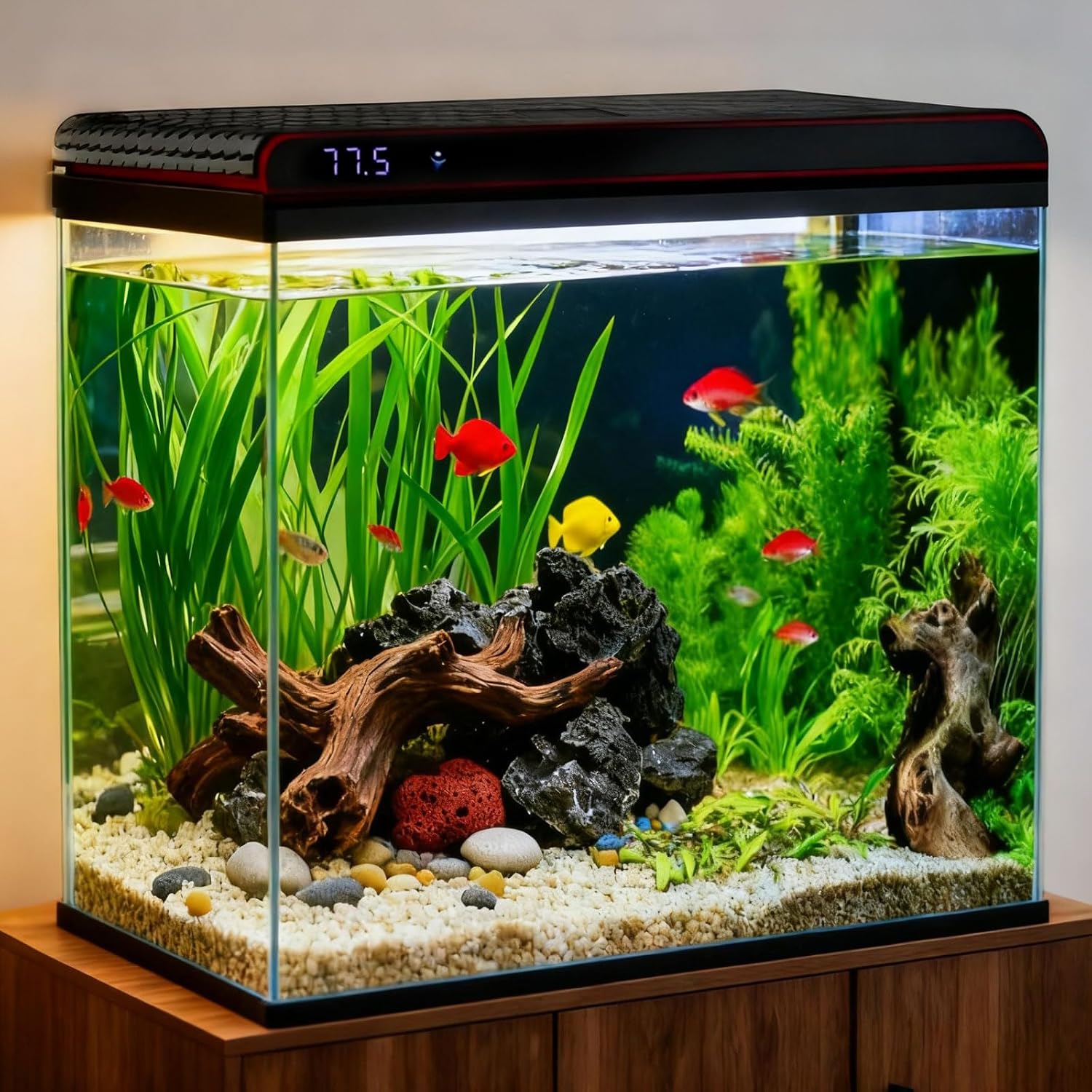
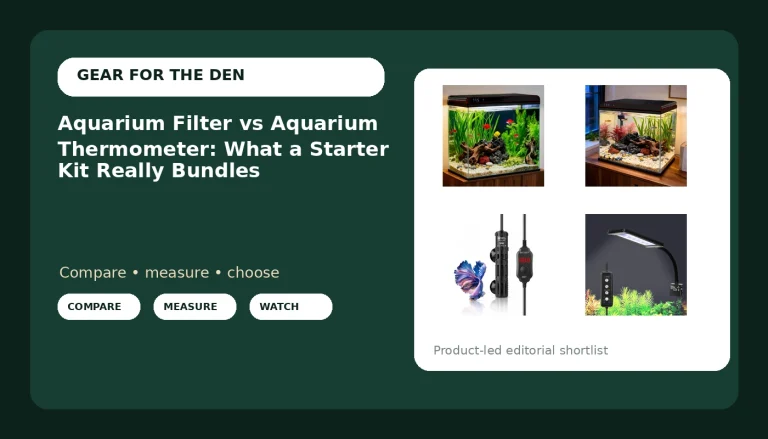
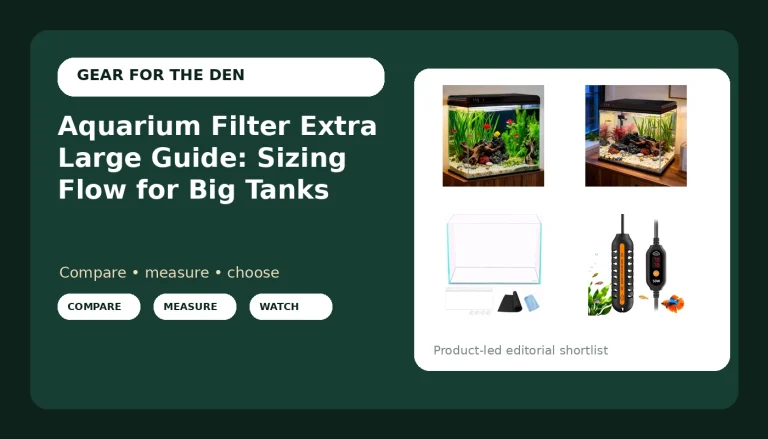
This is the tank I would hand to a family setting up their first aquarium: 20 gallons of glass, a quiet filter pump, 3-color LED lighting, built-in temperature monitoring, and a simple self-cleaning design that makes routine maintenance less of a production. The listing also pitches it as a kids gift idea, and 20 gallons is a reasonable place to start with children, because the extra water volume forgives small mistakes that a smaller tank punishes within a day.
Twenty gallons is the sweet spot for beginners for one unglamorous reason: dilution. Ammonia and nitrite from a couple of fish and one overfeeding spread through more water, so your bacteria colony has time to catch up. It also opens stocking that a 10 gallon cannot touch, a small school of tetras or rasboras, a centerpiece fish, and a cleanup crew, without running out of room halfway through the list.
The included pump handles mechanical and biological filtration if you keep media in it and rinse the sponge in tank water instead of under the tap. The listing does not publish a gallons per hour figure for the pump, so verify turnover yourself: hold a quart container under the outlet, time how long it takes to fill, and do the arithmetic. If you land under four turnovers an hour with the media loaded, that is your cue to clean the intake rather than buy a bigger pump.
What the kit does not include is a heater, and a 20 gallon tank in a room that drops below 70 degrees needs one. Pair it with the Hitop 50W adjustable glass heater or the adjustable submersible thermostat heater, both covered below. The 3-color LEDs are a viewing feature rather than a grow light, and the listing does not quote a kelvin rating, so treat them as display lighting and plan on a dedicated fixture later if you want plants to thrive.
Best Value: Coospider 10 Gallon Glass Fish Tank Starter Kit
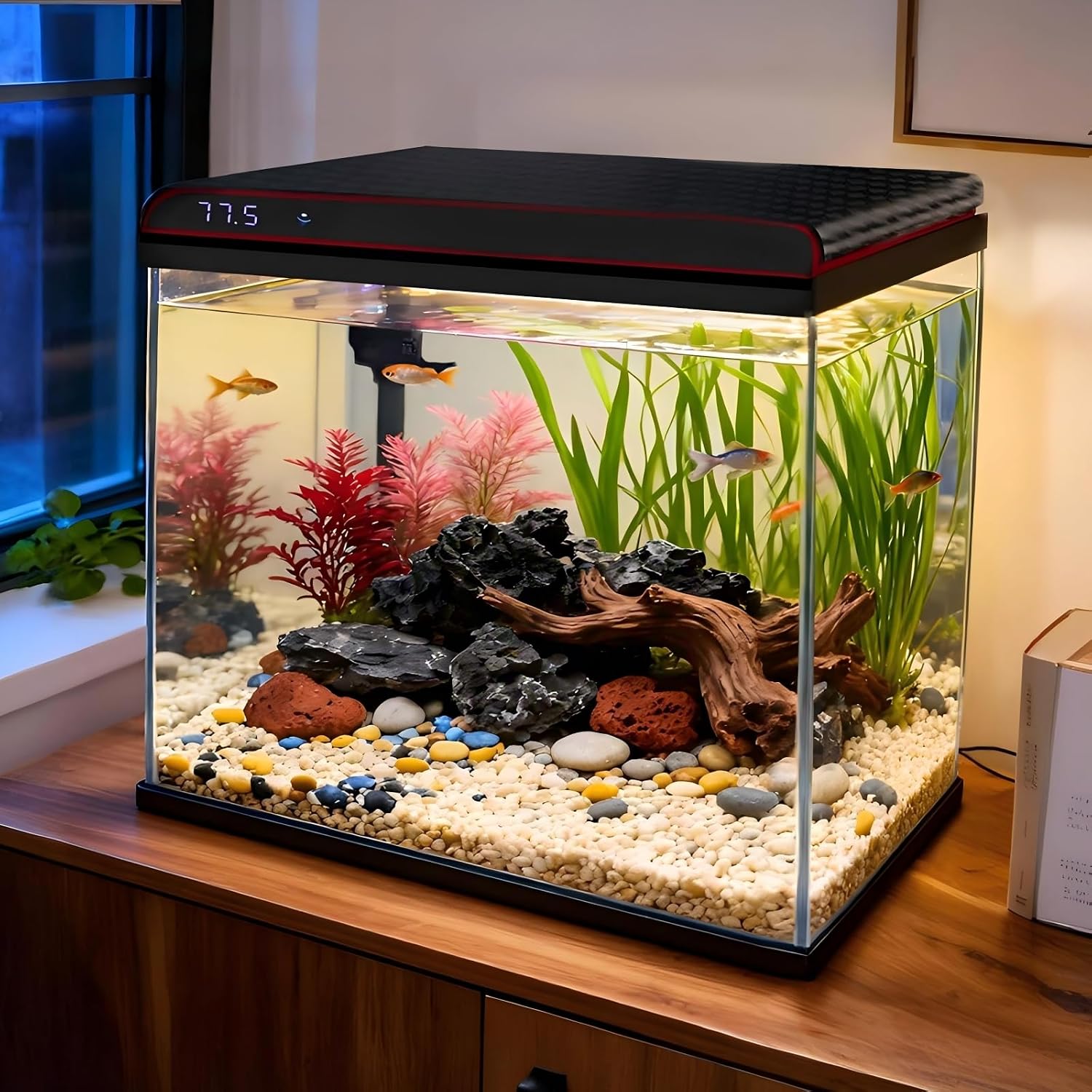
The 10 gallon version of the same kit carries an identical feature list, glass tank, quiet filter pump, 3-color LEDs, temperature monitoring, self-cleaning design, for less money, and it is the better buy if your space is a desk, a dorm room, a kitchen counter, or a kid's bedroom. A 10 gallon tank on a sturdy stand takes up roughly the footprint of a microwave, and it is the size most people actually start with.
The trade-off is stability. Less water means a smaller buffer, so a missed feeding, a dead snail, or a temperature swing shows up in your test kit faster. That is not a reason to skip the smaller tank, it is a reason to be honest about your maintenance habits. If you will test weekly and change 20 to 25 percent of the water on schedule, a 10 gallon runs beautifully. If you want a tank you can ignore for two weeks, take the 20 instead.
Flow rate is easy here: 40 to 50 gallons per hour at the outlet is plenty, and the included pump is sized for the job. The self-cleaning design reduces how often you have to siphon the gravel, but it does not replace water changes, and no kit on the market does. For heating, the smallest sizes in either heater line are enough for 10 gallons in a normal room, and the 50W Hitop is the safe pick if your house runs cold in winter.
Substrate grain matters more in a small tank. Fine sand looks better and gives bottom dwellers something to sift, but it clouds fast when disturbed. A 2 to 3 mm gravel is easier to vacuum and less likely to get pulled into the intake. Either works, just decide before you fill, because rescaping a 10 gallon with fish in it is a bad afternoon.
How I tested
Every filter and heater that comes through here gets the same treatment, and none of it requires a lab.
First, flow. I fill a quart container at the outlet with the tank fully loaded with media, convert that to gallons per hour, and compare it against the tank volume. A rating printed on a box means very little once the sponge is dirty.
Second, the nitrogen cycle. I watch ammonia and nitrite every other day on a stocked tank for the first month, because that is when a filter either proves it can host bacteria or proves it cannot. A pump that moves water but offers nowhere for bacteria to live is a decoration.
Third, heat. I check any heater against a separate glass thermometer rather than the built-in dial, and I check it at both ends of the thermostat range. Inexpensive heaters are usually accurate in the middle and vague at the edges.
Then the boring details that decide whether you keep the gear: how loud the pump is at 2 a.m., how easy it is to pull the media without draining the tank, whether the intake clogs when you stir the substrate, and whether the glass and rim feel like they would survive a move. There is no shortcut to picking the correct aquarium filter wide enough for the tank in front of you, and no spec sheet substitutes for a quart jar and a stopwatch.
Analysis and test results
The sizing math is where most first tanks go wrong, and it is the same math for a 10 and a 20. Take the tank volume, multiply by four, and that is your minimum gallons per hour target: 40 for the 10 gallon kit, 80 for the 20 gallon kit. Multiply by five for the upper end, which is where you want to sit with messy fish.
Wattage follows a similar rule. Freshwater heaters are usually sized at 2.5 to 5 watts per gallon, so a 20 gallon tank wants 50 watts in a normal room and closer to 100 if the room is unheated. That is why the 50W Hitop fits both kits here, and why the smallest sizes in the adjustable thermostat line are enough for the 10 gallon. Oversizing a heater is safer than undersizing it, but only if the thermostat actually holds, which is why I check the dial against a separate thermometer instead of trusting the number printed on it.
The thermostat range matters more than most buyers expect. An adjustable heater lets you hold a steady temperature through a cold snap, and a preset heater does not. Both heaters here are adjustable, and that is the feature I would pay for before I paid for an extra 50 watts.
The 3-color LED lights on both kits are a viewing feature. Neither listing quotes a kelvin rating, and the usual planted tank target of 6,500 to 7,500K is not something I would assume from a color changing strip. If you want plants that pearl, plan on a dedicated light.
Two smaller things decide long-term happiness. Substrate grain: a 2 to 3 mm gravel vacuums cleanly and stays out of the impeller, while fine sand looks better and behaves worse. And filtration stage order: mechanical sponge first, biological media second, chemical media only when you are removing something specific. Most kit pumps have room for the first two, and that is enough.
The aquarium filter wide reference table
This is the table I keep open when someone asks what to buy for a specific tank size. Flow figures are targets measured at the outlet, not box ratings, and wattage assumes a room that sits around 68 to 72 degrees.
| Product | Tank volume | Target flow rate | Heater wattage | Price |
|---|---|---|---|---|
Coospider 20 gallon starter kit | 20 gallons | 80 to 100 GPH | not included, pair with 50W | Check current Amazon price |
Coospider 10 gallon starter kit | 10 gallons | 40 to 50 GPH | not included, pair with 25W to 50W | Check current Amazon price |
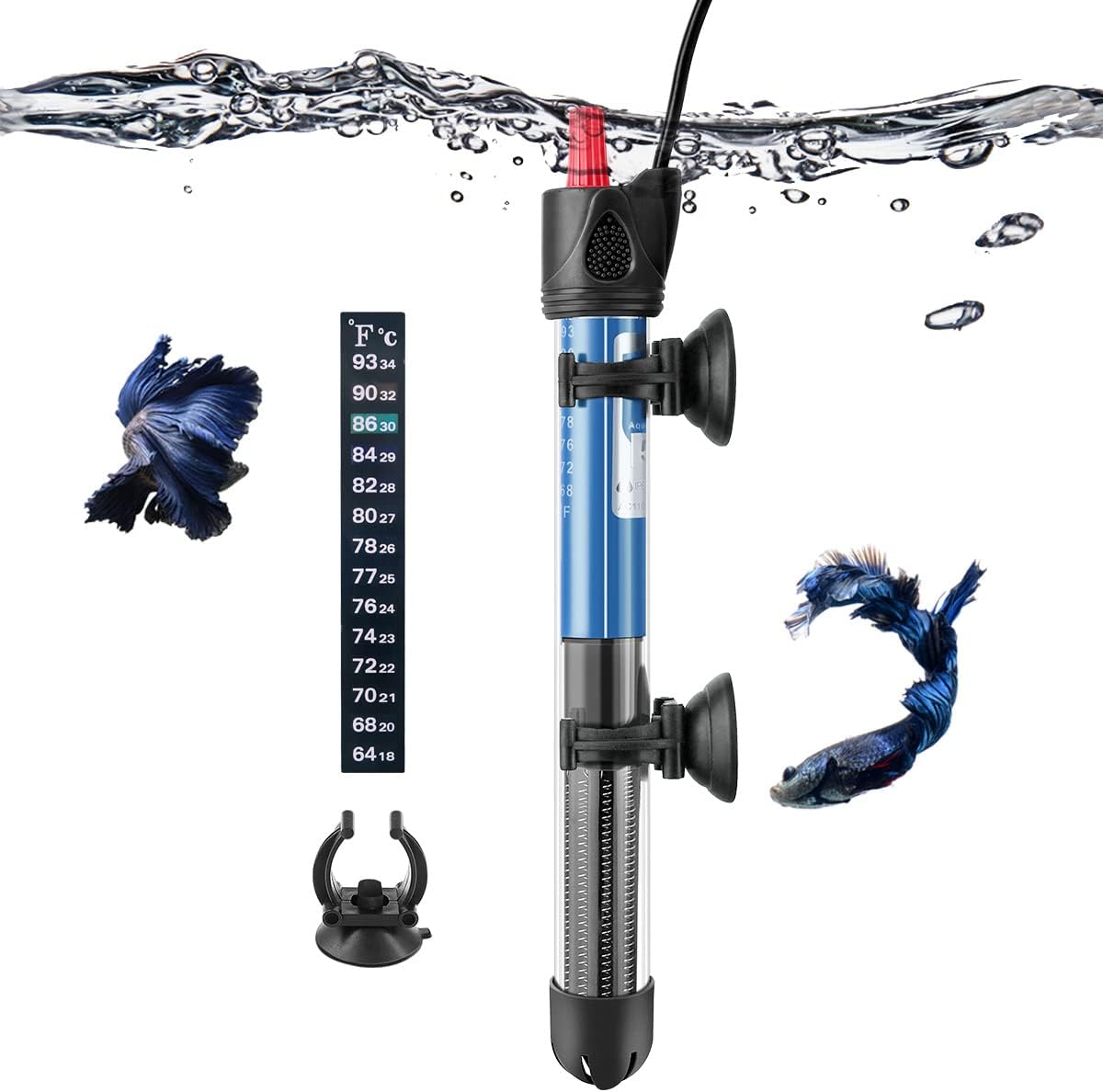 Hitop adjustable glass heater, 50W | listing covers 5 to 70 gallons across the line | not applicable | 50W | Check current Amazon price |
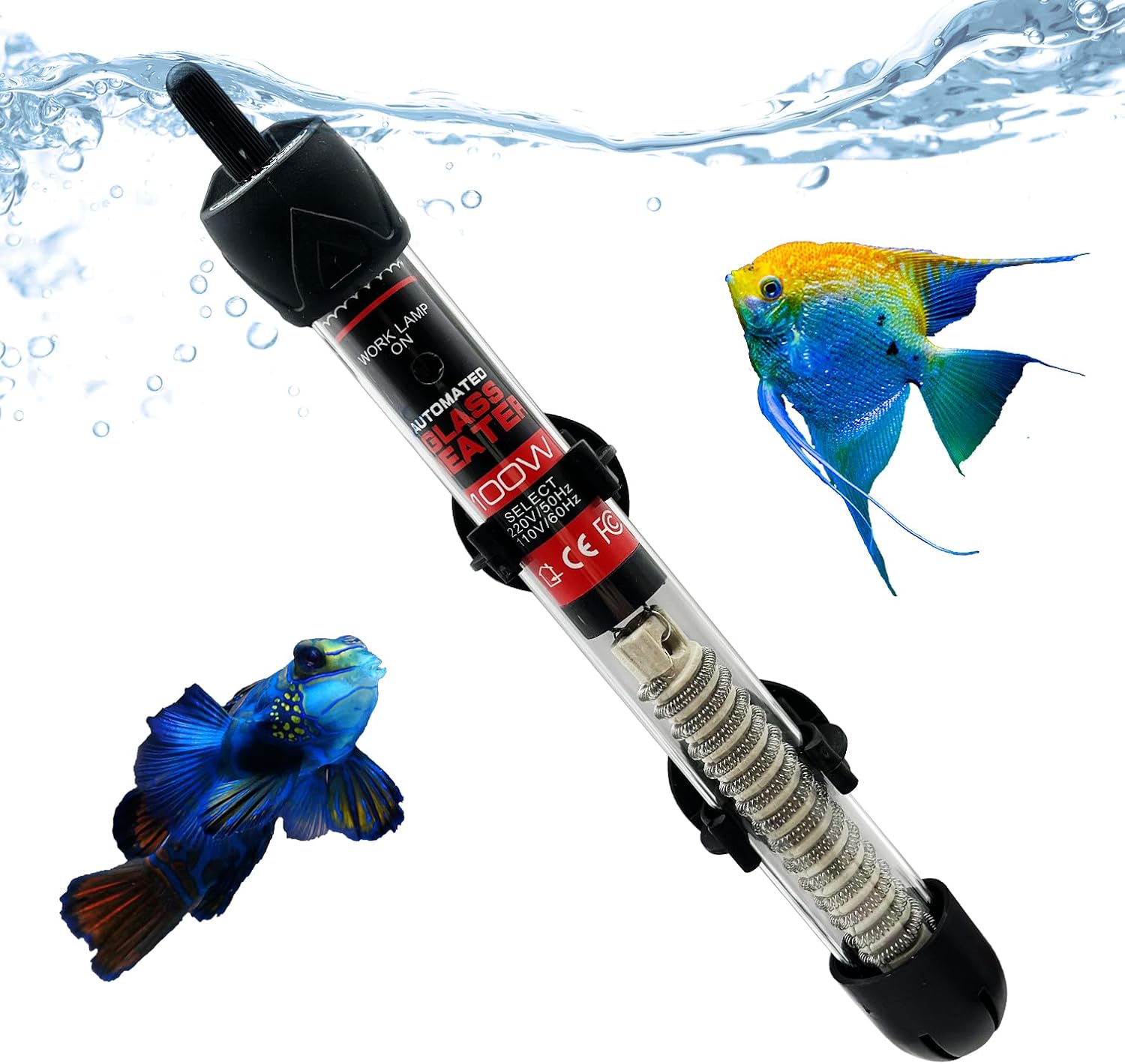 Adjustable thermostat heater | size the wattage to the tank volume | not applicable | 25W to 300W | Check current Amazon price |
The table is a starting point, not a spec sheet. Turnover drifts down as media loads up, so recheck it every few months, and treat the wattage column as a floor rather than a ceiling if your tank sits in a cold room.
Hitop 50W Adjustable Aquarium Heater
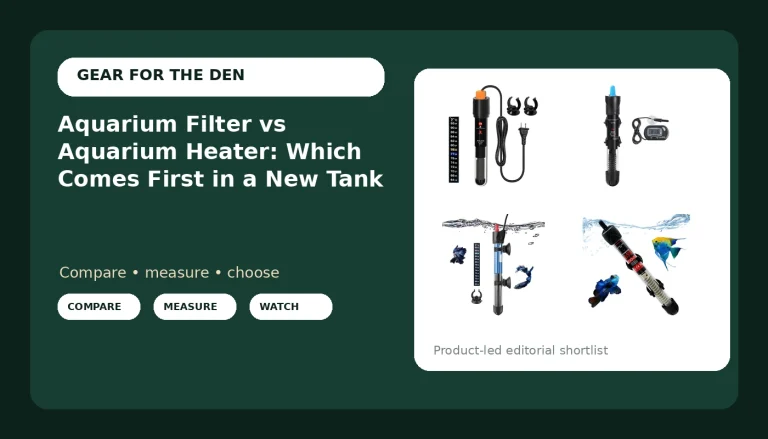
This is the budget heater I would put in either kit. The line runs 25W, 50W, 100W and 300W, the listing covers tanks from 5 to 70 gallons across those sizes, and the 50W version is the one that matches a 10 or 20 gallon tank in a normal room. It is a glass, fully submersible body with an adjustable dial, which is the combination that matters: glass transfers heat quickly, and an adjustable dial means you are not stuck with whatever temperature the factory picked.
Two habits keep a glass heater alive. Unplug it before you drain the tank, because a heater that runs dry in open air can crack. And keep it fully submerged below the water line whenever the tank is running. Follow those two and a glass heater will outlast the fish.
For a 20 gallon tank in a cold room, this is the one to pair with the Best Overall kit. For a 10 gallon on a desk, the 50W is more than enough, and the dial lets you turn it down rather than let it cycle on and off all afternoon.
Adjustable Submersible Thermostat Heater
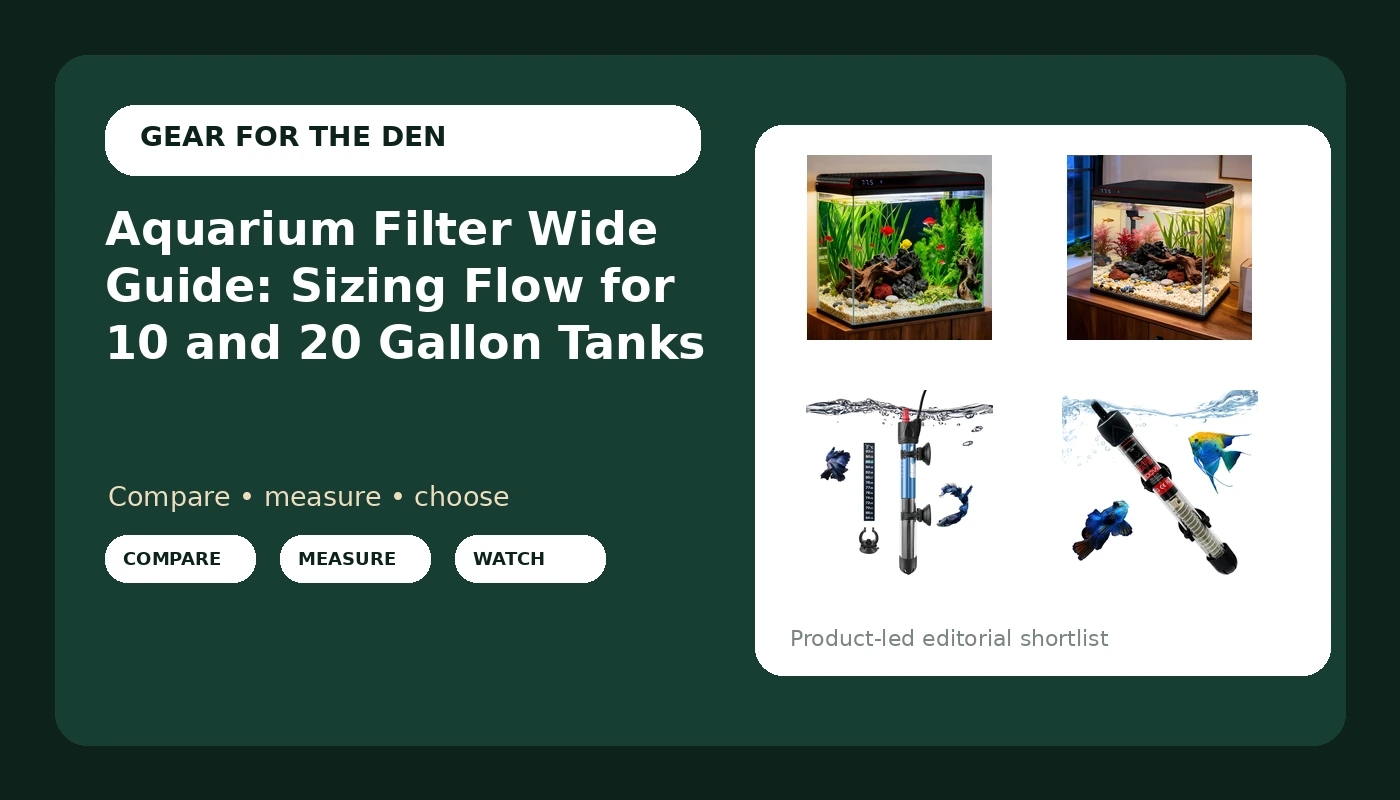
The second option is the least expensive way into an adjustable heater, and it covers the widest wattage spread of the two: 25W, 50W, 100W, 150W, 200W and 300W. The adjustable thermostat is the feature worth paying attention to, because a heater that holds a steady temperature is worth more than one with extra watts. Match the wattage to the tank volume with the 2.5 to 5 watts per gallon rule, and resist the urge to buy the biggest one for a 10 gallon tank.
I would use this as a spare, in a quarantine tank, or in a small shrimp setup where you want a low-wattage heater that will not cook the tank if the dial drifts. Check it against a separate thermometer for the first week, then monthly after that. Every heater fails eventually, and the failure mode you want is running a little cool, not running wide open.
Should you buy the Coospider 20 gallon starter kit?
Yes, if you want a first freshwater tank with the filter already sorted and enough water volume to be forgiving. The 20 gallon kit is the one I would choose for a family, a classroom, or anyone who wants fish that live long enough to get named. The self-cleaning design trims maintenance time, the temperature monitoring gives you a read at a glance, and the 3-color LEDs make the tank look good in a living room.
Budget for a heater, because it is not in the box, and plan on water changes anyway, because no self-cleaning feature removes nitrate. Measure your outlet flow once the media is loaded so you know your real turnover instead of guessing. Do those three things and this kit does the job for years. If you want to spend less and have less space, the 10 gallon version is the same machine in a smaller box.
Should you buy the Coospider 10 gallon starter kit?
Yes, if your space is small or your budget is tight. It is the same kit as the 20 gallon, quiet pump, 3-color LEDs, temperature monitoring, self-cleaning design, at a lower price and in a footprint that fits a desk. For a kid's first tank, a betta setup, or a shrimp colony, it is the sensible choice.
Be honest about the trade-off: 10 gallons swings fast, so weekly testing and a 20 to 25 percent water change are not optional. Add a heater sized between 25W and 50W, keep the substrate grain coarse enough to vacuum, and do not overstock it. If you can live with those terms, this is the best value in the category.