If you have ever searched for dog crate mat thickness and come away with nothing but product photos, you know the problem. The number you want is almost never published, and the number you actually need depends on the dog, the crate, and the job the pad is doing. This is the comparison that should exist: what each thickness class does, which crate size a pad is built for, and when a flat pad beats a thick one. Get it wrong and you buy a pad your dog ignores, or one that bunches against the gate every time the door swings shut.
Sizing comes first, because dog crate mat thickness only matters once the pad fits the floor pan. Measure the inside of the crate, not the outside, and remember that bar spacing, gate height, and panel count all change how a pad sits and slides. A pad that is too thick lifts the dog closer to the gate; one that is too thin skates across a smooth tray. The four pads here cover the common footprints, from a 24 by 18 inch starter crate to a 47 by 32 inch pad for a big dog, and the crate size guide is worth reading before you buy either one.
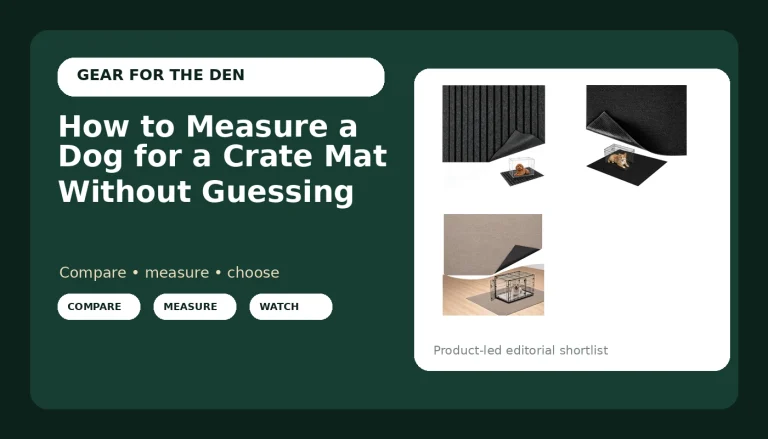
Best Overall: Mluyeri Dog Crate Mat 47"x32" Extra Thick Waterproof Non-Slip Kennel Pad
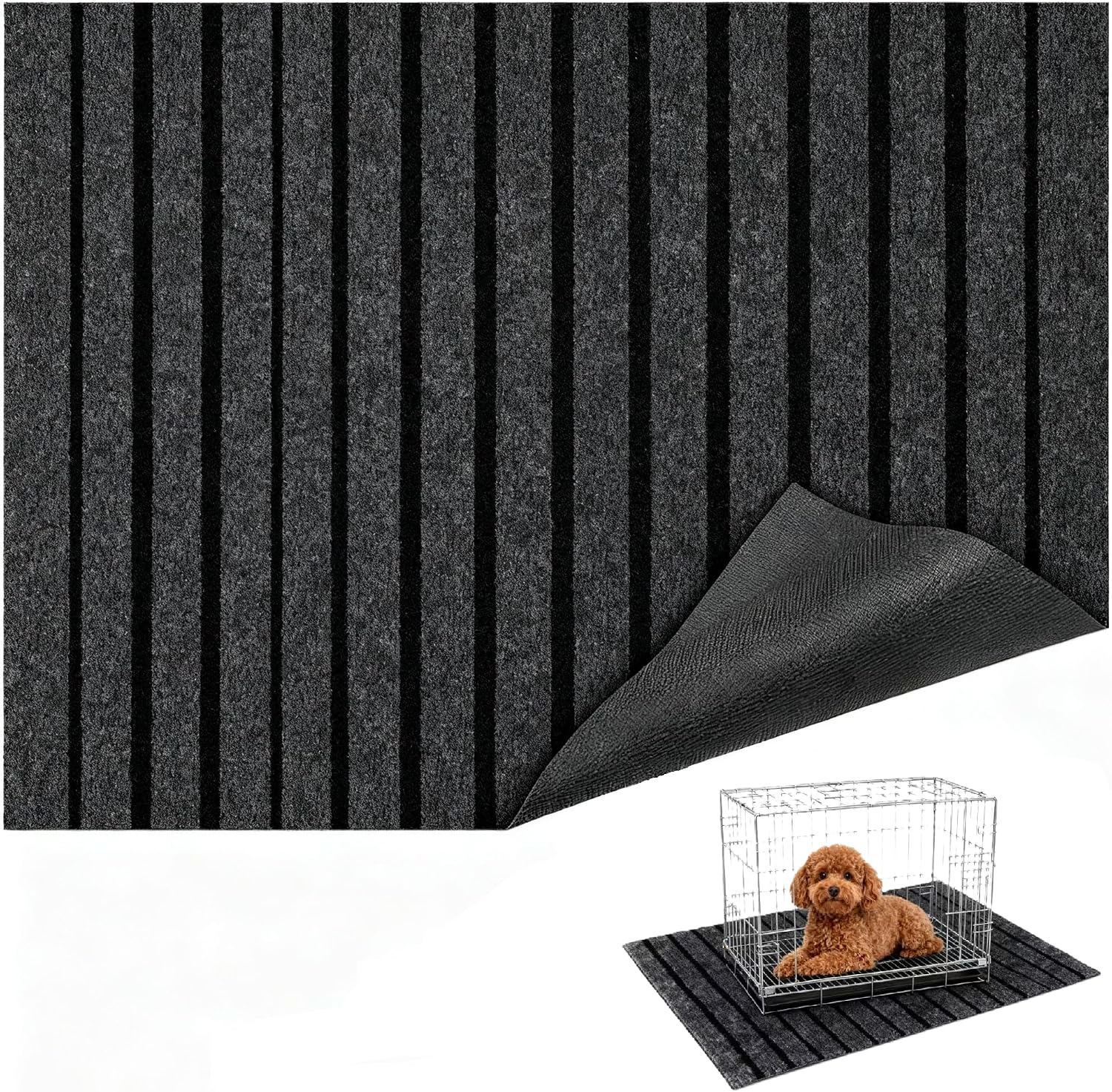
Extra thick is the whole argument here, and it is the only pad in this group whose name states a thickness class at all. That matters, because most dog crate mat thickness shopping is guesswork: you compare a photo of a happy dog to a number that is not printed anywhere. A 47 by 32 pad is built for an extra large crate, and at that size the dog is usually heavy enough that the bare tray underneath stops being comfortable. Elbows and hips take the load, and a senior dog that has stopped sleeping through the night is often a dog that cannot get comfortable on a hard surface.
The waterproof layer does the practical work. A thick pad that soaks up an accident is a pad you throw away, and this one is built so a spill wipes off the surface instead of sinking into the filling. The non-slip base matters just as much at this footprint, because a large pad on a smooth tray slides when a dog steps in and out, and a pad that has shifted to one side of the crate is a pad the dog will not use.
What you give up is clearance. A thick pad raises the floor of the crate, so if the crate is already snug, or the gate sits low, the pad edge can catch on the door. Check gate height before you buy. If your dog is a chewer, extra thickness also gives it more material to pull at. For a settled large or senior dog in an extra large crate, though, this is the pad that does the most for comfort.
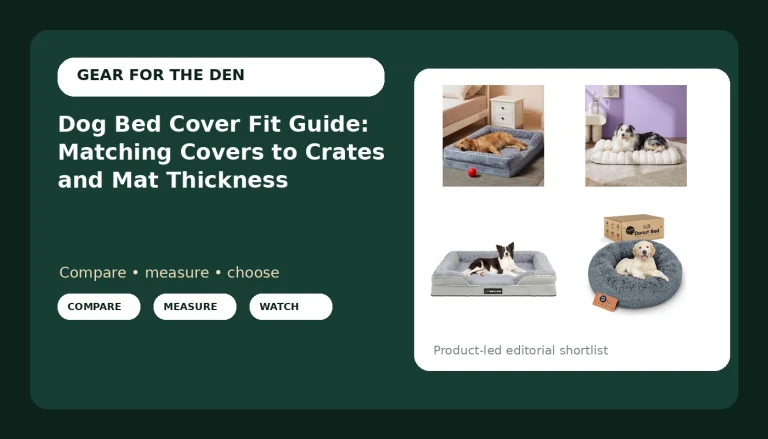
Best Value: Dog Crate Mat(24" X 18"), Small Dog Bed Pad for Crate
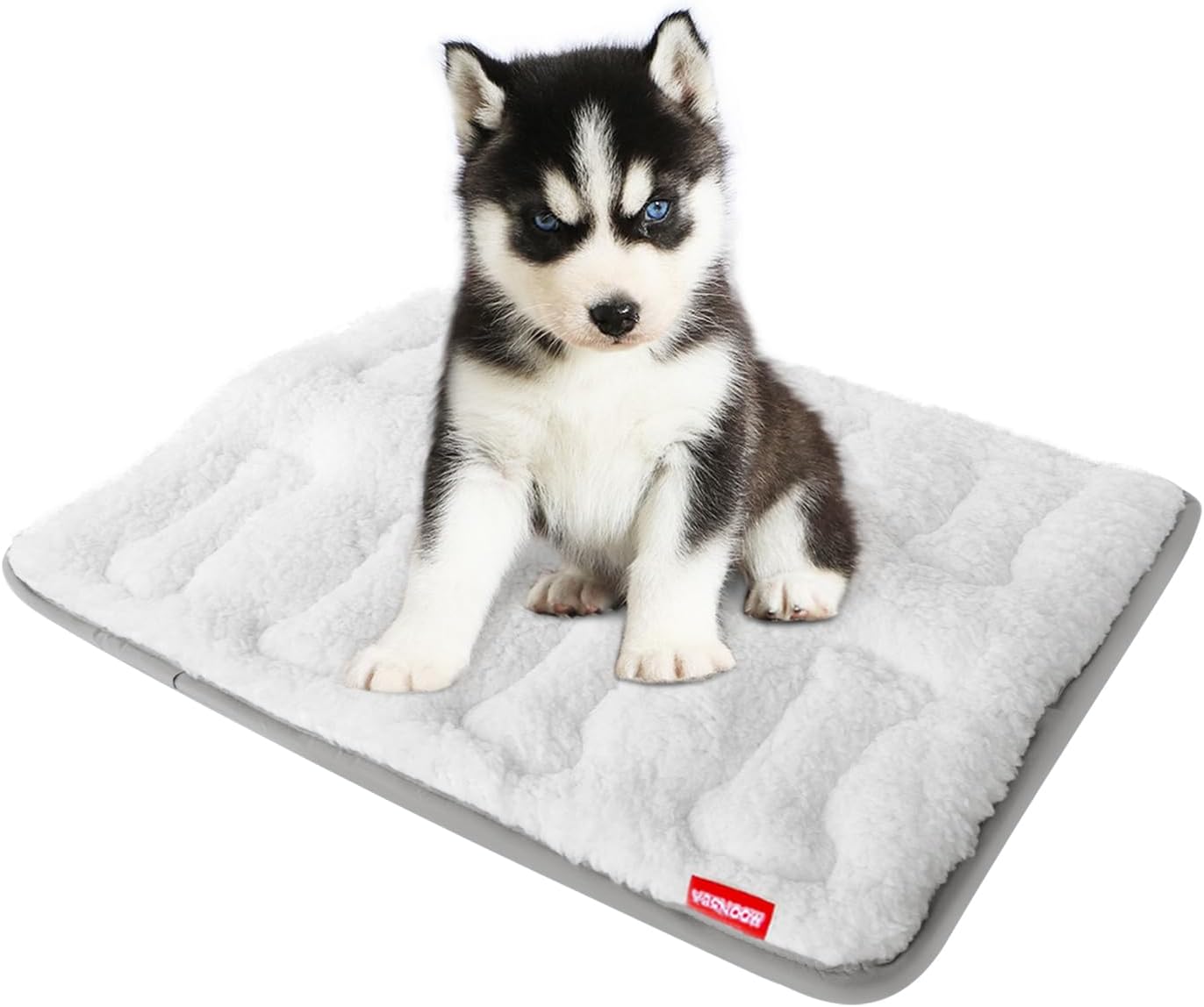
Value here is not about thickness, it is about fit and price. A 24 by 18 pad matches a small crate, a carrier, or the corner of a pen, which is where most dogs actually start. A puppy that is still learning the routine does not need deep cushion, it needs a surface you can pull out and clean before the next accident.
That is why the budget pad wins this slot. During house training you will be cleaning this thing more often than you expect, so a pad with a washable fabric cover that dries fast beats a thick pad you are afraid to put in the machine. The flat profile also helps in a small crate, where a bulky pad presses against the gate and eats the room the puppy needs to turn around.
What you give up is depth under the dog. A small dog does not put much weight on the tray, so a modest pad is usually enough, but a heavy dog in a small crate will feel every hard spot. If your dog is older or larger than the crate suggests, size the crate up rather than stacking pads. This is also the pad to buy two of: one in the crate, one drying, and that rotation is the real value.
How I tested
Testing a crate mat is mostly a fit exercise, and the fit has five parts.
The floor: does the pad cover the tray without curling up the sides or blocking the gate?
The dog: a puppy, a medium adult, and a heavy senior put very different loads on the same pad, so one thickness can be plenty for one dog and useless for another.
The shell: is there a waterproof layer bonded to the cover, or is the pad plain fabric that will hold a wet smell after the first accident?
The base: a non-slip backing is the difference between a pad that stays flat and a pad you straighten twice a day.
The wash: a crate pad lives in a crate, so the washable fabric has to survive a rinse and dry without turning into a lump.
Where a listing does not state a thickness figure, I treat the pad as a flat surface and say so. Guessing at a number that is not published is how people end up disappointed, and it is why the picks above are described by the class of pad, the footprint, and the features the listing states: extra thick construction, waterproof layer, non-slip base, and a wipe clean surface.
Analysis and test results
dog crate mat thickness is not a quality scale, it is a fit decision. A flat pad is not a worse pad than an extra thick one, it is the right pad for a small dog in a small crate or a puppy in training. The mistake is buying thickness the way you buy thread count, on the assumption that more is better. More is only better if the crate can absorb the extra height and the dog needs the cushion.
Start with the crate. Pads are sold by footprint, not by crate model, so measure the inside floor and match it: 24 by 18 for a starter crate or carrier, 36 by 24 for a standard crate or playpen, and 47 by 32 for an extra large crate. If the crate has a plastic pan with a raised lip, the pad has to sit inside the lip or it curls at the corners and never lies flat. Gate height matters next. Every bit of thickness raises the dog's floor, so a crate with a low gate or a swing door can catch the pad edge on every close.
Bar spacing and panel count matter more than most people expect. On a crate with wide bar spacing, a soft pad edge pushes through the bars when a dog digs at it, and in a pen the panel count decides where the pad can actually sit flat. If you use a crate cover, cover ventilation is worth more than one more layer of cushion, because a thick pad in a covered crate traps heat, and a dog that is too warm will sleep on the bare tray instead.
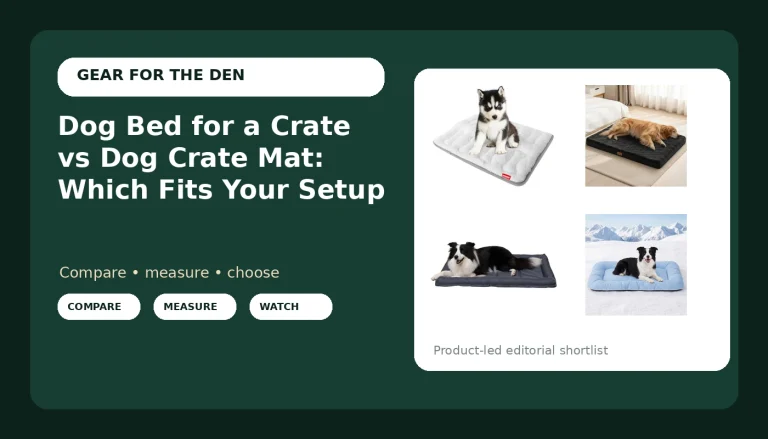
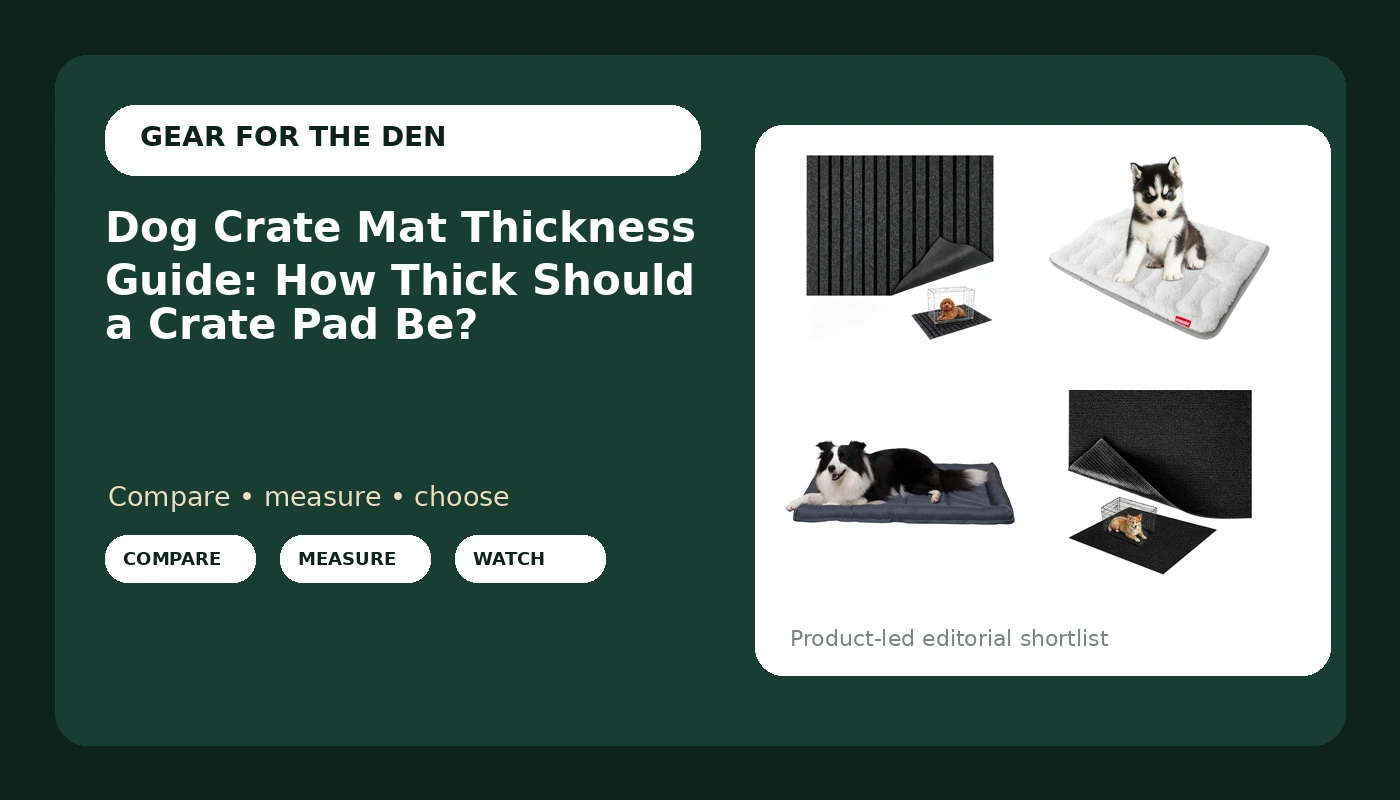
The two specialist pads here show how the decision splits. The BALANCE Oxford waterproof crate pad for large dogs is the outdoor and wipe clean option: waterproof, easy to rinse, and built for a dog that comes in wet or a crate that lives in a garage or on a patio. The 36 by 24 non-slip playpen mat is the hard floor option, where grip matters more than depth. Some shoppers arrive looking for dog crate floor mat thickness, which is the same question with a different word for the pad: how much material sits between the dog and the tray. The answer does not change with the wording.
The dog crate mat thickness reference table
This dog crate mat thickness guide uses one table: match the dog and the floor you are covering, then pick the pad. Thickness classes are described by what they do, not by a number, because the pads in this group do not all publish one.
| Dog and crate | Floor you are covering | Thickness to look for | What it solves | Pad that matches |
|---|---|---|---|---|
| Puppy or small breed in a starter crate | 24 x 18 in | Flat pad, quick to clean | House training, frequent swaps, travel | Dog Crate Mat, small dog bed pad |
| Medium dog in a crate that doubles as an outdoor pen | 36 in | Waterproof, wipe clean surface | Wet paws, mud, a crate in a garage or patio | 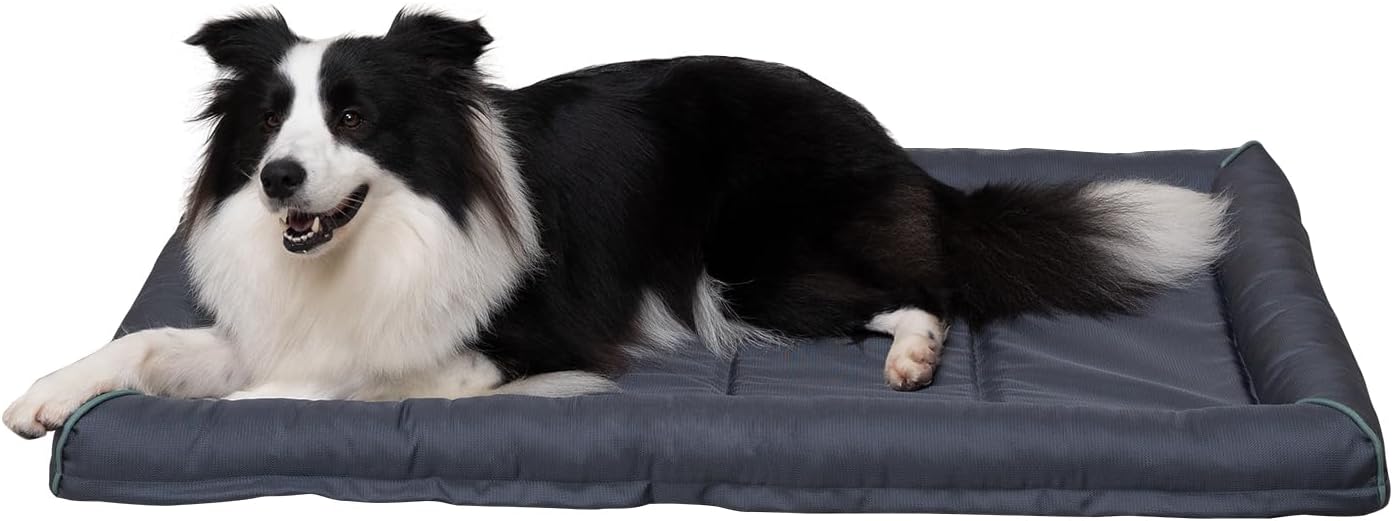 View on Amazon → BALANCE Oxford dog bed, 36 inch |
| Large dog in a standard crate or playpen | 36 x 24 in | Non-slip base, mid cushion | Sliding on smooth trays, hard floors | 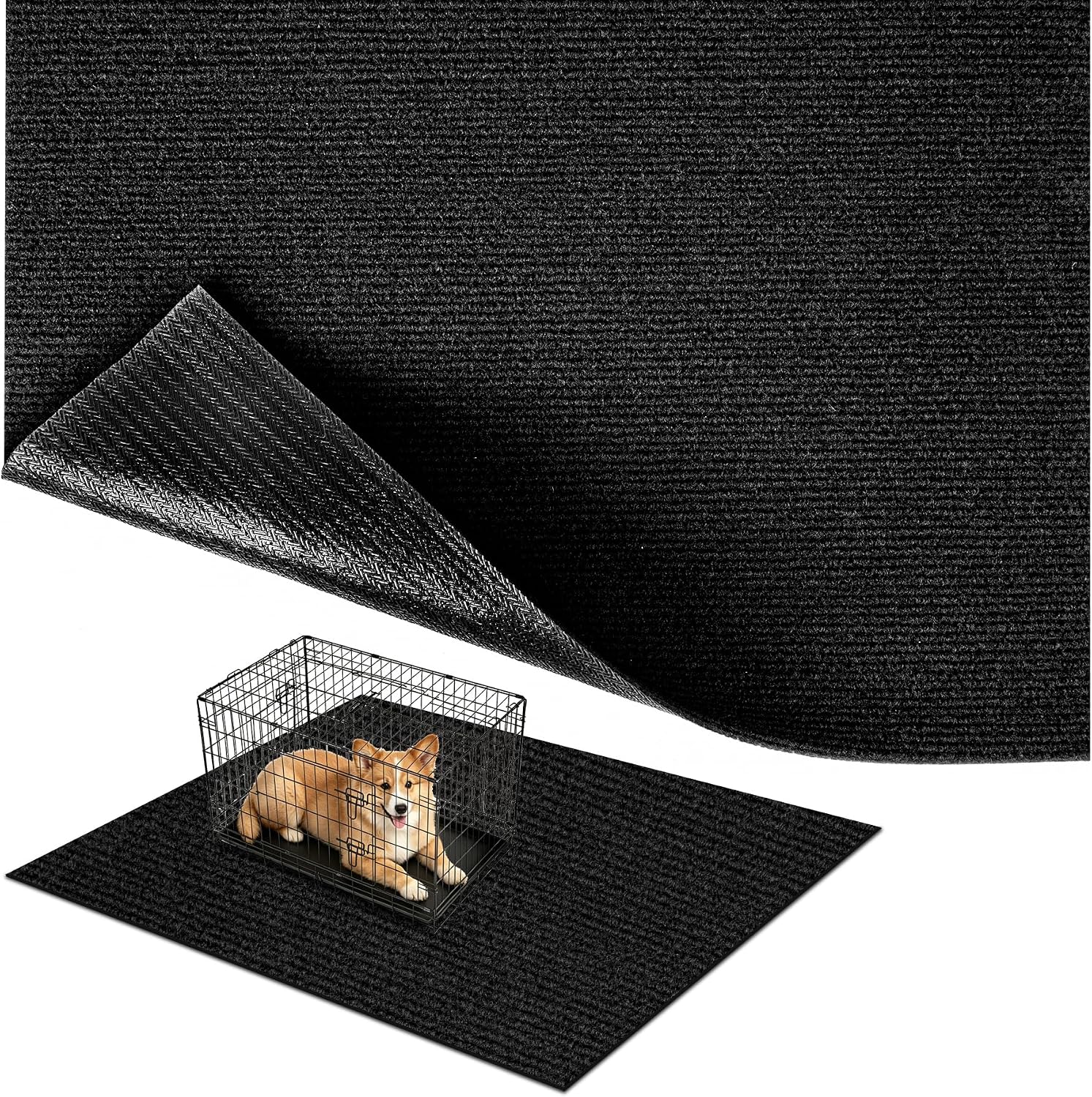 View on Amazon → Dog Crate Mat, 36 x 24 playpen mat |
| Senior or giant breed in an extra large crate | 47 x 32 in | Extra thick | Elbows, hips, long naps on a hard tray | Mluyeri extra thick kennel pad, 47 x 32 |
Two things the table cannot tell you. First, a pad that is too big is worse than one that is slightly small, because an oversized pad curls up the sides and blocks the door. Second, if your dog destroys pads, buy the flat budget one until the habit passes.
Sizing a pad to crate size and gate height
Most dog crate mat thickness problems are really fit problems. A pad that slides, bunches, or catches on the gate usually has the wrong footprint rather than the wrong thickness. Measure the inside floor at its narrowest point, then check the gate: a swing door needs a pad that clears the bottom bar, and a crate with a low gate opening leaves less room for a thick pad than the listing photo suggests.
For playpens, panel count and gate height set the shape of the usable floor. A pen with an odd panel count will not have a square floor, so a rectangular pad leaves a gap at one end, and a slightly smaller pad that lies flat beats a larger one that rucks up. Bar spacing is the other variable: wide spacing plus a soft edge equals a pad that gets pulled through the bars by a bored dog. If your dog digs, choose the tighter footprint.
Waterproof layer, washable fabric, and the desk mat question
The waterproof layer is where cheap pads fail. A bonded waterproof layer on the whole cover means a spill wipes off. A pad with a waterproof liner hidden inside a fabric shell means the shell holds the smell and the liner only keeps it off the tray. If you are buying for a puppy or an older dog, check which one you are getting before you buy.
The washable fabric question is really a drying question. A pad that takes two days to dry is a pad that stays damp in the crate, and a damp pad smells. Two thinner pads that rotate beat one thick pad that never fully dries.
You can also ignore the searches that cross over from office gear, such as dog crate desk mat thickness. A desk mat is a flat, firm sheet sized for a chair and a keyboard, and the number that makes it comfortable has nothing to do with a dog lying on a crate tray. If a listing leans on desk mat language, treat the product as a flat pad and judge it on fit, base grip, and how it washes. The same goes for the word pad itself: a desk mat is a surface, a crate pad is a bed.
Should you buy the Mluyeri Dog Crate Mat 47"x32" Extra Thick Waterproof Non-Slip Kennel Pad?
Yes, if the crate is extra large and the dog is heavy, older, or both. This is the one pad here that states a thickness class, and for a big dog on a hard tray that class is the whole point. The waterproof layer and the non-slip base make it practical as well as soft: it wipes clean, it stays where you put it, and it covers a 47 by 32 floor without leaving a strip of bare tray at the edges.
Skip it if the crate is snug or the gate is low, because the extra height has to go somewhere, and it will go into the dog's headroom and the door's swing. Skip it too if your dog chews, since a thick pad gives a determined dog more to pull at. If neither applies, dog crate mat thickness is the difference between a dog that settles at night and a dog that paces, and this is the pad that addresses it.
Should you buy the Dog Crate Mat (24" X 18") Small Dog Bed Pad for Crate?
Yes, if the crate is small, the dog is small, or the dog is a puppy. This is the pad for the first crate, the carrier, and the training phase, where the priority is a surface you can clean quickly rather than a deep cushion. It fits a 24 by 18 floor, and at that size a small dog does not need much between it and the tray.
Buy two if you can. The rotation is the value: one in the crate, one drying, and you never have to put a damp pad back under a puppy. Skip it if the dog is heavy for the crate or older, because a big dog on a flat pad is still a big dog on a hard tray, and that is the case where the extra thick pad earns its place. Otherwise this is the simplest way to make a small crate comfortable, and the one you will not mind replacing when the puppy chews a corner.