Curly coats are the one coat type where drying technique decides the finished look. A poodle, a doodle, a bichon, or a Portuguese water dog comes out of the bath holding water in tight spirals, and if those spirals dry the wrong way you get frizz, matting, and a coat that still feels damp at the skin hours later. That is why shopping for a dog dryer for curly coated dogs is really shopping for controlled airflow rather than raw heat. What follows covers what changes when the coat is curly, which features earn their place, and four grooming tools that support the routine: a heavy-duty blower, a step-down model in the same line, a budget high-velocity dryer with a heater, and a detangling conditioner that does the prep work before the dryer ever switches on.
Quick answer
For a curly coat, the correct dog dryer for curly coated dogs is a high-velocity blower you can run at a low or variable speed with the heat off, used on a coat that has already been conditioned and combed out. Airflow separates curls and pushes water off the skin; heat does the opposite, drying the outer layer while the roots stay wet. Look for variable speed, a long hose, and nozzles that reach the skin without pressing hard. If you want dog dryer for curly coated dogs explained in a single sentence, it is this: move air, not temperature.
Four useful options
| Model | Best fit | What stands out |
|---|---|---|
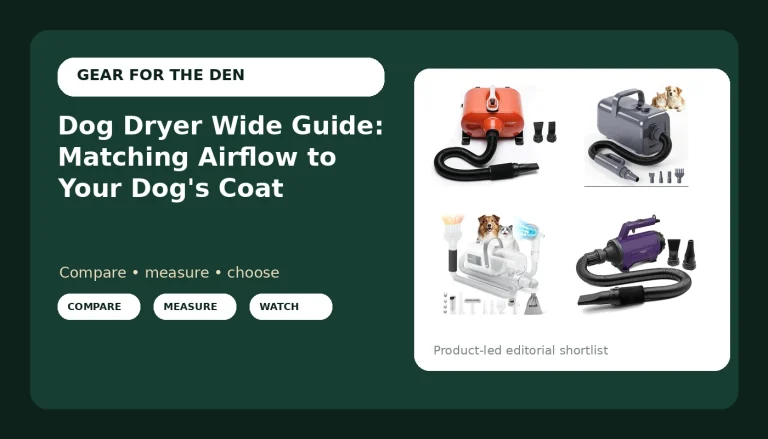
| Electric Cleaner Company K9 III Dog Blow Dryer – High Power Grooming Dryer, Heavy Duty, 10' Hose, Deshedding, Metallic Purple | Dense poodle and doodle coats that need a full dry | Heavy-duty framing and a 10' hose |
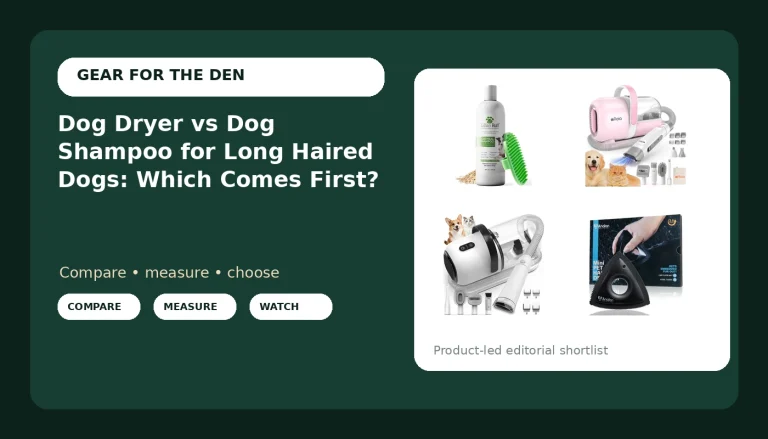
| Electric Cleaner Company K9 II Dog Blow Dryer – High Power Grooming Dryer, Heavy Duty, 10' Hose, Deshedding, Pink | One curly-coated dog groomed at home | The same heavy-duty framing and 10' hose in the K9 line |
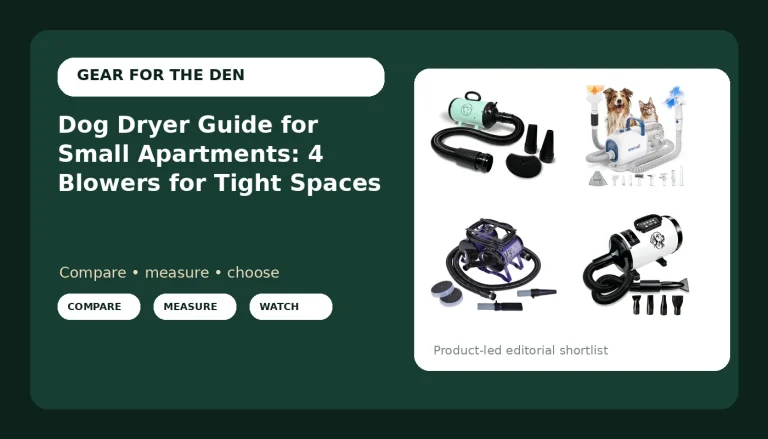
| High-Velocity Dog Dryer for Grooming – Quiet Pet Hair Blow Dryer with Heater, 4 Nozzles & Adjustable Speed – Professional Dog Blower for Large Dogs, Thick Coats & Deshedding | A first high-velocity dryer with heat available | Adjustable speed, a heater, and 4 nozzles |
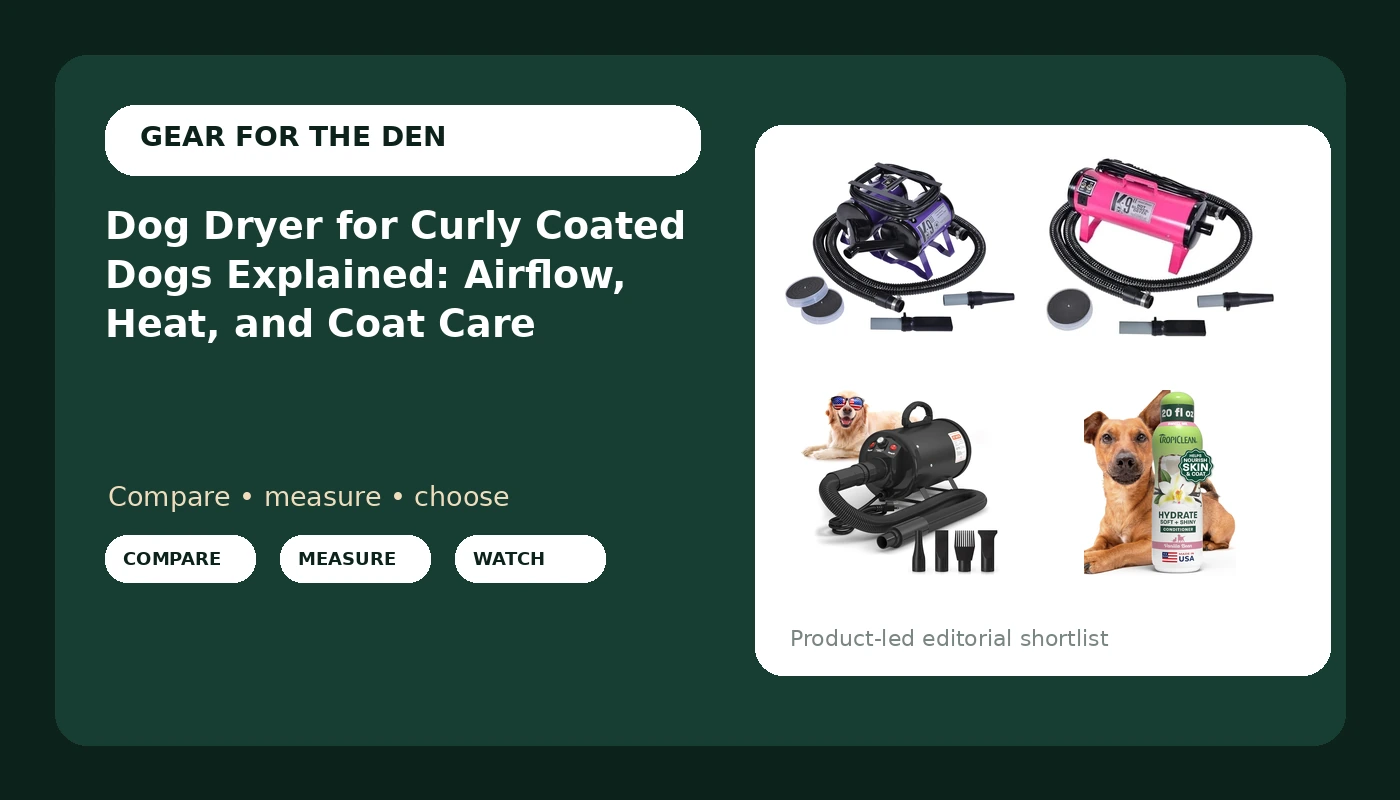
| TropiClean Dog Conditioner, Easy Detangling & Moisturizing Conditioner, Puppy Safe, Made in The USA, Kiwi & Cocoa Butter Scent, 20oz. | Prep before any dryer touches the coat | Detangling and moisturizing, puppy safe |
Heavy-duty pick: Electric Cleaner Company K9 III Dog Blow Dryer
The K9 III sits at the top of this group: it is the model here framed as heavy duty, and the 10-foot hose is the detail that matters most with a curly coat, because you can keep the machine on the floor and still walk around a large doodle without dragging it. Nothing about a blower like this is gentle by default, so plan on working at the lowest speed that still moves water and keeping your hand between the nozzle and the skin.
Step-down model: Electric Cleaner Company K9 II Dog Blow Dryer
The K9 II is the same idea in a different colorway and a different position in the line. For a single dog at home, the deciding factors are unchanged: heavy-duty construction, a 10-foot hose, and a blower built around deshedding and full-coat drying rather than a quick touch-up. If you groom one curly-coated dog every few weeks, this is the point in the range where a dedicated blower starts to make more sense than a handheld unit.
Entry point: High-Velocity Dog Dryer for Grooming
This is the budget route to high velocity, and it is the only dryer here that lists a heater and four nozzles. Heat is useful for the last few minutes on a curly coat, but it is also the fastest way to frizz a finish, so treat the heater as a finishing tool rather than the main event. Adjustable speed matters more: you want a low setting that separates curls without blasting water into the skin. The listing markets the motor as quiet, which is a relative claim rather than a measured decibel figure.
Prep step: TropiClean Dog Conditioner
No dryer works on a curly coat that is already matted, and that is where a conditioner earns its place in this lineup. A detangling and moisturizing conditioner applied after shampoo, left on for the time the label recommends, and rinsed or worked through before drying gives the coat slip, so the blower can separate curls instead of driving them into knots. This one is listed as puppy safe, made in the USA, and scented with kiwi and cocoa butter.
Prices and availability may change. Product images, names, and retailer links are matched to verified listings. No current price, rating, stock status, or measured result is stated here without current evidence.
Why curly coats change the drying plan
A curly coat is a hair coat, not a shedding coat. Poodle-type curls keep growing, and the hair that would normally fall out stays woven into the coat, which is why mats form so quickly when a curly coat is left wet. That single fact changes the drying plan: you are not blowing loose hair off a dog, you are separating strands that want to lock together.
Undercoat is the second variable, and it is where mixed breeds get complicated. A pure poodle typically carries very little undercoat, so drying is mostly about the topcoat and the skin underneath. A doodle can inherit a dense undercoat from the other parent, which means two layers to dry and a genuine deshedding step once the coat is dry. Knowing which coat type you are working with tells you how much time to budget and whether a deshedding routine belongs in your week at all.
Water behavior is the third. Curls hold water against the skin, so a coat can feel dry to the hand while the dog is still damp at the base of the hair. That is the setup for skin trouble and for the wet-dog smell that lingers a day after the bath. High-velocity airflow solves it by pushing water off the skin and out through the coat rather than evaporating it from the outside in.
Heat is the tool that gets misused. Warm air on a wet curly coat, especially with a brush working through it at the same time, encourages the cuticle to roughen and the strands to felt. The result is frizz at best and a tighter mat at worst. Heat has a place in the last few minutes of a groom, but it should not be the engine of the process.
Finally, curl needs moisture. A coat stripped of oil dries into a crisp, fuzzy texture instead of a soft one, which is why a moisturizing conditioner is part of the drying routine rather than an optional extra.
What to look for in a dog dryer for curly coated dogs
The ideal dog dryer for curly coated dogs is one you can turn down, not one with the biggest motor. Speed control earns its place on every curly coat, because the setting that clears water from a doodle's back is far too strong for a face, an ear, or a foot. A stepless dial or a multi-position switch both work; what matters is that the lowest setting is genuinely gentle.
Airflow quality matters more than heat. You want volume and velocity at the nozzle, delivered through a hose long enough that the motor unit sits on the floor behind you. Ten feet is the number to look for on a large dog, because it lets you walk around the animal instead of dragging the machine. A grip handle on the nozzle reduces hand fatigue, and since curly coats take longer to dry than short ones, that fatigue is real by the end of a session.
Motor noise is worth thinking about before you buy. Curly-coated dogs often need several sessions to accept the process, and a shrill motor makes that training slower. There is no standard decibel figure printed on most listings, so treat any quiet claim as relative rather than absolute.
Nozzles change what you can do. A narrow concentrator nozzle reaches through curl to the skin and is the tool for armpits and feet, while a wider nozzle covers the body faster. If a dryer ships with several, you get more control without buying extras.
Two supporting tools belong in the same conversation. Bristle type matters when you brush a curly coat out: a slicker with fine, flexible pins separates curls, while a fine-toothed comb drags and snaps hair. A blade guard on your clippers controls how much length you leave when you tidy feet, sanitary areas, and the face, which is the difference between a neat trim and a shaved patch. If your dog's skin is itchy, look at the oatmeal concentration in the shampoo you use before the conditioner goes on; a higher concentration is the usual choice for sensitive skin.
- Bathe with a shampoo matched to your dog's skin, and if the coat is dry or the skin is itchy, choose one with a higher oatmeal concentration; rinse thoroughly, because shampoo residue dries into a sticky film that traps curl.
- Apply a detangling conditioner, work it through with your fingers or a wide-toothed comb, and follow the label's dwell time before rinsing or leaving it in as directed.
- Blot the coat with a towel to remove standing water, then run a slicker brush through the coat while it is still slick to find mats before they tighten.
- Set the dryer to its lowest useful speed with the heat off, and work section by section from the skin outward, keeping the nozzle moving and your free hand between the airflow and the dog.
- Dry to roughly 80 percent, then finish with a warm pass and a brush, checking behind the ears, under the collar, and in the armpits, where curl holds the most water.
A drying routine that protects curl
- Test any new dryer on your own forearm first, at the setting you plan to use, before it goes near the dog.
- Keep the nozzle angled along the coat rather than pressed into it; direct pressure pushes water and air into the skin and can sting.
- Never point airflow at the ears, eyes, or face at full speed. Drop to the lowest setting and hold the nozzle further away.
- Work in short sessions with breaks if your dog is new to a blower, and reward calm behavior instead of holding the dog still.
- Check for mats after every bath. A mat that survives the dryer will tighten, and a tight mat on a curly coat is a clipper job rather than a brushing job.
- Store the hose loosely coiled and clear the intake before each session so airflow stays consistent.
Which option should you choose?
Choose the Electric Cleaner Company K9 III Dog Blow Dryer when you groom a large, densely coated poodle or doodle regularly and want the heavy-duty end of this lineup with a 10-foot hose. Choose the Electric Cleaner Company K9 II Dog Blow Dryer when the same routine runs through one dog at home and the step-down model in the line covers the work. Choose the High-Velocity Dog Dryer for Grooming when you want adjustable speed, a heater for the finishing pass, and four nozzles at the entry point of the category. Choose the TropiClean Dog Conditioner when the coat needs slip before drying, which on a curly coat is almost always.
None of the listings here publish a measured airflow figure or decibel rating, so the comparisons above rest on how each product is described and what it includes, not on bench testing. Confirm nozzle count, hose length, and heat settings on the current listing before you buy, since product details can change.
The bottom line
A curly coat rewards airflow and patience rather than heat. Whatever blower you choose, plan on the lowest speed that still moves water, a conditioned coat that has been combed out first, and a finishing pass with a brush and gentle warmth. The heavy-duty models in the K9 line cover large, dense coats with a long hose and a deshedding focus, the high-velocity option with a heater and four nozzles covers the same job at the entry point, and the conditioner handles the prep that makes all of it easier. Get the prep and the airflow right and the curl comes back the way it should.