If you have ever spent forty minutes rinsing a Golden Retriever only to watch them shake once and redecorate the bathroom, you already know why dog dryer vs dog shampoo for long haired dogs keeps coming up in grooming conversations. Both are real tools. Both do real work. They just do different work, and treating one as a substitute for the other is how owners end up with a damp undercoat, a matted tail, and a dog that smells like wet wool two days after a bath.
For most long-haired dogs, the working order is shampoo first and drying second, and the drying step is the one owners underestimate. A clean coat that stays damp against the skin is where matting and irritation start, because a dense undercoat can hold water for hours after the towel comes off. The real question is whether that drying step needs a dedicated dryer, or whether a grooming vacuum with genuine airflow can cover it while also handling shedding.
The honest answer to dog dryer vs dog shampoo for long haired dogs is that you are comparing a cleaning step against a finishing step, not two brands fighting over the same job. Shampoo decides how the coat feels and smells. Airflow decides how fast the dog dries, how much loose hair leaves with the water, and whether the coat dries all the way down to the skin. Get the order wrong and you buy everything twice.
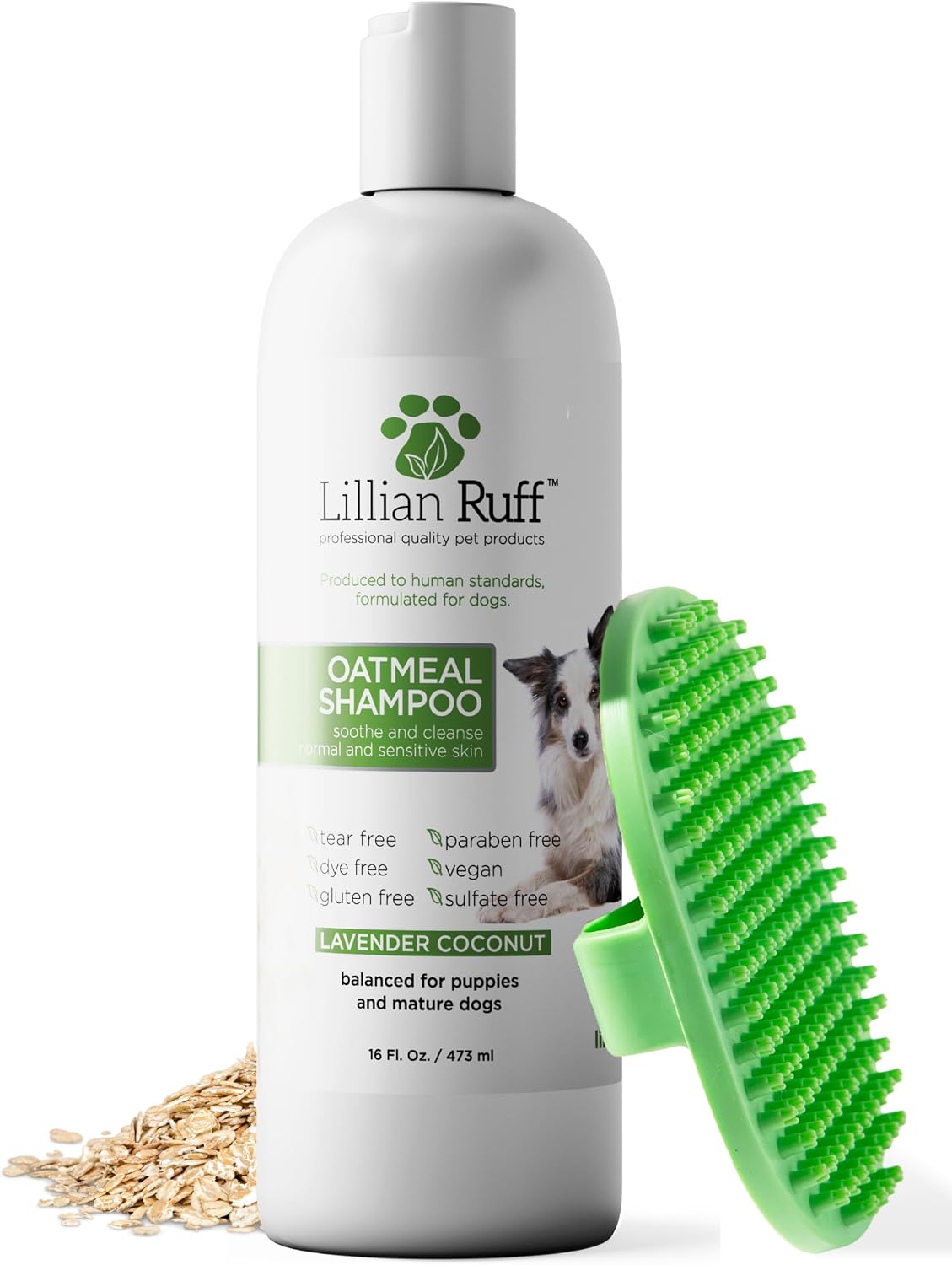
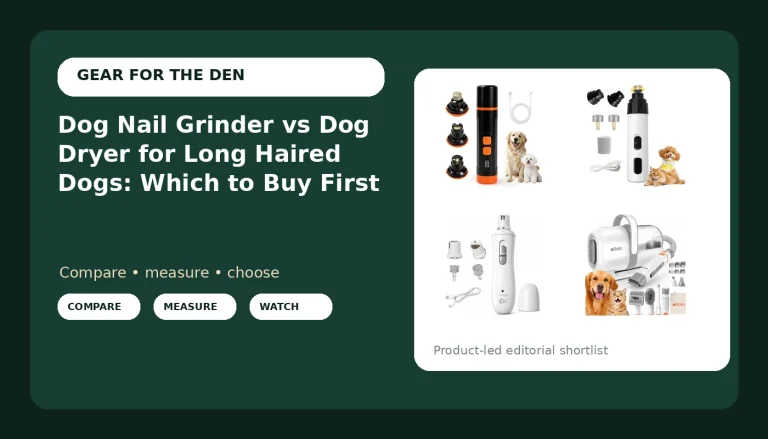
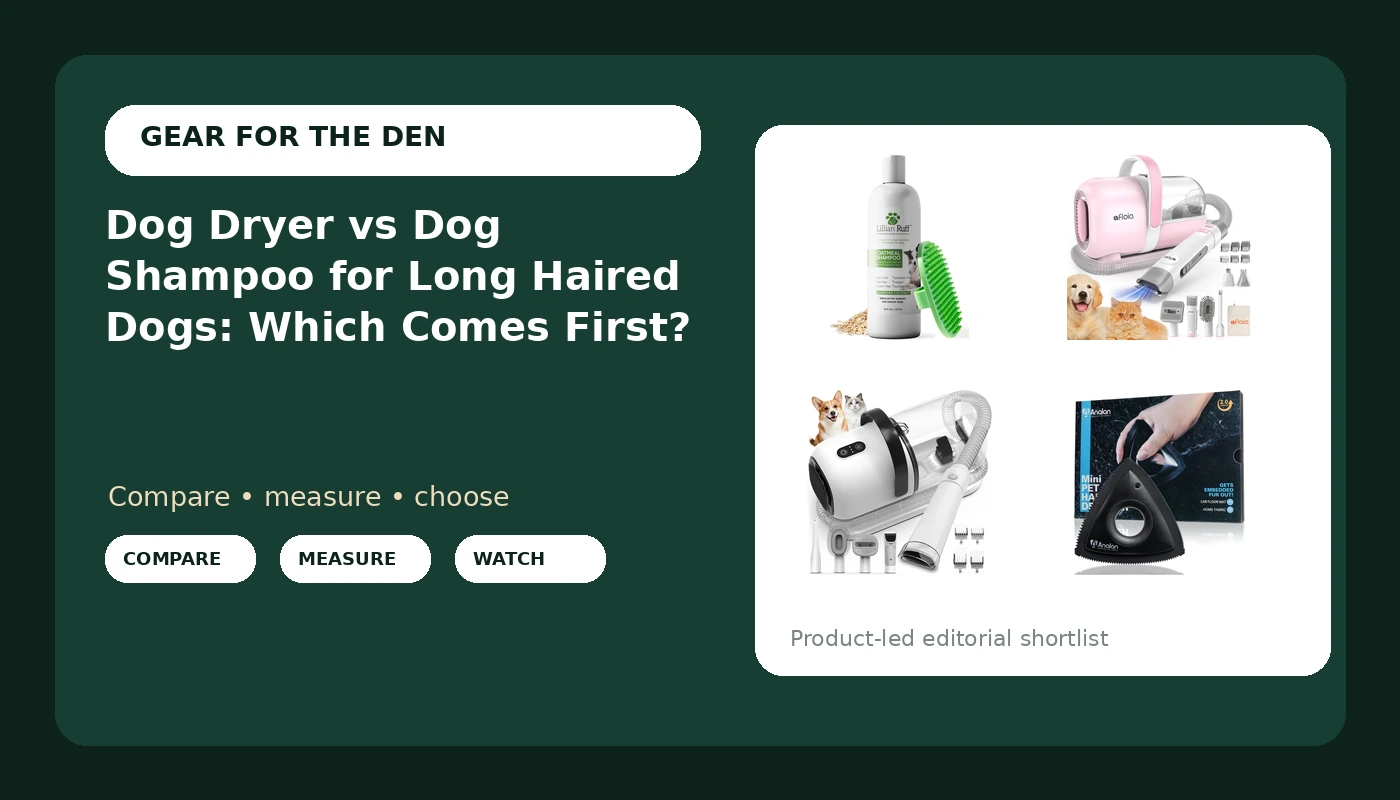
Lillian Ruff PRO Formula Deodorizing Oatmeal Dog Shampoo
Covers the wash step with oatmeal, aloe, coconut oil and provitamin B5, and includes a brush
Does nothing about drying time or loose undercoat
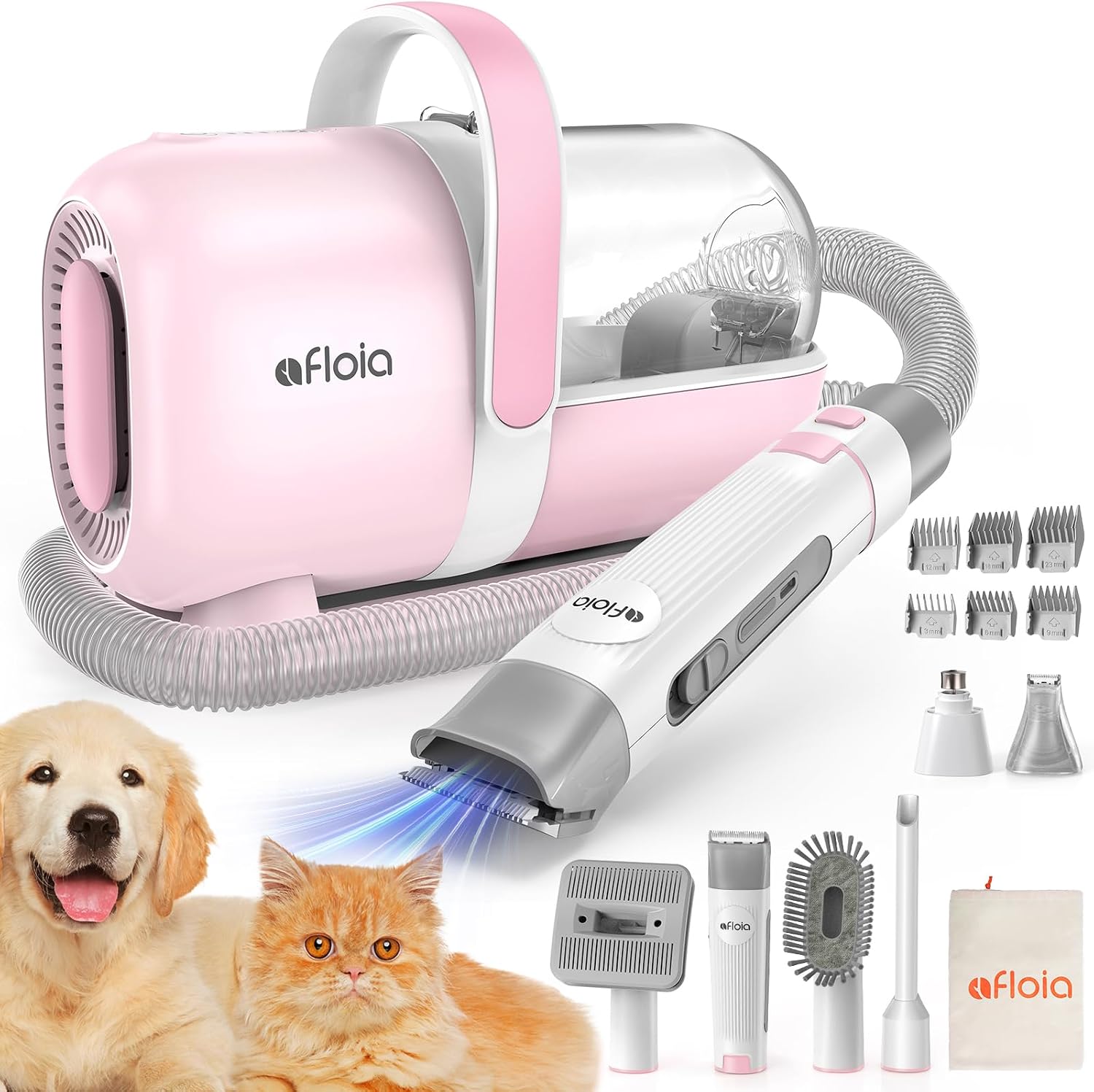
Afloia 6-in-1 Dog Grooming Kit, Pet Grooming Vacuum for Shedding
Six grooming jobs in one kit, including clipper, nail trimmer and grinder, plus a 1.5L dust cup
Costs the most here, and suction is not the same thing as the airflow of a real dryer
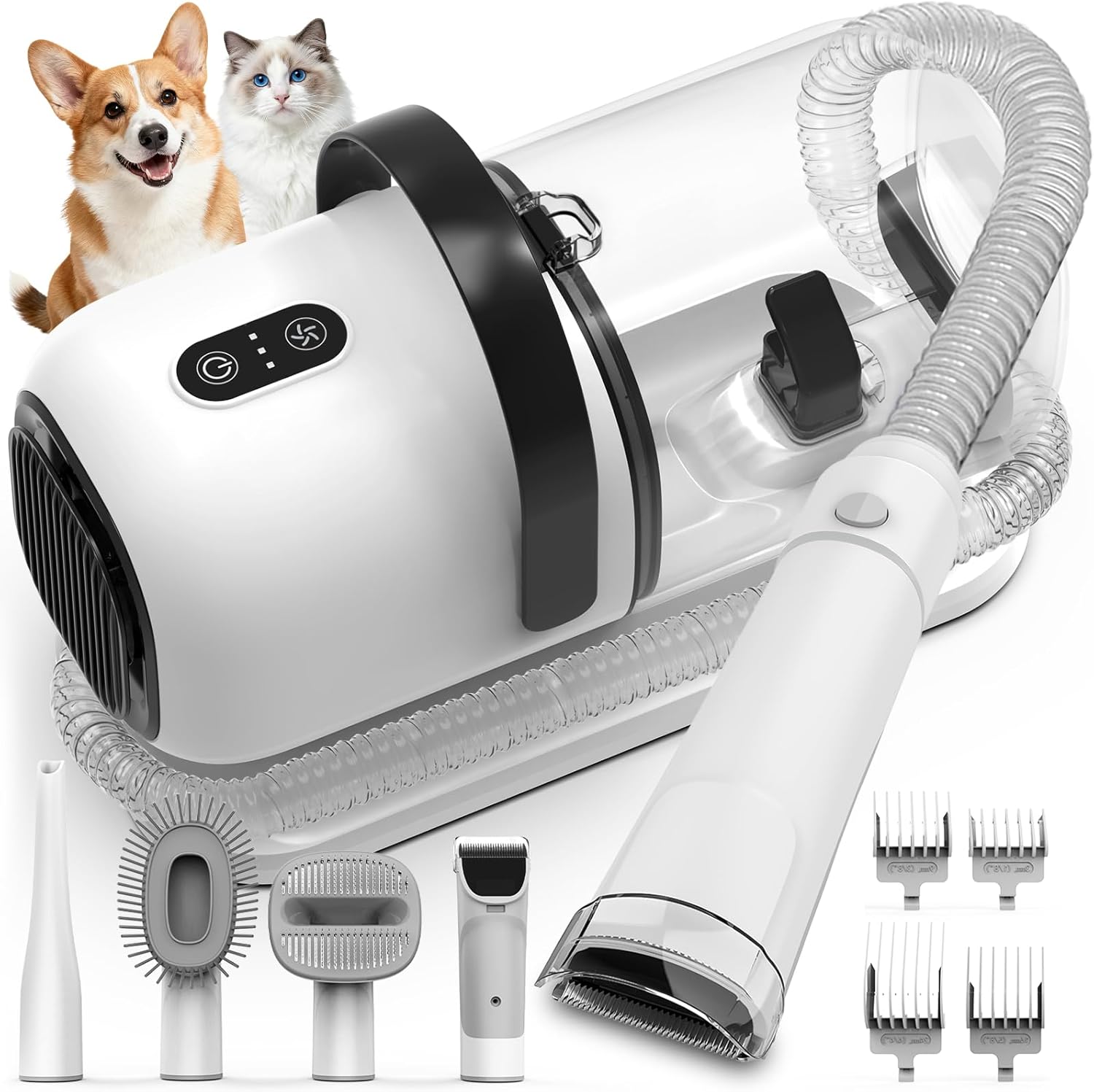
FIXR Dog Grooming Vacuum, All-in-One Pet Grooming Kit with Hair Clipper & Shedding Brush
All-in-one clipper and shedding brush with 12,000Pa suction and a low noise build
Fewer attachments than the Afloia kit, so nail work is on you
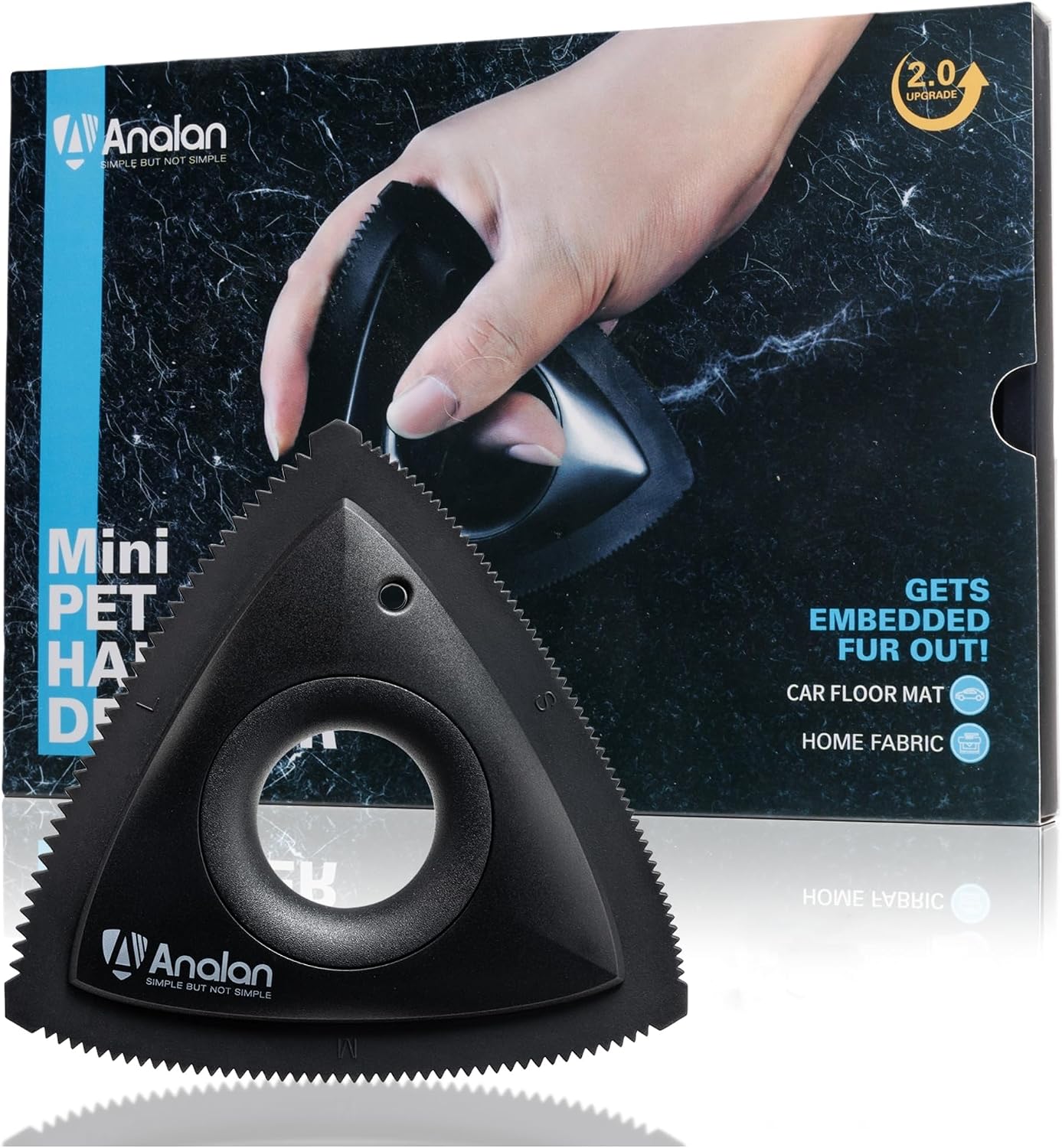
Analan Mini Pet Hair Remover for Car Detailing Dog Hair Tool Brush (Black)
Cheapest way to get the hair that already escaped off seats, carpet and bedding
Never touches the coat, so it cannot replace washing or drying
Prices and availability may change.
What the two halves of a long-haired routine actually do
Shampoo has one job: lifting oil, dirt, dander, and odor out of the coat and off the skin underneath it. On a long-haired dog that job is harder than it sounds, because the product has to travel through a lot of coat to reach skin. Coat type matters. A silky single coat lets shampoo through quickly. A dense double coat with a heavy undercoat holds water and product the same way it holds heat.
Drying is a different job entirely. Moving air separates hairs, lifts the coat off the skin, and carries moisture away. A towel presses water into the undercoat about as often as it pulls water out, which is why the difference between dog dryer and dog shampoo for long haired dogs comes down to which stage of the routine you are trying to fix.
Rinsing is the step people rush. Leftover shampoo in a dense coat attracts dirt and can irritate skin, so a long-haired dog needs more rinse time than a short-coated one, not less. Then drying starts, and airflow rather than heat does the work. Plenty of coat problems owners blame on shampoo are really drying problems: a damp undercoat, mats forming behind the ears, and that wet-dog smell that shows up a day later.
Where dog dryer vs dog shampoo for long haired dogs gets decided
Three things decide how much of your grooming budget goes to washing and how much goes to drying: coat type, undercoat density, and the amount of time you can realistically give the routine each month.
A long-haired dog with a light, silky coat that air dries in an hour does not need much drying hardware. A double-coated dog that stays damp for six hours does, because the undercoat holds water close to skin and mats form in the damp. Search dog shampoo for long haired dogs vs dog dryer and you mostly get brand pages pushing one side. The useful split is simpler: shampoo is a consumable you rebuy, drying is equipment you buy once.
One note on scope. The products compared here cover the wash step and the mechanical side of coat care, which means a shampoo, two grooming vacuums that supply suction and moving air through a brush or hose, and a hair removal tool for the surfaces the dog touches. A floor-standing stand dryer is not part of this batch. Where this article says airflow, it means the moving air a grooming vacuum delivers through its attachments, not the volume a dedicated stand dryer produces.
The wash step: Lillian Ruff PRO Formula Deodorizing Oatmeal Dog Shampoo
Oatmeal concentration is the number that matters most in a shampoo built for itchy skin. The Lillian Ruff PRO Formula lists oatmeal first among its actives, alongside aloe, coconut oil, lavender, and provitamin B5, and it is sold as a deodorizing formula for dogs with dry, itchy, or allergy-prone skin. It is made in the USA and ships as a 16oz bottle with a brush included, which matters more than it sounds on a long coat, because a brush helps you work lather down to skin instead of piling it on top of the hair.
Where this bottle wins is the part of grooming that has to happen before any dryer or vacuum gets involved. A clean coat dries faster, smells better, and sheds out more easily, because loose undercoat releases when the hair is clean rather than greasy. The brush in the box also gives you a way to check the rinse, since you can feel residue on the bristle type as you work.
Where it loses is everything after the rinse. A shampoo cannot pull water out of a dense coat, cannot shorten drying time, and cannot do anything about the hair your dog leaves on the couch. Visit on Amazon
The mechanical side: grooming vacuums that supply suction and air
The Afloia 6-in-1 Dog Grooming Kit is the broader of the two kits here. It bundles a clipper, a nail trimmer, a grinder, and grooming brushes into a vacuum body with a 1.5L dust cup, and the listing describes it as a low noise design for pets that dislike the noise of a full grooming salon. For a long-haired dog, the shedding brush and the clipper are the two attachments that earn their place. One loosens and collects undercoat before it lands on the floor, and the other handles sanitary trims and the mats that form behind the ears and under the collar. The trade-off is price and finish, because it costs more than the FIXR kit and comes in pink only. Visit on Amazon
The FIXR Dog Grooming Vacuum takes the same idea and narrows it. It is an all-in-one kit with a hair clipper and a shedding brush, rated at 12,000Pa of suction, and sold with cleaning brushes for the unit itself. Low noise is part of the pitch here too, and for a long-haired dog the shedding brush does the work that matters most, pulling loose undercoat into the cup instead of letting it drift onto the rug. What it lacks next to the Afloia kit is the nail side of grooming, so you either trim nails by hand or buy that tool separately. Visit on Amazon
Two things are worth separating here, because the listings blur them. Suction is how hard the unit pulls air and hair into the cup. Airflow is how much air moves across the coat, which is what actually dries a dog. A grooming vacuum with a strong motor and a good brush does a real job on loose undercoat and on surface moisture, but it is not a stand dryer, and no attachment turns it into one. Motor noise matters for the same reason: a unit a nervous dog will tolerate for twenty minutes beats a louder one that ends the session in five.
A blade guard is the other spec to check before you clip anything on a long-haired dog. Guard combs set the length, and on a double coat you generally want to leave enough length that the undercoat still insulates. A grip handle that stays comfortable through a full session matters more than most people expect, because grooming a long coat is a two-hand job.
The tool that handles what escapes: Analan Mini Pet Hair Remover
Every long-haired dog owner eventually notices that the hair problem does not end at the dog. It ends on the back seat, the stair carpet, and the one chair the dog is not supposed to use. The Analan Mini Pet Hair Remover is a small detailing brush built for exactly that, and it is the cheapest item in this comparison by a wide margin.
It is not a grooming tool in the coat-care sense. It never touches the dog, so it cannot replace shampoo or drying, and it will not loosen undercoat. What it does is clean up the hair that grooming did not catch, which is a different and much smaller problem. If you already own a shedding brush and a shampoo that suits your dog, this is the add-on that makes the car usable again. If you do not, buy it last. Visit on Amazon
Trade-offs: cost, motor noise, and drying time
Cost is the easiest trade-off to read. Shampoo is a recurring expense, and a 16oz bottle goes further on a small dog than on a Newfoundland. Grooming vacuums are a one-time purchase that covers several jobs, which is why they look expensive next to a bottle and cheap next to paying a groomer every six weeks.
Motor noise is the trade-off that decides whether the equipment gets used. A vacuum that spooks your dog turns a twenty-minute session into a wrestling match, and a half-done grooming session is worse than none, because a partly dried undercoat mats faster than a wet one. If your dog is noise sensitive, run the unit in the same room while it is switched off for a few days before you touch the coat with it.
Drying time is the trade-off that most changes your week. Washing a long-haired dog without any moving air means a damp undercoat for hours and a house that smells like a wet kennel. Adding airflow shortens the dry and lets you finish the job in one sitting, which is the real argument for buying equipment rather than another bottle.
Storage and cleanup round it out. A grooming vacuum needs a shelf, a charged battery or a cord, and a dust cup that gets emptied. A shampoo needs a shelf and a rinse. Neither is hard, but the vacuum is the one you have to remember to maintain.
Who should buy which
If your dog has a long coat that dries on its own in under an hour, start with the shampoo and skip the hardware. The Lillian Ruff bottle handles the part of the routine that actually needs a product, and you can add drying equipment later if the coat gets heavier or the winters get wetter.
If your dog has a dense undercoat that stays damp for half a day, buy the shampoo and one grooming vacuum together, and treat the vacuum as your drying and de-shedding tool. The Afloia kit is the broader pick because it covers nails and grinding as well as coat work. The FIXR is the leaner pick if you already own nail tools and want the shedding brush and clipper without paying for attachments you will not use.
If your main complaint is the back seat rather than the dog, the Analan brush is the answer, and it is the only product here that solves that specific problem.
What to do on bath day
Wet the coat thoroughly, work the shampoo down to skin with the included brush, and rinse longer than feels necessary. Towel off the worst of the water, then bring in moving air and work the coat in sections, starting at the hindquarters and finishing at the chest and behind the ears, where mats like to start. Use the shedding brush while the coat is mostly dry, not soaking, so the loose undercoat comes out instead of balling up.
If you are still weighing dog dryer or dog shampoo for long haired dogs, the answer is both, in that order, and the drying half is the half that decides whether the bath was worth the afternoon. Buy the wash step first, because it is cheap and it is the one you will repeat for the dog's whole life, then add airflow when the coat tells you it is time.