Kibble goes stale in a folded-over bag long before the bag is empty, and the fix is not a bigger bin. Real dog food storage is a chain: the container that keeps air out, the scoop that measures a portion, and the bowl the portion lands in. Break one link and the rest stops mattering. A bowl that is too small turns every meal into two pours. A bowl that sits too low puts a large dog's neck at an angle it will not hold for long. A bowl that never gets properly washed undoes everything the airtight seal was protecting.
This dog food storage guide is about the end of that chain, because the bowl is where most people guess. The four picks below cover four jobs: a raised stand for a large dog, a stainless set for daily rotation, a travel dish that lives in a bag, and a bulk set for a multi-dog house. None of them is a kibble bin and none of them claims to be. What they do is make the portion you pull out of storage measurable, repeatable, and easy to clean.
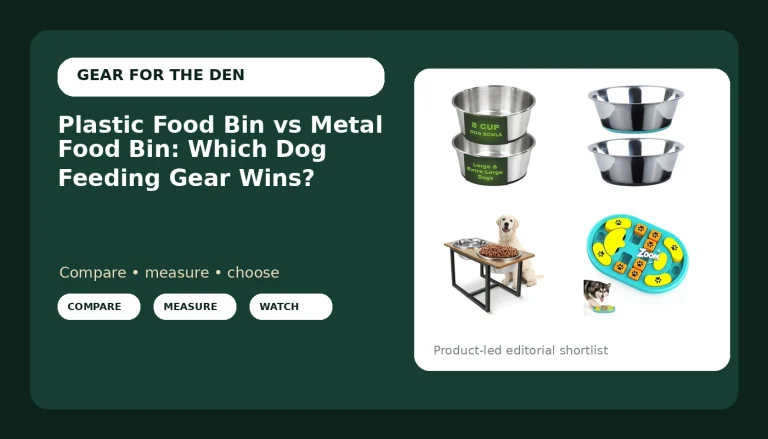
Best Overall: Spacnom Elevated Dog Bowls, Raised Dog Bowls Stand for Large Dogs
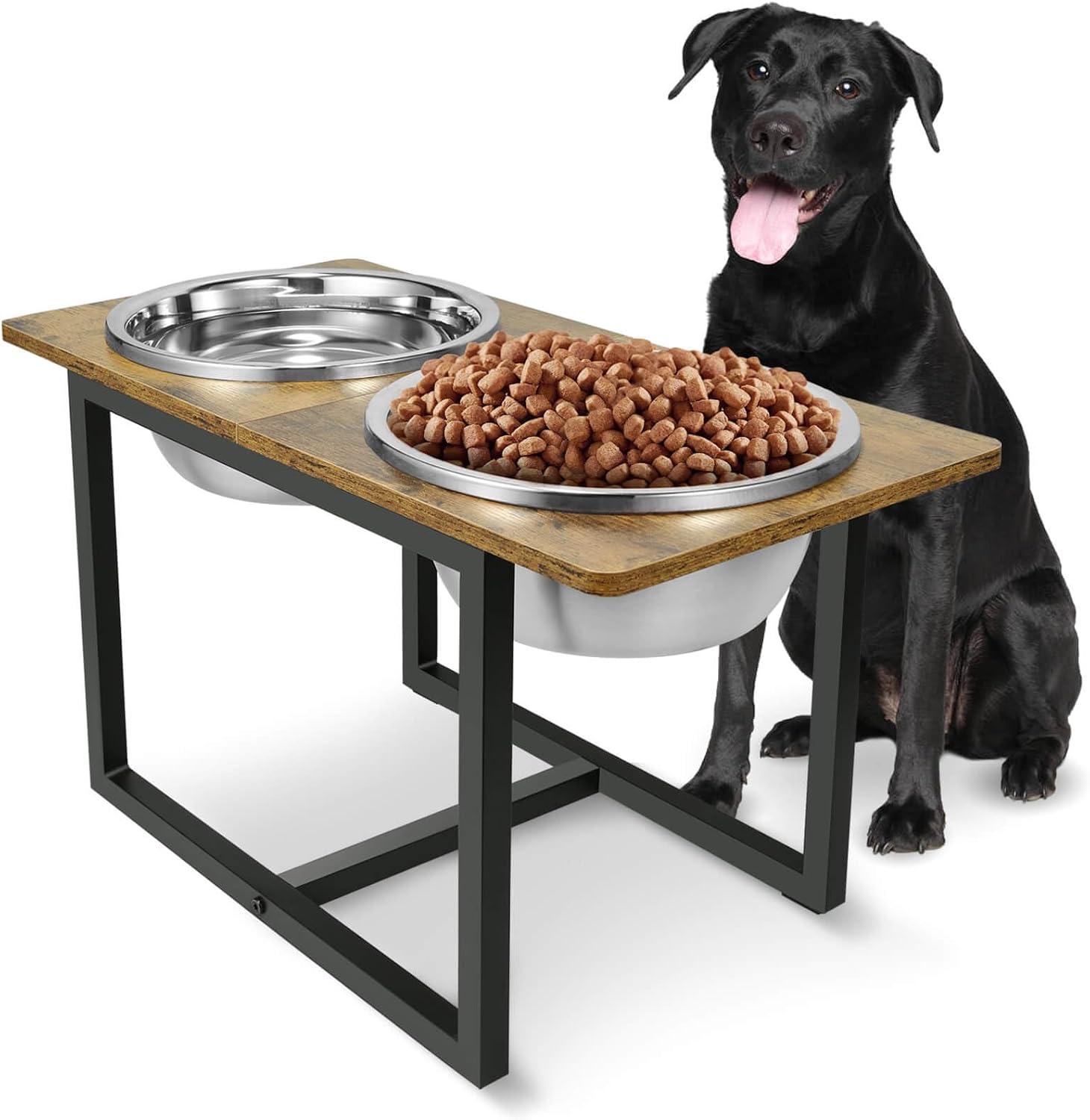
This is the pick for a big dog, and it is where I would start if your dog is past about 60 pounds. The stand raises the bowl to a feeding height that keeps a large dog's neck and front legs in a more natural line instead of dropping its head to the floor for every bite. If you have watched a big dog eat off a floor-level dish, you have seen the shoulders hunch and the front paws creep forward with each mouthful.
The stand format also solves a problem that has nothing to do with comfort: a bowl seated inside a stand cannot be pushed across the kitchen. A non slip base matters more than most people expect, especially on tile, and this one is built as a stand first rather than a bowl with a rubber ring glued to the bottom.
For water, a raised stand makes a larger water capacity workable, because the bowl is not sitting in the path of a wagging tail at floor level. Fill it in the morning and it is still there at night. That is the difference between a dog that drinks through the day and one that empties a shallow dish by noon and then waits.
Stainless is the material to look for here, and a stand like this takes stainless bowls. Stainless does not hold onto oils the way plastic does, it does not scratch into a surface that traps bacteria, and it is dishwasher safe. If you have ever scrubbed a plastic bowl and still smelled kibble on it, you know why that matters.
Two things to know before you buy. Measure your dog's shoulder height and check it against the stand's height, because a stand that is too tall is worse than the floor. And a raised bowl is not a slow feeder. If your dog inhales its food, you want slow feed ridges, and this is not that product.
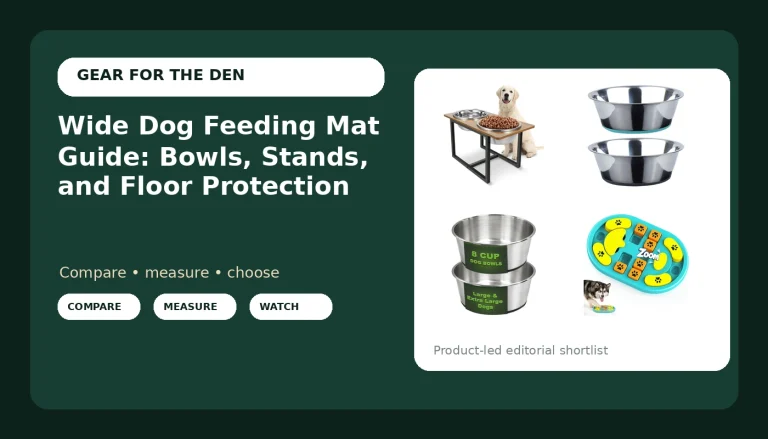
Best Value: STAOVA 4 Pack Stainless Steel Dog Bowls, 29 OZ Metal Dog Bowls, 3.6 Cups
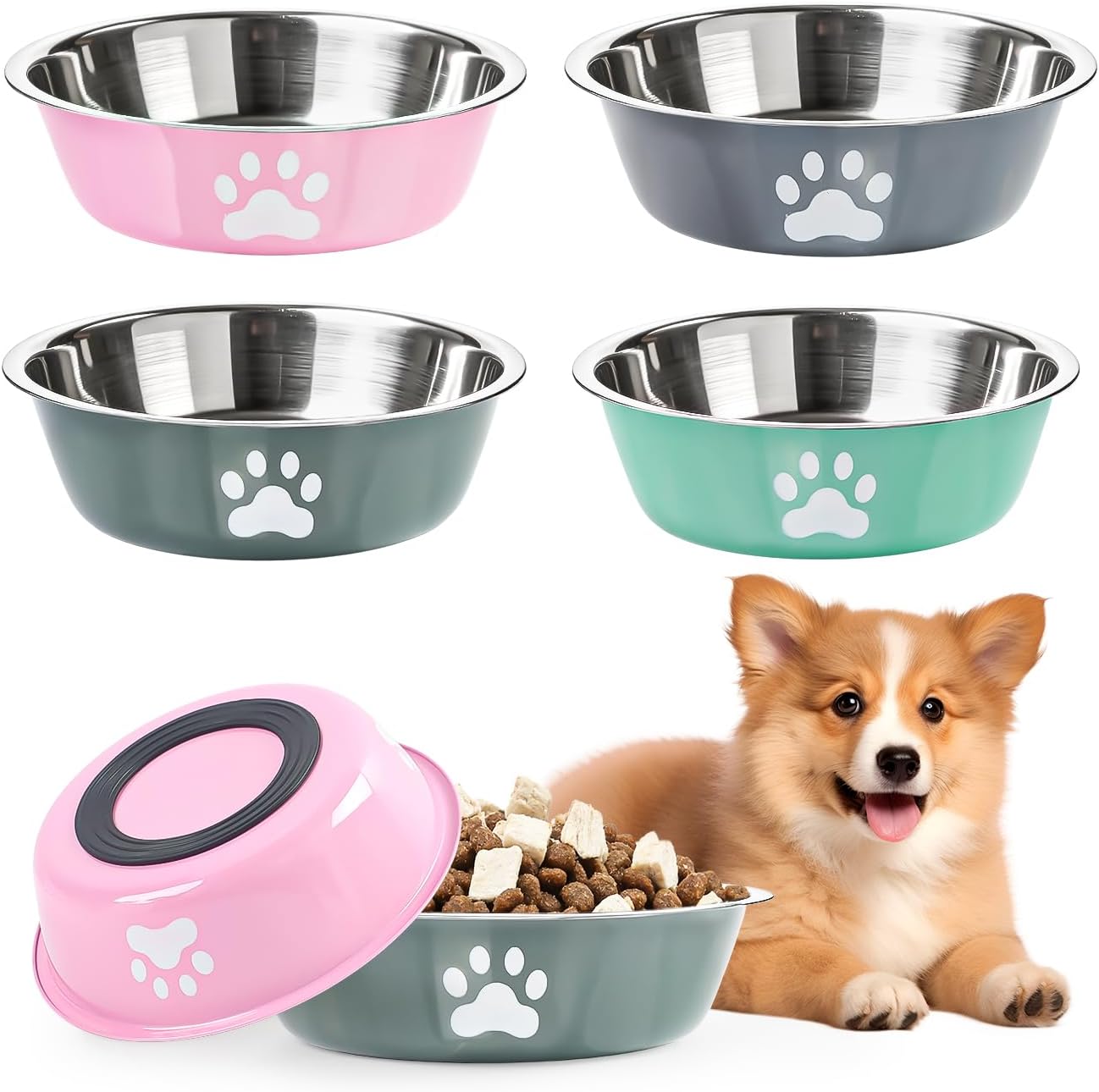
Four stainless bowls instead of one is the whole argument, and it holds up. The bowl capacity on each is 29 ounces, or 3.6 cups, which is a full meal for a medium dog and a reasonable single serving for a large one. Because you get four, you can keep two in the cabinet and two in the wash, which means the rotation never stalls on a night when you do not feel like doing dishes.
That rotation is the real value. The most common feeding mistake I see is a bowl that gets rinsed and refilled for days because it is the only one the dog will eat from. Four identical bowls break the habit. Dirty bowl goes in the dishwasher, clean bowl comes out, food goes in. Stainless survives that cycle for years, where a plastic bowl starts to haze and hold odor within a few months.
The capacity also makes these useful beyond the food bowl. At 29 ounces, one of them works as a water bowl for a medium dog or a backup dish in a second room. If you travel with your dog, stainless is heavier and less packable than a collapsible dish, so keep a collapsible in the car and leave these at home.
What you give up is the raised feeding height. These sit on the floor, which is fine for a small or medium dog and less ideal for a large one with joint issues. There are no slow feed ridges, so a fast eater will still finish in under a minute. And there is no non slip base, so on a hard floor you may want a mat underneath.
For a household that just needs clean bowls on a reliable schedule, this is the sensible buy.
How I tested
Every bowl here gets judged against the same short list, because bowls are simple objects and the differences that matter are easy to check.
Bowl capacity comes first. A stated capacity is only useful if it matches the portion you actually feed, so the question is whether the fill line lands where the number says it will. A bowl that claims 3.6 cups and tops out at 3 is a bowl that gets overfilled every night.
Feeding height is next. For a large dog, the question is whether the bowl sits high enough that the dog is not reaching down past its chest. That is why the raised stand wins for big dogs and why a floor-level bowl is the right answer for a small one.
Then the boring details that decide whether you keep using a bowl: dishwasher safe or hand wash only, a non slip base or a bowl that skates across tile, stainless or plastic, and enough water capacity to last a full day without a refill. Slow feed ridges get noted too, because they are either a feature you need or one you do not, and buying them by accident is annoying.
Looks do not enter into it. A bowl is a tool. It either makes feeding easier or it does not.
Analysis and test results
The pattern across all four picks is that the bowl matters less than the system around it. What most people call correct dog food storage is a sequence, and the bowl is the last step: kibble comes out of a container with an airtight seal, gets measured with a scoop, lands in a bowl, and the bowl goes in the dishwasher that night. Skip the seal and the kibble goes stale. Skip the dishwasher and the bowl becomes the least hygienic object in the kitchen.
There is no single ideal dog food storage product, and anyone selling you one is selling you a bin. What you actually want is repeatable portions. A bowl with a known bowl capacity makes that possible, because you stop eyeballing the scoop. If you free-pour kibble, you cannot tell whether your dog is eating 3 cups or 4, and that is the number that decides whether the weight stays where you want it.
Water is the other half of the job. A raised stand with real water capacity beats a shallow dish you refill three times a day, and if you run a fountain, remember the bowl still has to be cleaned even though a filter cartridge is handling the water. The fountain handles freshness. You handle the film that builds up on the bowl itself.
The two bowls in the reference table that do not get a headline section are there for good reasons. The collapsible travel dish is the one that lives in a bag, and the ten-pack of large stainless dishes is for a house with more than one dog, or a foster setup where bowls go missing. Neither is a daily driver for a single dog in a single-bowl home, and both are exactly right in their niche.
What none of these products fix: a dog that bolts its food, a dog that needs a raised bowl and a slow feeder at the same time, and a bag of kibble stored in a hot garage. Those are three separate purchases, and this guide is honest about which one it is making.
The dog food storage reference table
This is the table I keep open when someone asks which bowl to buy. Capacity figures come from the product listings; where a listing does not state one, I say so rather than guess. Every row links to the product page so you can confirm the details yourself.
| Bowl | Bowl capacity | Best for | Price |
|---|---|---|---|
Spacnom Elevated Dog Bowls | Not stated in the listing | Large dogs, raised feeding height | Check current Amazon price |
STAOVA 4 Pack Stainless Steel Dog Bowls | 29 oz / 3.6 cups each | Daily rotation, dishwasher safe | Check current Amazon price |
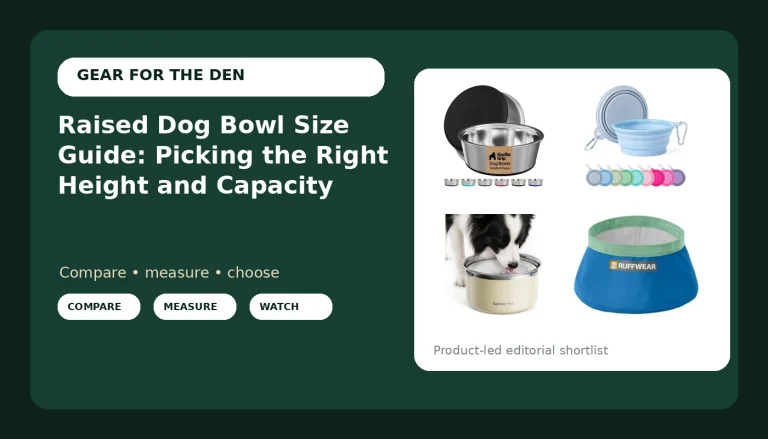
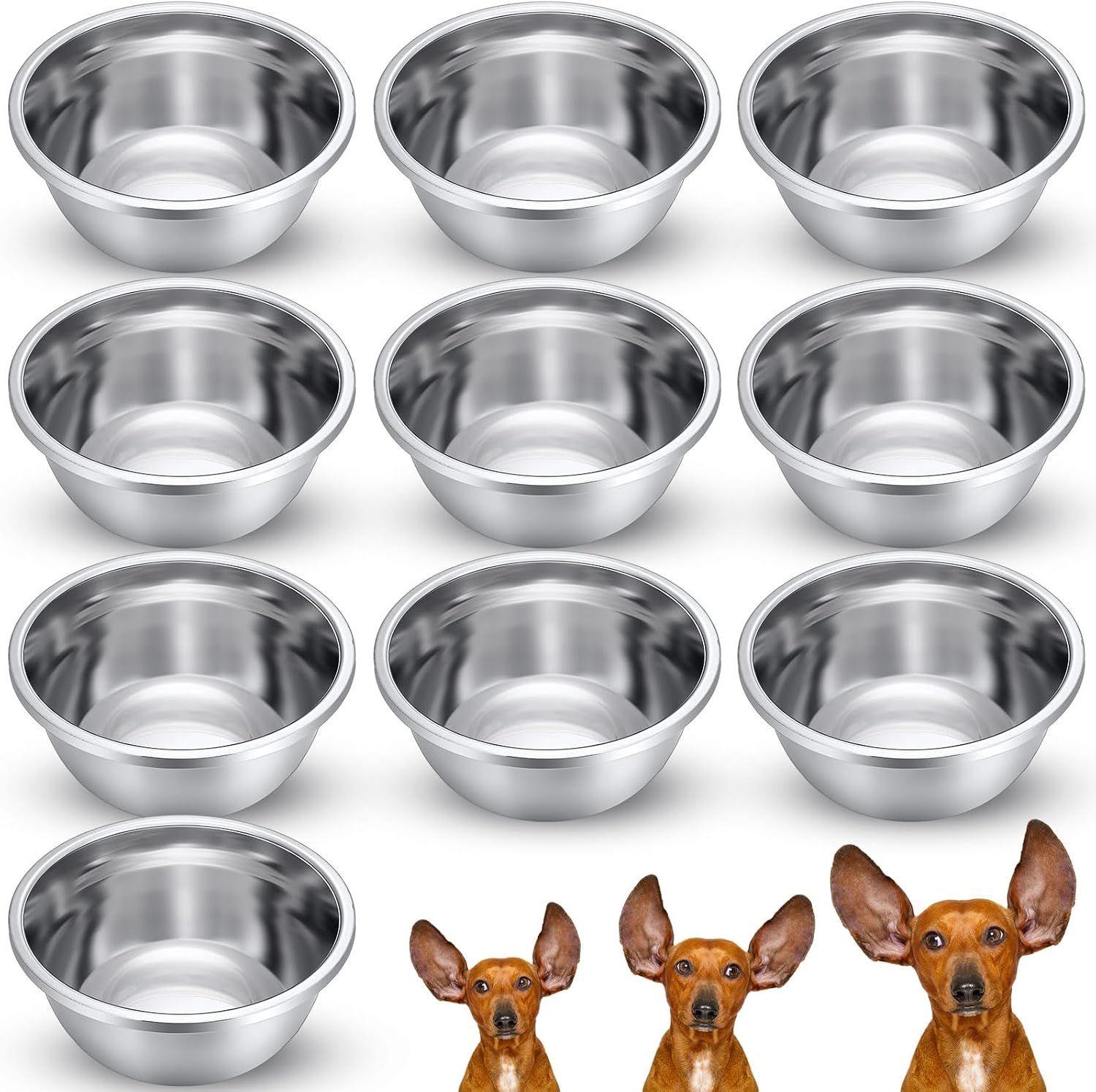 Ziliny 10 Pcs 8 Cup Metal Dog Bowls | 8 cups / 64 oz each | Multi-dog homes, water bowls | View on Amazon → |
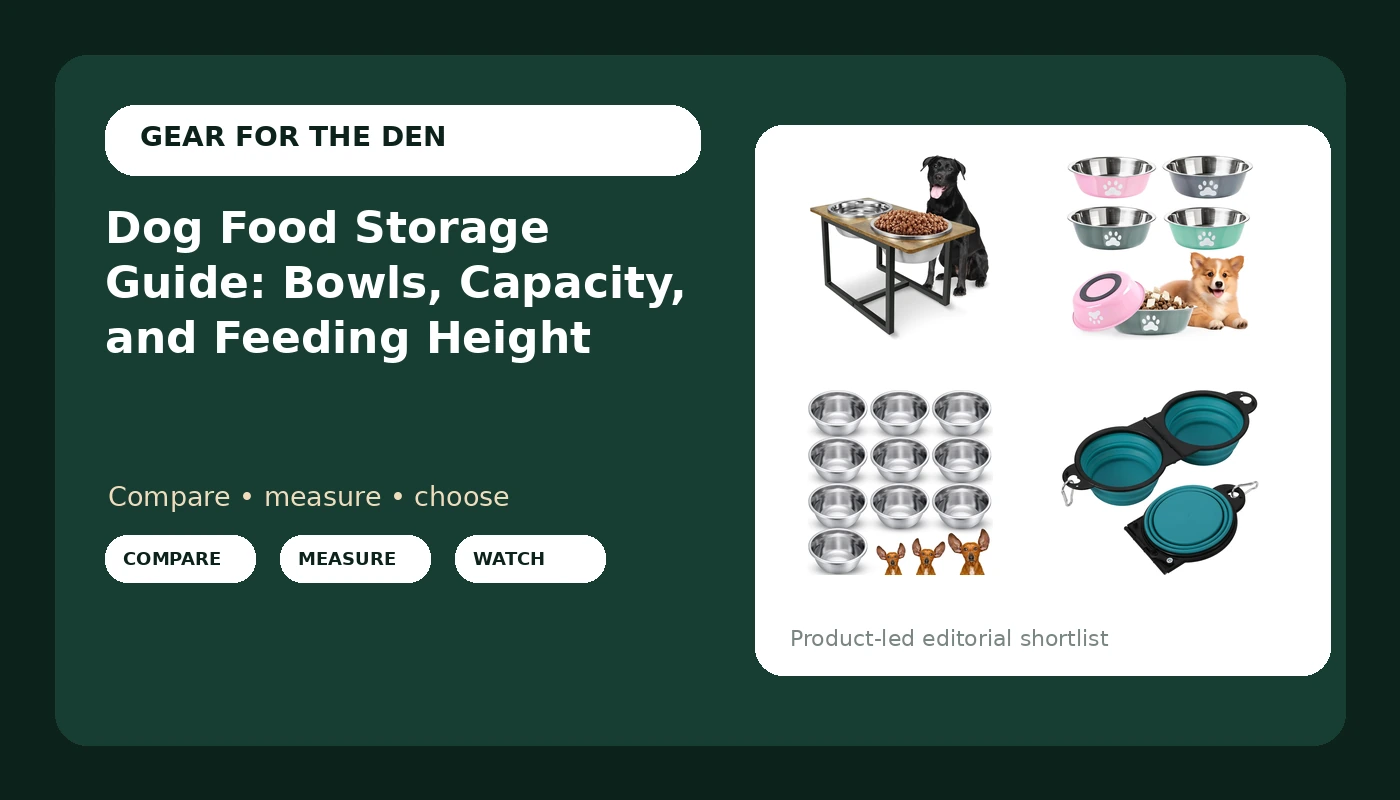
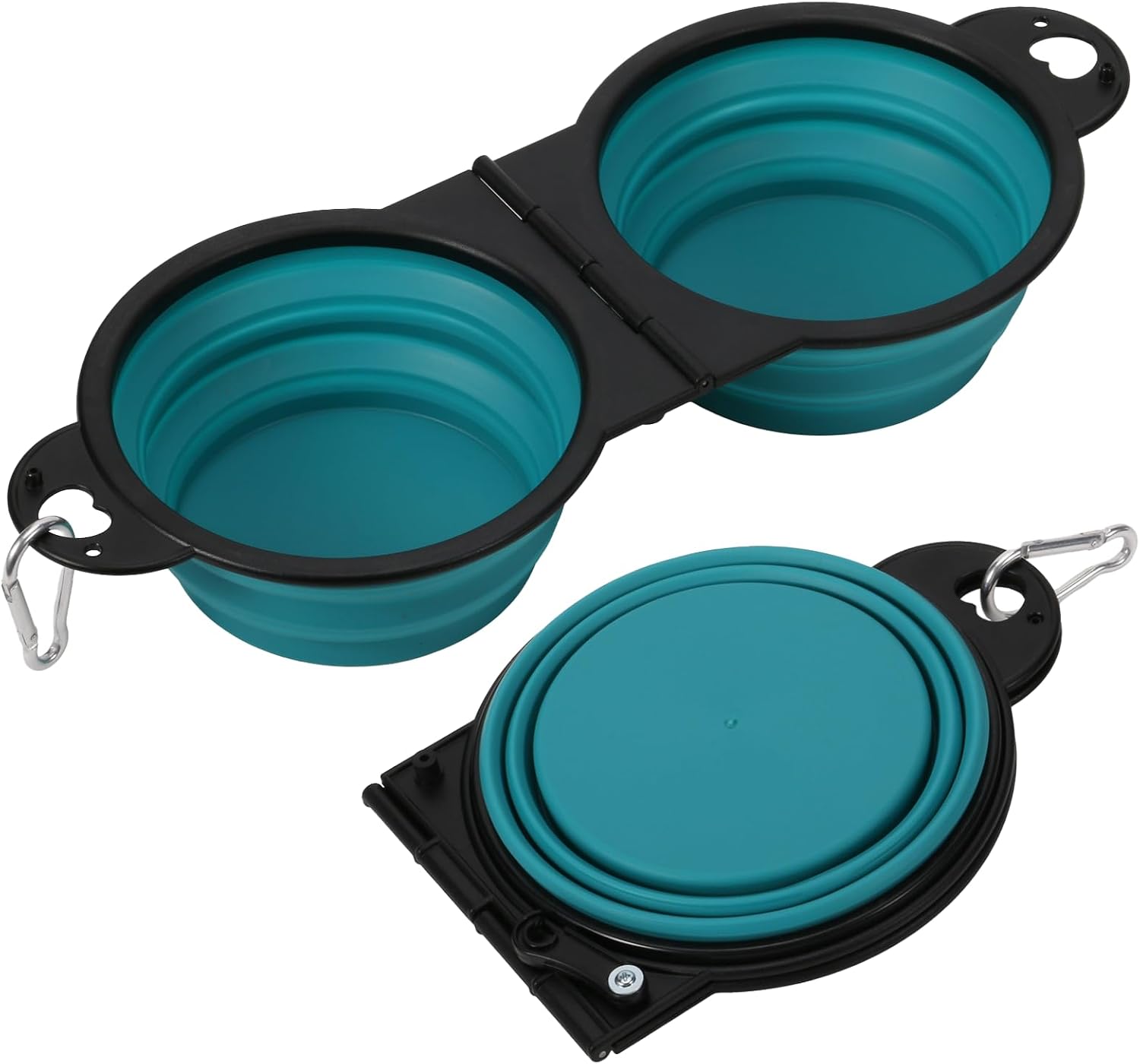 HDhqzm Collapsible Dog Bowls | Not stated in the listing | Travel and the car | View on Amazon → |
Raised stands versus floor bowls
The feeding height question splits cleanly. A raised stand is the better choice for a large dog, a senior dog, or a dog with neck or joint issues, because the dog eats with its head closer to level and its weight more evenly on all four legs. A floor bowl is the better choice for a small dog, a puppy that is still growing into its height, and any dog that prefers to eat lying down, which some do.
The mistake is buying a stand that is too tall. A stand that forces a dog to reach up is worse than the floor, because now the neck is extended instead of dropped. If you cannot check the height in person, err on the low side and let the dog grow into it.
There is a second benefit to a stand that people miss: the bowl stays put. A non slip base under a raised bowl does more for a messy eater than any mat, because the bowl cannot be shoved into the water dish and tipped. If you are sorting out dog food storage for a big dog, this is the piece that changes the daily routine most.
If your dog is a fast eater, a raised stand does not slow anything down. You would need slow feed ridges for that, and most raised stands do not have them.
Collapsible travel dishes and bulk sets
The other two picks solve two different problems.
The collapsible travel dish is for the car, the trail, and the hotel room. It folds flat enough to live in a bag, it weighs almost nothing, and it gives a dog somewhere to drink that is not a shared water bottle. What it is not is a daily bowl. It is too light to stay put on a hard floor and too small to hold a full meal for a big dog.
The ten-pack of large stainless dishes is the opposite trade. Each bowl holds 8 cups, which is more than most dogs need in one sitting but exactly right as a water bowl or for a household feeding several dogs at once. Ten bowls means you can run a full dishwasher load and still have clean ones in the cabinet. If you foster, this is the set that ends the scramble.
Buy one or the other, not both, unless you have a specific reason. A single dog in a single-bowl home needs neither.
Should you buy Spacnom Elevated Dog Bowls, Raised Dog Bowls Stand for Large Dogs?
Yes, if you have a large dog and you are still feeding off the floor. The raised stand puts the bowl at a feeding height that suits a big dog's frame, and the stand format means the bowl stays where you put it instead of sliding across the kitchen. Stainless bowls in a stand are also the easiest setup to keep clean, which matters more than most people admit at the register.
No, if your dog is small, if your dog is a puppy still growing into its height, or if your dog needs slow feed ridges. A stand does not slow a fast eater down and it does not help a dog that eats lying down.
Also skip it if you want one product to do everything. A raised stand is a fixed piece of furniture in your kitchen, and it takes up floor space that a stack of stainless bowls does not. That is the trade. If you have the room and a big dog, take it.
Should you buy STAOVA 4 Pack Stainless Steel Dog Bowls, 29 OZ Metal Dog Bowls, 3.6 Cups?
Yes, if you want clean bowls without thinking about it. Four stainless bowls at 29 ounces each means one in use, one in the wash, and two in the cabinet, and the whole rotation runs on the dishwasher. That is the entire value proposition, and it is a good one.
No, if you need feeding height. These sit on the floor, so a large dog will be reaching down. No, if your dog eats too fast, since there are no slow feed ridges. And no if you are buying for travel, because stainless does not collapse into a bag.
For a medium dog in a normal household, this is the set I would hand someone first. It is the least interesting purchase in this guide and probably the one you will still be using in five years.