If you have spent an evening searching dog gate vs dog door for a small dog, you already know the two answers come from different philosophies. A gate blocks a passage you already have. A dog door creates a new opening and hands the timing to the dog, which usually means cutting into a wall, a door, or a sliding panel. The gate side of that question has changed a lot in the last few years, because freestanding and folding gates now cover doorways, stair tops, and wide room openings without a single screw. The four products below are the clearest examples of that shift, and they also mark the point where a gate stops being the answer and a different kind of product takes over.
For most small-dog households, a freestanding gate with a built-in walk-through door is the better first buy, because it solves a doorway problem without permanent changes to a rental. The exception is a dog that needs to reach the yard while you are away, which is a dog door problem, and no gate on this list will fix it.
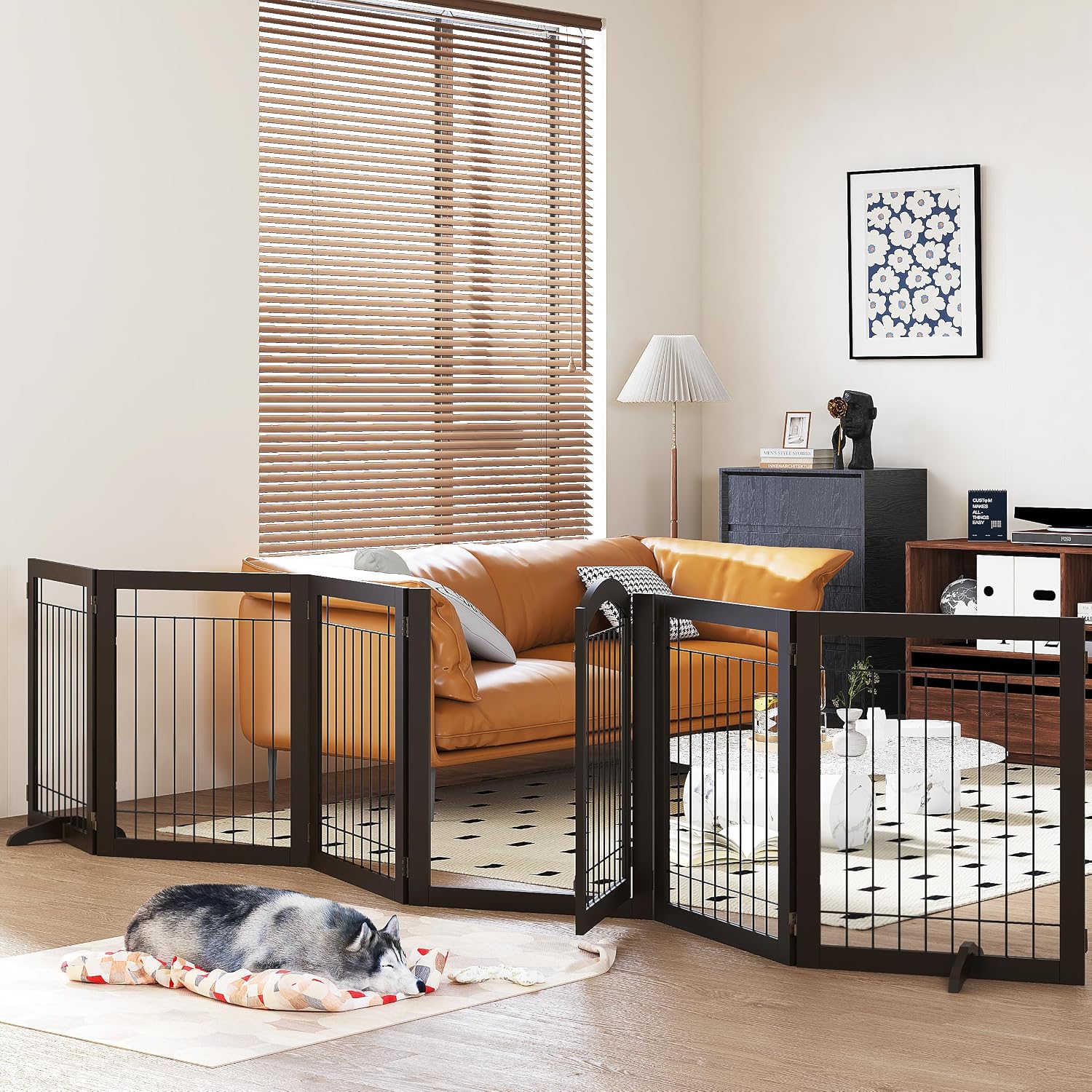
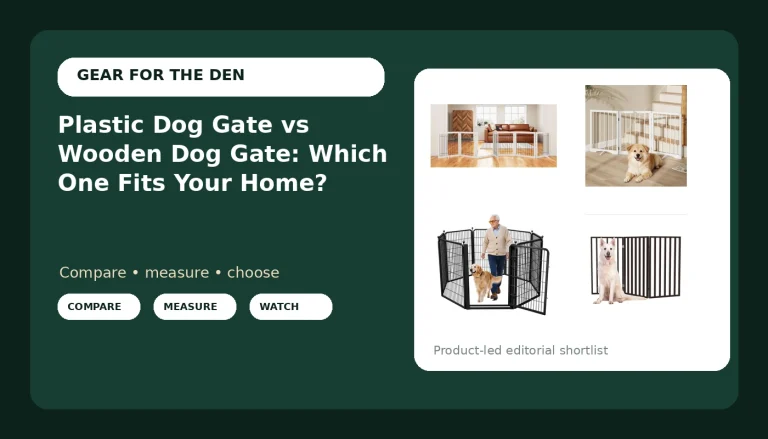
PAWLAND Dog Gate Indoor with Door, Freestanding, Foldable, 144 Inch Wide, 30 Inch H
Widest coverage in this group at 144 inches, with a built-in walk-through door and no mounting hardware
The 30 inch height is the lowest here, and a 144 inch span needs real floor space
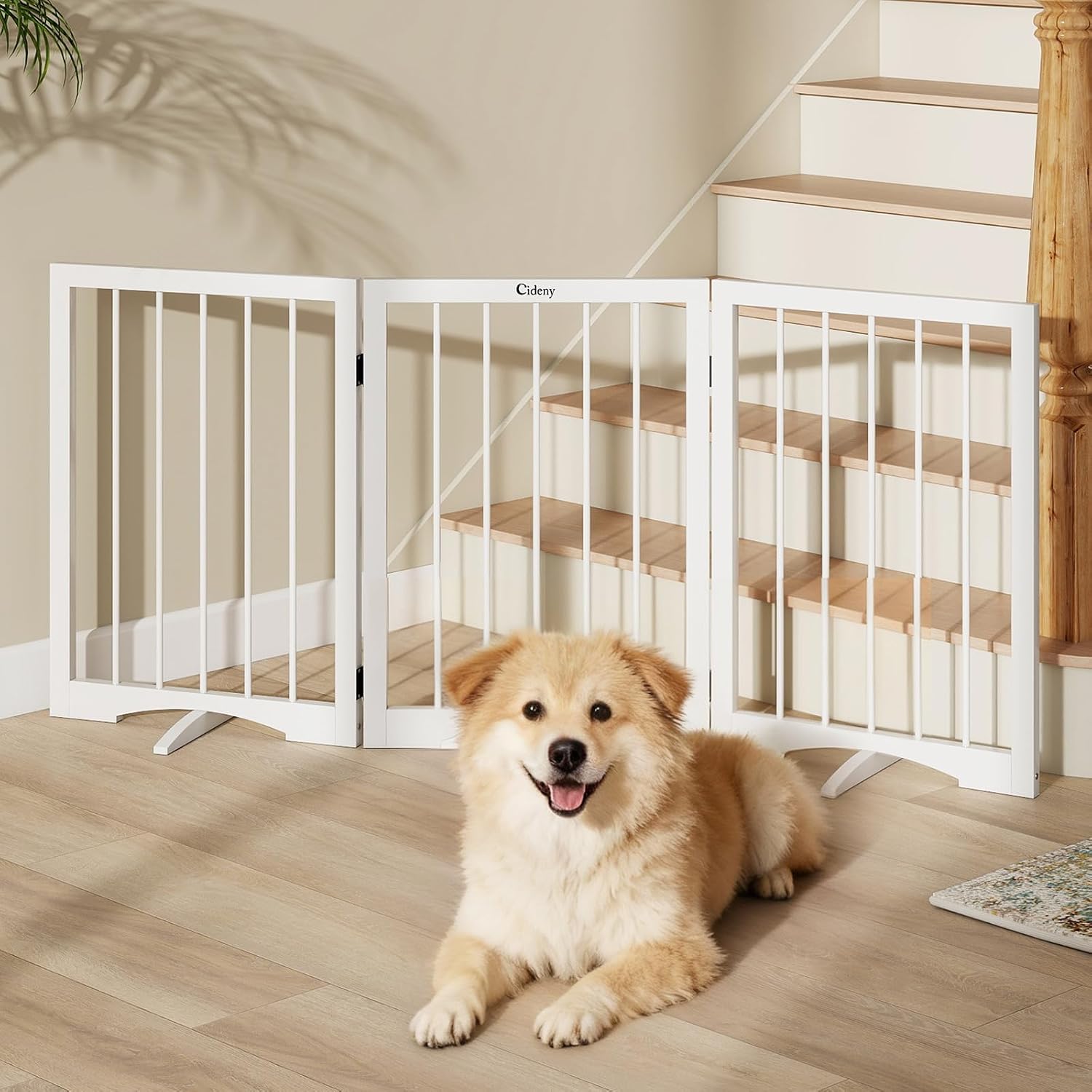
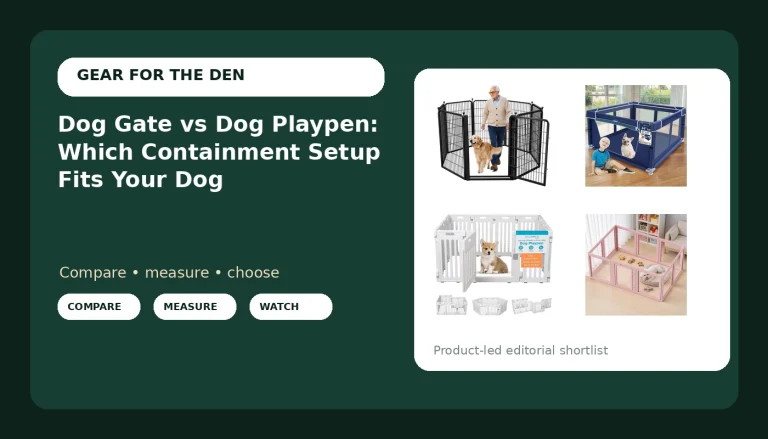
Free Standing Dog Gate Indoor, Foldable Dog Gate for Stairs Doorways
Simplest folding gate here, easy to move between a stair top and a doorway, no tools and no brackets
Covers one opening at a time, with no walk-through door and no extra panels
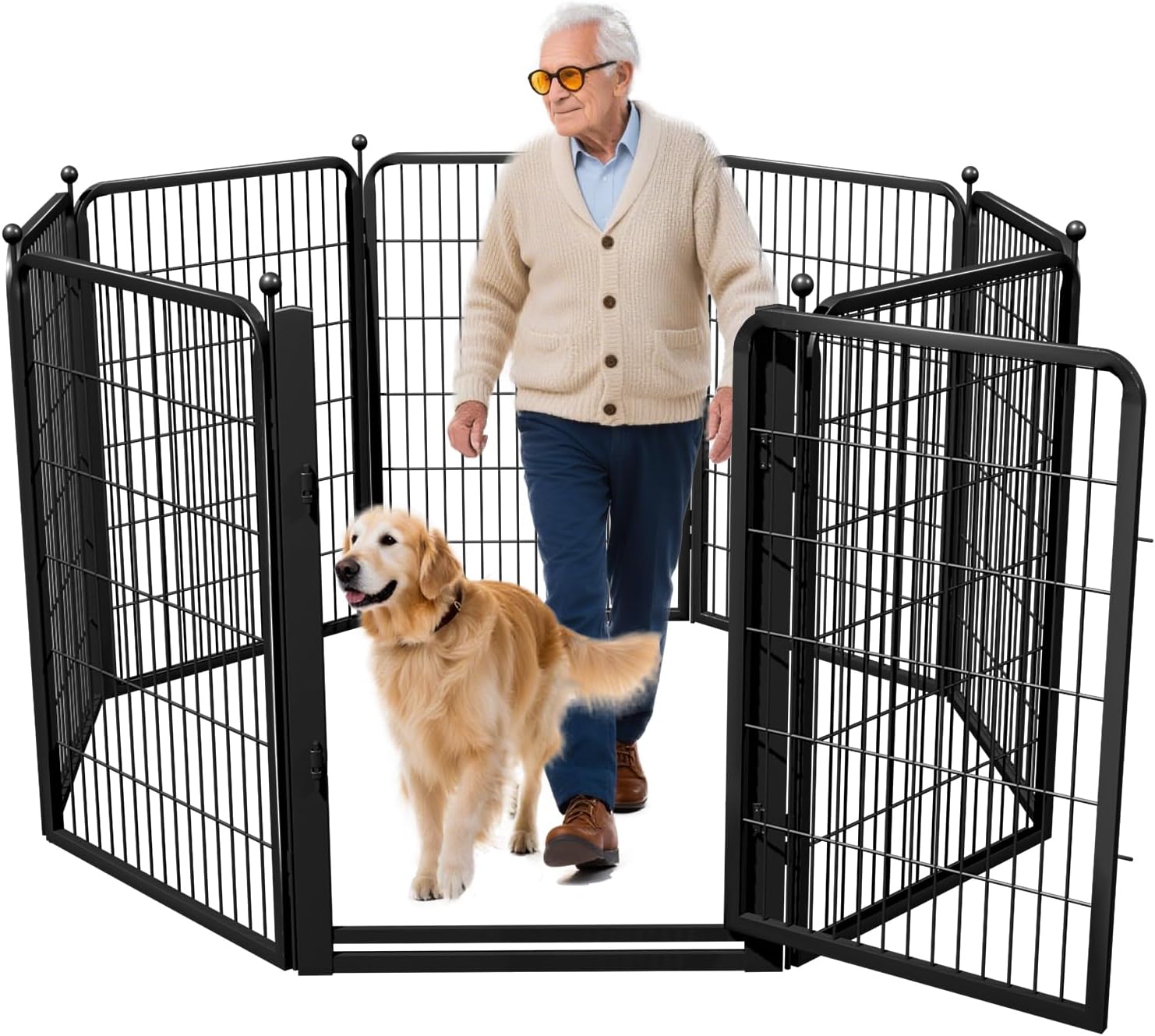
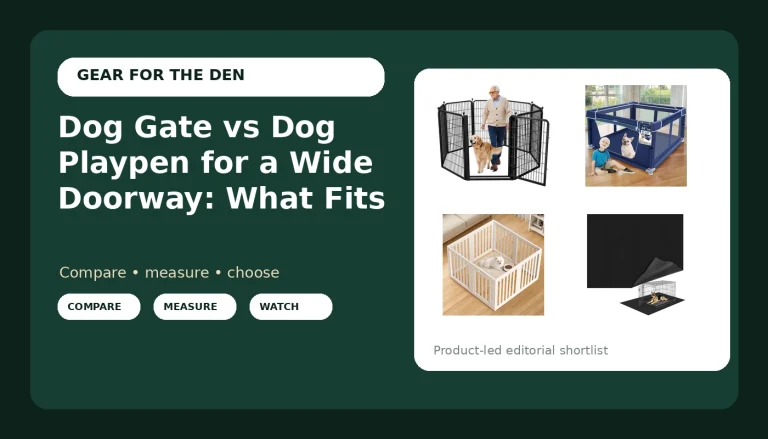
Jhsomdr Dog Playpen, 40 inch 8 Panels Dog Fence with Extra Wide Gate, No-Tripped Pet Playpen Rustproof
Tallest barrier at 40 inches, eight panels to reshape, extra wide gate, rustproof for indoor and RV use
Biggest footprint of the four, and it contains a zone rather than closing a doorway
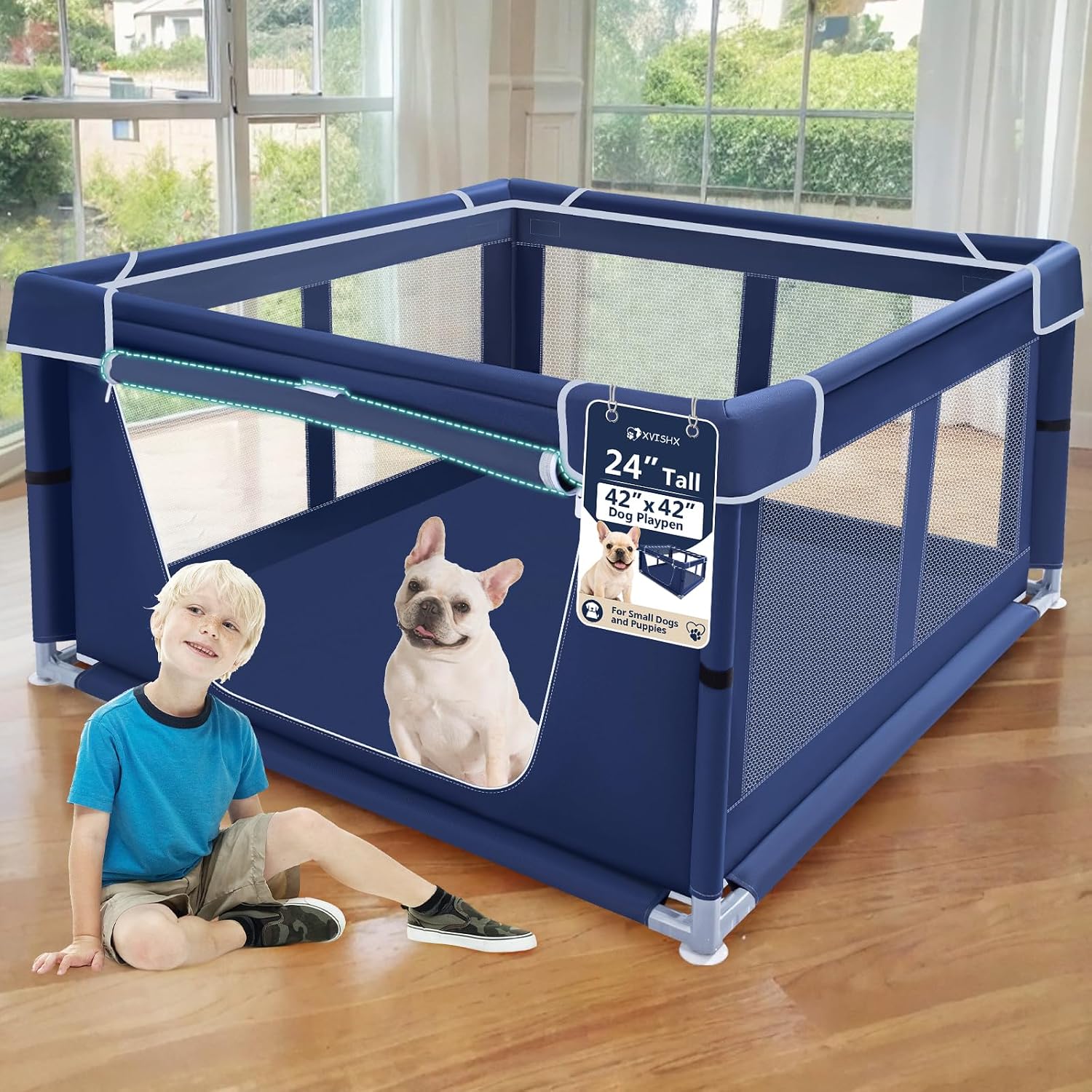
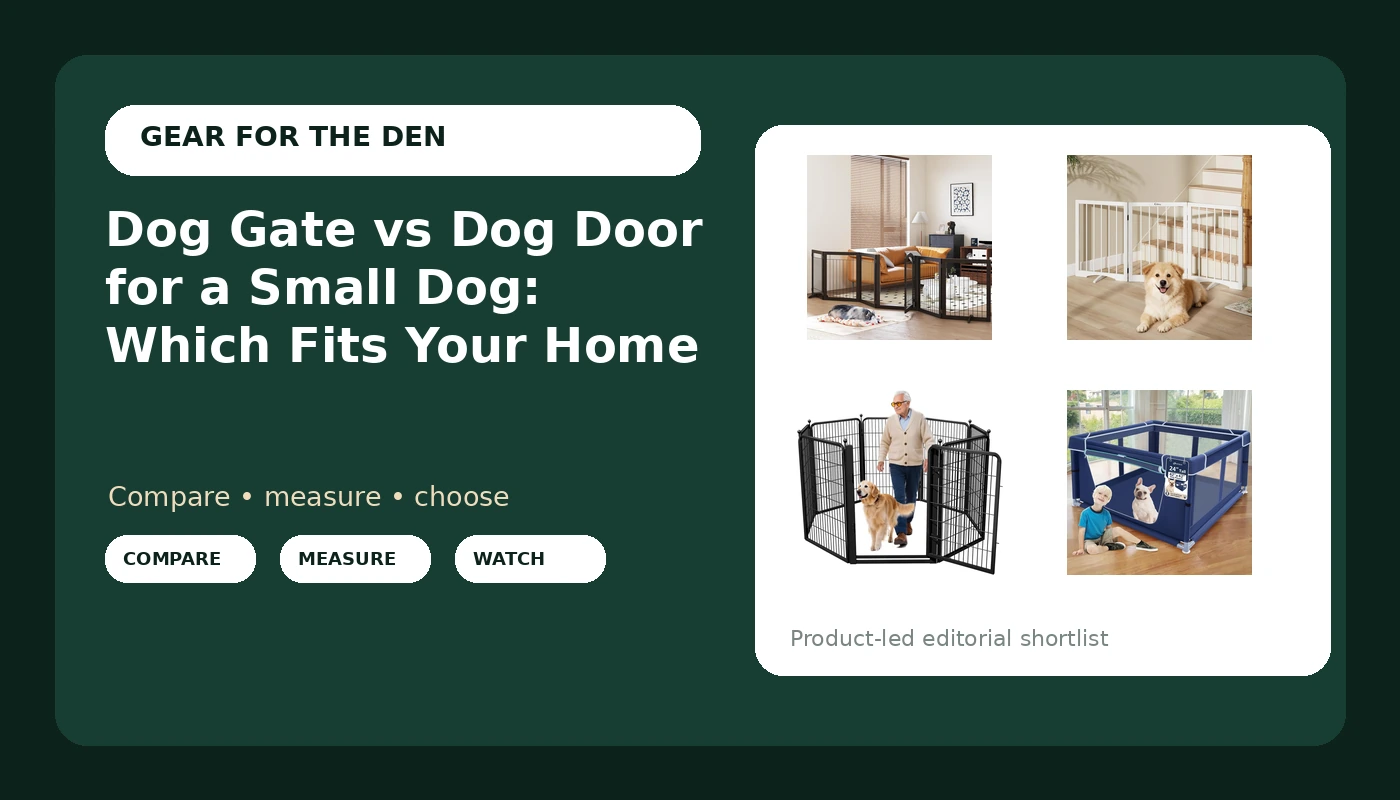
XVISHX 42×42 Inches Puppy Playpen with Gate, Dog Playpen for Puppies or Small Dogs
Soft-sided 42×42 footprint with a gate, thickened fabric and nylon wire mesh, indoor and outdoor use
Fabric is a boundary, not a chew-proof barrier, and it needs a sensible floor underneath
Prices and availability may change.
Dog gate vs dog door for a small dog: the decision in one line
Strip away the product photos and the decision is about control. A gate keeps a small dog on the side of the boundary you choose. A dog door removes the boundary and hands the schedule to the dog, which is either the entire point or a serious problem, depending on your fence, your yard, and your neighbors.
The search dog gate or dog door for a small dog is so common because both products are marketed with the same two words: freedom and independence. Only one of them gives the dog independence. A gate gives you control and gives the dog a smaller, safer world for a few hours a day.
The difference between dog gate and dog door for a small dog is not really about size. It is about who holds the decision. If you want the dog to stop using the stairs, or to stay out of the kitchen while you cook, you want a gate. If you want the dog to reach the yard at two in the afternoon while you are at the office, you want a dog door, and you should walk your fence line and check your local rules before anyone starts cutting.
Searching dog door for a small dog vs dog gate usually lands you on advice written for large dogs and large yards. Small dogs change two numbers, and both of them sit on the gate: the gap between the bars, and the height of the barrier.
What to measure before you buy
Bar spacing. This is the first number for a small dog. A gap wide enough for a large breed is also wide enough for a determined puppy to squeeze through shoulder first, and a gap narrow enough to stop a six pound dog can catch a leg. Look at the opening you plan to block and picture the narrowest part of your dog.
Gate height. The barrier heights in this group run from 30 inches to 40 inches, plus whatever a soft-sided pen gives you. A 30 inch gate stops almost every small dog that respects a barrier. It does not stop a climber, and small dogs are surprisingly good climbers when a couch is on the other side.
Panel count. A single folding gate covers one opening. An eight panel pen builds a shape. If your problem is a doorway or a stair top, a single gate is the right tool. If your problem is a puppy that cannot be left alone with the couch, panel count is what buys you a safe zone.
Walk-through door versus step-over. A gate with a door means you keep using the doorway normally. A gate without one means you step over it fifty times a day, which gets old by the second week and is why a lot of folding gates end up stored in a garage.
Crate size as a sanity check. Before you buy any pen, look at the crate your dog sleeps in. A pen barely larger than the crate is not a play area, it is a bigger crate. A 42 by 42 inch footprint is generous for a small dog, and an eight panel pen can be shaped larger or narrower depending on the room.
Floor and fabric questions. For soft-sided pens, three details matter more than the photos suggest. Washable fabric matters because puppies are messy. A waterproof layer matters if the pen sits on carpet or on a rug you like. Mat thickness matters for joints, especially in an older small dog. If you add a top or a cover to any pen, cover ventilation matters too, because a closed fabric box gets warm fast in a sunny room.
The four options, one at a time
PAWLAND Dog Gate Indoor with Door. This is the one that behaves most like a doorway solution. It is freestanding, so it needs no brackets and no drill, it folds when you want it out of the way, and the built-in door means adults walk through instead of climbing over. The 144 inch width is the headline number: it can span a wide opening or bend into a U shape around a hearth or a couch. The 30 inch height is the compromise. For a small dog that respects a barrier, 30 inches is plenty. For a climber, it is an invitation. Check current Amazon price on the PAWLAND gate if you need wide coverage with a door in it.
Jhsomdr Dog Playpen. This pen takes the opposite approach. Instead of covering an opening, it builds a room inside your room. Eight 40 inch panels give you a footprint you can reshape, the gate is extra wide, and the finish is described as rustproof, which is why it is sold for RV trips and campsites as well as living rooms. Height matters more than panel count for a small dog here, and 40 inches is the tallest barrier in this comparison. The trade-off is floor space and setup time. An eight panel pen has to live somewhere, and it does not fold away into a closet corner the way a single gate does. Check current Amazon price if a shaped containment zone fits your room better than a doorway barrier.
XVISHX Puppy Playpen. The XVISHX pen is the soft-sided option: a 42 by 42 inch footprint with a gate, built from thickened fabric and high-strength nylon wire mesh and sold for puppies and small dogs, indoors and out. Soft-sided pens are the easiest to move and the easiest to store, and they tend to be kind to floors because there is no metal frame dragging across a finish. The catch is the material itself. Fabric is a boundary, not a chew deterrent, and a determined puppy will test the mesh at the seams. If your dog is a serious chewer, this is the one to skip. Check current Amazon price if you want the lightest, most storable option.
Free Standing Dog Gate Indoor. The second freestanding gate is the minimalist pick. It is foldable, it is sold for stairs and doorways, and it does one job: block one opening. There is no walk-through door and no panel kit, so you step over it or you move it. For a small dog, stepping over a low gate is a minor annoyance, and the payoff is that this is the easiest of the four to relocate from a stair top during the day to a hallway at night. Check current Amazon price if you want one gate that moves with you instead of one gate per opening.
Where a dog door still wins
A dog door wins in exactly one scenario, and it wins completely: your dog needs to get outside, on its own schedule, without you. A senior dog with a weak bladder, a dog that refuses to toilet on a leash in the rain, a household where nobody is home for nine hours. No gate solves that, because a gate cannot open itself, and a pen definitely cannot.
The costs are real, though. A dog door is a permanent modification to a wall, a door, or a sliding panel, which rules it out for most renters and for anyone who does not want to cut into a finished surface. It also puts a hole in your home security envelope, and it puts your dog in the yard unsupervised, which is a fencing problem, a wildlife problem, and a weather problem at the same time. If you are comparing dog gate vs dog door for a small dog and your dog only needs containment while you are in the next room, a gate covers the need for a fraction of the disruption.
Trade-offs nobody mentions until week three
The first trade-off is storage. A folding gate disappears behind a door. An eight panel pen does not, and a pen that has to be assembled every morning stops being used by the second week. Buy for the version of your routine you actually have, not the tidy one you are imagining.
The second is your dog's body. A small dog with a long back and short legs should not be jumping over a 30 inch barrier twice an hour, and a senior dog should not be stepping through a gap that catches a paw. If your dog is older, a walk-through door at floor level is worth more than any other feature on this page.
The third is cleaning. Fabric pens collect hair, drool, and accidents, which is why washable fabric and a waterproof layer matter more than the color. A gate wipes down with a cloth. A pen gets taken apart and hosed off, or it smells.
The fourth is the multi-pet household. A gate separates a small dog from a large one in a way a dog door never can, and it separates a puppy from a cat's litter box, which is the containment problem nobody puts on the box. If you have more than one animal, the gate side of dog gate vs dog door for a small dog is not close.
The bottom line
If your dog needs a boundary inside the house, buy a gate, and buy one with a walk-through door and enough height that your dog cannot climb it. If your dog needs to leave the house on its own, no gate or pen will substitute, and you are shopping for a dog door plus a fence you trust. For everything in between, the four products above cover the realistic range: a wide freestanding gate with a door, a simple folding gate for one opening, an eight panel pen for a shaped zone, and a soft-sided pen for the smallest spaces and the easiest storage. Match the tool to the job, measure your opening before you order, and the choice stops feeling like a coin flip.