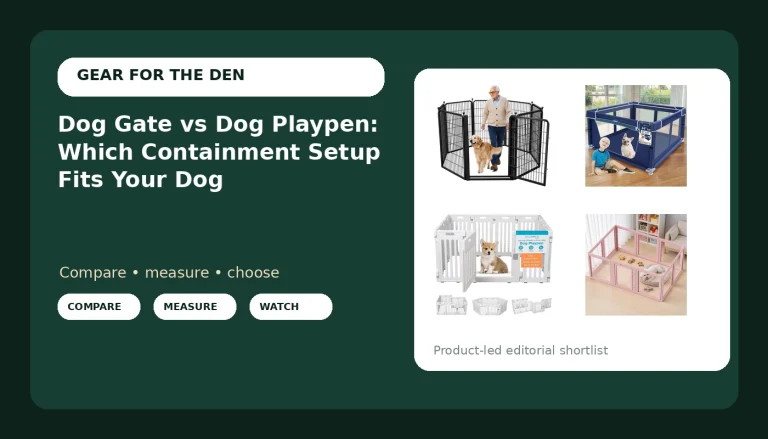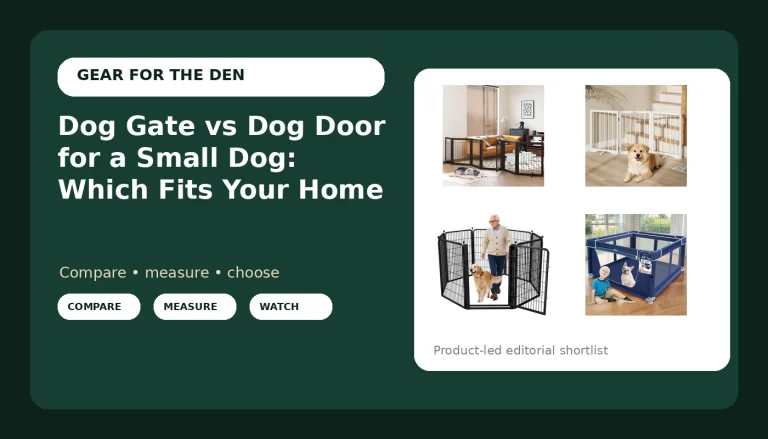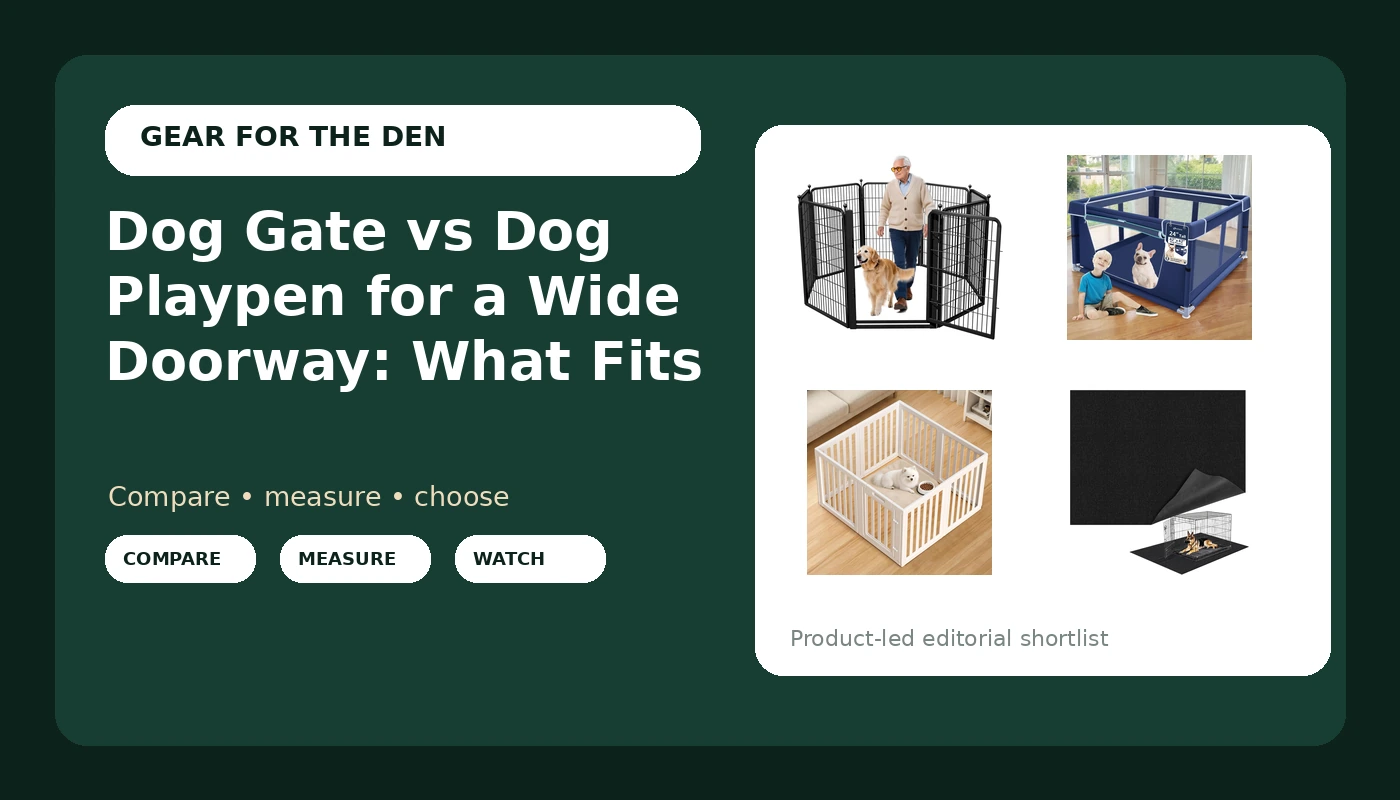
The dog gate vs dog playpen for a wide doorway question lands in my inbox every autumn, usually from someone whose hallway is 48 inches across and whose dog has worked out that a pressure-mounted gate gives up after one solid lean. I have spent years writing about containment gear, crates, and floor protection, and the honest answer is that most walk-through gates stop being a sensible purchase somewhere around 40 inches of opening. Past that width you are shopping for a playpen with a gate panel, and the details that decide whether it works are panel count, gate height, and what the pen sits on.
Framed the other way, as dog playpen for a wide doorway vs dog gate, the choice comes down to whether you want a barrier you step over or a freestanding enclosure you walk around. Both solve the same problem, and both fail the same way when the width and the hardware do not match. What follows is a straight comparison of the four pieces of gear I would consider for this job, including the mat that keeps the whole setup from sliding across a hardwood floor.
For most wide doorways, an eight-panel steel playpen with an extra wide gate is the better buy than a fabric pen, because rigid panels are what let you bridge an opening a standard gate cannot reach, and the gate panel keeps a normal walk-through point in the middle of the run.
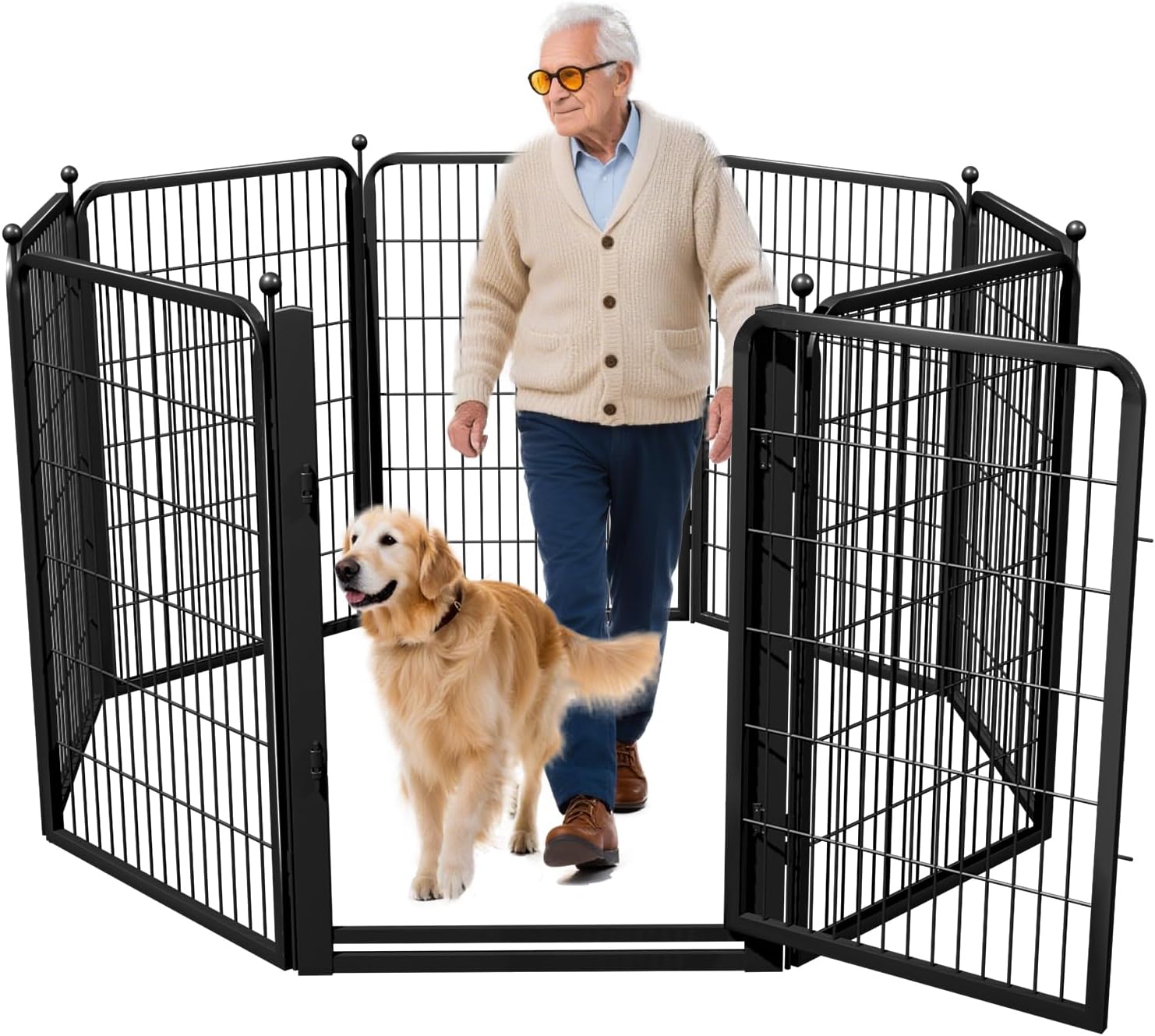
Jhsomdr Dog Playpen, 40 inch 8 Panels with Extra Wide Gate
Tallest pen in this group at 40 inches, with an extra wide gate panel, rustproof finish, and enough panels to wrap a corner
The most expensive of the three pens here, and folded panels need somewhere to live when the pen is down
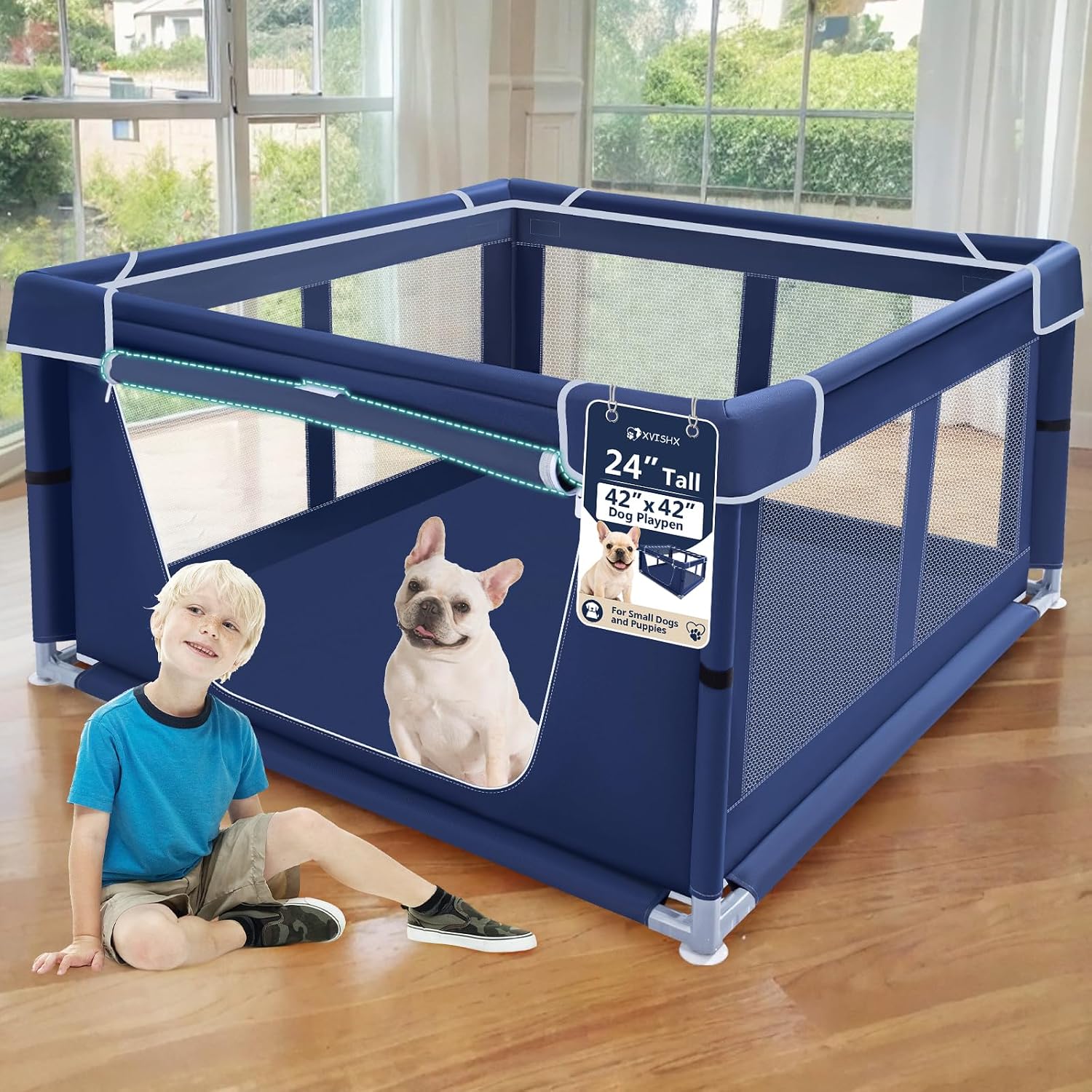
XVISHX 42×42 Inches Puppy Playpen with Gate
Built-in gate, a square 42 by 42 footprint, thickened fabric with high-strength nylon wire mesh, rated for indoor and outdoor use
Fabric walls flex under pressure, and there is no rigid bar structure to define bar spacing
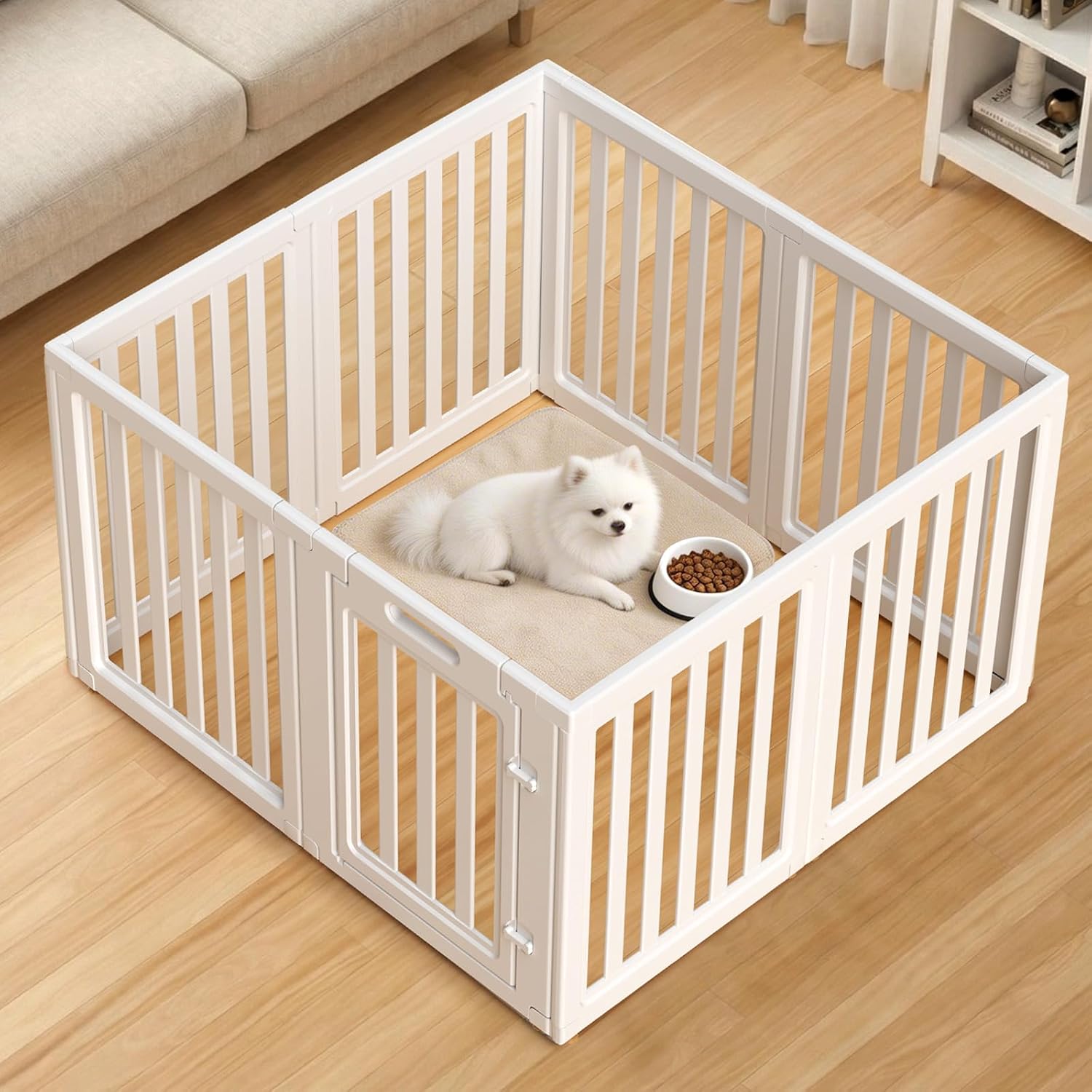
Dog Playpen Indoor, Puppy Playpen, White 23.6" H, 8 Panels
Eight panels at 23.6 inches tall, light enough to move room to room, and simple to reconfigure
The low height suits puppies and small dogs only, and there is no wide gate panel in the set
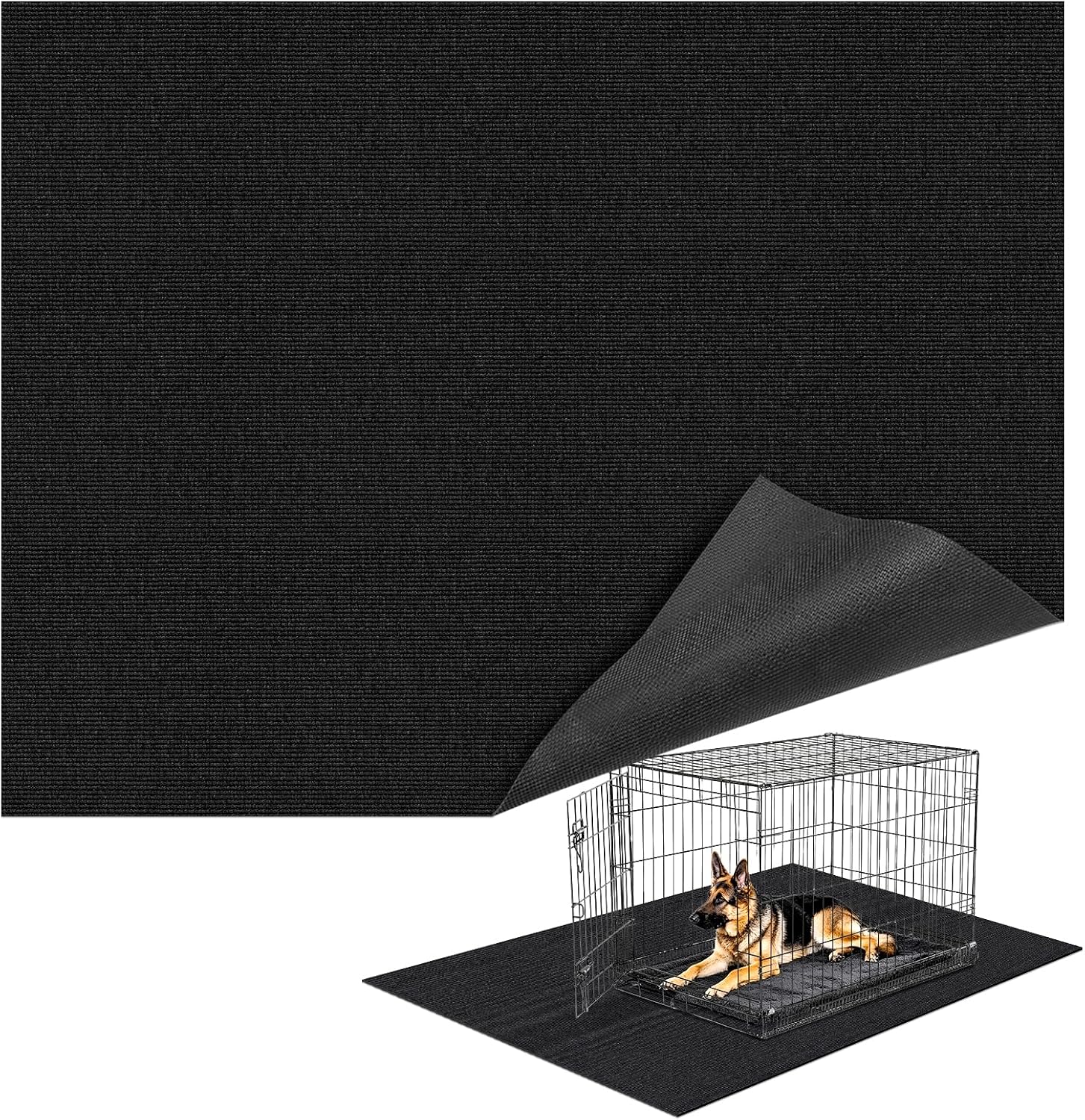
Wibeelee Mat for Under Dog Crate, Waterproof Non-Slip, 32" x 50" x 0.23"
Waterproof layer, non-slip backing, reusable, and sized to sit under a crate or a small pen footprint
A 0.23 inch mat and a 32 by 50 footprint will not cover a large pen, so measure before you commit
Prices and availability may change.
How I judge containment gear for an opening this wide
Three questions decide whether a product belongs in this comparison, and none of them are about marketing language.
The first is whether the thing actually spans the opening. A walk-through gate is designed around a doorway with a frame on both sides, and its extension kits add width in small, expensive increments. A playpen panel does not care about a frame. It stands on its own feet and forms whatever shape you push it into, which is why a panel count of eight matters more than a single impressive spec.
The second is whether you keep a walk-through point. This is where the difference between dog gate and dog playpen for a wide doorway stops being academic. A gate exists so that humans pass through without dismantling anything. A pen without a gate panel means stepping over a wall or pulling panels apart every time you carry a laundry basket. An extra wide gate panel in the run solves that, and it is the single feature I would pay extra for.
The third is what happens underneath. Panels on tile slide, panels on hardwood scratch, and a puppy in a pen will eventually have an accident. A waterproof layer under the pen does more for your floor than any finish on the panels themselves, and a non-slip backing is what keeps the whole shape from creeping across the room over a week of use.
Dog gate vs dog playpen for a wide doorway: what changes past 40 inches
Standard pressure-mounted gates are built for openings in the 28 to 38 inch range. Hardware-mounted gates go wider, but they require drilling into trim, and every extension piece you add creates another joint that can rattle or fail. By the time you have bought a gate plus two extensions for a 50 inch opening, you have spent real money on a barrier that still only covers one plane.
A playpen covers a plane and then some. Eight panels at 40 inches tall can be arranged as a wide rectangle, a long run across an opening, or an L shape that blocks a doorway and a hallway corner at once. That flexibility is the whole argument. The difference between dog gate and dog playpen for a wide doorway is mostly about how much floor the barrier occupies and whether you can reshape it later without buying parts.
The trade-off is honest and worth stating plainly. A gate is a thin line you step over. A pen is a piece of furniture. It occupies floor, it collects toys and hair, and it takes up storage space when it comes down. If your opening is 36 inches and your dog respects a gate, buy the gate. If your opening is wide, irregular, or shared with a stair landing, the pen is the more practical object.
The eight-panel steel playpens
The Jhsomdr Dog Playpen is the most capable option in this group on paper. Eight panels, a 40 inch height, and an extra wide gate panel give you the tallest wall here plus a real door in the middle of it. The rustproof finish matters more than it sounds: pens that live near a back door or get wiped down after rainy walks rust at the joints first, and a coated frame holds up far better over a winter. The portable framing and the RV camping angle in the description tell you the panels fold and travel, which also means they store flat against a wall.
Its weakness is cost and footprint. It is the priciest pen of the three, and folded panels still need a closet corner or a garage shelf. If you want a pen you can break down weekly, that is fine. If you want something you will never move, you are paying for portability you will not use.
The white eight-panel pen takes the opposite approach. At 23.6 inches tall it is roughly two feet of wall, which is plenty for a puppy or a small breed and nowhere near enough for a dog that can clear a couch. Its advantages are weight and simplicity. Eight light panels go up in a minute, move between rooms without a second person, and reconfigure into a small square for a puppy that is still learning the rules. There is no wide gate panel in the set, so you step over it or open the ring at one joint.
Between the two, height and gate height are the deciding specs. Measure your dog at the shoulder, add a few inches for a jump, and buy the pen that clears it. A 40 inch pen with a gate beats a 23.6 inch pen with a gate for any dog over about 20 pounds.
The fabric playpen with the built-in gate
The XVISHX playpen is the odd one out, and that is why it is useful here. It is 42 by 42 inches with a gate built into the wall, thickened fabric instead of steel, and a high-strength nylon wire mesh for the upper section. The mesh is the part that matters for ventilation and visibility: a fabric pen with solid walls turns into a stuffy box, while mesh keeps air moving and lets the dog watch the room.
Fabric buys you two things steel cannot. It is quieter, so a dog that paws at the wall does not rattle the whole house, and the cover and walls are typically washable fabric, which is a genuine advantage with a puppy that is not fully house-trained. It also weighs less and packs smaller.
What it gives up is rigidity. There is no bar spacing to check because there are no bars, which means the wall flexes when a dog leans on it and the whole pen can shift if it is not anchored or set on a non-slip surface. For a small dog or a supervised puppy, that is fine. For a dog that has already defeated one gate, it is not the pick.
The mat that keeps everything in place
The Wibeelee Mat is the least glamorous item here and the one I would buy first. It is 32 by 50 inches, 0.23 inches thick, waterproof, non-slip on the underside, and reusable. Under a crate it protects a floor from urine and water bowl spills. Under a small pen it does the same job and adds grip, which is exactly what a lightweight panel pen needs on tile or hardwood.
Two cautions. A 0.23 inch mat is a floor protector, not a cushion, so do not expect it to soften a hard floor for a senior dog. And the 32 by 50 footprint fits a crate or a compact pen, not a 42 by 42 enclosure or an eight-panel run. If your pen is bigger, this mat goes under the sleeping corner and the rest of the floor stays exposed.
What the specs tell you before you buy
Panel count sets the shape. Eight panels is the standard for a reason: it makes a square, a rectangle, or a long run, and it leaves one panel to act as a door if the set includes a gate. Six panels limits you to a hexagon or a short wall.
Gate height and overall height are different numbers. A 40 inch pen may have a gate panel that is shorter than the surrounding wall, and a dog that cannot clear the wall may still be able to scramble over a low gate. Check both.
Bar spacing matters on steel pens. Wide spacing lets a small dog squeeze through or get a leg caught. Narrow spacing is safer for puppies and toy breeds, and it is one more reason a fabric pen with mesh walls suits very small dogs.
Cover ventilation is worth checking if you plan to use a top. A covered pen traps heat and odor, and mesh panels breathe far better than solid fabric.
Washable fabric and a waterproof layer are the two features that decide how the gear ages. Fabric that cannot be wiped or washed turns into a sour-smelling pen within a season, and a waterproof layer under the pen is what keeps the floor from absorbing every accident.
Crate size and mat thickness are linked. If you are buying the mat to go under a crate, match it to the crate's footprint, not to the pen's. A mat that is too small slides out from under the crate; one that is too large bunches at the edges and trips you.
Should you buy a gate first, or go straight to a playpen?
Measure the opening before anything else. Under 38 inches with a frame on both sides, buy a gate and be done. Over 40 inches, or an opening with trim on one side only, skip the gate and put the money into a pen with a gate panel.
Then measure your dog. Under about 20 pounds, the white 23.6 inch eight-panel pen or the fabric XVISHX pen will hold. Over that, the 40 inch Jhsomdr pen is the safer shape, and the extra wide gate is the feature that keeps you from climbing over your own barrier ten times a day.
Finally, budget for the floor. A pen plus a waterproof, non-slip mat costs less than refinishing a hallway, and the mat is the piece that keeps the pen where you put it.
The dog gate vs dog playpen for a wide doorway math gets simple once you have those three numbers: opening width, dog height at the shoulder, and the floor area you are willing to give up. If you are still weighing a dog gate or dog playpen for a wide doorway, the width of the opening is the tiebreaker, and it almost always points at the pen.
What I'm watching next
Panel pens keep getting lighter, and the next round of listings will push fabric and mesh further into territory that steel used to own. The question I want answered is whether a mesh pen can hold a medium dog without walking across the floor, and that comes down to the base design rather than the wall material. I will be checking new gate-panel configurations for openings over 48 inches, since that is where most of the email comes from. Until then, measure twice, and put something waterproof under whatever you buy.