Shedding season turns an ordinary dog into a fur machine, and the question that follows is always the same: should the money go to a dryer or to a nail tool? This dog nail grinder vs dog dryer for shedding comparison exists because those two purchases solve completely different problems, and only one of them has anything to do with the hair on your floor. The most common mistake in this category is buying a nail tool to fix a coat problem, or buying a coat tool while the claws keep clicking across the kitchen tile. Below are the four tools worth considering, what each one actually does, and how to decide which purchase comes first.
The short answer: if loose hair is the problem, none of the four tools below is a dryer, and a nail grinder will not reduce shedding by a single strand. The Afloia 6-in-1 Dog Grooming Vacuum Kit is the closest thing in this lineup to a shedding tool, because the vacuum is the part that captures hair, while the Outdoggy Dog Nail Grinder is the better pick if claws are the actual job. Buy the tool that matches the mess you are cleaning up, not the one with the louder marketing.
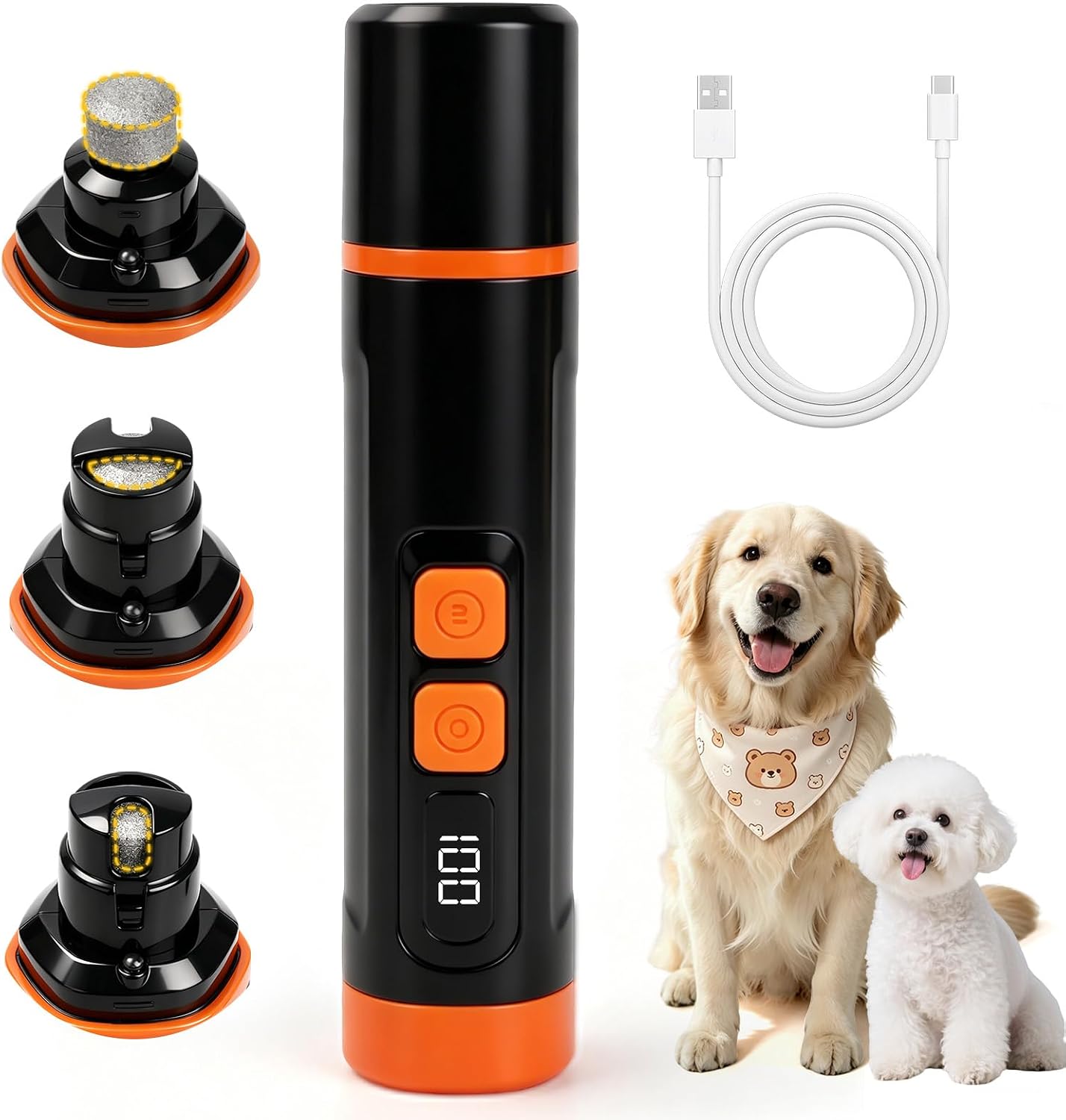
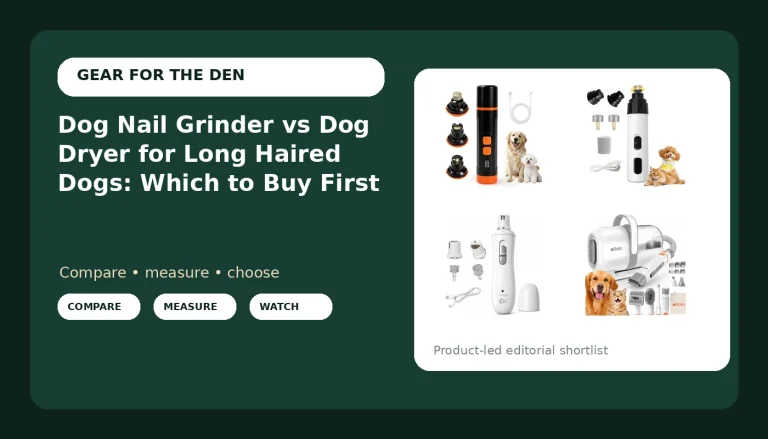
Outdoggy Dog Nail Grinder, Quiet 3-Speed with LED & Safety Guard
Three speeds, an LED, and a safety guard, which is the most control in this group
The guard is a backup, not a substitute for careful technique
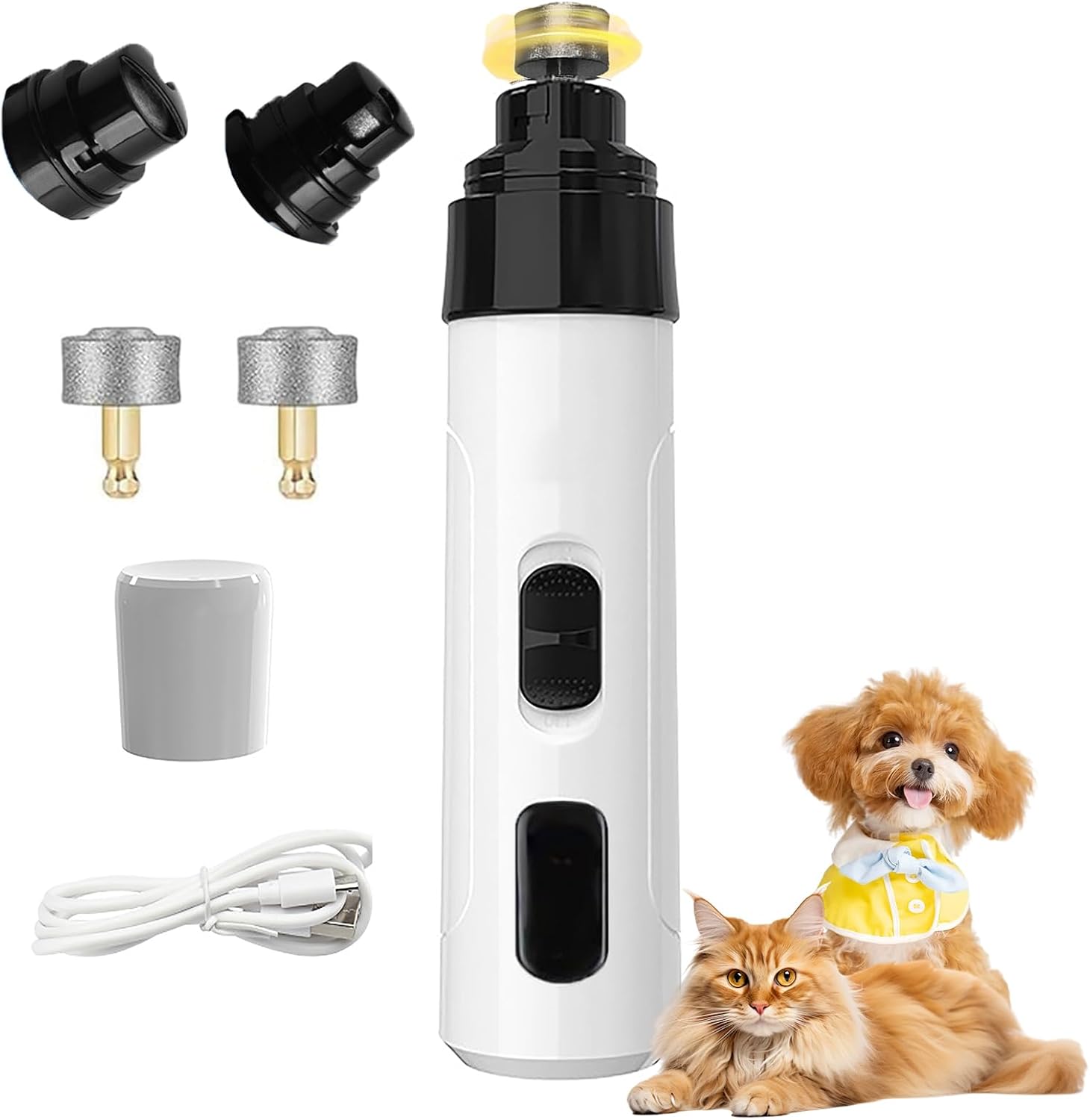
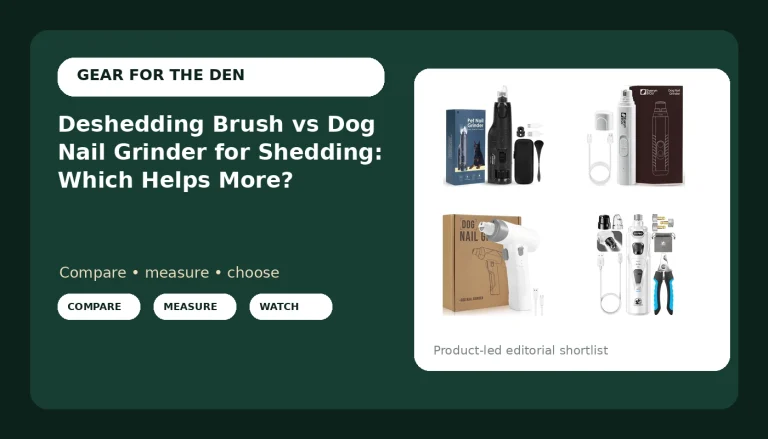
Yikuhot Upgraded Dog Nail Grinder Cordless with 2 Speeds for Pets
Cordless with two speeds, so you can follow a moving dog instead of dragging it to an outlet
The least adjustability of the three dedicated grinders
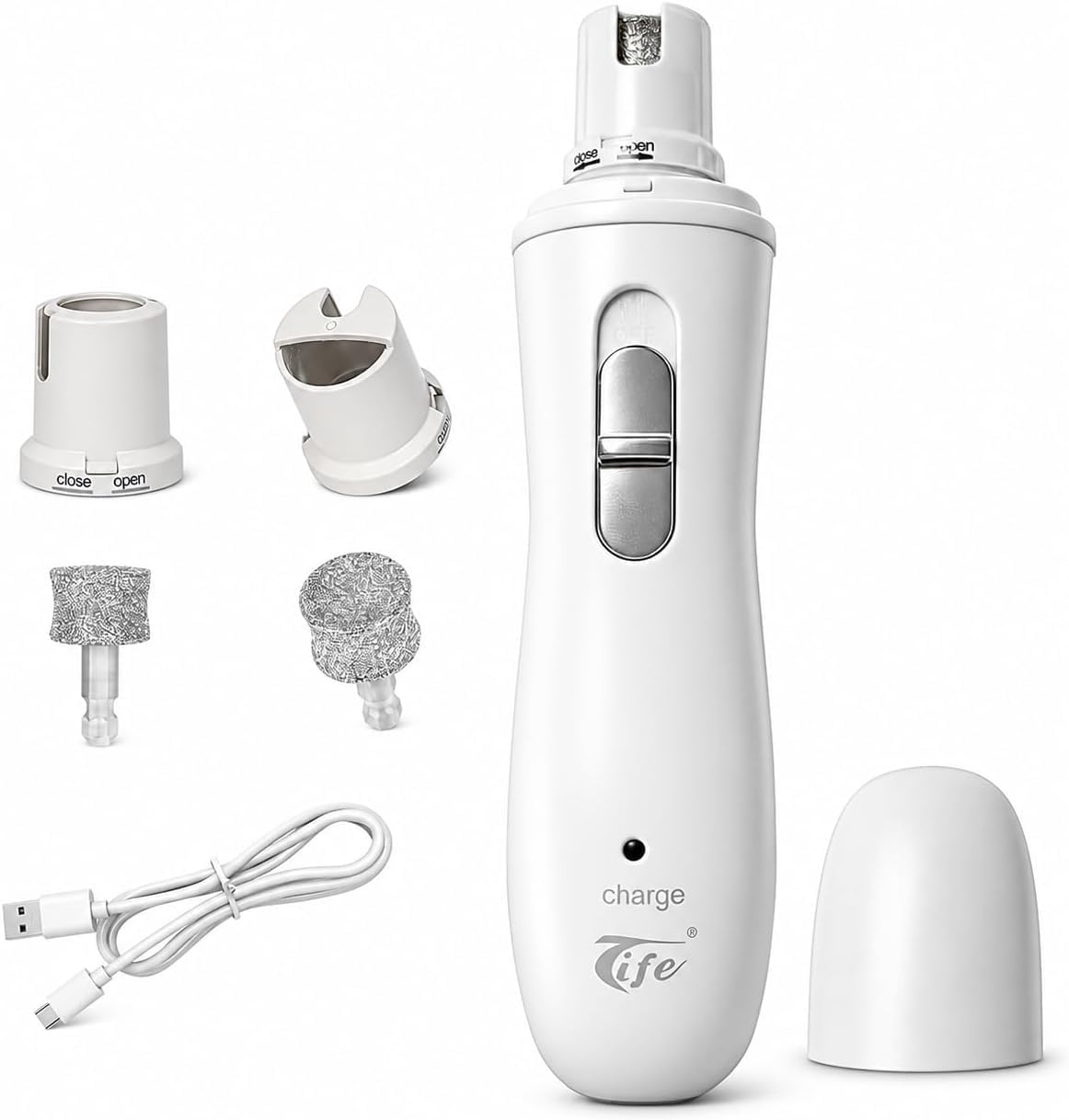
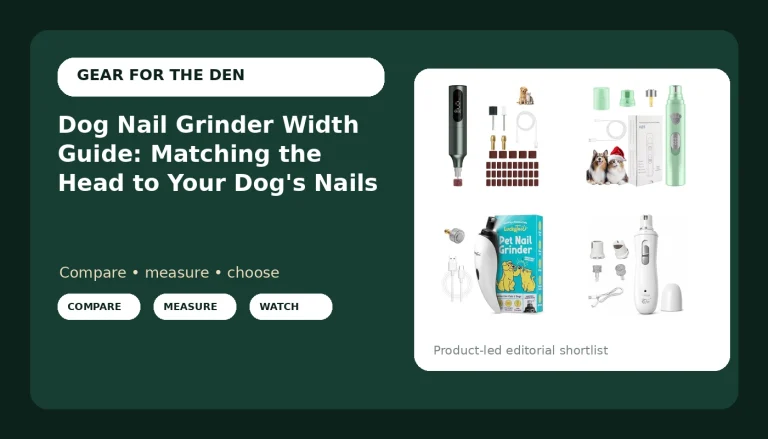
Tife Dog Nail Grinder for Dogs and Cats, Quiet Rechargeable
Quiet, rechargeable, and marketed for cats as well as dogs, at the lowest cost of the four
Fewest features, with no speed settings or guard in the description
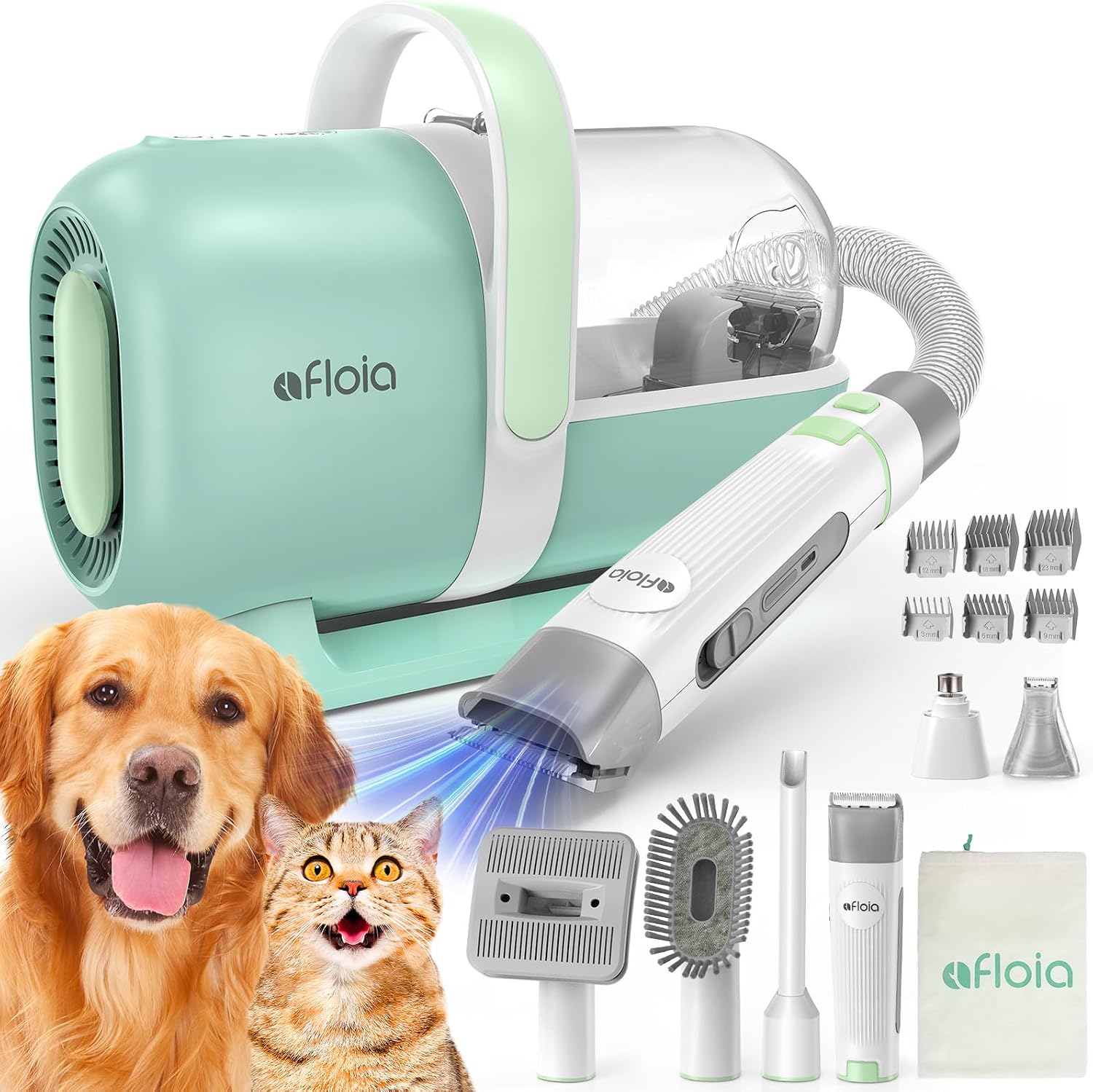
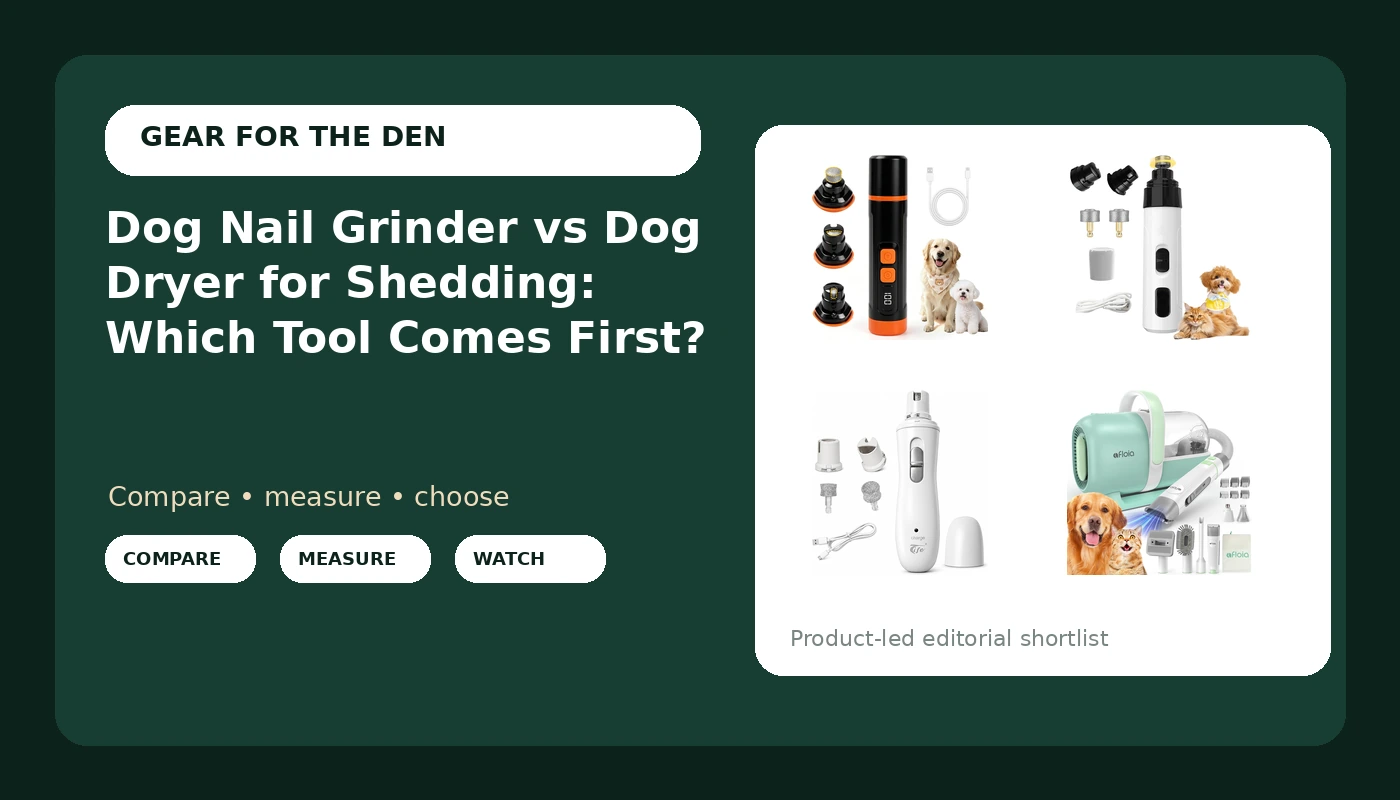
Afloia 6-in-1 Dog Grooming Vacuum Kit, Pet Clipper & Nail Grinder, Green
A vacuum, clipper, and grinder in one box, the only tool here that captures hair
Costs the most, and you pay for parts you may never use
Prices and availability may change.
How I compare these tools
Grooming tools get sold on adjectives, so it helps to name the specs that actually change outcomes.
For anything that touches the coat, airflow comes first, because air volume is what lifts dead hair out of the undercoat instead of flattening it against the skin. Coat type decides how much of that airflow you need: a short single coat gives up loose hair to almost anything, while a dense double coat needs a machine that can push air down to the skin. Bristle type matters on any brush or attachment, since soft pins skim the topcoat while stiff pins reach the undercoat. Oatmeal concentration is a shampoo variable, not a hardware variable, so it does not belong in a tool comparison like this one.
For anything that touches the nails, the list is shorter: motor noise, blade guard design, grip handle shape, speed settings, and how the tool is powered. A grinder that screams turns a nervous dog into a wrestling match, and a grinder with no guard asks you to hold a spinning abrasive drum against a moving paw with nothing between you and a mistake.
Dog Nail Grinder vs Dog Dryer for Shedding: Two Jobs, One Grooming Bin
The difference between dog nail grinder and dog dryer for shedding is not a question of which tool is built better. It is a question of what each one removes.
A dryer removes loose hair. Airflow lifts dead undercoat away from the skin and pushes it off the dog, which is why high-velocity dryers are the standard tool in professional grooming salons. Shedding is a coat problem, and coat problems are solved with air, brushes, and bath routines.
A nail grinder removes nail. It shortens and smooths the claw so it stops clicking on tile and stops catching in carpet. It has no effect on how much hair your dog leaves on the couch, and no airflow claim changes that.
Framed the other way, dog dryer for shedding vs dog nail grinder, the split stays the same: one tool handles the coat, one tool handles the claws, and neither substitutes for the other. The confusion comes from merchandising. Grooming kits bundle clippers, brushes, and grinders together, which makes it look as though a single purchase solves shedding. It does not. What a bundle can do is cover several jobs in one box, which is exactly what the vacuum kit further down this page is doing.
If your dog is dropping coat, buy for the coat. If your dog's claws are clicking, buy for the claws. Buying a grinder because the vacuum canister is full of fur is the single most common mistake in this category.
Nail grinders: quiet motors, guards, and speed settings
Three of the four tools here are dedicated nail grinders, and they differ mostly in how much control they hand you.
Outdoggy Dog Nail Grinder, Quiet 3-Speed with LED & Safety Guard. This is the most configurable of the three. Three speeds let you start slow with a nervous dog and step up once the paw relaxes, the LED lights the nail so you can see how close you are getting to the quick, and the safety guard is a physical stop between the abrasive drum and the pad. Treat that guard as a backup rather than a license to rush. Visit on Amazon
Yikuhot Upgraded Dog Nail Grinder Cordless with 2 Speeds for Pets. Two speeds and no cord. Cordless matters more than people expect, because most dogs stay calmer when you can follow them rather than dragging them toward an outlet. Two speeds is the least adjustability in this group, which is fine for a dog with thin, fast-growing nails and less fine for a thick, brittle claw that needs a slower pass. Visit on Amazon
Tife Dog Nail Grinder for Dogs and Cats, Quiet Rechargeable. The quiet, rechargeable option, and the least expensive of the four. The name markets it to cats as well as dogs, which is a useful hint: cats are the hardest audience for a noisy grinder, and a tool sold on quiet operation is usually the one to try first on a pet that bolts at the sound of clippers. It also carries the fewest features of the three, so if you want speed control or a guard, look at the Outdoggy instead. Visit on Amazon
None of these three will do anything about shedding. They shorten nails, and that is the whole job.
The grooming vacuum kit: the one tool here that touches shedding
The Afloia 6-in-1 Dog Grooming Vacuum Kit is the outlier in this lineup, and it is the only product here that speaks to the actual problem in the headline. It bundles a vacuum, a pet clipper, and a nail grinder, which means the hair you clip or grind gets pulled into a canister instead of drifting onto the floor.
That vacuum is the shedding-relevant part. Suction is not the same thing as a high-velocity dryer, and it will not lift a blown undercoat the way real airflow does, but it does capture loose hair during a trim and it keeps the work area from turning into a fur storm. For a dog that needs both a coat trim and a nail touch-up, one box covering both jobs is genuinely useful.
The trade-off is focus. It is the most expensive of the four, and part of that money goes to the vacuum and the clipper even if your only interest is nails. If you want a tool that does nails and nothing else, a dedicated grinder is the cheaper answer. If you are already living with a shedding dog and you want one purchase that helps with hair and nails at once, this is the one to look at first. Visit on Amazon
The non-negotiable: blade guard, grip handle, and motor noise
If I could check only three things before buying a grinder, they would be these.
A blade guard. Any tool that spins an abrasive drum near a paw needs a physical barrier. A guard will not save you from holding the nail in one spot for too long, but it stops the drum from catching skin when the dog pulls away, which is the kind of accident that ends grooming sessions for months.
A grip handle that fits your hand. You are holding this tool against a moving target for two to five minutes per paw. A handle that forces your wrist into an awkward angle turns a two-minute job into a ten-minute one, and a tired hand is an imprecise hand.
Motor noise. This is the spec that decides whether your dog tolerates the tool at all. Quiet operation is the entire selling point of the Tife, and the Outdoggy leans on the same idea with a quiet claim in its own name. If your dog already hates clippers, start with the quietest tool you can find and spend a week letting the dog hear it while it is switched off.
Everything else, LED lights, speed counts, colors, is preference.
What the specs say
Pull the marketing away and the specs on this page sort into two piles.
Coat-side specs: airflow, coat type, and undercoat density. Airflow is the number that matters most, and it is the number most listings bury. Coat type tells you whether you need volume or precision, and undercoat density tells you how much time you are going to spend. Bristle type belongs here too, because a slicker brush and a deshedding rake do different jobs on the same dog, and neither one is a substitute for air.
Nail-side specs: speed settings, guard, power source, and noise. The Outdoggy leads on settings and guard, the Yikuhot leads on cordless convenience, and the Tife leads on quiet and on cost.
What is missing from this lineup is the machine that would actually answer the shedding question, which is a high-velocity dryer. None of the four products here is one. The Afloia's vacuum captures hair, but capturing hair and blowing out an undercoat are different operations with different specs. If your search started with the dog nail grinder vs dog dryer for shedding question, that gap is the honest answer to the whole comparison.
Oatmeal concentration, for what it is worth, is a shampoo spec. It matters if you are dealing with itchy skin alongside the shedding, and it has no bearing on which of these four tools you should buy.
Should you buy a dryer before a grinder?
If you are weighing a dog nail grinder or dog dryer for shedding, answer one question first: what is on your floor, and what is on your dog's paws?
Hair on the floor, fur on the furniture, tumbleweeds in the hallway. That is a coat problem, and the tools that fix it are a dryer, a deshedding brush, and a bath routine built around your dog's skin. Buying a grinder will not move the needle, no matter how many speeds it has.
Clicking on tile, snagging on carpet, long quicks that make the vet wince. That is a nail problem, and a grinder is the right tool for it. It is also the cheaper problem to solve, since a dedicated grinder costs a fraction of a grooming vacuum kit.
If both are true, which is common in a double-coated dog, buy in this order. Coat first, because shedding affects your whole house every day, then nails, because overgrown claws affect your dog's gait and comfort. And if you want one purchase to cover as much of both as possible, the Afloia kit is the only product on this page that touches hair and nails in the same box.
For the coat side of that equation, see our deshedding tools for double-coated dogs.
What I'm watching next
Two things.
First, cordless nail grinders are converging on the same feature set: two or three speeds, a rechargeable battery, an LED, and a guard. The next round of products will be won or lost on motor noise and battery life, not on the length of the feature list.
Second, grooming vacuum kits keep absorbing more attachments. The Afloia already covers six functions in one body, and the pattern in this category is that the kit improves every year while the dedicated single-purpose tool stays roughly the same. Whether that makes the kit the better buy depends on how many of those six functions you will actually use. I will keep comparing them here as new versions land.