Long-haired dogs run on two grooming clocks at once. The coat needs brushing, detangling, and drying on a schedule you set, and the nails keep growing on a schedule your dog sets. That is why the dog nail grinder vs dog dryer for long haired dogs question lands in my inbox almost weekly. One tool touches a body part that grows continuously and can change how your dog stands and walks. The other manages a coat that only gets soaked occasionally but can take hours to dry properly when it does. They are not competitors, and most owners of a coated breed end up with both. The useful question is which one you buy first, and how to pick a grinder that will not scare your dog off the whole routine.
Buy the nail grinder first. Nails are the health item, and long-haired breeds hide nail problems better than short-coated ones because the fur covers the paw. Overgrown nails push the toes out of position and change the gait, and once a nail curls into the pad you are booking a vet visit instead of a grooming session. Drying is a coat-quality item. A damp undercoat left to air dry invites mats and skin irritation, but it is a slow problem, not a painful one. If your dog is already overdue for a nail trim, that decides the order for you. The four grinders below are the ones worth comparing right now, and a dryer makes sense as the next purchase.
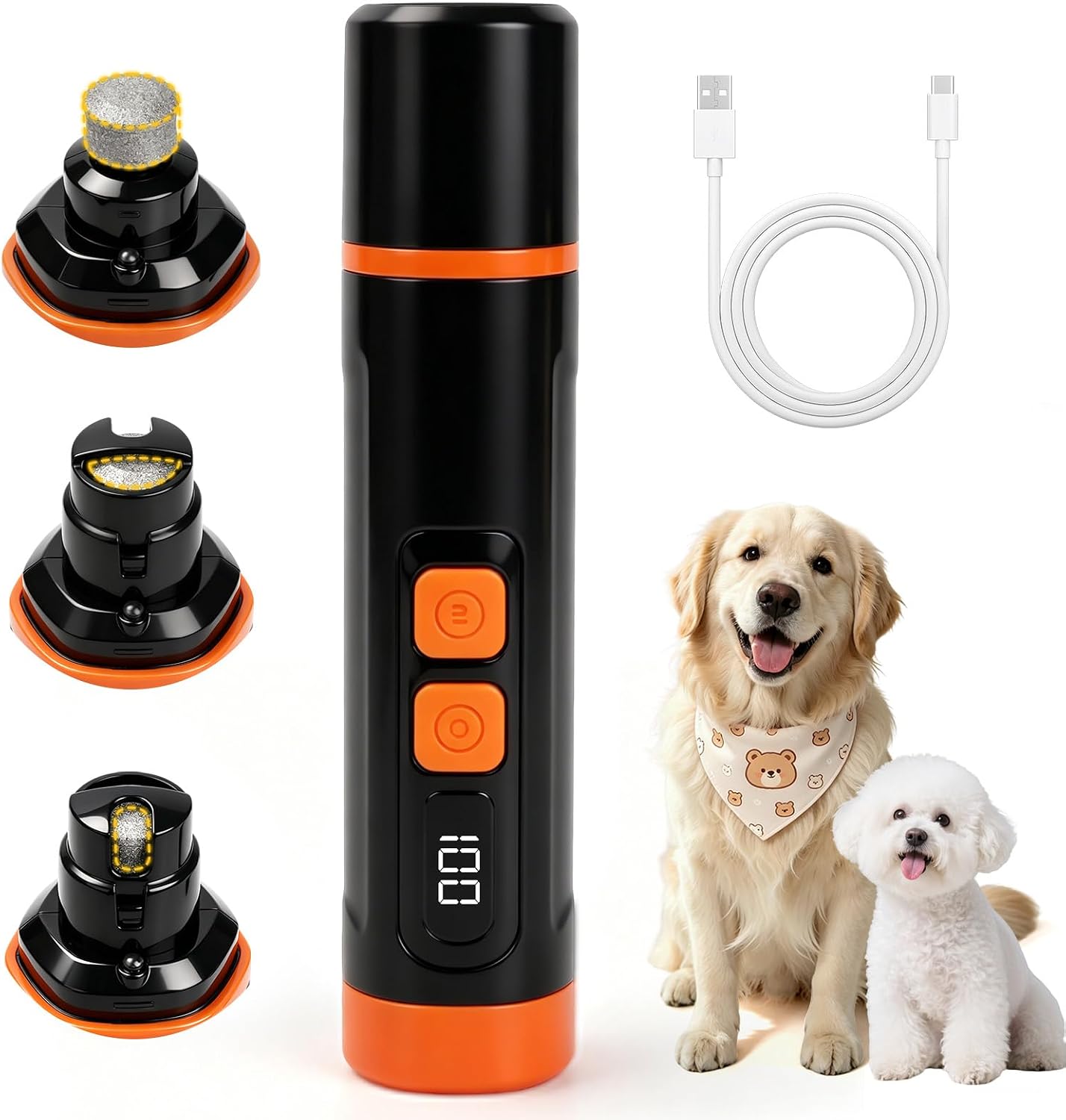
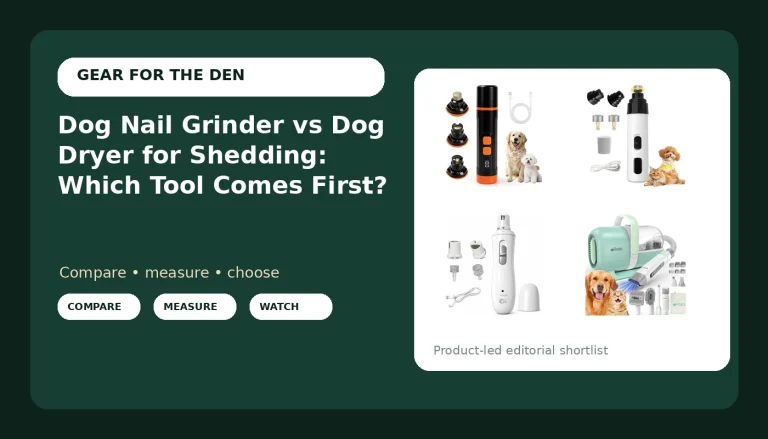
Outdoggy Dog Nail Grinder, Quiet 3-Speed with LED & Safety Guard
Three speeds plus a safety guard and an LED: the most adjustable of the four for a dog that needs a slow introduction
The most features to learn, and more tool than a calm dog with easy nails actually needs
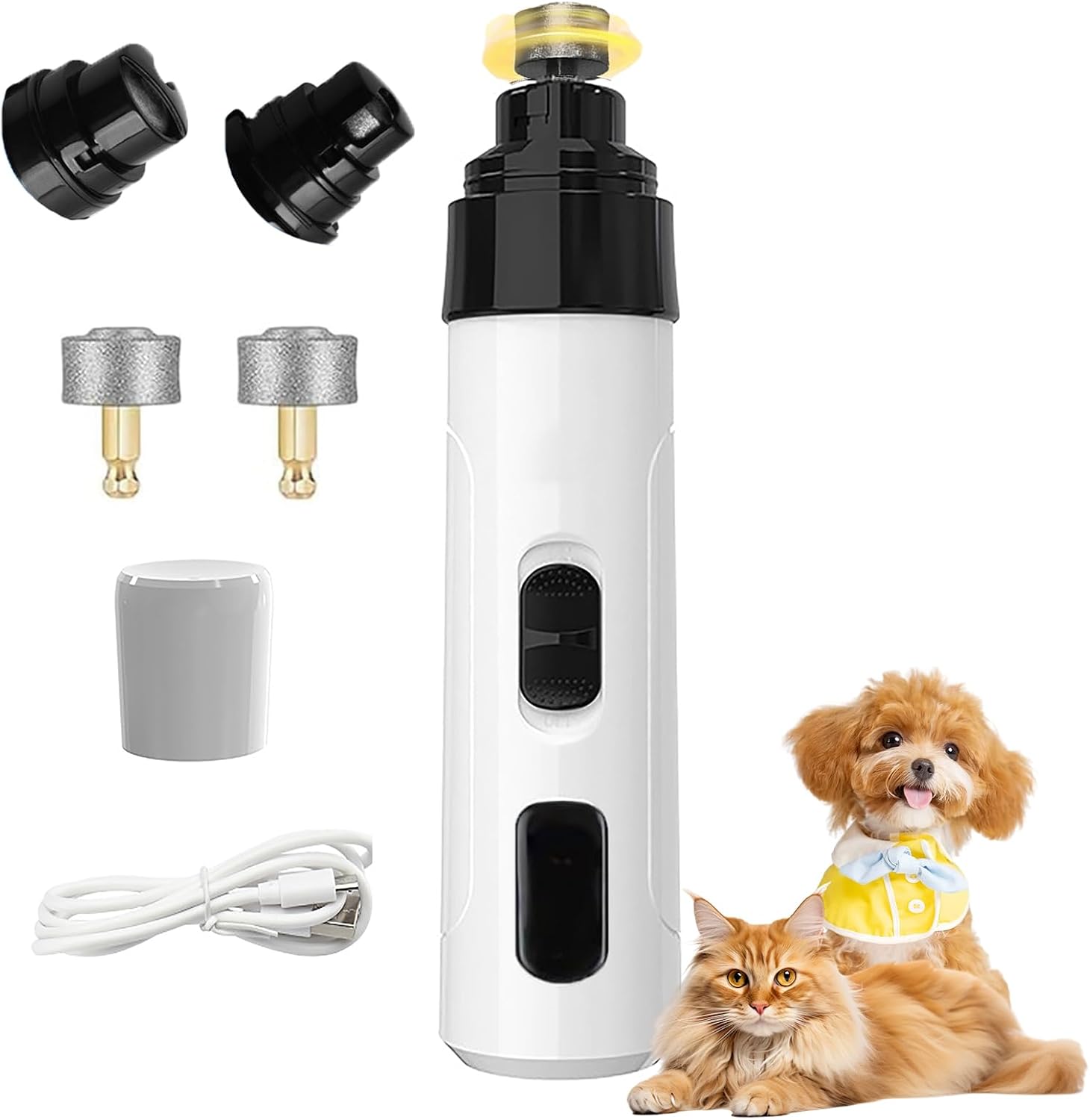
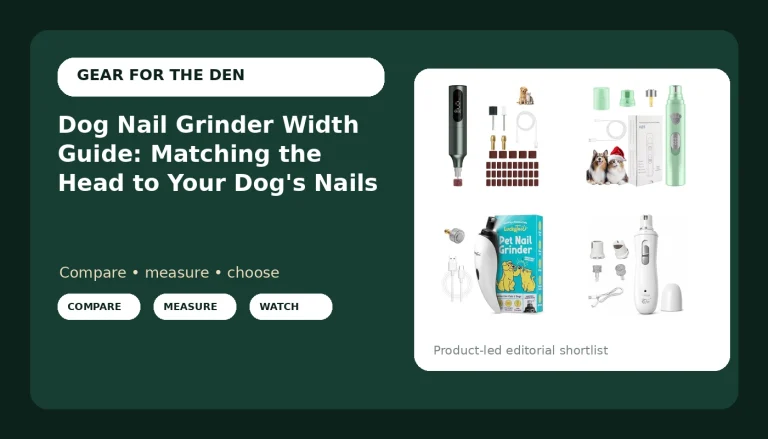
Yikuhot Upgraded Dog Nail Grinder Cordless with 2 Speeds for Pets
Cordless with two speeds: a simple middle ground between price and adjustability
Fewer speed steps than the Outdoggy, so less room to ramp up gradually
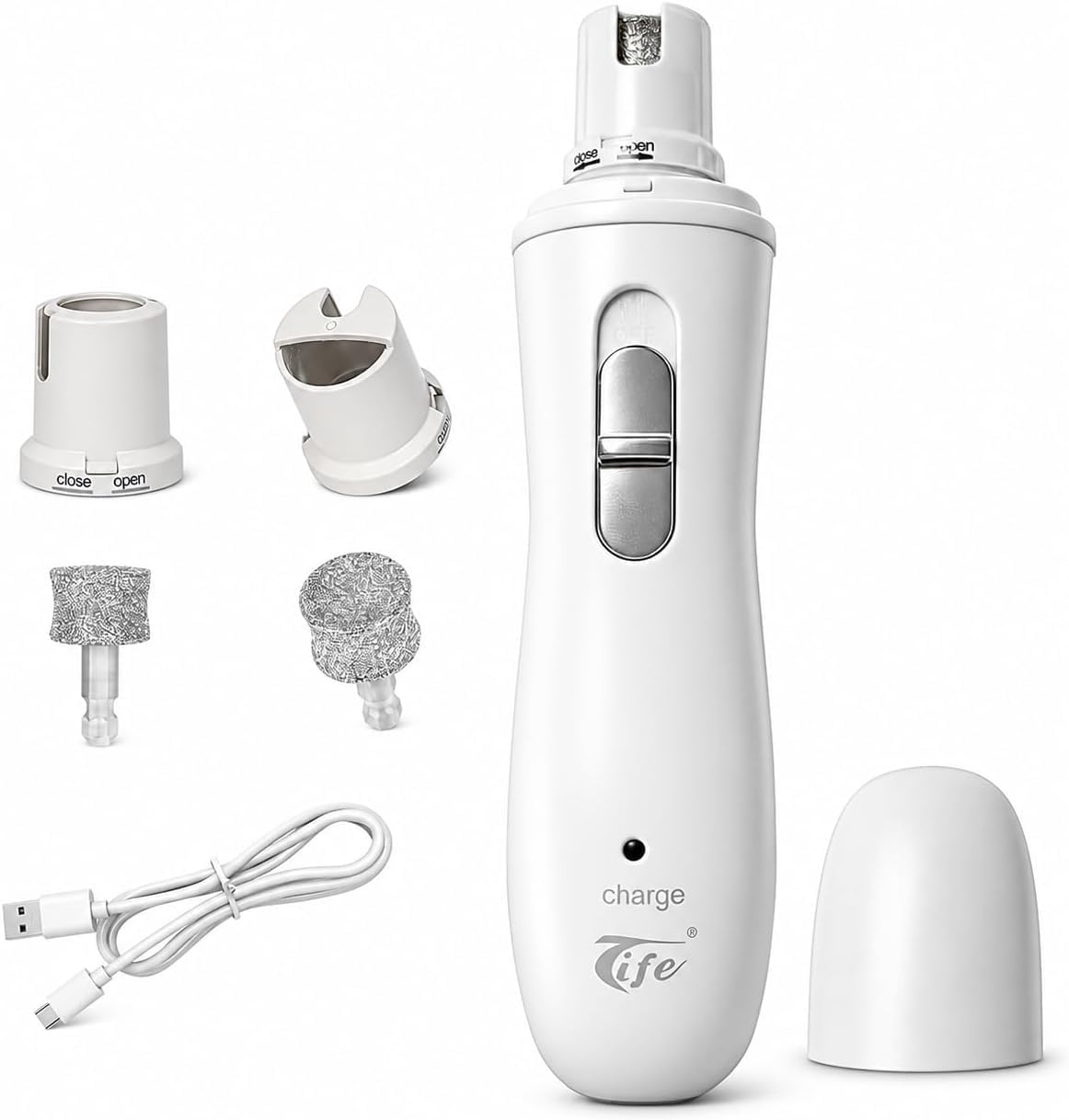
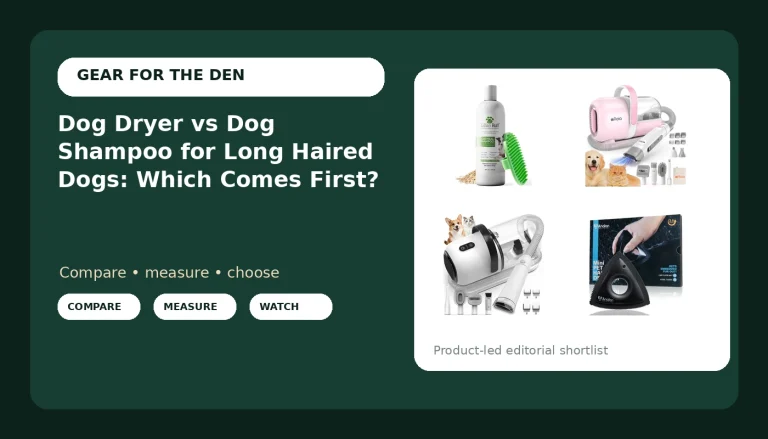
Tife Dog Nail Grinder for Dogs and Cats, Quiet Rechargeable
The lowest cost of the group and rechargeable, which makes it the easiest one to try first
Quiet and inexpensive usually means less torque, so thick nails take longer
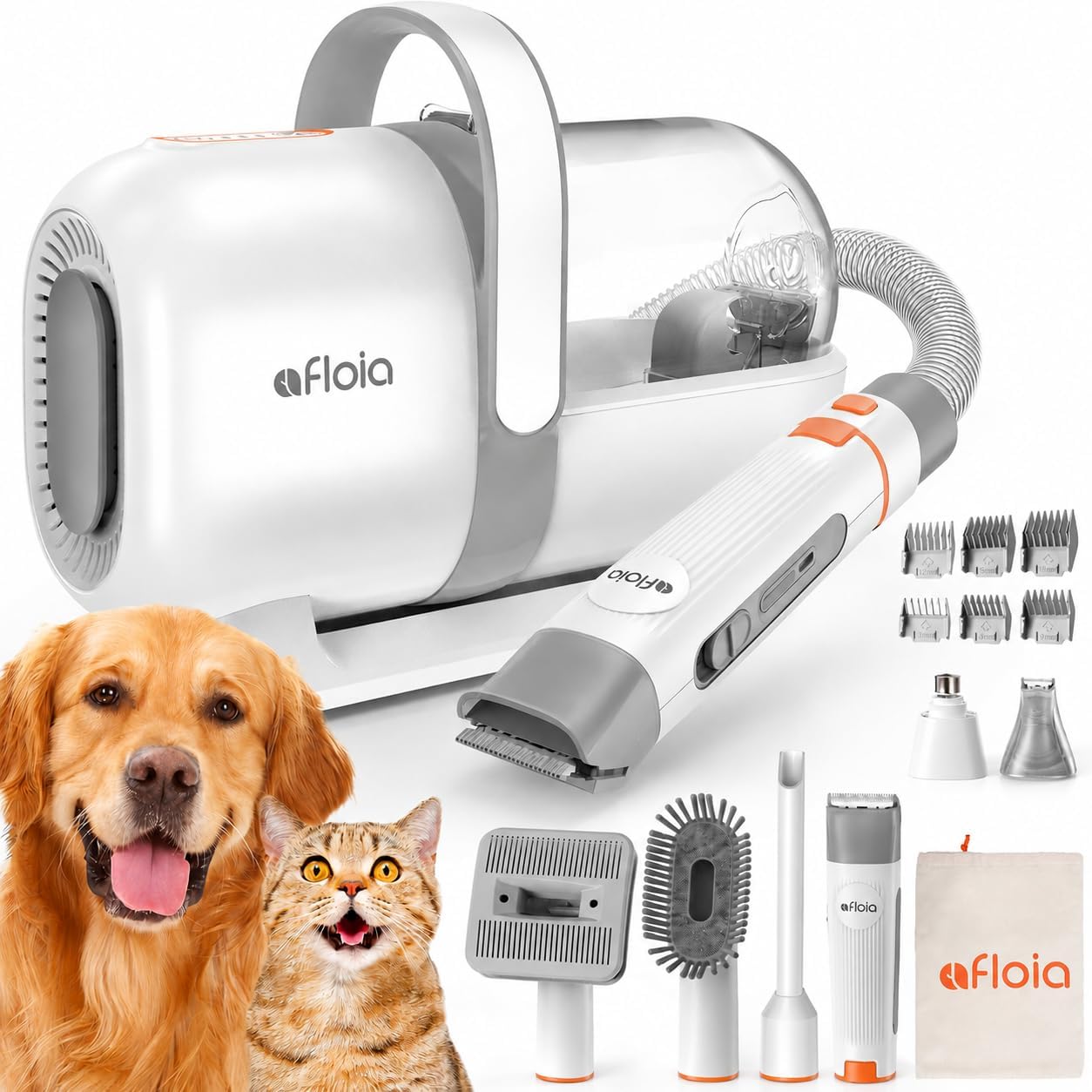
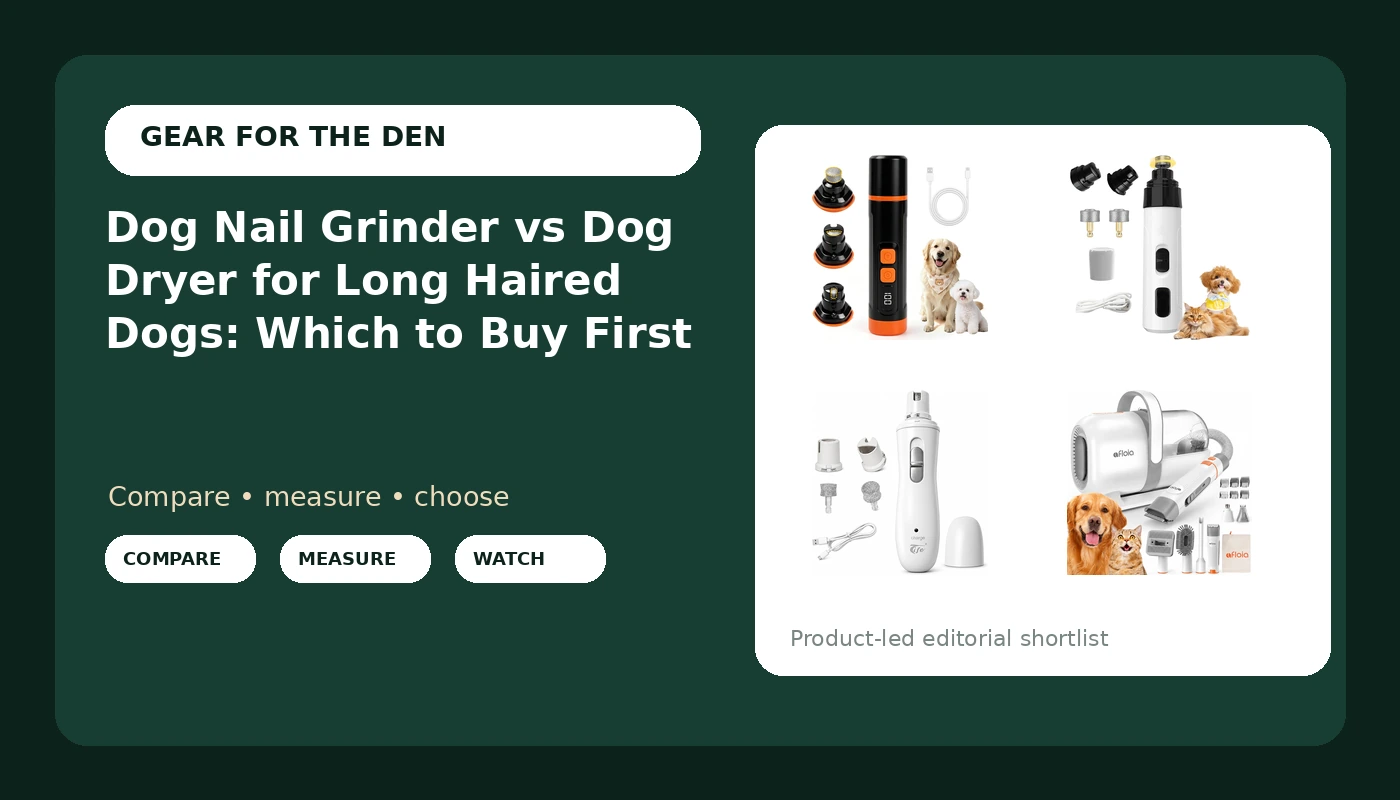
Afloia 6-in-1 Dog Grooming Vacuum Kit, Pet Clipper & Nail Grinder, White
A clipper and a grinder on one vacuum base, so it covers more of a long-haired dog's routine
The highest cost here by a clear margin, and a kit only pays off if you will use the clipper
Prices and availability may change.
How to judge any grooming tool for a coated dog
Motor noise is the first spec to check, and it is the one that decides whether your dog tolerates the tool at all. A grinder that hums lets you work up to full speed over a few sessions. A loud one teaches your dog to leave the room the moment you sit down on the floor with it. The same logic applies to a dryer, where motor noise at the lowest useful setting matters far more than the top speed printed on the box.
A grip handle is the second thing to check, because you are holding the tool in one hand while the other hand manages a paw or a section of coat. A handle that is too thick or too slick for your hand is a problem you feel at minute ten of a twenty minute job, and it is the reason a lot of tools end up in a drawer.
On the grinder side, a blade guard and a range of speeds are what let you work on a wiggling dog without panicking. On the dryer side, airflow and bristle type do the same job. Airflow determines how long you stand there, and bristle type determines whether the brush attachment is comfortable against your dog's coat type.
Dog nail grinder vs dog dryer for long haired dogs: the real trade-off
The difference between dog nail grinder and dog dryer for long haired dogs comes down to what each tool maintains. A grinder maintains something that grows continuously, roughly every few weeks, and it does the job in sessions measured in minutes. A dryer maintains something that gets wet only when you bathe or swim your dog, but a dense undercoat can hold water for a long time, and air drying that coat is how mats start.
Framed as dog dryer for long haired dogs vs dog nail grinder, the dryer wins on the sheer volume of time it saves on bath day. If your dog carries a heavy undercoat and you bathe every three weeks, a dryer can turn a three hour ordeal into something closer to an hour, because forced airflow reaches the undercoat in a way a towel never will. The grinder wins on frequency and on consequence. You will use it more often, and skipping it has a health cost rather than a cosmetic one.
The thing owners get wrong is assuming the dryer replaces brushing. It does not. Airflow dries the coat, but it does not remove loose undercoat, and blowing a wet, matted coat dry without working through it first just sets the mats in place.
So if you are deciding whether you need a dog nail grinder or dog dryer for long haired dogs first, look at the calendar. If the nails are overdue, buy the grinder. If your dog comes home wet from every walk and stays damp for hours, buy the dryer and put the grinder on the next list.
The four grinders, and who each one suits
Outdoggy Dog Nail Grinder, Quiet 3-Speed with LED & Safety Guard. Three speeds and a safety guard make this the most forgiving grinder of the four for a dog that is new to the tool. You can start on the slowest setting, keep the guard between the bit and the quick, and use the LED to see what you are doing on a dark nail. The trade-off is complexity. More settings to learn, and a dog that is already relaxed about nail work does not need any of them. Check current Amazon price
Yikuhot Upgraded Dog Nail Grinder Cordless with 2 Speeds for Pets. Two speeds and a cordless body put this in the middle of the group on adjustability. Cordless matters more than it sounds when your dog decides to lie down mid-session and you have to follow the paw instead of dragging the dog back toward an outlet. Two speeds is enough for most coats, though it gives you less room to ramp up gradually than the three-speed model above. Check current Amazon price
Tife Dog Nail Grinder for Dogs and Cats, Quiet Rechargeable. This is the least expensive way into the category, and the one I would suggest to someone who is not sure their dog will tolerate a grinder at all. It is rechargeable and it is built around quiet operation, which is the right priority for a first tool. The honest caveat is that quiet and inexpensive usually means less torque, so a dog with thick, hard nails may need more passes per nail and more time with the motor running near the head. Check current Amazon price
Afloia 6-in-1 Dog Grooming Vacuum Kit, Pet Clipper & Nail Grinder, White. This is the only entry here that is a grooming system rather than a single tool: a vacuum base with a clipper and a grinder in one kit. If your long-haired dog needs clipping between groomer visits, having the clipper and the grinder on the same base saves you from buying two separate tools and from sweeping up afterwards. It is also the most expensive option in the group, and a kit only pays for itself if you actually use the clipper. Buy it if you are already trimming your dog's coat at home. Check current Amazon price
Where a dryer fits into a long-haired routine
A dryer saves the most minutes per use and the fewest minutes per year, which sounds like a contradiction until you count. It might save two hours on each bath day, but you only bathe a long-haired dog every few weeks at most. A grinder saves ten minutes every two weeks and prevents a problem that can end in a vet visit.
The specs that matter on a dryer start with airflow. A high velocity dryer pushes air through the undercoat and out the other side, which is what actually dries the dog. A low airflow dryer with a heater just warms the top layer while the undercoat stays damp against the skin. Motor noise is the second spec, because a dryer is the loudest tool in any grooming routine and the one most likely to frighten a nervous dog. A variable speed control lets you start slow and build tolerance over several sessions.
Bristle type on the brush attachments decides whether the dryer doubles as a finishing tool. Stiff bristles work through a dense undercoat, while soft bristles suit a fine coat type and the face. And whatever you wash your dog with, oatmeal concentration in the shampoo matters far less than getting the undercoat fully dry before your dog lies down, since trapped moisture against the skin is what causes the irritation people blame on shampoo.
What the specs actually tell you
Read as two spec sheets, the dog nail grinder vs dog dryer for long haired dogs comparison is really a question about frequency and consequence. Speed settings on a grinder and airflow on a dryer are the same kind of spec: they determine how much control you have over the tool. Two speeds is a working tool. Three speeds with a guard and an LED is a tool you can hand to a nervous first-timer.
Cordless versus corded is a floor-plan question more than a quality question. Cordless grinders are easier to use on a dog that will not hold still in one spot, while a corded dryer needs an outlet and a dog willing to stand in roughly one place for a while.
Motor noise is the spec nobody lists honestly. Brands describe grinders as quiet, but quiet is relative, and the useful test is whether you can run the tool near your dog without your dog backing away. Bundle value is the last thing to weigh. A 6-in-1 kit is a bargain for someone who needs a clipper and a waste for someone who only needs nails done.
Should you buy the cheapest grinder first?
Yes, with two caveats. If you have never used a grinder on your dog, the least expensive rechargeable option here is the right experiment, because the most common reason a grinder sits unused is not build quality. It is a dog that will not tolerate the noise or the vibration. Buying the cheapest tool that could work tells you whether the whole approach suits your dog before you spend more.
The first caveat is nail thickness. Quiet, low-cost grinders generally have less torque, and a large dog with hard nails will need more passes per nail, which means more time with the motor running near your dog's head. If you have a big, thick-nailed dog, the two-speed or three-speed models will finish faster even though they cost more up front.
The second caveat is the coat, oddly enough. On a long-haired dog, the fur around the paw covers the nails, so you are working partly by feel. A blade guard and an LED are genuinely useful in that situation rather than marketing filler, and that is the argument for paying a little more than the entry price.
What I'm working on next
I am putting together a longer piece on drying a double coat without mats, covering how airflow, coat type, and undercoat density change the way you work through a dog section by section. The short version is already clear: dry the undercoat first and the top coat second, keep the nozzle moving, and never park the airflow in one spot on wet fur.
I am also collecting notes on introducing a grinder to a dog that has already decided it hates the sound, because that is the most common follow-up question I get after any nail tool write-up. The answer is rarely a better grinder. It is a slower introduction, one paw at a time, with the tool running on the floor beside your dog long before it ever touches a nail.