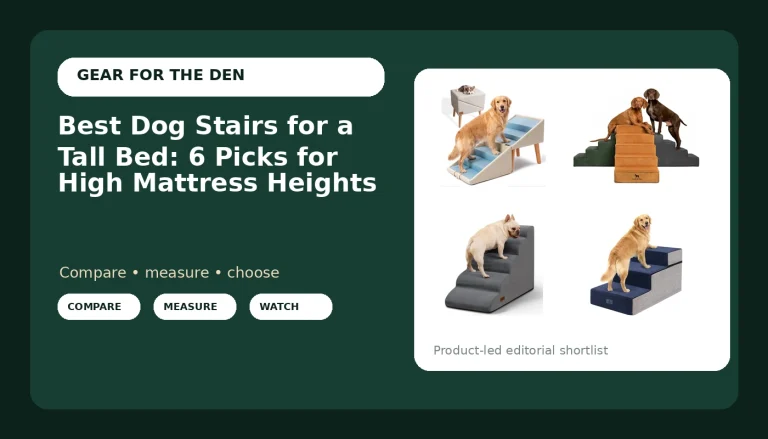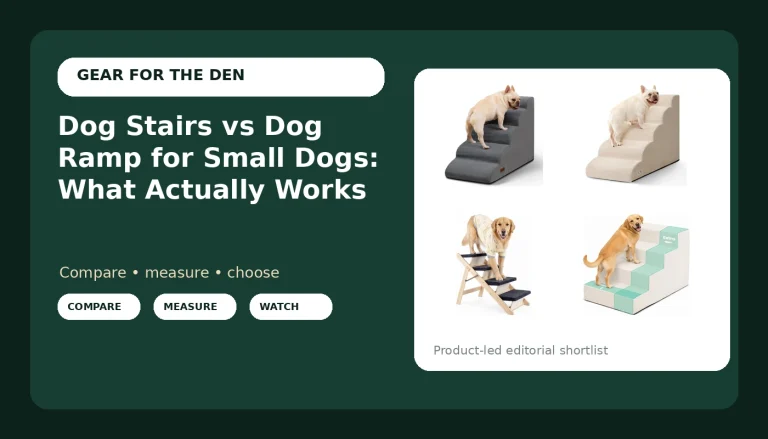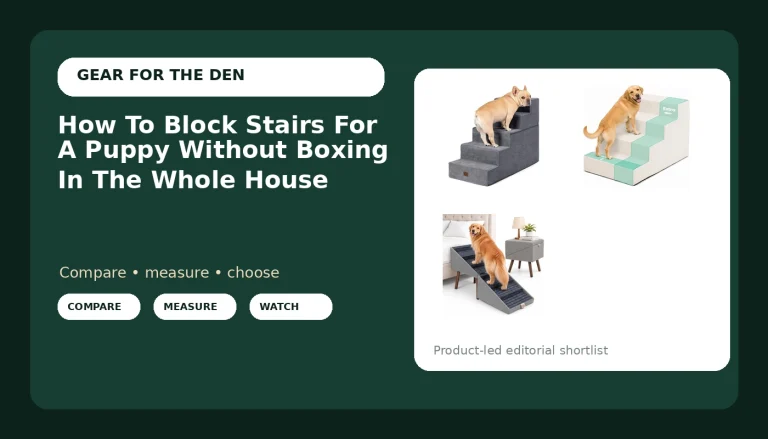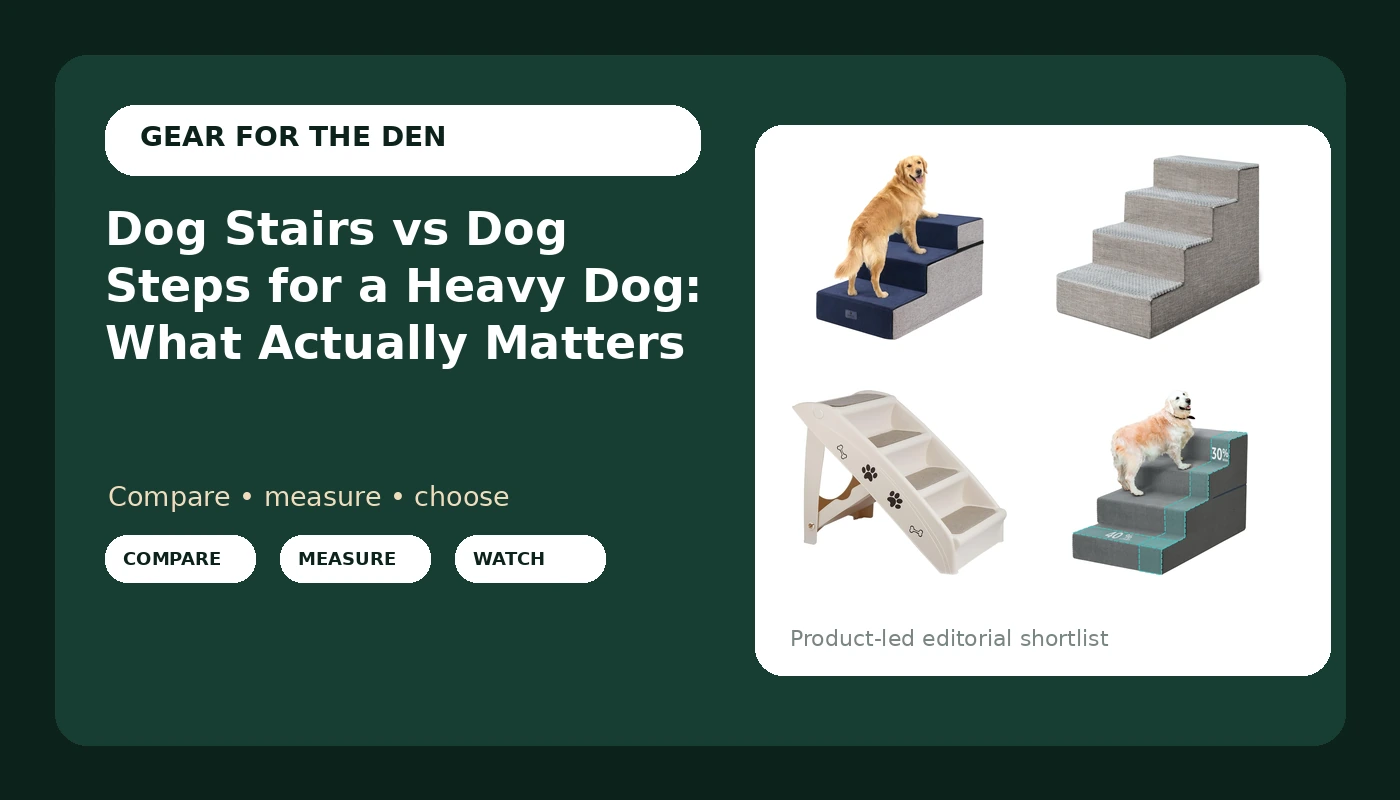
There is a moment in every big-dog household when the couch stops being furniture and starts being a destination. A 70-pound Labrador does not climb onto the bed so much as launch at it, and the landing is where hips, elbows, and shoulders pay the bill. That is why the dog stairs vs dog steps for a heavy dog question keeps showing up in my inbox. The two labels get used interchangeably online, but the products behind them are not built the same way, and the gap widens as your dog gets heavier. I have watched friends buy the cheapest set on the shelf, watch their Lab refuse it twice, and then order the wide version anyway. Buying the right one first is cheaper than buying twice.
The short version: for a dog over roughly 50 pounds, the label on the box matters far less than three numbers, which are rise per step, tread depth, and total width. Get those right and your dog walks up. Get them wrong and you have bought an expensive balance beam that your dog avoids.
The strongest pick in this group for most heavy dogs is the YENING Large Dog Stairs, because it is the only model here that is both 24 inches tall and built extra wide, and those two specs do more for a big dog than any color or fabric choice. The rest of this comparison explains where the other three land, and which ones I would skip.
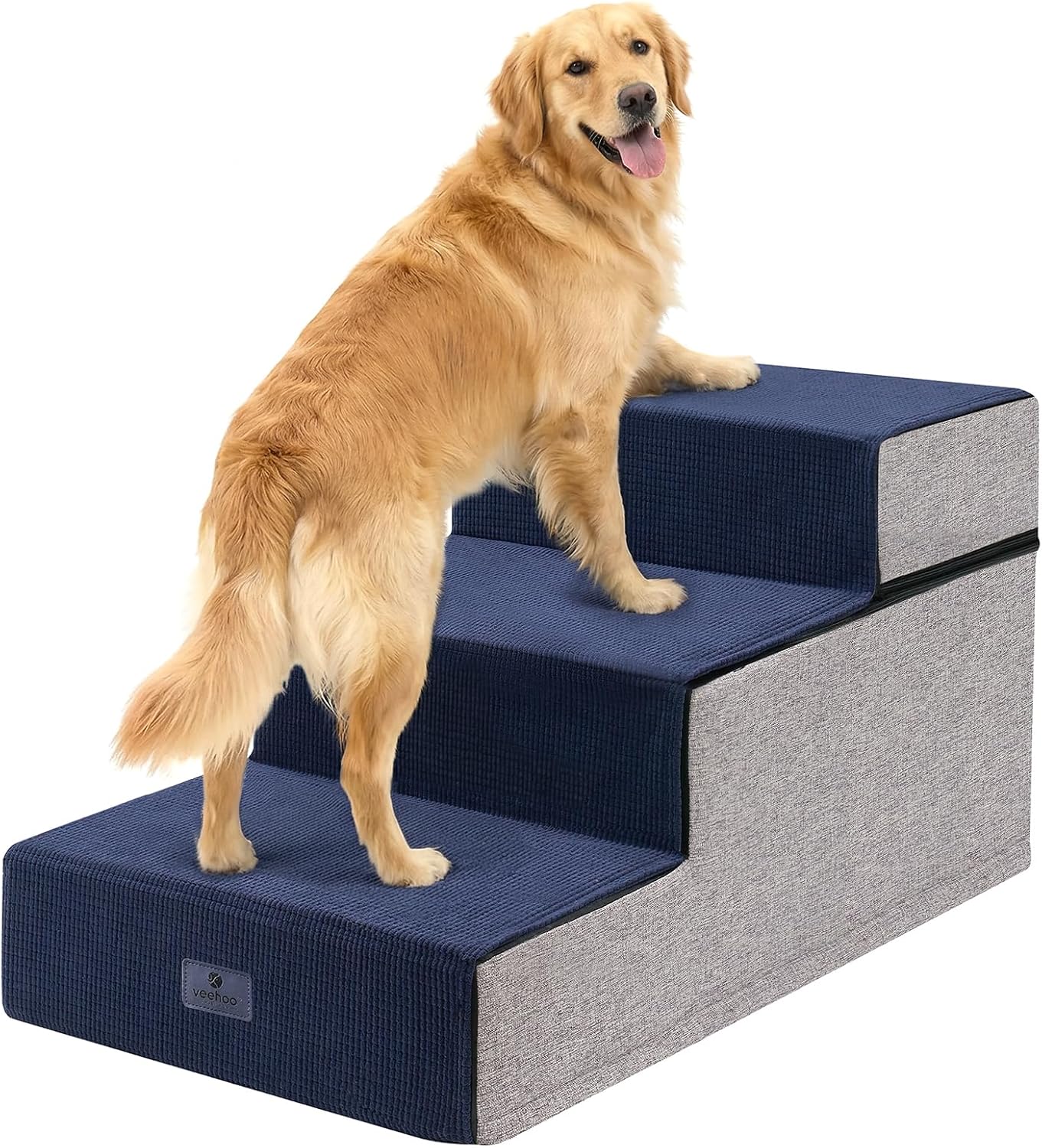
Veehoo Dog Stairs for Bed Couch Large Dogs Extra Wide 20", Pet Steps 18" H
Lowest climb in the group at about 4.5 inches per step, with extra-wide treads that give a heavy dog room to land
18 inches will not reach a tall bed, and you pay a premium for the shortest climb here
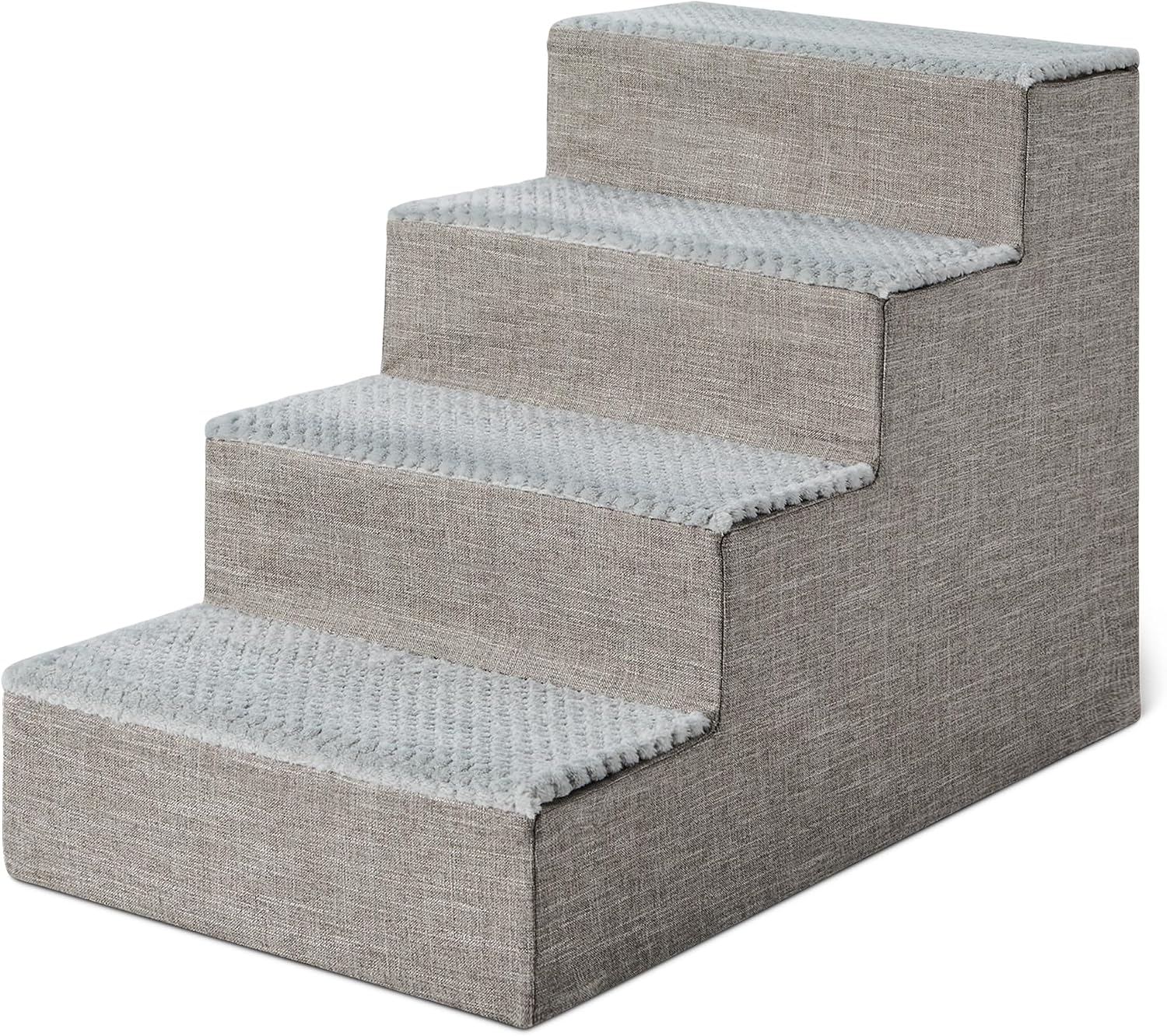
Amazon Basics Dog Steps, 18.7" H, 4-Step Pet Stairs for High Bed Couch and Sofa, Non-Slip Bottom, for Indoor Dogs and Cats, Grey
Middle height with a 4.7-inch rise, a non-slip bottom, and a mainstream price that is easy to justify
Standard width only, so a very heavy dog gets less landing room than the large-dog models
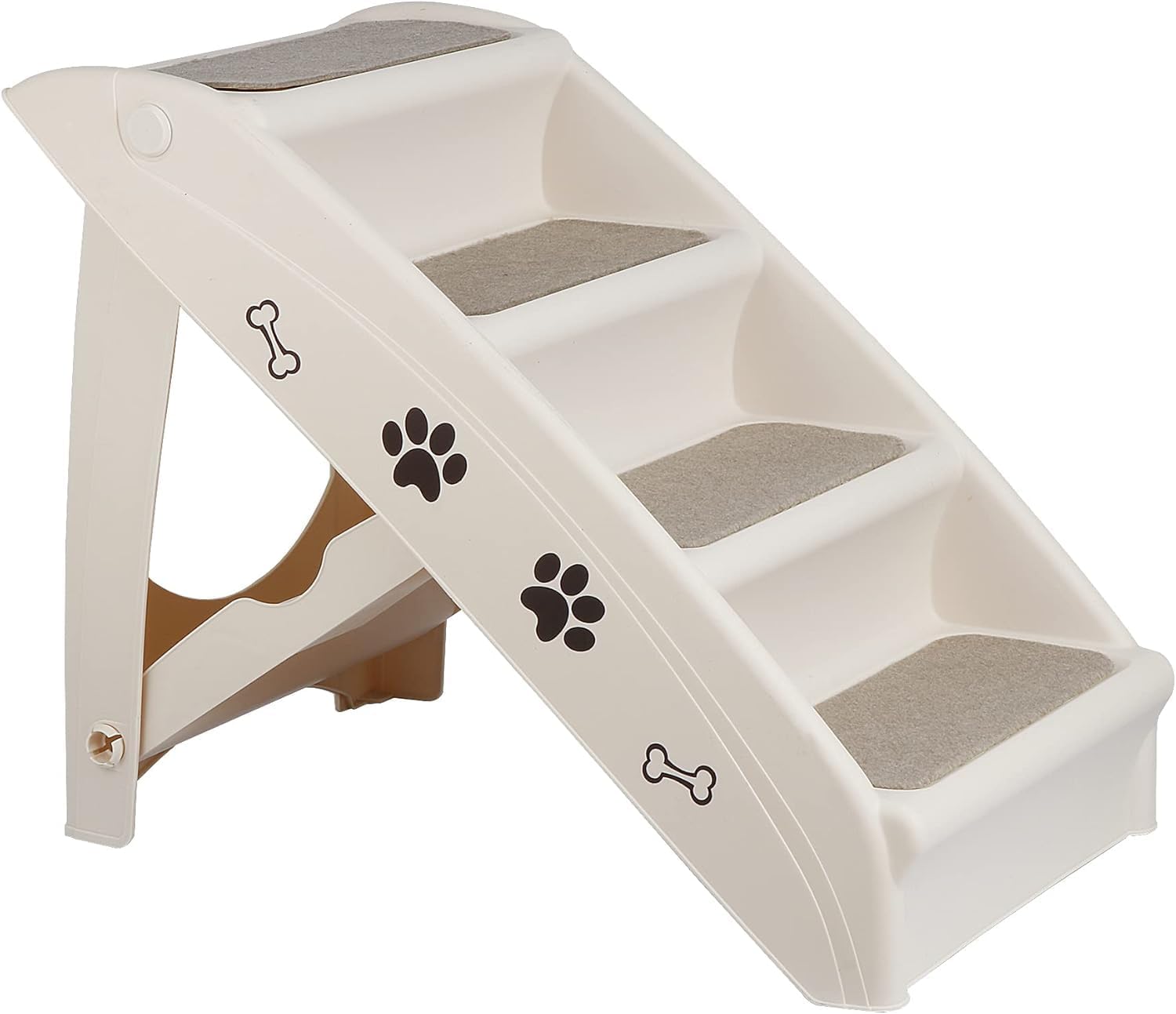
20" H 4-Step Dog Stairs for Small Dogs and Cats, Non-Slip Dog Steps for High Beds, Couch, Sofa, Sturdy Pet Steps (Tan)
Cheapest route to a 20-inch surface, light enough to move one-handed, tan fabric that disappears into a living room
Built and sold for small dogs and cats, so a heavy dog will feel the frame flex
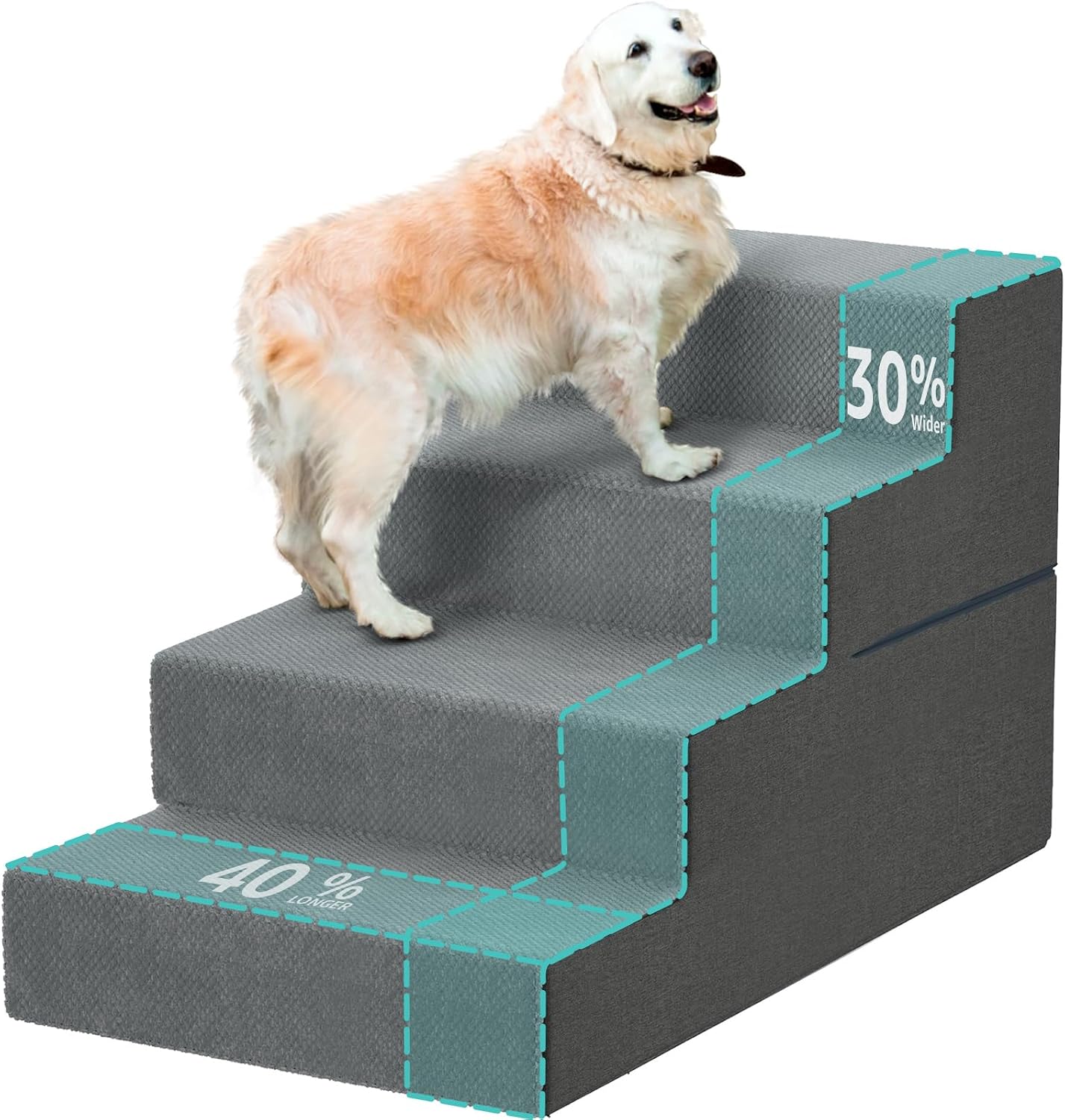
YENING Large Dog Stairs for High Beds, 24 Inches Tall Extra Wide Pet Steps for Large Dogs to Get on Bed, 4 Deep Step for Couch
The only model here that is both 24 inches tall and extra wide, so a tall bed stops requiring a jump
Highest price, largest footprint, and the heaviest to reposition
Prices and availability may change.
The real difference: dog stairs vs dog steps for a heavy dog
In catalogs, "steps" usually means a molded one-piece unit with a low, wide profile, often plastic with a carpeted insert. "Stairs" usually means an upholstered, frame-built unit with individual treads, a taller overall height, and a wider footprint. The difference between dog stairs and dog steps for a heavy dog comes down to how the load travels. A step is a single platform your dog hops onto, which means one big upward move. A stair is a series of short, supported rises that keep all four paws under the body. For a 60-pound dog, the second version is easier on joints because each rise is shorter and the dog stays balanced instead of launching.
The trade-off is real. Stairs take up more floor space, cost more, and are heavier to drag out of the way when you vacuum. Steps are cheap and easy to shove under the couch. For a cat or a 12-pound terrier, that trade is fine. For a heavy dog, the cheap route usually ends the same way: the unit slides on a hard floor, the frame flexes under load, and the dog stops using it.
One more practical note before you compare anything: the word "steps" also shows up on products that are really textured ramps, and on molded two-step platforms meant for a couch. Read the overall height in the listing title first, because two products with the same name can differ by six inches.
Rise per step is the number nobody prints
Riser height is the distance from the top of one tread to the top of the next. Manufacturers rarely print it, but you can work it out from the overall height and the step count.
- The Veehoo stair stands 18 inches tall over four steps, so the rise is about 4.5 inches.
- The Amazon Basics unit stands 18.7 inches tall over four steps, so the rise is about 4.7 inches.
- The tan 20-inch stair stands 20 inches tall over four steps, so the rise is 5 inches.
- The YENING stair stands 24 inches tall over four steps, so the rise is 6 inches.
For a heavy dog, a lower rise is easier per step but means the dog takes more steps to reach the same bed. A higher rise means fewer, bigger moves, which is harder on shoulders and wrists. If your dog is carrying extra weight or has early arthritis, the 4.5 to 5 inch range is the friendlier climb. If your dog is tall, athletic, and just needs to reach a high mattress, the 6-inch rise on the 24-inch unit gets the job done in four moves.
There is a second number hiding in there: the height of the top platform versus your bed. If the top step sits two inches below the mattress, your dog will jump the last two inches anyway, and that jump is the exact motion you bought the stair to prevent. Measure the bed to the top of the mattress, not to the frame, and write the number down before you shop.
Width and tread depth carry the weight
Width is the spec that separates a heavy-dog product from a small-dog product, and it is the one buyers skip. A 12-inch-wide stair asks a 70-pound dog to place a paw the size of a saucer on a target barely wider than the paw itself. The dog compensates by rushing, and rushing is how a stair tips or a dog lands wrong. Look for at least 16 inches of usable width, and treat every extra-wide claim as something to verify in the listing photos rather than the bullet points.
Tread depth matters for the same reason. Deep treads let the whole paw land, not just the toes. Shallow treads push weight onto the front of the foot, which is exactly the part that hurts on a dog with long nails or sore pads. This is usually where the dog steps for a heavy dog vs dog stairs argument ends: the wide, deep, upholstered stair wins, and the narrow plastic step goes back in the box.
The top landing deserves its own look. A stair that ends in a narrow lip gives a heavy dog nowhere to gather itself before the final push onto the mattress. A wide top tread turns that last move into a step instead of a scramble.
The four picks, one by one
Veehoo Dog Stairs for Bed Couch, Extra Wide 20 Inch, 18 Inch Tall
This is the shortest climb in the group and the one I would point a heavy, low-slung dog toward first. The 18-inch height over four steps works out to roughly a 4.5-inch rise, and the extra-wide 20-inch footprint gives a big dog somewhere to put all four paws. It is the easiest of the four to walk up. The cost is reach: 18 inches will not meet a tall bed, and the price is high for the amount of climb you get.
Amazon Basics Dog Steps, 18.7 Inch H, 4-Step
The middle of the group and the easiest to recommend without knowing anything about your dog. A 4.7-inch rise, a non-slip bottom, and a neutral grey finish that does not fight the living room. It handles a standard bed or a deep couch without drama. What it does not offer is extra width, so a very heavy dog has less landing room than the two large-dog models here, and there is no wider version to step up to.
20 Inch H 4-Step Dog Stairs, Tan
This one is honest about its audience: it is sold for small dogs and cats. The 20-inch height over four steps gives a 5-inch rise, and the tan fabric cover blends in with most furniture. It is the cheapest way in this group to reach a 20-inch surface, and it is light enough to move with one hand. The catch is the build. A stair designed around a 15-pound dog will flex under a 70-pound one, and flex is what makes a dog hesitate at the second step.
YENING Large Dog Stairs, 24 Inches Tall, Extra Wide
The tall one, and the only model here built from the ground up for a large dog. Twenty-four inches of height over four deep steps, extra wide, which puts the rise at about 6 inches per step. That is a bigger single move than the others, and it is the right call for a tall bed because it removes the final jump entirely. It costs the most, takes up the most floor space, and is the heaviest to reposition.
Surface, traction, and mat thickness
A stair is only as good as the surface the paw lands on. Mat thickness is the spec that gets ignored most often, and it is the one a heavy dog notices first. A thin mat over hard plastic compresses to nothing under 70 pounds, which puts the paw effectively on plastic. A mat a quarter inch thick or more, laid over a foam or wood core, is the difference between grip and a slide.
Washable fabric is a practical must in a house with a heavy dog, because drool, dirt, and the occasional accident all end up on the treads. Look for a waterproof layer under the fabric. That layer is what keeps moisture out of the foam core, and a foam core that stays wet is where smells live permanently. A cover that unzips and goes in the washing machine will outlast a cover you have to spot clean, and it costs less than replacing the whole unit a year from now.
Finally, check that the non-slip bottom covers the full footprint rather than four corner pads. Whether you call them dog stairs or dog steps for a heavy dog, the failure mode is identical: the unit shifts on a hard floor, and the dog stops trusting it. A rug or a grippy pad under the base fixes more complaints than any other single change.
If your dog is recovering from surgery
Vets send a lot of heavy dogs home on crate rest after knee or hip surgery, and the stair question usually arrives in the same week. If you are shopping both at once, the crate specs deserve the same attention as the stair specs. Crate size has to let the dog stand, turn, and lie flat without pressing against the walls. Panel count decides how far the crate folds down when it is not in use. Gate height matters for a dog that is sore but still wants to walk out on its own. Bar spacing should be tight enough that a curious nose stays inside. Cover ventilation keeps the crate from turning into a sauna in a warm room. Follow whatever your vet says about movement limits, and treat the stair as part of the recovery setup rather than a piece of furniture.
The stair and the crate are really the same project: getting a heavy dog from the floor to the bed and back without a jump.
What the specs actually say
Line the four up and the pattern is simple. Height and width track the price almost perfectly. The two extra-wide models cost more because they use more material, more foam, and more fabric. The two standard-width models cost less because they use less. Strip away the marketing and the dog stairs vs dog steps for a heavy dog decision is a measurement problem, not a materials problem. Match the stair height to your bed height first, then buy the widest version of that height your floor plan allows.
A stair that is two inches too short invites a jump at the top, and a stair that is too narrow invites a stumble in the middle. Both failures cost more than the difference between the cheap model and the expensive one, which is the whole argument for measuring before you click buy.
Should you buy a ramp instead?
A ramp solves the same problem with a continuous slope instead of steps, and for a dog with a bad back or a fused spine it is often the better answer. The catch is length. A ramp gentle enough for a heavy dog has to be long, and a long ramp in a bedroom is a trip hazard for the humans. Some dogs also refuse the surface, especially if they have slipped on a smooth ramp before. Stairs work better for dogs that already climb and for rooms where floor space is tight. If your dog launches at the couch from across the room, a ramp will not slow that down, but a wide stair will.
The dog stairs vs dog steps for a heavy dog question has one honest answer: buy for the bed you own, not for the photo on the box.
The bottom line: for a bed under about 22 inches, the Amazon Basics unit is the sensible middle and the tan 20-inch stair is the budget pick for a dog on the lighter end of heavy. For a tall bed and a genuinely heavy dog, the YENING stair is the one that does not ask your dog to compromise, and the Veehoo is the right choice when the climb needs to be short rather than tall. Measure the bed before you order, then buy the widest stair that height allows.