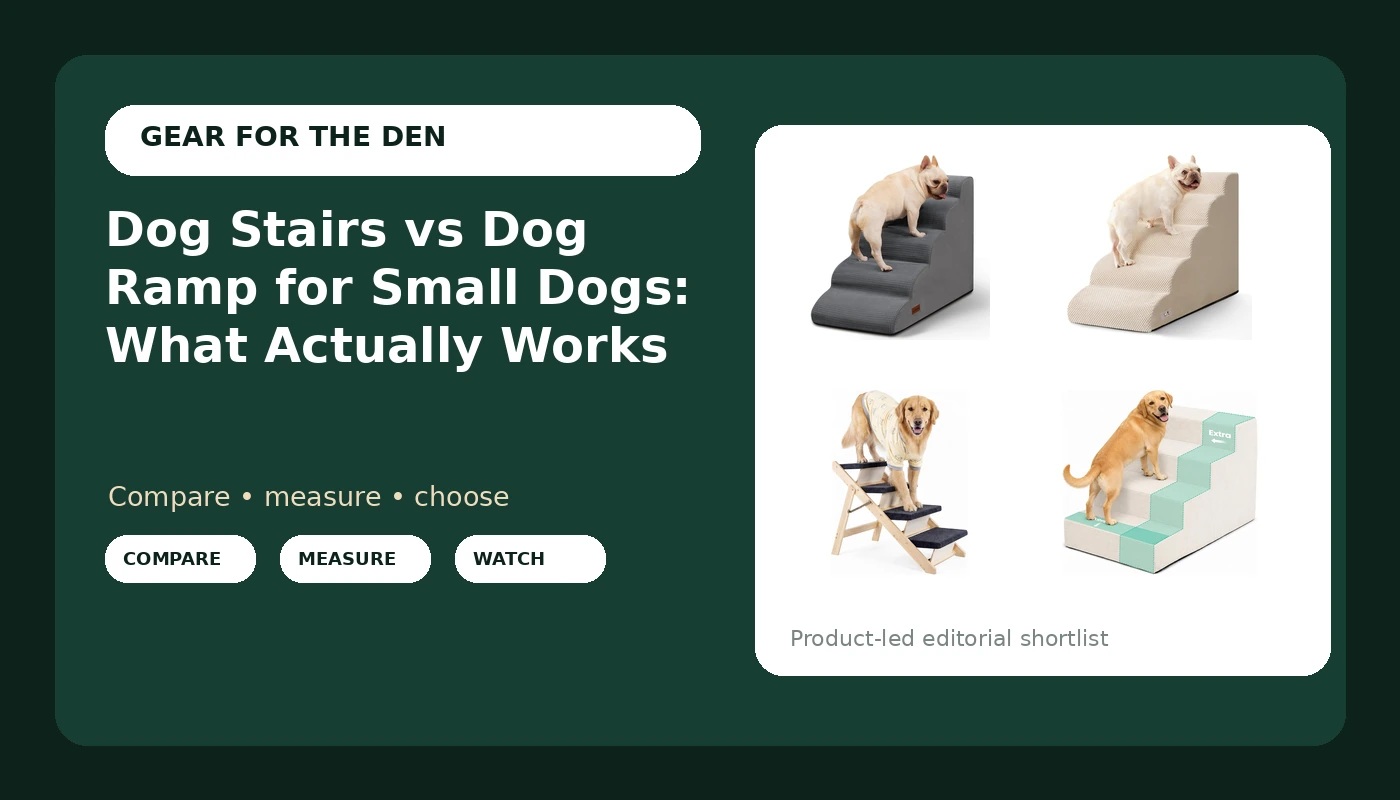
I have spent years writing about dog gear and watching small dogs size up a bed like it is a cliff face. The dog stairs vs dog ramp for small dogs question comes up in every one of those conversations, and the answer is not as simple as "ramps are better for joints" or "stairs are easier to store." It depends on your dog's stride, your bed height, and how much floor space you are willing to give up. This comparison looks at four current options, all designed to solve the same problem in different ways, and explains which one fits which household.
The best choice for most small dogs in 2026 is a five-step design with a low first step and a stable base, like the Aodisman Dog Stairs for High Bed, because it matches a small dog's natural stride better than a short, steep ramp. But that is the short answer. The long answer involves step rise, surface grip, footprint, and the difference between dog stairs and dog ramp for small dogs when your dog is nervous, senior, or built like a loaf of bread.
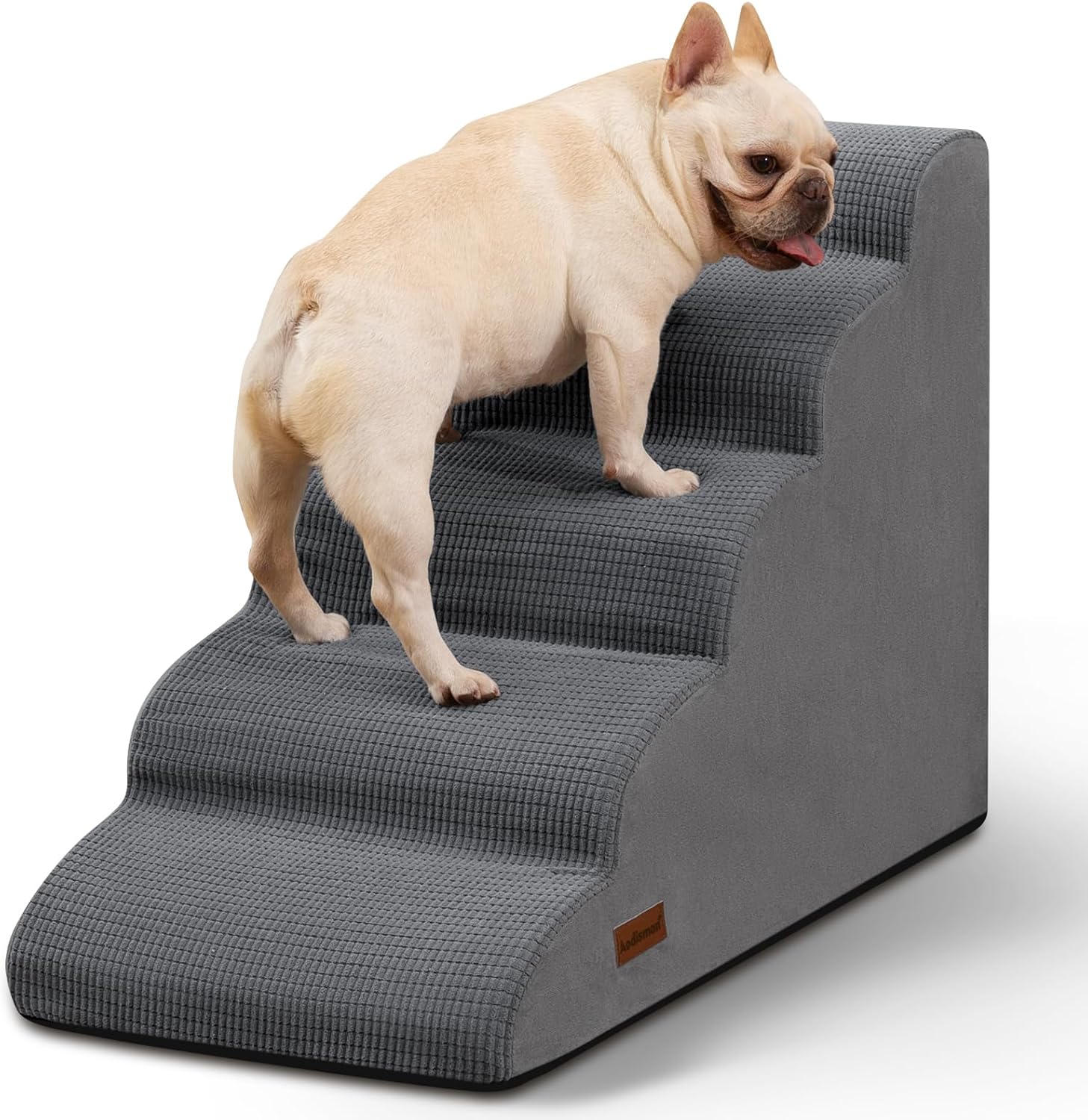
Aodisman Dog Stairs for High Bed,5-Step Pet Ramp for Small Dogs and Cats
Five steps and a small-dog focus make it the closest match for a typical small dog or cat
Not the widest option here, so a larger dog or a very unsteady dog may want more landing room
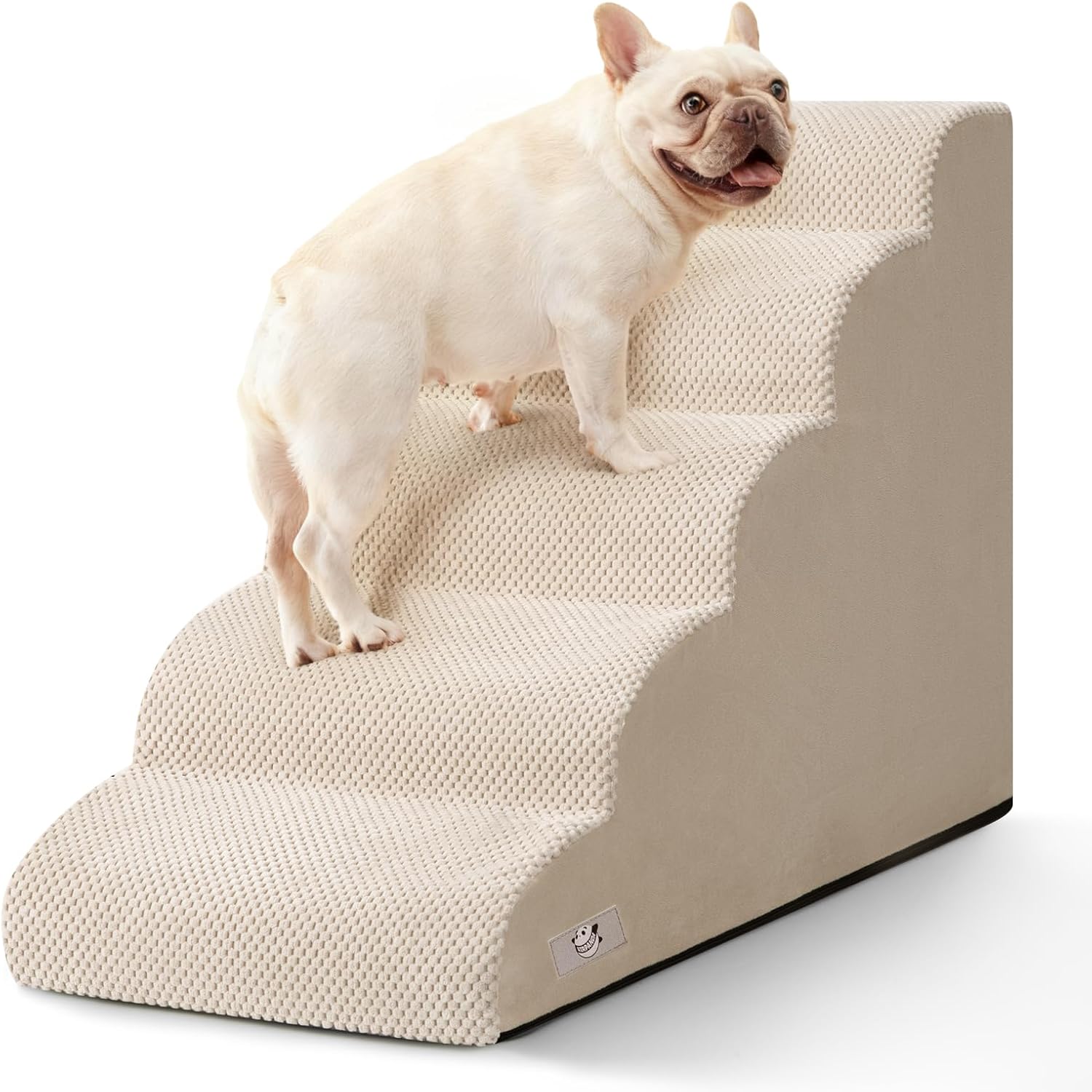
Dog Stairs for High Beds 22.4" H,5-Step Pet Ramp for Small & Medium Dogs
A five-step, 22.4-inch-high design that covers small and medium dogs
The name says small and medium, so it is not the first pick for a large-dog household
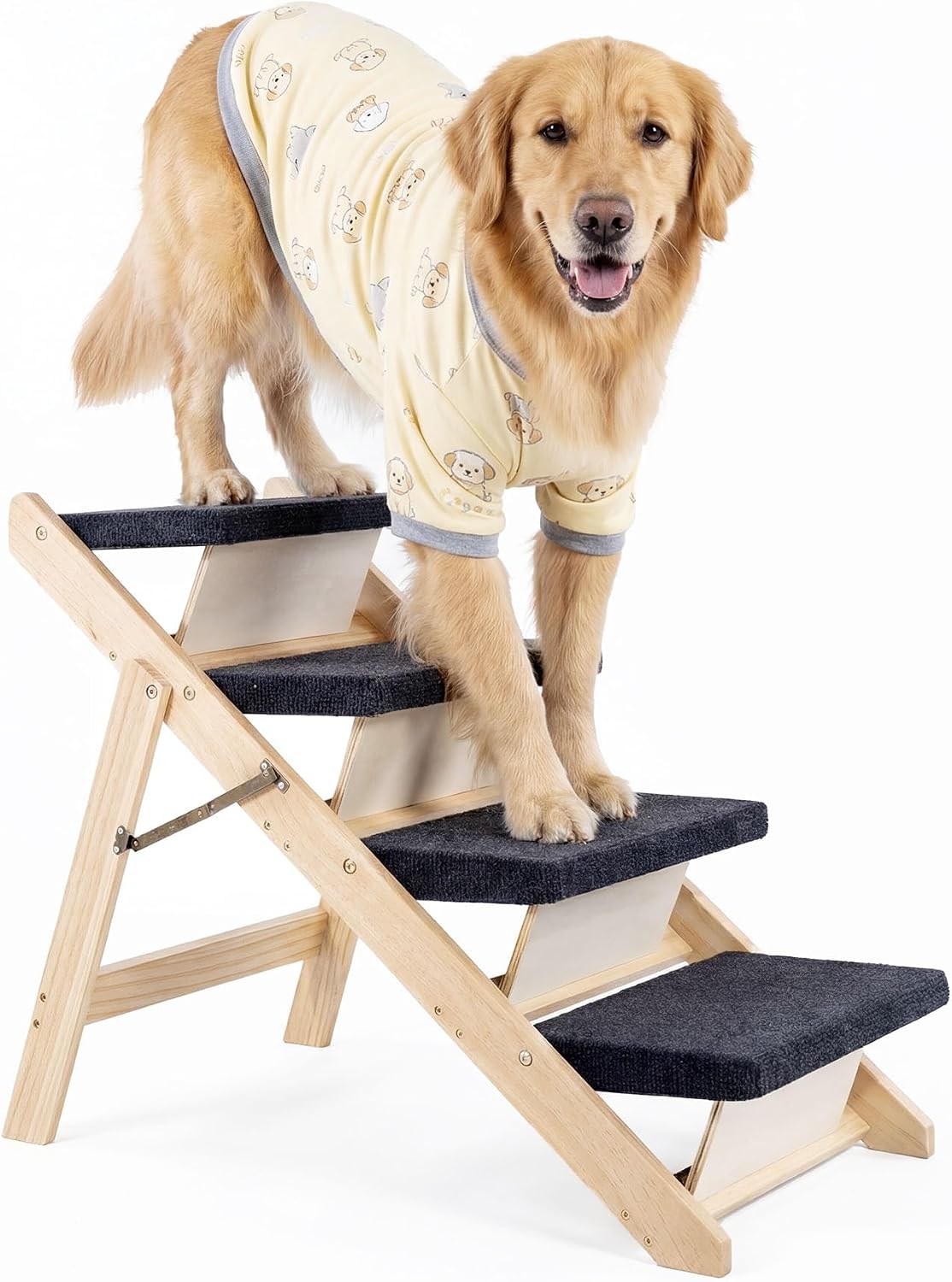
MEWANG Wood Pet Stairs, 4-Step Dog Stairs for Beds, Couches & Cars, 25" H
Wood build and a 25-inch height for beds, couches, and cars
Four steps at that height means a steeper climb than a five-step design
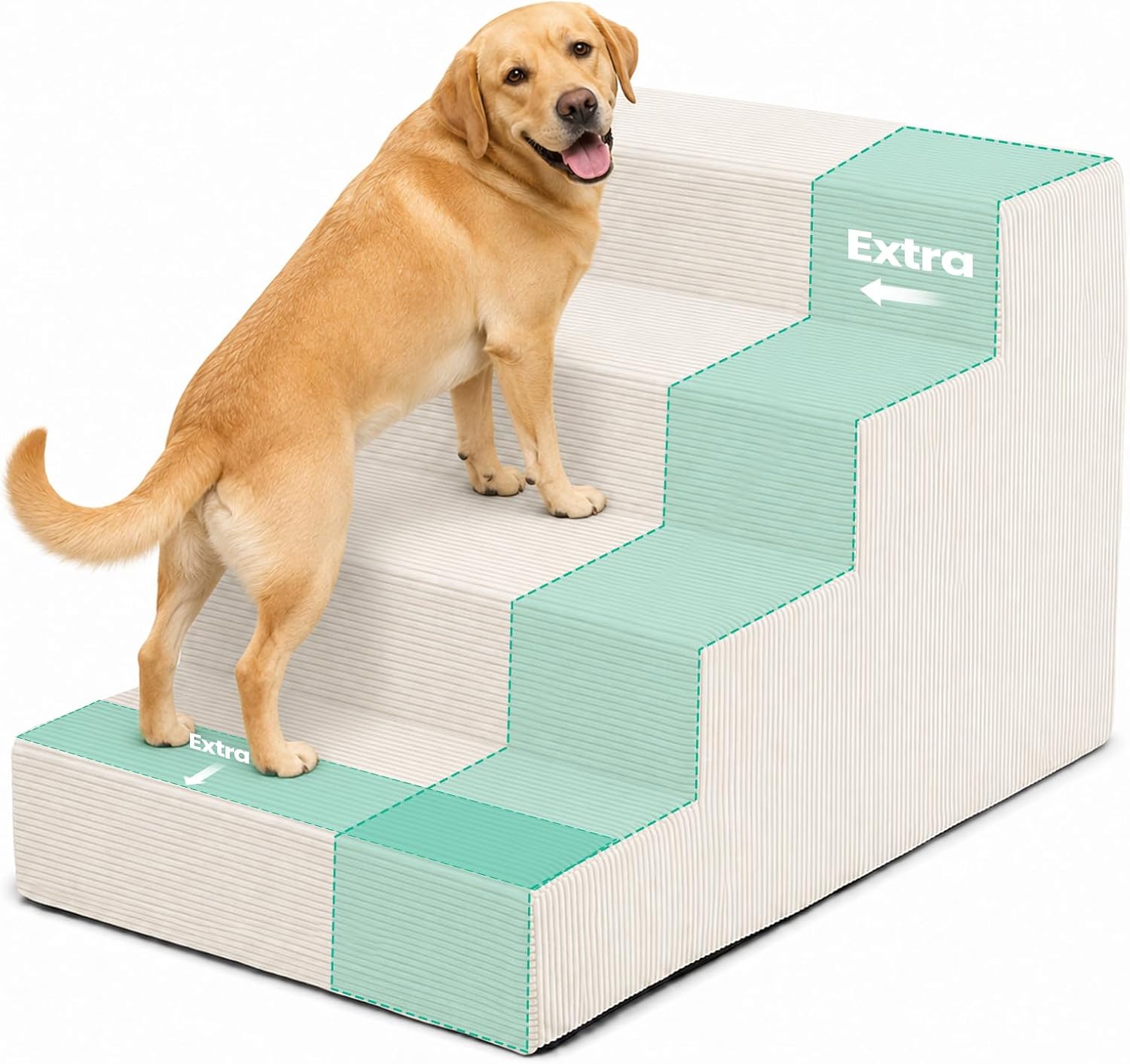
Kuitenz Dog Stairs for Large Dogs, 24" H Extra Wide Pet Steps for High Beds
Extra-wide steps and a 24-inch height give the most landing room of the group
It is built for large dogs, so it takes up more floor space than a small dog needs
Prices and availability may change.
How I evaluate dog stairs and ramps
I look at five things: the rise between steps, the width of the running surface, the total footprint, the traction of the top surface, and how easy the whole thing is to clean. A small dog with a 6-inch leg lift does not need the same geometry as a 70-pound retriever. The best dog stairs for a small dog have a short first step, a gradual rise, and a landing at the top that lets the dog pause before hopping onto the bed. A ramp can work, but only if the angle is gentle enough that the dog is not climbing a slide.
I also think about the room around the bed. If you already have a crate, the crate size you use tells you a lot about your available floor space. A wide set of stairs or a long ramp can block a walking path, a closet door, or the side of the bed you use at 2 a.m. If you use a crate cover, you already understand how panel count, cover ventilation, and gate height change the way a piece of pet furniture fits a room. The same is true here: a product that looks compact in a photo can dominate a small bedroom.
Step rise is the number that matters most for a small dog. A five-step design splits the height into smaller pieces than a four-step design, which means less shoulder work per stride. If your dog is a dachshund, a corgi, or any breed with a long back and short legs, that difference is not cosmetic. It is the difference between a confident climb and a dog that stands at the bottom looking at you.
Why dog stairs vs dog ramp for small dogs comes down to slope
The core trade-off is slope. Stairs break a climb into short, repeatable steps. A ramp turns the same height into one continuous incline. For a confident dog with good traction, a ramp can be faster and smoother. For a small dog with short legs, a ramp that is too short for the height becomes steep, and a steep ramp is harder than stairs. That is the difference between dog stairs and dog ramp for small dogs in practice: stairs control the rise, while a ramp controls the distance.
If you are deciding between dog stairs or dog ramp for small dogs, measure the height first. A bed that is 22 to 25 inches high is the range these four products are built for. Then measure the run. A ramp needs more floor length to keep the angle low. Stairs need more height per step, but they take up less length. In a tight bedroom, stairs usually win. In a living room with open floor, a ramp can be the kinder choice for a dog with arthritis.
The dog stairs vs dog ramp for small dogs decision is really a slope decision. If your dog already hesitates at the edge of the bed, a ramp that is too steep will not solve the problem. If your dog bounds up and down all day, either shape can work as long as the surface grips.
Stairs: the default for small dogs
Stairs are the default for most small dogs because they match how dogs already move. A dog takes one step, pauses, takes another. The rhythm is familiar. The Aodisman five-step model and the 22.4-inch five-step model both use that logic. The MEWANG wood stairs use four steps to reach 25 inches, which means each step is taller. That can be fine for a dog that already bounds onto the couch, but it is a bigger ask for a 10-pound dog with short legs.
The other advantage of stairs is storage and placement. They tend to have a smaller footprint than a ramp that reaches the same height, and they can sit flush against a bed or couch. If you need to move them, most are light enough to slide with a foot. The trade-off is that a staircase is a series of small obstacles. A dog that is nervous about footing may stop halfway. That is where a non-slip surface and a wide step matter more than the number of steps.
The number of steps also changes the landing at the top. A five-step design usually has a smaller top platform than a four-step design, because the extra step eats into the footprint. That is fine for a dog that steps off cleanly. If your dog likes to stand at the top and survey the room, a wider top step is worth prioritizing.
Ramps: the gentle-slope alternative
Ramps are not automatically better, but they are different. A ramp gives a dog one continuous surface, which can be easier for a senior dog that does not want to lift its legs repeatedly. The catch is length. To keep the angle low, a ramp for a high bed has to be long. If the ramp is short, the dog is essentially walking up a steep hill. For a small dog, that can be more tiring than stairs.
Ramps also need side rails or a textured surface, or the dog will slide. Some ramps fold, which helps in small apartments, but a folding hinge can be a weak point over time. If you are comparing a ramp and stairs for a dog with hip issues, look for a low angle first, then traction, then weight. A ramp that is easy to carry but too steep is not a mobility aid. It is a slide with a marketing budget.
Surface texture matters even more on a ramp than on stairs. A dog on a ramp is pushing forward on an incline, and a smooth surface gives nothing for claws to catch. Look for a woven or rubberized top, or add a non-slip mat if the ramp comes with a slick cover. If the ramp has a washable fabric cover, make sure the cover is tight and does not bunch at the bottom. If you have been searching dog ramp for small dogs vs dog stairs, the search results usually push ramps for joint health, but the better question is which shape your dog will actually climb.
Stability and safety are non-negotiable
A set of stairs or a ramp is only useful if it does not move. Look for a base that sits flat, a top step that meets the bed without a gap, and a surface that gives claws something to grip. If the product has a washable fabric cover, check how it attaches. A cover that shifts under a dog's weight can turn a stable step into a slip. A waterproof layer helps with accidents, but it can also make the surface slick if there is no texture over it.
Mat thickness matters more than most people expect. A thick, soft mat feels nice to a human hand, but a small dog needs a surface that does not compress away from its paws. A thin, firm mat with a textured top is usually better for traction. If you have a senior dog, pair the stairs or ramp with a rug or a non-slip runner at the bottom so the dog has a stable launch point.
The same way bar spacing matters on a crate to keep a pet from squeezing through, the gap between steps or the space under a ramp matters here. A wide gap can catch a small paw. A narrow gap can collect hair and dust. Check the spacing before you commit.
What the specs say
The specs in this group are simple: step count, height, width, and intended dog size. Five steps at 22 to 25 inches gives a gentler rise than four steps at the same height. Extra-wide steps help a dog that needs a bigger landing. A product labeled for large dogs is not automatically wrong for a small dog, but it is usually more product than a small dog needs. The dog stairs vs dog ramp for small dogs choice is not about which category is superior. It is about which geometry matches your dog and your room.
The Aodisman Dog Stairs for High Bed is the small-dog and cat pick. It uses five steps and is described for high beds, small dogs, and cats. If your dog is under 20 pounds and the bed is in the 22 to 25 inch range, this is the most natural starting point. The main limitation is width. A dog that likes to run up at an angle may prefer a wider landing.
The 22.4-inch five-step model is the middle ground. It is listed for small and medium dogs, and the five-step layout keeps the rise per step reasonable. It is a good fit if you have one small dog and one medium dog, or if you want a little more surface without moving into a large-dog product.
The MEWANG Wood Pet Stairs are the furniture-friendly option. Wood looks better in a living room than most plastic stairs, and the 25-inch height covers beds, couches, and cars. The four-step design is the trade-off. At 25 inches, four steps means a steeper climb than a five-step design at a similar height. It is best for a confident dog that already jumps on furniture and just needs a safer path.
The Kuitenz Dog Stairs for Large Dogs is the extra-wide pick. It is built for large dogs, with a 24-inch height and extra-wide steps. For a small dog, it is more landing room than you need, and it takes up more floor space. But if you have a small dog and a large dog sharing the same bed, or a small dog that is unsteady and needs a wide surface, the extra width can be worth the footprint.
If you are shopping for a puppy, remember that a puppy will grow. A five-step design that fits a 10-pound dog may feel narrow at 25 pounds. The 22.4-inch model and the Kuitenz both leave more room for growth, but they also take up more space. The Aodisman is the best fit for a dog that will stay small.
Height and step count are the two specs that predict how a dog will climb. Width predicts how confident the dog will feel. Material predicts how the product fits your home. None of those specs tells you whether your dog will use it, but they tell you whether the geometry is in the right range. If the numbers do not match your bed and your dog, no amount of training will fix the fit.
I cannot tell you which one your dog will use without seeing your dog move. What I can tell you is what the names and specs suggest. The Aodisman and the 22.4-inch five-step model are the small-dog-focused options. The MEWANG is the wood, four-step option for a confident climber. The Kuitenz is the wide, large-dog option that doubles as a stable platform for a small dog that needs more room. That is the whole comparison in one paragraph.
Should you buy one before you measure?
Yes. Measure the height of the bed, couch, or car seat before you buy. Measure the floor space in front of it. Then measure your dog: shoulder height, leg length, and how high the dog already jumps without hesitation. A dog that clears the couch in one leap may only need a low step. A dog that circles and whines needs a gradual climb.
If you are between a ramp and stairs, start with the product that has the lower first step. The first step is where most small dogs hesitate. After that, the rest of the climb is usually fine. If you can, buy from a retailer with a return policy, because a dog's willingness to use a ramp is not something a product page can predict. The best dog stairs for a small dog are the ones your dog actually climbs.
One more measurement: the height of your dog's favorite resting spot. If your dog already sleeps on the couch, measure the couch. If the dog sleeps on the bed, measure the bed. The product needs to match the place the dog actually wants to go, not the place you think it should go. A set of stairs that leads to a bed the dog ignores is just furniture.
What I'm comparing next
I am watching the market for two things: foldable ramps with better traction surfaces, and stairs with wider landings that do not take over a bedroom. The current group covers the basics well. The Aodisman is the small-dog default, the 22.4-inch five-step model is the small-to-medium bridge, the MEWANG is the wood option, and the Kuitenz is the extra-wide large-dog build. Next, I want to look at how these hold up when a dog uses them ten times a day, and whether the covers stay put after a few washes. That is the part a spec sheet cannot answer.