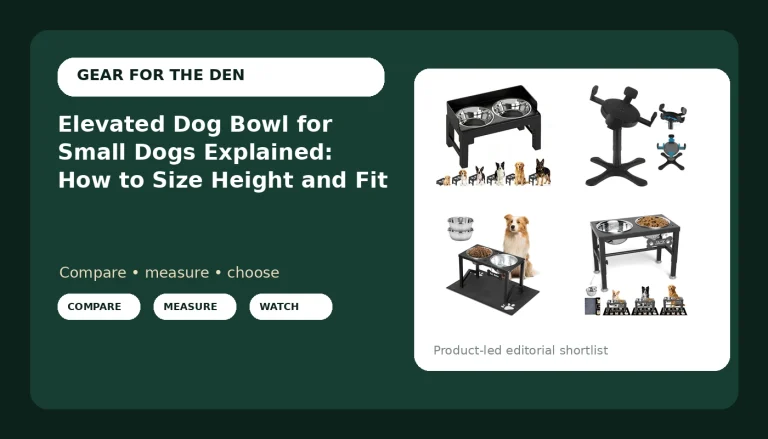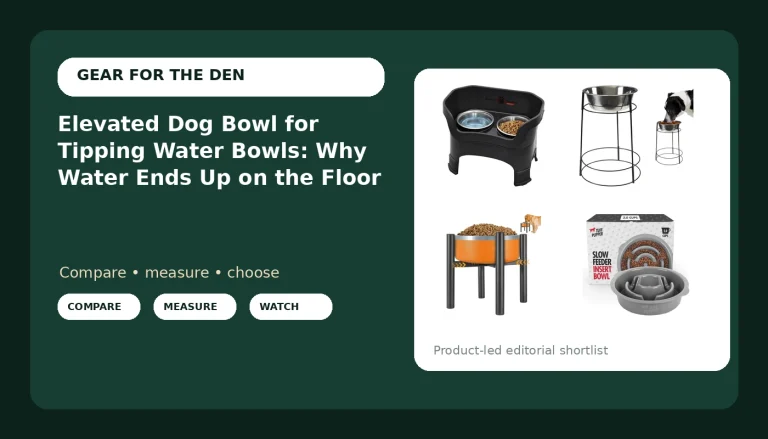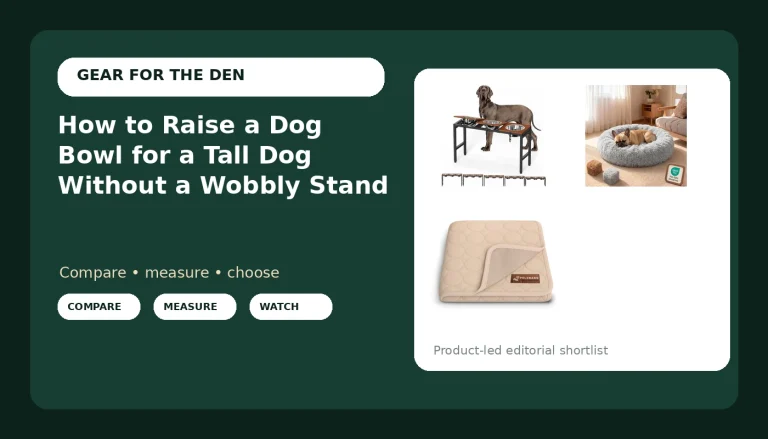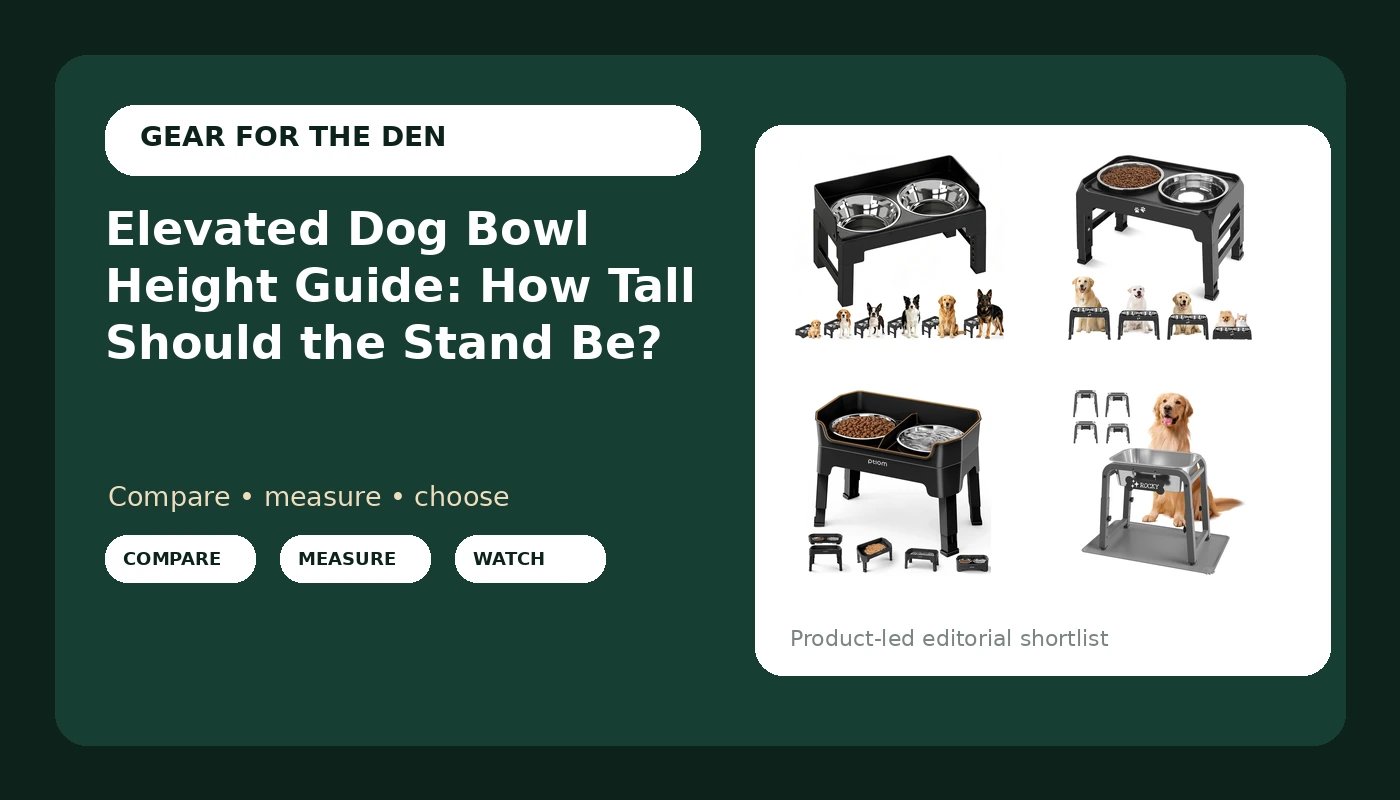
If you have ever watched a big dog fold its front legs under its chest to reach a bowl sitting on the floor, you already know why this elevated dog bowl height guide exists. There is no single number that works for every dog, and most of the advice out there skips the part that actually matters: matching the rim of the bowl to your dog's shoulder and elbow line instead of to a chart taped to the wall.
I keep four adjustable stands set up in the house right now, and I rotate them between a 28-pound beagle mix and a much taller foster dog. The short version is that adjustability matters more than any single number, a non slip base matters more than most shoppers expect, and a stand that fits your dog at twelve inches can be useless at four. What follows is how each stand is built, what heights it actually offers, and how to land on the correct elevated dog bowl height for the dog standing in front of you.
Best Overall: PAKEWAY Elevated Dog Bowls
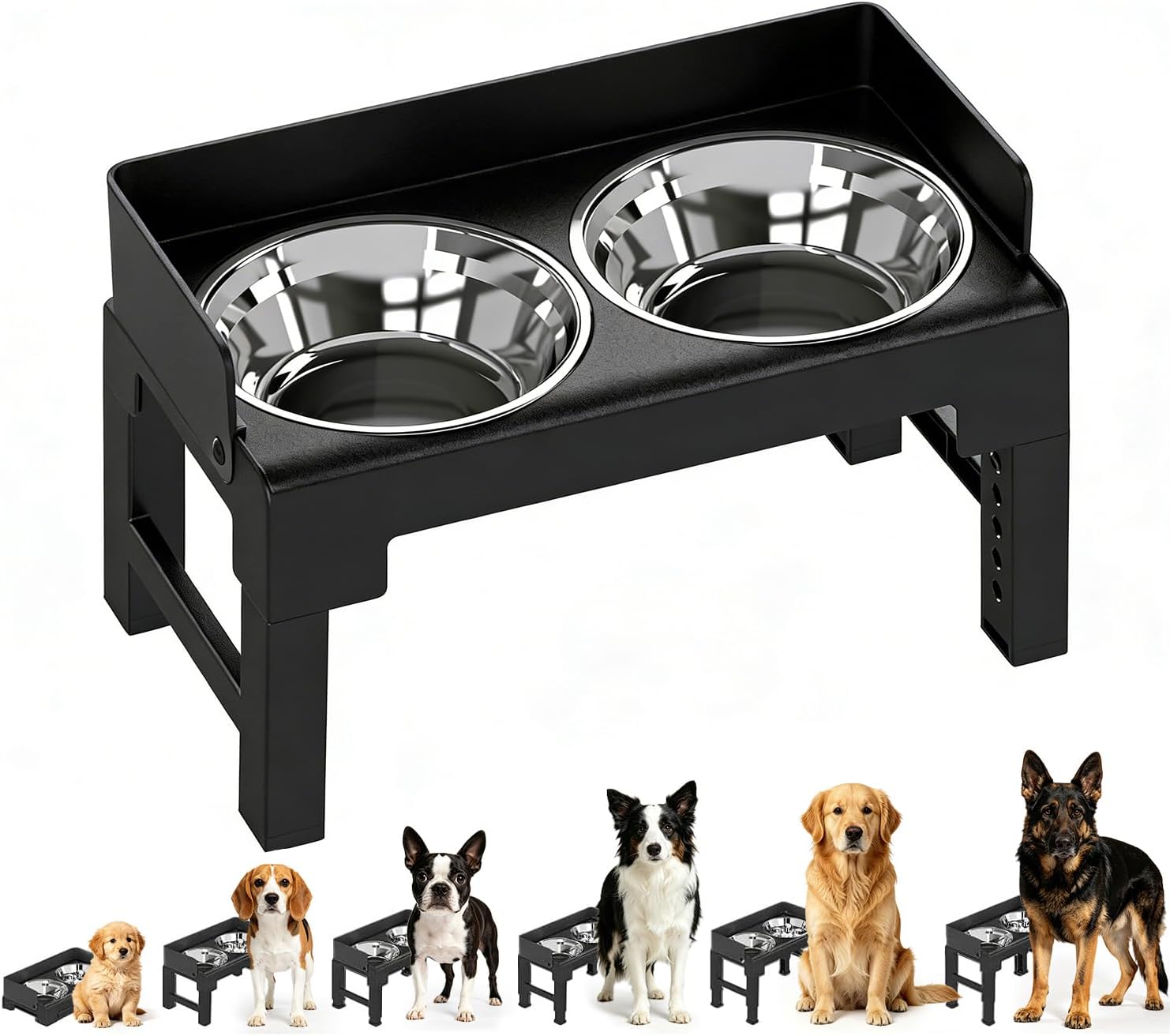
This is the stand I would hand to a friend with a Labrador or a shepherd mix, and it is the one that stays set up in my kitchen. Six height positions is more than anything else in this group offers, and the range is wide enough that the same stand can serve a medium dog at its lowest setting and a large dog at the top. That flexibility is the entire point of an adjustable feeder. A puppy that eats comfortably at nine inches will need closer to twelve before it is two years old, and buying once beats buying three times.
The tilt is the feature that surprised me. The platform angles the bowl forward, which lets a dog with a longer neck or a stiffer shoulder reach the food without dropping its head as far. For a senior dog with arthritis in the neck, that small change is the difference between eating eagerly and walking away from the bowl.
The stand ships with two stainless steel bowls, and both are dishwasher safe, which matters more than any finish claim once you are washing them twice a day. The spill proof tray underneath catches drool and stray kibble. It is not an airtight seal, and it does not need to be. An airtight seal belongs on a food storage bin, not on a bowl that lives in a stand.
The base has enough grip that it stays put when a dog pushes into it. That is the failure point on cheap stands: the dog noses the bowl, the whole thing slides across the tile, and dinner ends up under the refrigerator.
Best Value: COMESOON Elevated Dog Bowls
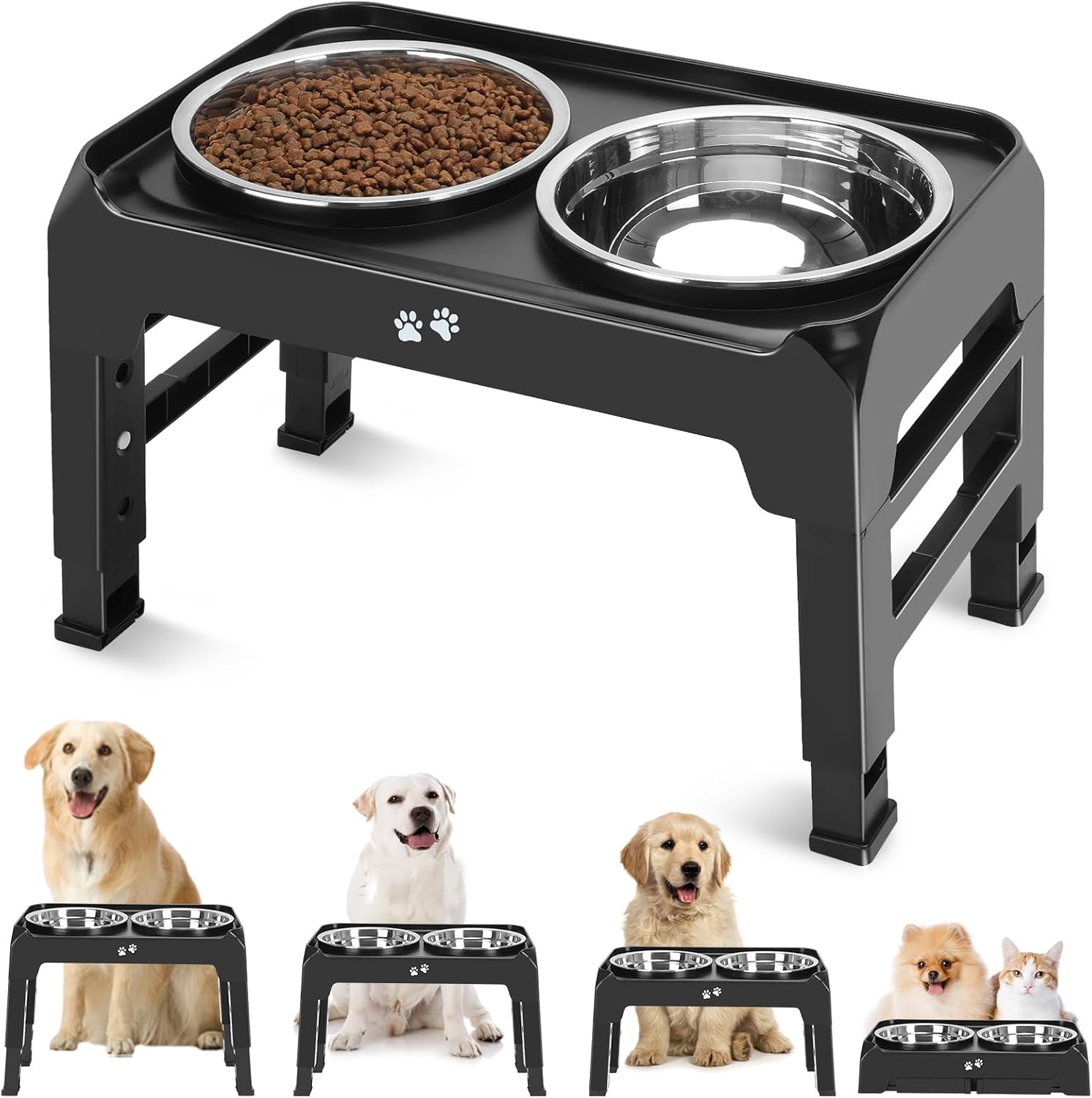
The COMESOON stand is what I recommend when someone wants a straightforward answer and does not want to think about it again. It adjusts to four marked heights, 3.7 inches, 9.2 inches, 10.75 inches, and 12.36 inches, and because the positions are labeled rather than guessed, you can find the one your dog likes and set it there every time without eyeballing it.
Two thick 50 ounce stainless bowls come in the box. That bowl capacity is generous for a medium dog and adequate for a large one, and the thick walls mean the bowls do not flex or rattle when a dog pushes food against the side. The feeder base is non slip, and the whole stand is light enough to slide out from the wall for a rinse.
Where it gives up ground to the PAKEWAY is the tilt. There is none. If your dog eats with a level head and a normal neck, that costs you nothing at all. If your dog is a senior with a stiff neck, or a deep-chested breed that has to reach down further than it wants to, the flat platform is the compromise you are accepting.
The stand is simple, the heights are honest, and it does the one job that matters. For most medium dogs, that is enough.
How I tested
Every stand went through the same checks, in the same order, at every height it offers.
First, the wobble test. Set the stand at each position, press down on the bowl rim the way a dog leans into it, and see whether the legs shift or the platform flexes. A stand that rocks at its tallest setting is a stand that gets knocked over by a dog that eats fast.
Second, the posture check. I set the rim of the bowl next to the dog's elbow line and watched a full meal. The correct elevated dog bowl height puts the rim somewhere between the elbow and the lower chest, so the dog eats with its neck level or angled slightly down. If the dog has to reach up, the stand is too tall. If it has to drop its head below the shoulders, the stand is too short. You can find that range yourself with a tape measure and a wall.
Third, the cleanup check. Bowls came out and went through the dishwasher. Trays came out and got rinsed in the sink. Stands that are awkward to take apart get used less, no matter how well they are built.
Fourth, the mess check, which matters most in a house with a sloppy drinker. I watched how far water traveled from each bowl, whether the tray caught the splash, and whether the base stayed where I put it on tile and on a low pile rug.
I ran all four stands through those checks with both dogs. I used a tape measure against a wall, the way any owner would, and I am not going to pretend I did anything more precise than that.
Analysis and test results
Height range is the number that separates these stands, and it is the number most listings bury. The PAKEWAY covers six positions, the COMESOON covers four labeled ones, and the 3-in-1 slow feeder covers four. The TIDANT is the odd one out: it is built around a 1.2 gallon water reservoir, and its four positions run from 12 to 17 inches, which puts it squarely in large breed territory. If your dog is a beagle, that stand is not for you.
There is no universal ideal elevated dog bowl height, which is exactly why adjustability beats a fixed number. A stand with four or more positions can follow a puppy through its growth and follow a senior through the years when its neck gets stiff. A fixed-height stand is a bet that your dog will never change. It will.
Bowl capacity turned out to matter more than I expected. Fifty ounces of food per side is a lot of kibble, and the 56 ounce bowls on the slow feeder are bigger still. Water is a different calculation entirely, because water capacity drives how often you refill. A 1.2 gallon reservoir means a large dog can drink all day without you hauling the bowl to the sink.
Stability separated the group less than I thought it would. All four have a non slip base of some kind, and all four stayed put on tile during normal eating. The difference showed up with the fast eaters, the dogs that push the bowl across the floor while they work. That is where a wide base and a grippy foot earn their keep.
Slow feed ridges are the quiet winner in this group. A dog that inhales a bowl in ninety seconds and then throws it up on the rug is not a dog with a behavior problem, it is a dog with a bowl problem.
The elevated dog bowl height chart by dog size
This is the chart I keep on the fridge, and it is the same one I use when someone asks me where to start. Measure your dog at the elbow, then set the stand so the rim lands at or just below that line. Adjust one notch and watch a meal.
| Stand | Height range | Bowl capacity | Best for |
|---|---|---|---|
PAKEWAY Elevated Dog Bowls | 6 positions | 2 stainless bowls | Medium and large dogs, tilt helps seniors |
COMESOON Elevated Dog Bowls | 3.7, 9.2, 10.75, 12.36 inches | 2 x 50 oz | Labeled heights, no guesswork |
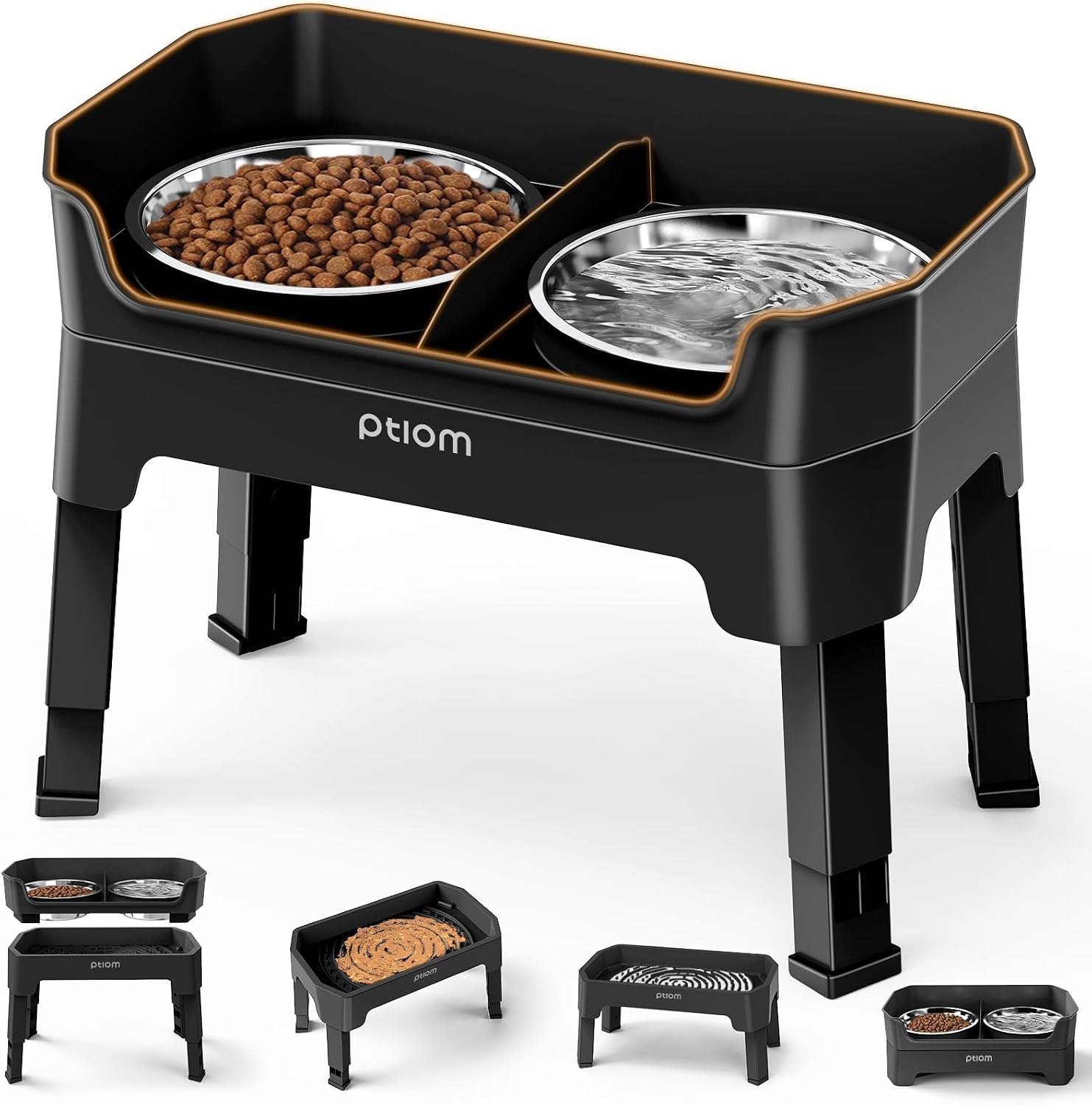 3-in-1 Elevated Dog Bowls Slow Feeder | 4 positions | 2 x 56 oz | Speed eaters, mess control |
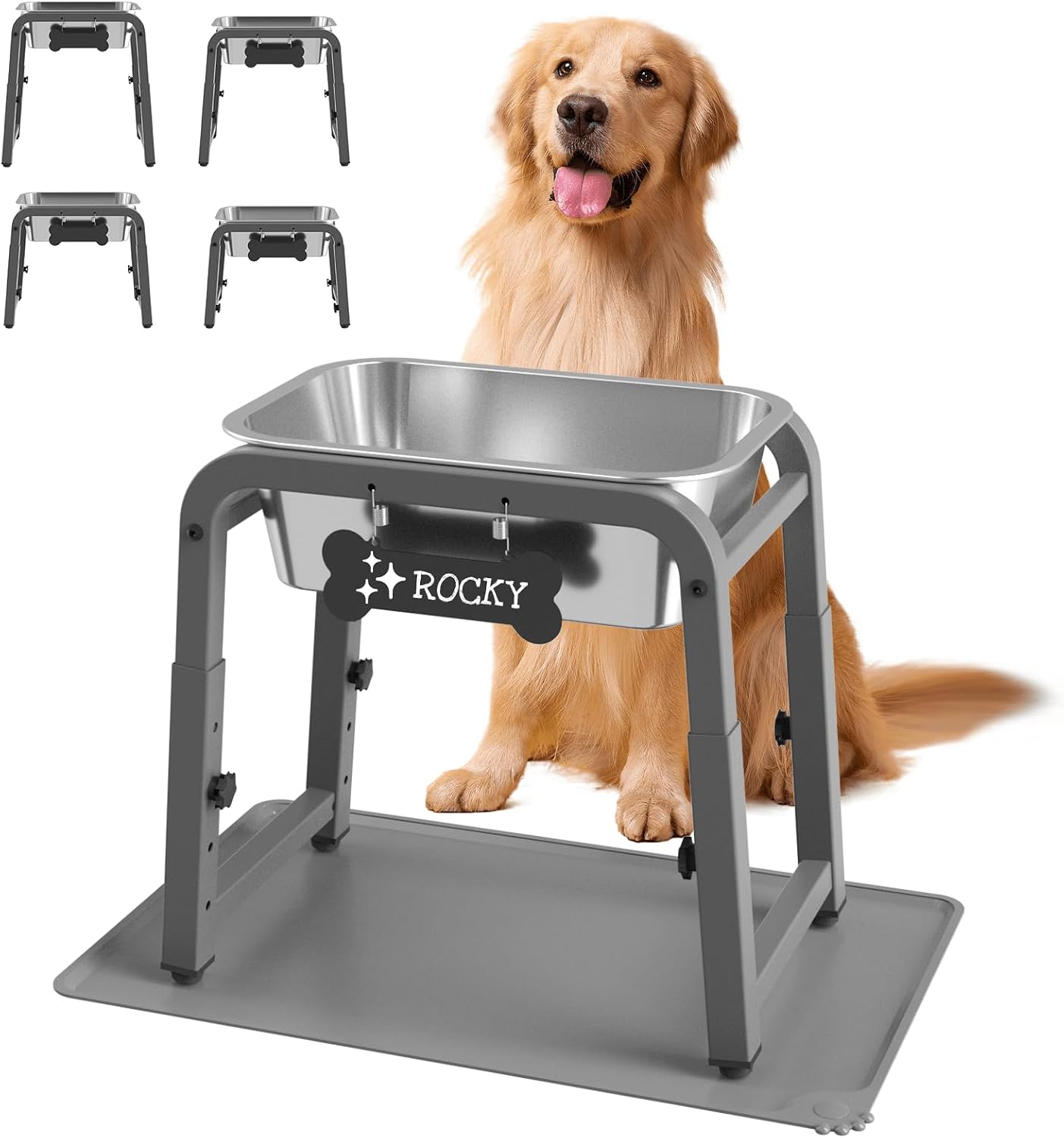 TIDANT Elevated Large Dog Water Bowl | 12 to 17 inches, 4 positions | 1.2 gallon water | Large breed drinkers |
Start at the second-lowest setting for a medium dog and the middle for a large one, then move one notch at a time. If your dog finishes a meal with its head high and its weight shifted back, the stand is too tall. If it crouches, the stand is too short.
For the dog that empties the water bowl: TIDANT Elevated Large Dog Water Bowl
A large dog drinks more water in a day than most people expect, and a small bowl means refilling it four times. The TIDANT solves that with a 1.2 gallon reservoir, and it comes with a mat to catch the splash that follows a big dog away from the bowl. There is no filter cartridge to buy and no pump to plug in, so it is one less consumable to keep stocked, which is exactly what I want in a water station.
The four positions run from 12 to 17 inches, so this is a large breed stand, not a universal one. The raised stand keeps the rim high enough that a big dog drinks without folding its front legs, and the mat is the part that saves your floor.
For the dog that inhales dinner: the 3-in-1 Elevated Slow Feeder
This is the stand for the dog that treats dinner like a race. The 3-in-1 design combines a raised feeder, a mess proof tray, and a licking plate that turns a thirty-second meal into a five-minute one. Slow feed ridges and a licking surface do the same job for a gulper that a puzzle toy does, except the dog is eating at a comfortable height while it happens.
The two 56 ounce stainless bowls are the largest in this group, and they are dishwasher safe. Four height positions cover small, medium, and large dogs, which makes it the most flexible pick here for a multi-dog house where one dog eats fast and the other eats normally.
Should you buy the PAKEWAY Elevated Dog Bowls?
Yes, if you have a medium or large dog and you want the widest height range in this group. Six positions and a tiltable platform make it the most forgiving stand for a growing puppy, and the tilt is the one feature that genuinely helps an older dog keep eating without pain. The spill proof tray handles the daily mess, the bowls are dishwasher safe, and the base stays where you put it.
The compromise is that the tilt is built into the platform, so you cannot switch it off for a dog that eats better from a flat bowl. If your dog is young, healthy, and eats with a level head, you are paying for a feature you will not use.
For a senior, a large breed, or a puppy that still has growing to do, this is the stand I would buy again.
Should you buy the COMESOON Elevated Dog Bowls?
Yes, if you want labeled heights and a stand that does not ask anything of you. The four marked positions take the guesswork out of finding the right feeding height, the 50 ounce stainless bowls are thick and quiet, and the non slip feeder base holds on tile.
What you give up is the tilt and the extra positions. If your dog is a medium breed with a normal neck, neither matters. If your dog is a senior, or if you are still guessing at the right height and want the most room to adjust, spend the difference and get the PAKEWAY instead.
Both stands solve the same problem, which is getting the bowl up off the floor and into a position where your dog can eat without straining. That is the whole point of an elevated dog bowl height guide: pick the stand that matches the dog you have now, then adjust it as that dog changes.