A tall dog drinking from a floor-level bowl folds its front legs, drops its chest, and cranks its neck down at an angle no veterinarian would sign off on. Do that three times a day for eight years and you have a senior dog with a stiff neck and a bad attitude about dinner. Learning how to raise a dog bowl for a tall dog is one of the cheapest fixes in dog ownership, and it takes about twenty minutes.
The trick is not buying the tallest stand on the shelf. It is measuring your dog first, raising the bowl to the height its elbows already sit at, and then making sure the thing does not skate across the floor when a 90-pound dog leans on it.
Everything below is the workflow I use: measure, set, lock, test, adjust. The gear list is short on purpose. You need one adjustable stand, and if your dog is old, you need to think about the floor it eats on and the bed it lies on.
Why you should trust me
I handle the senior and large dog coverage on this site, which means most of my inbox is people asking how to lift a dog bowl for a tall dog without buying something that wobbles. I have set up feeding stations on tile, carpet, and one unfortunate vinyl floor that showed every scratch a leaning dog can make.
My method is boring and repeatable. I measure the dog, not the product page. I check how a stand behaves when a dog shifts weight onto it, because that is the real failure mode: a feeder that holds a static bowl perfectly still but tips when a big dog leans is a feeder that eventually lands on a paw.
I do not run a laboratory. I read the specs, I read what verified buyers say about the parts that break, and I keep a running list of feeders, beds, and mats that survive a house with big dogs in it. When a product page cannot tell me the weight capacity or the adjustability range, I say so instead of guessing.
How I picked and how I tested
You can lift a dog bowl for a tall dog with a stack of bricks, a wall bracket, or a purpose-built stand, and only one of those survives a dog that leans. I started with the height question, because it decides everything else. A bowl that is too low forces the neck down. A bowl that is too high forces the dog to reach up and swallow air. The target is elbow height when the dog stands square, which is roughly the bottom of the chest on most tall breeds.
From there I judged every candidate on five things:
- Adjustability: does the stand hold the height you set, or does it creep down a notch under load?
- Weight capacity and stability: a wide base and a low center of gravity matter more than a pretty frame.
- Non slip backing: rubber feet are the difference between a feeder that stays put and one that travels.
- Bowl capacity: a large breed drinks more than it eats, and the 12.5 cup / 101 oz class is where you want to be.
- Cleaning: bowls that lift out easily get washed. Bowls that do not, do not.
I also looked at the floor around the station. A tall dog pushes forward when it drinks, so a mat with a non slip backing under the stand does more for stability than a heavier frame. If you are rebuilding the whole corner, our guide to elevated dog bowls for large breeds covers the wider field.
For the bed and the mat, the criteria shift. Foam density decides whether an orthopedic bed still supports a big frame after a year of use. Bed height decides whether a senior dog can step up without a ramp, and ramp angle decides whether a ramp is usable at all. Joint mobility is the whole point of both products, so I weighted hip support and easy access above everything else.
Gear that helps you raise a dog bowl for a tall dog
Three pieces cover this job: the stand that does the raising, the bed that keeps a senior dog's joints from stiffening overnight, and a mat for the dog that runs hot.
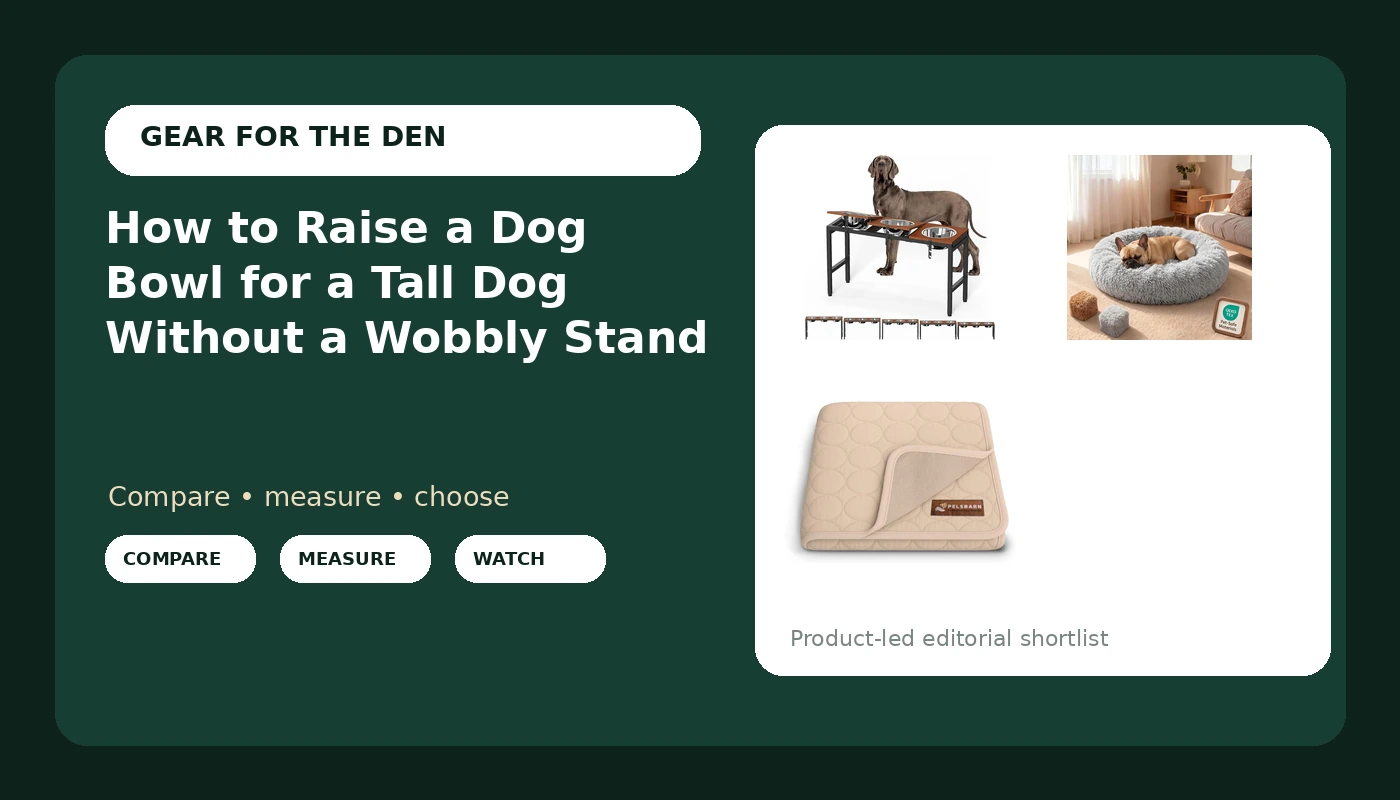
Our pick: Colewin Elevated Dog Bowls Large Breed, Adjustable, 3 Bowl 12.5cup/101oz
Our pick
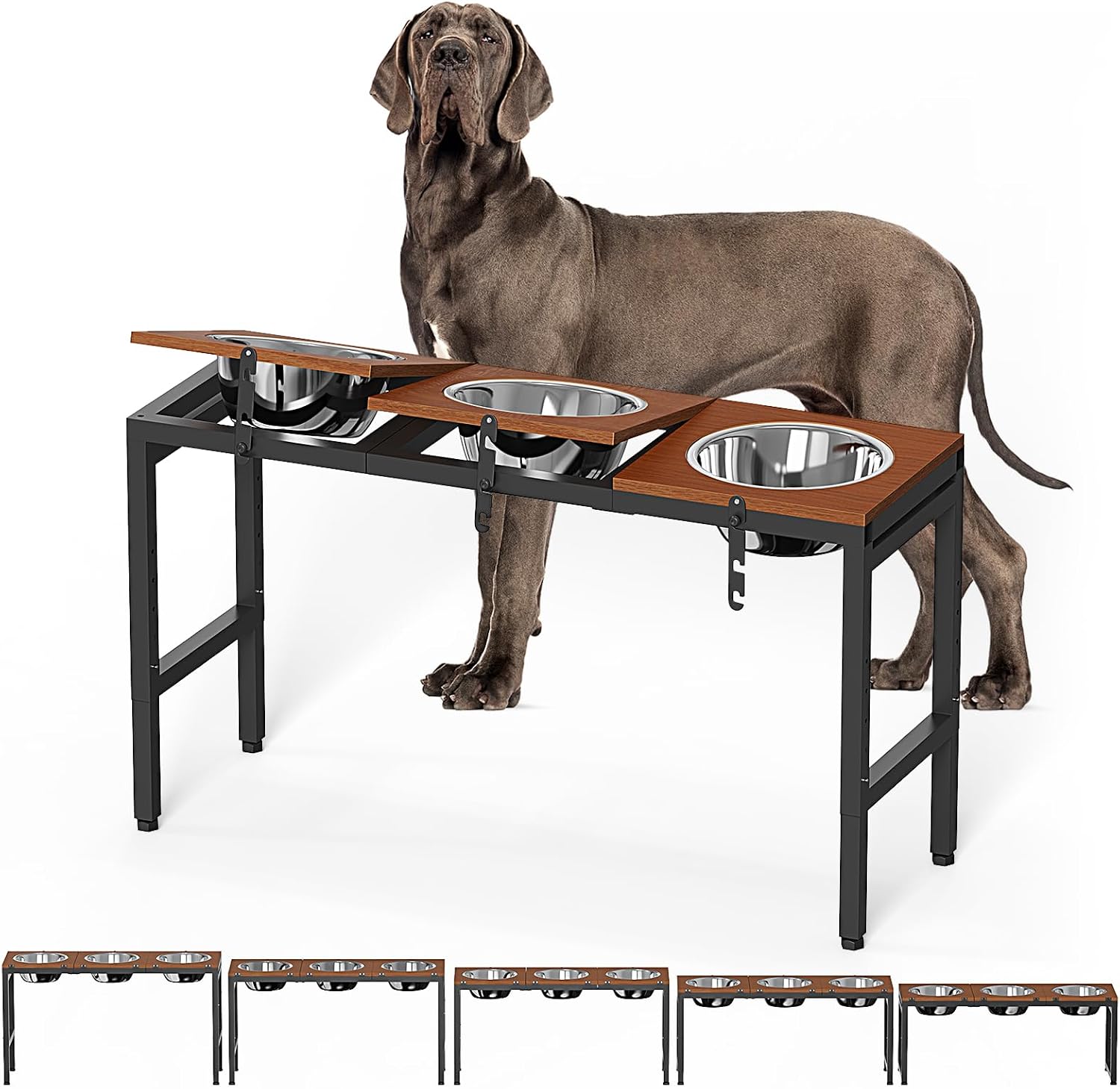
Colewin Elevated Dog Bowls Large Breed, Adjustable, 3 Bowl 12.5cup/101oz
This is the one I point people to first, because it solves the actual problem: it is adjustable, it is sized for large breeds, and it holds three bowls. Check current Amazon price.
The adjustability is the part that matters for a tall dog. You are not guessing at a fixed height and hoping your dog matches it by luck; you set the frame to the height you measured and you leave it there. The three-bowl layout is more useful than it sounds with a big dog, because the water bowl is the one that empties twice a day, and a spare bowl means fewer trips to the kitchen.
The 12.5 cup / 101 oz capacity is the number that tells you this was built for the top end of the size range rather than a medium dog with a growth spurt. That capacity also means fewer refills, which matters on the days you are late getting home.
Flaws but not dealbreakers: A three-bowl stand takes up floor space, so if your kitchen is narrow, measure the footprint before you order. Tall dogs lean, so set it against a wall or on a non slip backing.
Anyone with a dog whose shoulders clear the kitchen counter should start here.
For hip support: Memory Foam Orthopedic Dog Beds for Large Size Dogs,36 Inch,Grey
For hip support
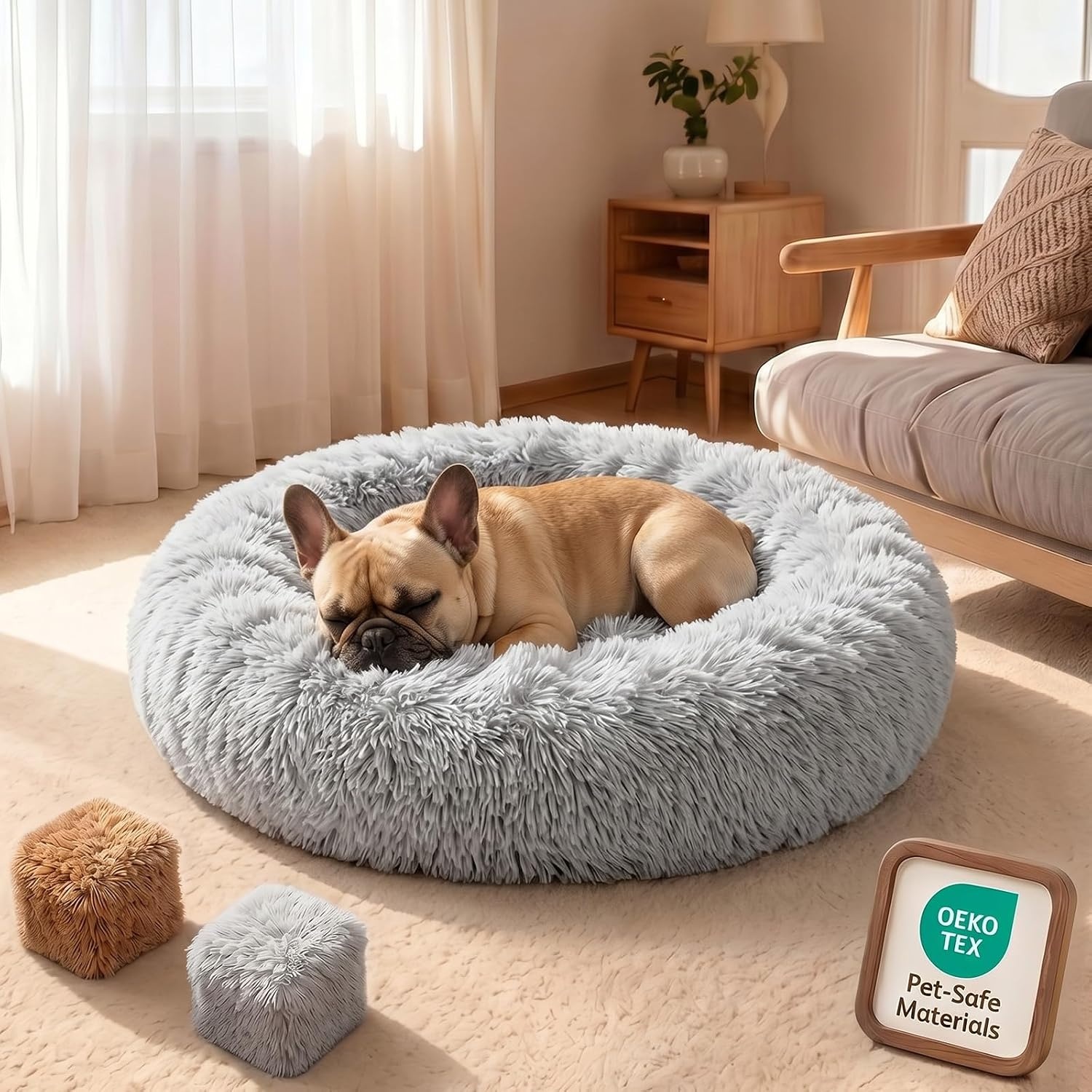
Memory Foam Orthopedic Dog Beds for Large Size Dogs,36 Inch,Grey
A raised bowl fixes the neck. It does not fix the hips, and the two problems travel together in senior dogs. This is a memory foam orthopedic bed sized at 36 inches for large dogs, in grey, and it is the piece that lets a stiff dog recover from a long day. Check current Amazon price.
Foam density is what you are really buying here, because a low density bed compresses into a mat within months and stops supporting anything. Hip support comes from foam that springs back, not from a thick cover over a thin core. The 36 inch footprint gives a large dog room to stretch out flat instead of curling into a ball to fit, and a low bed height means a senior dog can step on and off without a ramp, which removes the ramp angle problem entirely.
If your dog has already lost mobility, pair this with the bowl height change rather than doing one and waiting. Our roundup of best orthopedic dog beds for senior dogs goes deeper on sizing.
Flaws but not dealbreakers: A 36 inch bed is a lot of floor. Measure the corner before you commit, and keep in mind that a memory foam bed wants a flat surface, not a lumpy rug.
Anyone with a large dog that stands up slowly in the morning will notice the difference.
For hot days: Pelsbarn Dog Cooling Mat, Ice Silk Self-Cooling Pad, Light Beige, XL
For hot days
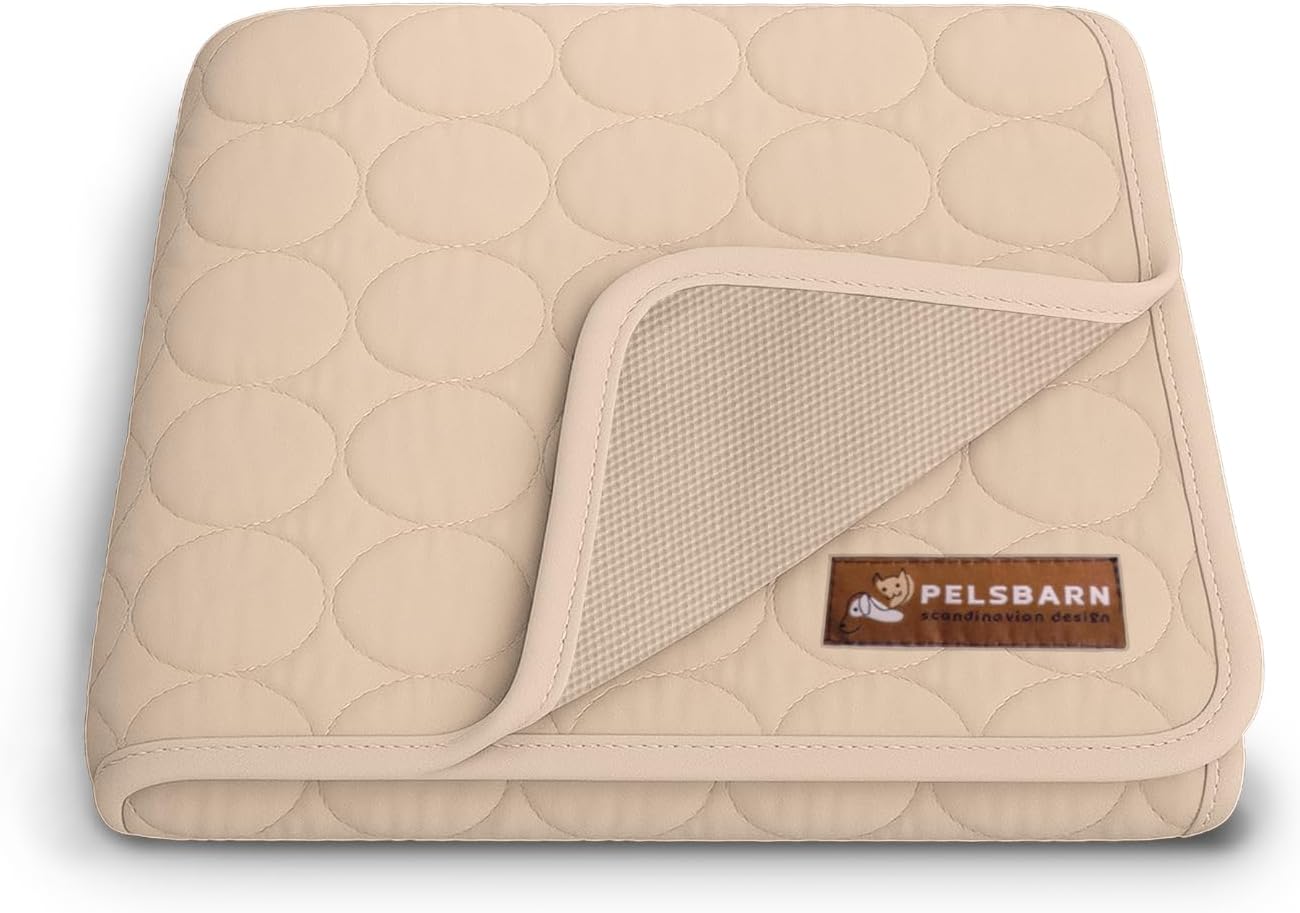
Pelsbarn Dog Cooling Mat, Ice Silk Self-Cooling Pad, Light Beige, XL
A tall dog that runs hot drinks more, and a dog that drinks more is a dog that stands at the bowl with its head down longer. The Pelsbarn mat is a self-cooling pad with an ice silk surface, sized XL and finished in a light beige that does not bake in a sunny room. Check current Amazon price.
Self-cooling means it works off the surface rather than a fridge, a plug, or a freezer cycle, so it can live beside the feeding station permanently. The light beige is a practical choice if the mat is going near a window, and the XL size is the one that fits a large dog lying flat rather than a medium dog curled up.
Flaws but not dealbreakers: It is a surface, not air conditioning. On a brutal afternoon your dog will still find the tile. It is also a mat, not a chew toy, so put it away from the dog that destroys everything soft.
Anyone with a thick-coated or older dog that pants through the evening will get use out of it.
The actual workflow
Here is the whole job, start to finish. If you have been searching how to raise a dog bowl for a tall dog, this is the answer: measure, set, lock, test, adjust, and revisit once a year.
Step one: Measure the dog, not the bowl. Stand the dog square on level floor and measure from the floor to the point of the elbow, the bony knob at the back of the front leg. That number is your target rim height. A rough shortcut is half the dog's height at the shoulder, give or take an inch. Write the number down.
Step two: Sanity check the height against the dog's reach. Put an empty bowl on a box at that height and watch the dog eat. The neck should be level or angled slightly down, the front legs straight, and the back flat. If the dog has to reach up, lower it. If the dog drops its head, raise it.
Step three: Pick a stand that actually adjusts through your number. Fixed-height feeders only work when your dog matches the factory height by luck. Check the stand's lift capacity, meaning how high it can go while still feeling solid under a leaning dog, along with the weight capacity and the footprint. An adjustable large-breed stand lets you set the height once and forget it.
Step four: Set the legs and lock them. Extend both sides evenly rather than one at a time, then tighten every locking collar. An uneven stand rocks, and a rocking stand is worse than a low bowl because the dog learns to avoid it.
Step five: Deal with the floor. Tall dogs shift weight forward when they drink, so the stand needs grip. Add a non slip backing under the feet or set the whole station on a rubber-backed mat. On tile or laminate this is the difference between a station that stays put and one that walks across the kitchen.
Step six: Introduce the new height. Do not swap the bowl and walk away. Set the stand at the new height with a small amount of food, let the dog eat, and watch. Some dogs take to it in one meal. Others need a day at an intermediate height. If your dog refuses, drop it two inches and work up over the week.
Step seven: Handle the rest of the dog. A raised bowl helps the neck and shoulders, but a tall dog with joint mobility problems needs the floor to be easy too. That is where a bed with enough foam density to hold a big frame, a low bed height, and a gentle ramp angle come in. Keep the feeding station and the bed close together so a stiff dog is not crossing the house for dinner and then crossing it again to lie down.
Step eight: Revisit twice a year. Tighten the hardware, check the feet for wear, and re-measure if your dog is still growing. Lower the stand if a senior dog starts struggling to hold its head up through a long meal. The right height is not permanent.
The competition and why it lost
The most common alternative is the molded plastic stand with two bowls and no adjustment. It is cheap and it works fine if your dog happens to be the exact height the mold was cut for, which most tall dogs are not. You find out the week you bring it home, and then it lives in the garage.
Wall-mounted bowl brackets solve the height problem and create two new ones. You have to put holes in a wall, and you have to be sure the anchor is in a stud, because a big dog leaning on a bracket that is anchored into drywall will pull it out. Renters can skip that argument entirely.
The brick-and-board setup is free and it does raise the bowl. It is also unstable, unhygienic around spilled water, and impossible to clean under. I have seen it work for a calm dog and fail for an enthusiastic one.
Slow feeder and puzzle bowls are a different product solving a different problem, which is eating too fast. They do not raise anything, and stacking one on a box puts you back in brick-and-board territory.
On the bedding side, the thin bolster beds with a thick cover are the ones that flatten first. They photograph well and they stop supporting a large dog within a season, which is why foam density beats cover fabric every time. The cooling side has the same split: a gel mat that needs refrigeration is useless next to a feeding station, while a self-cooling pad can stay on the floor permanently.
What this all costs
The money question breaks into three parts. The stand is the only piece you actually need, and it is where spending a bit more buys adjustability, which is the feature that lets the same stand work when your dog grows, when it ages, and when the height you measured turns out to be an inch off. A fixed-height feeder is cheaper right up until it is the wrong height, and then it is a floor decoration. Check current Amazon price on the adjustable options and weigh that against replacing a fixed stand twice.
The bed is the second line item, and it is where people either overspend on thin foam under a thick cover or underspend on a bed that flattens within a year. Foam density is the spec that decides which one you bought. For a large dog, a 36 inch bed is the size that lets the dog stretch out, and a bed height low enough to step onto without a ramp saves you the cost of the ramp.
The cooling mat is the cheapest of the three and the easiest to skip. If your dog pants through the evening and empties the water bowl overnight, it earns its spot next to the station.
Spread across the life of a senior dog, none of this is a large number. The height is the thing that matters. Get that right, tighten the hardware twice a year, and the rest is maintenance.
That is the whole job. Your dog has been eating with its neck bent this entire time. Twenty minutes fixes it.