Putting a tracker on your dog looks like a one step job. Clip it to the collar and head out the door. In practice, the hardware changes how the collar sits, and gps dog collar sizing stops being the same calculation you used for a plain ID tag. A tracker module adds weight and width to a strap that was already fitted to sit still, and a collar that behaved perfectly on its own can start rotating toward the side of the neck, riding up under the jaw, or bouncing enough that the dog stops mid walk to scratch at it.
The answer is not a tighter collar. It is a fit that accounts for the extra hardware, the shape of your dog's neck, and the way your dog moves. What follows is gps dog collar sizing explained from the ground up: the measurements worth taking, the checks to run once the unit is on, and the walking gear that keeps a tracker collar from becoming a nuisance on the trail.
Quick answer
Measure the neck at its widest point with a soft tape, then fit the collar so the tracker rides high on the neck, behind the ears and above the throat, with room for two fingers under the strap. Correct gps dog collar sizing for a tracker usually differs from the fit you would choose for a bare collar, because the unit's weight pulls the strap down and around. A tracker that hangs below the throat will swing with every step, and a collar tight enough to stop that swing is too tight for all day wear. Fit the hardware first, then judge the fit.
4 useful options
| Model | Best fit | What stands out |
|---|---|---|
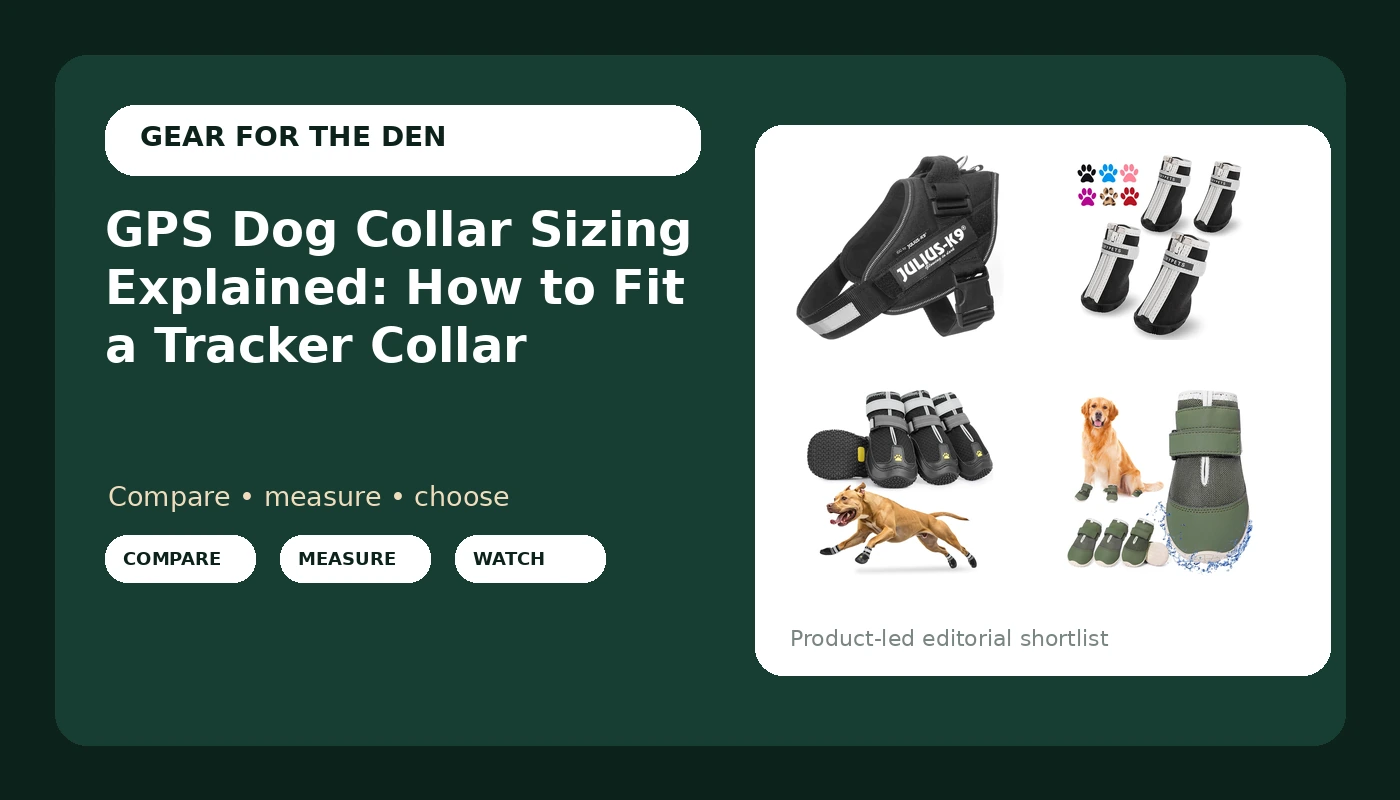
| Julius-K9, 16IDC-P-0, IDC Powerharness, Dog Harness, Size: 0, Black | Walks where the tracker collar needs to stay put | Harness format that keeps leash load off the throat |
| QUMY Dog Shoes Small Size Dogs, Dog Snow Boots & Paw Protectors for Winter | Small dogs in snow, ice, and road salt | Winter boot sizing built around small paws |
| LUCKYPAW Dog Shoes for Large Medium Dogs, Dog Boots for Hot Pavement Size6 | Large and medium dogs on hot pavement | Size 6 fit with hot weather walking in mind |
| DcOaGt Dog Shoes Large Size Dogs,Mesh Dog Boots & Paw Protectors | Large dogs in warm weather | Mesh upper that lets air move around the paw |
Walk harness: Julius-K9, 16IDC-P-0, IDC Powerharness, Dog Harness, Size: 0, Black
A harness and a tracker collar are not competitors, they are two tools with different jobs. The harness takes the leash, the collar takes the ID tag and the tracker. Splitting those jobs is the single easiest way to keep leash tension away from the neck, and neck tension is what drags a collar out of position on a walk. The trade off is that a harness needs its own sizing, measured around the chest rather than the neck, and the two fits have to coexist without rubbing. If your dog already wears a harness, our dog harness fitting guide walks through chest measurement in more detail. Once the harness carries the load, the collar above it can stay at the snug, high fit that suits the tracker.
Winter boot: QUMY Dog Shoes Small Size Dogs, Dog Snow Boots & Paw Protectors for Winter
Winter walking has a second effect on collar fit that owners rarely plan for. A dog in a coat has a thicker neck than the same dog in summer, so a collar set in October can sit differently by January, and the reverse happens after the spring shed. Boots do not change the collar, but they do change the walk: fewer stops for cold paws means fewer chances for the strap to work loose or rotate. Boot sizing follows the same logic as collar sizing. Measure, check the maker's chart, then watch the dog move before you commit to a long route.
Hot pavement boot: LUCKYPAW Dog Shoes for Large Medium Dogs, Dog Boots for Hot Pavement Size6
A traction sole matters more than most buyers expect, because a dog that slips on a smooth surface walks differently, and a different gait is a different set of forces acting on the collar. That is the thread connecting all of this gear: anything that changes how your dog moves also changes how the collar sits. Summer walks also tend to be shorter and hotter, which is worth remembering when you judge a fit. A collar that looks right in an air conditioned hallway may look different after twenty minutes in the sun with a panting dog.
Mesh boot: DcOaGt Dog Shoes Large Size Dogs,Mesh Dog Boots & Paw Protectors
Mesh is not the same thing as a cooling fabric, and it is worth being clear about that. A mesh boot moves air, it does not chill the paw. What it does is reduce the heat that builds up inside a closed boot on a warm day, which is why mesh shows up in summer footwear for dogs and in the vented panels of some harnesses. Large dogs generate more heat on a walk than small ones, and their necks are usually thick enough that collar fit is more forgiving of small errors. That is not a reason to skip the two finger check. It is a reason to spend your attention on the paws while the collar behaves.
Prices and availability may change. Product images, names, and retailer links are matched to verified listings. No current price, rating, stock status, or measured result is stated here without current evidence.
How gps dog collar sizing differs from a standard collar fit
Most collar advice is written for a strap that holds a tag, and a tag weighs almost nothing. Add a tracker and three things change at once.
The first is weight. A tracker module is heavier than a tag, and weight on a strap behaves like a small pendulum. On a narrow neck with short fur, that pendulum swings forward and back as the dog trots, which is exactly the motion owners describe when they say the tracker will not stay put.
The second is width. The unit takes up strap length, so the adjustment range you relied on may no longer reach the fit you want. Some trackers ship with their own collar, others slide onto an existing strap or drop into a pouch. Measure the combined thickness, not just the strap.
The third is coat. A thick winter coat, a summer shed, and a wet dog after a swim are three different neck measurements. A collar that is right in January can be loose by July, and rechecking seasonally is more reliable than trusting the fit you set months ago.
The goal is a collar that sits high on the neck, close behind the ears, where the neck is at its narrowest. A tracker there moves less than one hanging at the base of the throat. Reviews tend to argue about gps range and battery life, but a unit that swings under the jaw is usually a fit problem rather than a hardware problem.
Measuring for a tracker collar in five steps
Work through this once with the tracker in hand, then repeat it whenever your dog's coat or weight changes.
- Measure the neck at its widest point, low on the neck just above the shoulders, with a soft tape held snug but not tight. Write the number down.
- Measure again where you actually want the collar to sit, high behind the ears. That second number is the one that matters when a tracker is involved.
- Fit the tracker to the collar first, then put the whole thing on the dog. Adding the unit afterwards changes the balance more than most people expect.
- Slide the collar up to the high position and check the gap. Two fingers should fit between strap and skin, and no more than that.
- Watch the dog trot, turn, sniff, and shake. The tracker should stay roughly upright. If it rolls to one side the collar is too loose, and if the skin bunches around the strap it is too tight.
There is no single ideal gps dog collar sizing number that works across breeds, because neck shape varies as much as neck size. A sighthound and a retriever with the same measurement need different fits, and a dog with a heavy ruff needs a different strap position than a smooth coated one.
Fit checks that keep a tracker collar steady
- Recheck the two finger gap after every walk, especially after a roll in the grass or a swim.
- Keep the ID tag light, or move it to the harness, so the collar is not carrying two loads at once.
- Charge the tracker off the dog and switch to a plain collar for the evening, so the neck gets a break and the battery life cycle stays predictable.
- For dogs that pull, walk them on a harness. A front clip gives you steering without loading the neck, which keeps the collar where you set it.
- Match leash length to the route: a long line for sniffy walks on open ground, a short leash near roads, so you are not correcting through the collar.
- Treat boot sizing the same way you treat collar sizing. Measure, check the maker's chart, then watch the dog walk before you plan a long route.
Which option should you choose?
Choose the Julius-K9, 16IDC-P-0, IDC Powerharness, Dog Harness, Size: 0, Black when you want leash pressure off the neck so the tracker collar can stay high and still. Choose the QUMY Dog Shoes Small Size Dogs, Dog Snow Boots & Paw Protectors for Winter when the walk involves snow, ice, or road salt and your dog is small. Choose the LUCKYPAW Dog Shoes for Large Medium Dogs, Dog Boots for Hot Pavement Size6 when you walk a large or medium dog on hot pavement and want a size 6 fit. Choose the DcOaGt Dog Shoes Large Size Dogs,Mesh Dog Boots & Paw Protectors when you want a mesh upper for warm weather on a large dog.
None of these replaces a properly fitted tracker collar. They cover the parts of the walk the collar should not be handling, and they leave the neck free for the fit you worked out with the tape measure.
The bottom line
A tracker collar works when it sits high, stays upright, and leaves two fingers of room. Measure at the neck's widest point, measure again where the collar will actually sit, and fit the tracker before you judge the result. Check the strap after walks, after swims, and after any change in coat or weight, and treat a swinging unit as a fit problem first. The gear in this guide, a harness for the leash and boots for the paws, handles the jobs a collar should not be doing. Everything else is a matter of rechecking the fit as the seasons turn.