Most people who type guinea pig carrier vs cage into a search box are holding two products and wondering whether one of them can do the other's job. It cannot, and that mix-up costs guinea pigs floor space every year. A carrier is a travel box measured in minutes of use. A cage is a habitat measured in floor area the animal lives in around the clock. Blur the line and you end up with a pet spending its life in something designed for a twenty minute car ride.
For most guinea pigs the cage comes first and the carrier second, and the strongest home base in this group is the Tresbro C&C style cage: its listed 48 by 24 inch footprint works out to roughly eight square feet of open floor, the PVC bottom liner wipes clean in seconds, and the one-hand release hook means you are not fighting a latch twice a day. If your animals live on a patio or in a shed, the two-story hutches from Aivituvin and EZmilifey are built for that job. The Xymoso panel kit is the flexible middle ground for anyone who wants to change the shape of the enclosure later.
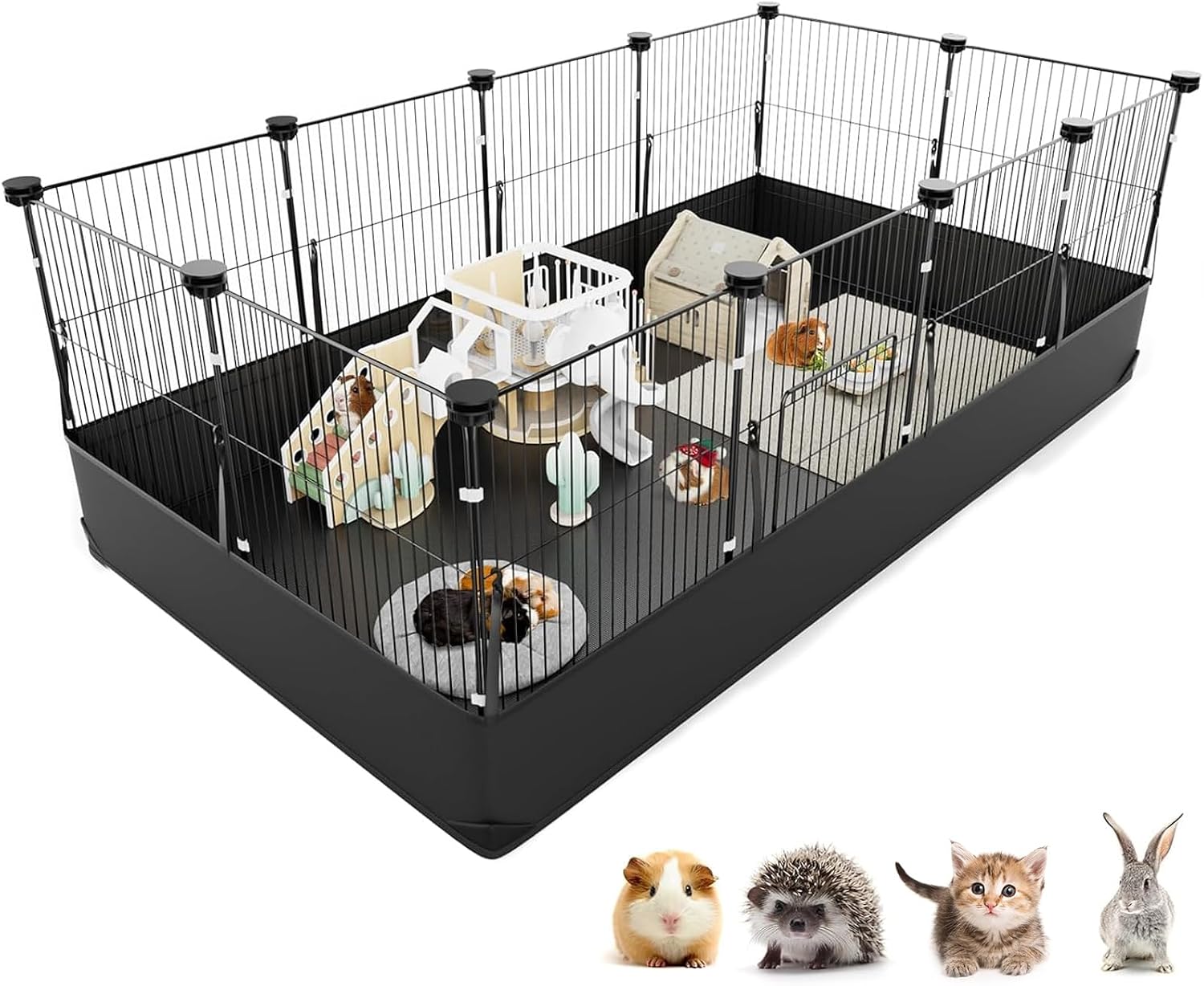
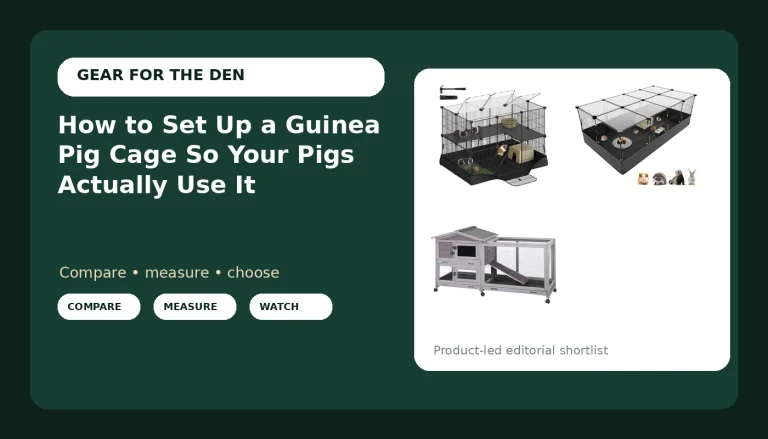
Tresbro Guinea Pig Cage with Waterproof PVC Bottom Liner & One-Hand Release Hook
Largest open floor area here, wipe-clean PVC liner, one-hand hook speeds up daily access
No lid in the description, so cats and jumpers need their own solution
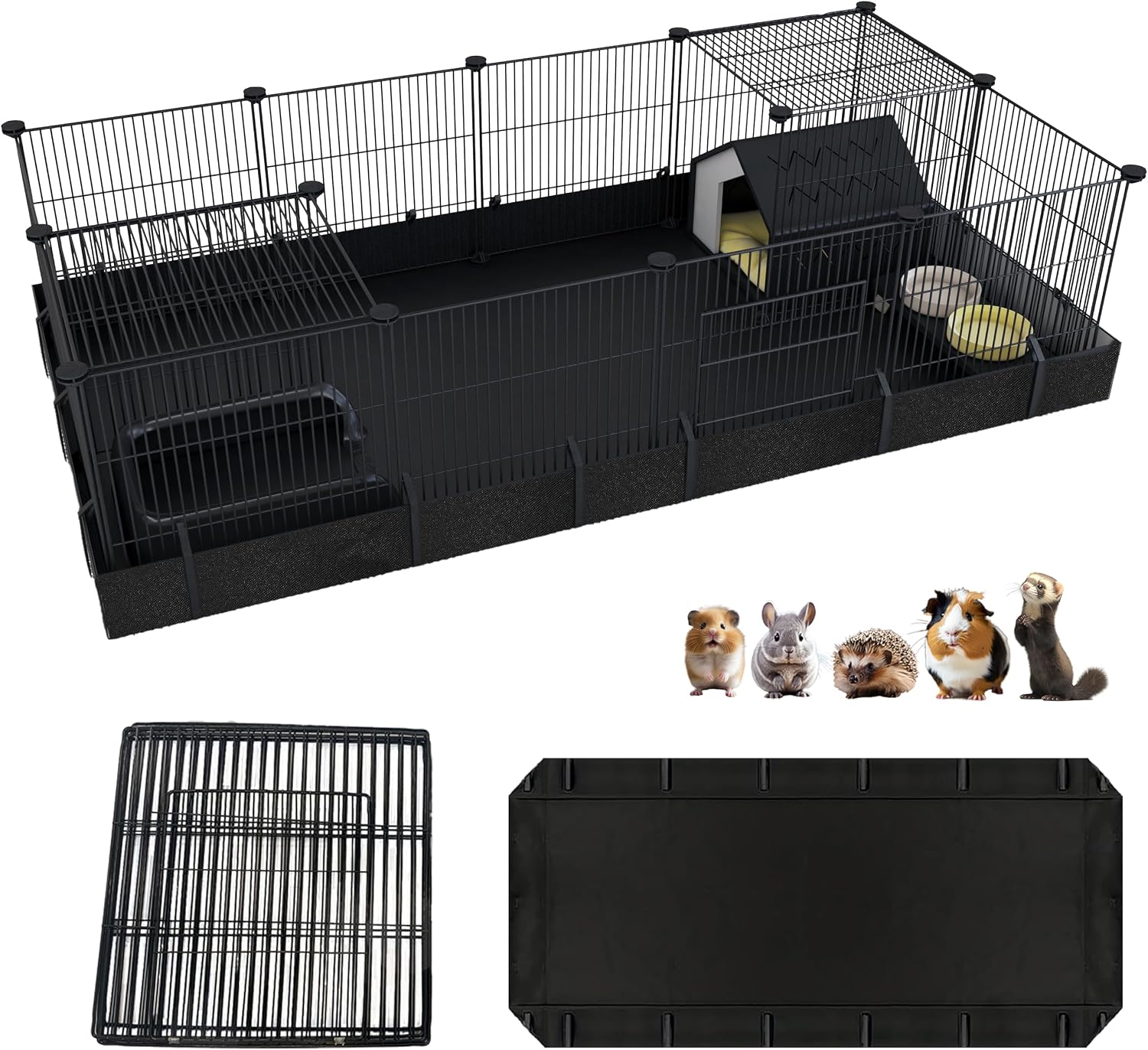
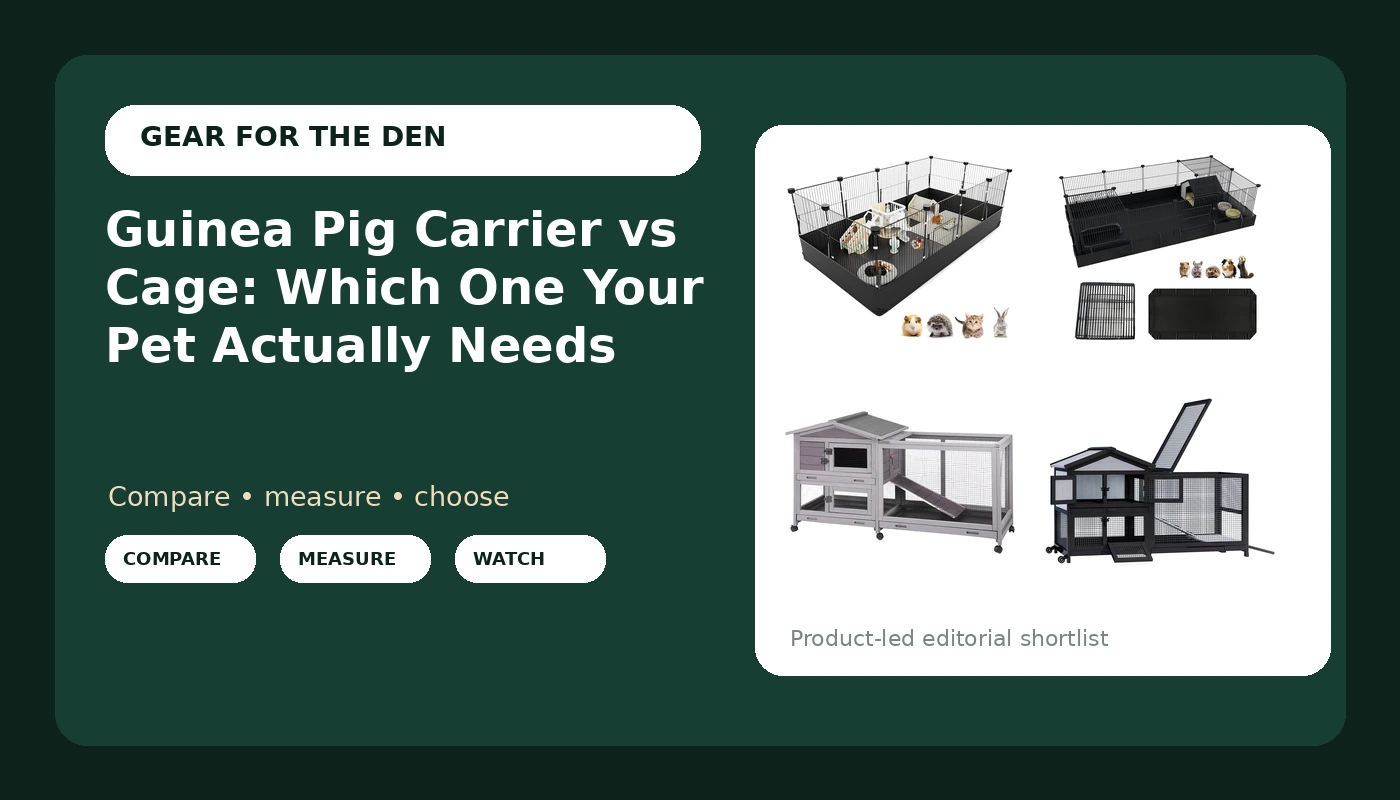
Xymoso DIY Guinea Pig Cages with Waterproof Canvas Bottom, 16 Panels
You set the floor area, folds flat for storage, doubles as a supervised outdoor run
Build time is real, panels shift unless anchored, canvas holds hair
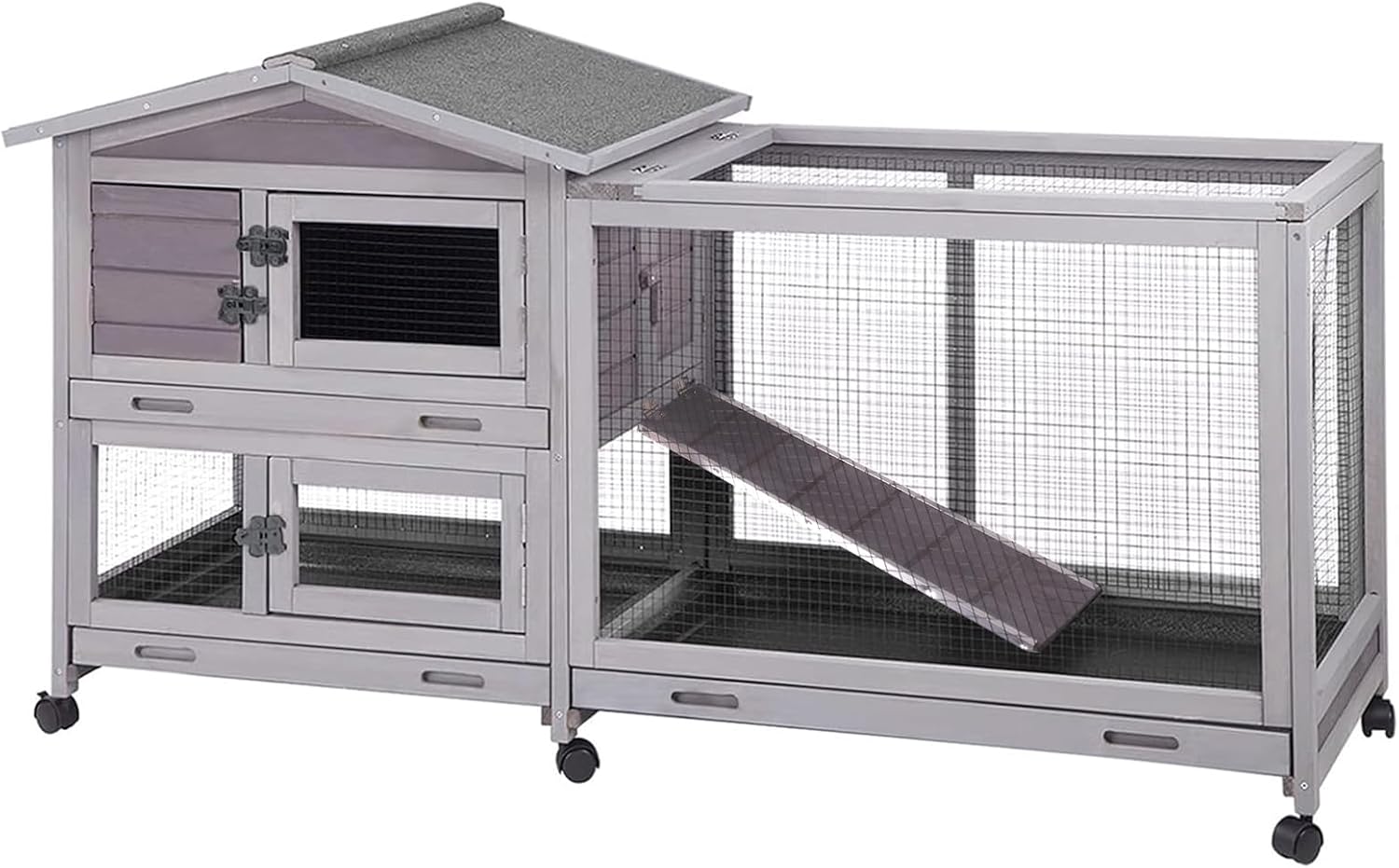
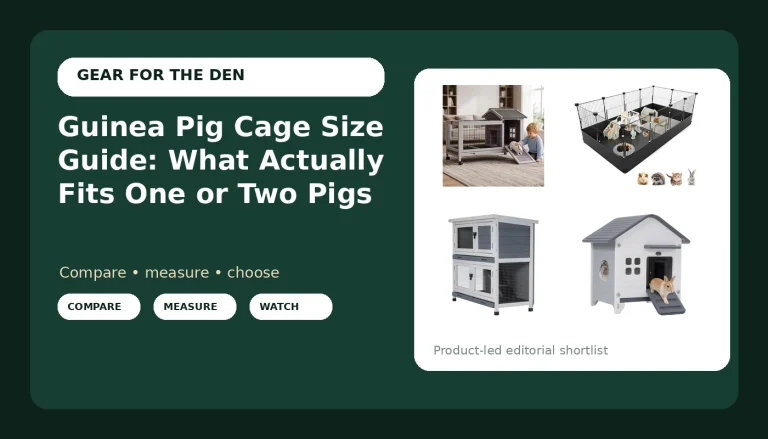
Aivituvin Rabbit Hutch with Casters, 3 Deep Pull Out Trays, Waterproof Roof
Rolls onto fresh grass, deep trays hold a lot of bedding, roof shrugs off rain
Outdoor climate management is on you, sold mainly as rabbit housing
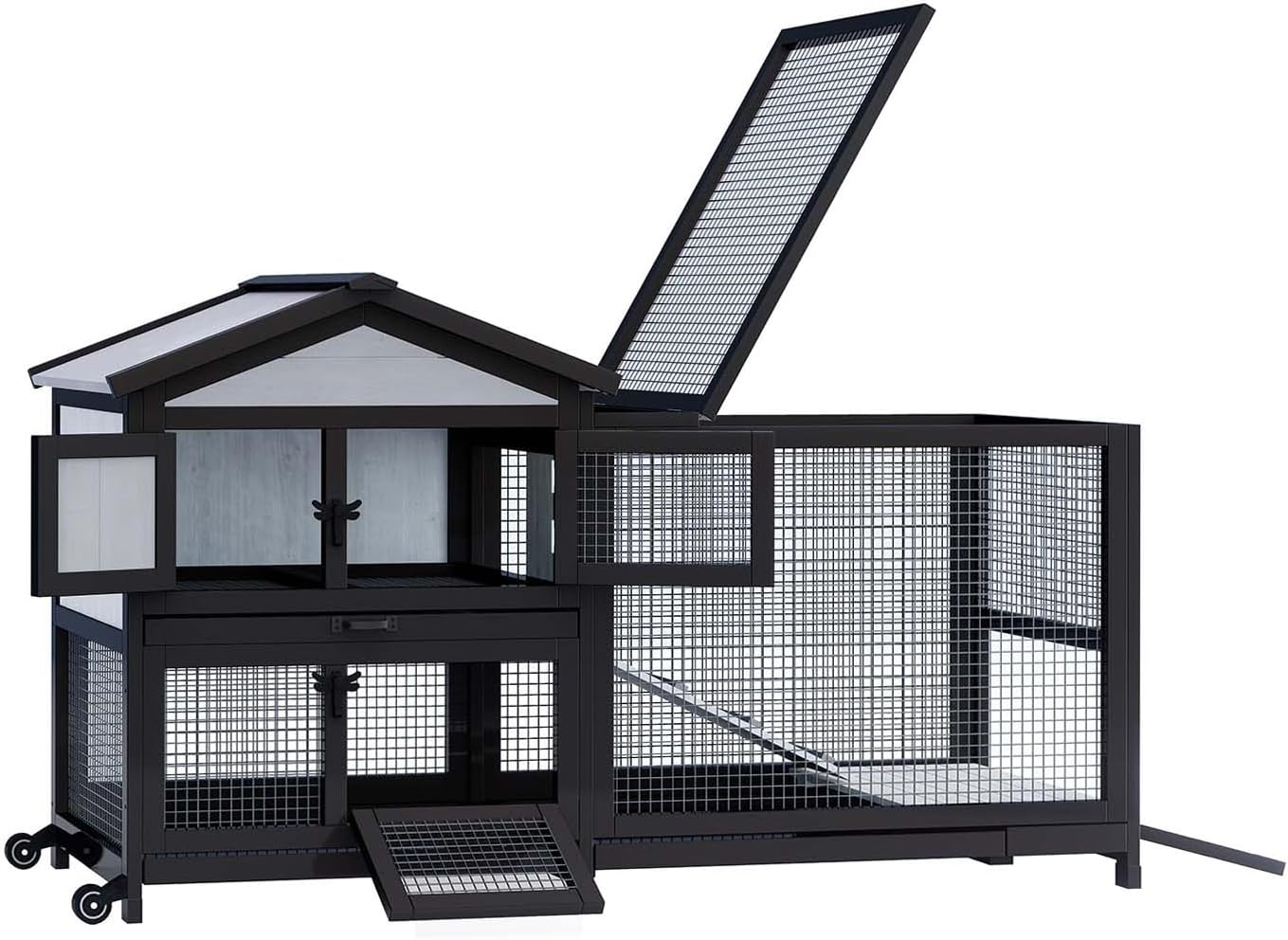
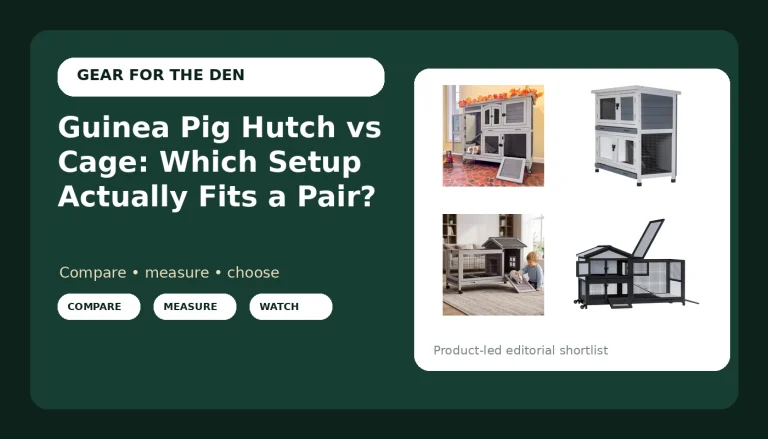
EZmilifey Rabbit Hutch 58 Inch, 2-Story Cage on Wheels with 3 Deep Trays
Longest listed footprint of the hutches, second level adds enrichment, wheels for moving
Upper floor does not count as running room, ramp is hard on older pigs
Prices and availability may change.
How I judged these cages
No one here has housed a guinea pig in any of these four cages, so treat this as a specification and listing comparison rather than a hands-on review. What I weighed was concrete: the listed dimensions and the floor area they produce, the material of the base (canvas, PVC liner, or pull-out tray), how that base comes out for cleaning, whether the whole thing moves on wheels, and how many daily jobs the layout supports. Those jobs are feeding, hay, water, hiding, and spot cleaning. I ignored words like deluxe and heavy duty, because they describe a box, not a pig's day.
The other half of the scoring is what these products are not. Three of them are sold as rabbit or chicken housing as well as guinea pig housing, which is worth knowing because rabbits are bigger and chickens perch. A hutch that suits a rabbit does not automatically suit a guinea pig, and the sizing section below explains why.
The guinea pig carrier vs cage question, answered
The short version: a carrier is for minutes, a cage is for months. A carrier is a small, ventilated box with a latch, a solid floor, and just enough room for the animal to stand, turn, and lie flat. A cage is a permanent habitat with a defined cage size, a water bottle, a hay rack, at least one hideout, and enough floor area for the pig to run a lap. Neither substitutes for the other.
Ask the question in reverse, cage vs guinea pig carrier, and nothing changes. The small one still travels and the big one still stays put. The mistake I see most often is a carrier used as a full time home because it was small and it fit on a shelf. A guinea pig kept in a carrier for a week will show it: chewed bars, wet bedding, and a pig that stops moving around. The other mistake is a cage used as a carrier, which means a loose animal in a moving car and a hard stop you cannot undo.
What actually decides the choice is duration. Under an hour, a carrier is correct. Overnight or longer, you need a cage, even a small one.
What a carrier is actually for
The difference between guinea pig carrier and cage comes down to what the animal does in the first ten minutes versus the next ten hours. Ten minutes in a carrier is a vet trip, a move to another room, or a bonding introduction on neutral ground. Ten hours in a cage is eating, sleeping, running, and chewing.
A good carrier has a solid bottom, ventilation on more than one side, a latch that will not pop when the animal pushes up against it, and enough height for the pig to stand without its ears touching the lid. If you have two bonded pigs, look for a carrier sized for both, because splitting a bonded pair for a vet trip causes more stress than it saves.
There is one number people get wrong on both carriers and play tunnels, and it is the same number: the opening has to be wide enough that the pig walks through at full height rather than ducking. If you already own a play tunnel for floor time, hold it next to a carrier and compare. Tunnel diameter and carrier door height are cousins, and both should clear the pig with room to spare.
Open-floor cages: the Tresbro C and C setup
The Tresbro cage is the closest thing in this group to a classic C and C build. The listing gives a 48 inch length, a 24 inch width, and a 16 inch wall height, which is a shape guinea pigs use well: long enough to run, shallow enough that you can reach the far corner from one side. The bottom is a waterproof PVC liner rather than a loose tray, and there is a one-hand release hook plus what the name calls triple fixing, which matters more than it sounds. Anything you open twice a day needs to open with one hand while the other hand is holding a pig.
The liner is the part I would think hardest about. A wipe-down liner plus a fleece or mat layer produces far less bedding dust than deep loose shavings, and it lets you see exactly what needs cleaning. The trade-off is laundry and a daily spot clean instead of one big weekly change.
The honest weakness is the open top. There is no lid in the description, so this cage belongs in a room without a cat or a dog that jumps, or under a lid you add yourself. Low walls also mean bedding and hay end up on the floor around the enclosure. Put the hay rack in one corner over the liner and most of that problem disappears.
Panel kits: the Xymoso 16-panel build
The Xymoso kit takes the opposite approach: sixteen wire panels and a waterproof canvas bottom that you assemble into whatever footprint you want. If fixed cages never quite match your room, this is the one that adapts. Two panels by four panels is a cage, a long line of panels across a hallway is a supervised run, and the included door gives you an access point wherever you place it. The name mentions indoor and outdoor use, and the metal wire yard fence format is genuinely useful on a lawn for grazing time.
The costs are time and rigidity. Panels have to be joined and squared, and the assembled shape is only as solid as the way you connect it. A guinea pig leaning on a panel will move anything that is not anchored, and a gap at the base is an escape route. Budget an evening for the first build and check every joint before the animal goes in.
The canvas bottom is soft underfoot and folds away for storage, which makes it a good travel or playpen floor. It is not a chew proof surface, and hair clings to fabric. Expect to vacuum or brush it, and keep a spare liner on hand if you use it indoors full time.
Two-story hutches on wheels: the Aivituvin and EZmilifey
These two are the outdoor end of the list, and they share a design language: a waterproof roof, three deep pull-out trays, and casters or wheels. The Aivituvin hutch is the more compact of the pair and lists casters, which makes it the easier one to roll onto fresh grass and back under cover. The EZmilifey is the bigger unit, listed at 58 inches and built as two stories in black, with the same three deep no-leak trays and waterproof roof.
The deep trays are the feature I like most for guinea pigs. Guinea pigs produce a lot of waste for their size, and a deep tray holds enough bedding that you are not changing it every single day. Pull-out trays also mean you can tip bedding straight into a bag without lifting the animal out of its house first.
Two-story designs need a caveat. The upper level is enrichment, not floor area. A ramp is a fun addition for a confident pig, but ramps are also where older and heavier pigs slip, and a guinea pig with a joint problem will simply stop using the upper floor. Judge a hutch by the footprint of the lower level.
The bigger caveat is climate. Guinea pigs handle cold far better than heat, and a waterproof roof does nothing about a summer afternoon. Any outdoor hutch needs shade, airflow, and a plan for days in the mid eighties and above, plus hardware cloth against predators. These hutches are also sold for rabbits and chickens, so check the bar spacing and the ramp angle before you commit.
Cage size, floor area, and bar spacing
Whether you are shopping guinea pig carrier or cage, floor area is the first specification to settle, because it is the one you cannot fix later with accessories. The widely repeated minimum for a single guinea pig is about seven and a half square feet, with more for a pair. The Tresbro's listed 48 by 24 inches lands right at eight square feet. The Xymoso kit lets you build past that. The two hutches have to be judged on their lower level footprint rather than the total, because the second story does not count toward running room.
Bar spacing is the second spec, and it is the one people skip. A gap a rabbit cannot squeeze through is still an escape route for a young guinea pig. If you are buying a panel kit or a hutch, look for spacing under an inch, and check the corners and the door frame, not just the long walls.
The rest of the list is smaller but real: hideout size, bottle capacity, and where the hay rack sits. Get the floor area right and the accessories are just a shopping trip. Get it wrong and no accessory fixes it.
Hay rack, bottle capacity, and the small details
A hay rack over one corner keeps hay dry and off the floor, which cuts bedding dust and makes the daily clean faster. Bottle capacity matters most if you work long days: a big bottle is not a substitute for fresh water, but it is the difference between a comfortable pig and a dry one when you get home late. Hideout size should let two bonded pigs lie together if they want to, or give each pig its own house if they would rather not.
Then there is the part nobody photographs: bedding dust. Loose shavings and paper bedding throw fine dust into the air every time the pig moves, and that dust settles on the liner, the bars, and your floor. A waterproof liner or canvas bottom plus a washable top layer cuts most of it. A deep tray with coarse bedding does the same job outdoors.
One more measurement worth taking before you buy anything: the height of the door or opening you will use to lift the pig out. If you have to tip the animal sideways to get it through, the enclosure is the wrong shape for a daily routine.
Where a carrier still earns its place
Even with a great cage, every guinea pig owner eventually needs a carrier. Vet visits, travel days, and introductions all require one, and there is no good reason to improvise with a cardboard box. Look for a hard sided carrier with a top opening as well as a front door, because lifting a nervous pig out through the roof is far easier than dragging it out of a front gate. Skip anything with a wire floor. Line it with a towel or a small absorbent mat, add a handful of hay, and put a familiar smelling hideout inside if it fits.
Never leave a guinea pig in a carrier as a permanent home, no matter how large the carrier is. A carrier has no room for a hay rack, a proper hideout, and a water bottle that stays put, and the ventilation that keeps a traveling pig cool is not enough for a full day of activity. A carrier is not a small cage, and that is the guinea pig carrier vs cage distinction most buyers miss.
What I would buy first
If you are setting up indoors and want one purchase that covers the basics, the Tresbro cage is the pick: the liner, the access hook, and the listed footprint do the most important jobs without extra parts. If your room is an awkward shape, or you want a setup that can become a playpen on the weekend, the Xymoso panels are the better buy, and you can size the enclosure to the space you actually have. If the animals live outside, choose between the two hutches by size and mobility: the Aivituvin for a smaller patio where you want to roll the house onto fresh grass, the EZmilifey when you want the extra length and a second level.
Whatever you choose, buy the carrier too. It is the one piece of gear in this guinea pig carrier vs cage comparison that has no substitute, and it is the one you will need on the worst day, when a pig is sick and you need to be at the vet in twenty minutes.