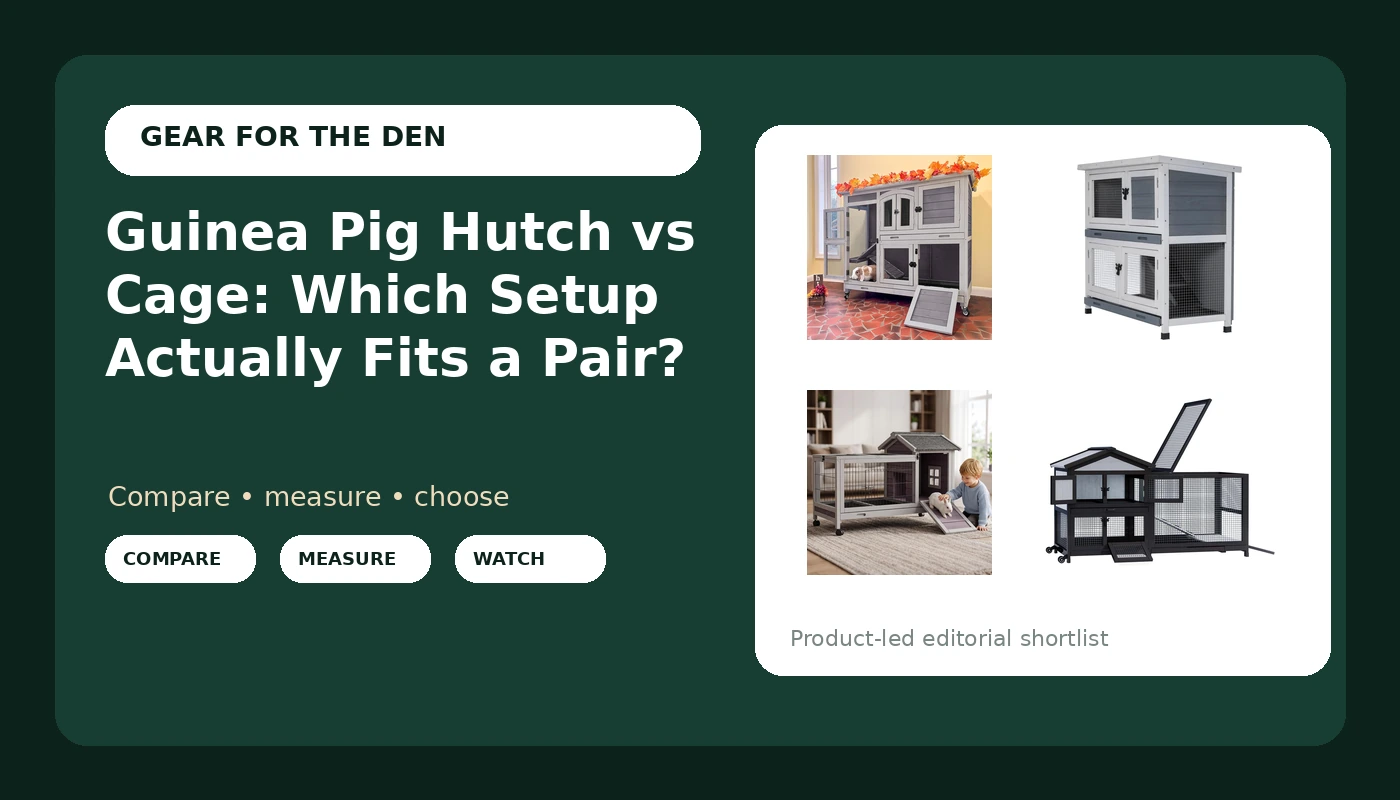
Every guinea pig hutch vs cage argument I have watched play out in forums and at rescue meetups starts in the same place. Someone has a pig that chews the bars of a pet store cage, someone else insists the animal needs wood, a ramp, and a roof, and both sides dig in. The guinea pig hutch vs cage question is not really about wood versus wire. It is about whether the enclosure gives a guinea pig a long, unobstructed runway, because that is the shape its body is built for. Get the floor plan right and the material becomes a secondary detail.
For a pair of guinea pigs kept indoors, the strongest pick of these four is the Aivituvin indoor cage, because its listed 6.6 square feet sits on a single level with no ramp cutting the run in half, and the pull out tray makes daily cleaning a two minute job.
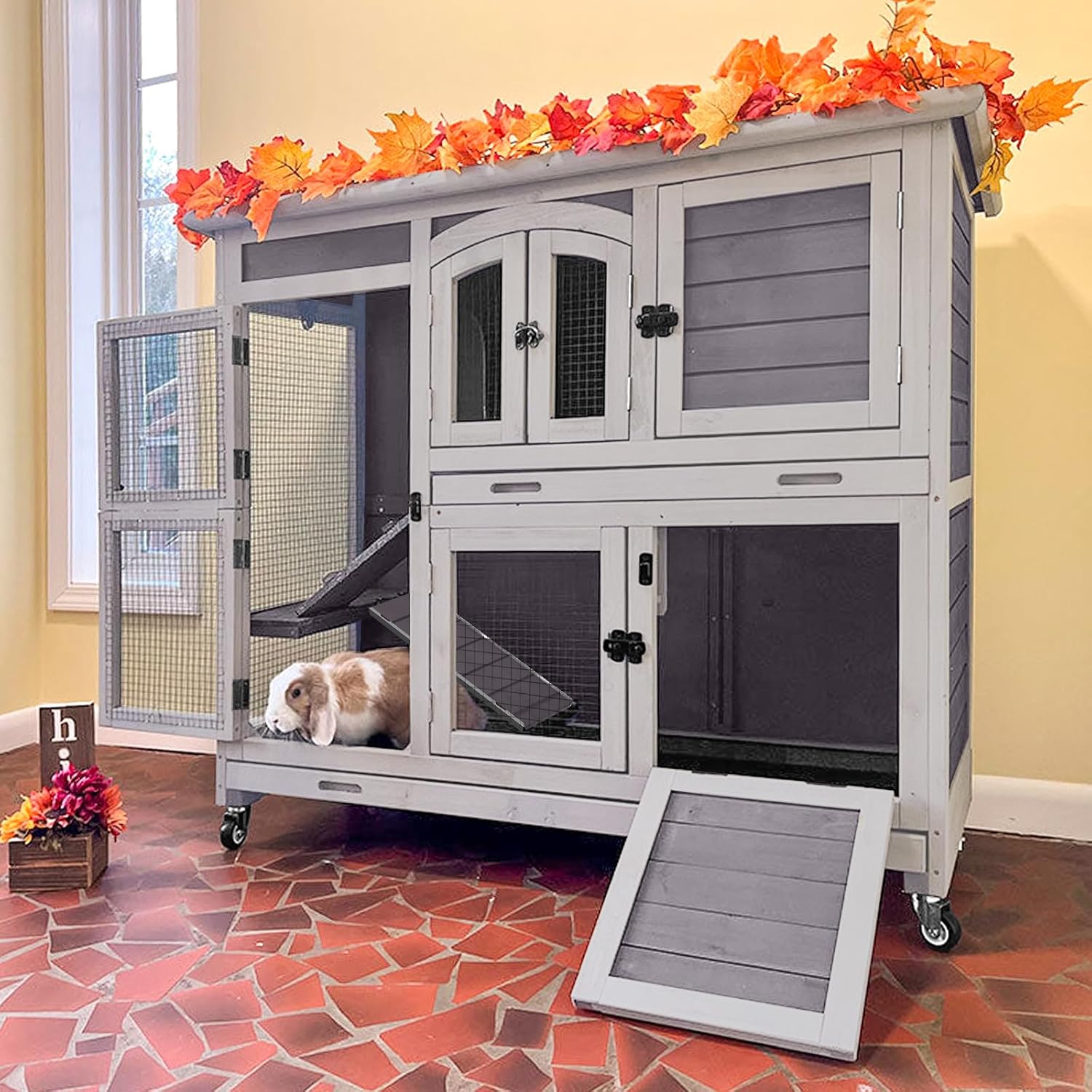
2-Tier Indoor Rabbit Hutch Bunny House Guinea Pig Cage with Sliding Plastic Trays, Wheels & Ramp, 47.2" Multi-Door Wooden Small Animal Cage for Rabbits, Bunnies, and Guinea Pigs (Grey)
Sliding plastic trays and multi door access make cleaning simple, and the wheels let one person move it
The ramp takes a bite out of the ground floor, and the upper deck suits a rabbit better than a guinea pig
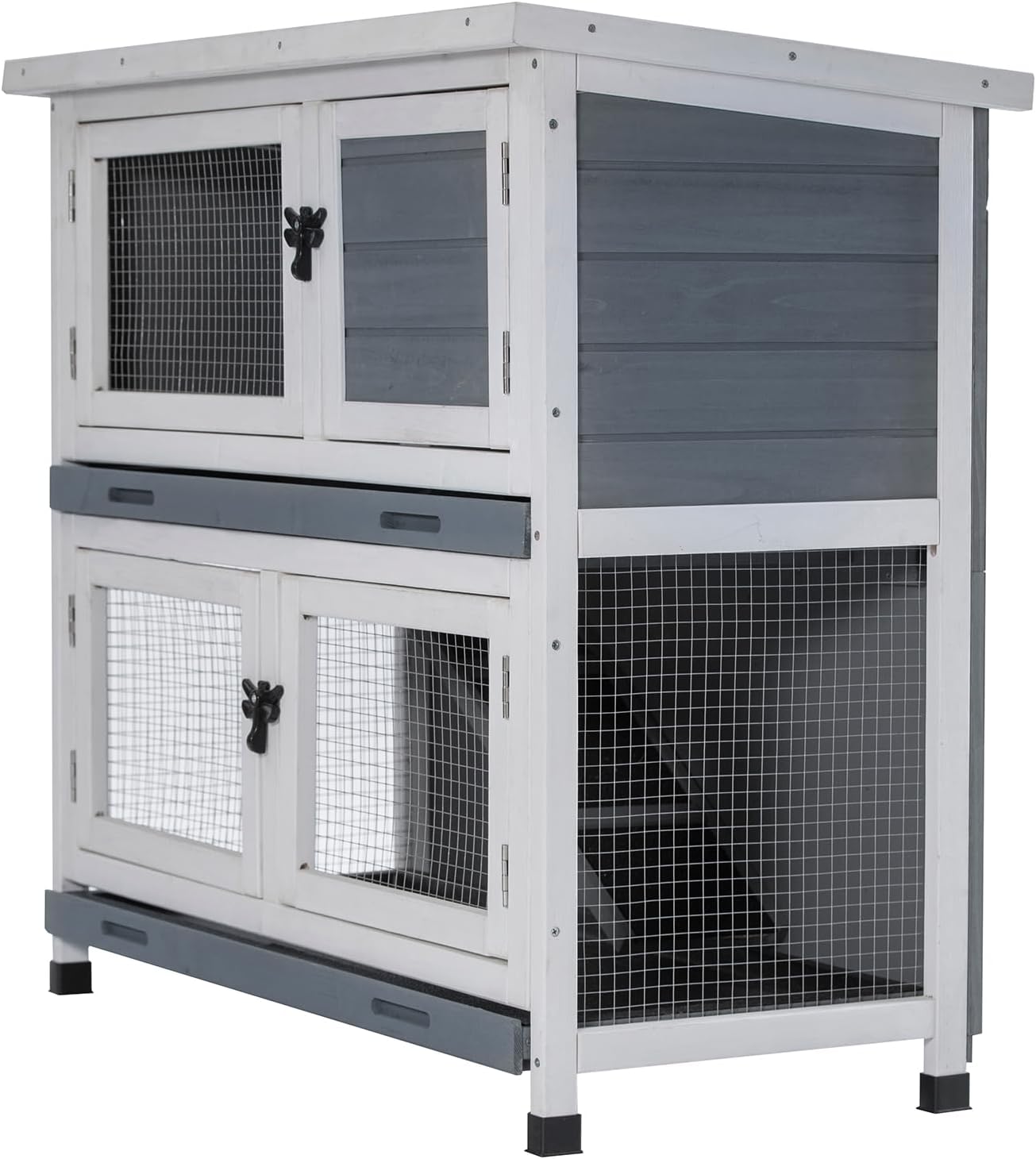
2 Story Solid Wood Rabbit/Bunny Hutch with 2 Large Main Rooms, Indoor Outdoor Rabbit House Guinea Pig Cage Pet House for Small Animals with Ventilation Door Removable Tray Waterproof Roof (Grey)
Two main rooms, a ventilation door, and a waterproof roof make it the most outdoor ready of the group
Solid wood needs more upkeep, and the second story is wasted space for pigs that will not climb
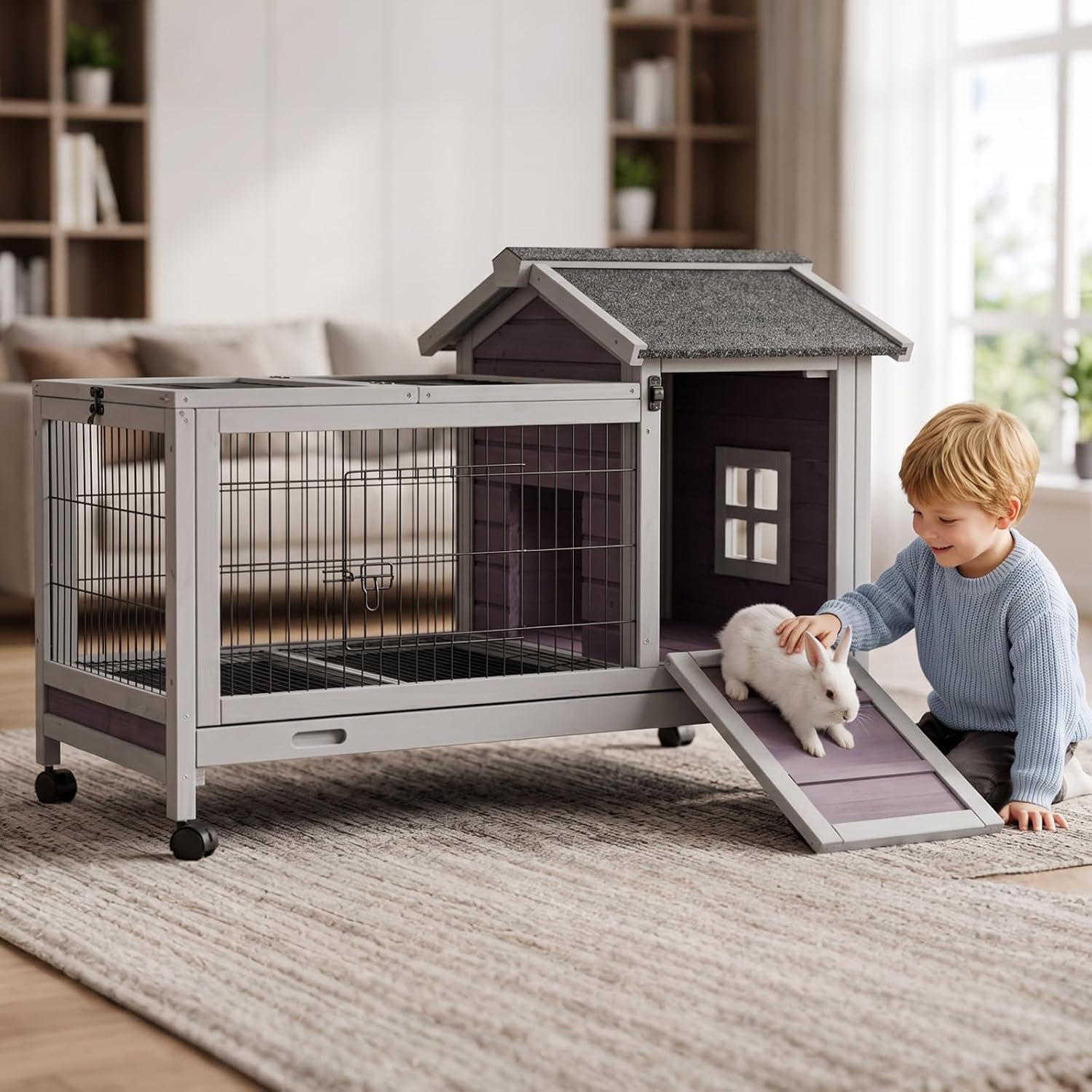
Aivituvin Rabbit Cage Indoor for 1-2 Bunnies, 6.6ft² Wooden Outdoor Rabbit Hutch, Small Bunny House, Guinea Pig Cage with Leakproof Pull Out Tray, 4 Wheels and Removable Wire Floor Grid
A single 6.6 square foot level gives a pair room to run, and the leakproof tray plus wheels keep it practical
The removable wire floor grid should come out for guinea pigs, and the shape is wider than it is long
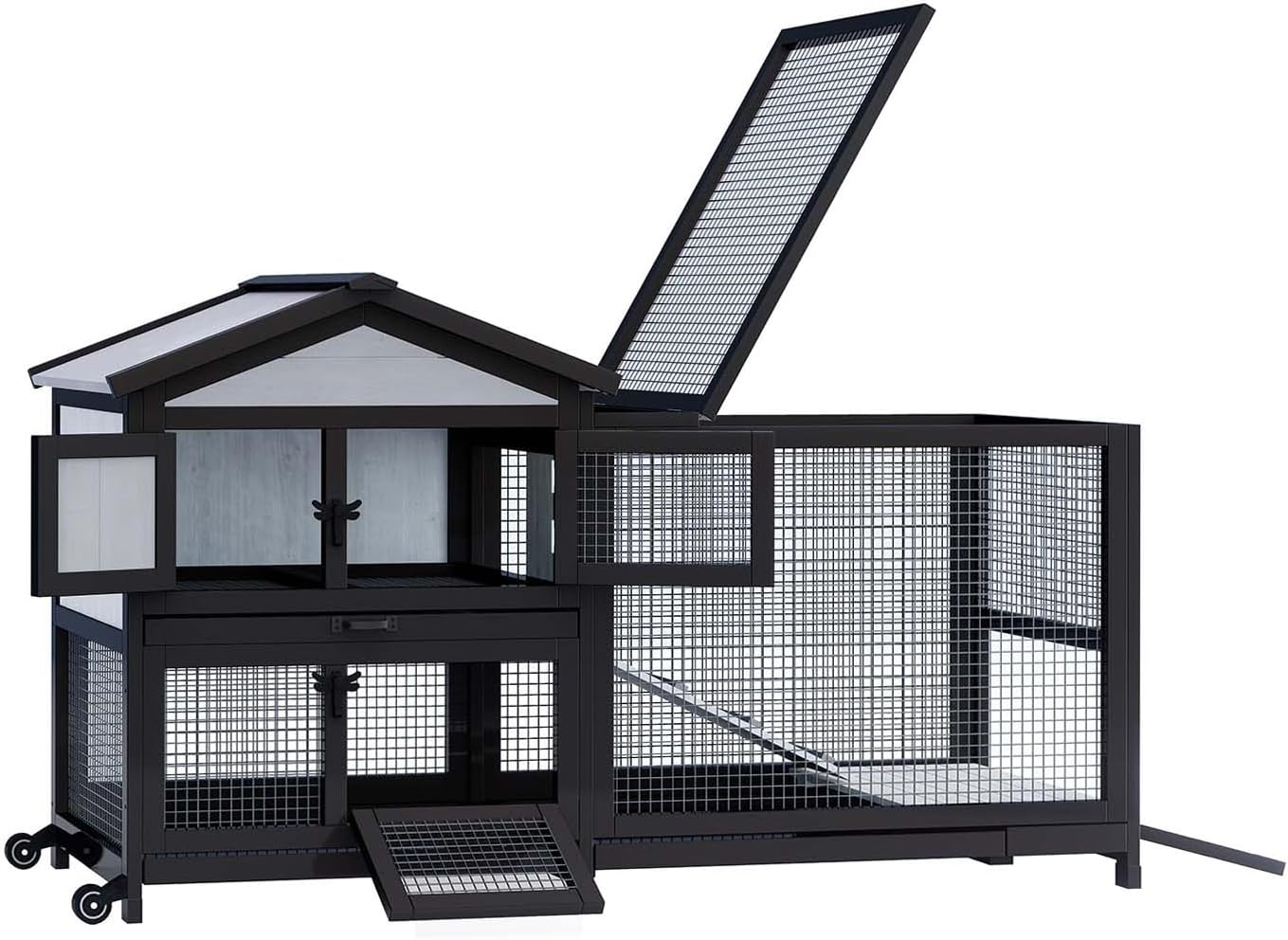
EZmilifey Rabbit Hutch 58" Rabbit Cage Outdoor&Indoor 2-Story Chicken Coop Guinea Pig Cage on Wheels Bunny Cage with 3 Deep No Leakage Pull Out Tray,Waterproof Roof (Black)
The longest unit here at a listed 58 inches, with three deep trays that contain bedding and mess
It is built as much for chickens as for small pets, so the ramp and level heights need a hard look
Prices and availability may change.
What the guinea pig hutch vs cage question really turns on
The practical difference between guinea pig hutch and cage layouts shows up in the footprint, not the material. A typical pet store cage is wide and shallow, often around 30 by 18 inches, which is generous for a hamster and cramped for anything that runs. A wooden hutch is usually taller and narrower, with a covered sleeping box at one end and an open section at the other. Neither shape is automatically better. What matters is how much uninterrupted floor area the animal actually keeps once you subtract the hideout, the food bowl, the water bottle, and the ramp.
Guinea pigs are not climbers. They do not use vertical space the way a rat or a ferret does, so a second story is only worth whatever the animal can reach comfortably. A steep ramp is a fall risk for a pig with a wide, low body, and a ramp that is too narrow becomes a one way street where one pig can trap the other. The cage vs guinea pig hutch debate gets heated because both formats can be done well or badly, and the cheap version of either one is usually bad in the same ways: too small, too dark, and too hard to clean.
One more thing worth saying plainly. Every unit in this group is sold as a rabbit hutch that also suits guinea pigs, and that is a fair description as long as you read the dimensions rather than the animal on the box. Rabbits sit up, jump, and use height. Guinea pigs run, hide, and stay low. That single difference reshapes which of these four makes sense for your household.
Floor area and bar spacing: the two specs that decide
Cage size is the number that matters most and the number most listings bury. Common welfare guidance for guinea pigs lands around 7.5 square feet for a pair, with more always being better, and a shape that is longer than it is deep so the animals can run laps instead of turning in circles. The Aivituvin unit lists 6.6 square feet, the EZmilifey lists 58 inches of overall length, and the 47.2 inch grey hutch sits between them on paper. Before you compare those numbers, check the depth on each listing, because a long shallow enclosure can offer less usable floor area than a shorter, deeper one. Check current Amazon price on the Aivituvin if the single level layout appeals.
Bar spacing matters less for guinea pigs than for rabbits, since pigs rarely try to climb, but it still matters at floor level. A guinea pig can push its head through a gap that looks far too small for it, and a panicked pig can get stuck, so gaps of about an inch or less are the safe target. The floor itself deserves equal attention. The Aivituvin listing includes a removable wire floor grid, and for guinea pigs that grid should come out, because these animals spend their entire lives on their feet and wire flooring causes a slow healing foot damage that is entirely preventable.
Ventilation and bedding dust go hand in hand. Wooden hutches with solid roofs trap ammonia from urine, and dusty bedding makes the air worse. Deep trays and a removable tray help because you can dump them often without dismantling anything, and a hutch that is easy to clean is a hutch that actually gets cleaned.
Two story hutches and where the ramp eats the room
The two story units here are the 47.2 inch grey hutch with sliding plastic trays and the 58 inch black EZmilifey, and both make the same trade. You gain a second level and you lose a strip of the ground floor to the ramp. For a guinea pig, the ground floor is the part that counts. The upper deck can work as a sleeping loft if the ramp is shallow and wide, but it should never be the reason you buy the hutch. Check current Amazon price on the 47.2 inch model if you want the wheels, the multi door access, and the sliding trays in one package.
The middle option, the two story solid wood hutch with two large main rooms, a ventilation door, a removable tray, and a waterproof roof, is the most outdoor oriented of the four. Two main rooms mean the animal can move between a sheltered sleeping area and an open section, which is closer to how a guinea pig uses space than one cramped box. The waterproof roof and ventilation door are real advantages on a covered patio. Guinea pigs are sensitive to heat and cold, though, and in most climates they belong indoors or in a temperature controlled outbuilding rather than exposed to the weather. Check current Amazon price on that unit if a patio setup is the plan.
The EZmilifey is the longest enclosure in this group at a listed 58 inches, and its three deep pull out trays aim straight at the mess problem. The listing also describes it as a chicken coop, which is a useful signal. Poultry housing is built for birds that perch and scratch, so verify that the ramp angle and the level heights suit a ground dwelling animal before you commit. Check current Amazon price on it if length is your priority.
Trays, bedding dust, and the cleaning reality
Cleaning is the part of hutch ownership that decides whether the enclosure stays in good shape or slowly slides. The sliding plastic trays on the 47.2 inch unit and the three deep no leakage trays on the EZmilifey both address it directly. Deep trays hold more bedding, which means fewer full changes, and they also contain bedding dust better than a shallow pan that the animal kicks over the edge.
A leakproof tray is a claim worth reading carefully. The Aivituvin listing uses that word, and the design detail that makes it true or false is the seam between the tray and the frame. Any gap lets urine run down onto the floor, the wheels, and whatever the hutch is standing on. When the unit arrives, slide the tray in and out a few times and look at that seam before you fill it with bedding.
Bedding choice compounds everything. Kiln dried shavings and paper based beddings produce less dust than some cheap softwood mixes, and the tray depth determines how thick a layer you can use. A generous layer of bedding absorbs urine and controls odor, while a thin layer just coats the tray and lets the smell rise. If you are housing two pigs, plan on a full tray change at least twice a week, and spot clean the sleeping area daily.
What the listings get right and what they leave out
All four listings cover the housing well and the interior almost not at all. None of them ship with a properly sized hideout, and hideout size matters because a guinea pig needs a shelter it can turn around inside without scraping its sides. An undersized pigloo is a quiet source of stress, and two pigs need either two hideouts or one large enough for both to pass each other.
The same gap applies to the hay rack. Hay should stay off the floor and out of the urine zone, which is why a rack that hangs above tray level keeps the animal eating clean food instead of soiled food. Bottle capacity is the other spec nobody prints. A larger bottle means fewer refills and less risk of a pig running dry on a hot afternoon, and a pair drinks more than most new owners expect. Tunnel diameter is the last one. Guinea pigs love to run through tubes, and a tunnel that is too narrow for the widest pig in the pair becomes either a trap or a fight, so measure your largest animal before you buy accessories.
What the listings do get right is the hardware around the edges. Wheels make a heavy wooden hutch movable for cleaning, which sounds minor until you try to sweep under a fixed unit. A waterproof roof and a ventilation door are genuine summer advantages on the outdoor oriented models. Multi door access matters more than it sounds, because reaching the back corner of a hutch through one small door is miserable, and a hutch you dread cleaning is a hutch that stays dirty.
Should you buy a guinea pig hutch or cage first?
Whether you land on a guinea pig hutch or cage, the floor area rule does not change. Buy the enclosure that gives you the most usable single level floor for the space you have, then add height only if the ramp is gentle enough that a wide bodied animal can use it without hesitation. The guinea pig hutch vs cage decision is really a decision about your room, your cleaning routine, and your climate, not about which format is superior in the abstract.
Indoors, a hutch with a pull out tray and wheels is easier to live with than a bare cage, because the tray contains bedding and the wood blocks some of the dust. Outdoors or on a covered patio, prioritize a waterproof roof, a ventilation door, and solid construction over extra levels. In a small apartment, the single level Aivituvin unit at a listed 6.6 square feet is the most sensible of the four, since a pair of pigs gets one long run instead of two short ones connected by a ramp.
Whichever you choose, measure your doorway before ordering, confirm the return window, and budget for the accessories the listing does not include: a hideout per pig, a hay rack, a water bottle sized for two, and a tunnel wide enough to be fun rather than frightening.
What I'm watching next
Two things are worth tracking in this corner of the market. The first is whether manufacturers start publishing usable floor area instead of overall width, because a 58 inch length means very little if the depth is shallow and the ramp claims a third of the ground floor. The second is the deep tray trend. Trays that slide out cleanly and seal at the seam are the single biggest quality of life feature on a wooden hutch, and the units here show three different approaches to the same problem, from a single leakproof pan to three separate deep drawers.
I am also curious how the crossover listings settle out. When a hutch is marketed as a chicken coop and a guinea pig cage at once, the buyer has to do the translation work, and that translation is exactly where most people get burned. Read the dimensions, subtract the ramp, and picture your largest pig running the length of the floor before you click buy. That habit will serve you better than any label on the box.