The hang on back vs canister aquarium filter question is the one that stalls more first-tank plans than any other piece of gear, because both designs work and both have real costs. I have watched people spend three weeks comparing media baskets and then buy the wrong size anyway. So this comparison starts with the things that actually change your weekly routine: tank volume, flow rate, and how much maintenance you are willing to do on a Sunday afternoon.
For most freshwater tanks under 40 gallons, a hang on back filter is the right first purchase, and the two Coospider kits below remove the hang on back vs canister aquarium filter decision entirely by shipping with their own pump. If you are running 55 gallons or more, or you want a planted tank with injected CO2, a canister earns its price.
Filtration is only half of a working setup, though. A filter moves water, and moving water is what spreads heat from a submersible heater, so the two purchases are linked. That is why the EHEIM Jager 50W and the Fluval P50 belong in this guide next to the filter conversation.
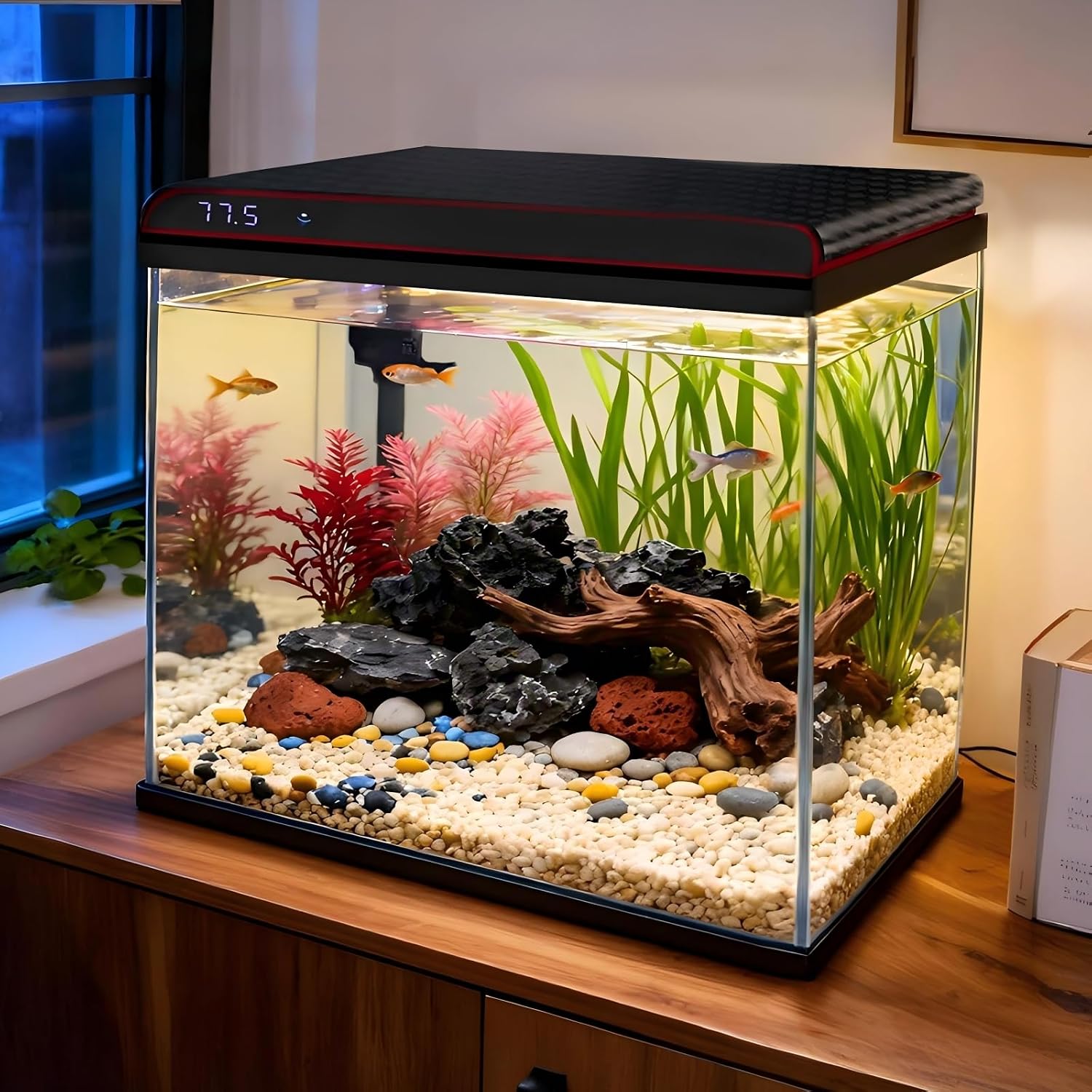
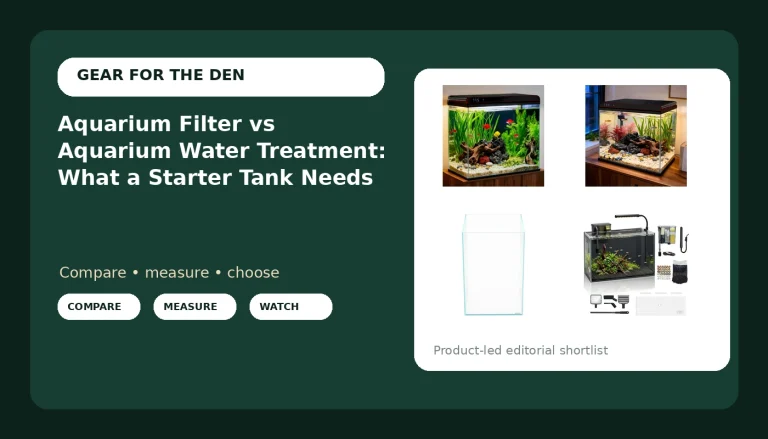
Coospider 10 Gallon Glass Fish Tank, Aquarium Starter Kit, Simple Self-Cleaning Aquarium with 3-Color LED Lights, Quiet Filter Pump, Temperature Monitoring for Fish, Shrimp, Kids Gift Ideas
Smallest footprint here, and the included pump, light, and temperature monitoring mean no separate filter shopping
10 gallons of tank volume leaves very little room for stocking mistakes
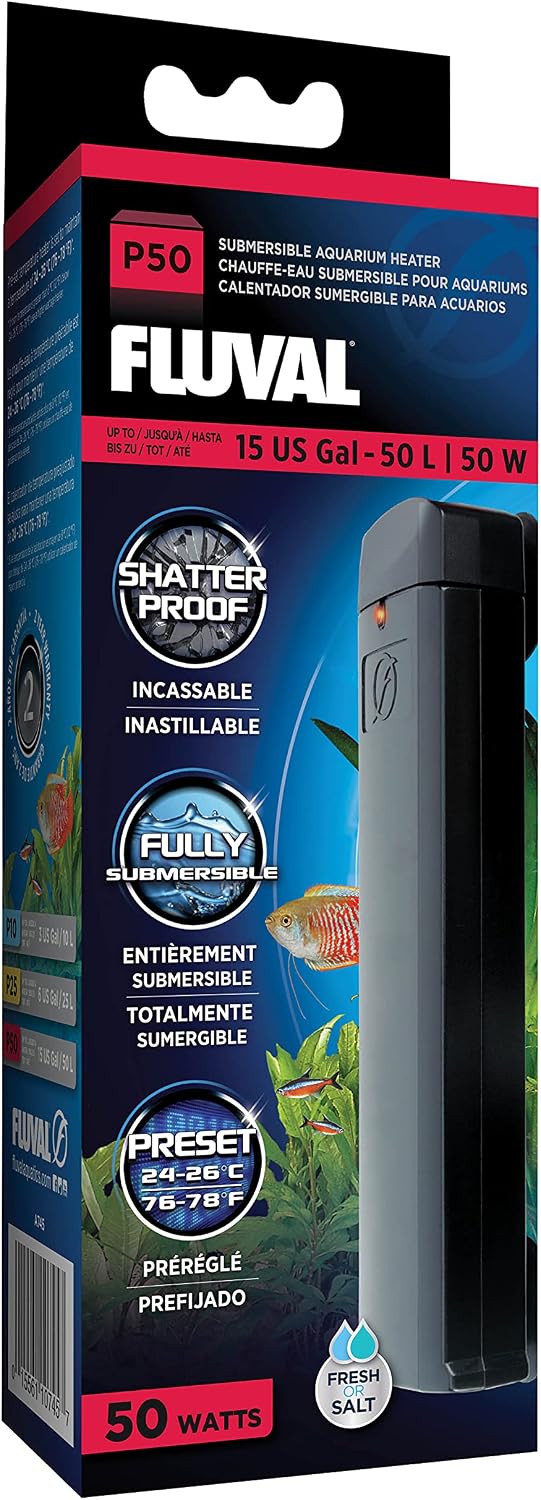
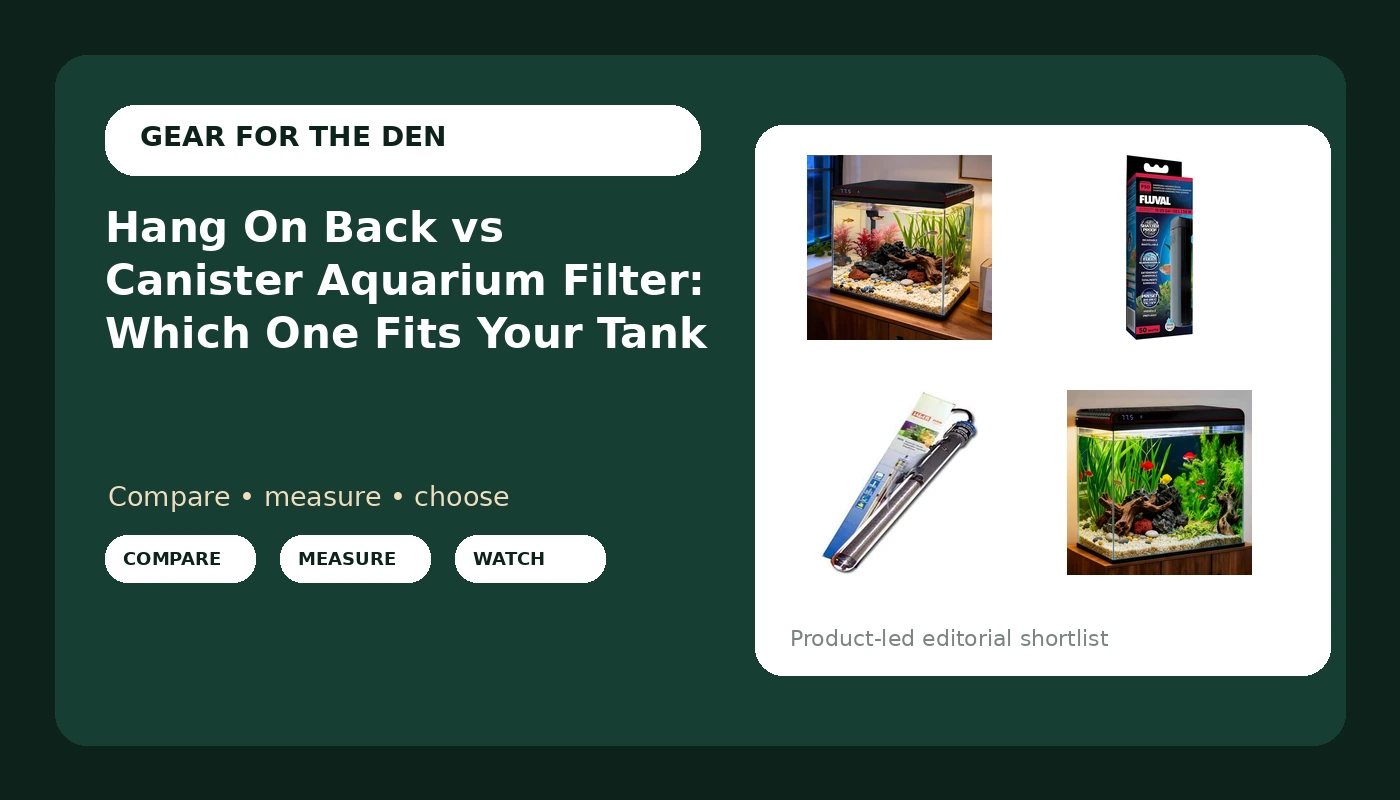
Fluval P50 Submersible Aquarium Heater
Compact 50W submersible body that hides behind a filter intake in a small tank
The 50W rating keeps it in small-tank territory, so a 20 gallon in a cool room is a stretch
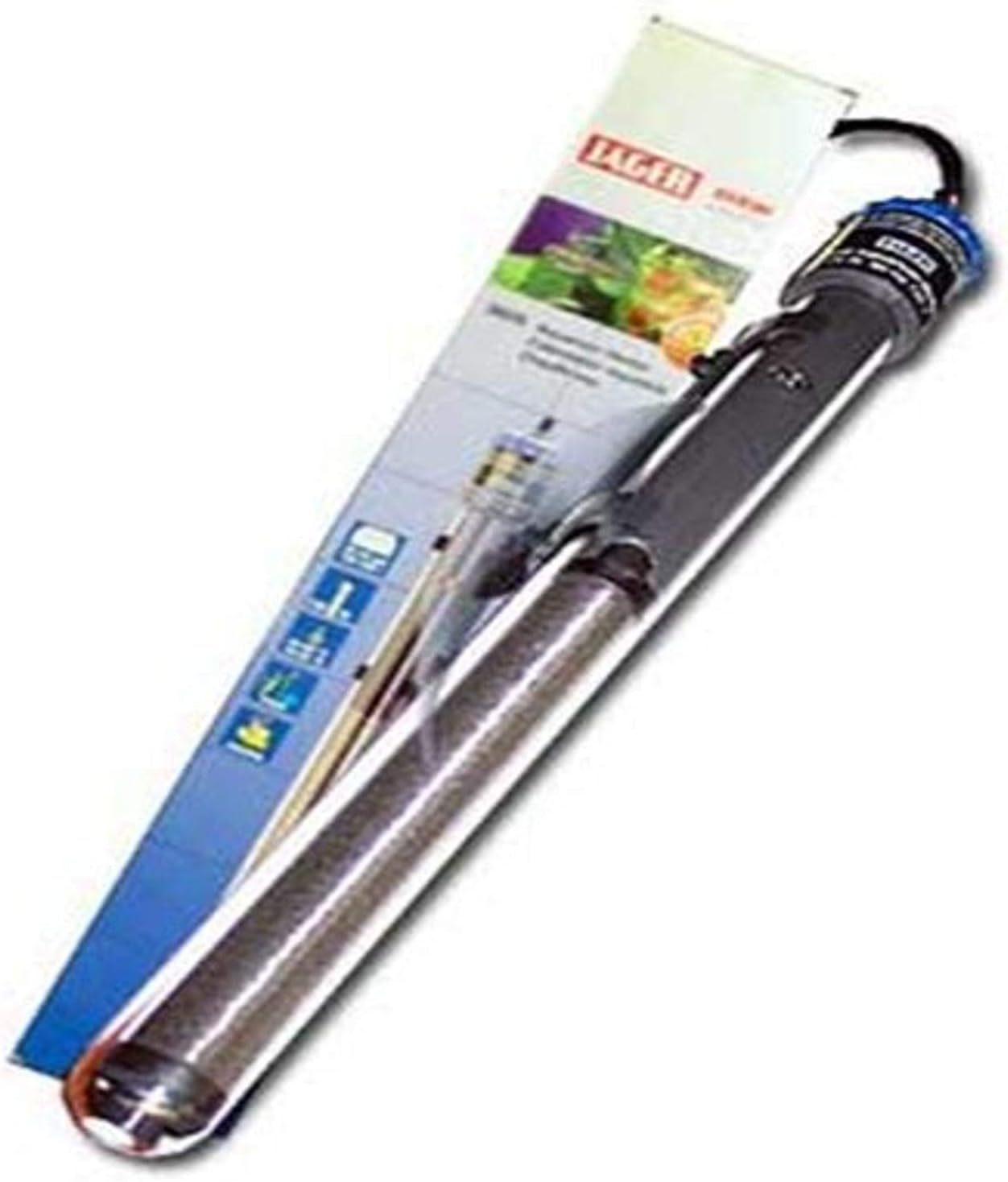
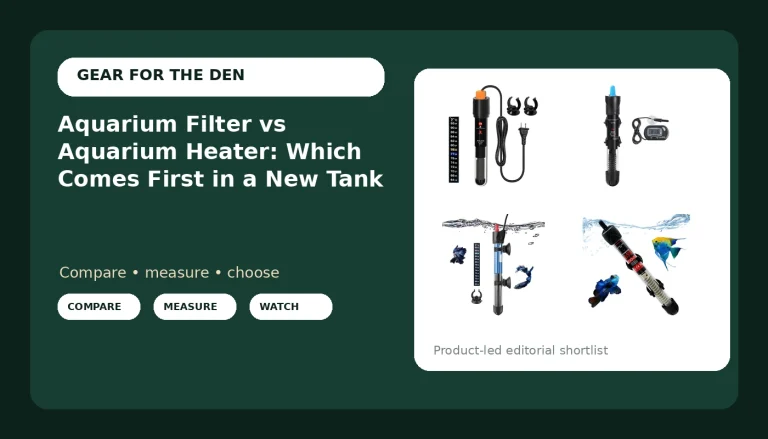
EHEIM Jager Aquarium Thermostat Heater 50W, Black
Adjustable thermostat dial and a glass body, at a wattage that suits small tanks
Bulkier than the compact options, which matters in a tight 10 gallon kit
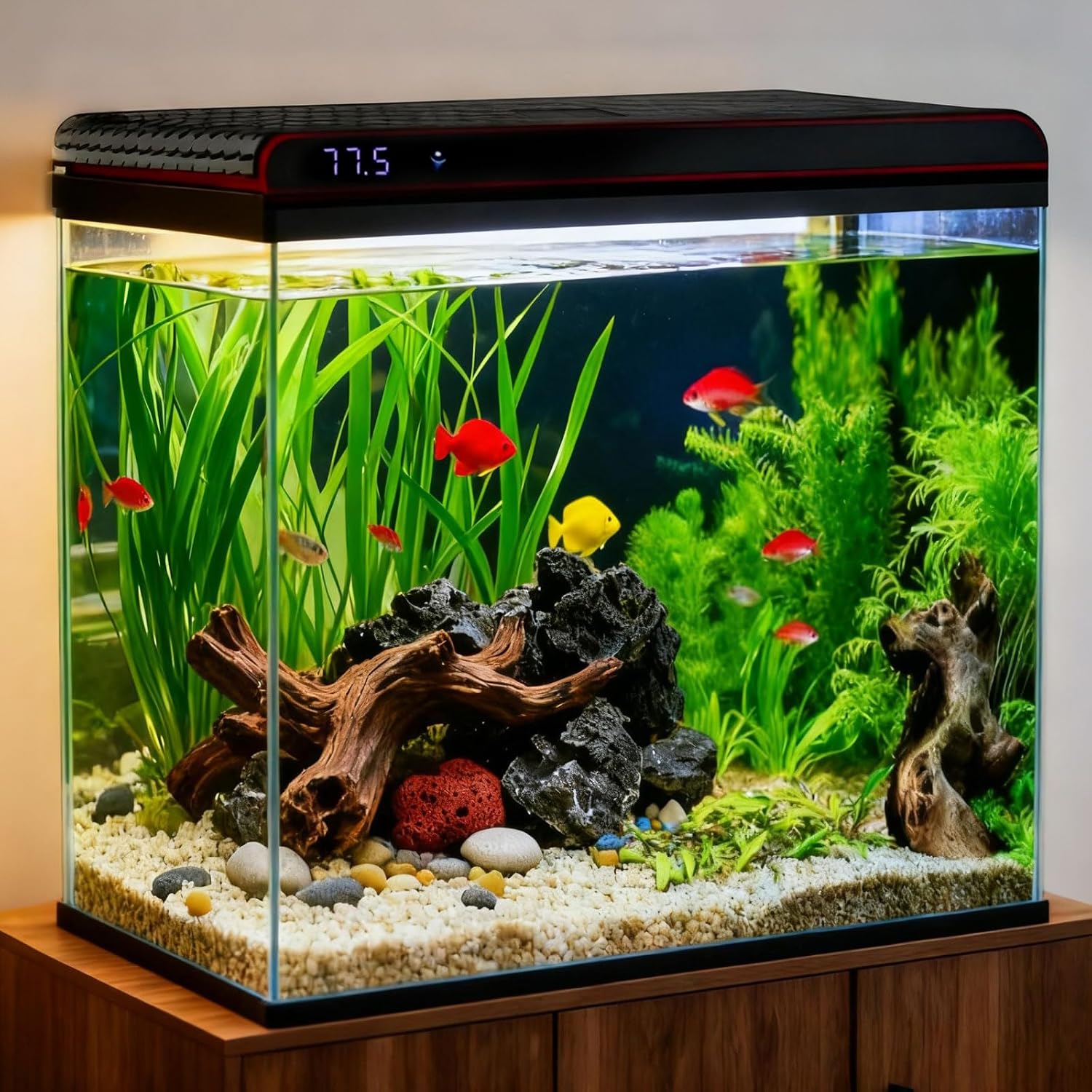
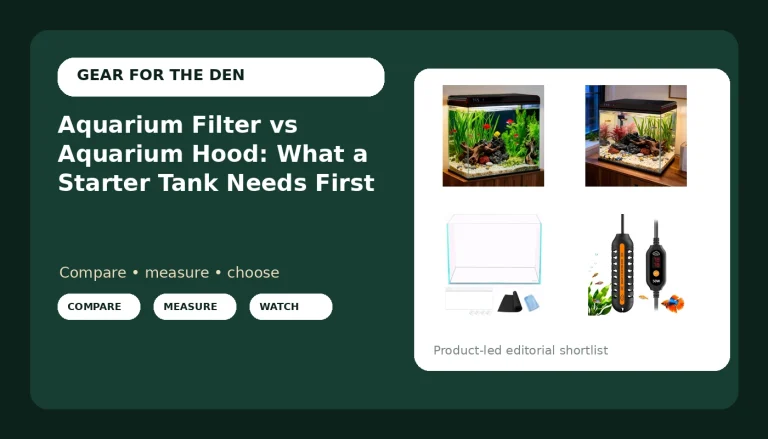
Coospider 20 Gallon Glass Fish Tank, Aquarium Starter Kit, Simple Self-Cleaning Aquarium with 3-Color LED Lights, with Quiet Filter Pump, with Temperature Monitoring for Fish, Shrimp, Kids Gift Ideas
More water volume for stability, with the same included pump, light, and monitoring
Takes up more space and weighs noticeably more once it is filled
Prices and availability may change.
What hang on back vs canister aquarium filter really changes
Strip away the marketing and the two designs differ in three measurable ways.
The first is where the water goes. A hang on back filter pulls water up an intake tube, pushes it across a media tray that sits outside the tank, and drops it back in as a small waterfall. A canister sits on the floor or in a cabinet, pulls water down through hoses, pushes it through stacked media baskets, and returns it, often through a spray bar. Water in a canister travels much farther, which is why canisters hold far more media for the same footprint.
The second is media volume. Most hang on back filters hold a single cartridge, and even the models with reusable baskets rarely hold more than a couple of cups of media. A mid-size canister holds several liters across multiple baskets, which is what lets you run separate mechanical, biological, and chemical stages without cramming them into one compartment.
The third is service interval. Because a canister holds so much more media, it clogs more slowly, and a well-stocked canister on a lightly stocked tank can go a month between cleanings. A hang on back with one cartridge needs attention more often, and the cartridge is usually the part that gets rinsed or replaced.
None of that makes one design better. It makes them suited to different tanks.
How I judge a filtration setup
I look at five things, in this order.
Media volume per gallon of tank volume. A filter that holds almost no media is a water mover, not a biological filter, and it will lean on your substrate and decorations to do the work.
Flow rate in gallons per hour. The usual target is four to ten turnovers per hour, so a 20 gallon tank wants roughly 80 to 200 gallons per hour of real, loaded flow. Manufacturers rate pumps dry, so treat the box number as a ceiling.
Whether there is room for more than one filtration stage. Mechanical, biological, and chemical media jammed into the same compartment is a compromise, not a design.
Whether it survives a power cut. A canister that loses its prime every outage gets old fast.
Whether the intake is safe for shrimp and fry. A bare intake tube will pull fry into a canister, and no amount of media volume makes up for that.
Hang on back filters: the practical default
Hang on back filters win on simplicity. They hang on the rim, they self-prime in seconds, and when something goes wrong you can see it. A friend's tank that started smelling wrong was diagnosed in about two minutes because the intake tube was visibly clogged.
They are also the cheapest way into real filtration. A basic hang on back costs less than a good heater, and it needs no hoses, no valves, and no cabinet with clearance.
The trade-offs are real. Media volume is the big one, and on a heavily stocked tank a single cartridge cannot keep up with the ammonia load. The waterfall return also drives off dissolved CO2, which matters if you run a planted tank with injected CO2, and it gets louder as water evaporates and the level drops below the lip. Some units will not restart cleanly if the impeller gets gunked up, and proprietary cartridges lock you into a replacement cost that adds up over a year.
For a 10 to 40 gallon community tank at a normal stocking level, none of that is disqualifying. It is the reason the design is still the default.
Canister filters: the media volume play
The canister aquarium filter vs hang on back comparison usually comes down to one question: do you need more media than a tray can hold? If you keep messy fish, run a heavily stocked tank, or grow plants in a 55 gallon or larger, the answer is yes.
A canister's advantage is that it turns filtration into a modular system. You can stack coarse sponge, then ceramic rings or bio balls, then a fine pad, then carbon or a resin, and change one stage without touching the others. The return is quieter, it can be aimed with a spray bar, and the whole thing hides in a cabinet.
The costs are plumbing, priming, and leaks. Every hose connection and every O-ring seal is a place water can escape, and a slow leak under a cabinet can damage a floor before you notice it. Priming after maintenance takes practice, and a canister that sits below the tank depends on a good siphon to restart. Servicing also takes longer: you disconnect hoses, carry a heavy canister to a sink, and hope you do not spill the contents on the way back.
I still recommend canisters for large tanks. I just do not recommend them for a first tank under 30 gallons, where the maintenance burden outweighs the media volume.
When the tank makes the choice for you
The difference between hang on back and canister aquarium filter stops mattering when the tank ships with its own pump, which is exactly what the two Coospider glass kits do. Each one includes a quiet filter pump, three-color LED lighting, and temperature monitoring, and each is built around a self-cleaning design that pushes debris toward the intake instead of letting it settle.
The 10 gallon version is the smaller of the two, and it is the one I would hand to someone setting up a first tank for a child or a desk. The footprint is small, the light and pump are already matched to the volume, and there is no filter shopping to do. The 20 gallon version is the same idea with more water, which is the single best thing you can do for stability, since a larger tank volume dilutes mistakes faster than any filter upgrade.
The honest trade-off is upgradeability. The pump and light are matched to the tank, so if you later want a canister and a high-output planted light, you are buying around the kit rather than building on it. The glass, the footprint, and the monitoring are what you keep.
If you are still deciding between a hang on back or canister aquarium filter for a tank you already own, a kit is not the answer. If you are starting from nothing and you want a working tank this weekend, it very often is.
Heaters: the other half of a working setup
Filtration gets the attention, but heat is what keeps fish alive in a cold room, and both filter designs in this comparison work better with a heater placed near the return.
Wattage is the number to get right. A rough rule for a tank in a normal room is two and a half to five watts per gallon, which puts a 50 watt heater in range for a 10 to 15 gallon tank and on the low side for a 20 gallon in a cool room. The EHEIM Jager 50W is a glass thermostat heater with an adjustable dial, so you set the thermostat range you want and leave it. The Fluval P50 is a compact submersible heater at the same wattage, and its appeal is the small footprint, which matters in a 10 gallon kit where the pump and intake already take up room.
Whichever you pick, mount it where flow passes over it. A heater sitting in still water cycles on and off and warms the glass around it rather than the tank. In a hang on back setup, aim the return across the heater. In a canister setup, position it near the spray bar or the intake.
What the numbers say
Turnover, not brand, is the number that predicts whether a filter keeps up. Multiply tank volume by four to ten to get a target flow rate in gallons per hour, then assume the real number is lower than the box claims once media is loaded.
Media volume is the second number, and it is the one hang on back filters cannot win. A cartridge measured in cups against a basket measured in liters is not a close contest.
Wattage and thermostat range decide whether your heater holds temperature or fights it. A 50 watt heater with a narrow thermostat range in a 20 gallon tank in a 65 degree room will run constantly, and constant running shortens the life of any heater.
Kelvin rating matters if you keep plants. A light in the 6500K range reads as daylight and supports growth, while blue-heavy fixtures sold purely for looks tend to push algae.
Substrate grain is the quiet variable in all of this. Fine grains pack tightly and can starve a canister intake that sits low, while coarse gravel lets debris fall through to a layer your filter never sees. Match the intake height to the substrate and you solve most of it.
What I'd skip
I would skip any hang on back filter that only accepts a proprietary cartridge. You are buying a subscription, not a filter.
I would skip an undersized canister on a large tank. A canister rated at the edge of your tank volume will need cleaning constantly, which erases the one advantage you paid for.
I would skip a heater with no adjustable thermostat in a room that swings in temperature, and I would skip running a 10 gallon tank unheated in a cold room just because the fish are sold as hardy.
And I would skip the upgrade spiral on a first tank. The hang on back vs canister aquarium filter question matters far less than whether the tank is cycled, stocked sensibly, and heated properly.
What I'm watching next
Compact canisters aimed at the 20 to 40 gallon range are the category to watch, because that is where hang on back filters currently win on convenience and canisters win on media. If a canister shows up with tool-free priming and a media basket you can lift out without disconnecting hoses, the middle of this comparison gets a lot more interesting.
The other thing worth watching is the all-in-one kit category. The kits in this guide already cover the small end of the market, and if the pumps and lights get easier to upgrade, the argument for buying every piece separately on a first tank gets weaker.