Peeing outside the box is a symptom, and the two things in this comparison treat it in completely different ways. One is hardware that changes where the cat stands and how much of the room the box touches. The other is a consumable that changes what the litter and the air smell like. Framing the problem as hooded litter box vs cat litter deodorizer for peeing outside the box only works if you accept up front that the two are not substitutes for each other.
I have shared a house with cats that overshot the front lip, cats that sprayed sideways into a wall, and one senior cat who needed a low entry and a step. The pattern I keep watching people repeat is buying the deodorizer first because it is cheap, then buying the hooded box three weeks later when the scatter and the smell are still there. Doing it in the other order usually saves money and a lot of scrubbing.
The short answer: a hooded box is the better first purchase for most households dealing with a cat that stands high, overshoots the edge, or sprays, and a deodorizer is a supplement to cleaning, not a replacement for it. The long answer is in the table and the sections below.
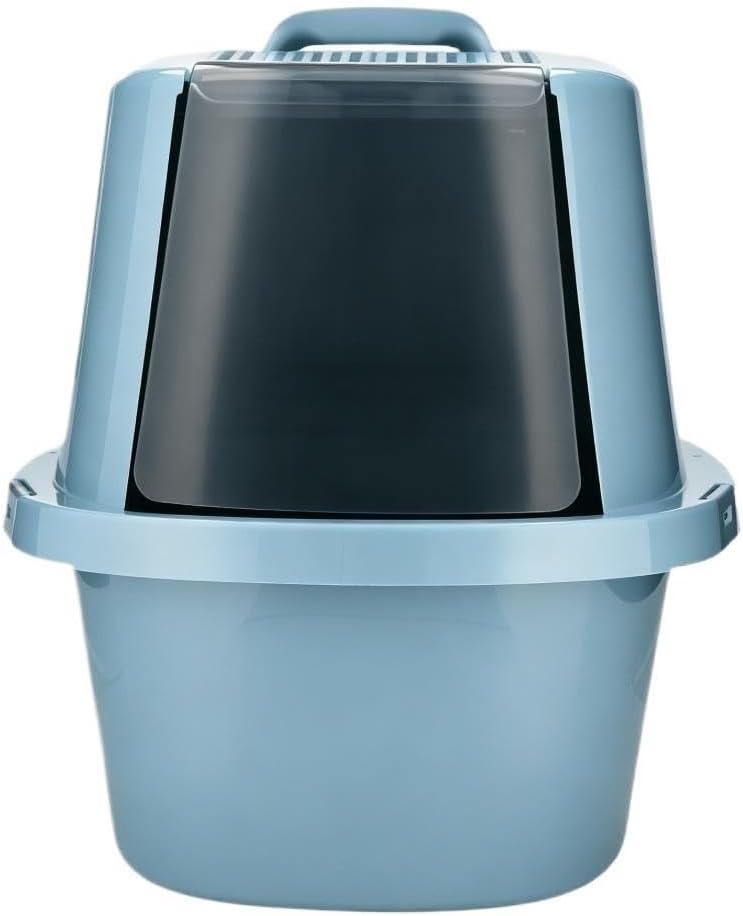
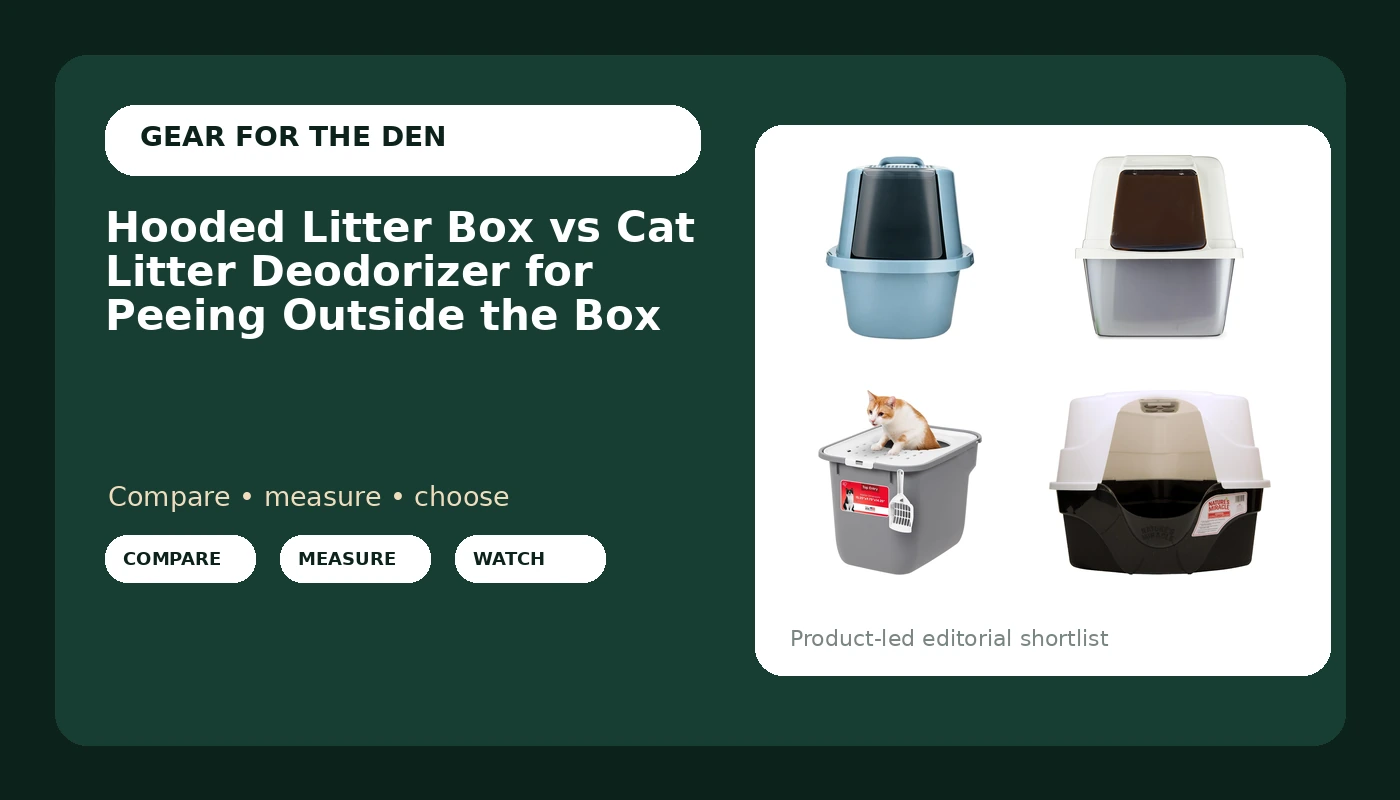
Large Blue Hooded Cat Litter Box, 19.38×14.99×15.38in Two-Piece Snap-On Enclosed Plastic Toilet, Lightweight 2.8LB Private Pan for Indoor Multi-Cat Household
Two-piece snap-on shell in a genuinely large 19.38 x 14.99 x 15.38 inch footprint, and at 2.8 lb the top lifts off in one motion
Thin plastic for the size, and the blue shell shows every scratch
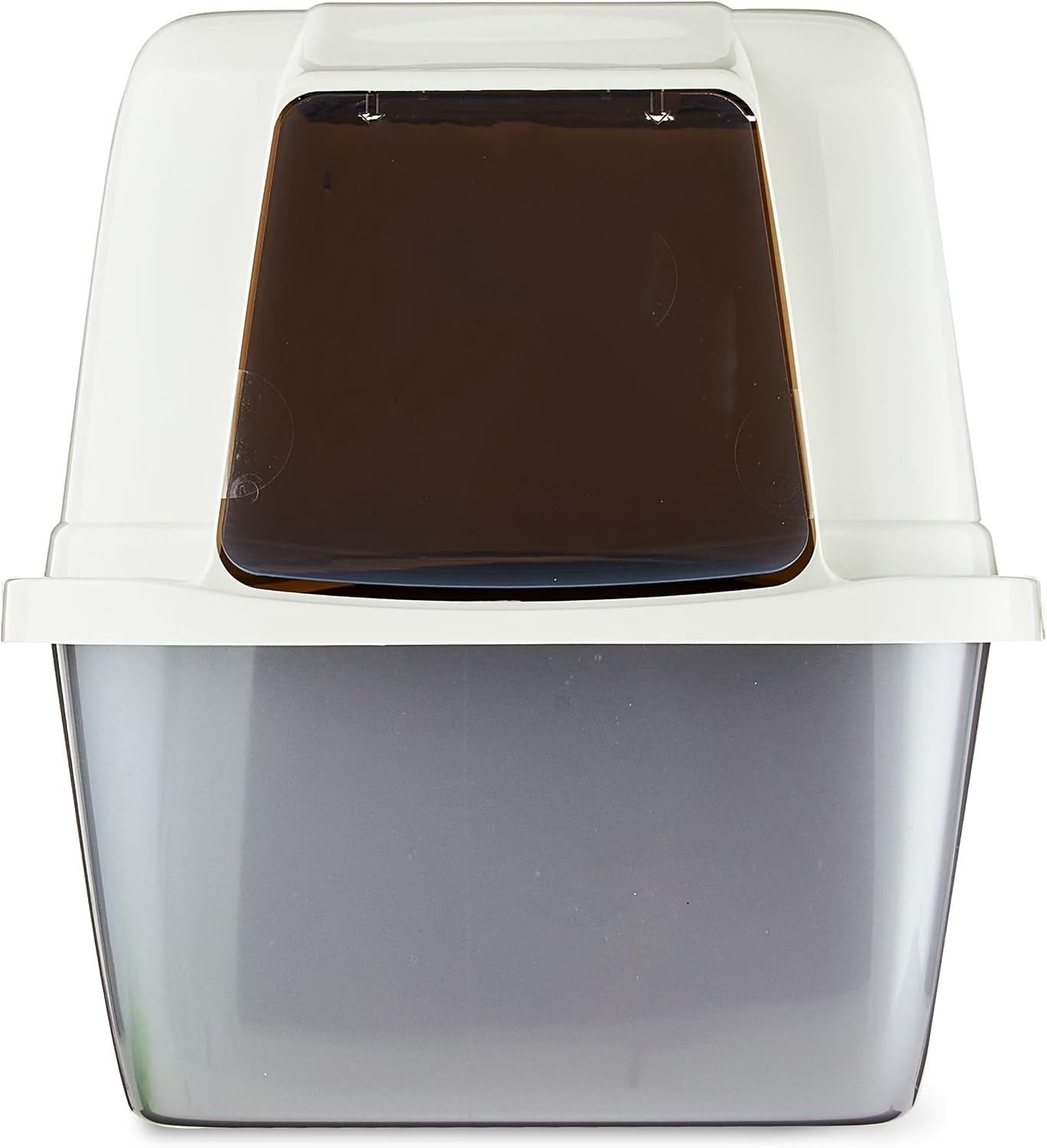
Extra-Large Hooded Enclosed Cat Litter Box
The largest interior in this group, which matters most for long or tall cats
The listing advertises no filter and no specific entry style, so you buy it for size, not extras
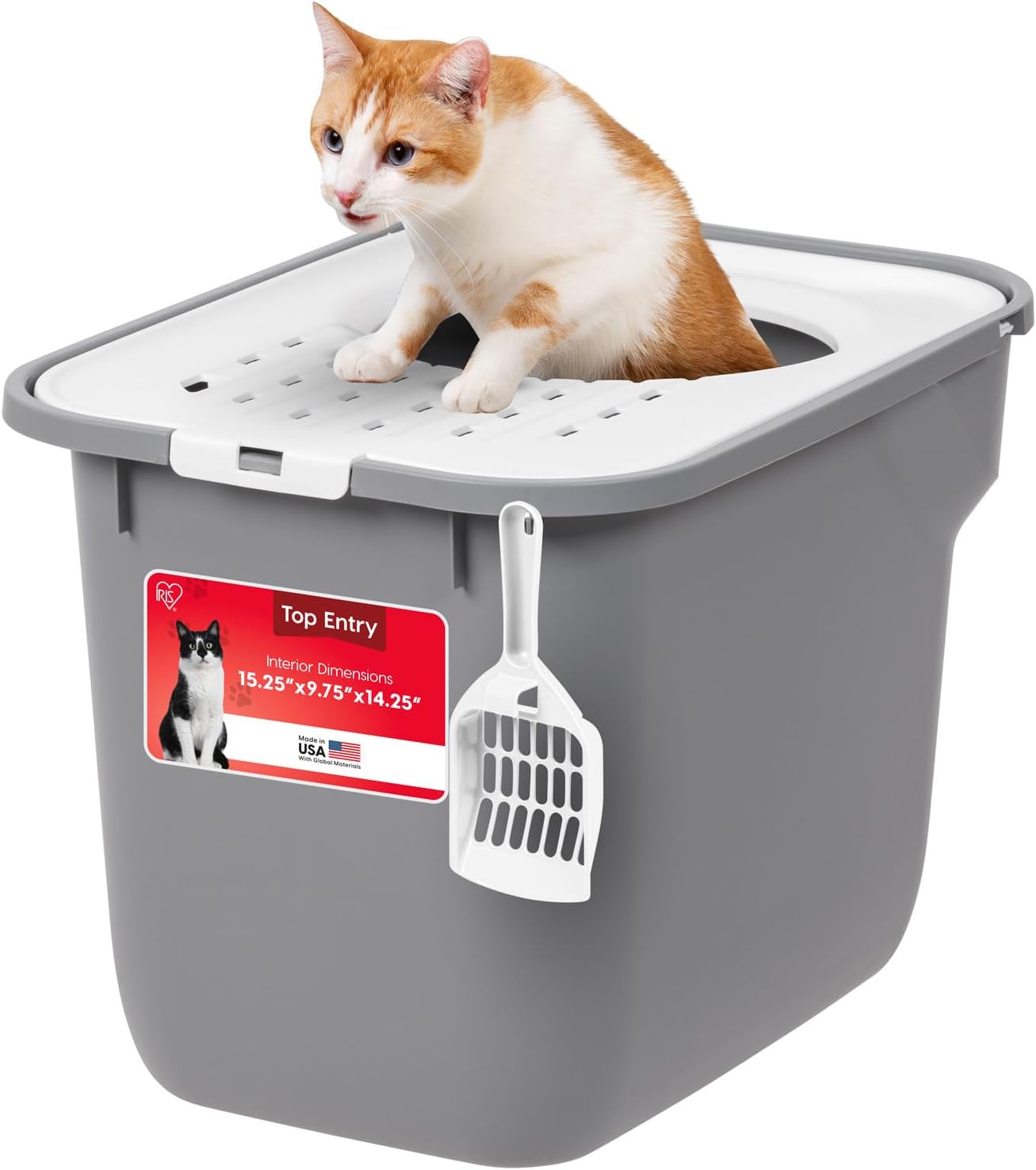
IRIS USA Large Top Entry Cat Litter Box, Hooded Privacy, Gray
Top entry drops litter back through the lid instead of onto the floor
A jump in and out, which is hard on seniors and small kittens
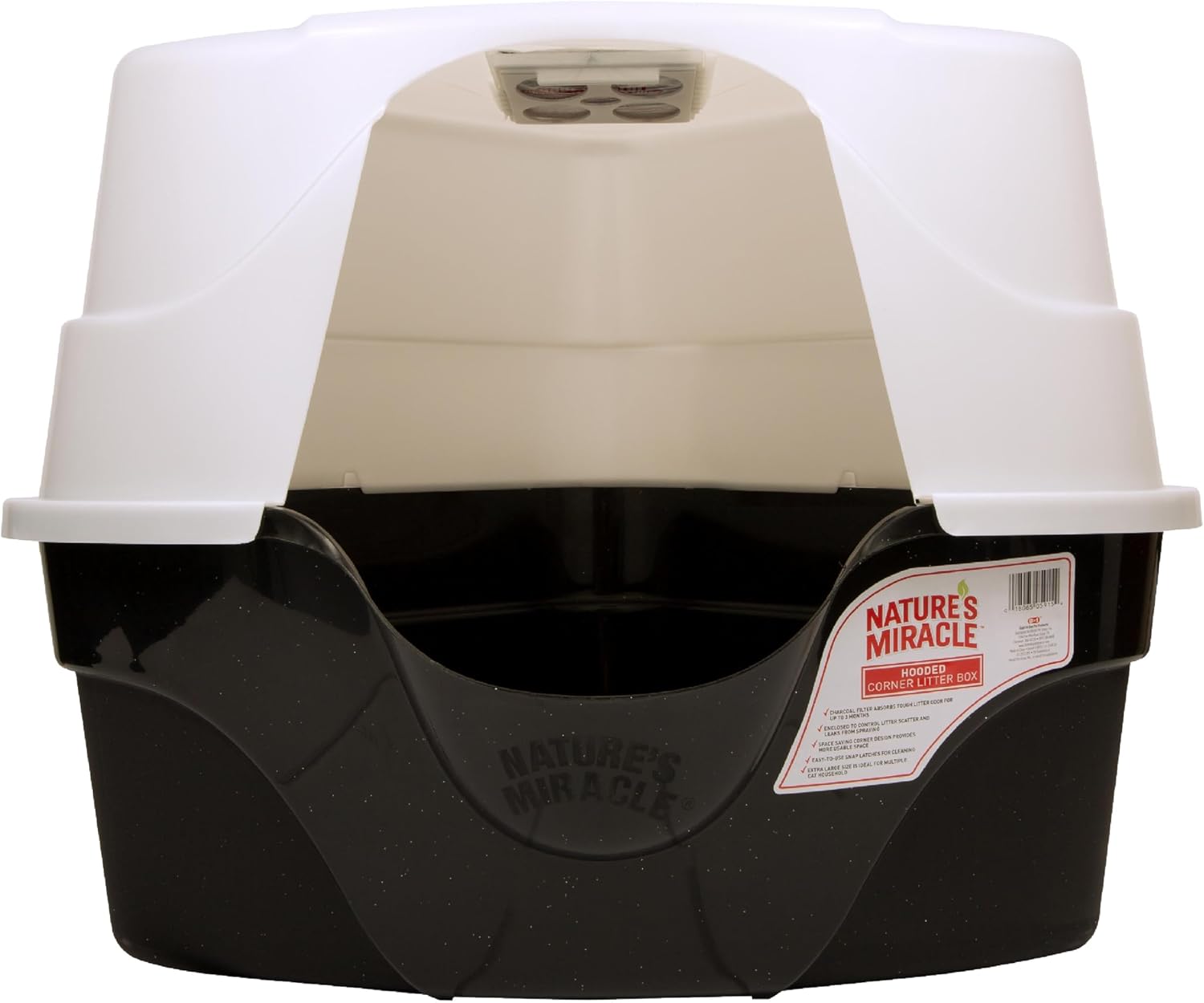
Nature's Miracle Advanced Hooded Corner Cat Litter Box with Charcoal Filter
Corner footprint tucks into a wall, and the charcoal filter gives the enclosure something to do with trapped odor
A corner box only fits a corner, and the price moves around
Prices and availability may change.
The hooded litter box vs cat litter deodorizer for peeing outside the box question
A hooded box is an enclosure, and the enclosure is the whole product. Walls, a roof, and a defined entry do three jobs at once: they block urine that leaves the cat sideways, they catch litter that would otherwise fly off the paws, and they hold odor inside the box instead of letting it drift across the room. The difference between hooded litter box and cat litter deodorizer for peeing outside the box is that the box changes the cat's environment while the deodorizer changes the room's air.
That distinction decides almost everything. If your cat stands up and pees over the rim, no additive on the market will stop the puddle, because the puddle starts above the rim. If your cat pees beside the box because the litter smells sour to it, a hooded box will not fix that either, and it can make it worse by trapping the smell in an enclosed space.
So the honest way to read the search phrase cat litter deodorizer for peeing outside the box vs hooded litter box is as a question about cause. Spray and overshoot are mechanical problems with a mechanical fix. Lingering smell is a cleaning and chemistry problem. Most households with a cat peeing outside the box have some of both, which is why the two products keep landing in the same cart even though they solve different halves of the problem.
How I evaluate a box: box size, entry height, litter depth
I start with box size, because it is the one thing you cannot fix after purchase. A box should be long enough that the cat can stand, turn around, and dig without stepping into what it just buried. That rules out most of what gets sold as a kitten box once the cat is grown, and it is why an extra-large enclosure exists at all.
Entry height comes second. A low entry helps a senior cat, an arthritic cat, and a kitten, and it also helps you, because you are the one scooping. A high entry contains scatter and stops a cat from kicking litter straight out the front. A top entry splits the difference: the cat drops in from above, and loose litter falls off the paws back through the lid rather than onto the floor.
Litter depth is the third variable and the cheapest one to change. Too little litter and the cat cannot bury anything, which makes the box smell faster and makes some cats stop using it. Too much and you are pouring money into a pan that gets scooped anyway. Most cats do well with a few inches of a clumping litter that sets up quickly, because clumping speed decides whether the urine reaches the bottom of the pan or sits on top of it in a ball you can lift out cleanly.
Box size, entry height, and litter depth are also the three things a deodorizer has no effect on. That is the point I keep returning to when someone asks whether they can skip the box and just treat the litter.
Odor control, clumping speed, and what a deodorizer cannot do
Odor control is where a deodorizer earns its place. These products work on the air and on the litter, not on the cat, and they are genuinely useful in a multi-cat household where two boxes are doing the work of four. A box with a charcoal filter, like the corner model in this comparison, adds a second layer: the filter traps some of what the enclosure holds in.
What a deodorizer cannot do is change geometry. It will not stop a cat from standing up and spraying over a low wall. It will not add floor space to a box that is too small. It will not lower the entry for a senior cat. If the problem is that your cat is aiming over the rim, you are buying the wrong product, and no amount of fragrance changes that.
Clumping speed matters here too, and it is the variable most people ignore. A fast-clumping litter forms a firm ball you can lift out in one piece, which keeps urine out of the litter bed and out of the air. A slow-clumping litter leaves a wet patch that spreads, and the smell that follows is exactly what sends people looking for an additive. Fixing the litter and scooping daily often does more for odor control than any product you pour in, and it costs nothing extra.
The honest ranking, in my experience: scooping frequency first, box size second, litter choice third, deodorizer fourth, and only then the shape of the enclosure. A hooded box with a filter does the most good when the first three are already handled.
The features these boxes do not have: waste drawer, sensor range, and mat texture
None of the four products here is an automatic box, so none of them has a waste drawer or a sensor range. If you have been reading about self-cleaning litter boxes and wondering why these listings look so plain, that is why: these are manual pans with lids. The upside is that there is nothing to plug in, nothing to calibrate, and nothing that quits working when a sensor gets dirty. The downside is that every scoop is yours.
Mat texture is the accessory people forget. A textured mat in front of the entry catches the litter that comes off the paws, and with a hooded box that matters more than it does with an open pan, because a cat leaving a top entry box tends to land and shake. A smooth mat slides around; a textured one traps grit where you can shake it out.
The last thing worth checking before you buy is the footprint you actually have. These enclosures are not small, and a box wedged into a corner with no room to swing the lid open is worse than an open pan you can reach from every side. Measure the spot, leave room for the lid, and leave room for the mat.
The four boxes, one at a time
Large Blue Hooded Cat Litter Box. This is the value pick and the one I would start with in a house that has more than one cat. The two-piece shell snaps together, so the top comes off in one motion when it is time to change the litter, and the listed 19.38 x 14.99 x 15.38 inch footprint is a real large box rather than a large-looking small one. At 2.8 lb it is light enough to carry to the sink. The trade-off is thin plastic: low weight has to come from somewhere, and this shell flexes if you grab it by the rim with a full pan of litter.
Extra-Large Hooded Enclosed Cat Litter Box. Size is the entire argument for this one. If your cat is long, tall, or both, an extra-large enclosure gives it room to turn around without touching the walls, and that alone can end a habit of peeing over the edge. The listing does not advertise a filter or a particular entry design, so buy this one for the interior volume and handle odor control through scooping and litter choice.
IRIS USA Large Top Entry Cat Litter Box, Hooded Privacy, Gray. Top entry is the best answer to tracking in this group. The cat enters from above, and loose litter falls back through the lid instead of onto the floor, which is exactly the behavior you want in a small apartment. The cost is access: a top entry box asks the cat to jump in and out, which is fine for a young, healthy cat and genuinely hard for a senior or a kitten. If you have both, this is not the box for the senior.
Nature's Miracle Advanced Hooded Corner Cat Litter Box with Charcoal Filter. The corner shape is the feature. It tucks into a wall and uses space a rectangular box wastes, and the charcoal filter gives the enclosure something to do with the odor it traps instead of just holding it. That combination makes it the most complete odor control package here. The catch is placement: a corner box only fits a corner, and if your room does not have one, the shape becomes a liability.
Trade-offs, and the cat that changes the answer
A hooded box has real downsides, and I will not pretend otherwise. It traps odor as well as it contains it, so a box you skip for three days smells worse enclosed than open. It hides the litter level from a glance. It gives a nervous cat one exit instead of four, and a cat that feels cornered by another cat in the house may start avoiding the box entirely, which is how a containment problem turns into a peeing-outside-the-box problem. If you have a multi-cat household with any tension, an open pan may be the better choice and the hood may be the mistake.
A deodorizer has its own failure mode: it can mask a smell that should be telling you something. If the litter smells bad enough that you need an additive, the more likely fix is more frequent scooping, a full litter change, or a bigger box.
So whether you end up with a hooded litter box or cat litter deodorizer for peeing outside the box, the decision should follow the symptom. Spraying over the edge, kicking litter across the floor, and standing tall in the pan are all mechanical, and the enclosure is the fix. A box that smells sour, a room that smells like a box, and a cat that avoids the pan are cleanliness and odor problems, and that is where an additive and a filter help.
What I would buy, and what I would test next
For most households with a spraying or overshooting cat, I would buy the largest hooded box the room allows and put a textured mat in front of it. Size solves more problems than any feature, and a box the cat can turn around in is a box the cat will use. If tracking is the specific complaint, the top entry design is the better tool, as long as every cat in the house can make the jump.
If the complaint is smell rather than aim, I would spend the money on a filter box and a fast-clumping litter before I spent it on an additive, and I would treat a deodorizer as the last step rather than the first. Framing hooded litter box vs cat litter deodorizer for peeing outside the box as a fight between two products is the wrong frame; one is hardware and one is a supplement.
The one thing I would test in your own home before committing is the footprint. Tape the dimensions on the floor where the box will live, picture opening the lid, and see whether you can scoop it without moving furniture. That five-minute check tells you more than any review, including this one.