Most people who look up how to block stairs for a puppy are picturing one gate at the bottom of the run. That gate matters, but it is one layer of three, and the failure almost never happens at the gate. It happens in the gap beside the newel post, on the landing nobody measured, or at the top of the stairs where nobody installed anything at all.
I have set up and pulled down a lot of puppy barriers, and the pattern repeats. The hardware is rarely the problem. The problem is that the barrier was chosen before anyone measured the opening, and that the piece of furniture parked at the bottom of the stairs was treated as decoration instead of as a second line of defense.
This guide is the layering plan, from the first measurement to the last latch check. It also covers the three step units I would park on a landing as the second layer, because a wide, stable set of pet steps does two jobs at once: it fills the floor in front of the first riser, and it gives the puppy a legal climb that is not the staircase.
Why you should trust me
I write the dog comfort and home guides here at Gear for the Den, and puppy-proofing is the part of that beat where bad advice costs the most. A gate that fails is not a return, it is an emergency vet visit.
My process is deliberately boring. I read the full listing for every unit I put in front of you, I match the numbers in the product name against the job the unit is being asked to do, and I say so when a piece of gear is being asked to do something it was not built for. A step unit is a step unit. It becomes a stair blocker only because of where you put it and what else you layer around it.
I also do not fill gaps with guesses. If a spec is not published, I tell you it is not published, and if I have not handled a unit, I do not imply that I have. What I can tell you is which measurements decide whether a barrier holds, because those are the same numbers I check when I set one up.
How I picked and how I tested
For the step units, the pick came down to five things.
- Rise per step. A five-step run to a given height is shallower per step than a three-step run to the same height, and a shallow rise is what makes a unit usable as the puppy's legal climb instead of a challenge.
- Footprint. On a landing, floor space is the scarce resource. Too deep and it pushes into the doorway; too narrow and a puppy walks around the edge.
- Base stability. The unit has to sit flat and stay put when a puppy hits it at speed.
- Cover. Whether the cover comes off, and whether there is a waterproof layer under it, decides how the unit survives the first accident.
- Portability. Foldable or not, one person has to be able to move it out of the way.
For the gate side of the plan, I checked gate height against a puppy near the top of its growth curve, bar spacing against head width, panel count against the width of the opening, and whether the mount lands on a stud or on drywall alone.
If you are still sorting out where the puppy sleeps, start with how to set up a puppy crate before you spend money on stair hardware. A crated puppy is a puppy that is not on the stairs at 3 a.m.
Block stairs for a puppy: the three units worth parking on the landing
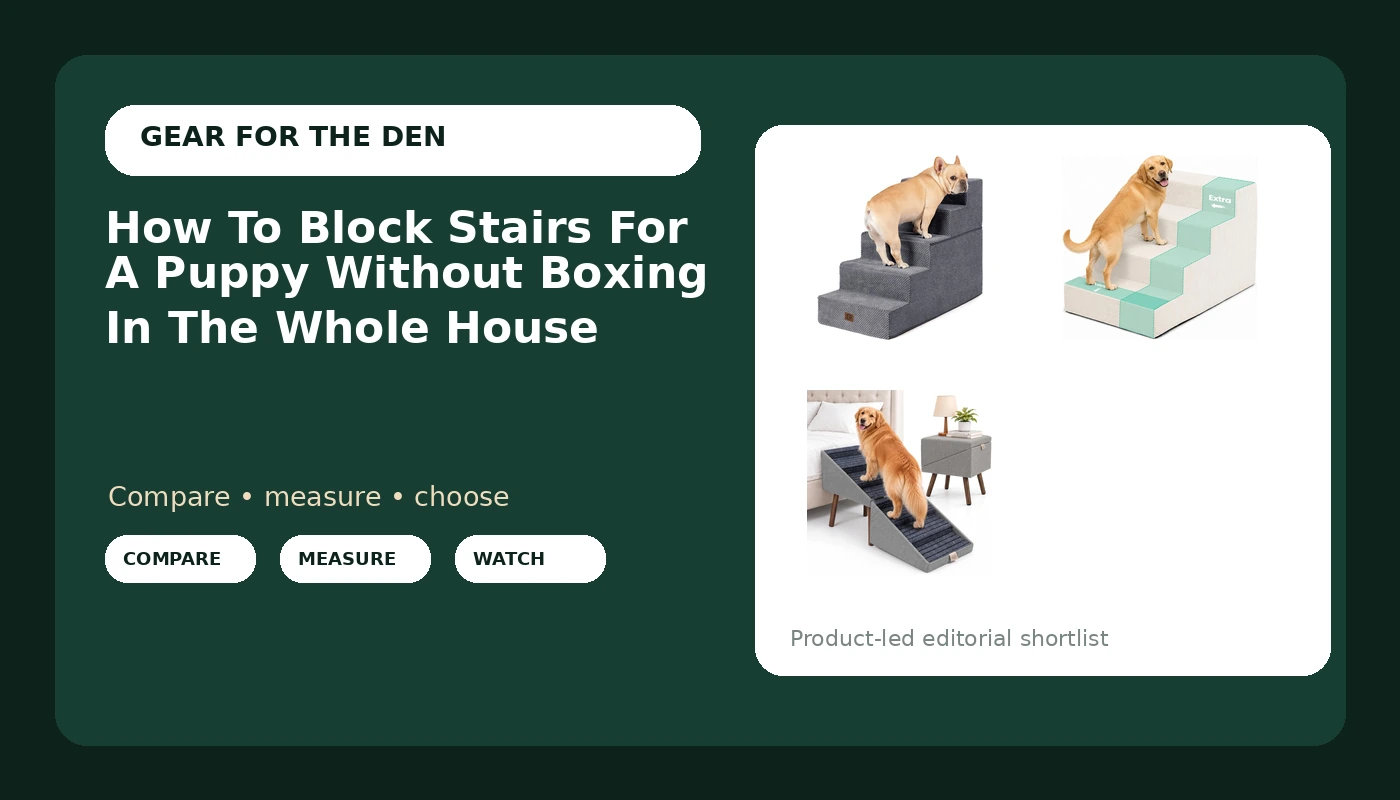
What most people picture when they imagine the correct block stairs for a puppy setup is a gate. The second layer is the piece of furniture, and the three units below are the ones I would put on a landing: an entry-level set of pet steps, an extra-wide set built for large dogs, and a folding wooden unit that passes as living room furniture once the puppy stage is over.
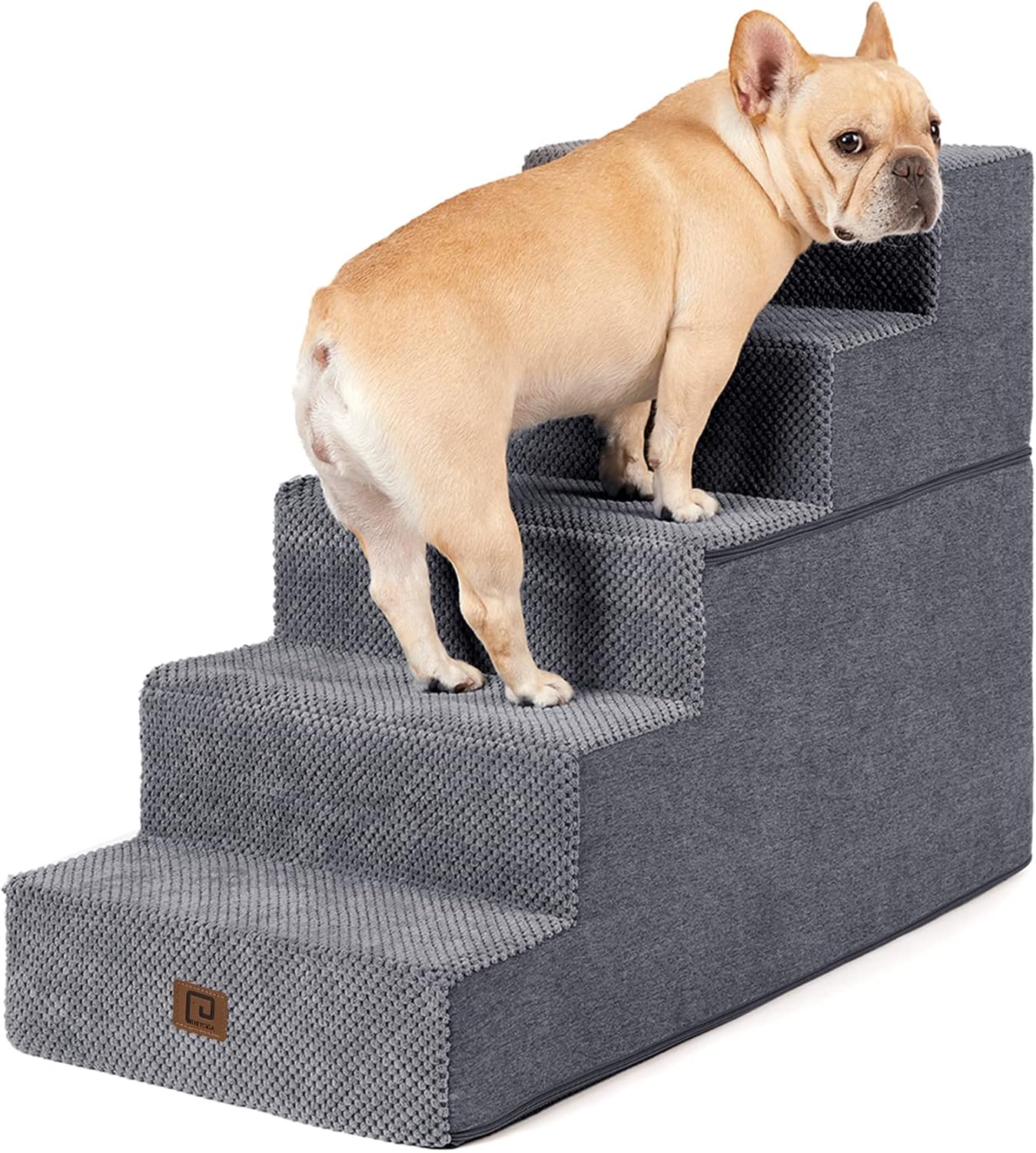
Budget pick: EHEYCIGA Dog Stairs for High Bed 22.5" H, 5-Step Dog Steps, Grey
Budget pick
EHEYCIGA Dog Stairs for High Bed 22.5" H, 5-Step Dog Steps, Grey
This is the entry point of the three, and the one I would buy first if the opening is narrow. Five steps to a 22.5 inch top means a shallow rise per step, which is exactly what you want from the unit that is supposed to be the puppy's legal climb. A steep three-step unit is a climbing challenge. A shallow five-step run is furniture a young puppy can actually use.
Check current Amazon price.
On a landing, the trade-off is footprint. Five steps spread the run out, so this unit takes more floor depth than a three-step set at the same top height. Measure the landing depth in step two below before you order, and be honest about the doorway it will sit beside.
Flaws but not dealbreakers: A light grey cover on a landing collects everything a puppy tracks in, so check the listing for whether the cover is removable and washable before you commit.
The buyer this fits: a household with a small to medium puppy, a narrow opening, and no plans to own a giant breed.
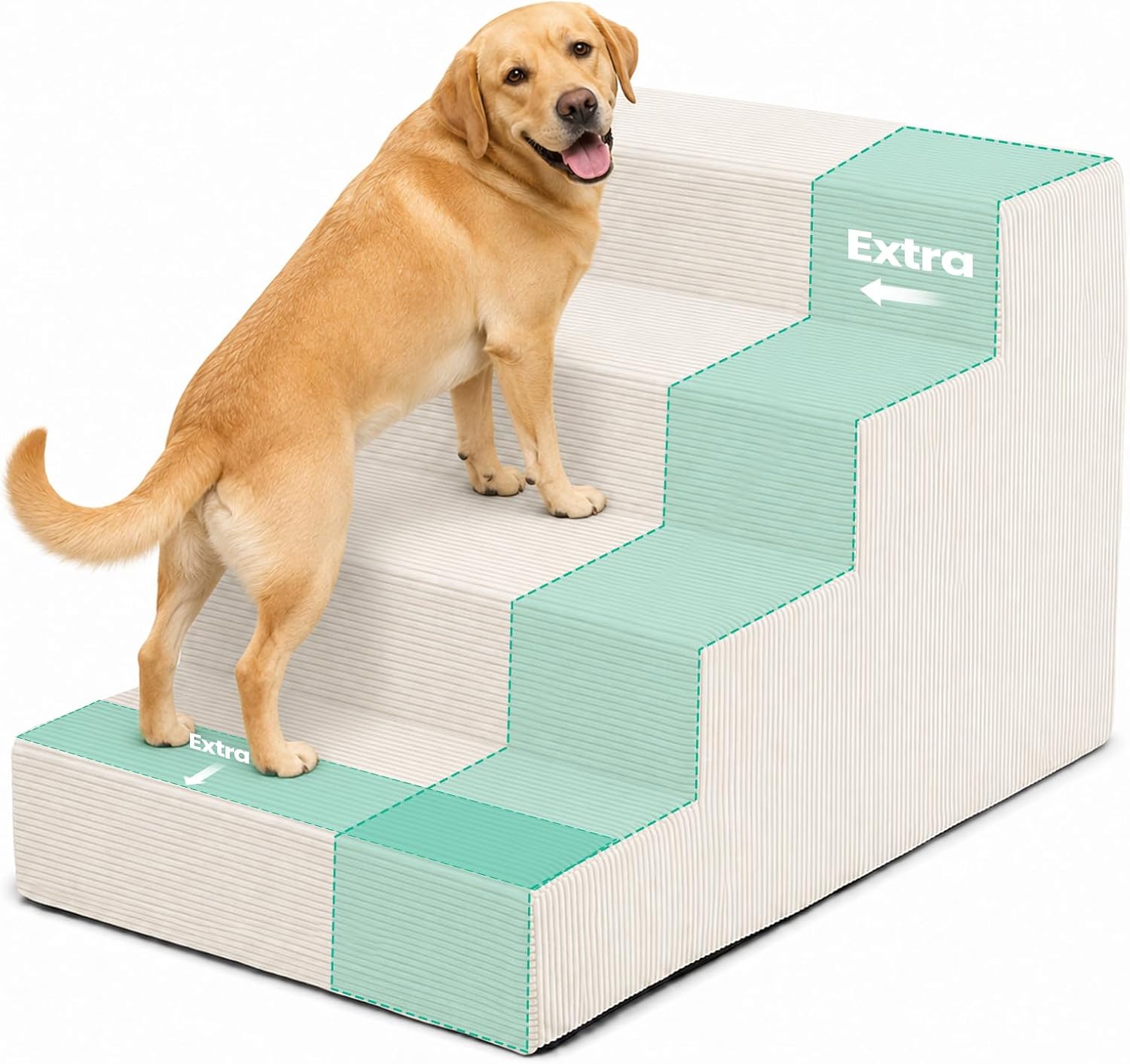
Runner-up: Kuitenz Dog Stairs for Large Dogs, 24" H Extra Wide Pet Steps for High Beds
Runner-up
Kuitenz Dog Stairs for Large Dogs, 24" H Extra Wide Pet Steps for High Beds
Extra wide is the whole reason this one is here. A wide unit covers more of the floor beside the newel post, and the gap between the edge of a step set and the wall is exactly where puppies squeeze through. If your opening is wide, or your puppy is a large breed that will be forty pounds before the stairs stop being a risk, this is the unit that does not get smaller as the dog gets bigger.
Check current Amazon price.
The 24 inch top also means it sits taller than the entry pick, so it reads as a real barrier rather than a low stool. The cost is obvious: it takes more floor, and a wide unit in a narrow hallway is a shin-bruiser.
Flaws but not dealbreakers: Width cuts both ways. A unit that covers the gap on one side of the landing can block the doorway on the other.
Buy this if you have a large-breed puppy, a wide opening, or a landing that has to double as a place to drop a leash and a pair of shoes.
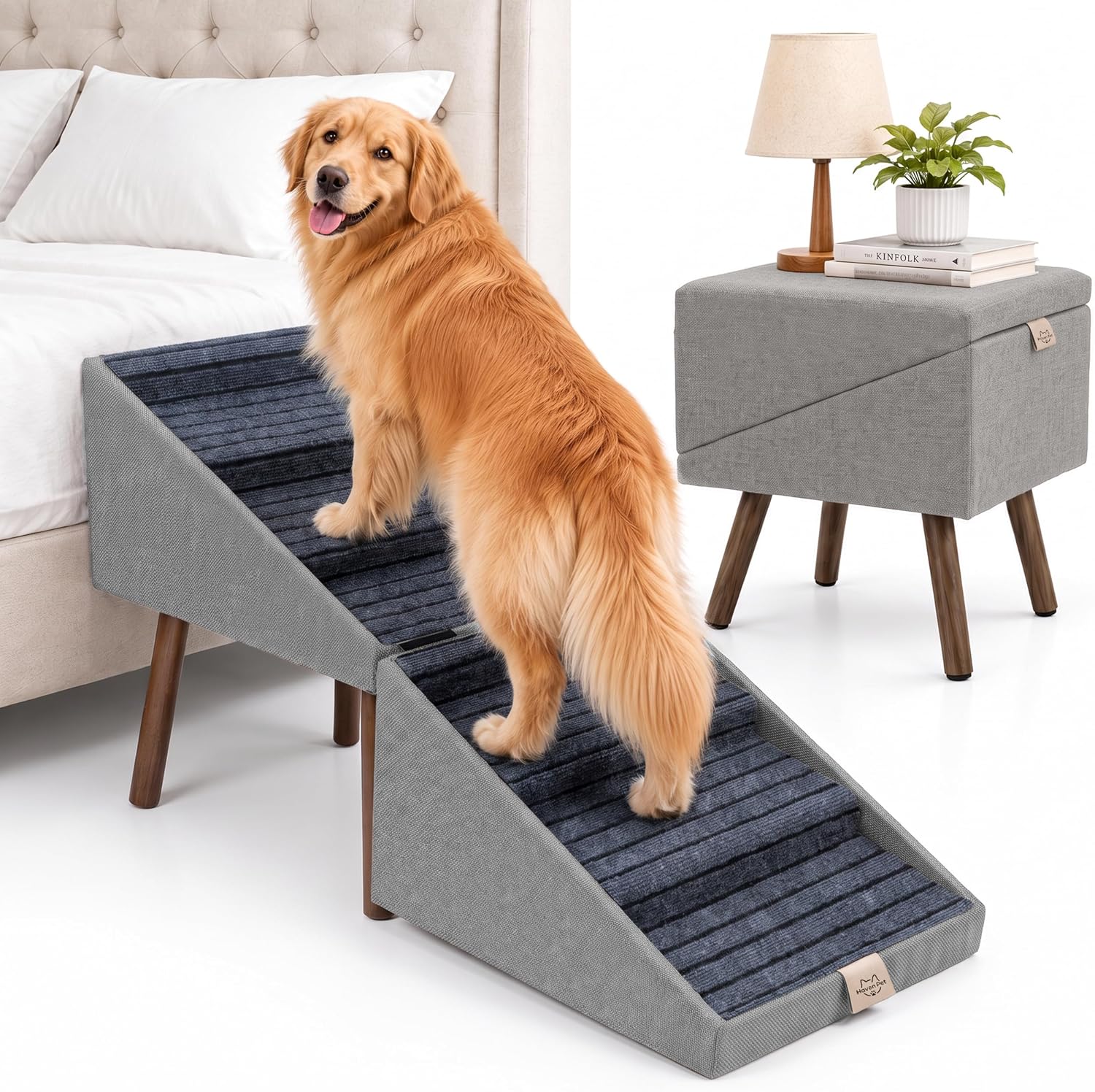
Upgrade pick: Haven Pet Wood Foldable Ottoman Dog Stairs, for High Beds & Large Dogs
Upgrade pick
Haven Pet Wood Foldable Ottoman Dog Stairs, for High Beds & Large Dogs
This is the one that stops looking like pet gear. Wood frame, ottoman profile, folds flat. In a living room where the staircase opens into the seating area, that matters more than any spec, because the barrier you leave in place is the barrier that works. A piece you resent looking at is a piece that ends up in the garage by week three.
Check current Amazon price.
The folding frame is the other half of the pitch. During the day it blocks the bottom of the run; in the evening it folds into a footstool or an extra seat. Wood also takes a wipe better than fabric, which matters on a landing where wet paws land.
Flaws but not dealbreakers: A wood unit is furniture, so it is heavier than a fabric step set and it is not the thing you throw in the wash. If your puppy is a chewer, wood is also the material that shows teeth marks.
Buy this if the staircase sits in the middle of your living space and you want the barrier to disappear when guests arrive.
How to block stairs for a puppy, step by step
Eight steps, in order. The order matters, because step two decides what you are allowed to buy in step three.
Step one: List every run the puppy can reach. Not every staircase in the house needs hardware. Puppies need the run between them and the bedrooms, the run down to the basement, and the short three-step drop into a sunken living room that nobody thinks of as stairs. Walk the house at puppy height, then decide which openings get hardware and which get furniture.
Step two: Measure the opening and the landing. Width at the mounting point, depth of the landing, height of the bottom riser, and the distance from the newel post to the wall. Landing depth is the number people skip, and it is the number that decides whether a step unit fits in front of the first riser at all. If the landing is shallow, you are shopping for a gate and a mat, not a five-step unit.
Step three: Pick the layer type. The correct block stairs for a puppy setup usually combines two of three options. A hardware-mounted gate screws into studs and is the only type I would put at the top of a run. A pressure gate belongs at the bottom only, because a puppy can push it out. A physical blocker, meaning a step unit, an ottoman, or a playpen panel, is the layer that fills floor space and gives the puppy somewhere legal to climb.
Step four: Set gate height and check bar spacing. Gate height needs to clear the point where a puppy can hook its front paws over the top rail, and climbers need more height than the box suggests. Bar spacing is the other half of the check: if a gap is wide enough for the puppy's head, the puppy will get its head through it and panic. Look at the bottom frame too, since a wide floor bar is a trip hazard on a landing and a chew target for a teething puppy.
Step five: Count panels before you count on coverage. Panel count is what closes the last few inches at the wall. Configurable panel systems wrap a corner or a newel post; a single fixed gate does not. If the opening is wider than the gate, the extra width gets closed with a panel or a second gate, never with a stack of boxes a puppy can climb.
Step six: Park the step unit on the landing. Base flat on the floor, lowest step facing into the room, unit pushed tight against the newel post side so there is no squeeze gap. The goal is not that the puppy uses the steps. The goal is that the floor in front of the staircase is occupied, and that the only climb left is a shallow, stable one that is not the stairs.
Step seven: Cover the top of the run. This is where serious injuries happen, and it is where a pressure gate is not an option. Hardware gate, into studs, opening away from the stairs so it never swings out over the drop. If the top landing is too narrow for a gate, the honest answer is a door that latches.
Step eight: Protect the base and retest as the puppy grows. Put a mat at the bottom of the run, and watch mat thickness, because a thick mat under a pressure gate changes the fit. Look for washable fabric and a waterproof layer, since the base of the stairs is where wet paws and accidents land. Then re-run the checklist every few weeks: gate height, bar spacing, latch reach, and whether the puppy can now clear the step unit.
The competition and why it lost
The retractable mesh gate is the most common first purchase and the one I would skip for stairs. Mesh sags, and a puppy that pushes at the bottom of a sagging panel finds the gap. It is fine in a doorway where you are standing on the other side.
The wooden accordion gate has the same problem in a different shape: gaps open at the wall as the gate extends, and wood is the material a teething puppy targets first.
A playpen wall works if you have the panel count to reach both walls, but it eats a room and it is a barrier you will be stepping over for a year.
The crate is the option people ask about most, and a crate is not a block. If you go that route, crate size matters more than most owners expect: too large and the puppy has room to build up speed, too small and you have traded a stair risk for a stress problem. Cover ventilation matters as well, especially if the crate sits near a heat register or in a hallway with no airflow. That is a separate guide, and it is linked above.
The competitor that wins on price every time: closing the door. If the staircase has a door, use it, and spend the money on the landing instead.
What this all costs
Three tiers of step unit, one gate, one mat, and a tape measure you already own. The entry unit is the least expensive of the three, the extra-wide large-dog unit sits in the middle, and the folding wood ottoman is the top of the range. Check current Amazon price on each before you decide, because these are the kind of listings that move.
The gate and its mounting hardware are a separate line, and so is the mat. Budget for the gate first, because the gate is the layer that actually stops the climb. The step unit is the layer that makes the gate work harder and gives the puppy a legal alternative to the stairs.
The piece worth noticing is the lifespan. A gate comes down when the dog can do stairs safely. The step unit stays, because a five-step run to a high bed is also what an older dog needs when jumping stops being comfortable. You buy it for the puppy stage and keep it for the senior stage, which is about as close to a free purchase as pet gear gets.
The ideal block stairs for a puppy setup is boring: a gate you have to unlatch, a step unit on the landing, a mat under both, and a checklist you re-run every few weeks. Nothing about it is clever, and that is the point. Clever barriers are the ones puppies defeat.