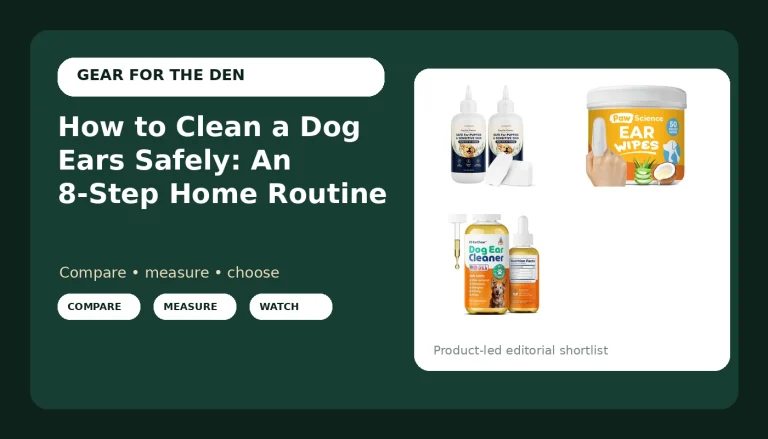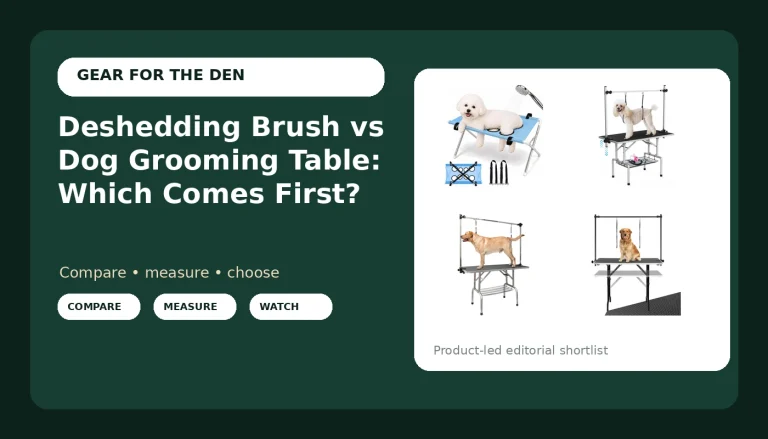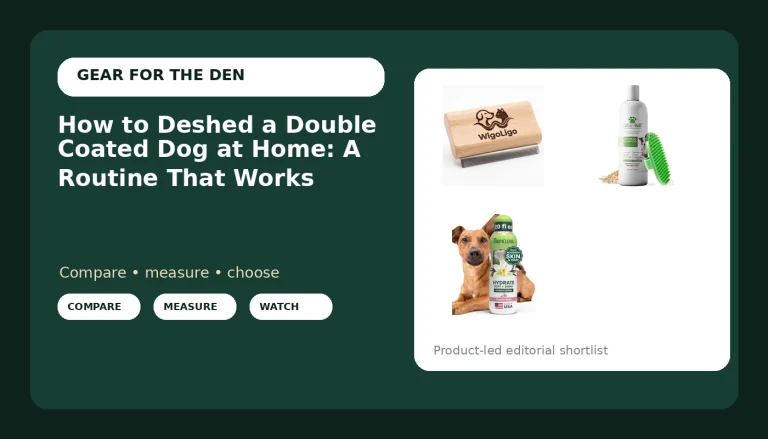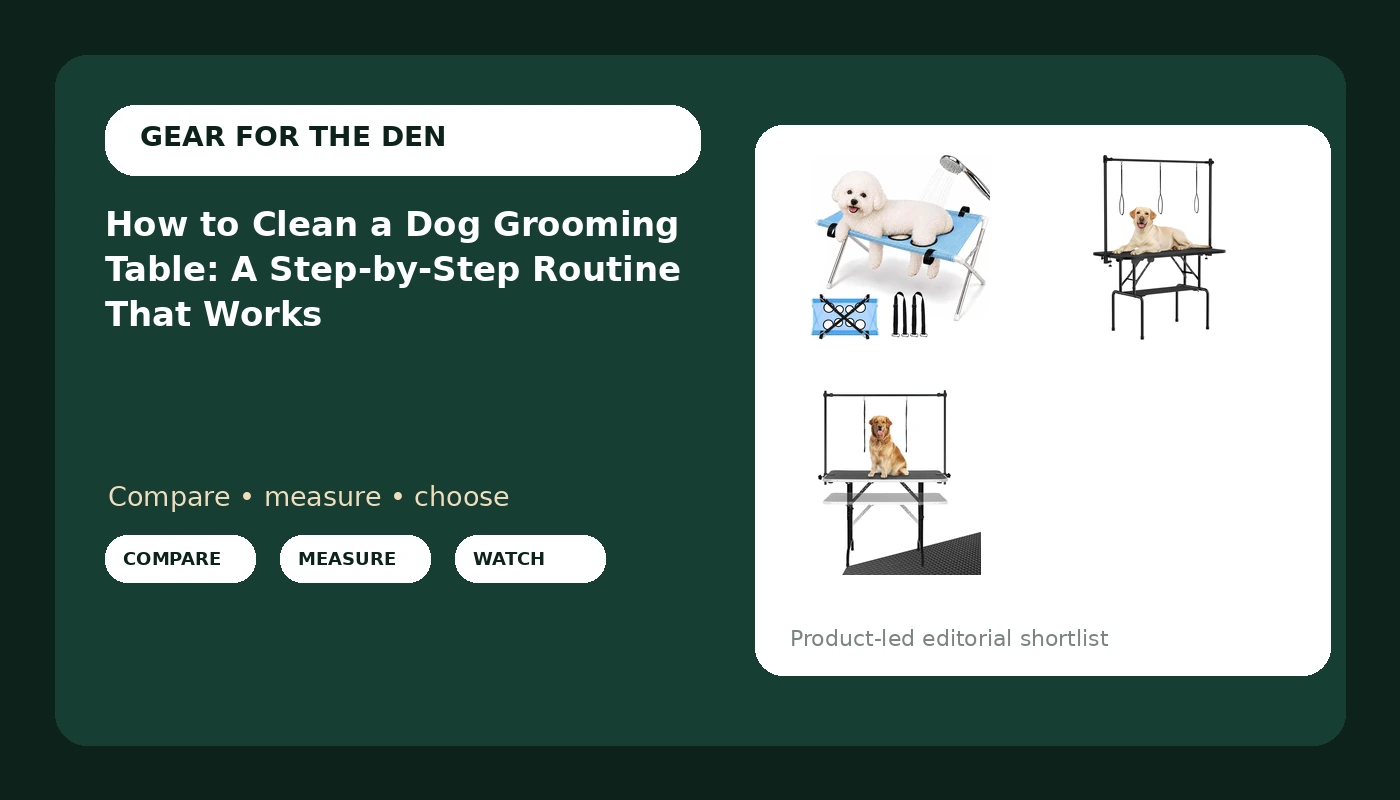
Knowing how to clean a dog grooming table is the difference between a table you keep for a decade and one that smells like a wet kennel by the second spring. Tables almost never fail because of weight. They fail at the seams, where loose hair mixes with water, dries into a paste, and starts working on the finish underneath. The noose, the arm joint, and the mesh tray are the other three spots that quietly give up.
The good news is that most of this job is dry work. Hair that never gets wet never turns into paste, and paste is what pushes you toward a scraper and a bad mood. If you have been putting off learning how to wash a dog grooming table because you were worried about rust, the worry is fair and the fix is boring: strip it dry, wash it mild, dry it fast.
Below is the full routine, plus the three tables that make it easy. One of them is closer to a sling than a table, and if you groom a small dog over a kitchen sink, that is the one you want. If your dog has a thick undercoat, the routine below still applies; it just runs more often.
Why you should trust me
I have cleaned more grooming tables than I can count, in a house with a double-coated shepherd mix and a terrier who sheds like a hay baler. I have also replaced a tabletop that went soft at the seam because I got lazy for a month, which taught me more than any care sheet.
What I know comes down to materials. A textured rubber deck, a molded plastic deck, and a powder-coated steel frame each want something different, and the cleaner that rescues one will wreck another. I keep the care sheets, I follow them, and I will tell you when a manufacturer's own instructions are the reason a table is failing.
The other thing I know is what not to do. Bleach on rubber dries it and cracks it. A hose on a tabletop pushes water straight into the seam. A wet noose left looped on the arm is the fastest way to rust a frame, and it is the most common mistake I see in home setups.
That is the standard this article holds to. No spray-and-pray, no bleach on rubber.
How I picked and how I tested
The three tables below are the three I would put in a home setup, and the reason is not the sticker on the frame. It is how each one behaves when the hair comes off. Four things decide that.
First, the deck. A deep texture with a visible seam between deck and frame collects hair, and a molded lip lets you sweep it off in one pass. Second, drainage. A mesh tray under the top catches clippings, and a solid tray just holds water. Third, the arm and noose hardware, because a noose that will not come off the arm never gets fully clean. Fourth, fold and height adjustment, because a table you cannot stow is a table that lives in your way.
I also look at the small stuff that decides whether the weekly wipe takes two minutes or ten: rounded corners, height pins you can reach with a wet hand, and whether the grip handle on the frame is a real handle or a stamped bump.
The test I apply is a cleaning test, not a load test. Coat type drives how much hair lands on the table, not how much table you need. A single-coated dog and a double-coated dog need the same routine at different frequencies, and the table that wins is the one that makes the frequent version quick.
Grooming tables you need before you clean a dog grooming table
Pick the table first, because the surface you buy decides the cleaner you use. All three of these fold, all three take a noose, and all three are easier to keep clean than the folding picnic table someone will inevitably suggest.
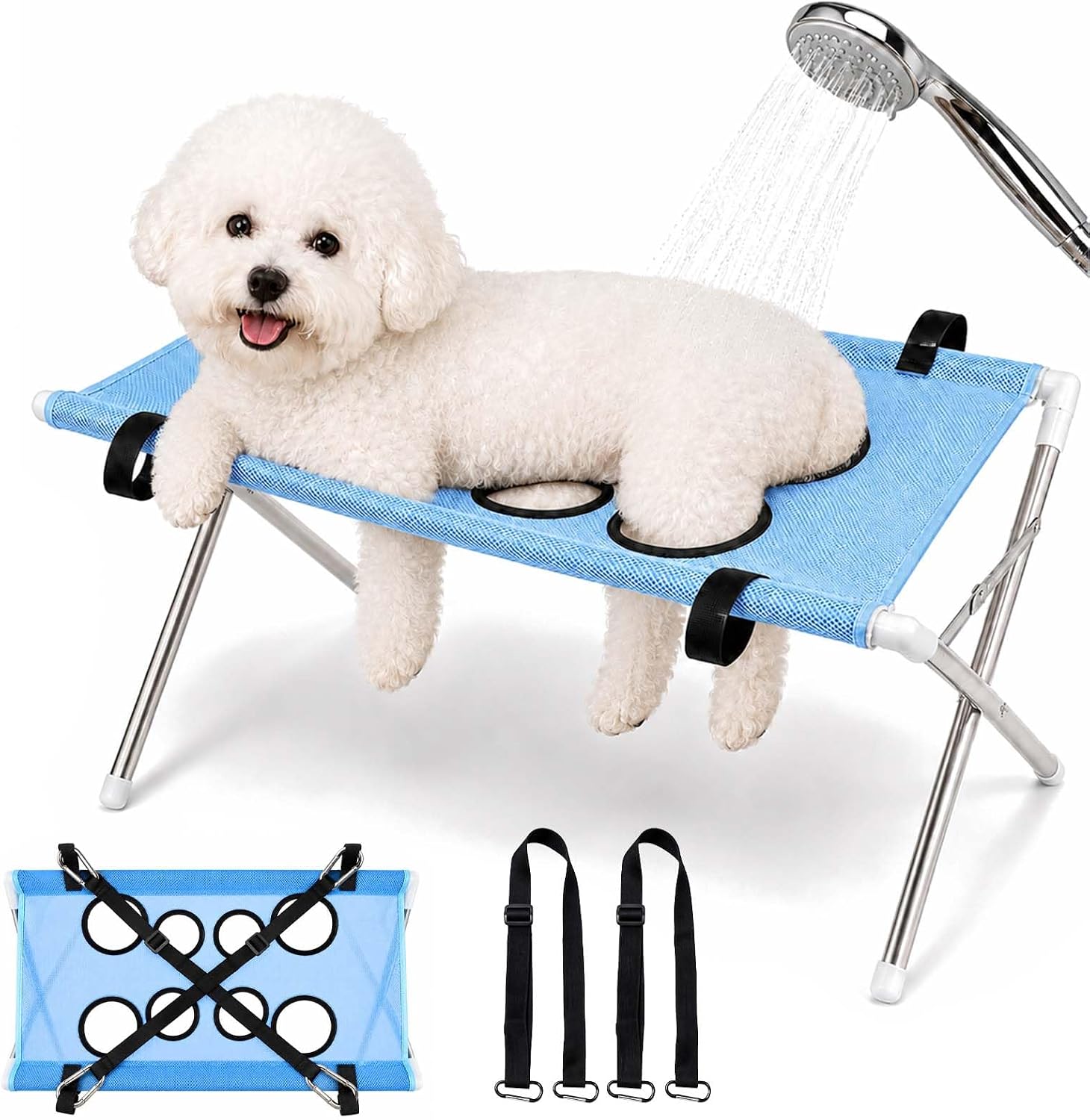
Budget pick: Dog Bath Hammock with Stand, Foldable Grooming Table for Small Pets,Blue
Budget pick
Dog Bath Hammock with Stand, Foldable Grooming Table for Small Pets,Blue
Check current Amazon price.
This is the odd one out and the one I would hand a small-dog household first. It is a hammock-style sling on a folding stand rather than a hard deck, so there is no seam for hair to pack into and no tabletop to scrub. The fabric lifts off, and you can rinse it in a sink while the stand dries.
The sling also means the dog's feet never stand in rinse water, which is exactly why it suits a dog that hates a wet floor.
Flaws but not dealbreakers: It is built for small pets and the stand is light. A 60-pound dog is not the customer here. The fabric holds a little water at the edges, so wring it and hang it rather than folding it damp.
Anyone with a cat, a puppy, or a dog under about 20 pounds who grooms in a kitchen or on a patio will get the most out of this one.
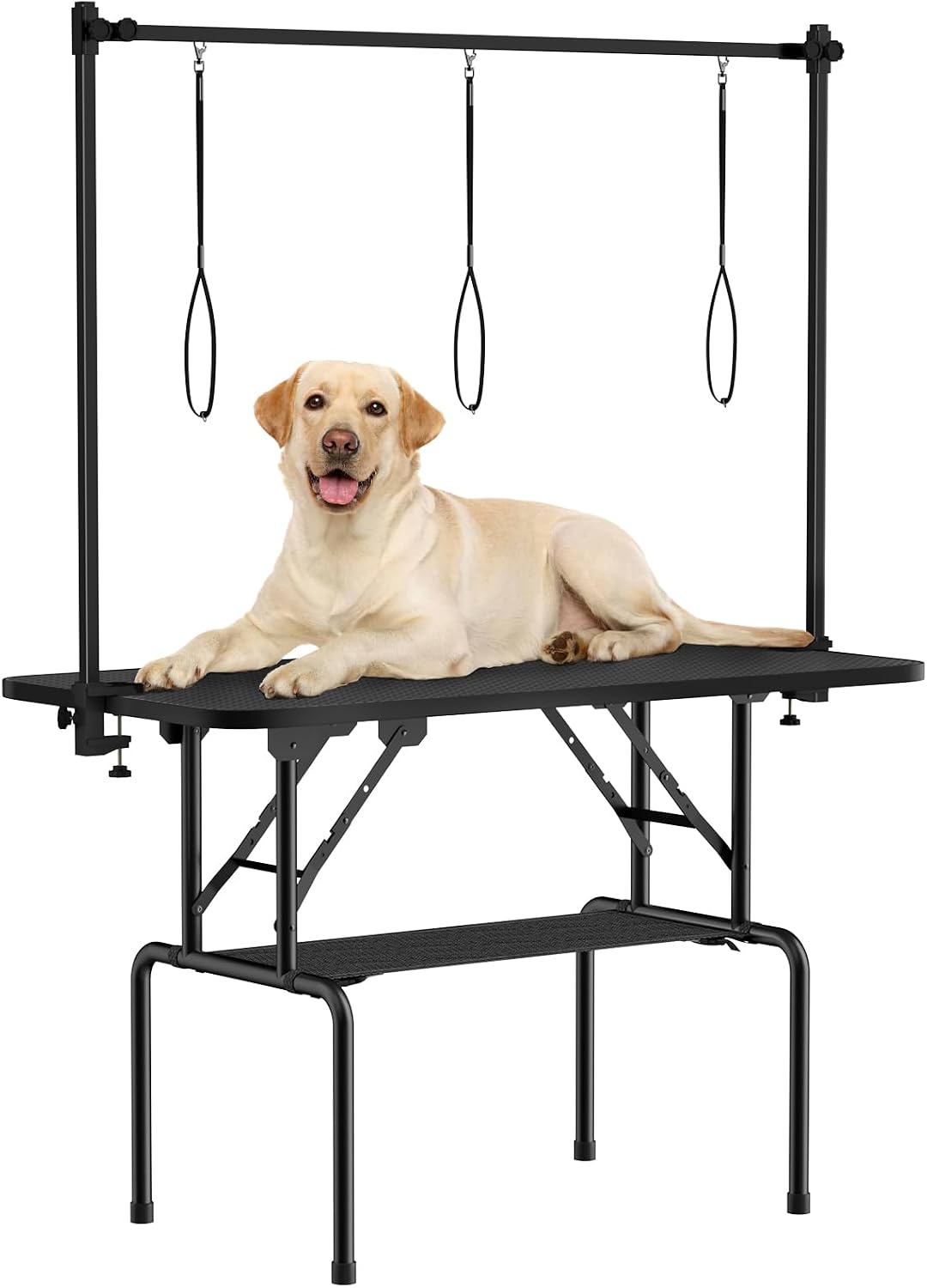
Runner-up: ROOMTEC 46 Inch Dog Grooming Table,Foldable Pet Grooming Tables at Home with Adjustable Arm,Nooses, Mesh Tray
Runner-up
ROOMTEC 46 Inch Dog Grooming Table,Foldable Pet Grooming Tables at Home with Adjustable Arm,Nooses, Mesh Tray
Check current Amazon price.
The ROOMTEC is the middle of the road in the best sense. A 46-inch deck is long enough for a medium dog to stand square, the arm adjusts, and the mesh tray is the detail that matters most for cleaning: clippings and rinse water fall through instead of pooling on a shelf. It folds flat against a wall, which is how most people will store it.
The noose comes off the arm, so you can wash it on its own and let the hardware dry separately. That one design choice saves more rust than any spray. The frame wipes down with the same damp cloth you used on the deck, which keeps the whole job to one bucket and one towel.
Flaws but not dealbreakers: The mesh tray is the part everyone forgets. Empty it after every session or it becomes the source of the smell you are trying to remove.
Anyone grooming a medium dog at home a few times a month will find this the easiest table of the three to keep clean.
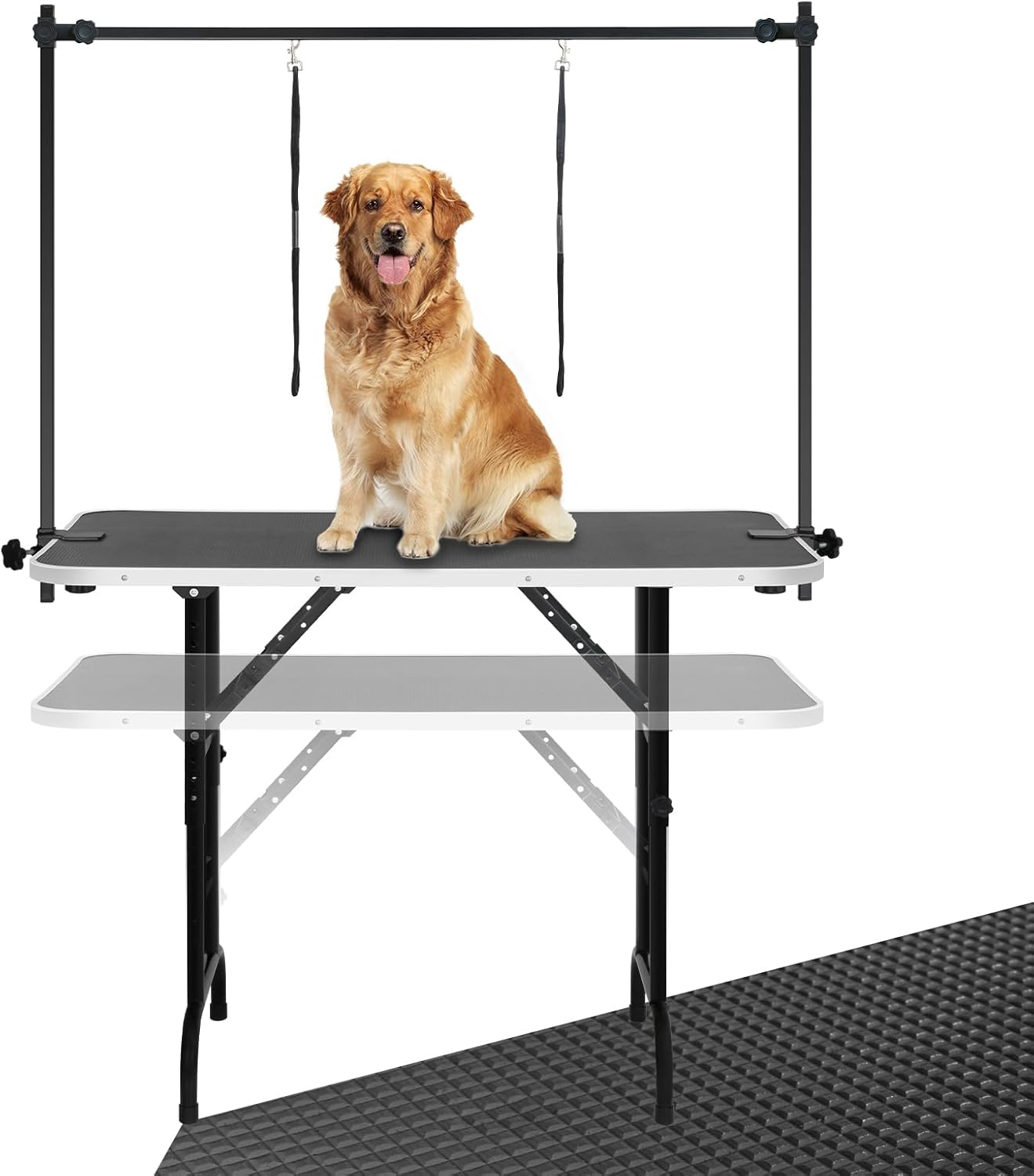
Upgrade pick: LEIBOU 45'' Height Adjustable(23''~33.8'') and Foldable Pet Dog Grooming Table Heavy Duty Iron Frame with H-Shape Grooming Arm & Noose, Maximum Capacity Up to 260lbs, Black
Upgrade pick
LEIBOU 45'' Height Adjustable(23''~33.8'') and Foldable Pet Dog Grooming Table Heavy Duty Iron Frame with H-Shape Grooming Arm & Noose, Maximum Capacity Up to 260lbs, Black
Check current Amazon price.
The LEIBOU is the table you buy when you are done bending. The height adjustment runs from a low setting up to counter height, and the H-shape arm gives you a place to hang a second noose without the assembly twisting. The iron frame is heavy, and heavy is what you want when a wet dog leans on the arm.
For cleaning, the height range is the hidden feature. Raise it to your own working height and you can wipe the deck without stooping. Drop it low and you can reach the underside of the frame, which is where rust starts. The height pins are the one spot that deserves a look every month, because a pin that sticks is a pin that will not lock.
Flaws but not dealbreakers: It is the heaviest of the three to move and the folding mechanism wants two hands. Set it up where you plan to use it.
Anyone grooming a large or heavy dog, or anyone who grooms often enough to care about their own back, should start here.
The actual workflow: how to clean a dog grooming table
Do this weekly in about ten minutes, then once a month with the hardware off. If the table has been used on a dog with a skin issue, treat every session as the monthly version. You can wash a dog grooming table with dish soap and warm water, but the drying matters more than the soap.
Step one: Strip the table. Take off the noose, the grooming arm, the mesh tray, and anything else that lifts off. Everything you remove is something you can clean properly, and everything you leave on is a place water hides. If your clippers are sitting on the deck, move them, and pop the blade guard off before it collects a mat of hair.
Step two: Dehair it dry. Brush the deck with a stiff-bristle brush before any water touches it. The bristle type matters less than the dryness. A dry pass lifts most of the hair, and a wet pass turns that same hair into a smear you have to scrub twice. Work the corners and the seam at the frame. On a dog with a thick undercoat, this step decides how long the rest of the job takes.
Step three: Know your surface. Textured rubber, molded plastic, and painted steel do not want the same cleaner. Rubber wants a soft brush and mild soap. Plastic can take a slightly firmer scrub. Painted steel wants you to skip abrasive pads entirely, because a scratch is where rust begins. When in doubt, read the table's own care sheet.
Step four: Mix a mild solution. Warm water and a few drops of dish soap handle most grime. If you would rather use something dog-specific, dilute a dog shampoo and keep the oatmeal concentration low. A heavy, creamy shampoo leaves a film on a rubber deck that then holds dust. A rough 1:10 dilution is plenty for a tabletop.
Step five: Wash the deck. Work in small sections with a microfiber cloth or a soft brush, and go with the grain of the texture rather than across it. Do not flood the surface. A damp cloth that you rinse often beats a soaked one, because water is the thing you are trying to keep out of the seams. Rinse the cloth in a bucket rather than under a running tap over the table, so the water lands in the bucket and not in the joint.
Step six: Do the contact points. The noose, the arm, the height pins, and the grip handle all get touched with wet hands and dirty hair. Wipe the arm with a damp cloth and dry it right away. Wash the noose in the sink with the same mild solution and rinse it hard. If the noose is fabric over a cord, squeeze it out and hang it rather than leaving it looped on the arm.
Step seven: Dry it completely. Towel the deck, then give it airflow. A small fan or a hair dryer on the cool setting moves water out of the corners and the seam far faster than sitting air will, and a table that is dry in ten minutes does not rust. Keep the dryer moving. Heat parked on one spot is how you lift a painted finish.
Step eight: Reset and store. Put the tray back only after it is dry, wipe the frame with a dry cloth, and fold the table or drop it to its low setting. Sweep or vacuum the floor under it, because the hair you knocked off the deck is now on the floor and it will find its way back up. A folded table takes less floor space and collects less dust, and a table that stays folded between sessions stays cleaner by default.
Weekly, that is the whole job. Monthly, add three things: wash the noose in the sink with the rest of the laundry load, wipe the underside of the frame, and check the height pins for stiffness. A dry cloth on the pins is usually enough. If you use a force dryer or a shop vacuum near the table, finish after the dog is off, because motor noise on top of a wet dog is a good way to undo a calm session.
The competition and why it lost
A hydraulic lift table is the obvious alternative, and for a large dog with a handler who grooms every week it is the right answer. It is also heavier, it adds a hydraulic cylinder to keep dry, and it costs more than most home groomers need to spend. More moving parts means more crevices, and crevices are the enemy of a clean table.
A wall-mounted grooming arm bolted over a counter is a clever space saver. You still clean the counter, the wall behind it, and the bracket, so you have traded one surface for three.
A tub with a built-in grooming loop is a fine place to wash a dog and a bad place to dry one, because the dog stands in a puddle the whole time. A folding plastic utility table from a hardware store is cheap, and it will hold a small dog, but the thin top flexes under a noose and the seams trap water.
Show tables with a suede or felt top look wonderful and hate water, so they belong in a different conversation. And the grooming tools themselves, the clippers, the brushes, and the dryers, live in their own guide; this one is about the surface they all sit on.
None of those are bad products, and none of them are wrong for the person who already owns one. They are solving a different problem than this article solves, which is keeping a home table clean without taking it apart every weekend.
What this all costs
The hammock is the least expensive of the three by a wide margin, and the two hard-deck tables sit close enough together that the difference is not the deciding factor. Check current Amazon price on each and compare, because these listings move.
Spread the cost over five years of monthly grooming and the per-use number gets small enough that the argument stops being about money and starts being about your back and your floor. The hammock wins on storage and on small dogs. The ROOMTEC wins on a middle-size dog and a wall to lean against. The LEIBOU wins if you groom a heavy dog or groom often.
Add the consumables: a second noose so one can be drying while one is on the arm, a couple of microfiber cloths that live only with the grooming gear, a stiff-bristle brush for the dry pass, and a mild shampoo you are happy diluting. None of that is expensive, and all of it makes the routine for how to clean a dog grooming table faster the second time you do it.
The math is the easy part. Ten minutes of dry work after each session is what separates a table that lasts from a table that smells. Do it once properly, keep the noose and the tray dry, and the table stops being a chore and starts being gear.