Double coats are two coats stacked on one dog. There is a dense, woolly undercoat that insulates against heat and cold, and a longer topcoat of guard hairs that sheds water and dirt. The undercoat is the part that ends up on your couch, your baseboards, and the inside of your car door. Learning how to deshed a double coated dog at home is mostly about getting that undercoat out on a schedule, before it packs into felted mats against the skin.
Most people attack the problem with the wrong tool and the wrong order. They grab a fine-toothed blade, drag it down the spine until the dog flinches, then give up and book a groomer. The order that works is looser than that: brush the dry coat first, loosen the undercoat in sections, then wash and condition so the dead hair releases and the skin underneath stops itching. Shaving a double coat is not a shortcut. It strips the insulation and the guard hairs, and the coat often grows back patchy and coarse.
Below is the gear I keep next to the tub and the eight step routine I run during the twice a year blowouts, plus a lighter weekly pass in between. The routine is the same whether you have a husky, a shepherd, a golden, or a chow mix. What changes is the pressure you use and the tool you reach for, and both of those follow the coat type in front of you.
Why you should trust me
I have lived with double coated dogs for most of my adult life, which adds up to a lot of Saturdays on a bath mat with a brush in one hand and a treat pouch in the other. I have made every mistake in this guide. I shaved a coat that should never have been shaved. I bathed a dog before brushing him and watched loose undercoat turn into wet felt that had to be cut out. I leaned too hard on a blade tool with a dog who did not deserve it.
What I took from all of that is simple. The coat does not care what you spent on the tool. It cares about order, pressure, and repetition. Get those three right and an inexpensive brush will outperform a grooming appointment you had to book three weeks out.
How I picked and how I tested
The three products below are the ones that stayed in my grooming bin after a full year of use, and they earned that spot by passing the same four checks.
The first is coat type. A tool that glides through a short double coat like a lab's will clog in seconds in a husky's woolly undercoat, so every pick has to handle medium to long hair without yanking. The second is the bristle type and the edge on the teeth. I want teeth that catch dead undercoat and let it go, not teeth that scrape skin. The third is the grip handle. If my hand cramps after five minutes, the tool is useless, because a real deshedding session runs twenty minutes or more. The fourth is what happens after the bath. Shampoo and conditioner have to rinse clean, because residue left in a dense undercoat attracts dirt and holds odor.
Every product here went through the same sequence in my house: dry brush, bath, condition, dry, final pass. Anything that made a dog flinch, or that left the coat dull and full of static, did not make the list. If you want a wider view of this category, the best dog brushes for shedding roundup covers the rest of the field.
Gear you'll need to deshed a double coated dog at home
There is no single ideal deshed a double coated dog at home kit that fits every dog, but three items cover the whole routine: a brush that reaches the undercoat, a shampoo that calms the skin the undercoat was sitting on, and a conditioner that lets a comb glide so you are not tearing hair out at the end.
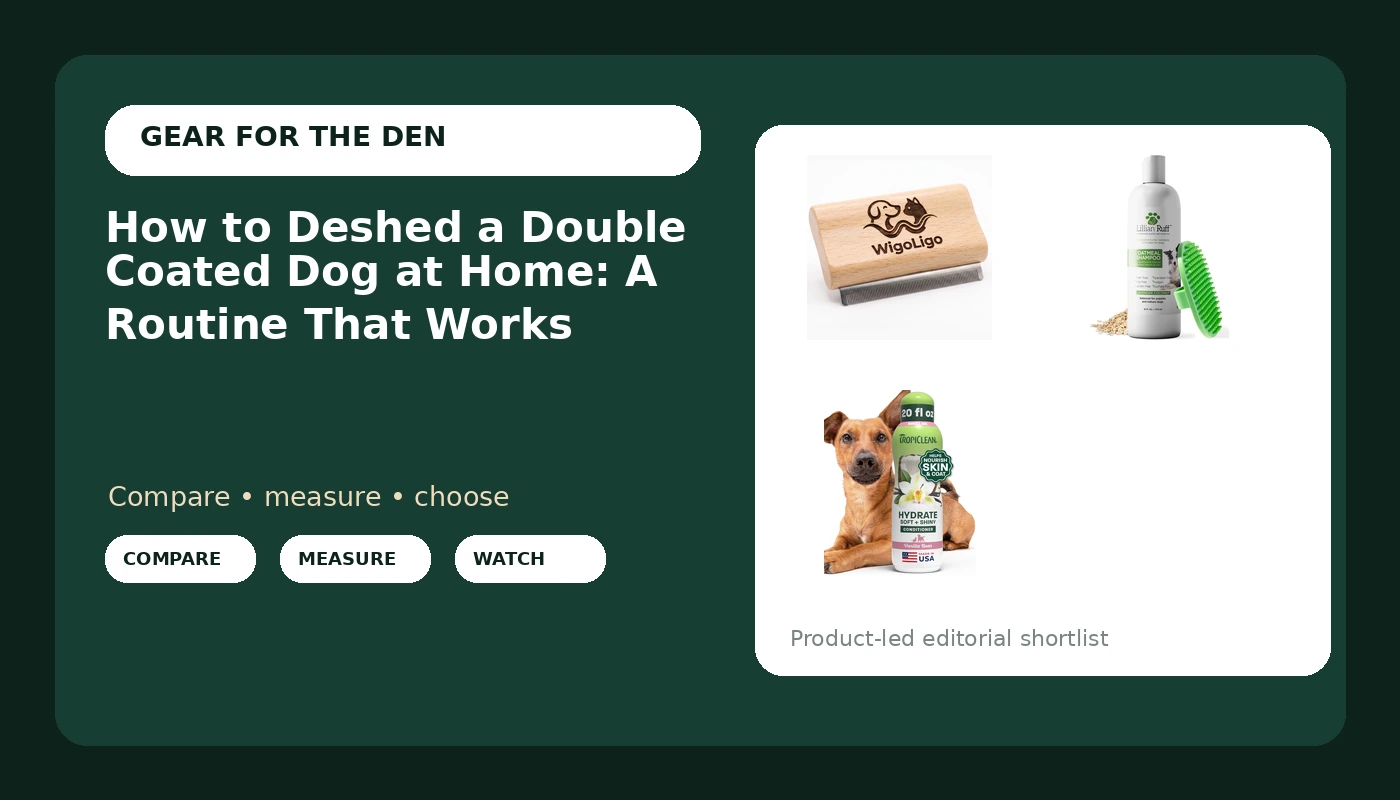
Our pick: WigoLigo Pet Deshedding Brush for Dog, Wooden Dog Brush Shedding Tool, Pet Pro Grooming Tool for Short, Medium & Long Hair Cats and Dogs | 5 Inch
Our pick
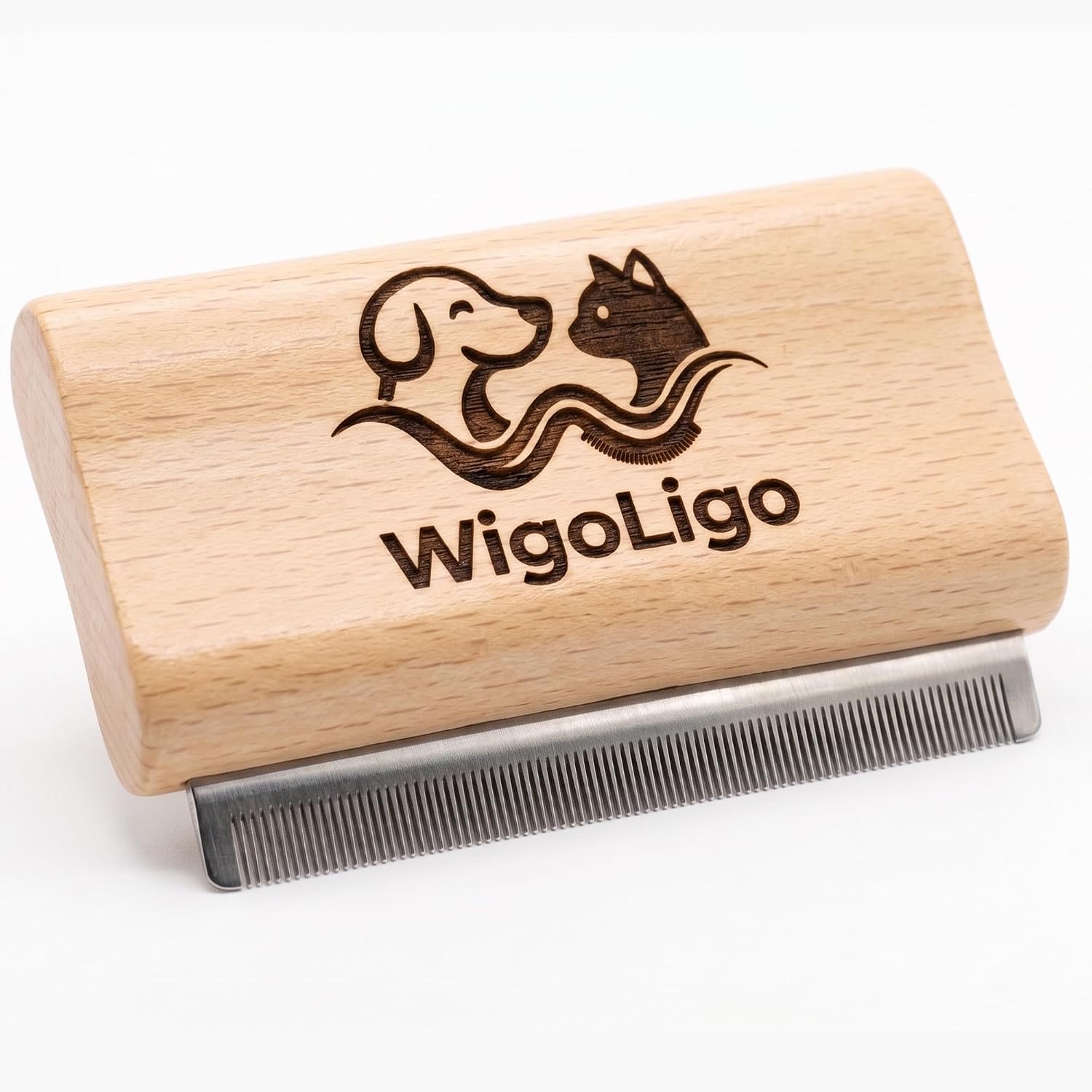
WigoLigo Pet Deshedding Brush for Dog, Wooden Dog Brush Shedding Tool, Pet Pro Grooming Tool for Short, Medium & Long Hair Cats and Dogs | 5 Inch
This is the tool that does the actual deshedding, and it is the one I pick up first on a dry coat. The head is five inches across, wide enough to cover a rib section in two or three passes without feeling clumsy around the shoulders and the base of the tail. The wooden body gives you something solid to hold, and it does not flex the way a thin plastic handle does, so you can keep steady pressure instead of sawing at the coat. Check current Amazon price.
The listing covers short, medium, and long hair on both dogs and cats, which matters in a house with more than one animal. It is a brush, not a clipper, so there is no blade guard to think about and no way to buzz a bald patch into a coat.
Flaws but not dealbreakers: Wood needs to be kept dry. Do not leave it sitting in a puddle on the tub ledge, and pull the undercoat out of the teeth after every session so the hair does not felt between them.
Anyone with a medium or long double coat, from a shepherd to a husky to a fluffy mixed breed, should start here.
Bath prep pick: Lillian Ruff PRO Formula Deodorizing Oatmeal Dog Shampoo – Calms Itching & Allergies, Ultra-Nourishing Dry Skin Relief – Oatmeal, Aloe, Coconut Oil, Lavender & Provitamin B5 – Made in USA 16oz+Brush
Bath prep pick
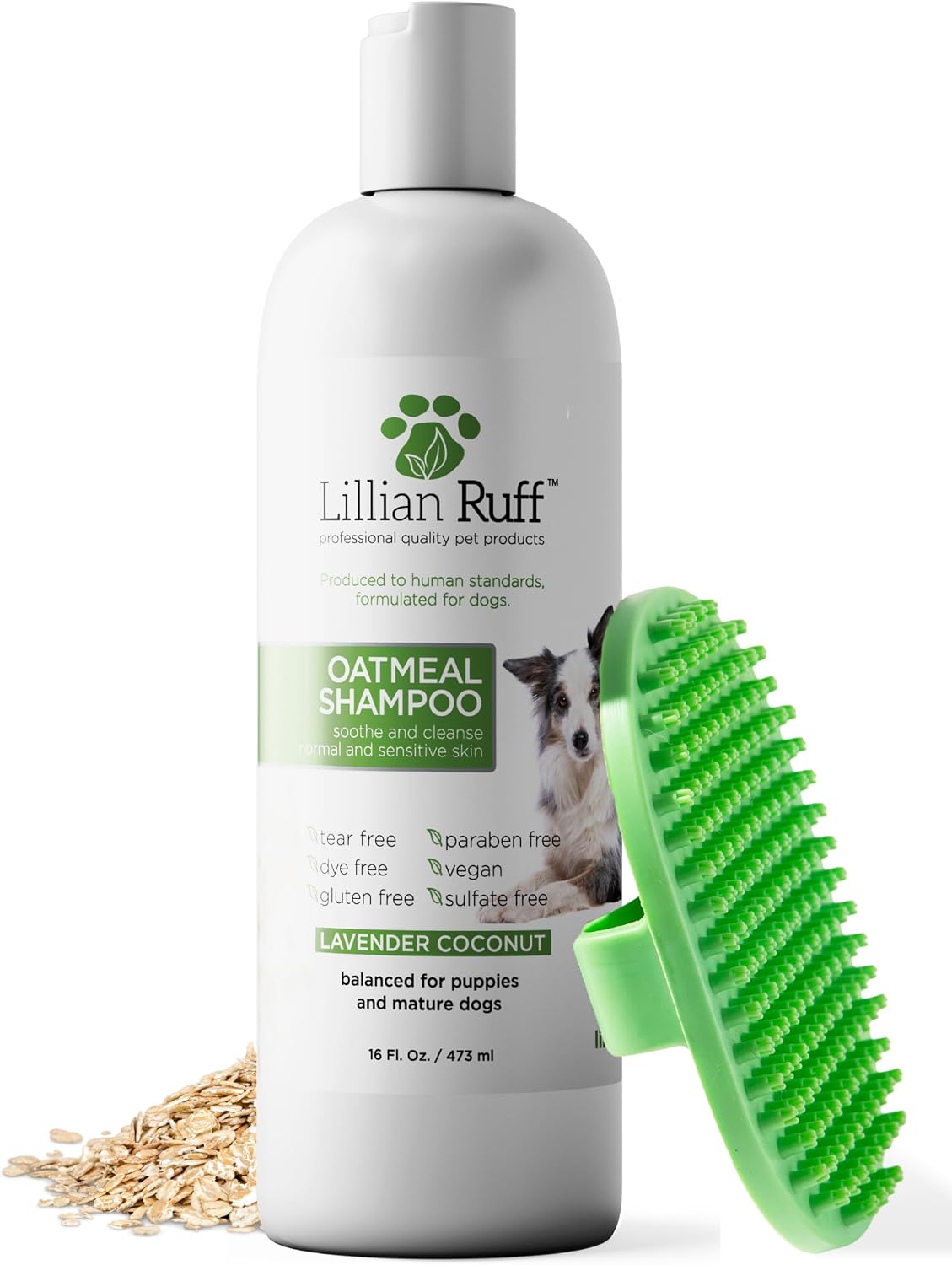
Lillian Ruff PRO Formula Deodorizing Oatmeal Dog Shampoo – Calms Itching & Allergies, Ultra-Nourishing Dry Skin Relief – Oatmeal, Aloe, Coconut Oil, Lavender & Provitamin B5 – Made in USA 16oz+Brush
Deshedding is a skin project as much as a coat project. When you pull a dense undercoat apart, you expose skin that has been covered and warm for months, and that skin itches. This shampoo is built around oatmeal, and the label also lists aloe, coconut oil, lavender, and provitamin B5. Check current Amazon price.
Oatmeal concentration is the detail worth comparing across labels, because a bottle built around oatmeal does something different from one that lists it near the bottom, and this one is sold as a deodorizing, itch-calming formula rather than a plain wash. It is made in the USA, the bottle is sixteen ounces, and it ships with a brush, which is handy for working lather down through a thick coat instead of just across the top.
Flaws but not dealbreakers: Oatmeal formulas can be thick, and thick shampoo is easy to leave in. Rinse twice as long as you think you need to, especially at the chest and the back of the thighs.
Anyone whose dog gets itchy and dander-heavy during a blowout will get the most out of this one.
Finishing pick: TropiClean Dog Conditioner, Easy Detangling & Moisturizing Conditioner, Puppy Safe, Made in The USA, Kiwi & Cocoa Butter Scent, 20oz.
Finishing pick
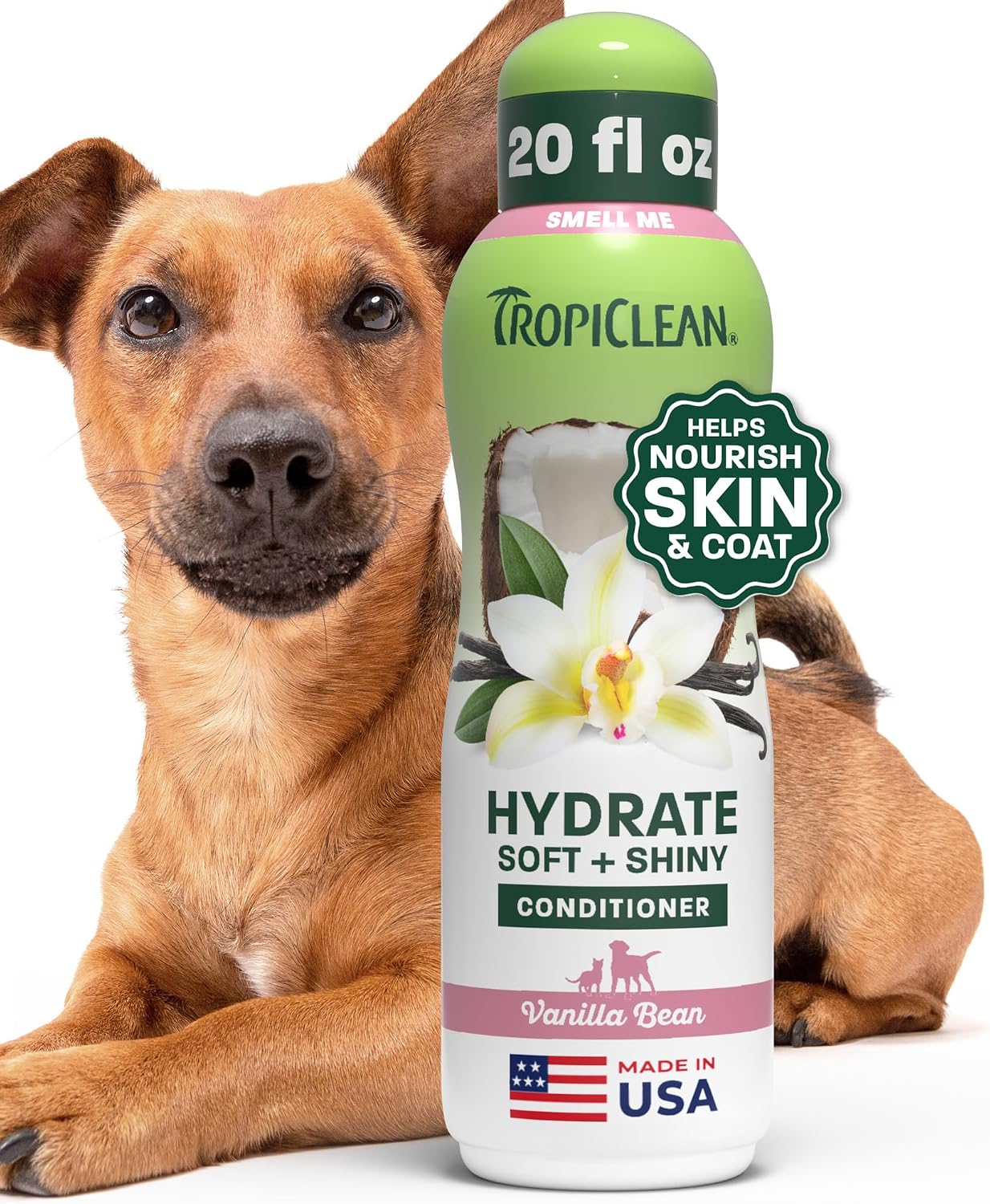
TropiClean Dog Conditioner, Easy Detangling & Moisturizing Conditioner, Puppy Safe, Made in The USA, Kiwi & Cocoa Butter Scent, 20oz.
Conditioner is the step most people skip and the one that saves the most coat. After a bath, the hair shafts are roughed up and the coat grabs itself, which means your next brushing session pulls instead of glides. A detangling conditioner smooths the shaft and cuts the static that makes undercoat stick to your forearms. This one is a moisturizing formula with a kiwi and cocoa butter scent, it is labeled puppy safe, and it is made in the USA in a twenty ounce bottle. Check current Amazon price.
A twenty ounce bottle goes a long way on a large dog, because you dilute conditioner in a cup and pour it over the coat rather than working it in straight from the bottle.
Flaws but not dealbreakers: The kiwi and cocoa butter scent is noticeable on a wet dog. It fades as the coat dries, but if your dog sleeps on your bed, you will smell it for an evening.
Anyone with a coat that mats at the armpits and behind the ears will notice the difference on the first comb-out.
The actual deshedding workflow
This is the routine, and it is the correct deshed a double coated dog at home order: dry brush, bath, condition, dry, brush again. Read all eight steps before you start, because the order matters more than the pressure.
Step one: Read the coat type. Put your hand flat on the dog's side and push the hair forward against the grain. What you see tells you what you are dealing with. A short double coat shows skin and short, dense fur. A long double coat lifts in a thick curtain with a softer woolly layer underneath. That undercoat is the target. If the hair feels packed and springy rather than loose, you are already looking at felted undercoat, and you should work those spots in small sections instead of long strokes.
Step two: Set up the space. Pick a room with a door you can close and a floor that wipes clean, because you will be picking up hair for days otherwise. Lay down a towel, put the treats within reach, and set the brush, the shampoo, and the conditioner where you can grab them without leaving the dog. A non-slip mat in the tub matters more than the brush you choose, because a dog who is sliding around will not stand still for anything.
Step three: Dry brush first, always. Water tightens loose undercoat against the skin and turns it into felt. Brush the dry coat before the bath, not after. Work one section at a time, starting at the hindquarters and moving forward, so you are not bending over the dog's face while he is still deciding whether he trusts you.
Step four: Use short strokes with light pressure. Lay the brush flat and pull in short, gentle strokes in the direction the hair grows, lifting the topcoat with your free hand so the teeth reach the undercoat instead of riding on top of it. Move in lines an inch apart across the ribs, the flanks, the shoulders, and the rump. Never dig in at the spine, and stay light over the hips, where the skin is thin. If you use a blade tool or an undercoat rake instead of a brush, keep the blade guard on and stay off the belly and the inside of the legs. Stop when the brush comes up clean. More passes do not get more hair, they just irritate skin.
Step five: Bathe with diluted shampoo. Wet the dog to the skin, which takes longer than you expect on a double coat. Dilute the shampoo in a cup of warm water and pour it along the back, then work it down through the coat with your fingertips or the brush that came with the bottle. Scrub the undercoat, not the topcoat. Rinse until the water runs clear and keep rinsing after that, because oatmeal shampoo left in a dense coat will hold dirt and odor.
Step six: Condition and comb through while wet. Apply the conditioner from the shoulders back, avoiding the face and the ears. Let it sit for the time on the label, then comb through the coat with a wide-tooth comb while the conditioner is still in. This is the step where you find the mats you missed, because a comb stops dead at a mat that a brush glides over. Rinse thoroughly.
Step seven: Dry completely, and mind the airflow. Towel dry, then let the coat air dry somewhere warm, or use a pet dryer on the lowest heat setting with the airflow pointed along the coat rather than straight at the skin. If your dog has never seen a dryer, run it a few feet away first so the motor noise is not a surprise. A dog who is scared of the dryer will fight every bath after that. Never leave a damp double coat to dry overnight. That is how hot spots and that wet-dog smell start.
Step eight: Do the final pass and set the schedule. Once the coat is completely dry, brush it out one more time. This is the pass that pulls the last of the loosened undercoat, and it is usually the biggest pile of the whole day. From there, brush once a week, and daily during the two seasonal blowouts, which for most double coated dogs land in spring and fall. Clean the brush, wipe the tub, and put the conditioner somewhere you will find it next time. The routine only works if you repeat it.
The competition and why it lost
Slicker brushes, rubber curry combs, undercoat rakes, de-shedding gloves, and grooming vacuums all do something useful, and none of them are wrong tools in the right hands. They just are not the tools this routine is built around.
A slicker brush is for finishing and fluffing a topcoat, not for pulling a woolly undercoat out of a husky. It fills up in three strokes and then it is just polishing the surface. A rubber curry comb is excellent for short coats and for working shampoo into a bath, but on a long double coat it does nothing except move loose hair around.
An undercoat rake with long teeth gets deep, and it is the right call for a seriously impacted coat, but it is easy to overdo. Used on a dog with thin skin, a rake leaves brush burn along the flanks that shows up two days later. A de-shedding glove is comfortable and dogs tolerate it well, which makes it a good tool for a nervous dog and a poor tool for a big job, because the surface area is tiny.
The bladed tools that promise to strip an undercoat in one pass are the ones I would leave on the shelf for a double coat. They cut hair rather than collect it, and on a long coat they can leave the silhouette looking chopped and uneven for months. High velocity dryers and grooming vacuums are a different category entirely. A dryer is genuinely useful in step seven, but it is a power tool with real airflow and real motor noise, and a dog who has not been introduced to one slowly will not tolerate it. Start with towels.
What this all costs
The brush is a one time buy. Check current Amazon price, and then treat it like a tool: keep it dry, clean the teeth, and it will outlast several bottles of shampoo.
The shampoo and conditioner are the recurring cost, and the honest way to think about them is cost per bath rather than cost per bottle. A sixteen ounce shampoo and a twenty ounce conditioner look similar on the shelf, but a large double coated dog uses more of both per bath than a small one, and a dog who blows coat twice a year will need more baths than a dog who barely sheds. The math you actually care about is how many baths a bottle covers and whether you are buying a formula that calms skin or one that just smells good.
The last line item is time, and it is the one people underestimate. A full dry brush, bath, condition, dry, and final pass on a large double coat runs an hour and a half on a cooperative dog and longer on a dog who is new to it. Split it across two days if you have to. Brush one day, bathe the next, and the coat does not care.
That is the job. Learning how to deshed a double coated dog at home is mostly about showing up on a schedule with the right three products and letting the coat do what it already knows how to do. Keep the hair on the brush and off your floor.