The question of automatic litter box vs cat litter usually starts as robots against scoops, and it usually ends with someone buying a machine that still leaves grit on the floor. That is the part the product page skips. Whether you run a self-cleaning unit or a plain open pan, the mess outside the box comes from the same short list of variables: box size, entry height, litter depth, and what sits on the floor in front of the door. This comparison covers the gear that decides those variables in a real home, one enclosure and three mats, and it puts the four in the order I would actually buy them.
The short version: the mat matters more than the machine. A mat sized to the exit zone stops more mess than a self-cleaning box without one, the SETVSON enclosure solves sightlines and odor containment rather than tracking, and the two smaller mats are niche picks for tight corners and hard floors.
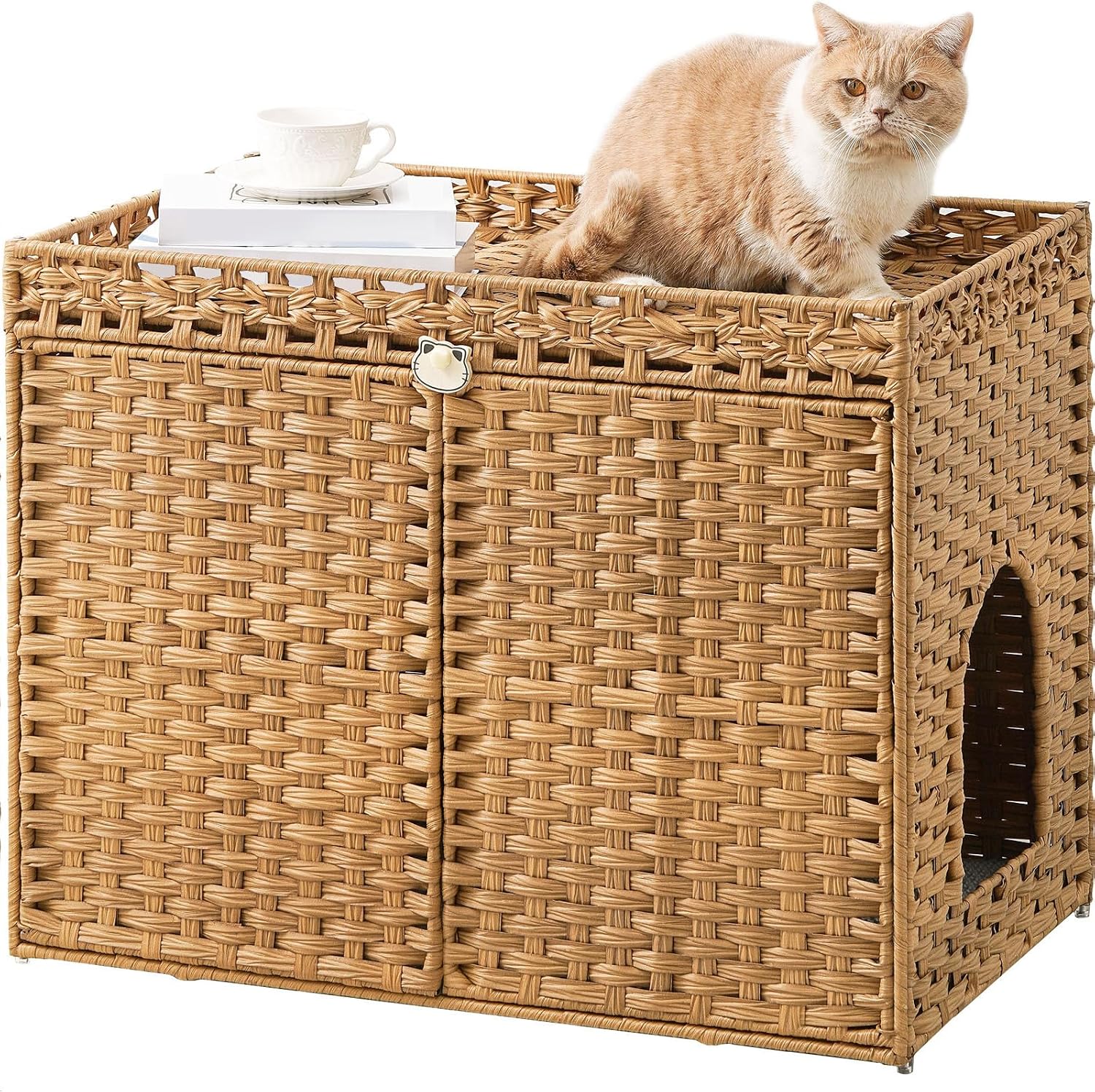
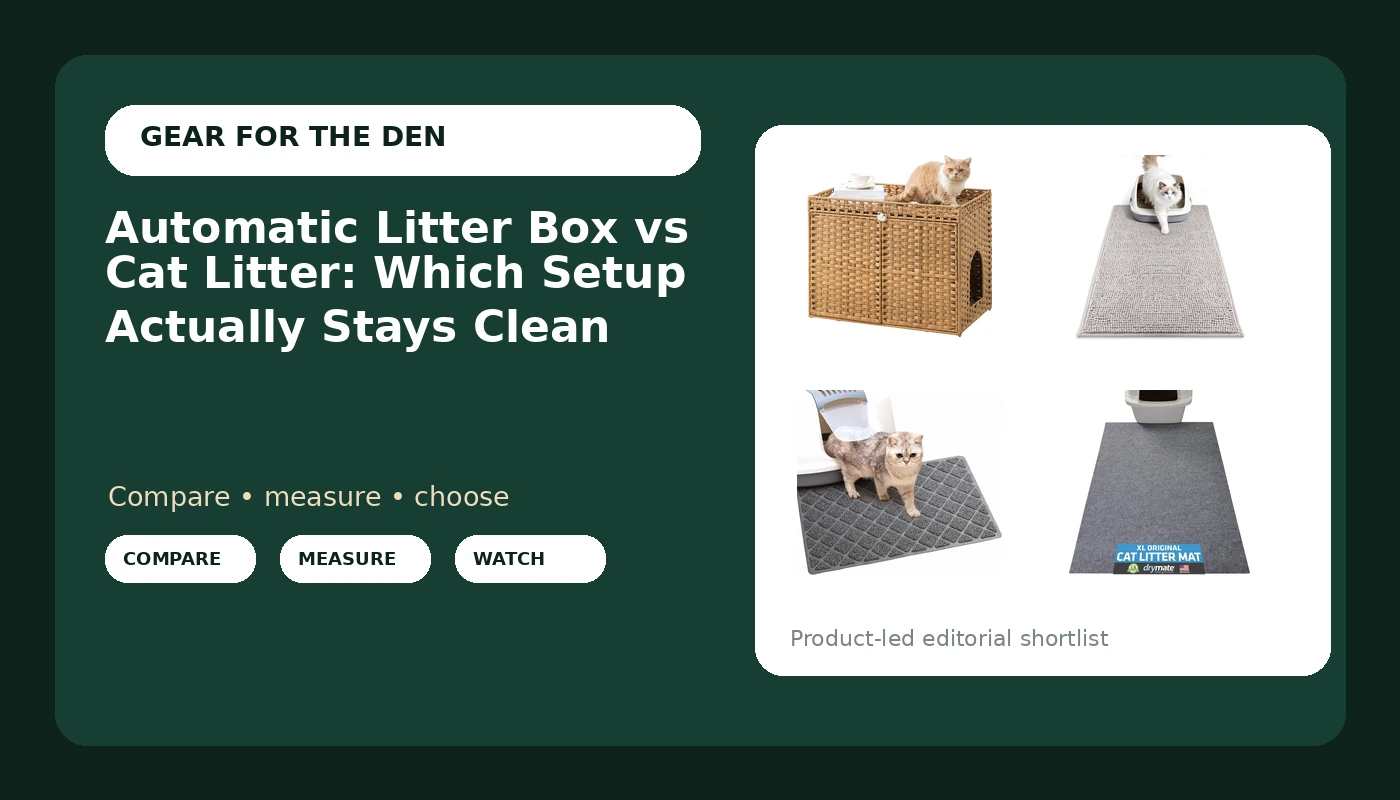
SETVSON Cat Litter Box Enclosure, Extra Large Hidden PE Rattan Natural
Hides the box completely, extra large interior, PE rattan finish passes as furniture, keeps odor and scatter in one footprint
Costs more than the three mats combined, still needs a mat, entry height and interior width have to be measured first
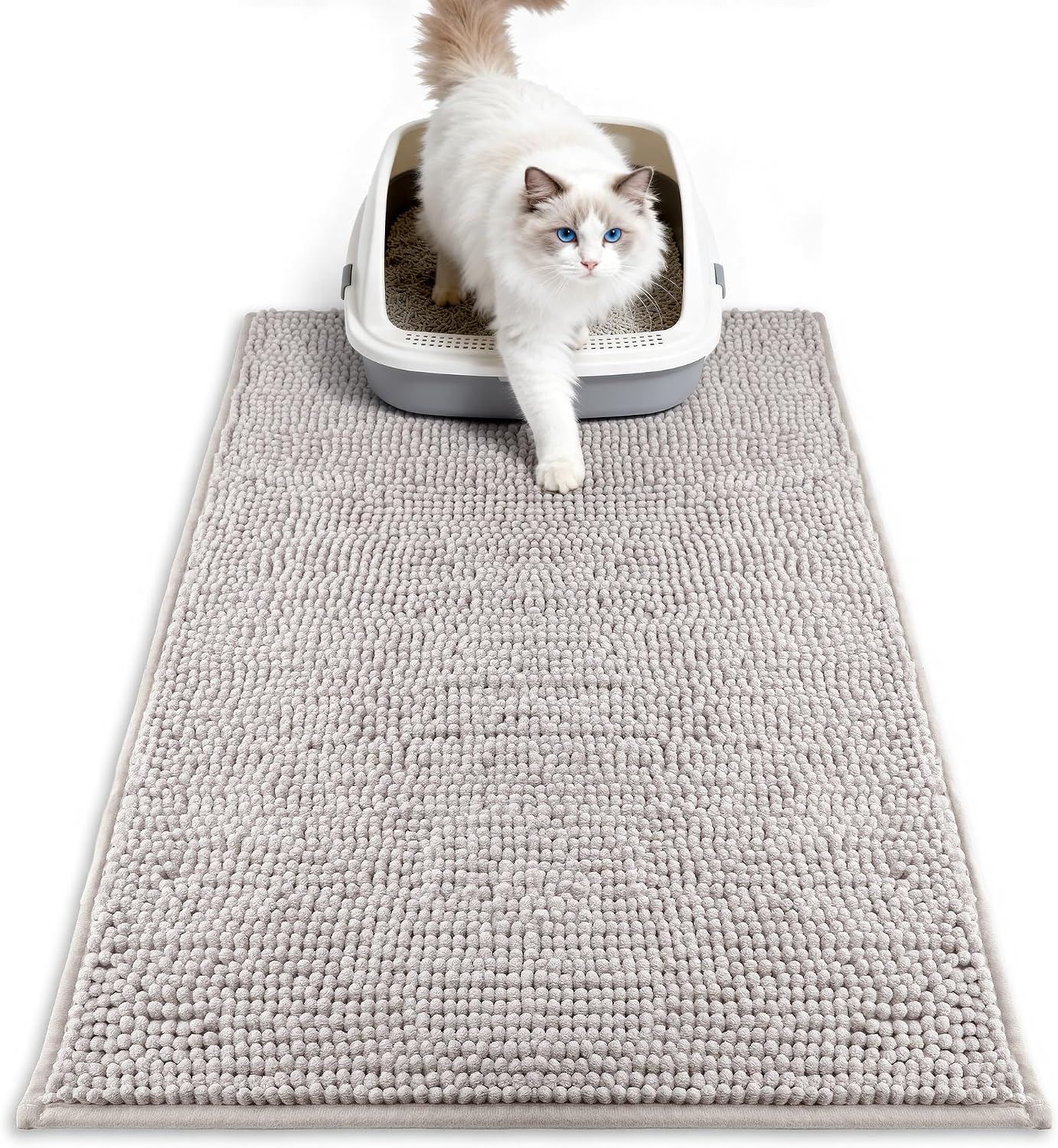
Pieviev Soft Chenille Cat Litter Box Mat, Ultra Absorbent, 28'' x 22''
Softest texture here, ultra absorbent top, 28 by 22 inches covers a wide exit for a mid-size box
Chenille holds moisture and fine clay, so it needs laundering rather than a quick shake, and it is slow to dry
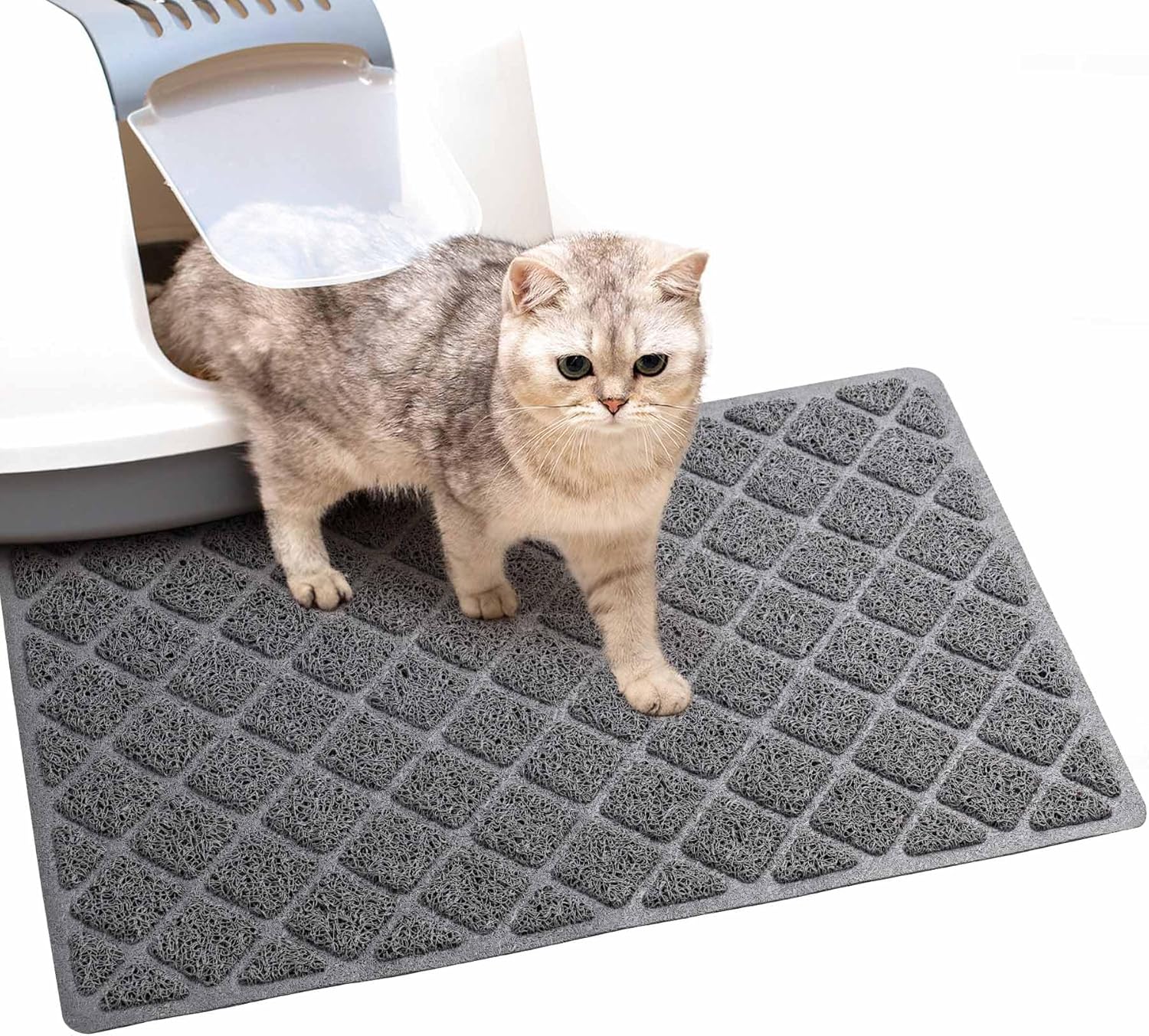
Cat Litter Box Mat,23 x 14 In,Trapping Mat Premium Durable PVC Pad,Grey
Cheapest item in the comparison, wipes clean with a damp cloth, small enough for the gap between a box and a wall
23 by 14 inches is small for a full-size box exit, PVC is less absorbent than fabric, grit escapes past the edges
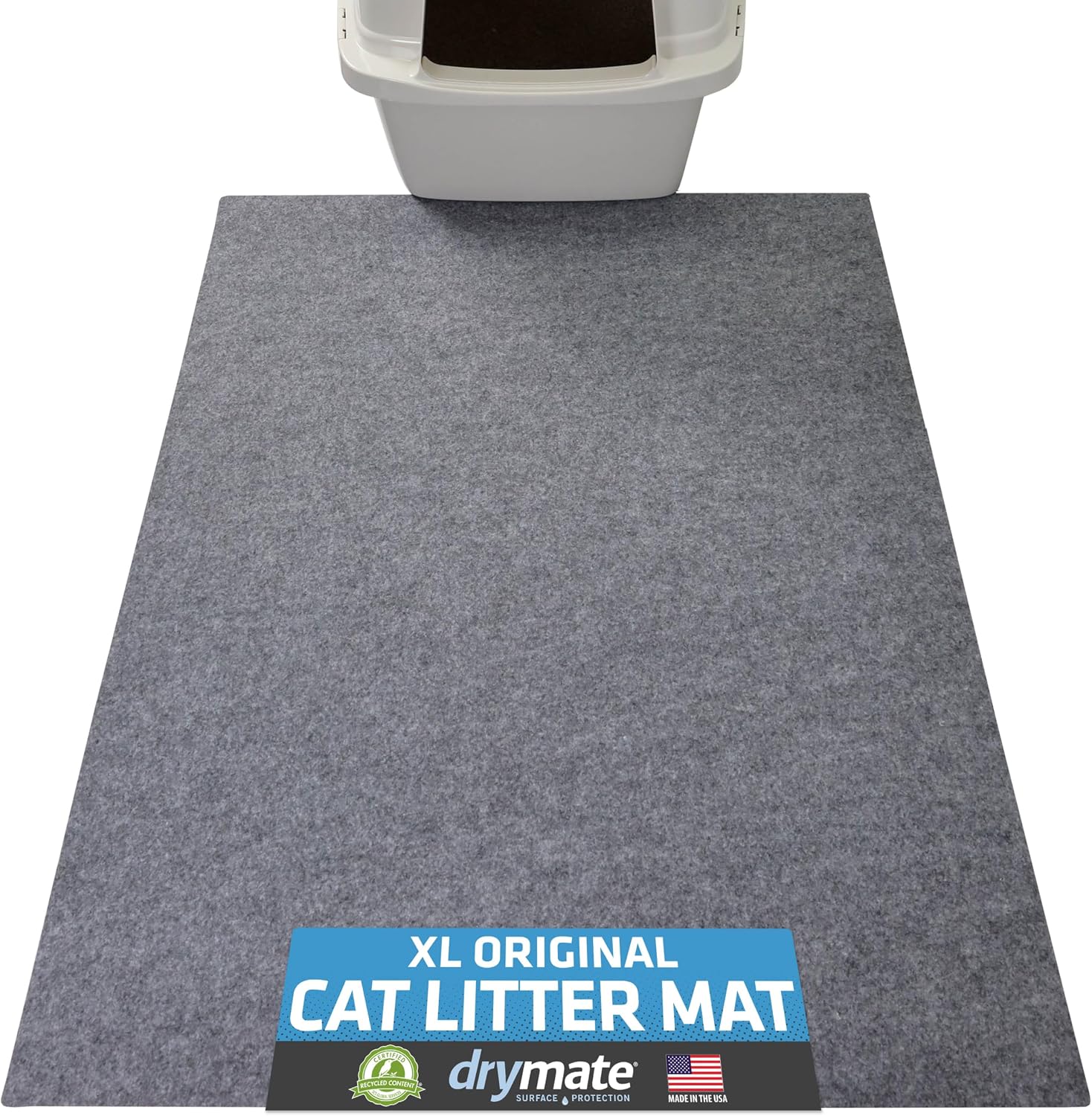
Drymate Cat Litter Box Mat, Litter Trapping Mat, Light Grey, 29×36 XL
Largest mat here at 29 by 36 inches, absorbent fabric top with a waterproof backing, covers the full exit path of a big box
Biggest footprint of the three mats, needs a machine wash, more expensive than the PVC pad
Prices and availability may change.
What the automatic litter box vs cat litter debate gets wrong
The difference between automatic litter box and cat litter setups is mostly about who does the scooping, not about what ends up on your floor. A self-cleaning box rakes clumps into a waste drawer on a timer, so you empty a drawer every few days instead of scooping twice a day. A manual box asks for a scoop and a bag, and it asks every day. What does not change is the exit. A cat still leaves the box with litter between its toes, and a rake still drops granules when it cycles. A machine that runs at 3 a.m. spreads the same litter you would have caught with a scoop in hand.
That is why this comparison spends its time on mats and enclosures instead of motors and sensors. The features that separate a good automatic box from a bad one, sensor range, clumping speed, waste drawer capacity, matter once you have committed to spending a few hundred dollars. The features that separate a clean floor from a gritty one cost between five dollars and eighty. If you are still treating cat litter vs automatic litter box as a straight either-or, fix the cheap end of the problem first, because a mat works with both.
There is one honest argument for the machine: odor control. A box that rakes minutes after use seals waste in a drawer, and that beats a scoop on a busy day. The enclosure below attacks the same problem from the other direction, by putting the whole box behind a door.
What an enclosure actually changes
The SETVSON Cat Litter Box Enclosure is the only piece here that changes how a room looks and smells rather than what lands on the floor. It is an extra large hidden unit in a natural PE rattan finish, which means it reads as a side table or a plant stand until a guest notices the door. Inside, it holds a full-size box, and the door keeps the box out of sight and the worst of the odor in one place. PE rattan also wipes down, which matters more than it sounds in a room where a box lives.
What it does not do is trap litter. A cat still exits through the opening, and the granules still come with it. The enclosure narrows the exit path, which helps, but you still want a mat in front of the door or inside the base. Two measurements decide whether it works for you: the interior width, which has to clear your box with room for the cat to turn, and the entry height, which has to suit the oldest or smallest cat in the house. A senior cat that has to step up and over a lip will find somewhere else to go.
The trade-offs are real. It costs more than the three mats combined, it takes up floor space in a way a bare box does not, and it adds a surface to wipe down. If your box already sits in a laundry room behind a closed door, the enclosure buys you very little. If it sits in a living room or an open-plan apartment, it buys you the room back. That is the whole case for it.
Mat texture and the tracking problem
Three mats, three textures, three different jobs. The Pieviev Soft Chenille mat is the softest of the group, a 28 by 22 inch pad with an ultra absorbent top. Chenille works because the fibers stand up and catch granules that a flat surface lets roll, and the same fibers soak up a miss. The cost is maintenance: a chenille mat holds moisture and fine clay, so it needs laundering rather than a quick shake, and it takes a while to dry.
The PVC trapping mat goes the other way. It is a durable grey pad at 23 by 14 inches with a price that makes it the cheapest item here. PVC wipes clean with a damp cloth, it does not hold odor the way fabric can, and it fits in the narrow gap between a box and a wall. The problem is the size. At 23 by 14 it covers the entry of a small or medium box and not much else, and a cat that bolts out of a large box will clear it in one stride.
The Drymate mat is the coverage pick. At 29 by 36 inches it is the largest mat in the comparison, with an absorbent fabric top and a waterproof backing, and it is sized for the way a large box actually gets used: the cat lands, takes a step or two, and shakes. The trade-off is footprint and laundry. It is bigger than some bathroom floors, and it wants a machine wash rather than a wipe.
Box size, entry height, and the waste drawer
Box size drives the rest of the setup, and it drives the automatic litter box vs cat litter decision more than any feature list does. A mat should be at least as wide as the box and long enough for two steps, which is why a 23 by 14 pad is a compromise and a 29 by 36 mat is not. If you are choosing between the two, measure the floor in front of the box before you measure anything else. Entry height matters just as much for older cats and kittens. A high-sided box keeps litter in, but it also keeps a stiff cat out, and a cat that cannot get in comfortably is a cat that goes on the floor next to the mat you just bought.
Litter depth is the quiet variable. Two to three inches of clumping litter gives a cat something to dig in and gives a rake something to grab. Too shallow and the clumps break apart on the way to the drawer; too deep and the tracking gets worse. If you run an automatic box, clumping speed matters more than brand, because a slow clump smears across the rake. In a multi-cat home, sensor range matters too, since a box that cycles while a second cat is investigating is a box that startles everyone.
Where the box goes changes the answer as much as the box itself. Placement for multi-cat homes is worth a separate read, but the short version is that a box in a corner with walls on two sides has a narrower exit path and needs less mat coverage than a box standing in the open.
The mat is the non-negotiable part
Every recommendation in this comparison assumes a mat at the exit. It is the cheapest piece in the setup and the one that changes your day the most. Without it, litter travels from the box to the hallway to the bed, and you sweep twice a day and still feel grit underfoot. With it, the litter stops within a step or two of the door.
Two rules cover most setups. First, the mat should be wider than the box and extend at least a body length past the entry, which is why the 29 by 36 Drymate handles a large box and the 23 by 14 PVC pad handles a small one. Second, pick the texture for your cleaning habits, not for the cat. A cat will use a chenille mat and a PVC mat equally. You are the one who has to shake it, wipe it, or wash it, so choose the one you will actually maintain. A mat you resent is a mat that stays dirty.
If you have a big exit and a hard floor, two mats can beat one. A textured pad right at the door catches the first drop, and a larger absorbent mat behind it catches the rest. That is the same logic as pairing the enclosure with a mat: each piece covers a different part of the path from box to floor.
What the published specs actually tell you
The only numbers worth trusting before you buy are the ones printed on the listing: the dimensions, the material, whether it is machine washable, and whether the backing is waterproof. A 29 by 36 mat is bigger than a 28 by 22 mat and much bigger than a 23 by 14 pad, and that difference is the whole story for coverage. Material tells you the maintenance: PE rattan wipes down, PVC wipes down, chenille and the Drymate fabric go in the wash.
Everything else is a claim to test against your own floor. Absorbency, trapping power, and odor control all depend on your litter, your cat, and how often you clean. That is why the mat you already own is the best baseline. Put it down, watch where the litter lands after a week, and buy the size that covers that zone. If the grit collects a foot from the box, you need a longer mat, not a different machine. If it collects at the door, you need more mat texture.
Separate the specs that are fixed, like footprint and material, from the ones that are habits, like how often you scoop or wash, and the automatic litter box vs cat litter decision gets a lot simpler. Buy for the fixed numbers. Adjust the habits.
Should you buy a mat before you replace the box?
Yes. The order of spending matters more than the brand you pick. Start with a mat, because it is the cheapest fix and it works with any box you own now or buy later. Then look at litter depth and clumping speed, because those cost nothing but attention and often solve tracking and odor at the same time. Then consider box size and entry height, and only after that consider an enclosure or a self-cleaning machine.
A mat cannot fix a box that is too small, a litter that does not clump, or a cat that is avoiding the box for a medical reason. If the floor around the box is wet rather than gritty, or if the box sits in a spot the cat has to fight to reach, the mat is not the problem. And if odor is the complaint rather than tracking, the enclosure and the automatic box both go after it, from opposite ends of the budget.
Whichever side of automatic litter box or cat litter you land on, the mat is the piece that pays you back every single day. It is also the piece you can buy today for the price of a bag of litter and see the difference by tomorrow. The machine can wait. The floor cannot.
What I'm watching next
Enclosures are getting better at airflow, which is the weak point of any closed box, and mats are moving toward two-layer designs that trap grit on top and keep moisture below. On the machine side, wider entries and better sensor range are the two features that make automatic boxes friendlier to large cats and multi-cat homes, and both are worth watching if you are planning to spend real money.
The one thing I do not expect to change is the arithmetic. A mat, a box of the right size, and litter at the right depth handle most homes for less than the cost of a single self-cleaning unit. If you want the machine, buy it for the scooping, not for the tracking. Tracking is a mat problem, and it always will be.