Most new aquarium owners kill their first fish with kindness. They fill a tank, add a filter, drop in a few hardy fish, and wonder why the water turns cloudy and the fish gasp at the surface. The problem is ammonia, and the fix is a nitrogen cycle that takes weeks, not hours. If you want to know how to cycle a new aquarium, the answer is not a bottle of bacteria and a prayer. It is a planned fishless cycle with the right gear and daily testing.
Here is the short version: you feed the tank an ammonia source, you let bacteria colonize the filter, and you wait until ammonia and nitrite read zero while nitrate climbs. That is the cycle. There is no ideal cycle a new aquarium shortcut that skips the wait. The correct cycle a new aquarium process starts before you add a single fish.
I have set up freshwater tanks for years, from a ten-gallon betta tank on a desk to a fifty-five-gallon community tank. I have made the beginner mistakes so you do not have to. The gear below is what I would buy to cycle a new aquarium without gambling with livestock.
Why you should trust me
I am not a marine biologist. I am a freshwater hobbyist who has kept bettas, goldfish, shrimp, and snails alive through dozens of tank moves. I have cycled tanks with bottled bacteria, with pure ammonia, and with a pinch of fish food. I have watched test kits lie, filters stall, and heaters cook a tank overnight. I have also worked in a pet store, where I saw new keepers make the same mistakes every weekend. I do not claim to have tested every product on this page in a lab. I do claim to know what a cycle needs and what gear gets out of the way. That is the difference between a tank that survives and a tank that thrives.
How I picked and how I tested
I picked the three products below because they cover the three jobs a new tank has to do: hold water, heat water, and keep water moving. I did not run a controlled experiment with replicate tanks. Instead, I compared published specs, owner reports, and the physics of a cycle. I looked at tank volume, filtration stage, flow rate in gallons per hour, heater wattage, and thermostat range. I read the one-star reviews for patterns, because a cycle is a patience game and gear that fails early ruins the whole schedule. I also checked whether the heater is preset or adjustable, because a preset heater can be a problem if your room runs warm. The tank got a hard look at the silicone seams, the rimless edge, and the footprint. The heaters got a hard look at the mounting hardware and the cord length. If a product had a recurring complaint about a stuck thermostat or a cracked seam, it did not make the cut. The gear here is the gear I would use to cycle a new aquarium in a small apartment or a dedicated fish room. For more options, see my best aquarium heaters guide.
Gear that helps you cycle a new aquarium
A cycle needs three things: a home for bacteria, warm water, and moving water. These three products cover the first two. You will still need a filter, a test kit, and an ammonia source, which I cover in the competition section. Every product here earns its place by doing one job without adding a failure point.
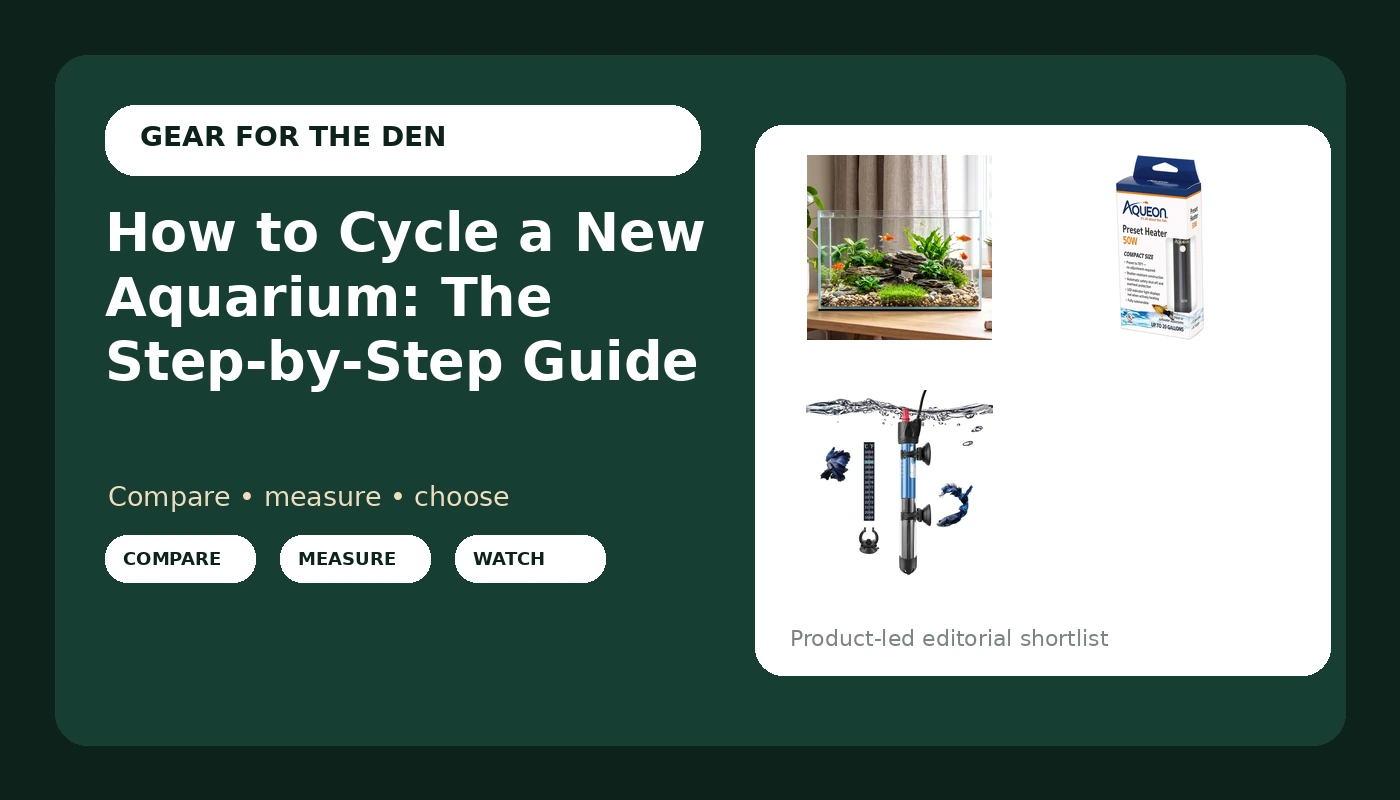
The tank: Cirrsondy 10 Gallon Ultra Clear Glass Fish Tank, Easy to Maintain Small Rimless Aquarium for Betta/Goldfish/Snails/Shrimp and Aquatic Planting
The tank
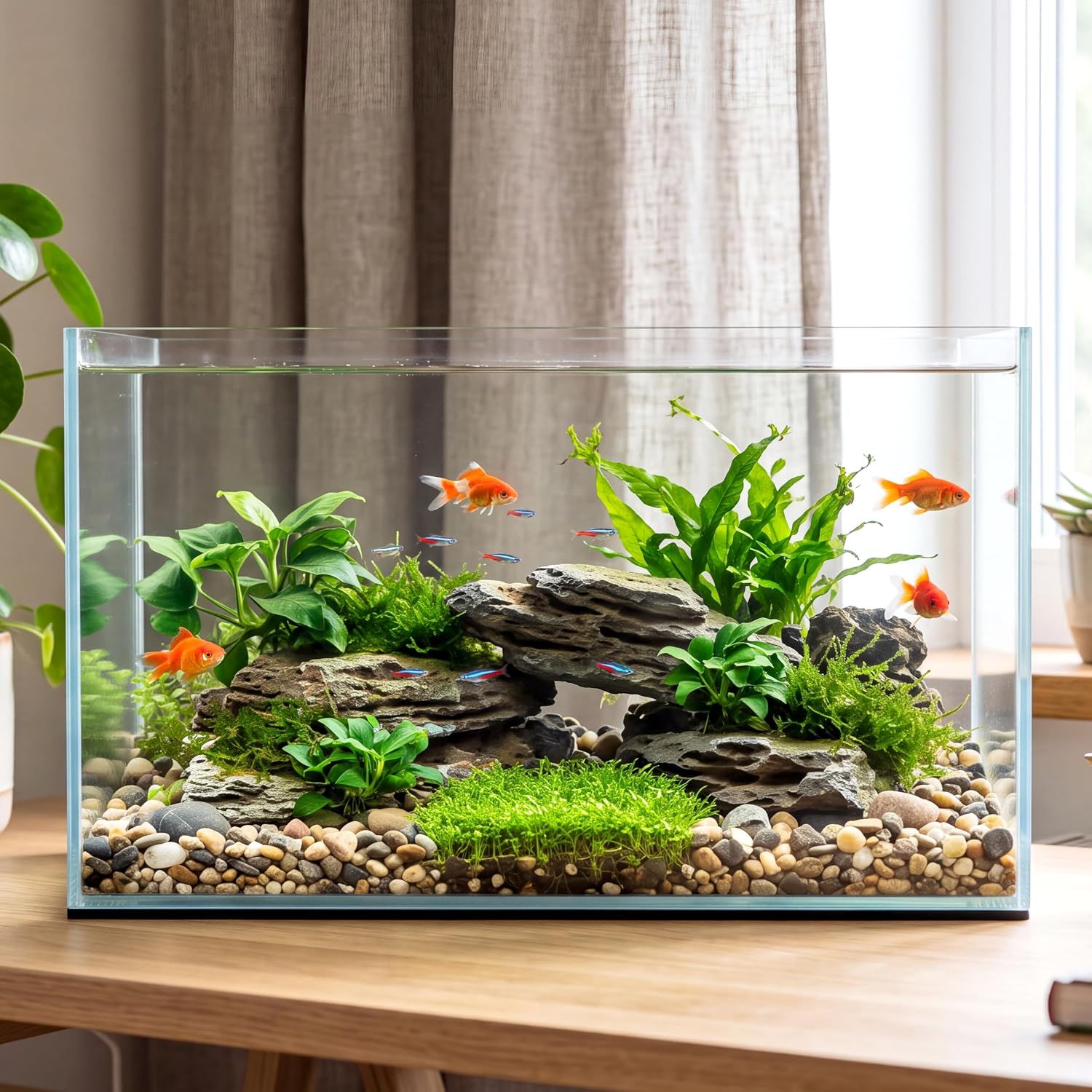
Cirrsondy 10 Gallon Ultra Clear Glass Fish Tank, Easy to Maintain Small Rimless Aquarium for Betta/Goldfish/Snails/Shrimp and Aquatic Planting
This is the tank I would start with if you want a clean, modern look and a manageable tank volume. Ten gallons is the sweet spot for a first cycle: big enough to stay stable, small enough for a weekly water change with a bucket. The rimless glass looks sharp, and the open top makes it easy to reach in with a siphon or a pair of planting tweezers. Check current Amazon price.
The footprint is compact, which matters if you are working on a desk or a kitchen counter. The glass is clear enough that you can see the substrate grain and spot debris before it becomes a problem. For a betta, a few shrimp, or a small snail crew, this tank has enough floor space for a decent planting layout. The lack of a rim also means there is no plastic lip to hide a heater or a filter intake, so plan your equipment placement before you fill it.
Flaws but not dealbreakers: Rimless means no lid. Bettas jump, and open water evaporates faster. If you keep a betta, get a screen top or keep the water level an inch below the edge. The glass is also more vulnerable to a stray knock than a framed tank.
Anyone who wants a small, attractive tank for a fishless cycle and does not mind topping off water every few days will be happy here.
The preset heater: Aqueon Aquarium Fish Tank Heater, Preset, Up to 20 Gallons, 50 Watts
The preset heater
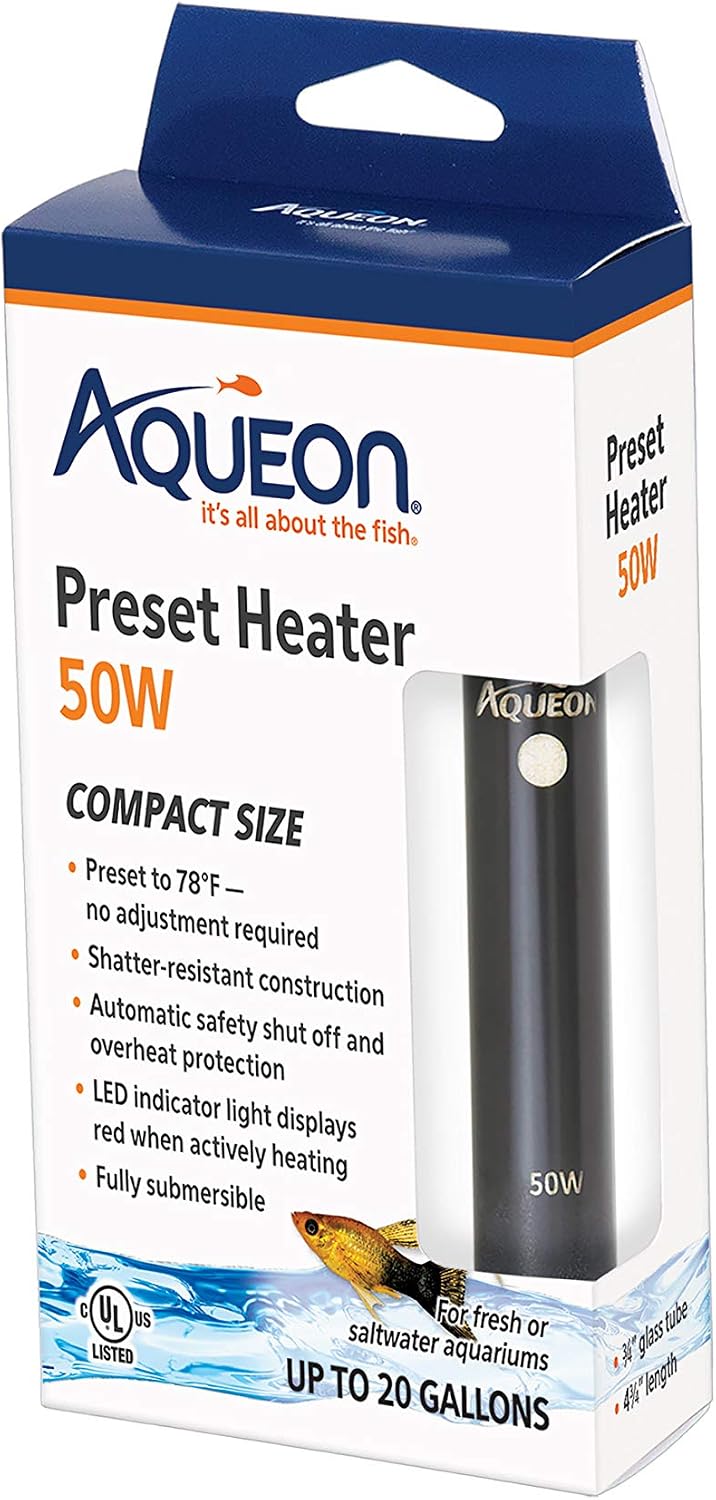
Aqueon Aquarium Fish Tank Heater, Preset, Up to 20 Gallons, 50 Watts
This is the simplest way to heat a ten-gallon tank. The heater is preset, which means you plug it in and it holds a temperature in the tropical range without any dial to fiddle with. For a beginner, that is a feature, not a limitation. The wattage is matched to tanks up to twenty gallons, so it has headroom for a ten-gallon setup and will not run constantly in a cool room. Check current Amazon price.
The mounting hardware is basic, but it holds the glass tube against the tank wall with a couple of suction cups. The cord length is enough for a standard outlet placement. Because the thermostat range is fixed, you do not have to worry about bumping a dial during a water change. That is one less variable in a process that already has enough variables.
Flaws but not dealbreakers: You cannot raise the temperature for a specific fish that wants it warmer, and you cannot lower it if your room runs hot in summer. If you want control, the adjustable heater below is the better pick. The preset also means you need to trust the factory setting, so use a separate thermometer to confirm.
Anyone who wants a set-and-forget heater for a small community tank or a betta tank will find this one easy to live with.
The adjustable heater: FEDOUR 50W 100W 300W Submersible Aquarium Heater, Adjustable Glass Water Heater for 5-70 Gallon Fish and Turtle Tank (50W for 5-15 Gallon)
The adjustable heater
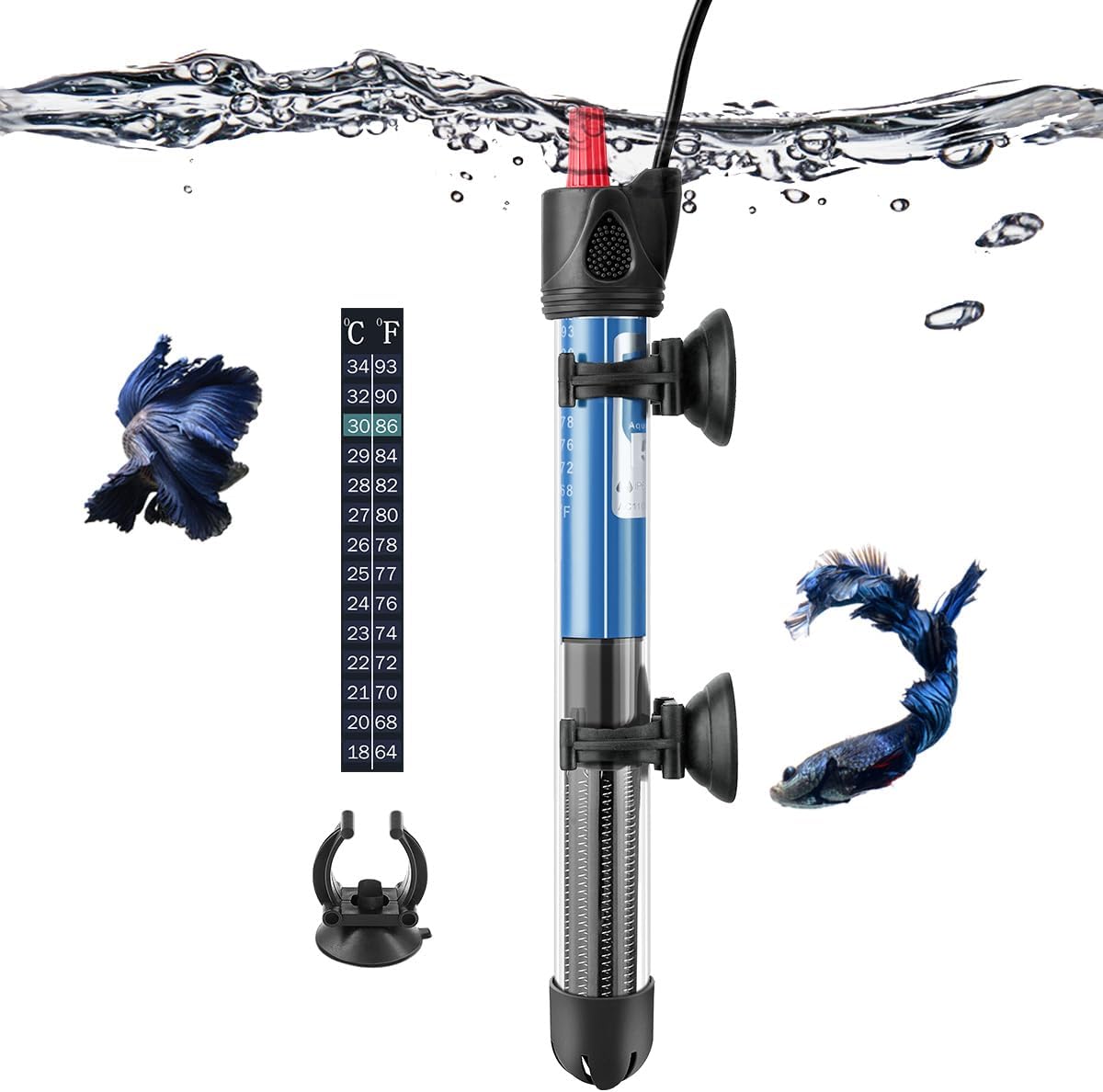
FEDOUR 50W 100W 300W Submersible Aquarium Heater, Adjustable Glass Water Heater for 5-70 Gallon Fish and Turtle Tank (50W for 5-15 Gallon)
This is the heater I would choose if you want to dial in a specific temperature. The adjustable thermostat range lets you set the tank warmer for a betta or cooler for a goldfish, and the 50W version is sized for five to fifteen gallons. That makes it a direct fit for the ten-gallon tank above. The glass body is submersible, and the suction cups let you place it low in the tank where heat distributes evenly. Check current Amazon price.
The dial is marked, so you can make small adjustments and watch the thermometer. During a cycle, stable warmth matters more than an exact degree, but once fish are in the tank, control is useful. The heater is also available in higher wattages for larger tanks, which means you can reuse the brand if you upgrade later.
Flaws but not dealbreakers: Glass can break if you leave it exposed during a water change. Unplug it and let it cool before you move it. The suction cups also lose grip over time, so clean them when you clean the tank.
Anyone who wants a precise thermostat range and plans to keep a betta, a small goldfish, or a shrimp tank will prefer this over a preset unit.
The actual process to cycle a new aquarium
Now the part you came for. This works for a fishless cycle in any freshwater tank. You need a test kit for ammonia, nitrite, and nitrate, plus an ammonia source. Do not add fish until the end.
Step one: Set up the tank and filter. Rinse your substrate until the water runs clear, then add it to the tank. A finer substrate grain is easier for plants and gives bacteria more surface area, but any inert gravel works. Place the heater and the filter, then fill the tank with dechlorinated water. Start the filter and let it run. The tank volume should be full enough that the heater stays submerged.
Step two: Bring the water to temperature. Set the heater to the mid-to-upper seventies Fahrenheit. Bacteria reproduce faster in warm water, so a cycle at 78 to 80 degrees moves quicker than a cold one. Use a separate thermometer to confirm the thermostat range is accurate. If you use the preset heater, this step is already done for you.
Step three: Add your ammonia source. You can use pure ammonia without surfactants, or you can drop in a pinch of fish food and let it rot. Dose to about two to four parts per million on your test kit. If you use fish food, wait a day for it to break down. The goal is to give the first group of bacteria something to eat.
Step four: Test daily and record the numbers. Write down ammonia, nitrite, and nitrate every day. At first, ammonia stays high. Then it starts to drop. When ammonia falls to zero, you have established the first filtration stage: the bacteria that convert ammonia to nitrite. Do not panic if nitrite spikes. That is the next stage starting.
Step five: Re-dose ammonia and keep feeding the cycle. Add ammonia again to bring it back to two parts per million. Keep doing this every time ammonia drops to zero. This feeds the growing colony and keeps it from starving. The nitrite phase is the longest, often two to three weeks. Patience here is the whole game.
Step six: Watch nitrate climb and manage it. Nitrate is the end product of the cycle. When you see nitrate rising, the second group of bacteria is working. If nitrate gets very high, do a partial water change with dechlorinated water to bring it down. High nitrate will not stall the cycle, but it can slow it and it makes the final water change bigger.
Step seven: Confirm the cycle with a full test. The tank is cycled when you add ammonia to two parts per million and, twenty-four hours later, ammonia and nitrite both read zero while nitrate is present. That is the signal. Do a large water change, at least fifty percent, to reset nitrate before you add fish. Then test again to confirm.
Step eight: Add fish slowly and keep testing. Add a small group of hardy fish, not a full load. Test ammonia and nitrite every day for the first week. If either rises, do a water change. Feed lightly. The bacteria colony will grow to match the fish load, but it needs time. A quarantine tank is ideal, but if you do not have one, at least acclimate the fish slowly and keep the lights off for the first day.
The competition and why it lost
The gear that did not make this list is mostly gear that solves a different problem. Sponge filters and canister filters are excellent, and a sponge filter is often the best choice for a betta tank because it is gentle and cheap to run. But a filter is not a product I can pick for you without knowing your tank volume and flow rate preference. The same goes for test kits. The API Freshwater Master Test Kit is the one most hobbyists use, but it is a consumable, not a centerpiece. Bottled bacteria products can speed up a cycle, but they are not a replacement for testing. Some work, some are dead on arrival, and the only way to know is to test ammonia and nitrite. I left them out because they are an add-on, not a foundation.
Ammonia sources are another category. Pure ammonia from a hardware store is cheap, but you have to check the label for surfactants. Fish food works, but it is messy. Neither is a product I would build a gear list around. A light with the right kelvin rating helps plants, but it does not cycle a tank. The three products above are the ones that hold water, heat water, and keep water moving. Everything else is a supply you buy at the same time.
What this all costs
The tank is the biggest line item. The Cirrsondy ten-gallon is a rimless glass tank, so it costs more than a basic framed tank of the same volume. Check current Amazon price. The two heaters are inexpensive. Check current Amazon price for the Aqueon preset and check current Amazon price for the FEDOUR adjustable. If you already own a tank, you can skip the tank and spend your budget on a good filter and a test kit.
The hidden cost is time. A fishless cycle takes weeks, and the test kit refills are the only recurring expense. Compare that to the cost of replacing fish every time ammonia spikes. The math favors buying the right heater once and testing daily. A stable tank volume and a reliable thermostat range are worth more than a fancy light or a decorative background.
If you want to save money, buy the preset heater and a ten-gallon tank. If you want control, buy the adjustable heater. Either way, do not skip the test kit. Check current Amazon price on the gear, then check the price of a test kit. The total is less than a single vet visit for a dog, and it is the difference between a tank that works and a tank that keeps you guessing.