Bearded dragon lighting is one of those topics where the internet gives you two loud answers and no middle ground, so this basking lamp vs uvb tube for bearded dragon comparison is built around the question I see most in keeper forums: do you need both, or can one fixture do the job? The short answer is that they solve different problems. A basking lamp produces the heat your dragon needs to digest food and move, while a UVB tube produces the ultraviolet light that lets its skin make vitamin D3 and absorb calcium. If you only buy one, you are leaving a hole in the setup that shows up later as lethargy, poor appetite, or a vet bill. The goal here is not to sell you the most expensive fixture. It is to help you match the right light to your enclosure.
For most adult bearded dragons, the right answer is a linear T5 HO UVB tube plus a separate basking bulb, because no single lamp reliably delivers both the heat gradient and the UVB output a growing dragon needs. But the details depend on your tank size, your basking temperature, and whether you are lighting a small juvenile enclosure or a 4x2x2 adult home. The four products below cover the main paths: a high-output T5 tube, two compact UVB options, and a dedicated heat lamp.
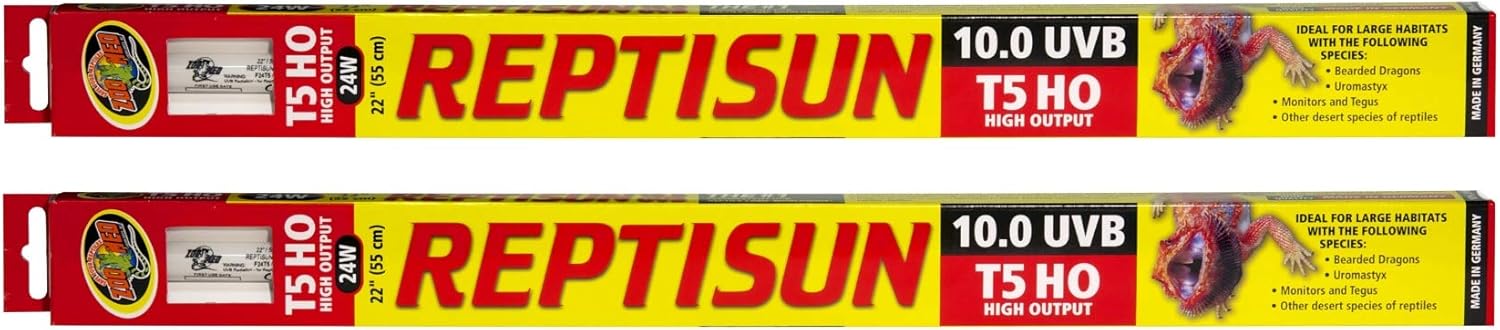
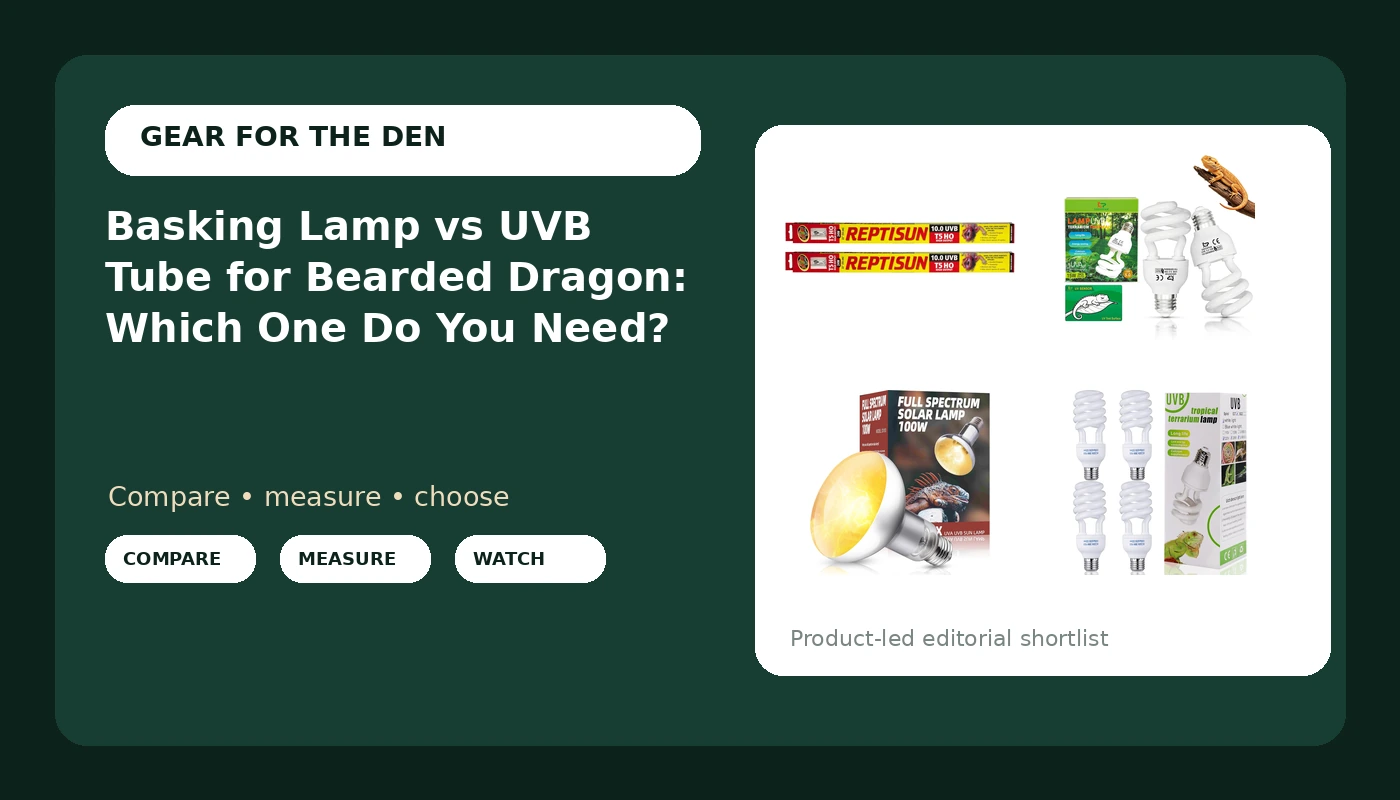
Zoo Med 24 Watt T5 HO ReptiSun 10.0 UVB Lamp, 2pk
High-output linear tube with 10.0 UVB, the format most keepers use for adult tanks because it spreads UVB across a wide area
Needs a T5 fixture and reflector, so the total setup costs more than the bulb alone
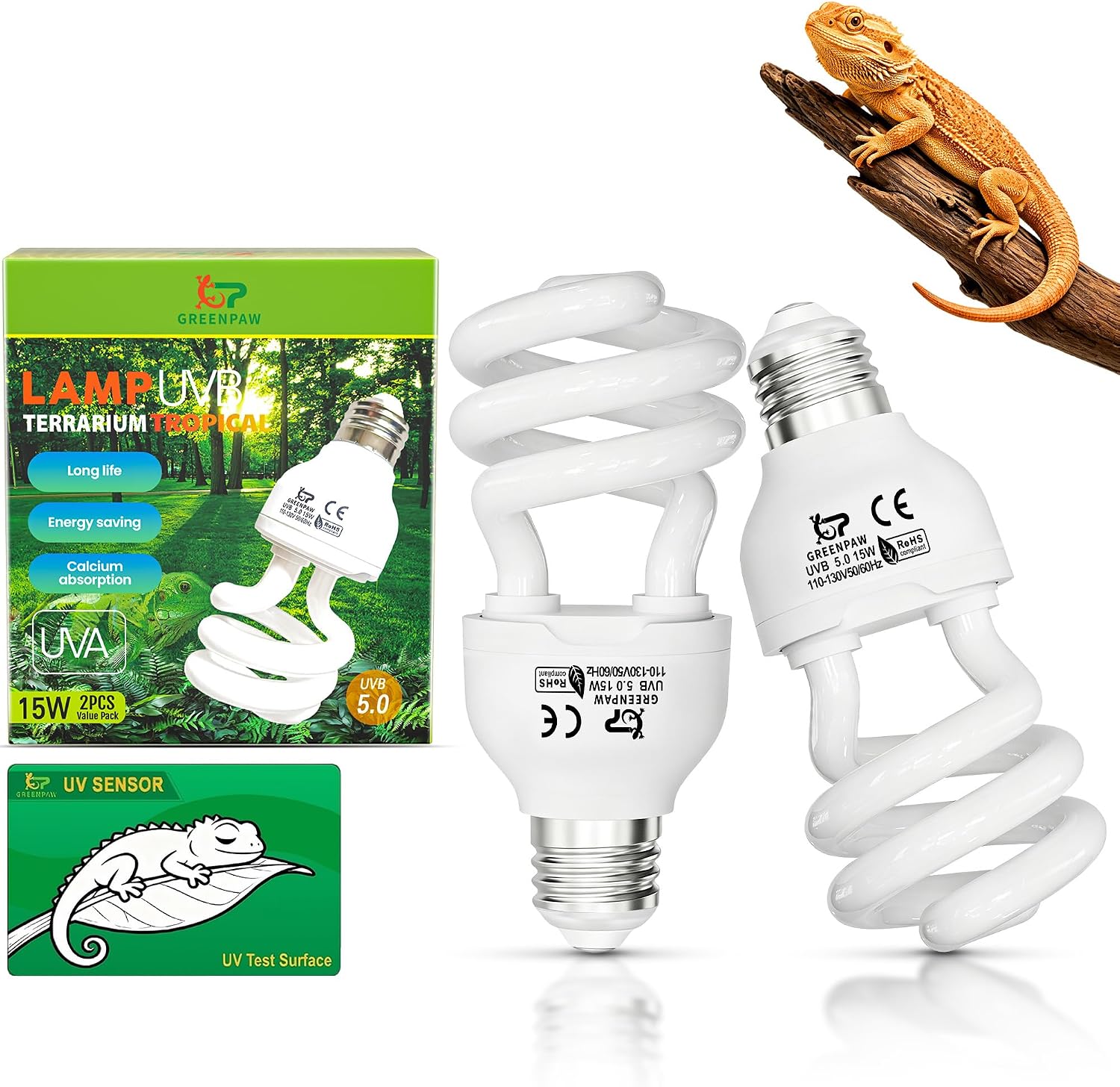
GREENPAW Reptile UVB Bulb 5.0 15W, Compact Fluorescent Light E26 Base, 2PCS
Compact E26 base screws into a standard dome, low entry cost, and the 5.0 output suits smaller or temporary enclosures
5.0 UVB is weaker than 10.0, and the compact footprint covers less of the tank
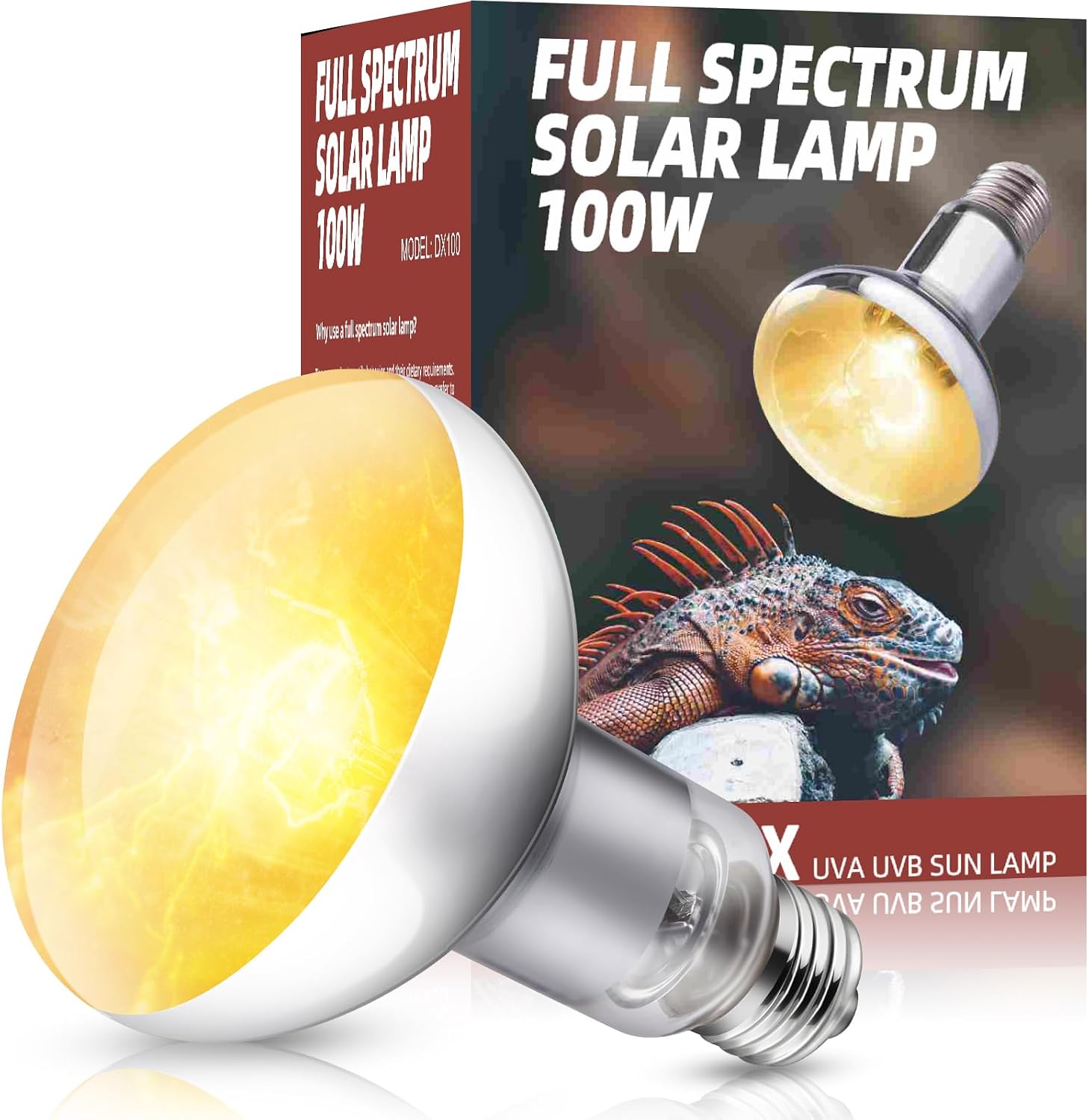
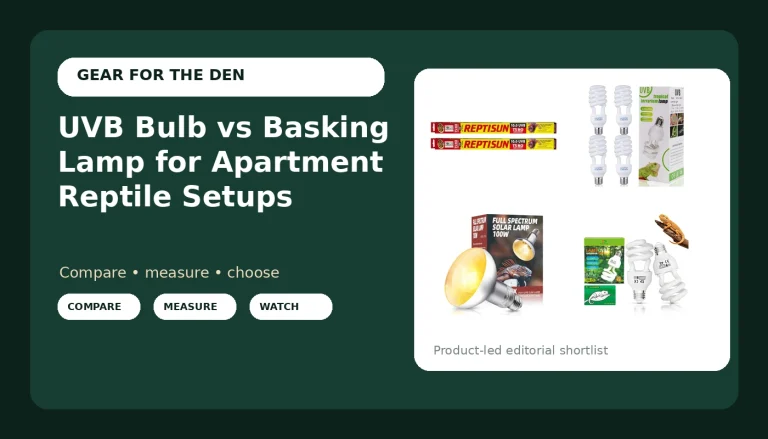
DXOPHIEX 100W Reptile Heat Lamp Bulb Full Spectrum UVA UVB Sun Lamp
A dedicated heat bulb that adds visible light and some UVA/UVB, easy to pair with a dimmer or thermostat
Heat lamps are not a replacement for a proper UVB tube, and 100W can overheat a small tank without a thermostat
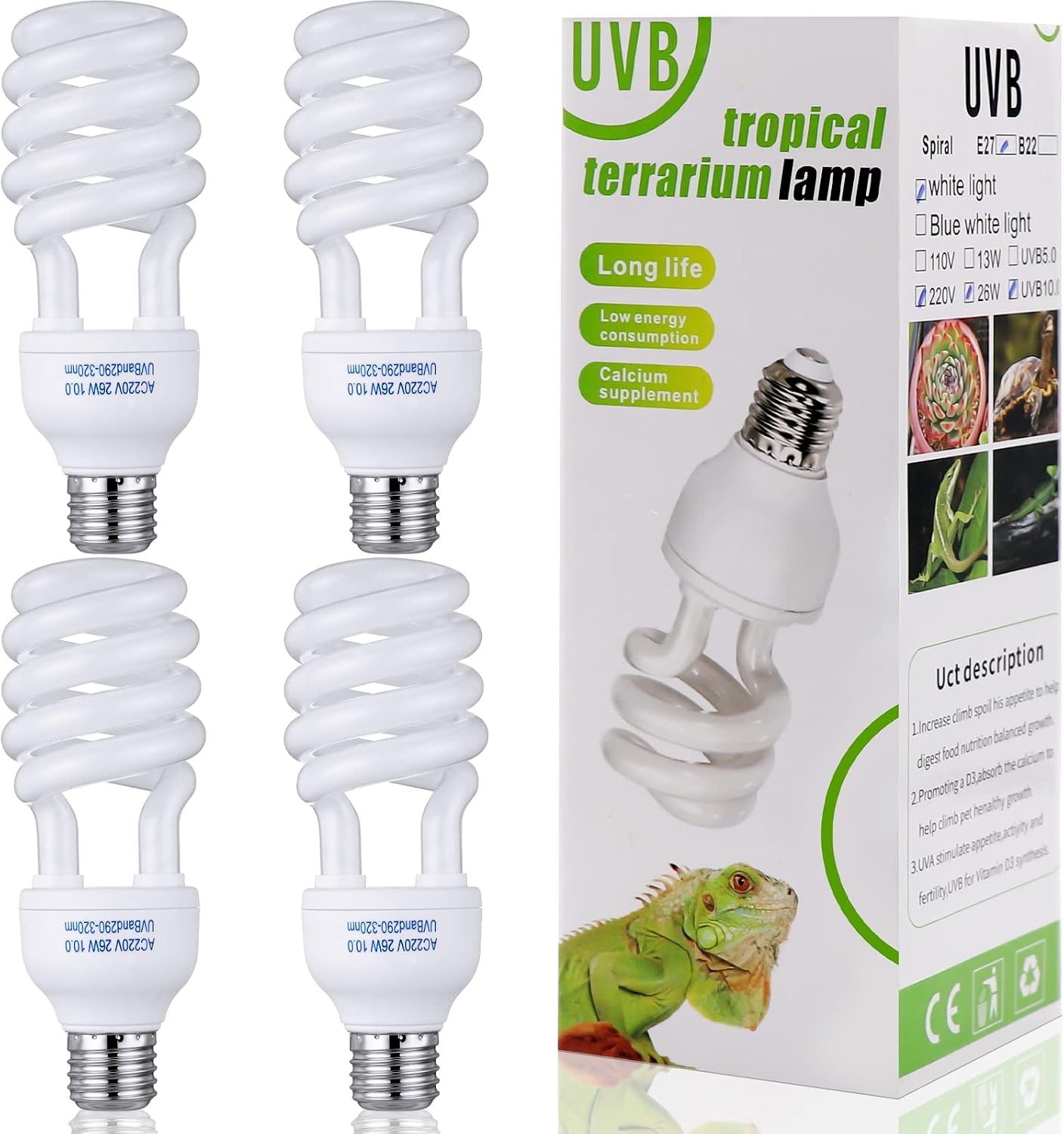
Reginary 4 Pcs Reptile Uvb Bulb 10.0 26w, Uvb Light for Bearded Dragon
Four compact 10.0 UVB bulbs with an E26 base, so you get spares and a stronger UVB label than the 5.0 compact
Compact bulbs do not spread UVB as evenly as a linear tube, and the 26W format has limited reach
Prices and availability may change.
basking lamp vs uvb tube for bearded dragon: the short answer
If you have been searching uvb tube for bearded dragon vs basking lamp, the clean answer is that a UVB tube is for calcium metabolism and a basking lamp is for digestion. They are not interchangeable, and the difference between basking lamp and uvb tube for bearded dragon care is the same difference between a heater and a light bulb. One raises the temperature in a specific spot. The other delivers a spectrum your dragon's body uses to process calcium. That is the core of the basking lamp vs uvb tube for bearded dragon question, and it is why most experienced keepers run both.
What each product actually does
The Zoo Med 24 Watt T5 HO ReptiSun 10.0 UVB Lamp is a linear fluorescent tube. In a bearded dragon enclosure, that linear shape matters because it spreads UVB output across the length of the tank rather than concentrating it in one small circle. The 10.0 rating is the stronger of the common UVB strengths, and the T5 HO format is high output. Visit on Amazon. This is the bulb I would pair with a 4x2x2 or larger enclosure, mounted over the basking zone with a reflector. The trade-off is that you need a T5 fixture, and the bulb is only one part of that purchase.
The GREENPAW Reptile UVB Bulb 5.0 15W is a compact fluorescent with an E26 base. That means it fits a standard dome fixture. It is the easiest way to add UVB to a small juvenile tank or a temporary setup. The 5.0 UVB strength is lower than 10.0, so it suits species with lower UVB needs or a tank where the bulb sits close to the animal. Visit on Amazon. For an adult bearded dragon in a large tank, a 5.0 compact is usually not enough on its own. It can work as supplemental light, but it is not the main UVB source.
The DXOPHIEX 100W Reptile Heat Lamp Bulb is a heat lamp, not a UVB tube. It produces full-spectrum visible light plus UVA and UVB, and it screws into a standard fixture. Visit on Amazon. This is the bulb that creates your basking spot. It should be on a dimmer or a thermostat so you can hold the basking temperature in the right range without cooking the tank. A 100W bulb is powerful, so in a small enclosure it can push the temperature too high. That is why a thermostat range matters more than the wattage label.
The Reginary 4 Pcs Reptile Uvb Bulb 10.0 26w is a four-pack of compact 10.0 UVB bulbs. Visit on Amazon. The 10.0 rating gives you stronger UVB than the 5.0 compact, and the four-pack means you have replacements on hand. The limitation is the compact form factor. A compact bulb concentrates UVB in a smaller area, so it works best in a smaller tank or as a supplement to a linear tube. In a large adult enclosure, you would need multiple fixtures or a linear tube to cover the basking zone evenly.
Why most bearded dragons need both
A bearded dragon is a heliothermic reptile. It moves between a hot basking spot and a cooler shaded area to regulate its body temperature. A basking lamp creates that hot spot. UVB exposure happens at the same time, but it is not the same thing as heat. If you provide heat without UVB, the dragon can digest food but cannot properly use calcium. If you provide UVB without a proper basking temperature, the dragon may not bask long enough to absorb the UVB. The two systems work together.
Choosing basking lamp or uvb tube for bearded dragon care is not really an either/or decision. The real choice is which UVB format and which heat source fit your tank size. A 40-gallon breeder tank has different needs than a 120-gallon adult enclosure. In a smaller tank, a compact 10.0 bulb and a lower-wattage heat bulb can work. In a larger tank, a T5 HO tube and a separate basking bulb are the more reliable combination. The heat lamp does the warming. The UVB tube does the calcium work.
The difference between heat and UVB
UVB is the part of the light spectrum that triggers vitamin D3 synthesis. Without it, calcium from food passes through the animal instead of being deposited in bones. A UVB tube is designed to produce that spectrum at a useful level. A basking lamp is designed to produce heat, usually with some visible light and sometimes a small amount of UV. The overlap does not make them equal. A heat lamp that claims UVA and UVB is not a calibrated UVB source, and a UVB tube that produces little heat is not a basking source.
UVB output also changes with distance and with the screen top. A bulb behind a fine mesh screen delivers less UVB than the same bulb in an open fixture. That is why two keepers can use the same product and get different results. If you want to know what your dragon is actually getting, a UVB meter is the only way to measure it. Without a meter, follow the manufacturer's distance chart and replace the bulb on schedule. UVB bulbs lose useful output over time even when they still glow.
How to choose based on tank size and setup
Tank size is the first filter. For a juvenile bearded dragon in a 20 to 40 gallon tank, a compact UVB bulb like the GREENPAW 5.0 or the Reginary 10.0 can be enough, especially if the bulb is mounted close to the basking spot. For an adult in a 4x2x2 or larger, a linear T5 HO tube is the better fit because it covers more of the enclosure. The Zoo Med T5 HO 10.0 is built for that job.
Basking temperature is the second filter. You want a gradient, not a single number. The basking surface should be warm enough for digestion, and the cool end should let the dragon escape the heat. A thermostat range or a dimmer lets you adjust the heat lamp without changing the bulb. If your basking temperature runs too high, you can raise the fixture or use a lower-wattage bulb. If it runs too low, you can lower the fixture or increase wattage.
Substrate depth and hide size also affect how the enclosure holds heat. A deep substrate can insulate the floor, and a large hide can create a cooler microclimate. Humidity range matters for shedding, but it should not be so high that the enclosure stays damp. A heat mat wattage is usually not the main heat source for a bearded dragon, because they bask from above. A heat mat can be useful for a sick or rescued animal, but it does not replace overhead basking light.
What the specs mean
Wattage is not UVB strength. A 100W heat lamp and a 24W UVB tube do different jobs. The 100W number tells you how much heat the bulb can produce. The 24W number tells you how much power the UVB tube draws, and the 10.0 tells you the UVB output category. A 5.0 bulb produces less UVB than a 10.0 bulb of the same type. A T5 HO tube produces more UVB than a compact fluorescent of similar wattage because the linear shape and the high-output ballast are more efficient.
Linear vs compact is the other major spec. Linear tubes spread UVB across a wider area. Compact bulbs concentrate it. If your dragon spends most of its time in one basking spot, a compact bulb can work if it is placed correctly. If your dragon moves around the tank, a linear tube gives more consistent exposure. That is why the T5 HO tube is the default recommendation for adult enclosures.
Common mistakes and trade-offs
The most common mistake is buying a heat lamp with UVB and assuming it covers both needs. It does not. A heat lamp can produce some UVB, but the output is not the same as a dedicated UVB tube, and it is not easy to verify. The second mistake is using a compact 5.0 bulb in a large tank. The UVB fades before it reaches the basking spot. The third mistake is skipping the thermostat. A 100W bulb in a small tank can raise the basking temperature too high, and a dragon that cannot escape the heat can become dehydrated.
The trade-off with a T5 HO tube is upfront cost. You need a fixture and a reflector, and the bulb itself is more expensive than a compact. The trade-off with compact bulbs is coverage. They are cheaper and easier to fit, but you may need more than one, and you will replace them more often. The trade-off with a heat lamp is control. It gives you the basking spot, but you still need a UVB source. There is no single product in this group that solves the whole lighting puzzle.
What to buy first
If you are starting from nothing, buy the UVB tube first. A bearded dragon without UVB is at risk of metabolic bone disease, and that risk is more urgent than a slightly imperfect basking temperature. The Zoo Med T5 HO 10.0 is the strongest of the four for a full-size enclosure. Pair it with a heat lamp like the DXOPHIEX 100W on a dimmer or thermostat. If you have a small juvenile tank and a tight budget, the Reginary 10.0 compact four-pack or the GREENPAW 5.0 compact two-pack can get you started, but plan to upgrade to a linear tube as the dragon grows.
Whichever route you take, check the distance between the bulb and the basking spot. Check the basking temperature with a digital probe, not a stick-on gauge. Check the humidity range and the cool end. And replace the UVB bulb on the schedule the manufacturer recommends, because UVB output drops over time even when the bulb still lights up. The basking lamp vs uvb tube for bearded dragon question has a simple answer: you need both, but they do different jobs.