Apartment reptile keeping hits one wall fast: the enclosure is small, the outlet count is smaller, and the uvb bulb vs basking lamp for apartment setups question usually lands the same week you notice your animal parked under the same corner of the screen top for six hours straight. UVB and heat are two separate jobs, and not one of the four bulbs below does both of them well. If you are still sorting out the enclosure itself, our small apartment reptile tank setup guide covers hide size, substrate depth, and where to put the tank before you spend anything on lighting.
The framing matters, because when buyers type basking lamp for apartment vs uvb bulb into a search bar they are usually picturing one fixture doing everything. One device is a light source your reptile's body uses to make vitamin D3. The other is a heat source that gives it a place to digest a meal and regulate its own temperature. Buy the wrong one and you get an animal that either never warms up or never gets the UVB its species needs.
For most apartment keepers the answer is both: a linear T5 HO UVB tube over the enclosure plus a dimmable heat bulb on a thermostat. That pair covers the two jobs, and the four products below each fill one half of it.
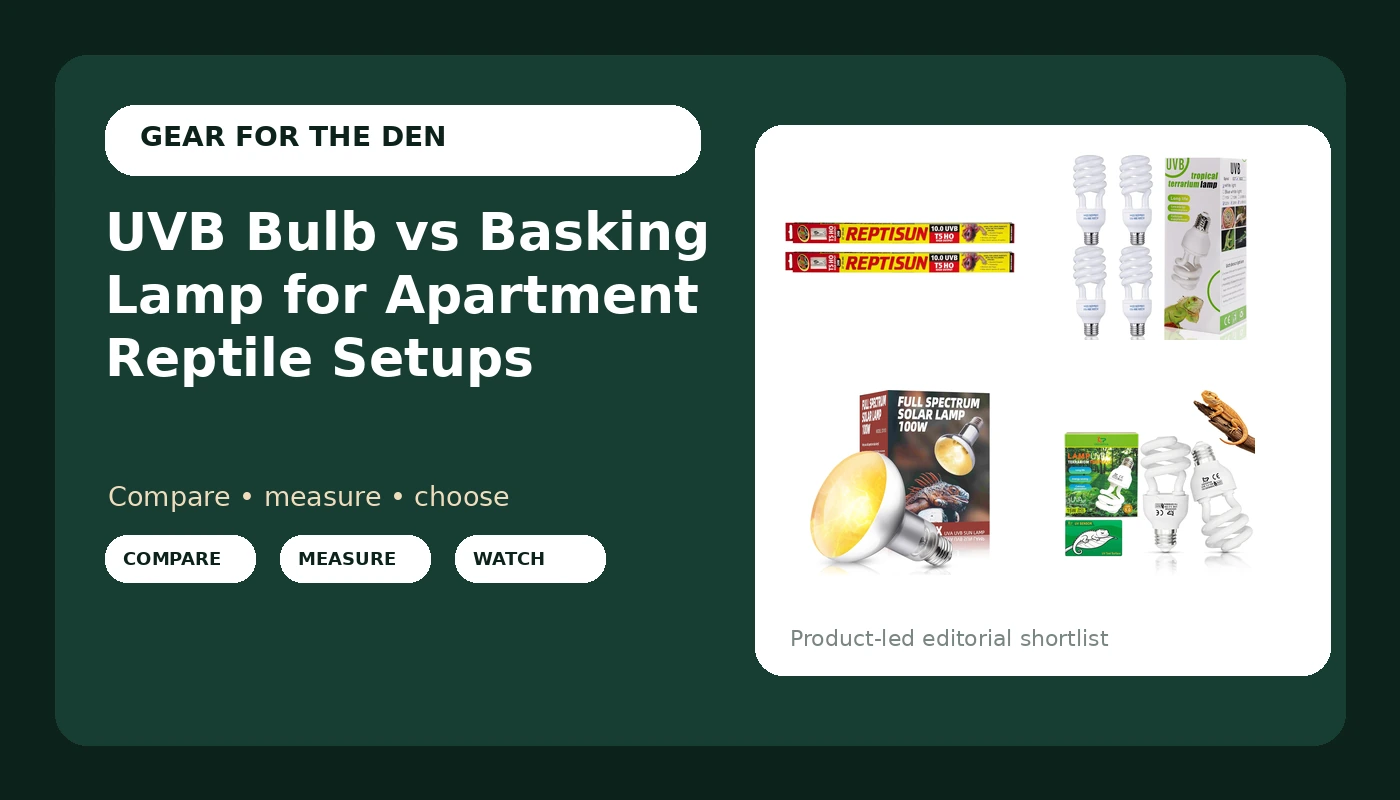
Here is how the four bulbs on this page line up once you stop treating them as four versions of the same thing and start treating them as two roles.
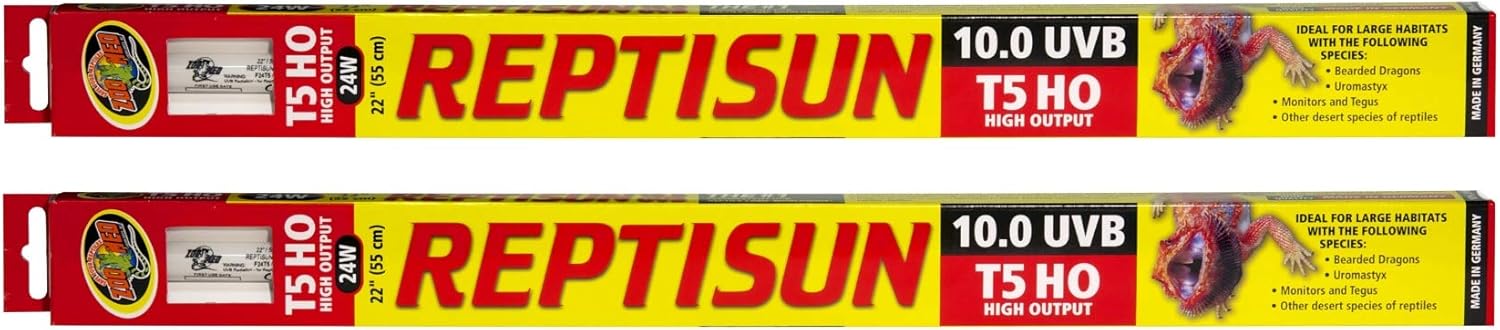
Zoo Med 24 Watt T5 HO ReptiSun 10.0 UVB Lamp, 2pk
Widest UVB coverage of the group, two tubes per pack, desert-strength output spread as a strip
Needs a T5 HO fixture, adds zero heat, and takes real estate over a small tank
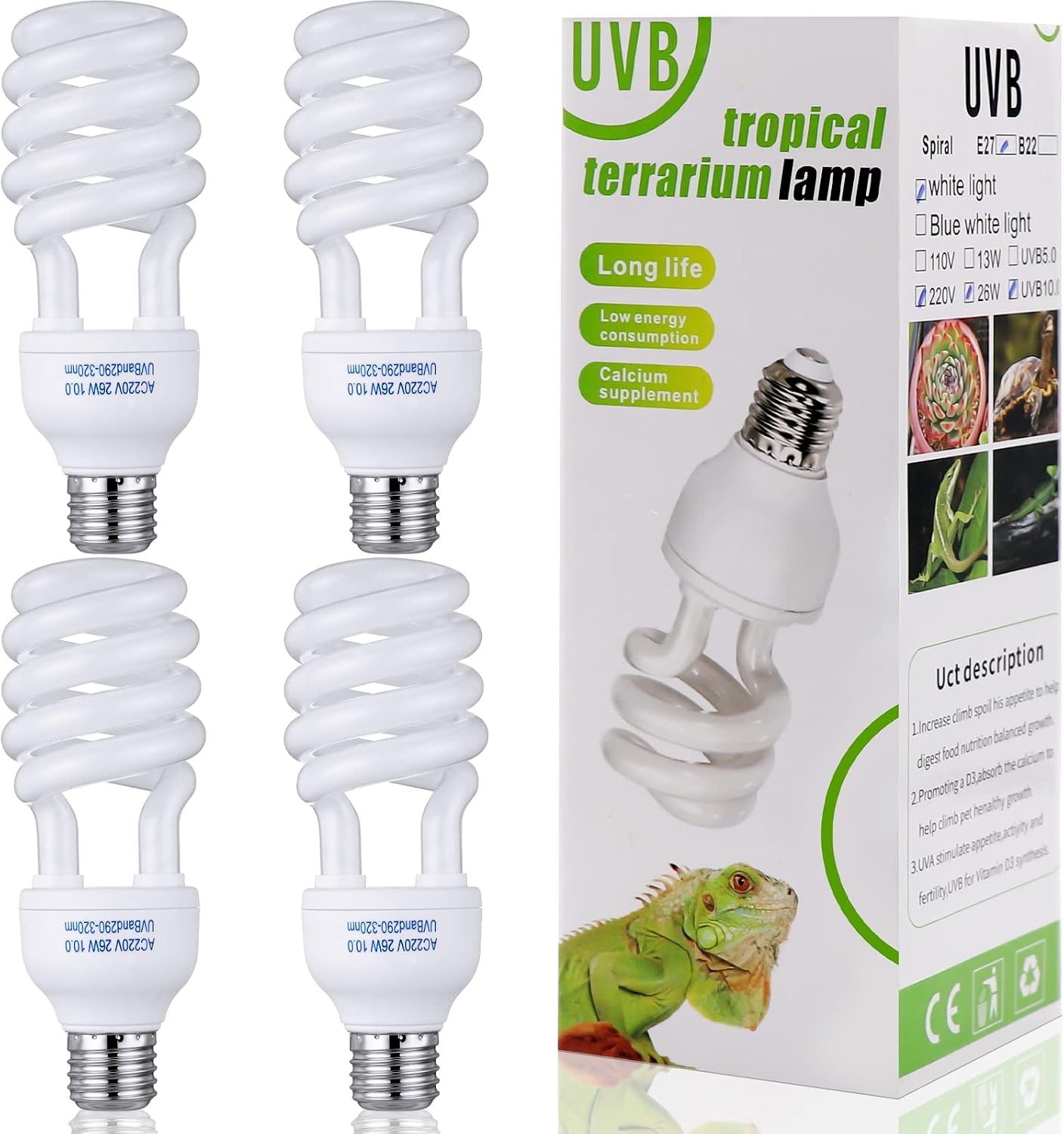
Reginary 4 Pcs Reptile Uvb Bulb 10.0 26w, Uvb Light for Bearded Dragon
Four 10.0 bulbs per box, screws into a common compact fixture, easy to keep a spare
Compact bulbs throw a narrower cone, so bulb height and distance matter more
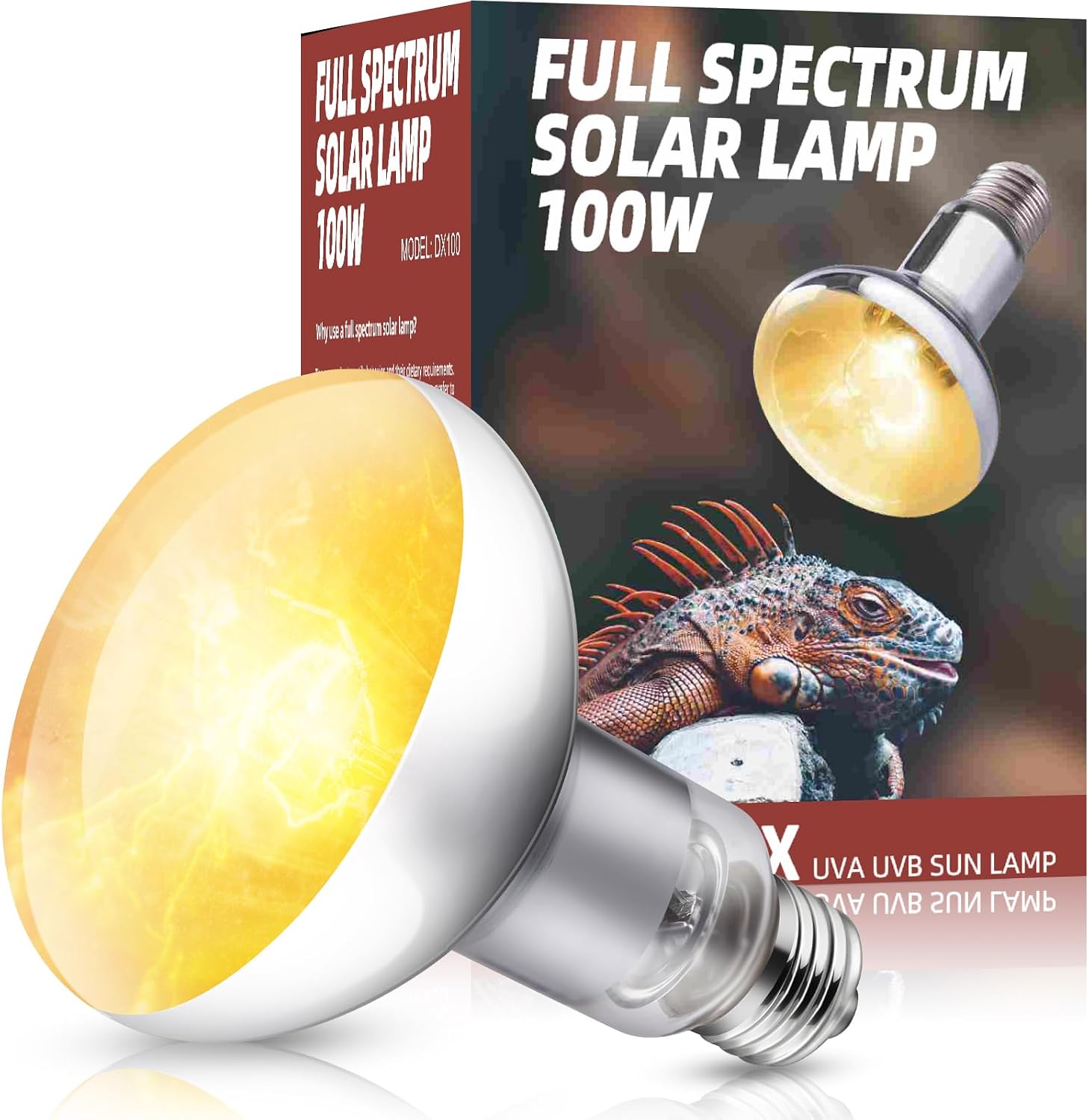
DXOPHIEX 100W Reptile Heat Lamp Bulb Full Spectrum UVA UVB Sun Lamp
Real overhead basking heat for a cold apartment, with a bright full spectrum glow
100W is more than a small tank can absorb without dimming, and a heat lamp's UVB claim is not a substitute for a UVB tube
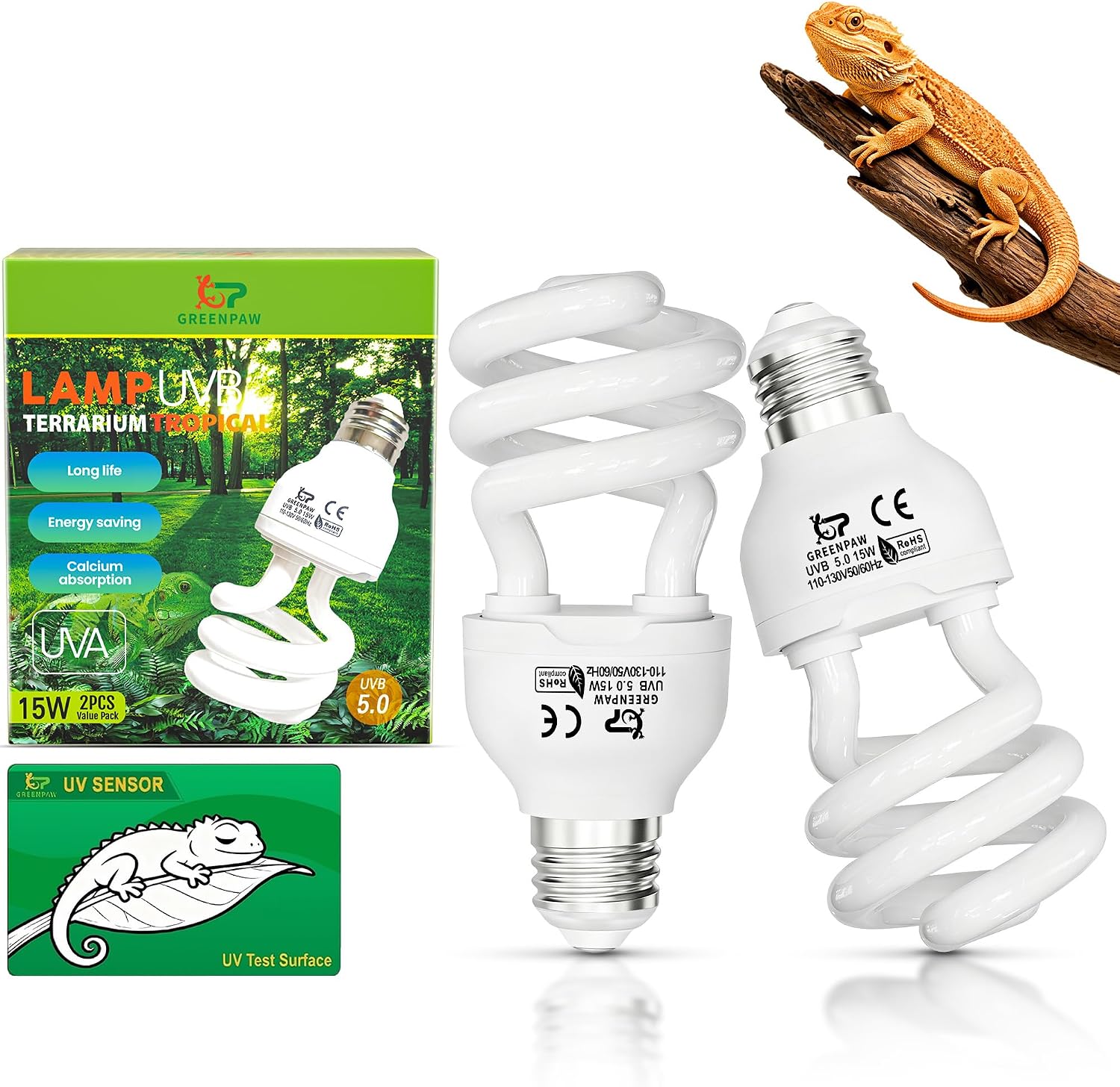
GREENPAW Reptile UVB Bulb 5.0 15W, Compact Fluorescent Light E26 Base, 2PCS
Low-cost way to add UVB to a nano tank or quarantine bin using an ordinary E26 socket
5.0 output and 15W are not enough for a large desert enclosure or a deep tank
Prices and availability may change.
How to judge these four lights
Four bulbs, two jobs, and a lot of overlap in the marketing. Before any individual pick, run the same five checks over a reptile light:
- Job. Does it produce UVB, heat, or a blend the label implies but the enclosure still needs help with?
- Base. Standard E26 socket, a compact fluorescent fixture, or a T5 HO linear fixture. The base decides which product is even possible in your apartment.
- Coverage. A compact bulb throws a cone. A linear tube throws a strip. Match that shape to the enclosure footprint, not to the footprint of your shelf.
- Tank size. A 15W compact is a nano or quarantine answer. It is not a bearded dragon answer in a four-foot enclosure.
- Control. Anything in the heat range above roughly 60W in a small tank needs a dimmer or a thermostat, not a wall switch.
Run those checks and the rest of this article is just picking a lane.
UVB bulbs: the part apartment setups skip
The difference between uvb bulb and basking lamp for apartment enclosures is mostly a difference of job description, and UVB is the half people skip because none of it is visible. Heat you can feel on your hand. Vitamin D3 synthesis you cannot, which is exactly why it gets ignored until an animal shows the long-term signs of deficiency. Three of the four products here are UVB sources.
Zoo Med 24 Watt T5 HO ReptiSun 10.0 UVB Lamp, 2pk. This is the linear tube of the group, and linear is the format to pick first if the enclosure is wide enough to mount it. A 10.0 tube is desert-strength uvb output spread along a strip rather than concentrated in a spotlight, which suits a screen-top setup where the animal moves between a hot end and a cool end. The two-pack matters because UVB tubes weaken long before they stop glowing, so you want the replacement already in the drawer. It produces light, not heat, so it never replaces the basking side. Check current Amazon price
Reginary 4 Pcs Reptile Uvb Bulb 10.0 26w. Four compact 10.0 bulbs at 26W each, with the same UVB grade as the Zoo Med tube delivered through a screw-in compact instead of a linear fixture. That makes it the easier buy for anyone who already owns a dome or compact fixture and does not want to hang a T5 reflector over a small apartment tank. The trade-off is coverage: a compact throws its uvb output into a narrower cone, so the distance from bulb to basking spot matters more and you will be setting fixture height rather than trusting the bulb to cover the floor. Check current Amazon price
GREENPAW Reptile UVB Bulb 5.0 15W, Compact Fluorescent Light E26 Base, 2PCS. The 5.0 rating is a lower UVB output aimed at tropical and forest species rather than desert ones, and 15W is small. In a nano tank, a quarantine bin, or a planted setup with a shaded canopy, that is the right dose. In a tall enclosure with deep substrate depth and a lot of climbing structure, the animal may never sit close enough for the uvb output to matter. Two bulbs, standard E26 base, no fixture drama. Check current Amazon price
Basking lamps: heat, and the UVB claim on the box
DXOPHIEX 100W Reptile Heat Lamp Bulb Full Spectrum UVA UVB Sun Lamp. This is the only true heat source of the four, and it is the one to handle most carefully. A 100W bulb is real overhead heat, which is exactly what an apartment needs in February when the room temperature drops and your reptile stops eating. It is sold as a full spectrum bulb with UVA and UVB, and it does put out visible light that reads as sunlight. Check current Amazon price
The catch is that a heat lamp's UVB claim is a bonus, not a plan. Heat bulbs are designed around basking temperature first, and any UVB they emit is small and unpredictable across distance. If your species needs meaningful UVB, treat this bulb as the heat half of a two-bulb setup and pair it with one of the tubes above.
The other catch is wattage discipline. In a small enclosure, 100W builds heat quickly, so a dimmer or a thermostat is not optional. Set the thermostat range so the basking surface lands at the basking temperature your species needs while the cool end stays cool. If the tank is genuinely tiny, step down to a lower-wattage heat bulb rather than trusting a dimmer to do all the work.
Compact versus linear: matching the format to the apartment
Once these stop being competitors, the format question becomes the real one. Three of the four products here are compact bulbs and one is a linear tube, and the split is about space.
A linear T5 HO tube needs a fixture roughly as long as the tube, plus a reflector, plus a way to sit it on a screen top. In a studio apartment with shelf-based enclosures, that is a genuine constraint, which is why so many people default to a compact dome. A compact bulb and a dome take up a fraction of the footprint and can be clamped or hung in a corner.
The cost of that convenience is coverage. Compact bulbs concentrate their uvb output, so you get a hot spot of UVB rather than a gradient. That works if you place the basking spot directly under the bulb and keep the distance consistent, and it fails if the animal spends its days on the far side of a wide enclosure.
My rule: linear for anything wide, compact for anything narrow, and never assume a compact is doing more than it is just because the box says 10.0.
Fixtures and sockets are non-negotiable
The same logic that makes hot-swappable keyboards worth paying for applies to reptile lighting. The bulb is disposable. The fixture is the thing you keep.
That means the first decision is the base, not the brand. A standard E26 socket opens up the GREENPAW compact and the DXOPHIEX heat lamp. A compact fluorescent fixture opens up the Reginary bulbs. A T5 HO fixture is the only way to run the Zoo Med tube at all. Buy bulbs before you know which fixture is going on the shelf and you end up with a drawer of bulbs that fit nothing.
One fixture feature is worth the extra money: a dimmer or a thermostat on the heat side. Heat output you cannot turn down is heat output you will fight all summer. On the UVB side, the equivalent upgrade is a reflector hood, which sends more of the uvb output down into the enclosure instead of up into your ceiling.
What the specs say about uvb bulb vs basking lamp for apartment layouts
Strip the packaging away and the uvb bulb vs basking lamp for apartment decision comes down to three numbers and one shape: uvb output, wattage, distance from bulb to animal, and the footprint of the light.
On the heat side, wattage and distance set the basking temperature. A 100W bulb at a short distance over a small tank will overshoot, which is why the thermostat range and the dimmer matter more than the number on the box. On the UVB side, output and distance set the dose, and both compact and linear bulbs lose usable UVB quickly with height. Screen mesh between bulb and animal cuts UVB further, so a bulb that performs well in open air is not delivering the same dose through a mesh top.
Then come the enclosure variables that decide whether any of this works:
- Tank size. A narrow tank is a compact-bulb tank. A wide tank wants a tube.
- Basking temperature. Set the surface, not the air, and check it with a probe rather than your hand.
- Humidity range. Tropical species that need a high humidity range usually also want the lower-output 5.0 style bulb, not a desert-strength 10.0.
- Substrate depth and hide size. Deep substrate plus a large hide means the animal can sit far from both light and heat, so placement beats wattage.
- Heat mat wattage. A heat mat can hold up ambient temperature, but it does not replace an overhead basking light for species that need to see and feel a bright hot spot.
If you can only fund one purchase this month and you are stuck on uvb bulb or basking lamp for apartment enclosures, buy the heat source first. An animal that cannot digest is in immediate trouble. An animal running a few weeks of lower UVB is not, as long as you fix it.
Should you buy a full lighting kit first?
Sometimes, yes. A starter kit that bundles a dome, a bulb, and a clamp can be the cheaper way to get a first setup running, and it saves you from matching bases to wattages yourself. The risk is that kits ship with generic bulbs that do not match your species or your tank size, and then you buy the right bulb anyway on top of the kit.
What I would do instead: settle the species and enclosure dimensions first, then buy the fixture that locks in the format, then buy bulbs in multi-packs so a replacement is always on the shelf. That sequence costs a little more up front and a lot less over two years.
What to set up next
Two habits pay for themselves. First, replace UVB bulbs on a calendar rather than waiting for one to fail. A tube that still glows has often already dropped most of its usable uvb output, and staring at it will never tell you. Second, put the heat bulb on a thermostat or dimmer from day one and check the basking temperature once a week, because an apartment that feels fine to you in July is a very different enclosure in January.
Get those two things right and the uvb bulb vs basking lamp for apartment question stops being a debate. You have a light source with a schedule and a heat source with a dial, and the animal does the rest.