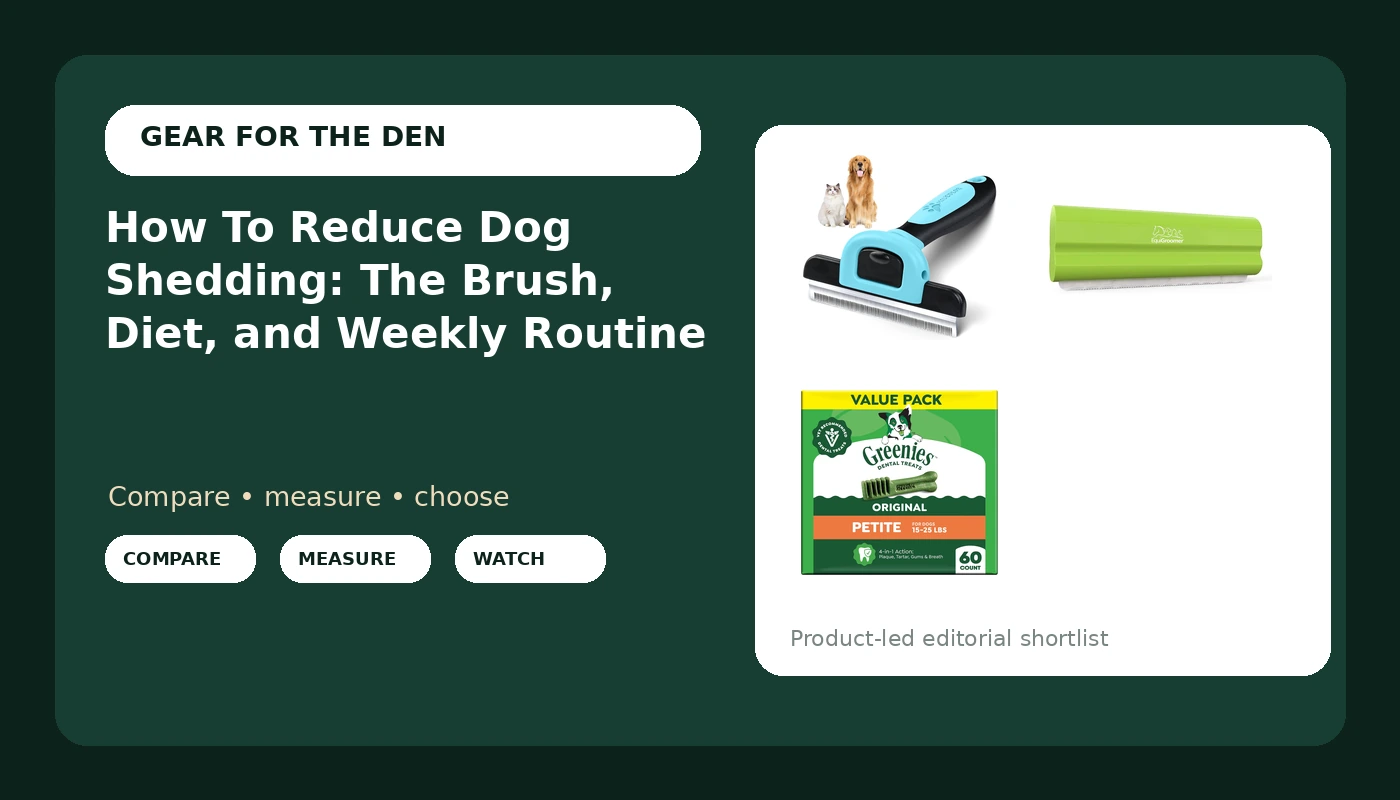
A shedding dog is not a broken dog. It is a dog whose coat cycle is doing exactly what a coat cycle is supposed to do, and most owners lose this fight because they treat shedding as a vacuum problem instead of a skin problem. If you want to reduce dog shedding for longer than one afternoon, you have to work three fronts at once: the dead undercoat that is already loose, the skin that decides how quickly new hair pushes out, and the diet that feeds both.
This is the full answer to how to reduce dog shedding in an ordinary house, with ordinary floors and an ordinary amount of patience. No grooming table, no forced-air dryer, no certificate required.
I have shared a house with a double-coated shepherd mix, a short-haired dog that sheds like a cactus is exploding, and a cat who treats the whole routine as a personal insult. What follows is the routine I actually run, in order, once a week, plus a longer version during a seasonal coat blow.
Why you should trust me
I am not a veterinarian, and nothing below replaces one if your dog has bald patches, hot spots, or a coat that changed overnight. What I am is the person who writes the grooming and skin and coat guides for this site, which means I spend a lot of time reading ingredient panels, comparing how deshedding blades are cut, and talking to owners who already bought the expensive tool that did nothing.
My bias is toward order of operations over brand names. Most shedding complaints I hear are not solved by a better brush. They are solved by brushing the right layer of the coat, at the right frequency, on a dog whose diet is not working against its own skin. A cheap tool used correctly beats an expensive tool used once a month, every time.
I also try to keep score honestly. If a tool only works on short coats, I say so in the section where it appears. If the only real fix is a vet visit, I say that too, even though it does not sell anything.
How I picked and how I tested
I do not publish numbers I did not measure, so this section is about criteria rather than a lab report. For deshedding tools, the questions are always the same: how deep the teeth reach relative to the coat type, whether the edge meets the skin or skims above it, how much undercoat comes out per pass, whether the head clogs after thirty seconds, and how the handle feels after fifteen minutes of short strokes. A tool that wins on a short coat can lose badly on a dense double coat, so I keep those two cases separate.
For the diet and treat side, I read the ingredient list the way I would read it for my own dog. I look for a named omega 3 source and actual EPA DHA content instead of a vague "fish meal" line, I check the oatmeal concentration in a shampoo instead of trusting the front of the bottle, and I check the bottle size against the recommended dose so a supplement is not quietly running out in two weeks. If a formula is limited ingredient, that matters for a dog with a sensitive stomach, and if it is not, I say so.
You can see how these criteria shake out across the whole category in my guide to dog grooming tools, which covers rakes, slickers, combs, and the tools that quietly do nothing. This article is narrower: the three items that do the work in my own routine.
The tools that reduce dog shedding
Three things carry the load here. One is cheap, one is the tool I reach for first, and one is not a tool at all but the reason the other two get used without a wrestling match.
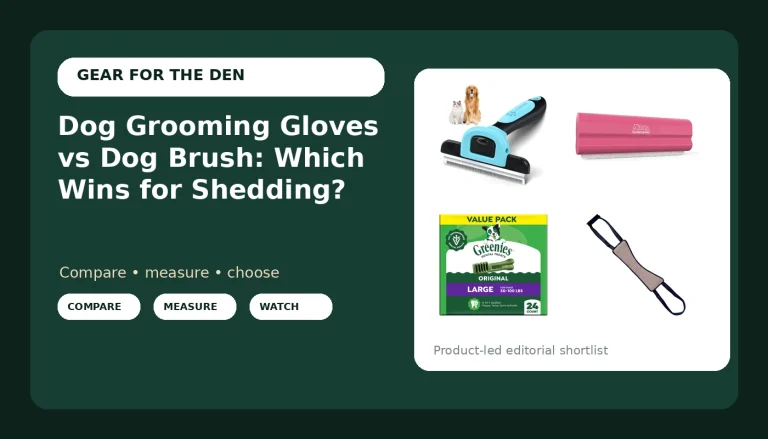
Budget pick: MIU COLOR Pet Grooming Brush, Deshedding Tool for Dogs & Cats, Blue
Budget pick
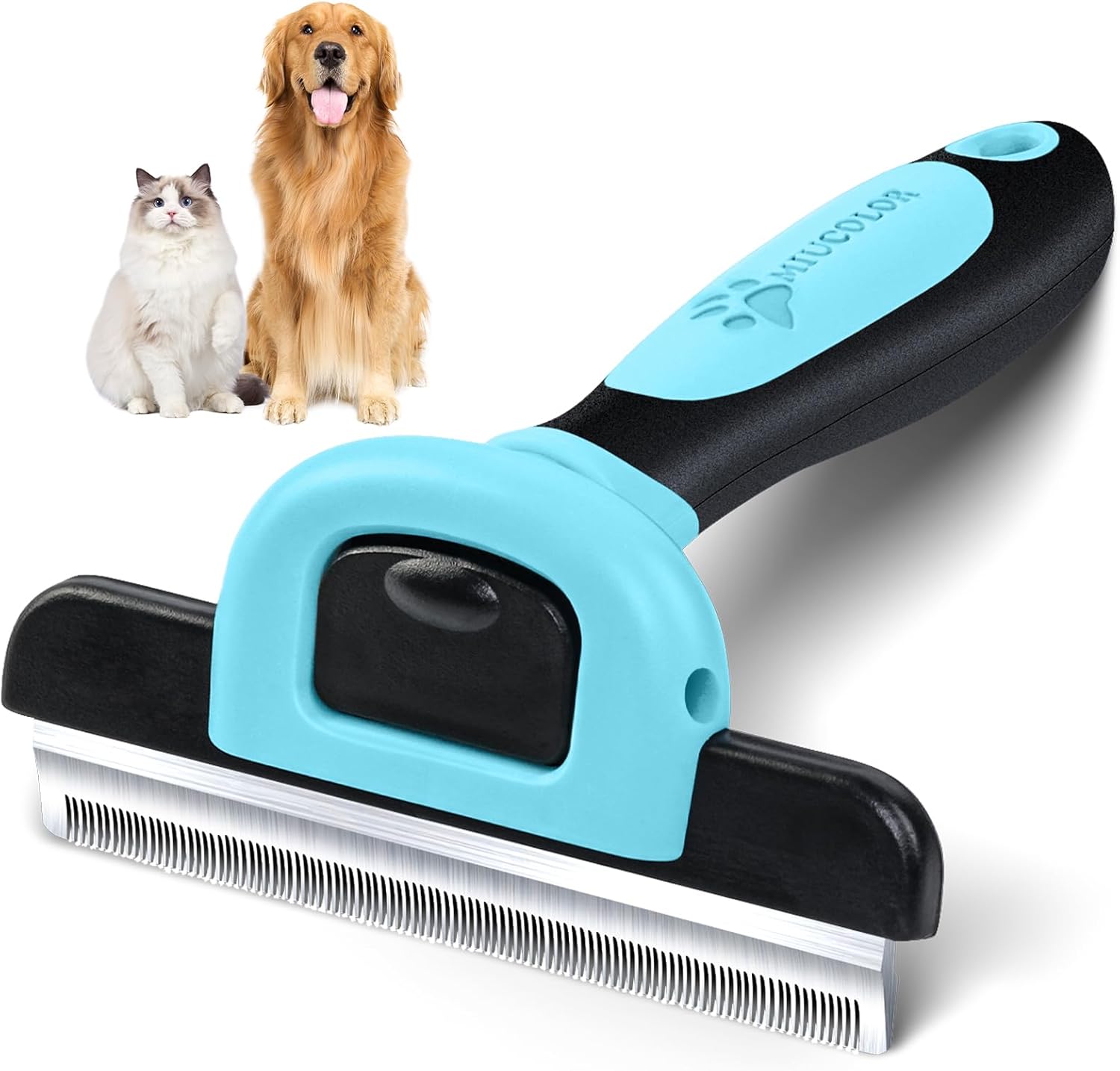
MIU COLOR Pet Grooming Brush, Deshedding Tool for Dogs & Cats, Blue
Check current Amazon price.
This is the tool I hand to people who are not sure they want to spend real money on grooming gear, and it is the one I keep in the car for foster dogs. The head is a fine-toothed blade on a small handle, sized for cats and small dogs but perfectly usable on a medium coat. It is light, it rinses clean in a second, and it does the one job it is built for: lifting loose hair off the surface of a short or medium coat without a full grooming session.
Where it earns its place is on a single-coated dog. On a lab, a beagle, or a cat, a few minutes with this thing pulls a surprising amount of hair, and the dog barely notices. It is also the right size for legs, faces, and tails, where a five-inch blade is simply too much tool.
Flaws but not dealbreakers: The teeth are shallow, which means they clog quickly on a dense double coat. You will spend as much time clearing the head as brushing. Pressing hard does not help and will scratch skin, so use light strokes and let the blade find the loose hair. Anyone with a husky, a shepherd, or a malamute should look at the next entry instead.
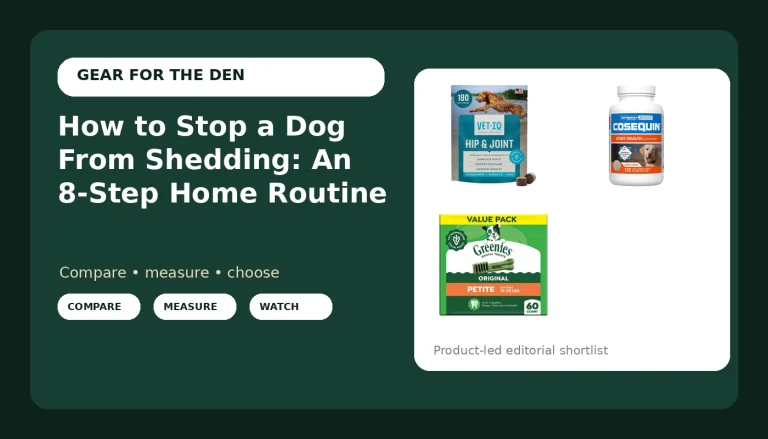
Our pick: EquiGroomer 5-Inch Undercoat Deshedding Brush for Dogs & Cats, Lime
Our pick
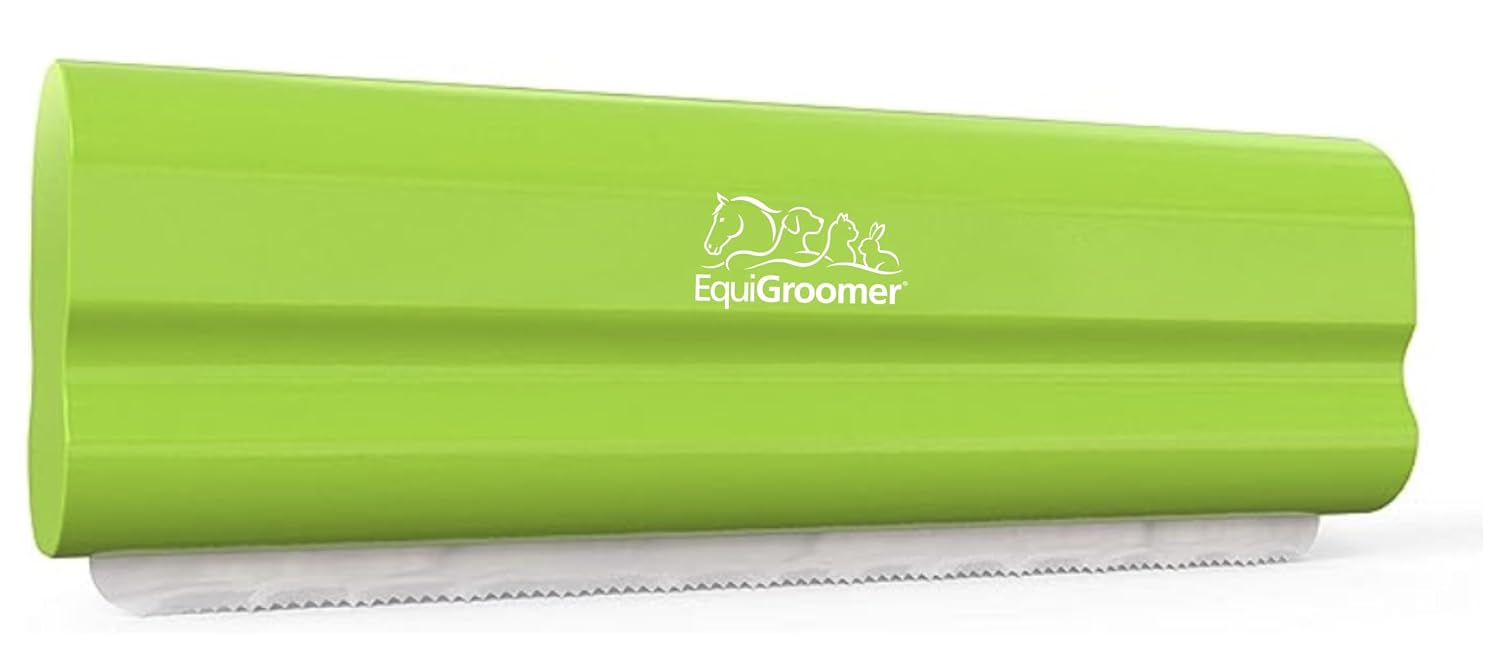
EquiGroomer 5-Inch Undercoat Deshedding Brush for Dogs & Cats, Lime
Check current Amazon price.
If you own a double-coated dog and you want to reduce dog shedding at the source, this is the tool that does it. The five-inch head is a wide, fine-toothed blade set on a long handle, and the geometry is what separates it from the cheap brushes: the teeth reach under the topcoat and pull the loose undercoat out, rather than raking across the guard hairs and snapping them.
That distinction matters more than any spec sheet. Tools that cut guard hairs leave a coat that looks thinner and feels coarser for months. This one grabs the dead undercoat and leaves the rest alone, which is why it is the first thing I reach for on a shepherd mix in March.
The handle is long enough for two-handed control on a big dog, so you can work in long, even strokes instead of short jabs. On cats it takes a lighter hand, but it works, and the wide head covers a lot of body per pass, which turns a thirty-minute job into a ten-minute one.
Flaws but not dealbreakers: The head is wide, so it is clumsy on legs, paws, and faces; keep the budget brush above for those spots. It also needs clearing every few strokes during a heavy blow, and it will not untangle a mat, it will catch on one. Work mats out with a comb first, then come back with this.
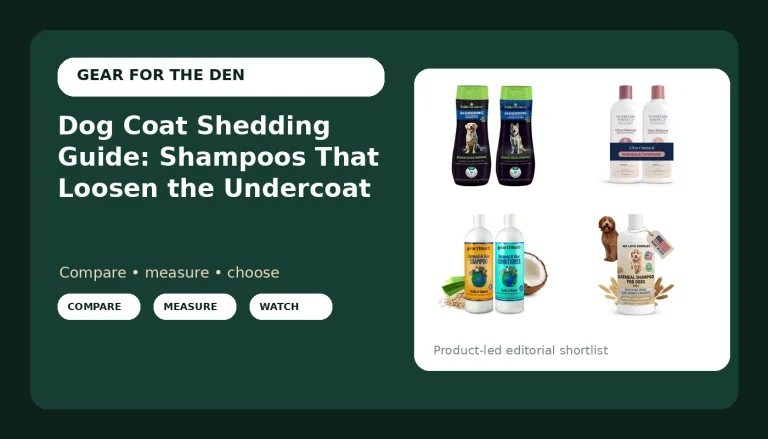
The routine anchor: Greenies Petite Natural Dental Dog Treats, Original Flavor, 60 Count
The routine anchor
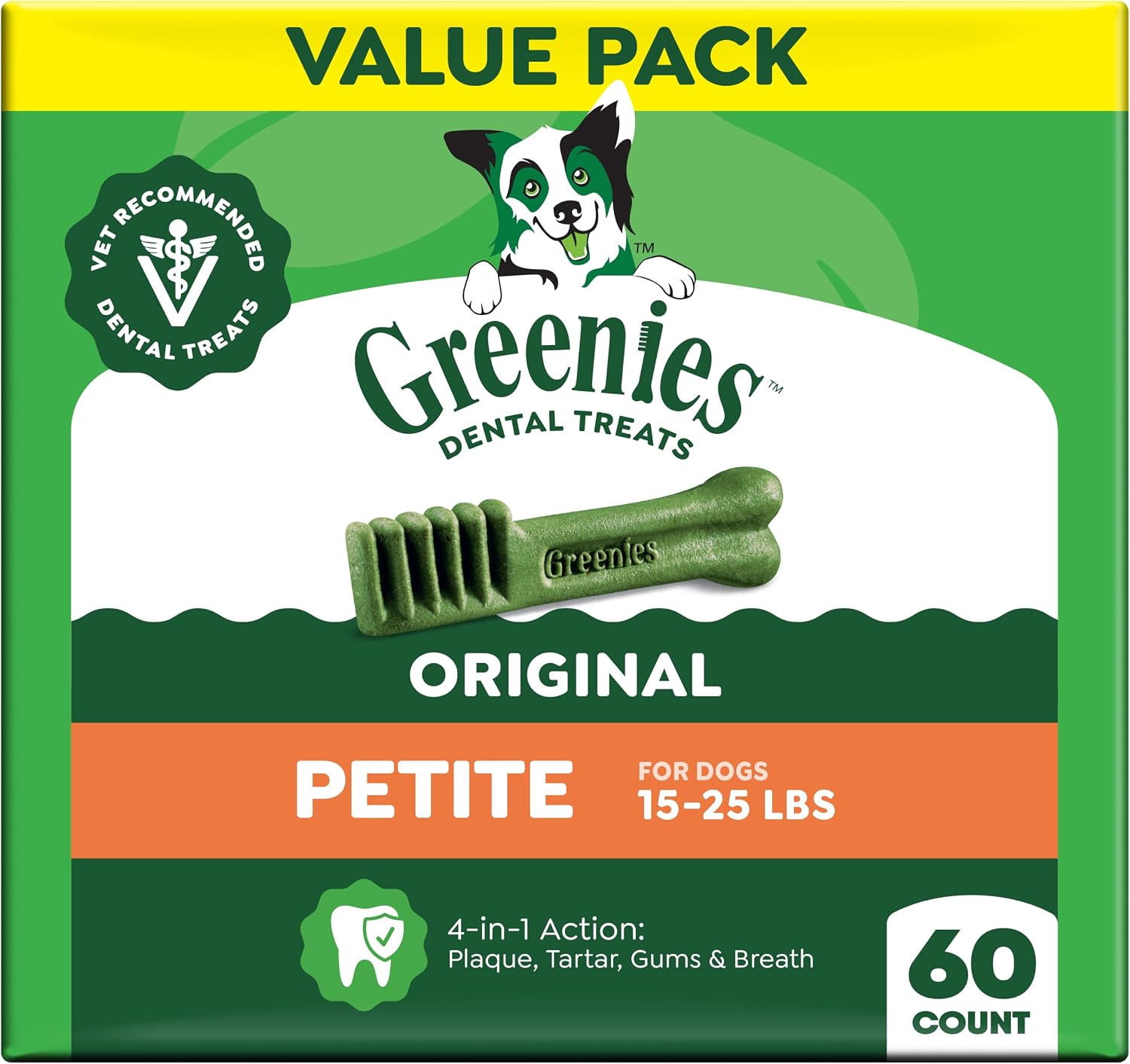
Greenies Petite Natural Dental Dog Treats, Original Flavor, 60 Count
Check current Amazon price.
This is the entry that makes people ask why a dental treat is in a shedding article, so here is the honest answer: because the routine only works if the dog stands still for it. A dog that fights the brush for five minutes sheds more hair onto the floor through squirming than a calm dog sheds in a twenty-minute session, and the difference between those two dogs is usually a chew.
I keep a jar of the petite size next to the brush. One treat at the start, one at the halfway mark, one at the end, and the whole thing becomes something the dog shows up for instead of something the dog tolerates. The petite size is built for small dogs, and the texture is firm enough that it takes a few minutes of chewing rather than disappearing in one bite, which is exactly what you want when you need the dog occupied while you work a hindquarter.
The dental side is real too, in the sense that chewing an abrasive texture does help scrape tartar off the tooth surface. It is not a substitute for a vet cleaning, and no treat is, but it is the rare item that earns its place twice: a calmer grooming session and a cleaner mouth.
Flaws but not dealbreakers: The count goes fast if you use three per session, so budget for it as a consumable rather than a one-time buy. If your dog has a sensitive stomach, introduce them one at a time and check the ingredient list before you make them a habit. A small dog with existing dental disease should have a vet look at the teeth before you start any chewing routine.
The shedding routine, step by step
Most advice about how to lower dog shedding starts with a tool recommendation and skips the sequence. The sequence is what does the real work to lower dog shedding, so here it is in order.
Step one: Know the coat type. Double coat, single coat, curly, or wiry. Double-coated dogs blow coat twice a year and shed steadily in between. Single coats shed continuously and shed more per day. Curly coats shed, but the hair stays trapped in the coat instead of landing on your floor, which is why they look like they do not shed at all. The coat type decides your tool and your cadence, and a deshedding blade on a curly coat is wasted effort.
Step two: Brush dry, before the bath. Water mats loose undercoat against the skin and turns a ten-minute job into a fight. Get the dry hair out first. This is the single step most owners skip, and it is the reason a bath sometimes seems to make shedding worse for a week.
Step three: Work in three passes. With the grain first to lay the coat down, then short strokes against the grain to lift the undercoat, then with the grain again to finish. Light pressure. Let the teeth do the work. Pressing digs into skin, the dog flinches, and the session is over.
Step four: Bathe with an oatmeal shampoo, and read the ingredient list. The word oatmeal on the front of a bottle means very little. Colloidal oatmeal high in the ingredient list is what you want, because oatmeal concentration is what calms an itchy skin, not the label. Rinse twice as long as feels necessary. Shampoo residue itches, an itchy dog scratches, and scratching is shedding with extra steps.
Step five: Dry completely, then brush again. Damp undercoat clumps and holds. Towel dry, then low heat if your dog tolerates it, then one more pass with the deshedding tool. That second pass is where the real volume comes out, and it is the step that separates a good bath from a great one.
Step six: Feed the coat, not the marketing. Omega 3 fats are the ones with real evidence behind them for skin and coat, and the number that matters is EPA DHA, not the total fish oil on the label. Look for a named source and a stated EPA DHA amount, then check the bottle size against the dose for your dog's weight so you are not buying a two-week supply at a two-month price. If your dog is itchy or gassy on a fish oil, try a limited ingredient approach with one fat source at a time so you can tell what actually helped. My notes on dosing live in the fish oil guide if you want the longer version.
Step seven: Keep anything on the skin lick safe. A dog will lick off a topical product within a minute, so whatever you put on a dry patch or a hot spot has to be lick safe. That rules out most of the human cabinet. If the skin is red, broken, weeping, or smells, stop and call your vet; that is not a shedding problem, that is a skin problem wearing a shedding costume.
Step eight: Set the cadence and keep it. Ten minutes twice a week, plus one long session during a coat blow. Write it on the calendar next to the trash pickup. The dog brushed on a schedule sheds less in the house than the same dog brushed frantically once a month, every time.
The competition and why it lost
Everything in this category claims to reduce dog shedding. Most of it manages the hair after it lands, which is a different job.
Undercoat rakes with hooked teeth are the big one. They pull hair, and they pull it fast, but the hook design can cut guard hairs as it goes, and a coat that has been raked hard for a season looks dull and feels rough. If you already own one, use it gently and stop when the hair stops coming.
Rubber curry brushes are excellent in the bath, where they work shampoo into a double coat and lift loose hair, but on a dry coat they mostly polish the surface. Slicker brushes are the same story: fine for finishing and for fluffing a leg, useless for reaching undercoat. Deshedding gloves feel great to use and do almost nothing on a dense coat, though they are fine on a short-haired dog that just wants to be touched.
Robot vacuums and lint rollers are the symptom management category. I own both. They are not a shedding plan.
On the diet side, generic salmon oil capsules with a low dose, and deshedding shampoos that claim to stop shedding, are the two most common wastes of money. A shampoo can loosen hair, which is useful, but it cannot stop a coat cycle, and a capsule with no stated EPA DHA is a guess. Professional grooming is genuinely useful during a coat blow, but it is a supplement to home brushing, not a replacement, because the undercoat comes back in a few weeks.
What this all costs
The three items above are each priced on their own listing, so check the current price there before you buy rather than trusting a number in an article written on a specific day. What I can tell you is the shape of the spending.
The budget brush is the cheapest thing in the routine and the one that lasts the longest, because there is nothing on it to wear out except the teeth. The five-inch undercoat tool costs more than the budget brush but less than a single grooming appointment in most cities, and it is the item that does the heavy lifting if you have a double-coated dog. The treats are the only consumable on the list, so they are the line item that recurs, and the size you buy should match your dog.
Then there is the part that does not show up on a receipt: a decent oatmeal shampoo, an omega 3 supplement with real EPA DHA numbers, and the ten minutes twice a week. Add those and the whole routine costs less per month than a professional grooming appointment, and it works better, because it happens twelve times more often.
The math is the easy part. The hard part is step eight, which is the boring one, on a Tuesday, when the dog does not want to stand still. Do that for a month and the difference in your house is not subtle. That is the job. Your dog was built to shed. Your floors were not built to hold it.