Puppies eat like the floor is a suggestion. If you want to know how to set up a feeding station for a puppy, start with the boring version: one fixed spot, one set of bowls, one water source, and a routine the puppy can predict down to the minute. Everything else is decoration.
Most people skip straight to shopping. They buy a cute elevated stand, drop it in the middle of the kitchen, and then spend six months stepping around a water bowl that the puppy treats as a splash pad. Gear matters, but it is the third decision in the sequence, not the first.
The order that works is location, then capacity and height, then the water station, then the routine that ties it together. A feeding station setup for a puppy is a layout problem first and a shopping problem second, and getting that order wrong is why so many kitchens end up with a bowl parked in the walking path.
Why you should trust me
The rules for how to set up a feeding station for a puppy are mostly about the room, not the bowl, and I learned that the hard way. I have set up feeding stations for puppies in a galley kitchen, in a mudroom with a floor drain, and in a small apartment where the only free wall sat next to a heat vent, which is a mistake I only made once.
I write about dog gear for a living, and I have watched more puppies knock over more bowls than I care to count. That is why I care about unglamorous details: whether a base slides across tile when a twelve-pound puppy leans on it, whether a bowl survives the dishwasher, whether replacement filter cartridges for a fountain are sold on their own or force you to buy a whole new unit. Nobody puts those details in a product photo.
How I picked and how I tested
Judging feeding gear by the hero image is how people end up with a bowl that skates across the floor. I start with the listing and the questions that matter across the first year of a puppy's life:
- Does the bowl capacity match a puppy-sized meal, and will it still work at forty pounds?
- Is the feeding height right for a growing dog, or is it fixed for an adult?
- Does the base grip, or does it skate?
- Can the parts go in the dishwasher?
- For water, what is the water capacity, and how does the filter cartridge supply work?
- Does the food storage side actually hold an airtight seal?
After that I read the critical reviews, the two and three star ones, looking for what fails at month three rather than day one. A bowl that cracks at month three is worse than a bowl that arrives cracked, because you have already built a routine around it. If you are still sorting out bowls, my guide to the best dog bowls for puppies covers that decision on its own.
The three picks below cover the water side, the cheap enrichment side, and the puzzle side of a puppy feeding station. None of them is a full station by itself. Together they handle the parts of feeding that a plain bowl cannot.
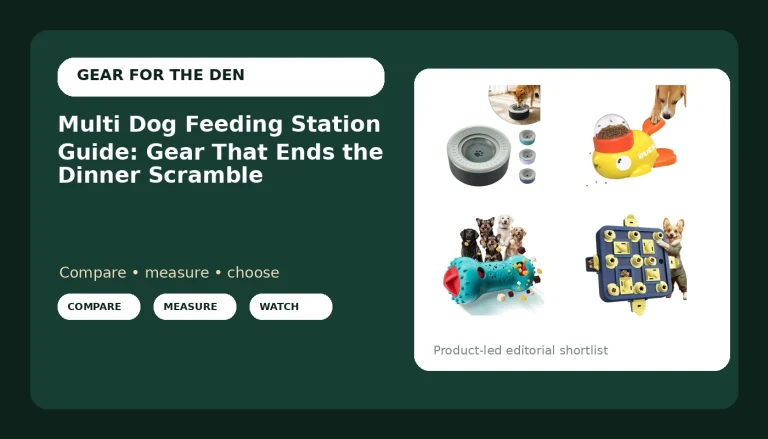
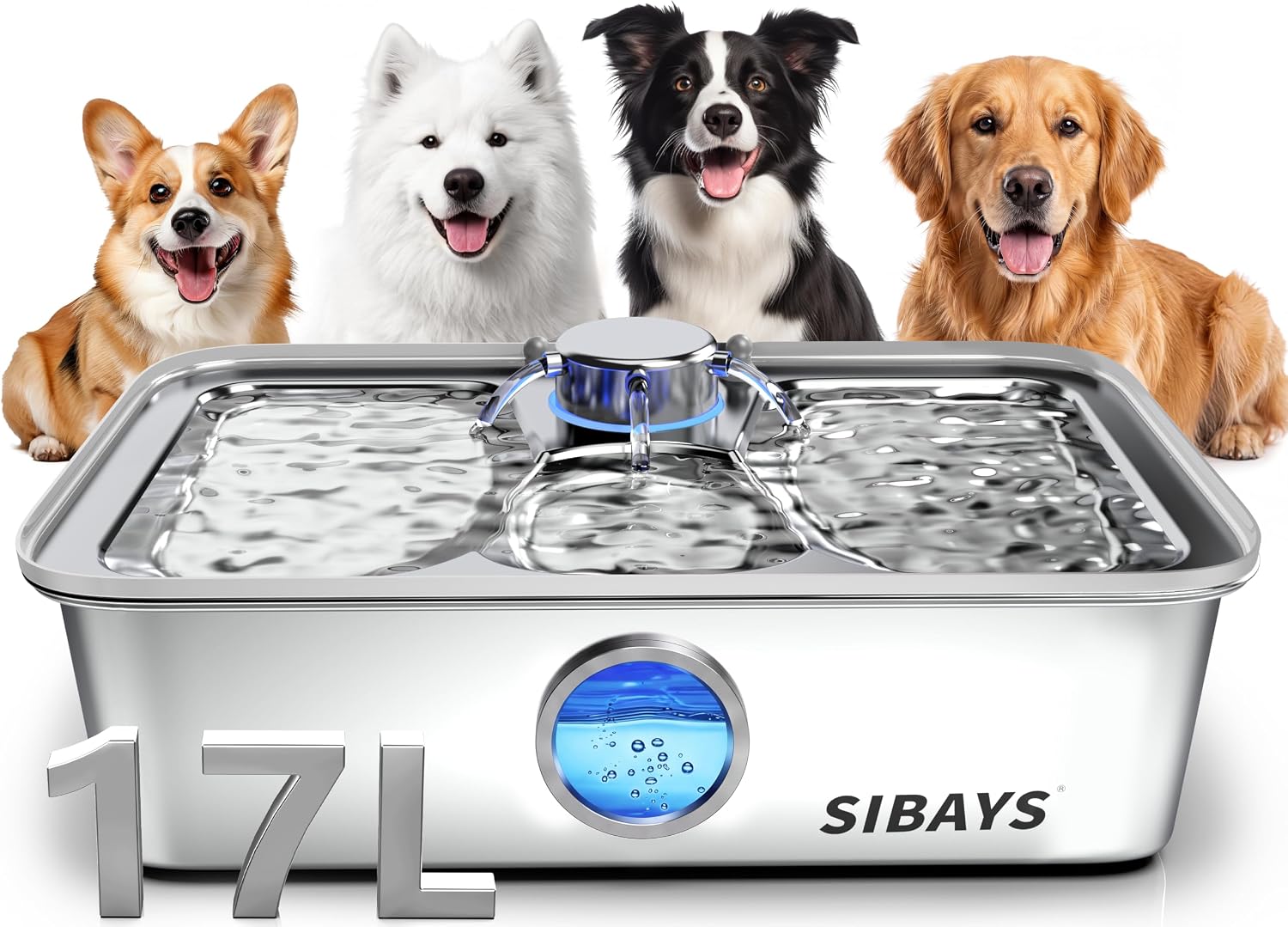
The water side: SIBAYS 17L Dog Water Fountain, Stainless Steel Pet Water Fountain FS83
The water side
SIBAYS 17L Dog Water Fountain, Stainless Steel Pet Water Fountain FS83
Check current Amazon price. The 17L water capacity is the reason this fountain belongs in the conversation. A puppy drinks in small, frequent sips, and a shallow bowl goes warm and dusty within an hour in a busy house. Moving water stays more appealing, which matters more than most people expect in the first few weeks, when you are trying to keep a puppy hydrated without standing at the sink.
The stainless steel basin is the other selling point. Stainless steel does not hold odors the way plastic does, and it is the material most people end up wanting after their first plastic bowl picks up a permanent smell. Plan for a nearby outlet and a short cable run, or a spot where the cord tucks behind furniture instead of stretching across a doorway.
Flaws but not dealbreakers: A reservoir this size is a commitment at cleaning time. You are dumping and rinsing a lot of water, and stainless steel is heavier than plastic when you carry it to the sink. Fountains also need a filter cartridge on a schedule, so check the listing for how replacements are sold before you commit.
Anyone who works away from home, or who has a puppy that empties a bowl by lunchtime, gets the most out of this one.
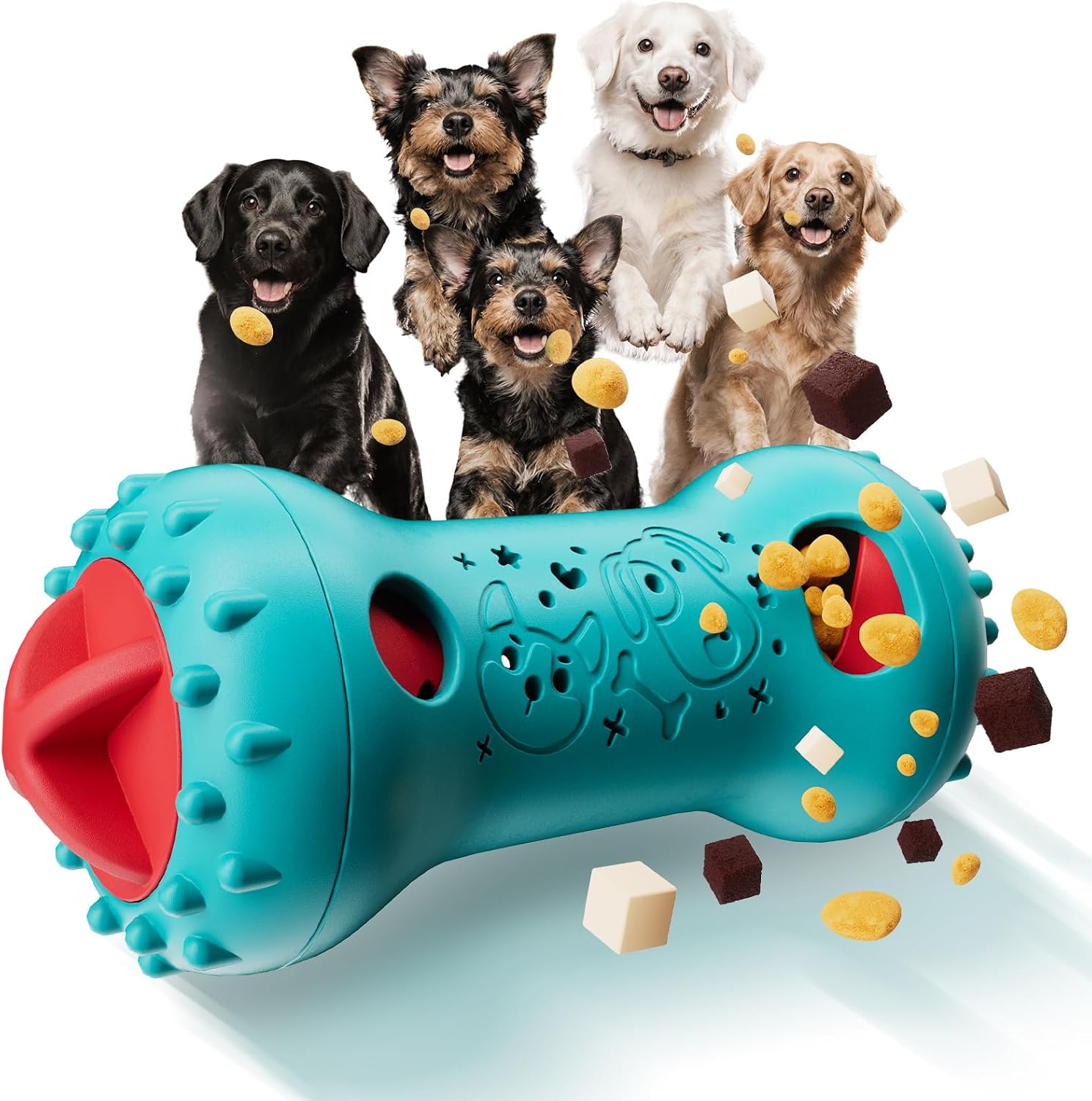
Budget pick: Interactive Dog Toys,Adjustable Treat Dispensing Toy to Keep Them Busy
Budget pick
Interactive Dog Toys,Adjustable Treat Dispensing Toy to Keep Them Busy
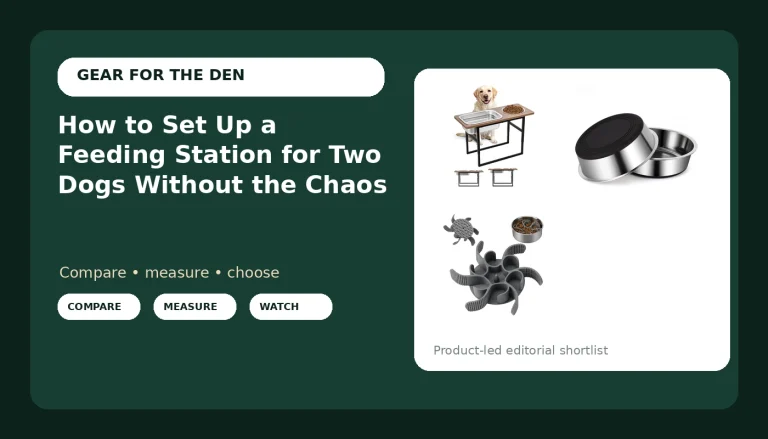
Check current Amazon price. This is the cheapest way to slow down a puppy that inhales a meal in ninety seconds and then looks around for more. The adjustable treat dispensing design means you can start on the easy setting for an eight-week-old and tighten it as the puppy works out the mechanics, which is the entire point of a difficulty dial on a food toy.
It is not a bowl replacement and it is not a water source. It is a mealtime accessory: part of the ration in the bowl, part in the toy, and the meal stretches from two minutes to ten. That is ten minutes you get back, and a puppy that is working for food is a puppy that is not chewing the baseboard.
Flaws but not dealbreakers: Treat toys live or die on the puppy's motivation. Some puppies take to them on day one, and some ignore them for a week before it clicks. Plastic parts also mean supervision with a determined chewer, so check the listing for whether the pieces are dishwasher safe before you plan on a lazy cleanup.
Best for anyone with a gulper, a bored puppy, or a puppy that needs a job while you eat your own dinner.
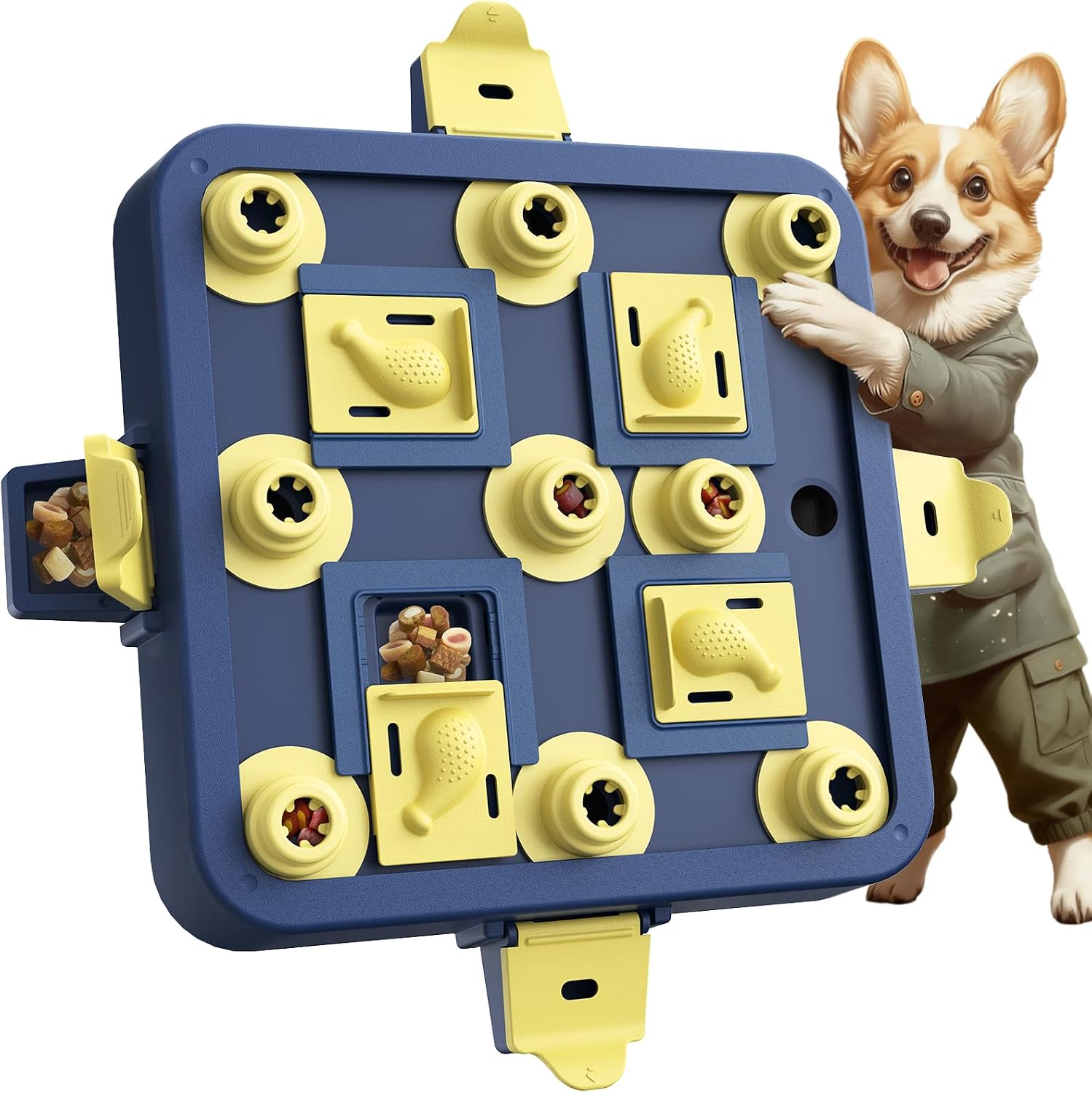
The enrichment pick: KADTC Dog Chess Puzzle Toy, 3-Levels, Mental Stimulation for Smart Dogs
The enrichment pick
KADTC Dog Chess Puzzle Toy, 3-Levels, Mental Stimulation for Smart Dogs
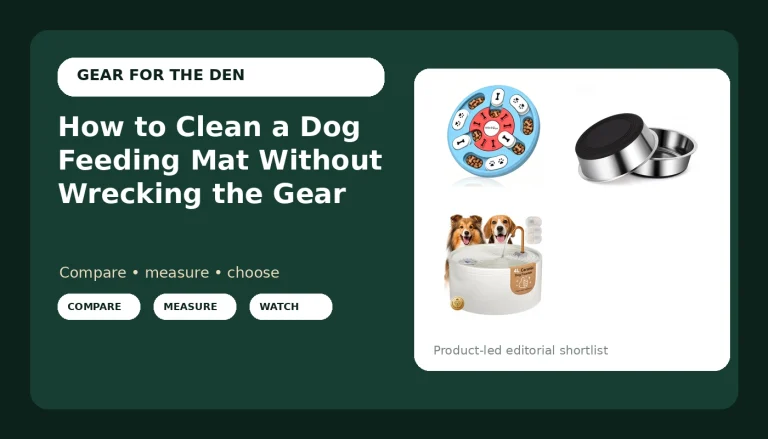
Check current Amazon price. The three levels are the point here. A single-stage puzzle teaches a puppy one trick and then becomes a bowl with extra steps, but a three-level board gives you somewhere to go as the puppy gets smarter, which happens faster than most people expect between three and six months.
Mental stimulation is not a luxury for a puppy in a small home. Fifteen minutes of problem solving can do more for a dog than a walk around the same block, and it fits into a lunch break. Use it for part of the meal rather than all of it, so the puppy still learns that the bowl is where dinner lives.
Flaws but not dealbreakers: Puzzle pieces get lost. Sliding covers end up under the couch, and a board with missing pieces is a board that stops working. Supervision matters, because a frustrated puppy will chew the parts it cannot move. Check the listing for cleaning instructions rather than assuming the board can go in the sink.
Anyone with a puppy that finishes dinner and then stares at you like you owe it something will get the most out of this one.
How to set up a feeding station for a puppy, step by step
Now the sequence itself. This works in a kitchen, a mudroom, a laundry room, or a corner of a living room, and it takes about twenty minutes once the gear is out of the box. When you set up a feeding station for a puppy, the order below matters more than the brand names on the boxes.
Step one: Pick the spot before you buy anything. The right spot has a floor you can wipe, a wall behind it, and no foot traffic cutting through it. Keep the station out of the puppy's sleeping area and away from heat vents, radiators, and doors that swing. A puppy that has to defend its food in a hallway is a puppy that learns to eat fast. Tile or vinyl beats carpet every time, because the first week of a feeding station is mostly spill management.
Step two: Match bowl capacity to the meal, not the puppy. Puppies eat small meals three to four times a day, so a giant bowl is not a kindness. It is a way to overfeed and a way to leave kibble sitting out going stale. Start with a bowl that holds one meal with a little room to spare, and plan to size up at least once before the dog is grown. Measure the food instead of eyeballing it.
Step three: Set the feeding height correctly. For a young puppy, the floor is the right feeding height, full stop. Elevated stands are for adult dogs, and a puppy stretching up to reach a raised bowl is a puppy practicing bad posture. Revisit the height when the dog stops growing, usually somewhere around a year for most breeds, and use chest height as the guide.
Step four: Anchor the base so nothing slides. A non slip base or a rimmed mat does more for your sanity than any bowl upgrade. Water bowls are the worst offenders, because a puppy that pushes a bowl across the floor is a puppy that is about to splash. Put the water on a tray with a lip, and check that the food bowl actually grips your floor type rather than trusting the words non slip on the box.
Step five: Build the water station as its own thing. Water and food do not have to share a corner, and water is the half of the job most people skip when they set up a feeding station for a puppy. Water capacity matters most here: a fountain with a real reservoir keeps you from refilling four times a day, and moving water encourages a puppy to drink, which counts in warm weather and after play. If you use a fountain, plan the cord. If you use a bowl, plan on changing the water twice a day.
Step six: Introduce the routine. Feed at the same times, in the same spot, and take the bowl up after ten or fifteen minutes. Free feeding makes house training harder, hides a lost appetite, and turns the station into a buffet. A predictable routine is the part of the setup a puppy actually understands, and it is what makes the ideal feeding station setup for a puppy work in a small space.
Step seven: Add slow feed ridges or a puzzle for the gulpers. If your puppy finishes before you sit down, split the meal between the bowl and a food toy. Slow feed ridges handle a whole meal, and a puzzle handles part of one. Rotate the toys so the challenge stays interesting, and keep feeding part of every meal from a plain bowl so the puppy does not learn that dinner only arrives with a game attached.
Step eight: Lock in a cleaning schedule. Rinse bowls daily, run the dishwasher safe parts through weekly, and change fountain water and check the filter cartridge on whatever cadence the maker recommends. Kibble goes stale and rancid in an open bag, so store it in a container with an airtight seal and keep the scoop inside. Every month, recheck bowl capacity and feeding height, because a puppy that grew two inches has outgrown yesterday's setup.
The competition and why it lost
Several things people buy for a puppy feeding station did not make this list, and the reasons are worth knowing if you are working out how to set up a feeding station for a puppy for the first time.
Gravity waterers, the kind that hold a bottle upside down over a bowl, are cheap and they work, but they are miserable to clean and they have no filter cartridge. A puppy mouthing a shared reservoir is not a setup I want in my kitchen.
Plain ceramic bowl sets are attractive and heavy, which sounds like an advantage until one chips, and until you notice that most of them have a bare bottom that slides on tile. Heavy is not the same as stable.
Fixed-height elevated stands are the most common mistake. They are sold as ergonomic for all dogs, but a stand sized for an adult Labrador is the wrong feeding height for a ten-week-old puppy, and a stand sized for a puppy is outgrown in two months. Buy the stand when the dog is grown.
Slow-feed bowls with molded ridges are useful for gulpers, but they solve one problem only. They do nothing about water capacity, nothing about the routine, and nothing about a puppy that is bored between meals.
Automatic feeders are for adult dogs on a schedule. A puppy needs you at meals, both to see how much is eaten and to reinforce the routine, so a feeder adds cost without adding much at this stage.
What this all costs
The gear in this guide is the cheap part. Each item above links to its listing, where it shows Check current Amazon price, and all three together are a one-time purchase that will outlast the puppy stage if you clean them properly.
The recurring costs are the ones to plan for: food, which climbs as the puppy grows, replacement filter cartridges for a fountain, and the occasional replacement bowl for the one that gets chewed or dropped. If you run a fountain, keep a spare filter cartridge on hand so you are never tempted to skip a change because the box is empty.
None of this is complicated. Figuring out how to set up a feeding station for a puppy comes down to a location, a bowl sized to the meal, a water source with enough capacity that you are not refilling it all day, and a routine you actually follow. Set it up once, adjust it as the puppy grows, and the messiest part of owning a puppy gets a lot quieter.