A dog feeding mat looks clean for about four days. Then the kibble dust settles into the surface, the water bowl leaves a hard mineral ring, and the corner of the kitchen starts to smell faintly of kennel. Knowing how to clean a dog feeding mat is not complicated, but the small mistakes are what turn a two-year mat into a six-month mat: scalding water on a rubber backing, a soak that never fully dries, a spray cleaner that leaves a film your dog then licks off at the next meal.
I run a two-dog feeding station on a tile floor with a puppy who believes water is a toy. That mat gets soaked, dragged, and stepped on daily, and it still looks new after two years of the routine below. Eight steps, ten minutes, and one of them is the step almost everyone skips.
You do not need special equipment for this. You need warm water, a mild dish soap, a soft brush, and a mat you can lift off the floor without a fight. The three pieces of gear below are what make the job faster, and they are what I would buy first if I were building a feeding station from scratch.
Why you should trust me
I have been writing about pet gear and household cleanup for most of a decade, and I have cleaned up after dogs with long jowls, dogs that dunk their whole muzzle in the water bowl, and one Labrador who treated every meal like a digging competition.
That is the useful part of the resume. The rest is method. I have scrubbed silicone mats with slow feed ridges, pulled rubber-backed runners out from under bowls, and put more mats labeled dishwasher safe through a dishwasher than I care to admit, mostly to learn which ones come out flat and which ones come out curled like a taco shell.
I do not sell cleaning products and I do not get paid to like a mat. I care about three things: does the mat stay flat, does it come clean without a chisel, and does it dry before the next meal. Everything here is built around those three questions.
How I picked and how I tested
I did not pick the gear below by reading spec sheets. I picked it by asking what a feeding station has to survive: water, saliva, kibble oil, a dog standing in the bowl, and a wash every week.
For mats, two things matter, the non slip base and the surface texture. A smooth silicone mat wipes clean in one pass but slides across tile. A deeply ribbed mat grips the floor and traps kibble dust in every groove. The mats that work split the difference: shallow ridges, a pebbled underside, and no deep channels where wet food can sit.
For bowls, bowl capacity and feeding height matter more than finish. A three-cup bowl is the practical size for a medium dog. Anything deeper than about three inches makes a short-legged dog reach, and reaching is how water ends up on the mat instead of in the bowl.
For water, I looked at how many parts touch water, how easily the reservoir rinses, and whether the filter cartridge is a shape you can buy anywhere or a proprietary part you have to reorder forever.
Every piece here went through the same routine: warm water, a drop of dish soap, a soft bottle brush, air dry on a rack. The gear that came out of months of weekly washing without clouding, cracking, or holding a smell made the list. The gear that needed a specialty brush or a screwdriver to open did not.
What you need before you clean a dog feeding mat
You can clean any mat with a sponge and dish soap. These three pieces are what make the job fast, and they are the gear I would buy first for a feeding station that stays presentable.
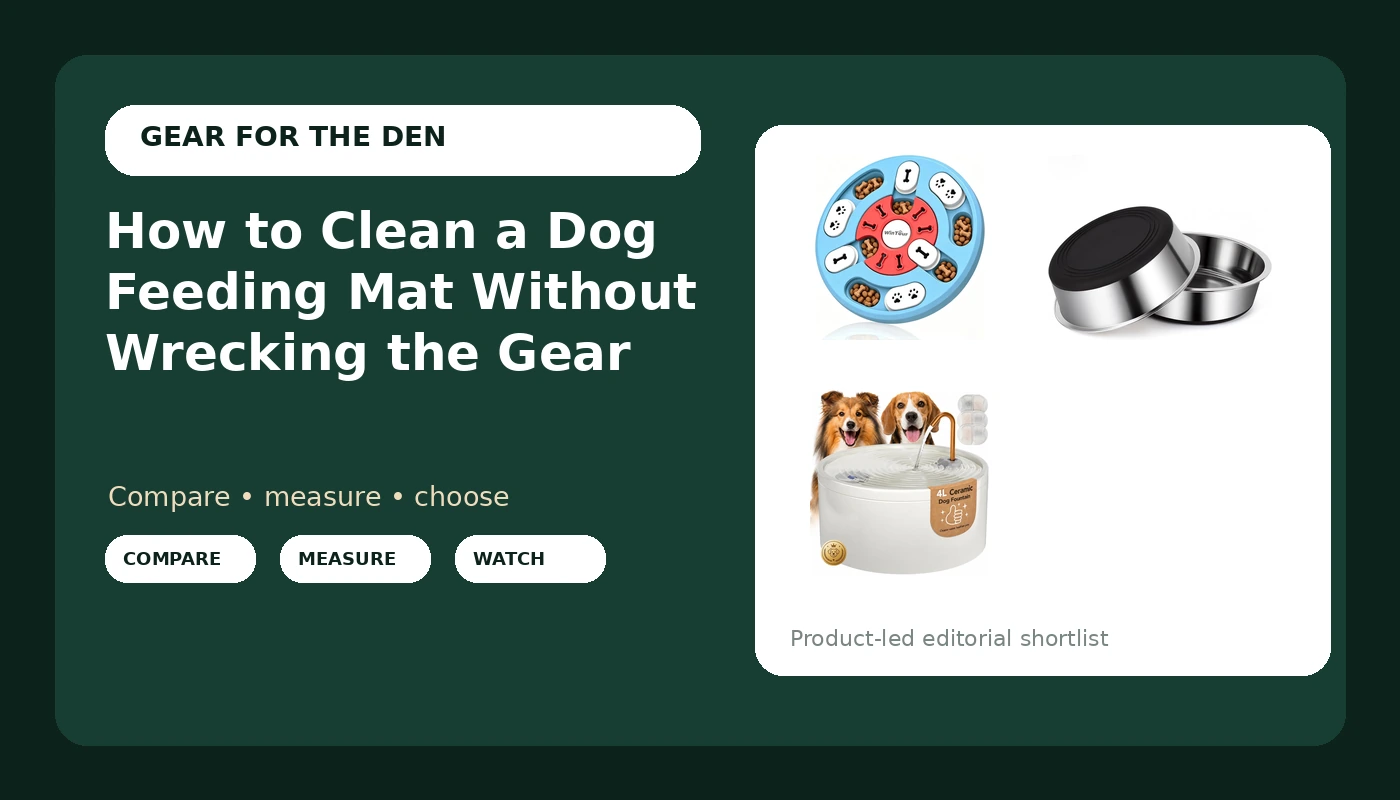
Budget pick: WinTour Dog Puzzle Toy,Interactive Dog Toys & Dog Puzzles for smart Dogs
Budget pick
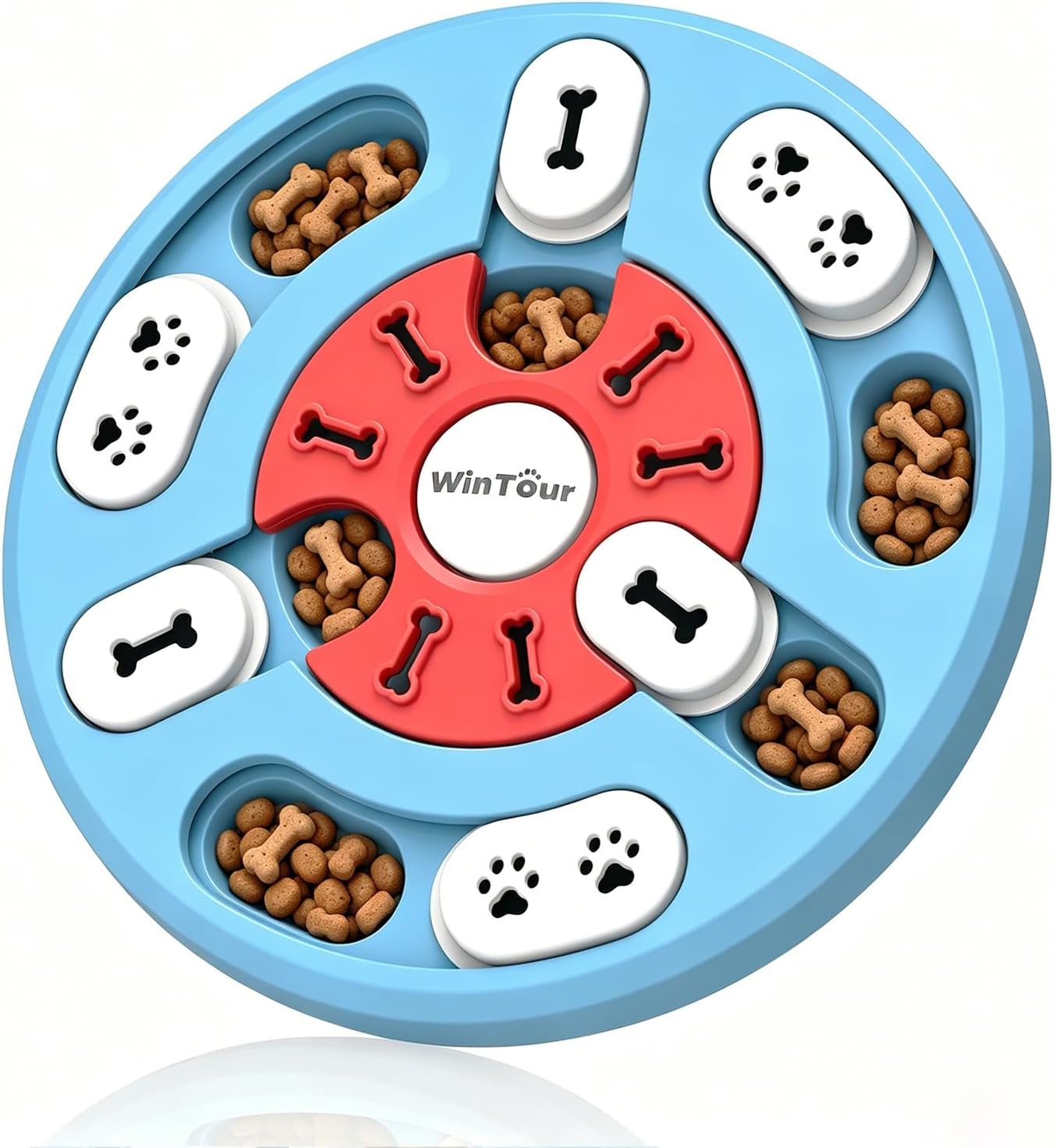
WinTour Dog Puzzle Toy,Interactive Dog Toys & Dog Puzzles for smart Dogs
The cheapest fix for a dirty feeding mat is not a better mat. It is a slower meal. A dog that inhales a bowl of kibble in forty seconds is a dog that pushes the bowl across the mat, tips it, and trails crumbs from the kitchen to the couch. Give that same dog a puzzle and the meal takes ten minutes and stays inside an eighteen-inch circle. Check current Amazon price.
This is the smallest item on the list and the one that changes the mess the most. The sliding compartments and flip lids are shallow enough to rinse under a tap, and there are no deep wells where wet kibble can sit and sour. It is also the piece I reach for when the weather is bad and the dog needs something to do that is not chewing the baseboards.
Flaws but not dealbreakers: The plastic is thin, and a dog who solves puzzles by biting them will eventually pop a slider loose. This is a thinking dog's toy, not a chewer's toy. Supervise the first few sessions and put it away afterward.
Anyone with a fast eater, a food-flinging eater, or a bored dog in a small apartment will get more value out of this than out of a fancier mat.
Our pick: Dog Bowls, Food Grade Stainless Steel for Food and Water, 2-Pack, 3 Cups
Our pick
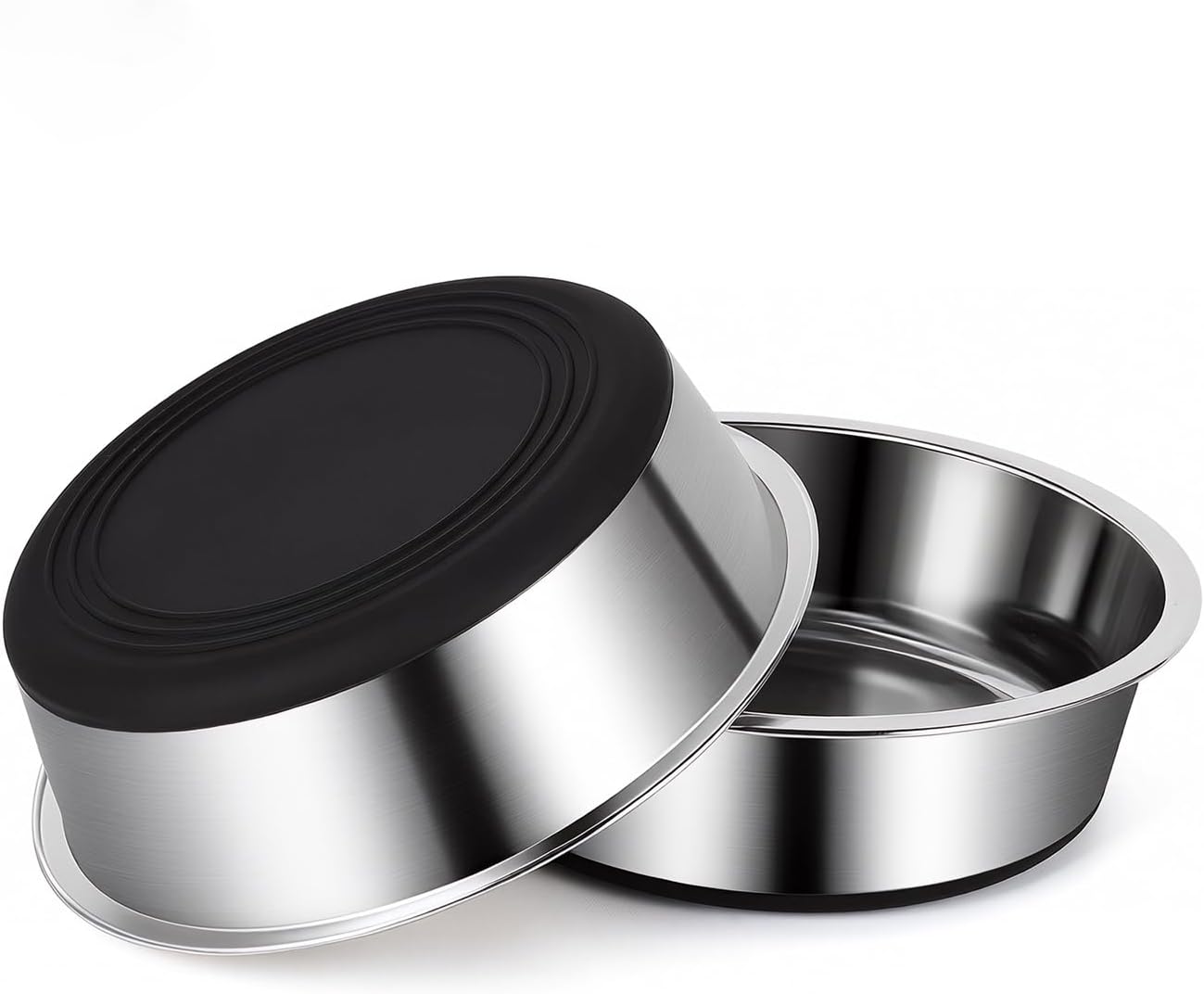
Dog Bowls, Food Grade Stainless Steel for Food and Water, 2-Pack, 3 Cups
Stainless steel solves the bowl half of the mess. It does not hold odor, it does not stain, and a three-cup bowl capacity is right for most medium dogs, with enough room that a dog's tongue is not scraping the bottom and shoving the bowl toward the wall. Check current Amazon price.
The reason I put these ahead of decorative ceramic sets is the cleanup math. Stainless is the one material on a feeding station that is honestly dishwasher safe, so the bowl goes in, comes out spotless, and dries in minutes. Ceramic and melamine chip, and a chipped rim is a place for bacteria to hide no matter how hard you scrub. Two bowls also means you always have one clean while the other is in the wash, which is the single biggest reason people let a feeding station get gross.
Pair them with a mat that has a non slip base so the water bowl stays put when your dog drinks like it is a race. A bowl that slides is a bowl that spills, and spilled water is what turns kibble dust into a sticky film that bonds to silicone.
Flaws but not dealbreakers: They are plain, and there is no silicone ring on the bottom, so on bare tile they will still skid without a mat under them. If your dog eats like a snowplow, this is not a slow feeder, it is just a clean one.
Upgrade pick: MISFANS Ceramic Dog Water Fountain, All-Ceramic Body, Pure Copper Spout
Upgrade pick
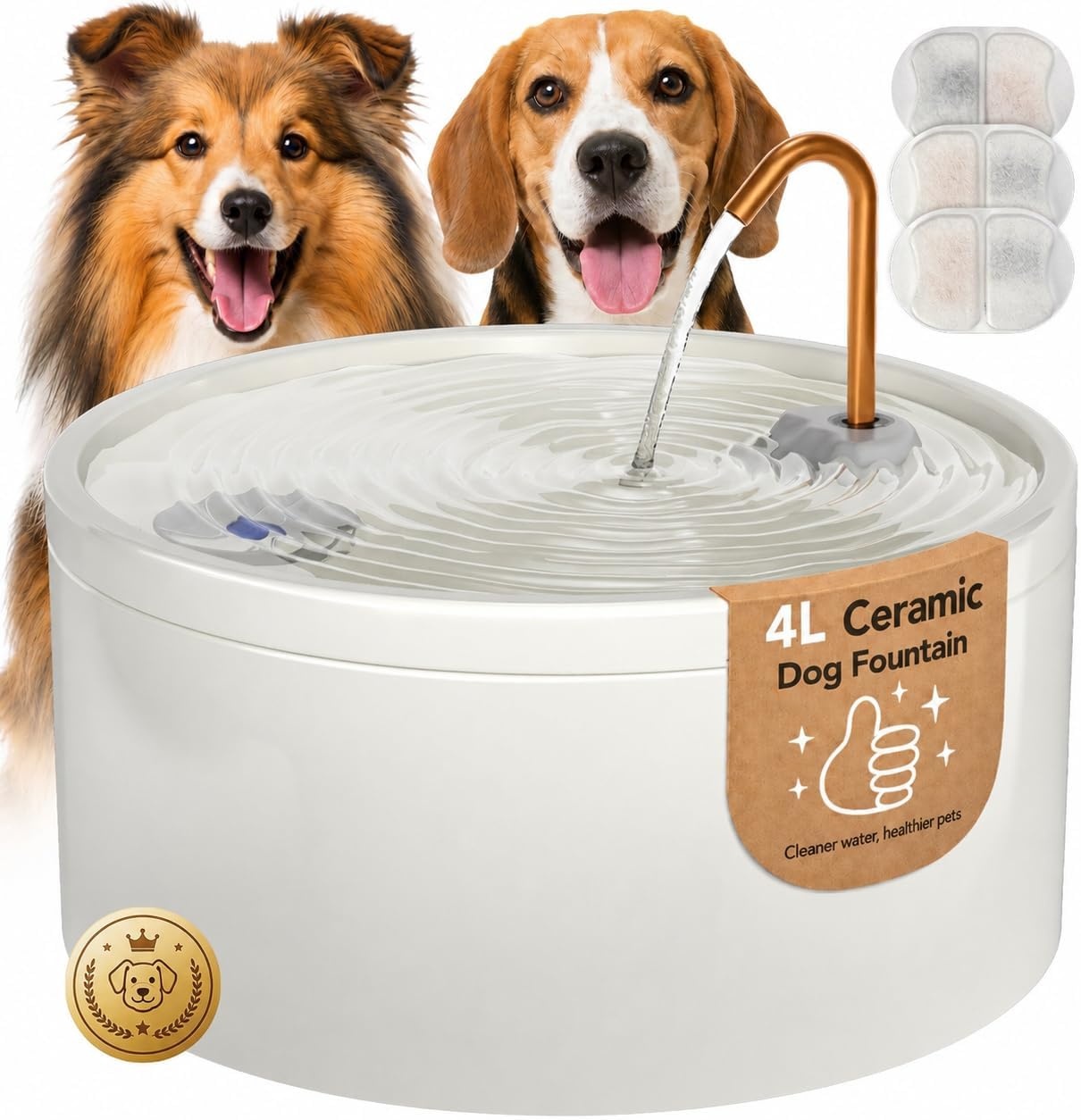
MISFANS Ceramic Dog Water Fountain, All-Ceramic Body, Pure Copper Spout
If your dog drinks from a bowl the way a toddler drinks from a cup, a fountain is the upgrade that keeps water off your floor. The all-ceramic body matters here. Plastic fountains scratch, and a scratched reservoir holds a biofilm that no amount of rinsing removes. Ceramic wipes clean, does not hold odor, and does not cloud over time. The pure copper spout is a nice touch for anyone tired of the plastic taste that some dogs refuse. Check current Amazon price.
Water capacity is the spec to check before you buy any fountain. A small reservoir means you are topping it up twice a day and rinsing it constantly. A larger one means a single fill gets you through a workday with a big dog.
The filter cartridge is the ongoing cost, and it is also the part that decides how often you clean. Any fountain with a filter needs the cartridge swapped on a schedule, and the pump needs the impeller pulled and rinsed or it will start to hum. Budget five minutes a week for the fountain on top of the mat routine.
Flaws but not dealbreakers: Ceramic is heavy and it is breakable. Put it somewhere it will not get kicked, and rinse it before the first use. It also costs more than everything else on this list combined, so it is a buy-once piece, not a starter piece.
Anyone with a dog that ignores a still bowl, or a household with two dogs sharing one water source, will get the most out of this.
The actual cleaning workflow
Here is the routine, start to finish. It works on silicone, rubber, and fabric-topped mats, and it takes about ten minutes once you have done it twice.
Step one: Clear the station and shake the mat. Pick up the bowls, the fountain, the toys, and anything else sitting on the mat. Take the mat outside or hold it over a bin and shake it before any water touches it. Dry kibble dust brushes off in seconds. Wet kibble dust becomes paste, and paste is what stains.
Step two: Do the dry pass. Run a stiff brush or a rubber squeegee across the mat in one direction. This lifts the hair, the crushed kibble, and the fine dust that a rinse would only push into the corners. If your mat has slow feed ridges or a pebbled underside, brush both sides. This is the step almost everyone skips, and it is the one that decides whether the wash takes two minutes or twenty.
Step three: Rinse with warm water, never hot. Warm water loosens dried food and oils. Hot water is a mistake on any mat with a rubber or thermoplastic backing, because heat is what makes those backings warp and peel. Rinse the whole mat, top and bottom, and let the water carry the loose grit off before you add soap.
Step four: Wash with mild dish soap and a soft brush. A drop of plain dish soap in warm water is enough. Work it into the surface with a soft brush or a sponge, paying attention to the edges, the corners, and the ring where the bowl sits, because that ring is where saliva and kibble oil collect. Skip anything with bleach, ammonia, or heavy fragrance. Your dog eats off this surface, and a cleaner that leaves residue leaves it in the dog's mouth.
Step five: Deal with the mineral ring. If your water is hard, the bowl ring will not come off with soap. White vinegar does it. Pour a little on the ring, let it sit for five minutes, then scrub. Vinegar also handles the sour smell that comes from wet kibble. Rinse thoroughly afterward, because vinegar is not something you want your dog licking off the mat.
Step six: Rinse until the water runs clear. Rinse the mat under running water until no suds remain and the water sheets off instead of beading. Soap residue is the reason a clean mat still feels slick, and it is the reason some dogs refuse to eat off a mat for a day after it has been washed.
Step seven: Dry both sides completely. Hang the mat over a rack, a shower rod, or the back of a chair so air reaches both sides. A mat that goes back on the floor damp will grow a smell within a day, and a wet non slip base will not grip, which is how a mat ends up under the refrigerator. If you are in a hurry, towel it dry and give it ten more minutes.
Step eight: Set a schedule and stick to it. Shake the mat daily, wipe it with a damp cloth every other day, and do the full wash once a week. Twice a week if you feed wet food or live with a heavy drooler. Wash the bowls daily and rinse the fountain reservoir weekly. Most silicone mats are dishwasher safe on the top rack, but a rubber-backed mat is not, and neither is anything with an adhesive layer. Kibble storage matters too: an airtight seal on the food bin keeps the oil in the kibble from going rancid, and rancid oil is the smell you are actually fighting when the feeding corner stinks. Whether you need to clean a dog feeding floor mat in a kitchen or clean a dog feeding desk mat in a home office, the routine is the same. A small desk mat under a bowl just picks up more hair and needs the dry pass more often.
The competition and why it lost
Not everything that sits under a bowl deserves a spot in a guide about feeding gear.
The ribbed plastic boot tray is the classic cheap answer. It catches water and it is nearly indestructible, but the grooves are deep enough to hold kibble dust, and once dust mixes with drool you are scraping corners with a butter knife. It lost on cleaning time.
The fabric-topped mat with a rubber backing is soft, quiet under a bowl, and looks better in a kitchen than silicone. It also absorbs, and an absorbent mat in a feeding station is a wet sponge that smells like dog food by the end of the week. It lost on drying.
The gravity water jug is convenient until you have to clean it. A wide reservoir with a narrow neck is hard to rinse, and the base seals with a gasket that traps slime. It lost on access.
Raised feeding stands with two stainless bowls are genuinely good for large dogs, and I would recommend one in a guide about senior dogs rather than this one. Same for the deep stainless slow feeder. If you need one of those, the best slow feeder bowls for fast eaters is the page you want, and if your kitchen is tiny, start with setting up a feeding station in a small apartment.
Every one of those products can work in the right house. They just do not survive the question this article is built around: can you clean a dog feeding mat in ten minutes with a sponge and a bottle brush?
What this all costs
The gear on this list is inexpensive next to the cost of replacing a mat twice a year because it curled, cracked, or held a smell you could not get out.
The puzzle toy is the smallest purchase of the three and the one that cuts down on mess fastest. The stainless bowls sit in the middle, and they are the piece that lasts longest, because there is nothing on them to wear out. The ceramic fountain is the biggest spend by a wide margin, and it is the one I would recommend only if your dog actually prefers moving water. Check current Amazon price on each before you commit, since listings move.
The other costs are consumables. Dish soap you already own. White vinegar, a bottle of which lasts about a year. Fountain filter cartridges, which are the only recurring purchase here, and the reason I would not buy a fountain with a proprietary cartridge unless the pump was very good.
Then there is time. Ten minutes a week, plus a daily shake, plus a bowl wash. Call it fifteen minutes a week to keep a feeding station that does not smell, does not stain the floor, and does not need replacing. Over a year that is about thirteen hours. Over the life of a dog, it is a weekend.
The math on a cheap mat that fails in six months is worse than the math on a good one, and the eight steps above are what make a good one last. That is the whole argument.