If your cat has started peeing beside the box, on the bath mat, or on a pile of laundry, the fix is almost never punishment. Learning how to stop a cat missing the litter box at home is mostly about removing the reasons a cat decides the floor is the better option: a box that is too small, an entry height a stiff senior cannot manage, litter that is too deep or too shallow, or a spot where the cat cannot watch the room while it is exposed.
Cats are fastidious, and a miss is usually a message rather than a grudge. Before you change any gear, rule out a medical cause. A urinary tract infection, crystals, arthritis, or kidney trouble will send a cat out of the box every time, and no amount of fresh litter fixes a bladder infection. If the misses started suddenly, or if you see straining, blood, or repeated trips that produce nothing, that is a vet appointment, not a shopping trip.
Once health is off the table, the work is mechanical and cheap. A short list of variables decides whether a cat uses the box: box size, entry height, litter depth, clumping speed, odor control, mat texture, the size of the waste drawer, and on automatic units, sensor range. Get those right and most cats are back in the box within a week. Get them wrong and you will be scrubbing the same corner for months.
Why you should trust me
I write the cat gear coverage for this site, and litter boxes are the category where marketing language and cat behavior diverge hardest. I do not run a testing lab. What I do is read the spec sheets, read through the buyer feedback that mentions misses, returns, and refusals, and compare what a box claims against what its shape actually lets a cat do.
That last part matters more than any feature list. A box with a high wall and a swinging flap can be marketed as private and draft free while functioning as a barrier for a fourteen year old cat with sore joints. A self cleaning unit with a narrow sensor range can be marketed as safe while startling the cat that triggers it. A box described as large can measure shorter than the cat standing next to it.
Everything below aims at one outcome: to stop a cat missing the litter box at home without rebuilding your house or replacing your cat. When a product solves one of the real problems, I say so. When a feature is decoration, I say that too.
How I picked and how I tested
I did not put these boxes in a lab. I compared the three units in this guide against the checklist that answers how to prevent a cat missing the litter box at home, and I read buyer feedback looking for the failure patterns that repeat: a senior cat refusing a high entry, a covered box that traps odor until the cat quits it, an automatic unit that cycles before the cat has stepped clear.
The checklist I use on every box:
- Box size: the box should run about one and a half times the length of the cat from nose to tail base. Most boxes sold as large are not.
- Entry height: a senior cat or a kitten needs a low wall or a step. A high wall is a barrier with a nice photo on the box.
- Litter depth: two to three inches of unscented clumping litter. Deeper and small cats sink. Shallower and urine reaches the plastic, where the smell never leaves.
- Clumping speed: fast clumping seals waste before it spreads. Slow clumping means the whole box smells by day two, and a smelly box is a skipped box.
- Odor control: a covered box hides smell from you and holds it at cat nose level. Airflow usually beats a lid.
- Mat texture: a textured mat traps tracked litter. A smooth mat just relocates it to the carpet.
- Waste drawer: a larger drawer means fewer interruptions and fewer days you let the box slide.
- Sensor range: on automatic boxes, the sensors decide when the unit stops. A generous sensor range is the difference between a calm cat and a cat that avoids the area for a week.
If odor is a bigger complaint than misses in your house, my guide to cutting litter box odor in a small apartment handles that problem on its own. For the wider field of automatic units, see the best self cleaning litter boxes.
Gear that helps stop a cat missing the litter box at home
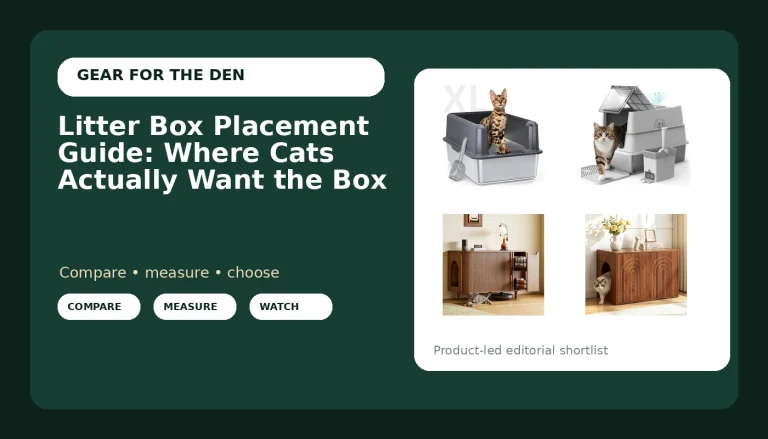
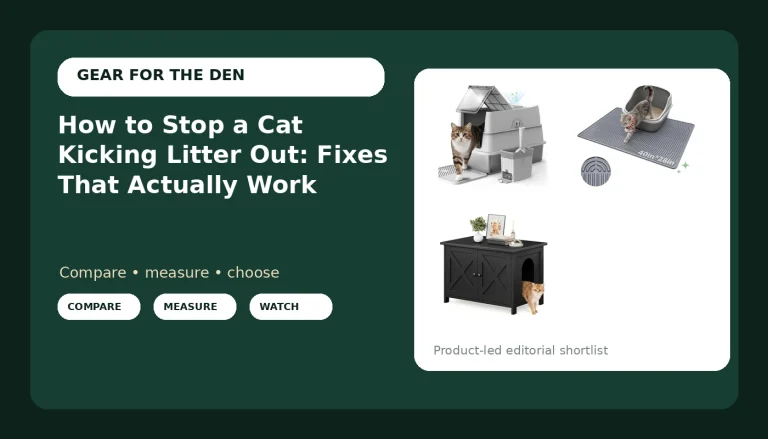
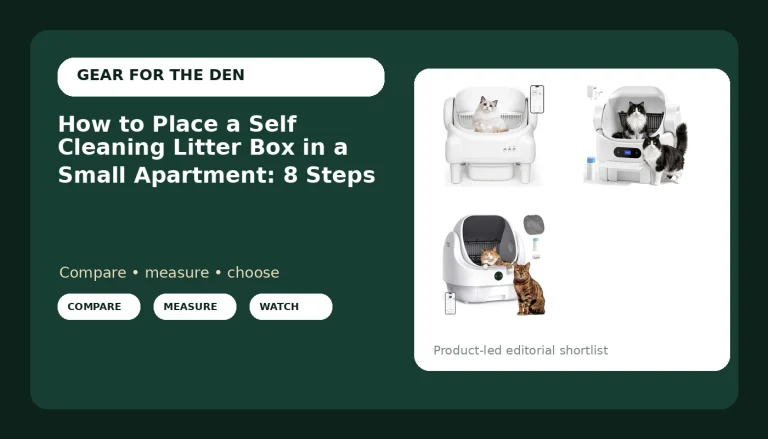
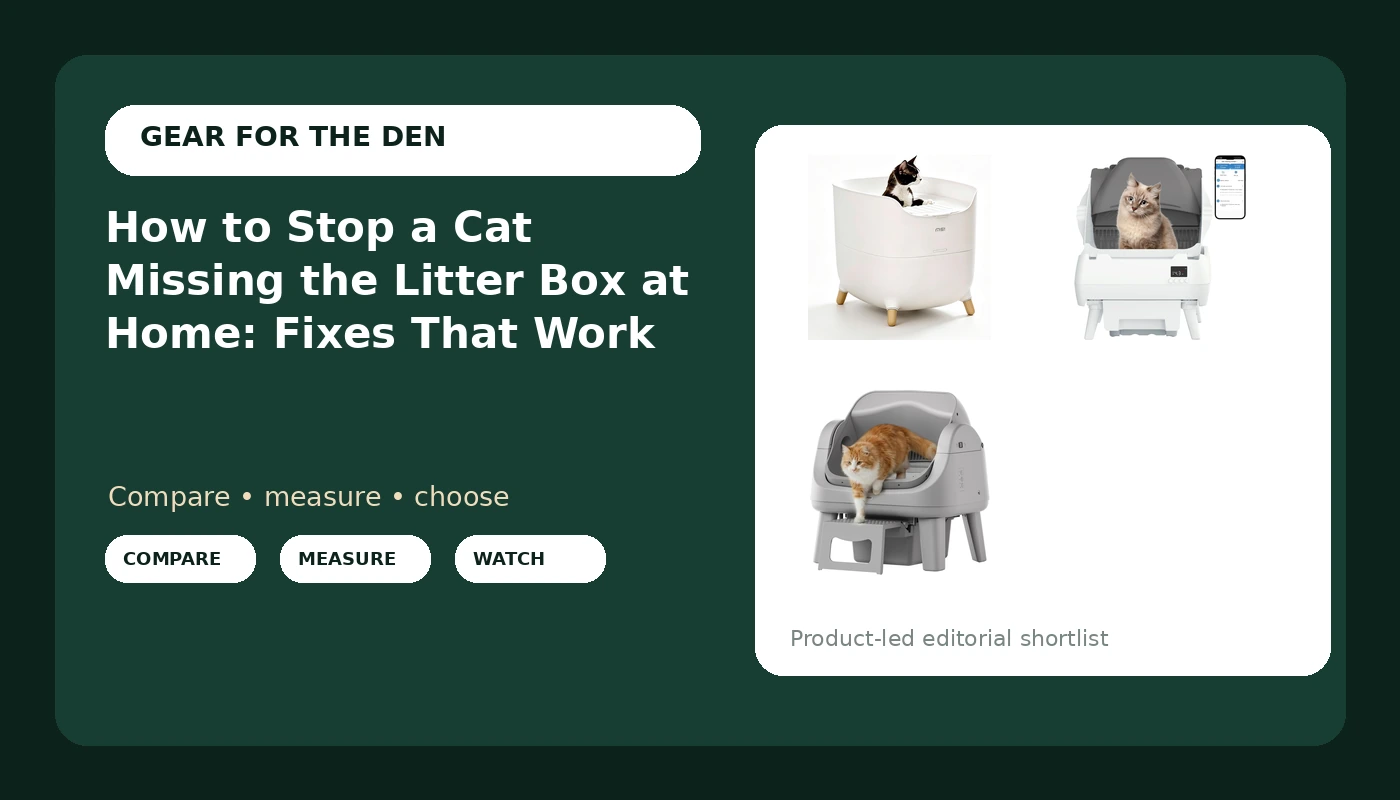
Three boxes cover the range of reasons a cat misses. A covered top entry box for the cat that wants privacy and a household tired of tracking. An open self cleaning unit for the home that cannot keep up with scooping. A larger automatic unit with a step for the senior cat that still wants a box but needs an easier approach. None of these fix a medical problem. All of them fix a shape problem.
Budget pick: MS!MAKESURE Large Top Entry Cat Litter Box with Scoop, Covered Hidden Design for Odor Control and Less Tracking, Easy to Clean(White)
Budget pick
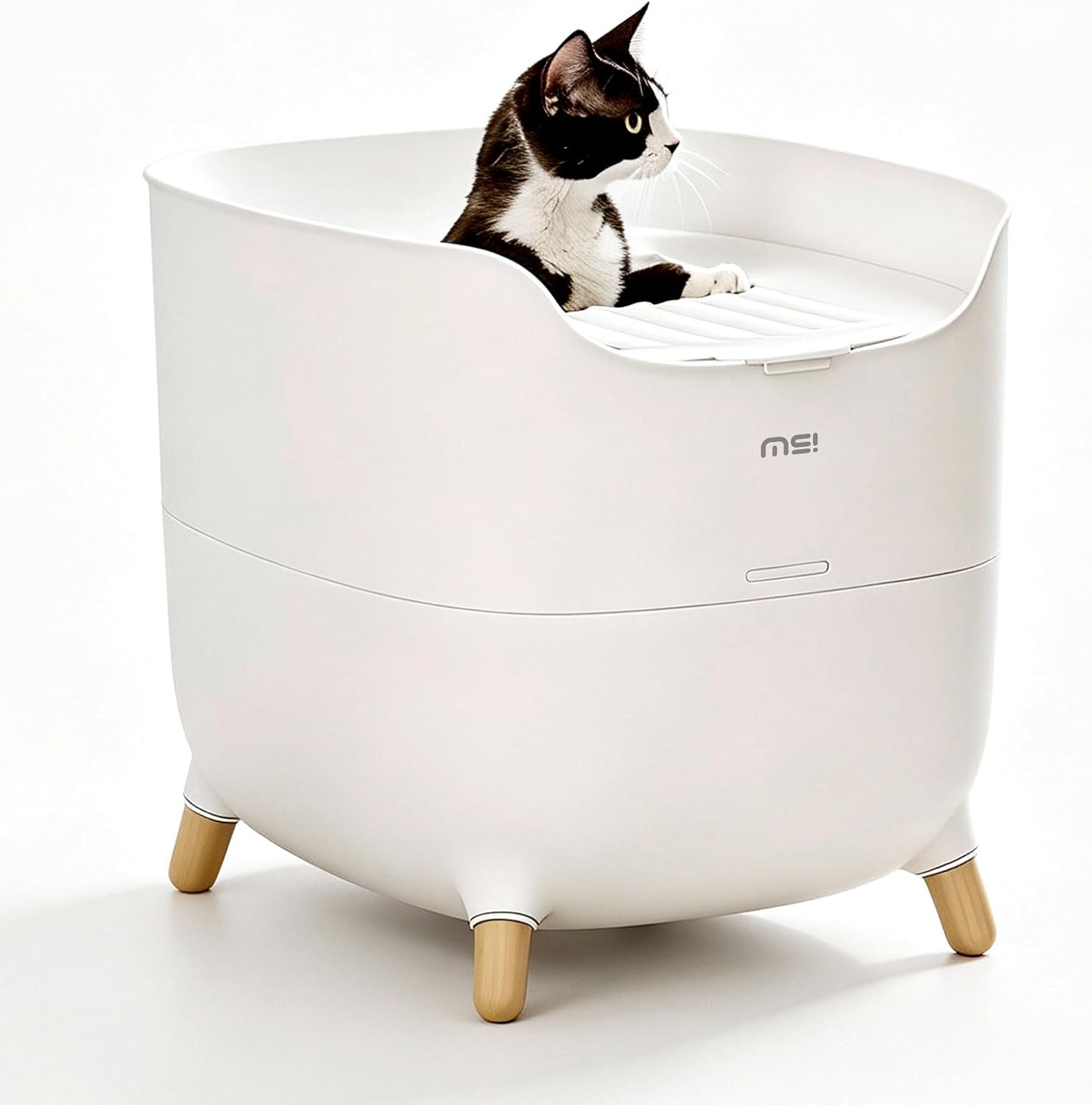
MS!MAKESURE Large Top Entry Cat Litter Box with Scoop, Covered Hidden Design for Odor Control and Less Tracking, Easy to Clean(White)
The MS!MAKESURE is the simplest of the three and the one I would start with in a house where the cat already accepts a covered box. Top entry does two jobs at once: it keeps litter on the lid instead of on your floor, which takes pressure off mat texture, and it gives the cat a private spot without a swinging door that can trap a nervous animal. The covered design holds odor in, the included scoop means you are not hunting for one at 11 p.m., and the white finish wipes clean.
Flaws but not dealbreakers: Top entry means jumping. A kitten, a senior cat, or a cat with sore joints may refuse it outright, and a refused box is worse than no box. If your cat is older, read the PetPivot section below before you buy.
Check current Amazon price.
Our pick: Lohhuby Automatic Cat Litter Box Self Cleaning – App Control, Open-Design, Smart Health Monitor, Suitable for Medium Cats and Kittens, Anti-Pinch Safety, Quiet Operation – White
Our pick
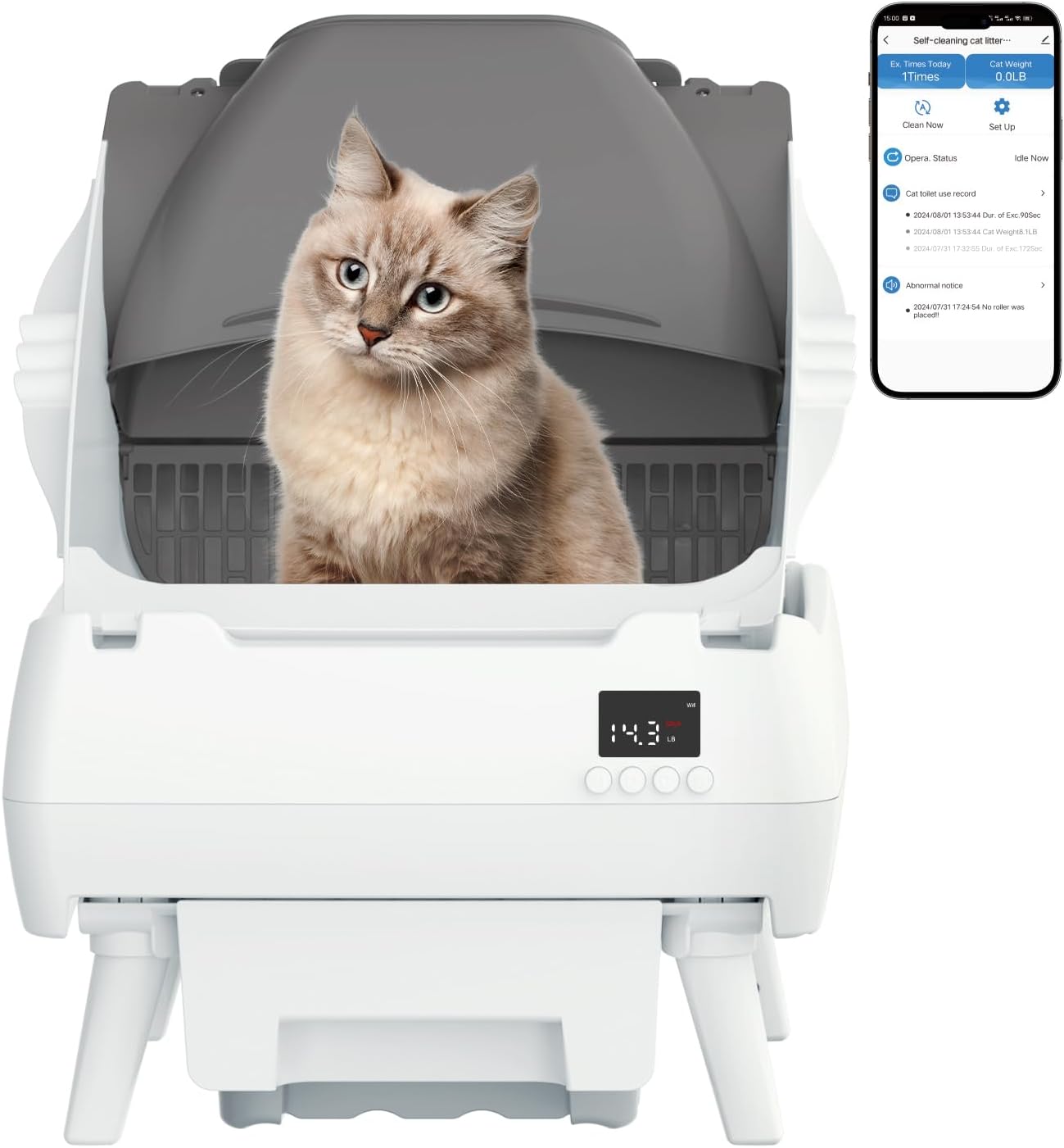
Lohhuby Automatic Cat Litter Box Self Cleaning – App Control, Open-Design, Smart Health Monitor, Suitable for Medium Cats and Kittens, Anti-Pinch Safety, Quiet Operation – White
The Lohhuby is the one I would hand to a household of medium cats or kittens where scooping is the chore that keeps getting skipped. It is an open design, and that matters more than the app: cats that hate enclosed spaces are the ones most likely to start missing, so an open automatic box removes the enclosure problem while still removing the waste. App control means you can adjust the cycle and read what the health monitor logs without crouching beside the box. Anti pinch safety and quiet operation count for more than they sound, because a unit that grinds at 3 a.m. teaches a cat to avoid that corner of the house.
Flaws but not dealbreakers: An open design contains less odor, so pair it with a fast clumping litter and a real scooping habit. Automatic does not mean hands off, and the waste drawer still needs emptying on a schedule.
Check current Amazon price.
Upgrade pick: PetPivot Open Top Self Cleaning Cat Litter Box, Automatic Litter Box with 7 Pairs of Safety Sensors, Anti-Pinch Protection and Easy Access Step for Senior Cats, Dark Grey
Upgrade pick
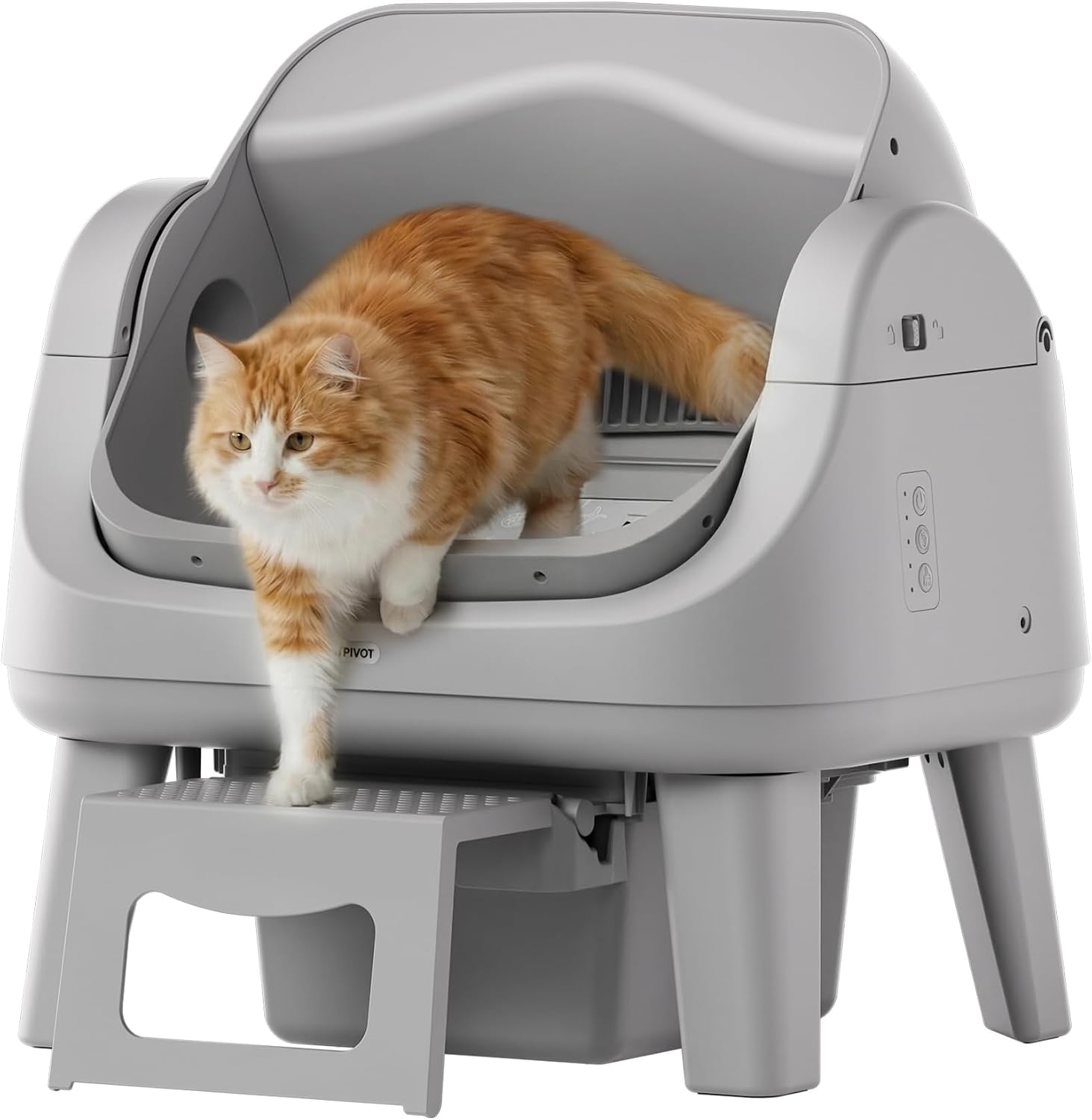
PetPivot Open Top Self Cleaning Cat Litter Box, Automatic Litter Box with 7 Pairs of Safety Sensors, Anti-Pinch Protection and Easy Access Step for Senior Cats, Dark Grey
The PetPivot is the one I would choose for a house with a senior cat that still wants to use a box. The easy access step is the feature that sells it, because entry height is the most common reason an older cat quits a box, and a step turns a jump into a walk. Seven pairs of safety sensors and anti pinch protection address the obvious worry about a machine that moves on its own. The open top keeps air moving, so odor does not build the way it does under a hood, and the dark grey finish hides the dust that white plastic advertises.
Flaws but not dealbreakers: It is the largest of the three and the most expensive. A cat that has never used an automatic box may need a week or two with a plain box sitting beside it before it commits.
Check current Amazon price.
The actual litter box workflow
This is the part that fixes most misses, and almost none of it requires a purchase. Work through it in order. Most cats respond inside a week, and the ones that do not usually have a medical issue that was hiding behind the behavior.
Step one: Vet first. Book the appointment before you buy anything. Urinary issues, crystals, diabetes, and arthritis all produce misses, and a cat in pain will not use a box no matter how perfect the box is. Treat the body first, then the gear.
Step two: Count the boxes. One box per cat, plus one, placed in different spots. Two cats sharing one box is a queue, and a cat that gets ambushed at the box will find somewhere quieter. If you have three cats, three boxes is the floor, not the ceiling.
Step three: Size the box. Measure your cat from nose to tail base and buy a box about one and a half times that length. A cat that has to hang its rear over the edge will eventually just go beside the box, which looks like a behavior problem and is really a box size problem.
Step four: Lower the entry. For a kitten, a senior, or a cat with sore joints, cut the wall down or add a step. An easy access step on an automatic unit does the same job. If your cat is hesitating at the rim with one paw in the air, entry height is the reason.
Step five: Reset litter depth and type. Two to three inches of unscented clumping litter, level across the box. Scented litter and liners are common triggers for cats that suddenly quit a box they used for years. Change one variable at a time and give it a week.
Step six: Scoop on a schedule that matches your life. Twice a day is ideal, once a day is the realistic floor. If you know you will not keep up, that is the argument for an automatic unit with a large waste drawer, not an argument for a smaller box you clean more often.
Step seven: Fix the location. A box in a dead end, next to a furnace, or behind a door that closes is a box a cat will skip. Give it a quiet wall with an escape route and some light. On an automatic unit, check that the sensor range covers the whole entry so the cycle never starts while the cat is inside.
Step eight: Clean the old spots properly. Enzyme cleaner, not ammonia, on every place the cat has gone. Ammonia smells like urine and invites a repeat. A textured mat in front of the box catches the litter that otherwise ends up in the carpet, and a clean floor removes the scent cue that keeps pulling the cat back.
None of those steps is dramatic on its own. Together they prevent a cat missing the litter box at home in the large majority of households where the only real problem was the box.
The competition and why it lost
Several boxes people ask about did not make this list, and the reasons are worth knowing.
The standard high sided open pan is cheap and easy to hose out, but for a senior cat the wall is a barrier and for a large cat the pan is simply too short. Size and entry height eliminate it before odor control even comes up.
The hooded box with a carbon filter and a swinging flap looks like the obvious answer to smell. In practice the flap is a hurdle and the hood traps odor at the level of the cat's nose, which is exactly where it does not want odor. A covered box works when the cat chooses it and fails when the cat is forced into it.
Pellet and crystal litter systems solve tracking and odor differently, and some cats do fine on them. But the texture change alone sends other cats to the floor for a week, and a cat with sensitive paws may never accept pellets. Texture is a real variable, not a marketing footnote.
The tiny kitten box that fits under a sink is a temporary tool, not a permanent home. A cat outgrows the box long before it outgrows the habit of avoiding one that is too small.
What this all costs
Nothing in the workflow section costs money beyond litter and a bottle of enzyme cleaner. The gear is where the spending happens, and the three boxes here sit in a narrow band: the MS!MAKESURE is the least expensive, the Lohhuby sits in the middle, and the PetPivot is the most expensive of the three. Check current Amazon price on each before you commit, because listings move.
The running cost matters more than the sticker. Litter is the real bill. Fast clumping litter costs more per jug and less per month, because you scoop less wasted litter and tear down the whole box less often. Slow clumping litter means full changes every week or two, which is how a bargain becomes a chore.
Then there is the cost of getting it wrong: enzyme cleaner, replacement mats, and the hours you spend scrubbing a corner. A mat with genuine texture catches tracked litter before it reaches the carpet, and one bottle of enzyme cleaner costs less than a single professional carpet cleaning.
The math on the automatic units is simple. If scooping is the task that gets skipped in your house, a self cleaning box earns its place by keeping the litter clean enough that the cat keeps using it. A box you clean daily beats a clever box you clean never.
That is the whole job. You are not training the cat to tolerate a bad box. You are fixing the box until the cat has no reason to look elsewhere, and that is how to stop a cat missing the litter box at home for good.