Most people searching for how to stop a dog from shedding want one product that ends the hair on the couch forever. That product does not exist. Shedding is a biological cycle, not a behavior problem, and the honest version of how to stop a dog from shedding is a routine: the right tool for your dog's coat type, a bath schedule that does not strip the skin, nutrition that supports the coat from the inside, and a vet visit when the pattern changes suddenly.
Here is the part that never makes it into the ad copy. A healthy coat sheds on a schedule. Double-coated breeds blow their undercoat once or twice a year, short single coats shed a steady trickle all year, and most of the hair that lands on your floor is hair you did not remove first. Management beats magic every single time.
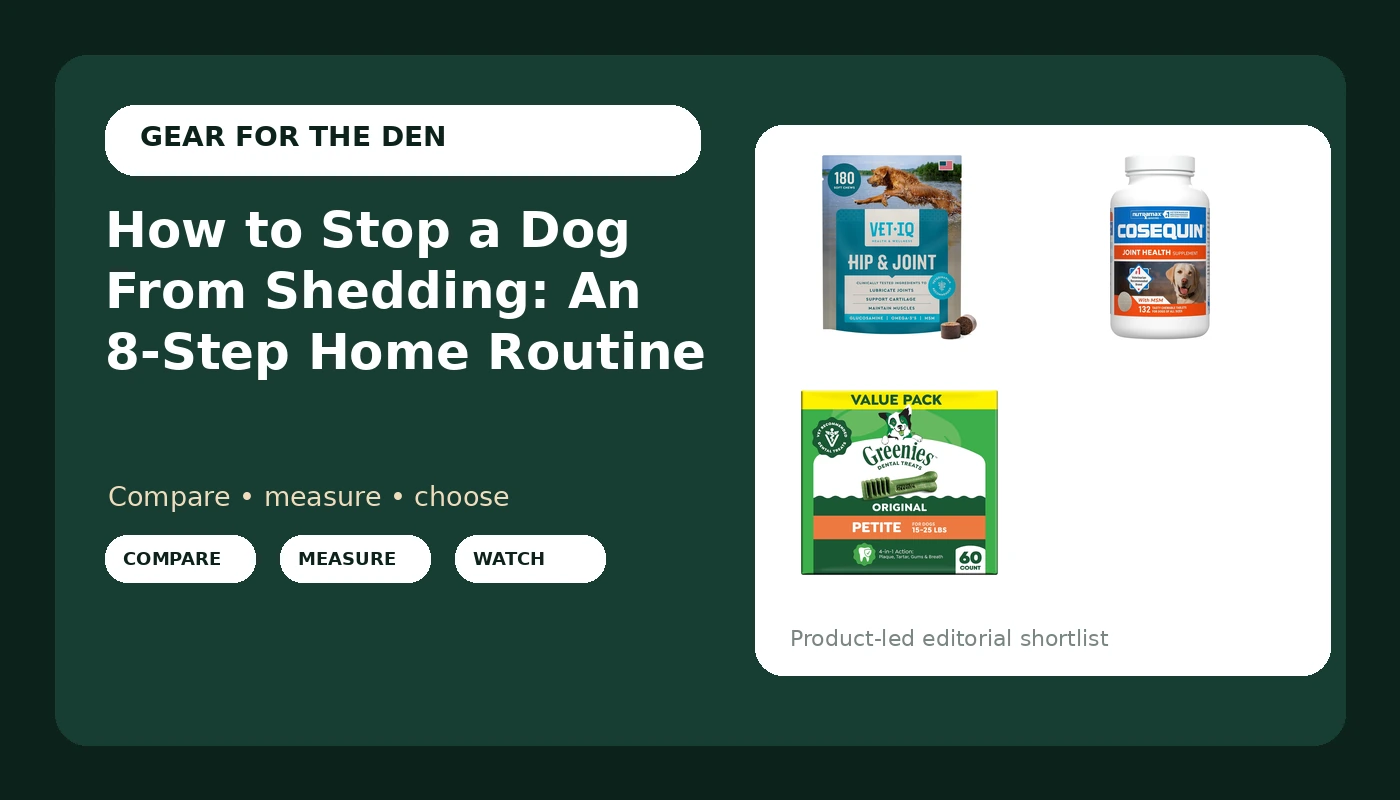
The products below are the ones that stay in my routine: two chews that carry omega 3 fats for skin and coat support, and a dental chew that keeps a dog busy while you work a rake through the undercoat. None of them is a cure. All of them earn their place in the plan.
Why you should trust me
I am the designated brusher in my house, which currently means three dogs, two of them double-coated shedders, and I have spent more hours than I care to count kneeling on a tarp with an undercoat rake in one hand and a treat in the other. I learned the routine the slow way: a coat stripped raw by over-bathing, a bottle of fish oil that went rancid on the shelf, a slicker brush that did nothing on a husky mix. What I know now is that coat condition shows up in the brush weeks before it shows up on the couch, and that the gap between a house buried in fur and a house that is merely dog-scented is about twenty minutes a week.
How I picked and how I tested
I did not run these three products through a lab. I read them the way a groomer reads a label: ingredient list first, then the EPA and DHA numbers, then the bottle size against the daily serving, then one more question that kills most chews, which is whether a dog will actually eat it twice a day for months. A refused chew is a chew that does nothing.
That gave me a short list built on three criteria:
- Coat support first. A joint chew earns a place in a shedding routine only if it also carries something for the skin, which in practice means omega 3 fats from fish or krill. Glucosamine by itself does nothing for shedding.
- A bottle size that lasts. Sixty chews is a two-month supply for a small dog and a two-week supply for a big one. The count on the label matters more than the marketing on the front.
- Something a dog will take without a fight. Soft chews beat tablets for most dogs, which is why two of the three picks are chews and the tablet is the one I hand out wrapped.
For the grooming side of the routine, the tools matter as much as the chews. I compare rakes, slickers, and deshedding blades by coat type in my dog grooming tools guide, and I keep a separate list of joint supplements for senior dogs for the older shedders who need more than coat support.
Supplements that help stop a dog from shedding
No chew on this list will stop a dog from shedding on its own, and any product that claims otherwise is selling hope in a tub. What a good supplement does is give the skin and coat the raw material they need to grow a dense, oily, flexible coat that holds dead hair until you brush it out. That is omega 3 work, and it is slow work: expect eight to twelve weeks before the brush tells you it is working.
Budget pick: VetIQ Glucosamine Hip & Joint Chews for Dogs, MSM & Krill, 180 Count
Budget pick
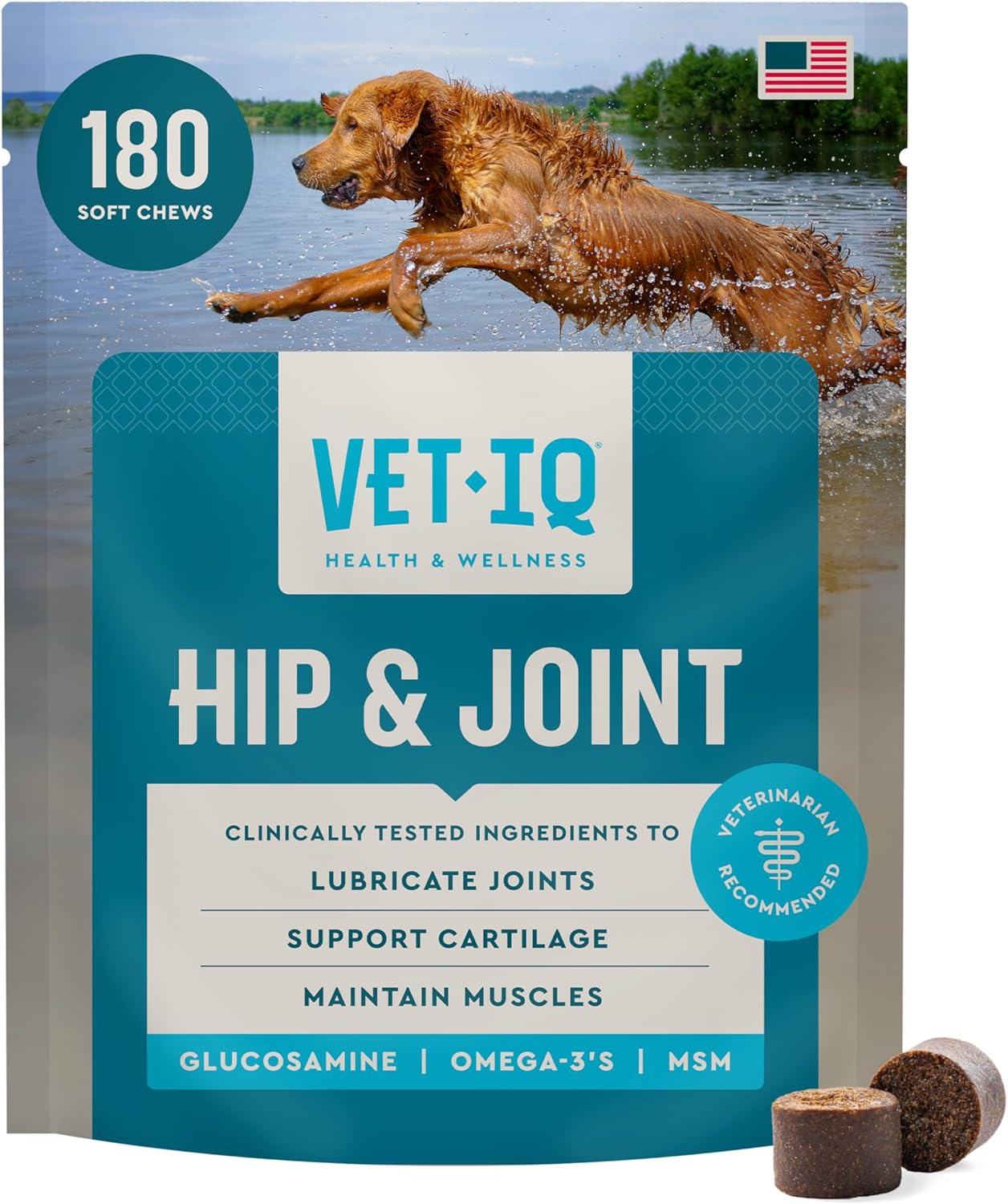
VetIQ Glucosamine Hip & Joint Chews for Dogs, MSM & Krill, 180 Count
This is the one I hand to people who want coat support without adding a second supplement to the budget. Krill is the reason it belongs in a shedding article: krill oil carries omega 3 fats in the same family as fish oil, and the formula pairs it with MSM and glucosamine, so a dog with stiff hips gets something out of it too. The 180 count is the other argument. A large tub goes a long way at a maintenance serving, which matters when you are running a coat trial and do not want to reorder halfway through. Check current Amazon price.
The catch is that this is a joint formula first and a coat product second. Treat the skin and coat benefit as a bonus rather than the main event, and if the coat is the whole problem, pair it with an oil or a chew built around omega 3.
Flaws but not dealbreakers: The chews have a strong smell that some dogs love and some turn their noses up at, and the texture softens in humid weather. Keep the tub sealed and store it somewhere cool.
Anyone with a middle-aged dog who sheds heavily and moves a little stiff in the morning should start here.
Upgrade pick: Nutramax Cosequin Joint Supplement for Dogs, Chewable Tablets, 132ct
Upgrade pick
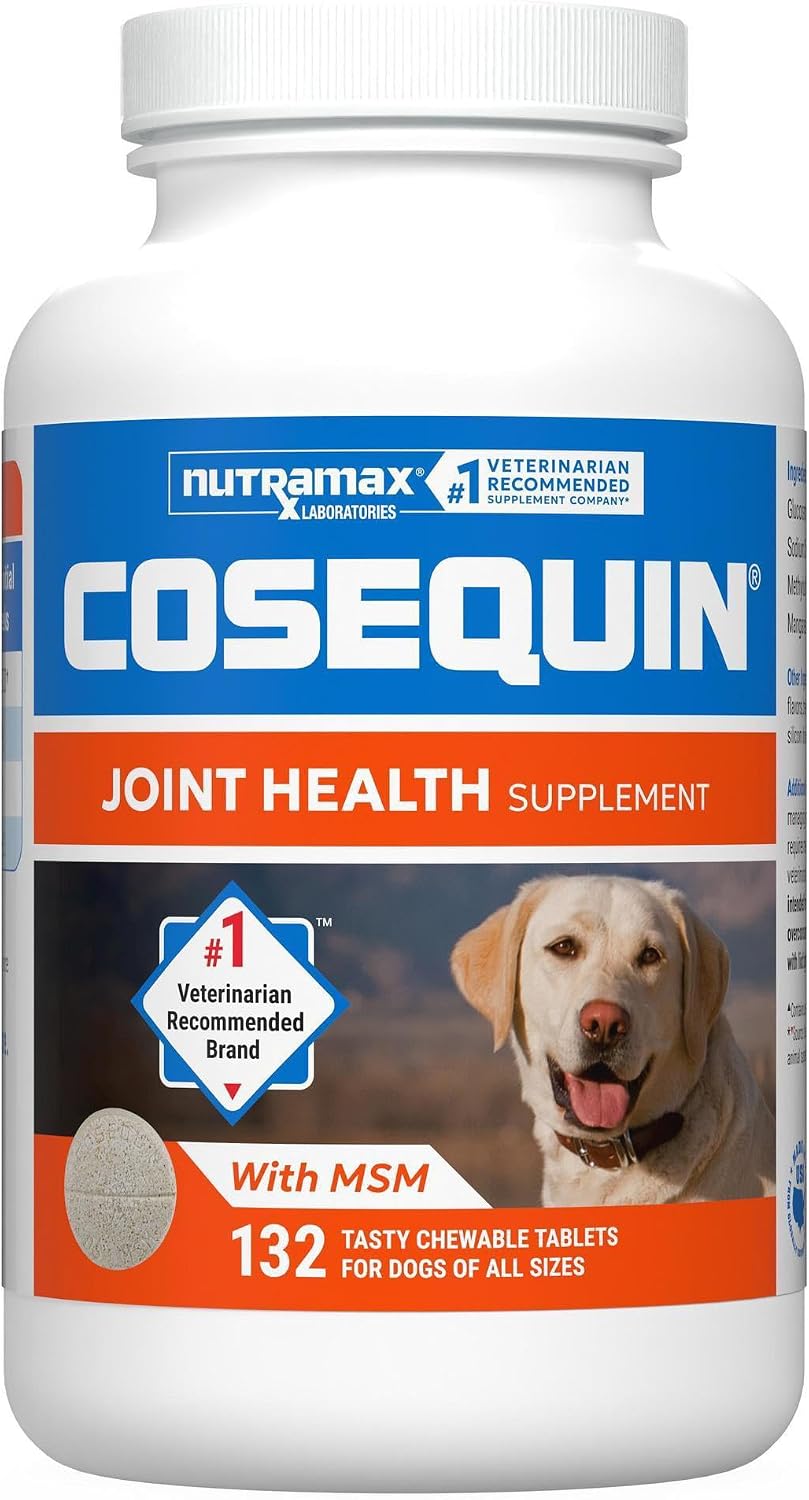
Nutramax Cosequin Joint Supplement for Dogs, Chewable Tablets, 132ct
Cosequin is the joint supplement most dog owners have already heard of, and the reason it shows up in a shedding article is simple: a dog whose hips ache will not stand still for twenty minutes of brushing, and a dog who will not stand still does not get brushed. Coat care is a standing-still sport. If your older dog starts walking away halfway through a session, joint comfort is part of the shedding fix, not a separate problem to solve later.
The 132 count sits in the middle of the three picks here, and chewable tablets are the format I keep for dogs who eat anything, because you can break a tablet in half and hide it in a bite of wet food. Check current Amazon price.
Flaws but not dealbreakers: Tablets are harder to hand out than soft chews, and a picky dog will spit them out. Break them, wrap them, or crumble them over dinner. It is also a joint formula rather than a coat formula, so it pairs with an omega 3 source instead of replacing one.
Anyone with a senior dog who has slowed down while the coat went dry and dull at the same time should look here first.
The grooming-session chew: Greenies Petite Natural Dental Dog Treats, Original Flavor, 60 Count
The grooming-session chew
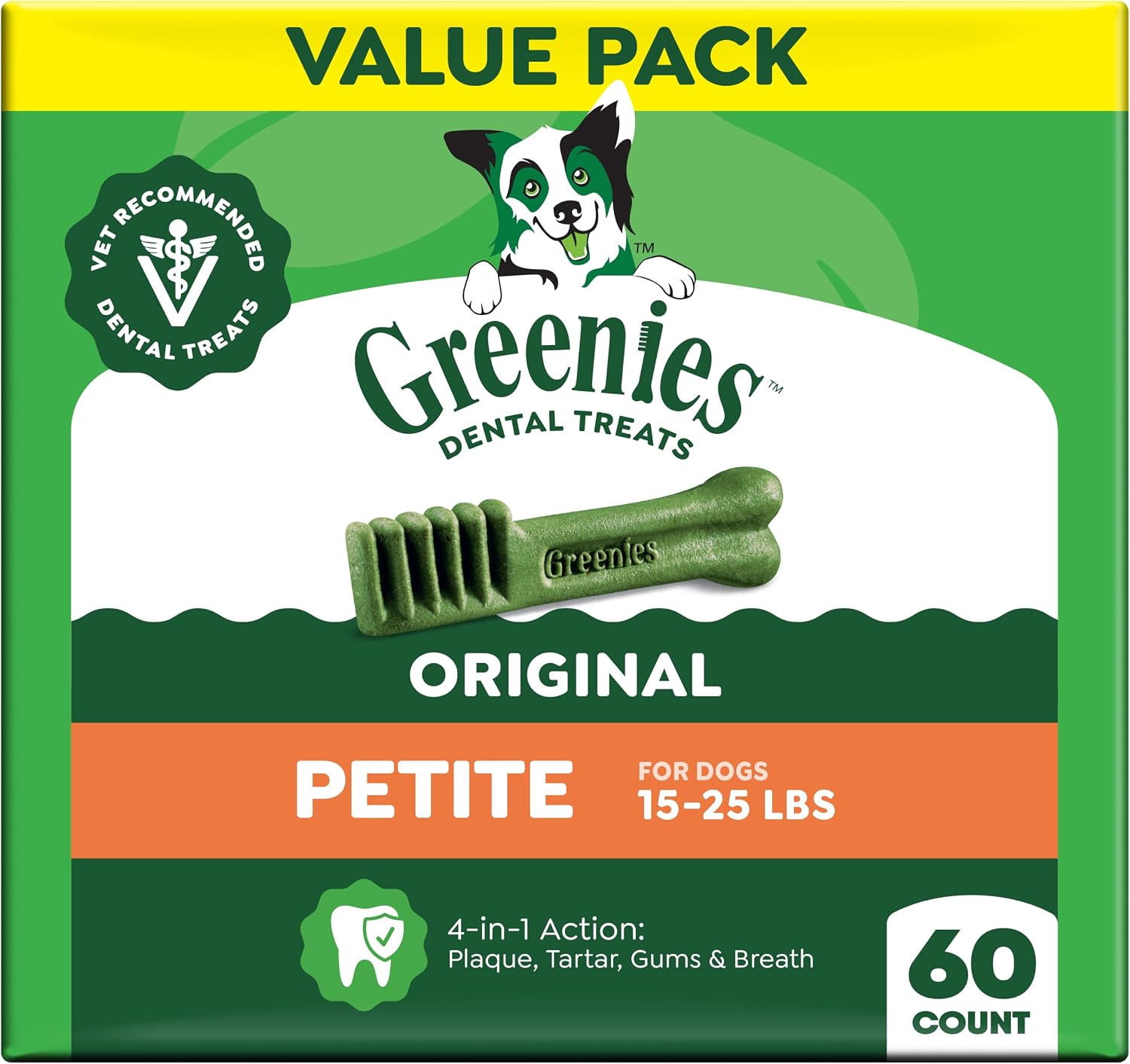
Greenies Petite Natural Dental Dog Treats, Original Flavor, 60 Count
This is the pick that has nothing to do with shedding, and it earns its place anyway. The hardest part of de-shedding a small dog is getting twenty uninterrupted minutes with the rake, and a dog who is working on a chew is a dog who is not spinning away from your hand. The petite size is built for small mouths, the texture takes a while to get through, and the dental benefit is real enough that you are not just buying a distraction. Check current Amazon price.
Two notes from the routine. First, a chew is a session tool, not a meal replacement: one per grooming session, and skip it for a dog who tries to swallow without chewing. Second, size matters more than flavor. The petite is for small dogs, and a dog who is too big for it will try to take it whole.
Flaws but not dealbreakers: A 60 count disappears fast if you groom twice a week, and some dogs lose interest in the original flavor after a few weeks. Rotate it with a different chew if that happens.
Anyone with a small dog who fights the brush and needs help with the teeth at the same time will get the most out of these.
The actual coat-care workflow
If you came here looking for how to prevent a dog from shedding, the honest answer is that you cannot, but you can control where the hair lands. The chews support the coat. These eight steps are what actually shows up in the brush.
Step one: Know your coat type. Before you buy anything, figure out what is growing on your dog. Run your fingers against the grain along the spine. If you can lift a soft second layer away from the skin, you have a double coat and you are dealing with undercoat, which is the fine, woolly hair that mats and blows twice a year. If the hair is uniform and short against the skin, you have a single coat and you are dealing with a steady year-round shed. A coat type you cannot name is a tool you cannot buy.
Step two: Match the tool to the coat type. Double coats need an undercoat rake, not a slicker. A rake gets under the topcoat and pulls dead wool out in clumps, while a slicker polishes the surface and leaves the undercoat to mat. Short single coats need a rubber curry or a soft bristle brush, because a rake on a short coat scratches skin without removing much. Long, silky coats need a pin brush plus a comb for the feathering behind the ears and on the tail.
Step three: Brush dry, and brush before the bath. Wet hair stretches, and a rake on a wet coat pulls live hair along with the dead. Brush before the bath, never after, because water tightens mats and turns loose undercoat into felt. Work in sections, line by line, and stop when the rake comes up clean instead of full.
Step four: Bathe with an oatmeal shampoo, and respect the oatmeal concentration. Every four to six weeks is plenty for a normal coat. Oatmeal should sit near the top of the ingredient list, not at the bottom behind the fragrance and the dyes. Rinse twice as long as you think you need to, because shampoo left in the coat dulls it and itches.
Step five: Dry the coat all the way through. A damp undercoat mats. Towel the dog hard, then finish with a force dryer or a human hair dryer on the cool setting, moving constantly so you never cook the skin. Blow the coat against the grain. You will be surprised how much loose hair comes out at this stage, and every bit of it is hair that would have landed on the couch over the next week.
Step six: Feed the coat, not just the dog. Coat condition is built from the inside. Look for omega 3 fats, specifically EPA and DHA, and read the ingredient list rather than the front of the tub, because a label that says "with salmon oil" can mean a teaspoon of it in a bucket of filler. Bottle size matters here too. A small bottle of a concentrated oil beats a gallon jug of something diluted, and oil that has gone rancid smells like old paint.
Step seven: Control the environment, not just the dog. You will never out-brush a shedding dog completely, so shrink the landing zones. Vacuum twice a week during a blow, wash the dog's bedding weekly, and keep a lint roller by the door. An air filter near the dog's favorite spot catches the fine hair that floats, and a washable throw on the couch is easier to launder than a sofa cushion.
Step eight: Know when shedding is a symptom. Shedding that changes suddenly is not a season. Bald patches, a greasy coat, constant scratching, or hair that comes out in handfuls on a dog who never shed like that before all point to a vet visit. Thyroid problems, parasites, and allergies show up in the coat first. If your vet suspects food, they may suggest a limited ingredient diet trial: one protein, one carb, eight weeks, no treats in between.
The competition and why it lost
The deshedding shampoo that promises to end shedding at the source is the biggest offender in the category. Shampoo cleans the coat and soothes the skin, and it cannot change a hair follicle's growth cycle. The harsher formulas strip the coat oils that hold dead hair in place, which means you get more hair on the floor, not less. If a shampoo label promises an end to shedding, put it back.
Grooming vacuums with a brush attachment are genuinely useful for a heavy shedder in a carpeted house, but they are not a starting point. They are loud, they need a dog who tolerates noise, and an expensive vacuum does not replace a basic rake. Start with the rake.
Fish oil pumps and salmon oil bottles from the pet store are not on this list because the dose is a guess. A pump that delivers an unmeasured squirt makes it impossible to know whether you are giving a meaningful amount of EPA and DHA or almost none, and a coat responds to dose, not to the word "salmon" on the front. A chew with a fixed serving is easier to judge.
Undercoat blades with a cutting edge, the ones shaped like a rake with a razor tucked inside, work, and they also cut live hair when they are used wrong. I leave those to people who groom for a living. The same goes for coat sprays and leave-in conditioners: fine as a finishing step, and only if they are lick safe, because your dog will groom them off within the hour.
What this all costs
The honest breakdown has three parts.
The routine itself costs almost nothing: a rake or a curry brush matched to the coat type, an oatmeal shampoo, and your time. That is the part that does the real work, and it is a one-time tool purchase plus a bottle of shampoo every few months.
The chews are the recurring cost, and the tub size is what you are really buying. A large count spread across a daily serving is the cheapest way to run a coat trial for the eight to twelve weeks it takes before you can judge anything. Compare the cost per serving rather than the number on the shelf, and buy the size that gets you through the trial. Each of the three picks above has its own listing, so check there before you commit.
The vet visit is the wild card. A skin check and a thyroid panel cost what they cost, and they are worth it the moment shedding stops looking seasonal.
Add it up and the monthly number is small, especially next to professional grooming every six weeks. The trap is buying three tools and two supplements in the first week, using none of them consistently, and deciding that nothing works. Pick one brush, one chew, and one bath schedule. Run the routine for a season. Then look at the rake and let it tell you whether the shedding plan is working.
That is the job. Your dog is going to shed. The only question is whether it sheds into the brush or into your house.