Kittens do not need to be taught how to dig. They need a box that is easy to find, easy to climb into, and boring enough to leave alone. That is most of how to train a kitten to use a litter box, and in a quiet house with a healthy kitten the whole thing usually takes three to seven days.
The rest is setup. Box size, entry height, litter depth, and placement matter far more than any treat, any trick, or any gadget with a sensor in it. Get those four right and the kitten does the work on its own. Get them wrong and you will spend two weeks cleaning the same corner of the rug.
I keep an open stainless pan in every foster room, and I have moved it more times than I can count to fix a kitten that had suddenly stopped using it. The fix was never the litter. It was always placement or access. If you want the short version of how to train a kitten to use a litter box, it is this: make the box the easiest thing in the room to use.
Why you should trust me
I have fostered kittens for years, which means I have set up more litter boxes than anyone should have to. Bottle babies, barn kittens, a pair of siblings that arrived with worms and opinions: every one of them had to be shown where to go, and every one of them taught me something about placement that no product page mentions.
I also write the cat gear coverage here, from litter boxes for odor control to kitten feeding setups, so I read the spec sheets and I see what comes back as a return. I do not take money from brands, and I do not keep a box in this house that a kitten refused to use.
How I picked and how I tested
For this guide I looked at what actually changes a kitten's behavior in the first two weeks: box size, entry height, litter depth, the material the pan is made of, and how easy it is for a human to keep clean.
Box size is the one people get wrong most often. A pan that looks generous for a two-pound kitten is a pan a five-pound kitten outgrows in a month, and a pan that is oversized for a very small kitten can be hard to climb into and unsettling to stand in. I measure the inside of the pan rather than the footprint on the listing, and I check whether a kitten can turn around without its nose touching a wall.
Entry height decides whether a kitten uses the box at all. A wall an adult steps over is a fence to an eight-week-old. Open pans with a low front win the first week; anything with a lid or a top entry gets introduced later, once the kitten is already jumping onto furniture.
Litter depth matters as much as litter type. A shallow layer lets a small kitten dig and cover without sinking, and it makes scooping faster. I also watch clumping speed: a litter that forms a firm clump quickly keeps the pan cleaner than one that crumbles and leaves fragments behind, and fragments are what turn into odor control problems.
Material is the long game. Stainless steel does not scratch, does not hold smell, and wipes clean. Plastic is lighter and cheaper, but it scratches, and a scratched plastic pan holds odor no matter how often you wash it.
Finally, mat texture. A textured mat catches tracked litter before it reaches the carpet, and a smooth one just spreads the mess around. None of the boxes here has a waste drawer or a sensor range, because automatic boxes and small kittens are a bad first pairing. That is a conversation for when the cat is grown.
The boxes that make it easier to train a kitten to use a litter box
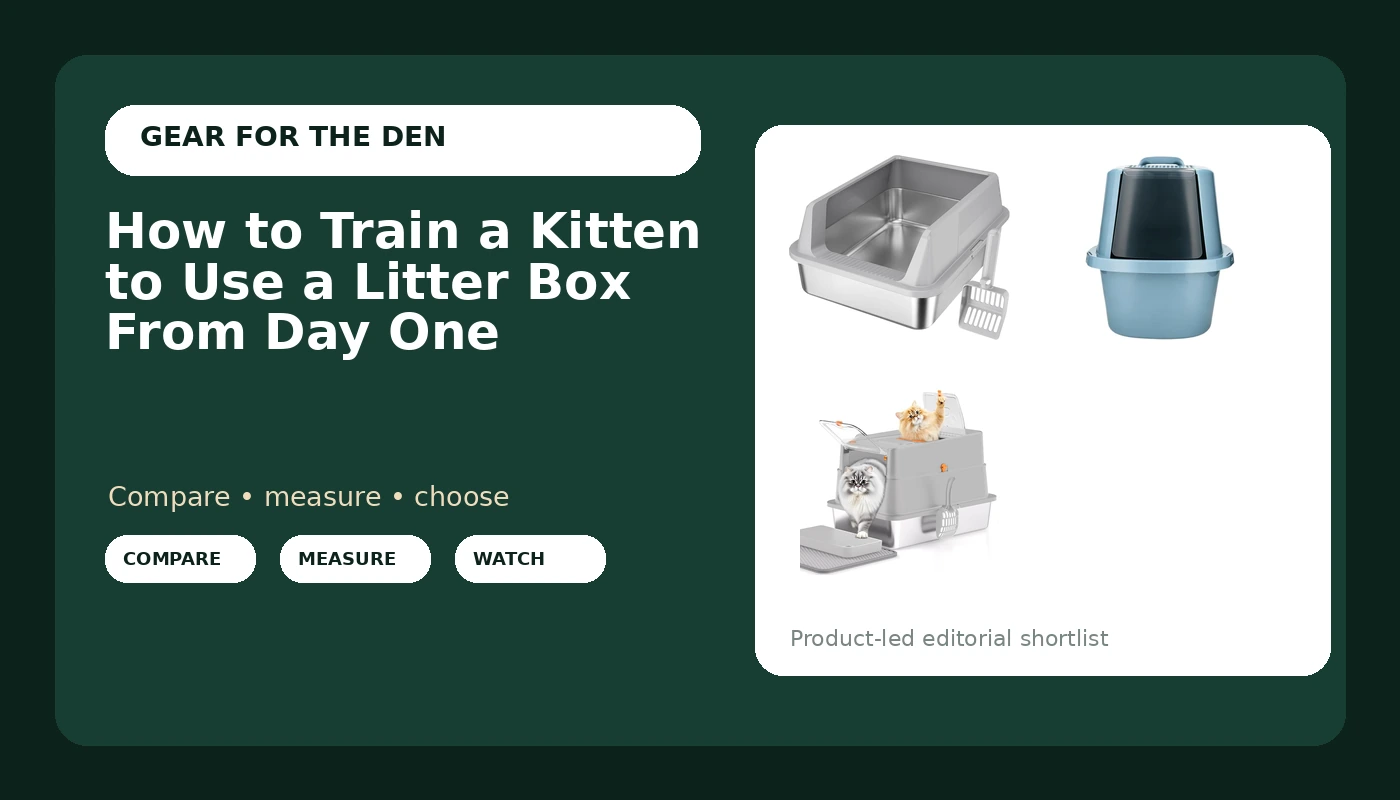
You do not need a kitten-specific box. You need one the kitten can walk into, one you can keep clean in under a minute, and one that will still fit the cat in two years. These three cover that range, from a cheap open pan to an XL stainless enclosure.
Budget pick: Lifewit Stainless Steel Cat Litter Box for Kitty
Budget pick
Lifewit Stainless Steel Cat Litter Box for Kitty
Check current Amazon price
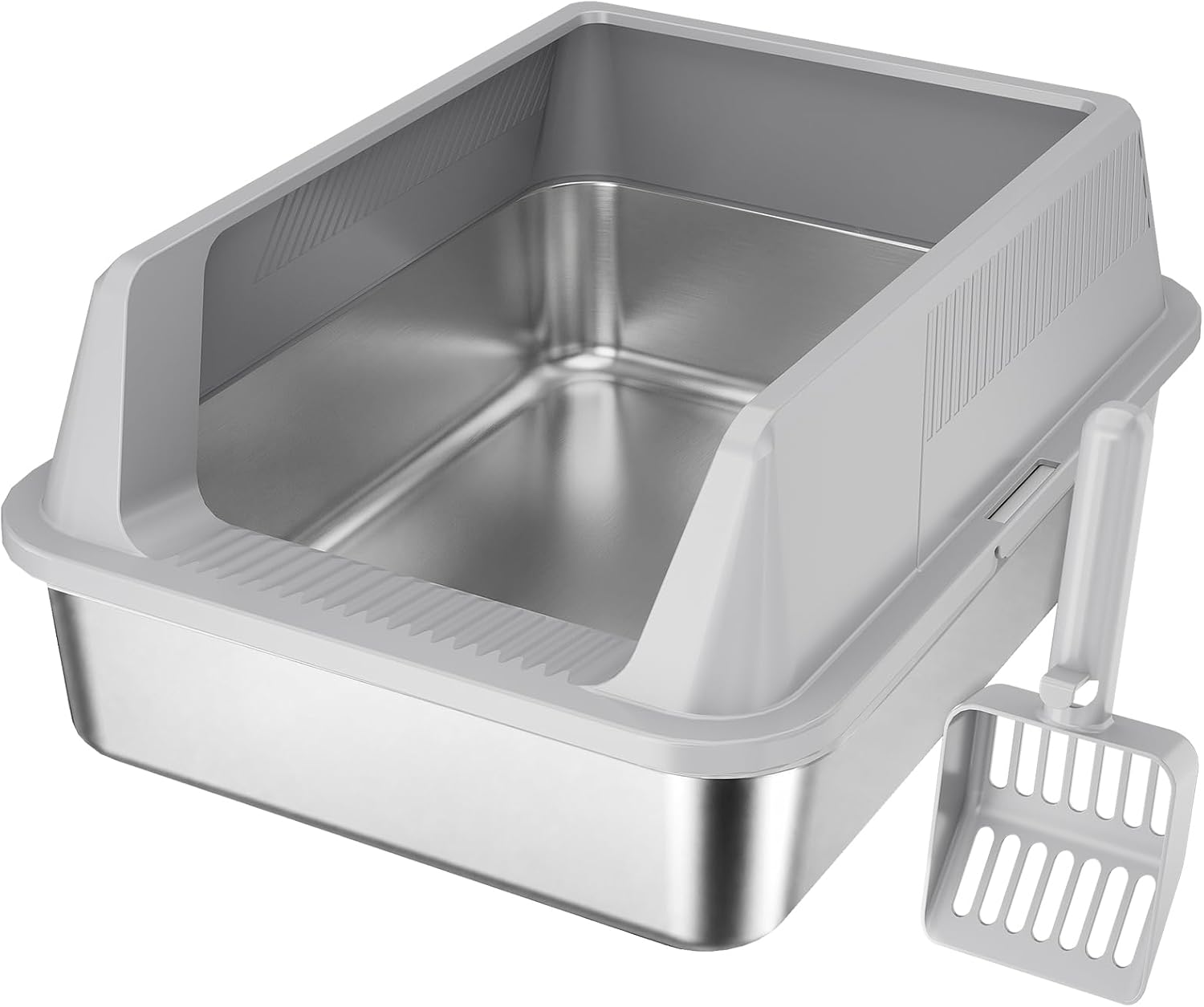
The Lifewit is an open stainless steel pan at 17.7 by 13.8 by 8.3 inches in gray, and it is the shape I start almost every kitten on. There is no lid, no door, and no top entry to figure out, so the only decision the kitten has to make is which end to use. The stainless walls wipe clean with a damp cloth, which matters in week one, when a nervous kitten may need the pan freshened twice a day.
For a small kitten the open top is a feature rather than a compromise. You can watch from across the room and see whether the kitten is actually using it, and you can reach in and move a stray clump without lifting a lid. The 8.3-inch height keeps most of the digging inside the pan instead of on your floor.
Flaws but not dealbreakers: There is no lid, so odor control is entirely on your scooping schedule. The walls that keep litter in are also walls a very small kitten has to clear, so for the first week or two keep the litter shallow and add a small step or a folded towel in front.
Runner-up: Large Blue Hooded Cat Litter Box
Runner-up
Large Blue Hooded Cat Litter Box
Check current Amazon price
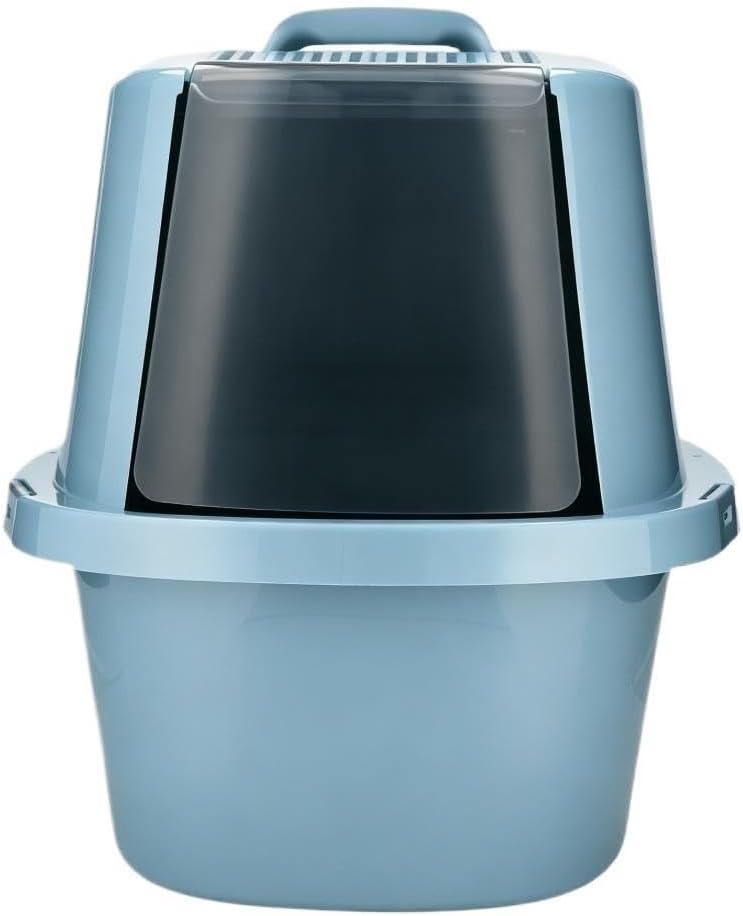
The blue hooded box is a two-piece snap-on enclosure, 19.38 by 14.99 by 15.38 inches and 2.8 pounds, which makes it the lightest option here and the easiest to move while you work out where the kitten wants to go. If you are playing the placement game, shifting the box a few inches a day toward its permanent spot, a light plastic unit is far less annoying than a stainless one.
The hood gives the cat privacy and keeps most of the scatter inside. In a multi-cat household that matters, because a covered box gives a shy cat somewhere to go without being watched by the resident bully.
Flaws but not dealbreakers: The enclosure holds odor as well as it holds litter, so it needs a full wash more often than an open pan. Plastic scratches, and a scratched hooded box keeps a smell long after you have scrubbed it. Some kittens also dislike walking into a cave, so run the first week with the lid off and snap it back on once the kitten is reliable.
Upgrade pick: APPKER Stainless Steel Litter Box with Lid
Upgrade pick
APPKER Stainless Steel Litter Box with Lid
Check current Amazon price
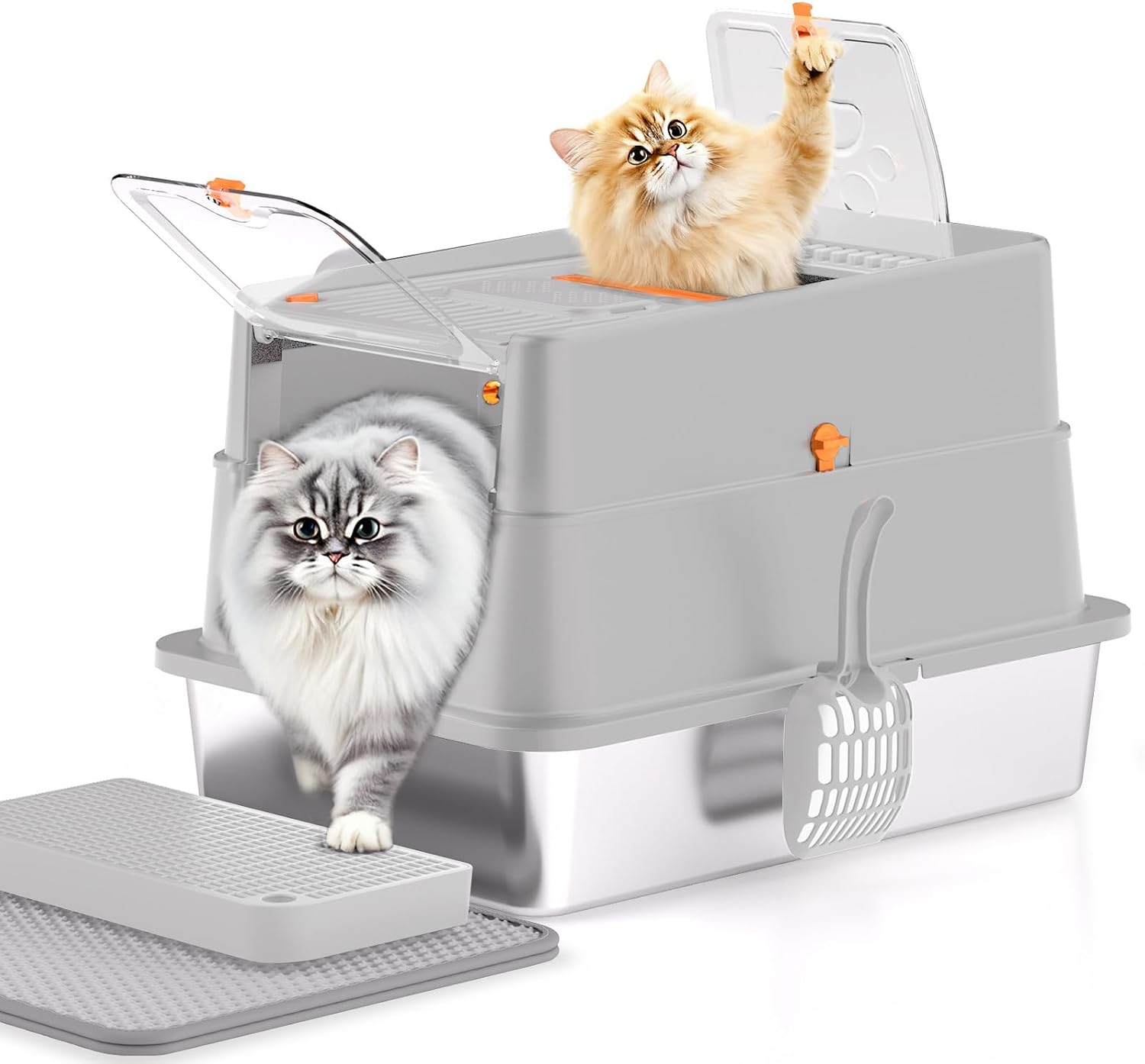
The APPKER is the box you buy once. It is an XL enclosed stainless steel pan with high sides, front and top entry, and it ships with a scoop, a mat, and a foot pedal in gray. Stainless steel gives you the easy cleaning of the Lifewit with the containment of the hooded box, and the XL interior means you will not be shopping again when the kitten turns into a twelve-pound cat.
For training, the front entry is the door you use first. It sits at floor level, so a kitten walks in the same way it walks into an open pan. The top entry is for later, once the cat is jumping onto counters, and it is also the reason this box stays cleaner: cats that exit over the top track less litter onto the floor, and the included mat catches what comes off their feet.
Flaws but not dealbreakers: The footprint is large, and an XL box in a small apartment bathroom is a real space decision. The top entry is not a kitten feature, so ignore it for the first month. The lid also makes the whole unit heavier to move during the placement phase.
The actual kitten litter box routine
There is no single ideal train a kitten to use a litter box schedule, but this sequence is close, and it works with any of the three boxes above or with a cardboard tray you were going to recycle anyway.
Step one: Set the box up before the kitten comes home. Unpack it, wipe it down, and put it in a quiet corner before the carrier is opened. A kitten's first instinct after a car ride is to look for somewhere to go, so the box should already be there with litter already in it, ideally in a room with a door you can close for the first night.
Step two: Start with shallow litter. An inch or two of unscented, fine-grain clumping litter is plenty for a kitten. Deep litter makes small feet sink and turns digging into work. Skip scented litters and skip crystals or pellets for the first month, because texture is the thing kittens object to, and clumping speed matters less than whether the kitten is willing to stand in the pan at all.
Step three: Get the entry height right. A kitten should be able to walk in without jumping. If your pan has a high front, put a folded towel or a low step in front of it, or run the first two weeks with the lid off and a shallower layer of litter. Entry height is the most common reason a kitten walks away from a box and never comes back to it.
Step four: Put the kitten in at the right moments. After every meal, after every nap, and after every hard play session, set the kitten in the box, let it sniff, and step back. Do not hold it there and do not block the exit. Kittens usually dig, circle, and go within a minute or two of waking up or eating.
Step five: Praise and never punish. Say one calm word when the kitten finishes, then walk away. Never rub a nose in waste, never shout, and never grab a kitten off the box. A kitten that connects the box with being handled will find a quieter corner of the house, and you will spend a week undoing that association.
Step six: Scoop twice a day and keep the litter level. Morning and evening, scoop the clumps and top the litter back up. A clean box is a used box. Stainless pans can go longer between full washes than plastic, but neither one should smell like ammonia when you walk past it.
Step seven: Handle accidents correctly. Move the waste into the box so the smell points to the right place, then clean the spot with an enzymatic cleaner. Ammonia-based cleaners smell like urine to a cat and pull it straight back. This is also the step where you correct train a kitten to use a litter box habits that went wrong early: if the kitten keeps choosing one spot, put a second box there or feed the kitten on that spot for a week.
Step eight: Adjust as the cat grows. Size up the box, deepen the litter, and add the lid or the top entry once the kitten is jumping. In a multi-cat home, one box per cat plus one, in separate rooms if the layout allows. Re-check mat texture and placement, because a box that worked at four months can stop working at eight.
The competition and why it lost
Most of the gear that did not make the cut solves a problem you do not have yet.
Self-cleaning boxes with a rake and a sensor range are wonderful for a settled adult cat and a nightmare for a kitten that weighs less than the rake. The sensor can trigger mid-visit, the motor is loud, and the waste drawer needs a level of litter management a kitten cannot help with. Wait until the cat is full grown and reliable.
Top-entry-only boxes lose for the same reason. A top entry is a great litter control feature for a cat that can jump, and an impossible wall for a kitten that cannot.
Crystal litters and pine pellets are popular for odor control, but the texture puts some kittens off, and pellets do not let a small cat bury anything, which is half the point of a litter box in the first place.
Scented litters and box liners fail the same test: they add a smell or a texture the kitten did not ask for. Liners also catch claws, and a kitten that snags a claw on a liner while digging may not go back in.
The three boxes above are the ones I keep recommending because they solve the actual problem, which is access. Everything else on the shelf is a later purchase.
What this all costs
All three boxes are one-time buys, and the gap between them is smaller than the gap between a box you keep and a box you replace after a year of odor you cannot wash out.
- Lifewit Stainless Steel Cat Litter Box for Kitty: the least expensive way in, and the easiest shape for a kitten to learn on. Check current Amazon price
- Large Blue Hooded Cat Litter Box: similar money, more privacy, more odor maintenance. Check current Amazon price
- APPKER Stainless Steel Litter Box with Lid: the largest spend and the last box you buy for this cat. Check current Amazon price
The recurring cost is litter, and a kitten goes through far less of it than an adult, so the first month is cheap. The recurring cost people forget is time: two scoops a day, a full wash on a schedule, and a mat that gets shaken out. That is the real price of how to train a kitten to use a litter box, and it comes to about three minutes a day.
The setup is the whole job. Buy a box the kitten can walk into, put it somewhere quiet, keep it clean, and the kitten handles the rest. That is the entire method, and it has worked on every kitten I have brought home.