Cats do not hate having their claws trimmed. They hate being pinned, surprised, and outnumbered. Learn to trim cat nails in short bursts with a sharp tool and a calm hand, and most cats stop fighting by the fourth session.
I have trimmed claws on foster cats, senior cats, and one very opinionated Maine Coon who could open kitchen cabinets. Here is how to trim cat nails when the cat is awake, when nobody is holding it down, and when you are working alone.
Five minutes a week, one good pair of scissors, and a towel. That is the whole setup.
Why you should trust me
I am the person friends call when their cat has one claw that clicks on the hardwood and nobody in the house wants to be the one to deal with it. Over the years I have trimmed claws on kittens, on a nineteen-year-old cat with arthritis in both hips, and on a foster who had never been handled by a person. The pattern is always the same: the tool matters less than the sequence.
I learned the sequence the hard way, then confirmed it with two veterinary technicians and a groomer who has done this professionally for a decade. Nothing here is exotic. It is the version that keeps a cat from learning that hands are dangerous.
I also keep my own cats on a weekly schedule, which means I see what actually goes wrong: the claw that splits because the blade was dull, the quick that gets nicked because someone cut too close on a dark claw, and the cat that hides under the bed for three days because a trim turned into a wrestling match.
How I picked and how I tested
Three things decide whether a trim goes well: the cutting tool, the hands holding the cat, and the restraint option for cats that will not sit still. So those are the three things I looked at.
The trimmer had to be small enough for a cat claw, sharp enough to slice instead of crush, and open wide enough that I could still see the tip of the claw while the blade was around it. I compared scissors against guillotine clippers and human nail clippers on the same cats. A crushed claw splits later, and a split claw is how you end up at the vet.
For gloves, the question is glove fit. A glove that is too thick turns your hand into a club, and a club cannot hold a paw. I looked for thin protective panels, a cuff that stays up, and enough length to cover the forearm where a back paw can reach.
For a restraint bag, I looked at how fast a cat goes in, how fast it comes out, and whether one paw can be worked at a time without the whole thing collapsing.
I tested on my own cats and on foster kittens, always one paw at a time, always with treats waiting. I did not test anything on a cat that was already panicking, because that is not a test, that is a fight.
One thing worth saying: nails are not coat care. Coat length, undercoat, and comb spacing belong to a brushing routine with the right bristle type and a deshedding edge, and no trimmer solves shedding. A roller adhesive handles the hair on your couch. Nail trimming is its own job, and it is the one that saves your furniture and your forearms.
What you need to trim cat nails without drama
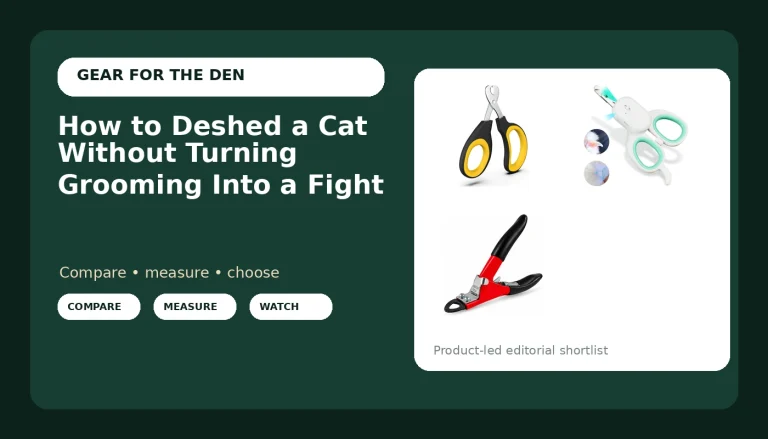
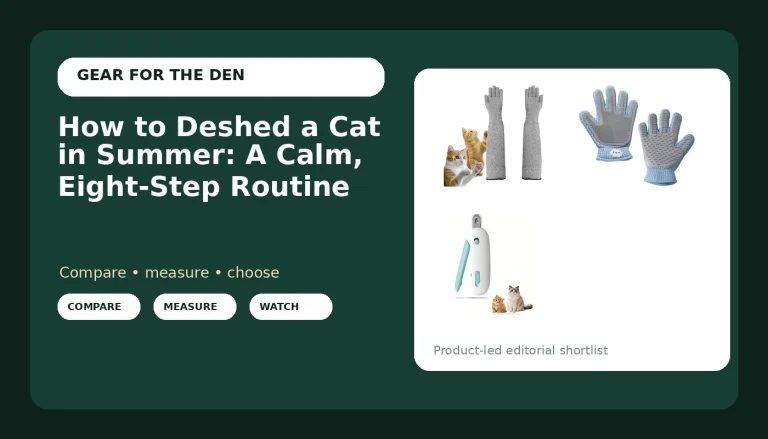
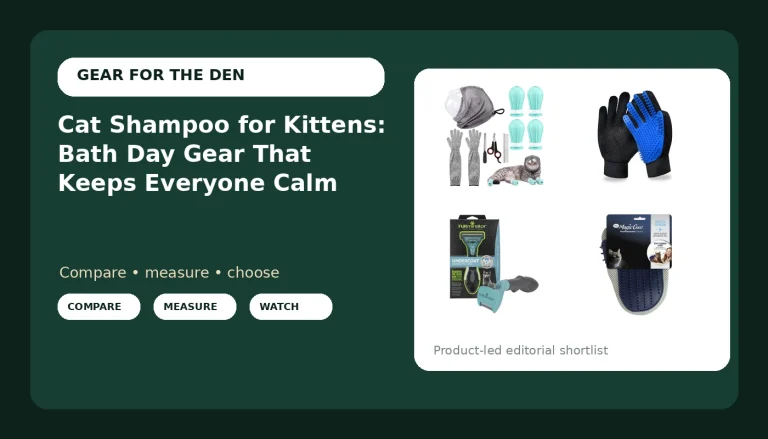
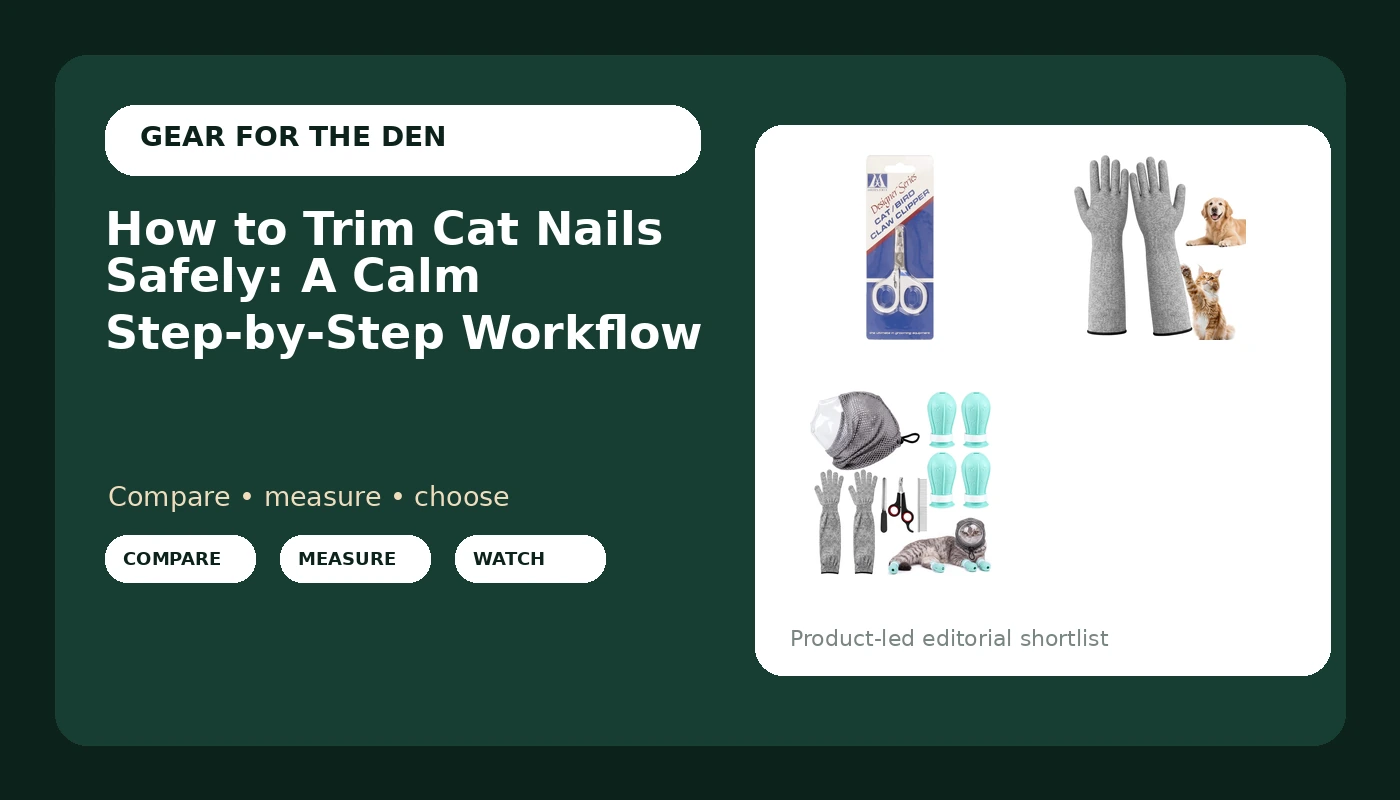
Three tools cover almost every cat. Start with the trimmer, add the gloves if your cat uses its back feet, and add the bag only if your cat turns into a buzzsaw.
Our pick: Millers Forge Designer Series Cat Nail Scissor
Our pick
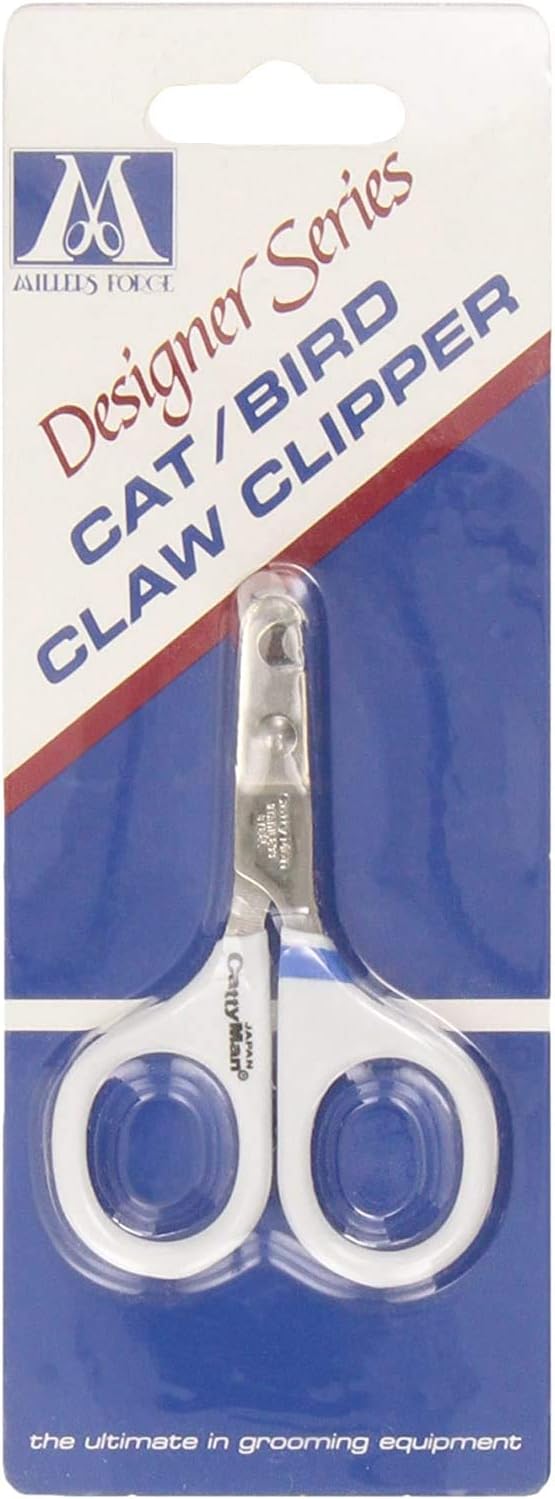
Millers Forge Designer Series Cat Nail Scissor
Scissors beat clippers for cats, and this pair is the reason. The blades are short and slightly curved, which lets you get around a claw that is only a few millimeters long without the handle blocking your view. On a dark claw, being able to see the tip while you cut is the difference between a clean trim and a bleeding quick.
A scissor cut also slices the claw instead of crushing it. Crushing leaves a ragged edge that catches on carpet and splits up the length of the claw, which is a much bigger problem than a long nail. There is no nail guard on this pair, so the safety comes from your hand position and from taking small bites rather than one big one.
The spring action is light, which matters when you are making eight or ten cuts in a row on a cat that is only tolerating you for a minute. Nothing about it is fancy. It is a small sharp tool with a comfortable grip, which is exactly what the job needs.
Check current Amazon price.
Flaws but not dealbreakers: There is no stop or guard, so a beginner can cut too much by rushing. Take a sliver at a time and that problem disappears.
Anyone who trims claws at home on a regular basis, or who has more than one cat, should start here.
Budget pick: Lanjiesh 15.7 Inch Kevlar Anti-Bite Anti-Scratch Gloves, Flexible Arm Protection for Cat Grooming Nail Trimming
Budget pick
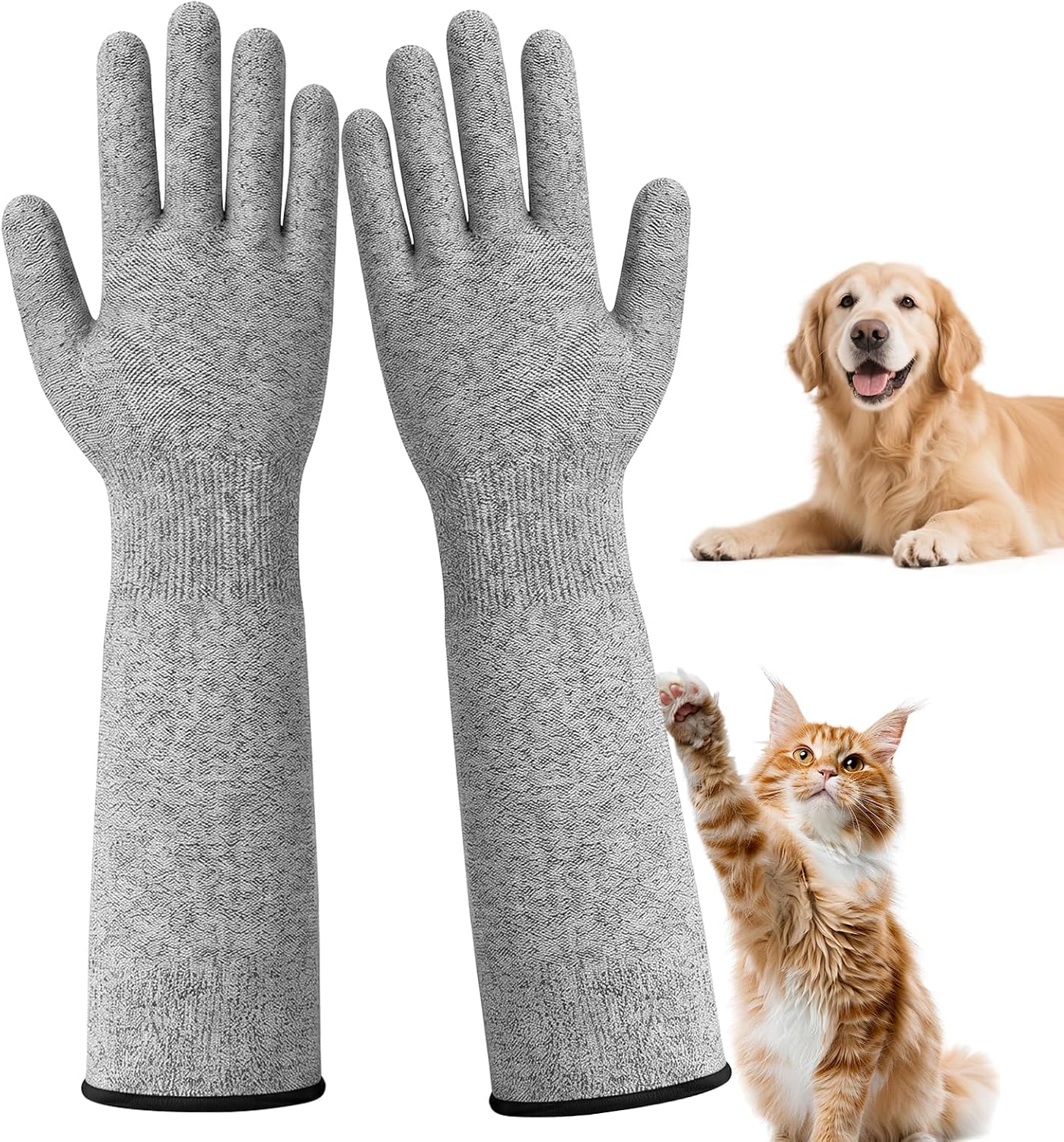
Lanjiesh 15.7 Inch Kevlar Anti-Bite Anti-Scratch Gloves, Flexible Arm Protection for Cat Grooming Nail Trimming
The 15.7 inch length is the point. A back paw can reach a long way up a forearm, and a glove that stops at the wrist does not help once the cat has decided the trim is over. The protective panels cover the fingers and the forearm, and the fabric between them is thin enough that you can still feel a claw between your thumb and finger, which is what you need to isolate one nail.
Glove fit is the whole game here. If the fingers are baggy you lose the fine control that makes a two-second trim possible, and a loose glove is more likely to slip off mid-hold than to protect anything. Size down if you are between sizes.
Check current Amazon price.
Flaws but not dealbreakers: The palm is not fully padded, so a determined bite through the webbing will still be felt. This is scratch and grip protection, not armor.
Anyone whose cat brings its back feet into the argument should keep a pair of these next to the trimmer.
Also useful: Ferrochef 10 Pcs Cat Bath Bag, Cat Grooming Kit, Drawstring, Gray
Also useful
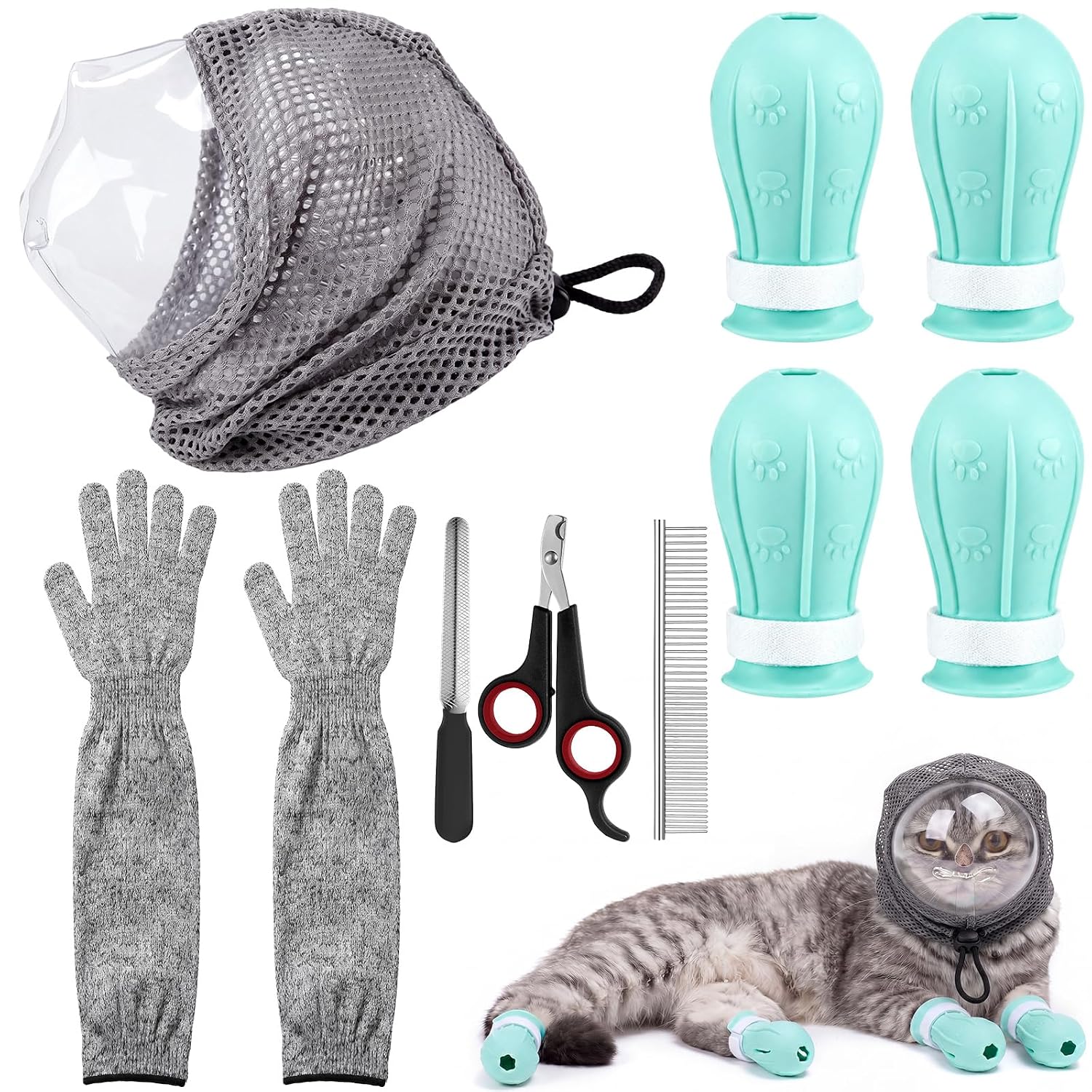
Ferrochef 10 Pcs Cat Bath Bag, Cat Grooming Kit, Drawstring, Gray
Some cats will not be held, no matter how calm the room is. A drawstring bag is not a punishment, it is a way to keep everyone safe while you work on one paw at a time. The drawstring cinches around the neck without pressing on the throat, and the fabric gives you control of the body without four legs going in four directions.
The kit includes more than the bag, so read the listing for what is in the box. For nail trimming, the bag is the piece that matters. Put the cat in rear first, cinch it snug but not tight, then pull out one front paw, trim, put it back, and repeat on the other side. Most cats settle within a minute once they realize they cannot kick.
Wash it after every few uses. Loose hair and dander build up in the seams, and a bag that smells like a vet clinic is a bag your cat will fight.
Check current Amazon price.
Flaws but not dealbreakers: A bag removes the cat's ability to leave, so a cat that is truly panicking will panic harder. If yours does, stop and let a vet handle the trim.
Anyone with a cat that scratches during handling, or with a cat that needs medication and grooming in the same session, will get use out of this.
The actual nail trimming workflow
Here is the sequence. It works on a lap, on a counter, or on the floor, with or without a second person.
Step one: Pick the time. Trim after a meal, not before. A fed cat is a sleepy cat. Do not do this the second the cat wakes up or the second you walk in from work, because those are the two most energetic windows of the day.
Step two: Learn the claw. Hold a paw and press the pad gently until the claw extends. On a light claw you can see the pink quick through the shell. On a dark claw you cannot, so look for the hollow hook at the tip and the slight taper where the live tissue ends. That hook is all you need to remove.
Step three: Set up your station. Towel on the counter, trimmer in your dominant hand, treats within reach. If you are using gloves, put them on before you pick up the cat, not after. A cat that watches you put gloves on mid-hold learns to leave early.
Step four: Handle before you cut. Touch every paw, press every pad, and put the cat down. Do this for a few days in a row before you trim anything. This is the step almost everyone skips, and it is the step that decides whether the ideal trim cat nails routine is calm or a chase.
Step five: Take the first nail. Start with a front paw, since front claws are easier to see. Cut one claw straight across, a sliver at a time. If the cat pulls, let go, wait, and try again. Never chase the claw with the blade.
Step six: Use the nail guard. No guard on your trimmer? Then the guard is your thumbnail. Place your thumb against the pad so the blade can only travel so far. Cutting a little long is fine. Cutting into the quick is the mistake that costs you a week of trust.
Step seven: Do one paw and stop. Two or three claws in one session is a win. The correct trim cat nails approach is boring on purpose: front left today, front right tomorrow, the backs later in the week. Cats remember short sessions fondly and long ones forever.
Step eight: Reward, reset, repeat. Treat immediately, even if you only did one claw. If you nick the quick, press styptic powder or cornstarch on it, stay calm, and end the session. Then put the cat down and walk away. Next week, start again with the paw that went best.
That is the whole method. Most cats go from two-person wrestling matches to one-person five-minute trims in about a month of short sessions.
The competition and why it lost
Human nail clippers are the most common tool people try first, and they are the worst of the lot. The blade is straight and the jaw is wide, so the claw rolls instead of sitting still, and the result is a split nail.
Guillotine clippers designed for dogs are too large for a cat claw. The opening swallows the whole nail, which means you cannot see where the quick ends, and the crush instead of slice problem shows up again.
Rotary grinders are quieter than they used to be, and some cats tolerate them, but they take longer per nail and the sound alone sends a lot of cats under the couch. If you already own one and your cat does not care, use it. If you are buying your first tool, buy scissors.
Soft claw caps and scratching posts are not trimmers. A post redirects scratching and caps cover the claw, but neither one removes the hook that catches on carpet. They are part of the plan, not a replacement for it.
A vet or a groomer is the right call when a claw is ingrown, when the cat has a medical reason for not being handled, or when you have tried for a month and the cat still panics. That is not a failure. That is triage.
If you are shopping for coat tools instead, that is a different article. Brushing, undercoat removal, and the right comb spacing live in our guide to brushing a long-haired cat.
What this all costs
Three items, and none of them are recurring. The trimmer is the one you cannot work around, so buy that first. The gloves are the safety layer for a cat that kicks. The bag is the handling layer, and it is only worth buying if handling is the real problem, not the nails.
Check current Amazon price on each listing before you buy, because listings move and a grooming kit is not worth paying a premium for.
What you save does not show up on a receipt. A vet visit for a torn or ingrown claw, a scratched forearm, a couch that needs replacing: all of those cost more than a small pair of scissors. Add a scratching post and a lint roller and the furniture side of the problem is covered too.
The time math is the part people miss. A trim takes about five minutes, you will do it roughly once a week, and that adds up to a few hours a year. The first month is the hard part, because that is when the cat is learning that the trimmer is not a threat. After that it is just part of the week, like scooping the box.
That is the job. Your cat will never love it. It will stop caring, and that is the win.