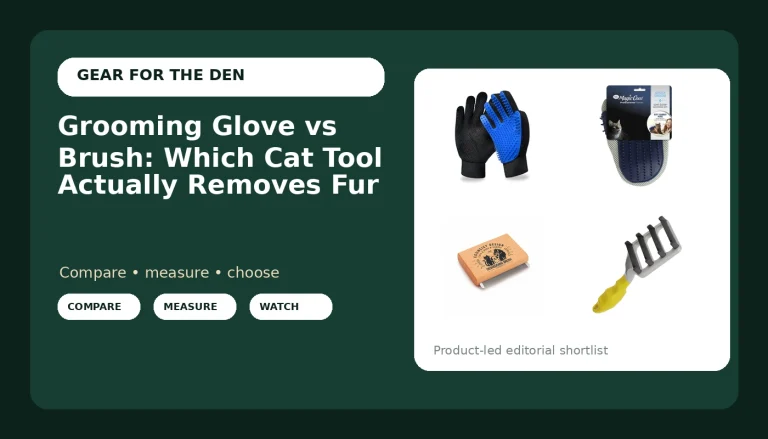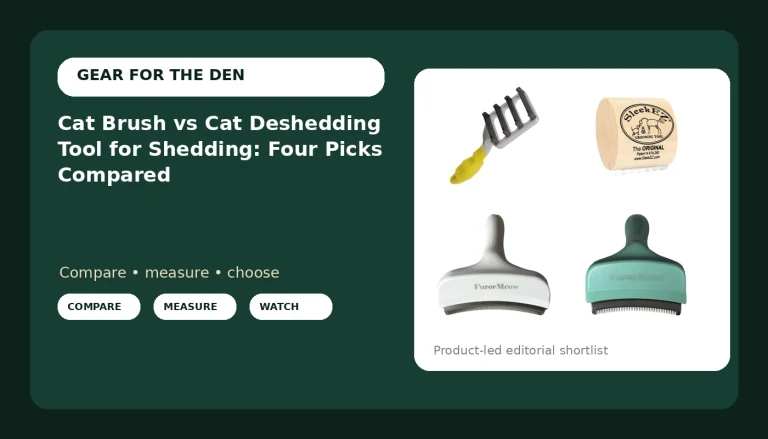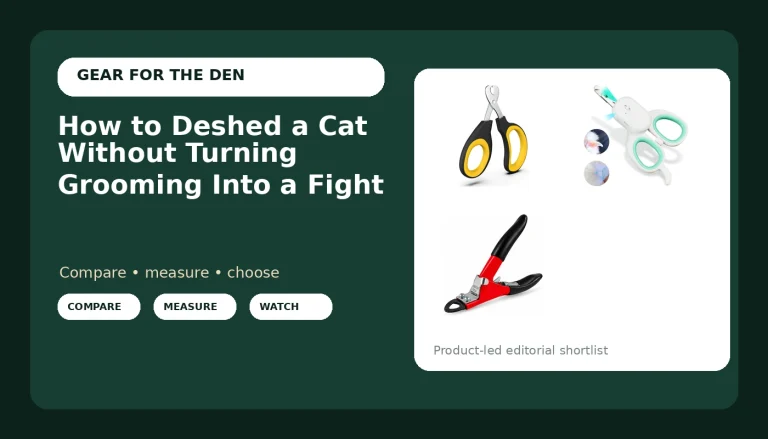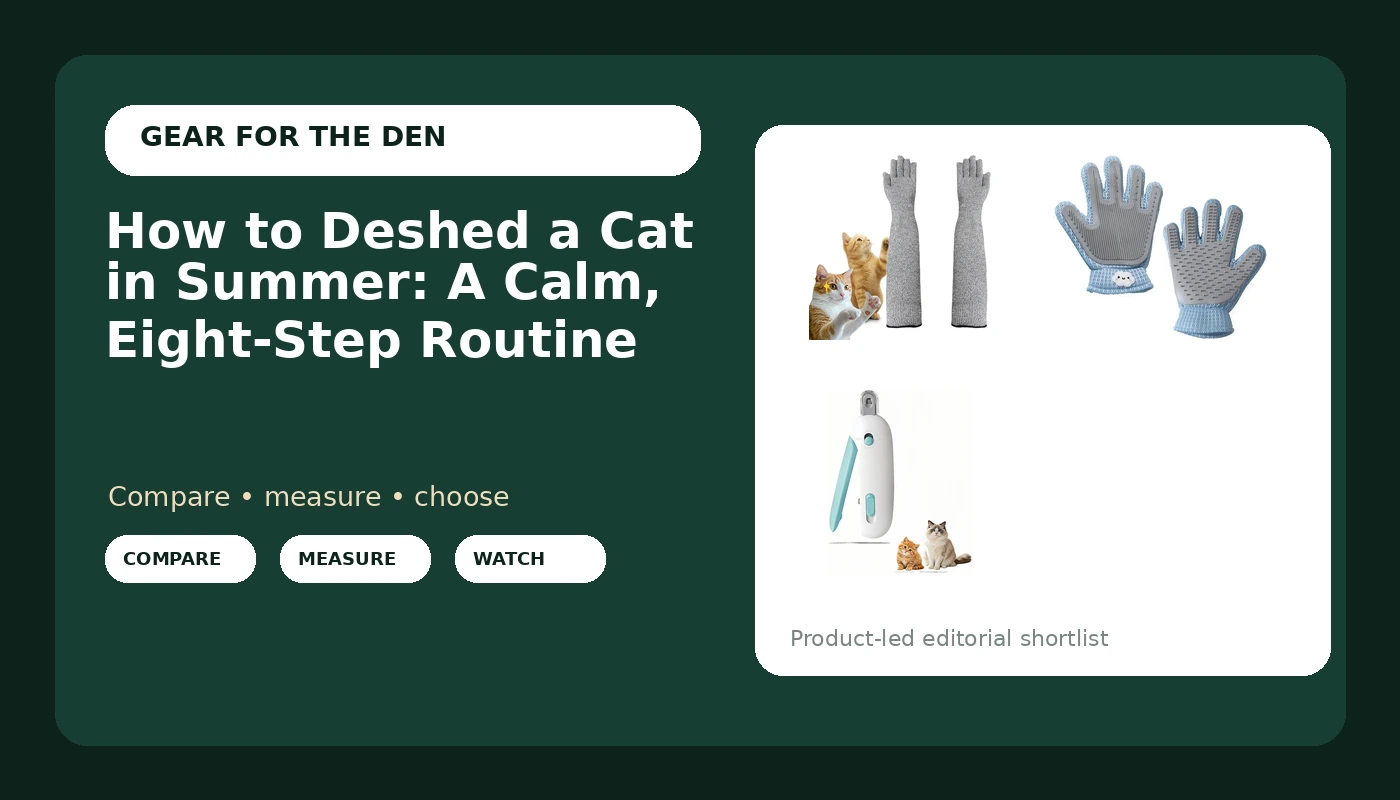
Summer shedding is not a season, it is a second job. Once the thermostat climbs, the undercoat your cat grew all winter starts letting go in handfuls, and every dark surface in the house turns into a felt mat. Learning how to deshed a cat in summer is less about finding a miracle tool and more about repeating a short routine during the few weeks the coat is actually blowing.
The window matters. A cat's summer coat does not shed on a calendar, it sheds on light and temperature. The loose hair comes out over two to four weeks and then slows to a trickle. If you want to deshed a cat in summer without turning every session into a wrestling match, you work with that window: short passes, several times a week, with the right tool for the coat length in front of you.
Below are the three tools I would put in a deshedding kit and the eight steps I would run in order, plus the honest limits of what a glove and a brush can do.
Why you should trust me
I write about pet gear for this site, which means I spend my weeks reading spec sheets for bristle type, glove fit, and blade guards instead of repeating the same spring advice about shaving the cat. Shaving a cat in summer is a bad idea, because the coat insulates against heat and a shaved cat can sunburn. So is buying the most aggressive rake on the shelf. What works is understanding the undercoat, matching the tool to the coat length, and accepting that a cat will tolerate about four minutes of anything before it starts planning its exit. My job is to translate tool specs into a routine you can finish before that happens.
How I picked and how I tested
I cannot test a grooming glove on your cat, and anyone who claims they did is selling something. What I can do is check the specs that decide whether a tool survives a real session, then sequence the tools so the cat is handled, deshedded, and finished in an order that keeps stress low.
For the grooming glove, I looked at glove fit first, meaning whether the wrist closes and whether the pads sit flat against the palm. A glove that twists on your hand makes you grip harder, and a hard grip is what ends a session early. I also weighed bristle type, since soft silicone nubs lift loose undercoat without scraping skin.
For the handling sleeves, the questions were coverage and flexibility: forearm length versus hand-only, and whether the knit still lets you feel what you are doing.
For the clippers, I looked for a nail guard, a hidden file, and a blade small enough for kitten claws.
The rules that matter in a deshedding session are simple: keep sessions under ten minutes, work a section no more than three passes, and stop the moment the skin shows pink. The eight steps below are built around those rules. If your cat is long-haired, the brush you choose matters as much as the glove, and I went through that in brushes for long-haired cats.
The kit
The handling layer: MANON ROSA Ultra-Flexible Pet Handling Sleeves
The handling layer
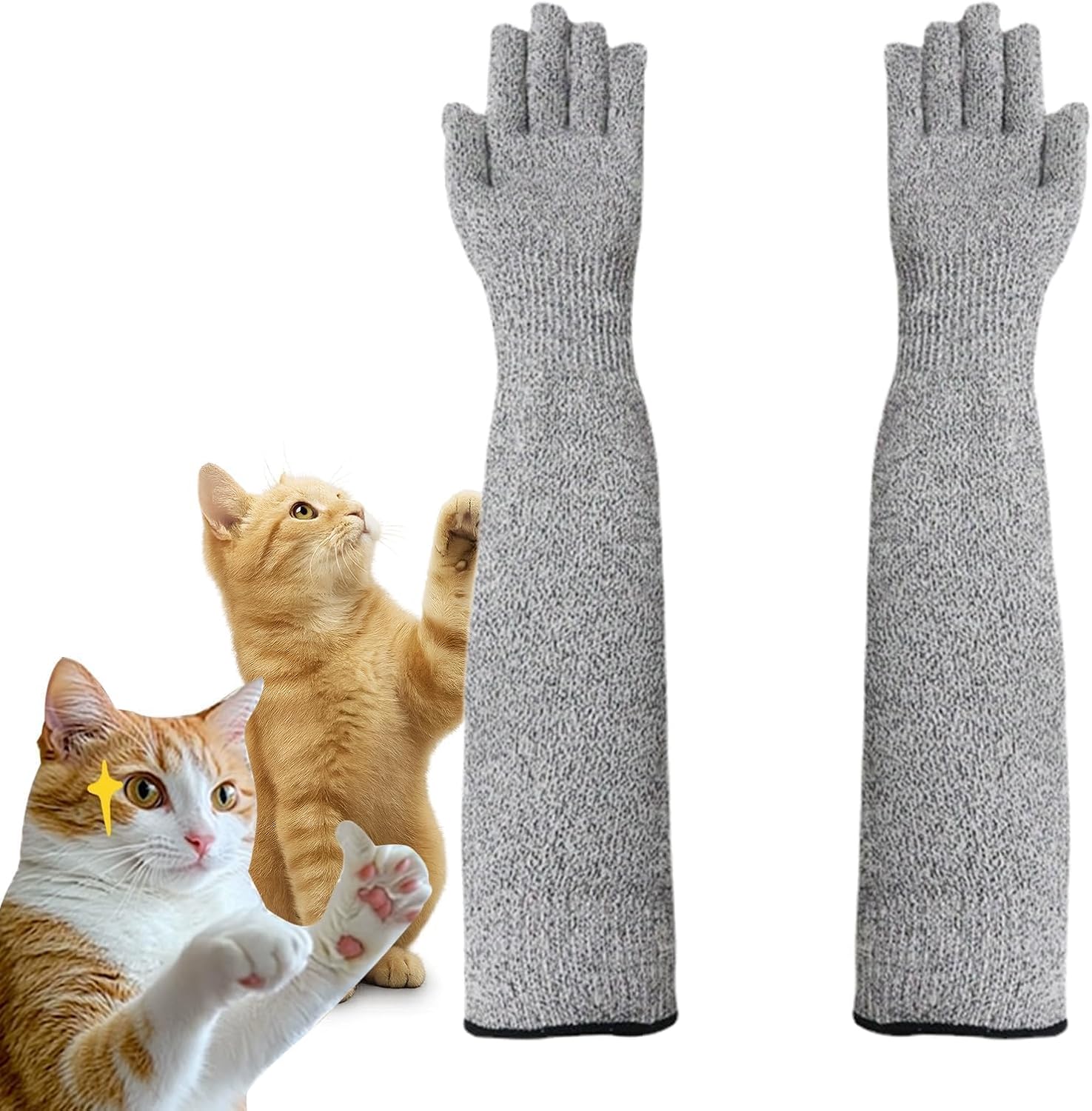
MANON ROSA Ultra-Flexible Pet Handling Sleeves
Check current Amazon price.
Most deshedding sessions end early because of the front end of the cat, not the back end. Sleeves solve that. This pair runs 15.7 inches long, so it covers the forearm up to the elbow, and the listing describes a Kevlar fiber construction with a knit flexible enough that you can still feel what you are doing. That flexibility is the point. A stiff glove makes you grip harder, and gripping harder is what turns grooming into a chase.
The length is the detail that matters for cats specifically. When a cat decides it is done, it does not bite the hand, it goes for the wrist and forearm. Long sleeves give you a layer there without turning your arm into a club.
Flaws but not dealbreakers: These are handling sleeves, not falconry gauntlets, and no fabric makes a panicking cat safe to manhandle. If your cat is genuinely terrified, stop and try again tomorrow.
Anyone whose cat has drawn blood during a nail trim or a bath will get the most out of these.
The main tool: Guilinyuheng Cat Grooming Gloves, Upgraded 2-in-1 Double-Sided
The main tool
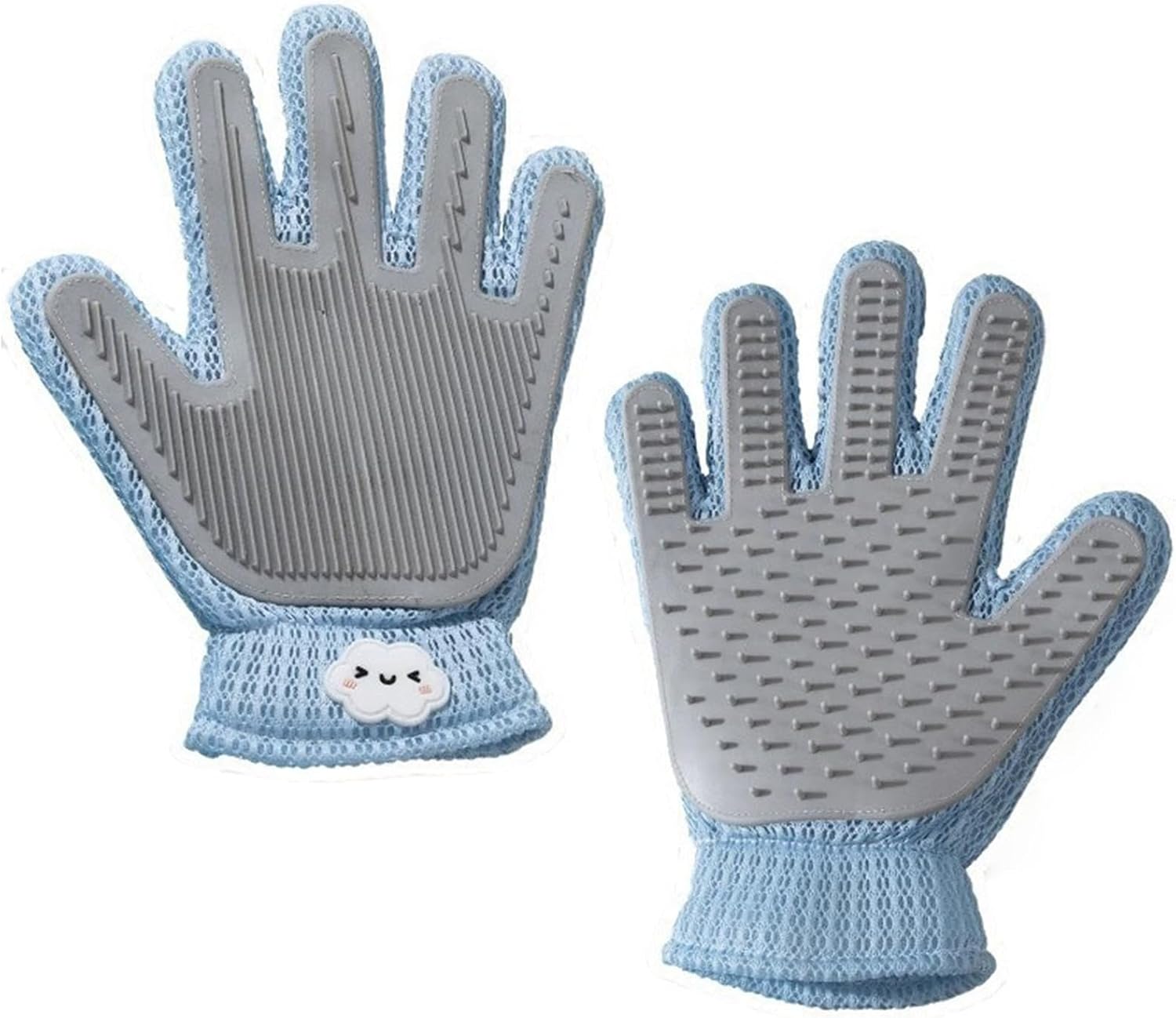
Guilinyuheng Cat Grooming Gloves, Upgraded 2-in-1 Double-Sided
Check current Amazon price.
This is the tool that does the actual deshedding in the routine below. The double-sided design means one side carries the silicone nubs that lift loose undercoat while the other side smooths the topcoat, so you are not switching tools mid-session. Glove fit matters more than people expect: because the pad sits in your palm, you control pressure the way you would while petting, which is why most cats tolerate a grooming glove far longer than a rake.
A glove is also the safest first pass on a cat with a thin coat or a sensitive belly, because you can feel the skin through the pad and back off instantly.
Flaws but not dealbreakers: A glove lifts what is already loose. It will not cut through a packed undercoat, and it does nothing for a mat. If the coat is felted, that is a different conversation.
Anyone with a short or medium coat cat that sheds on the furniture will be fine here.
The finishing tool: SAYUANVA Adjustable Cat Nail Clippers with Safety Guard & Hidden File
The finishing tool
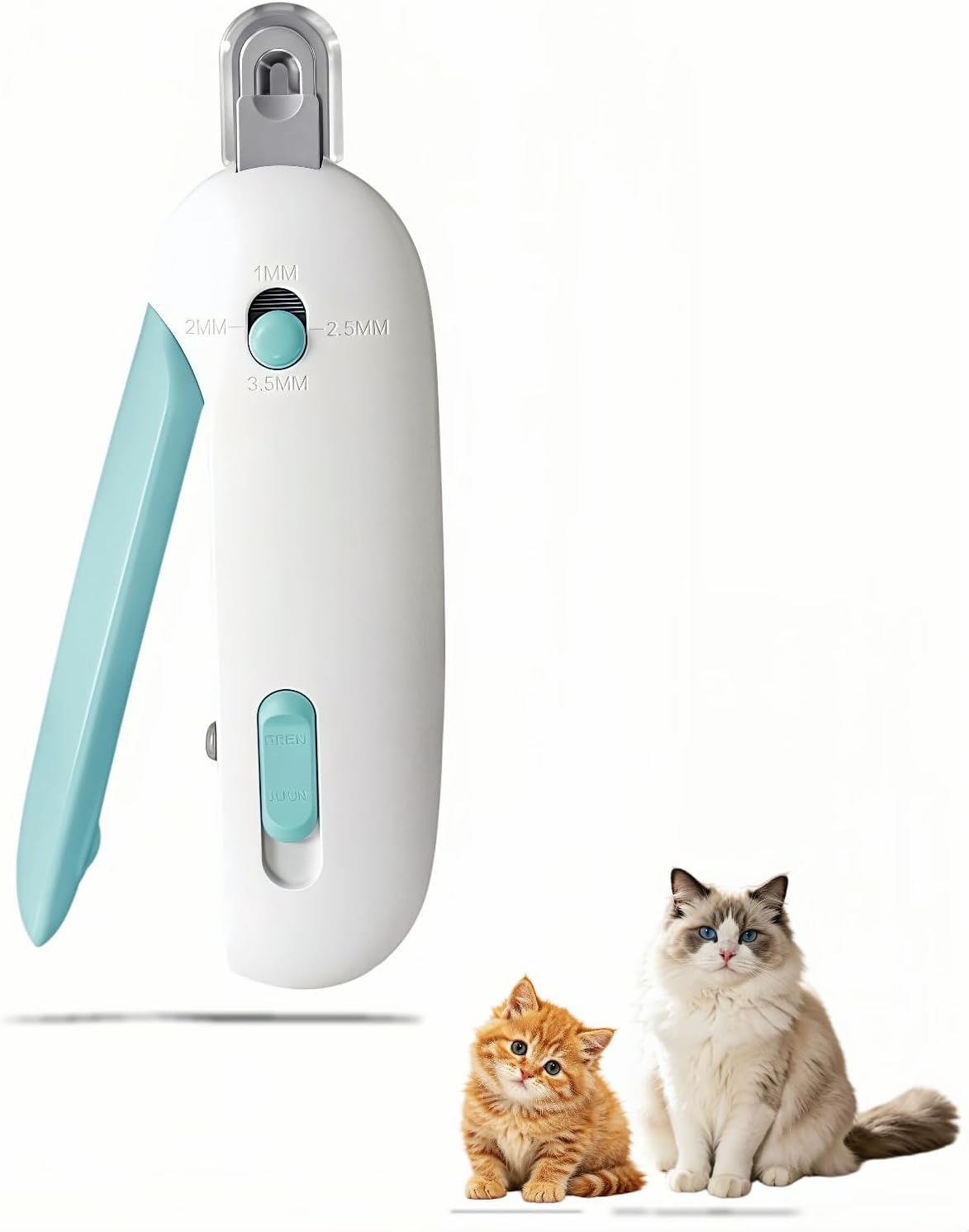
SAYUANVA Adjustable Cat Nail Clippers with Safety Guard & Hidden File
Check current Amazon price.
Clippers belong in a deshedding kit for one reason: paws. Loose hair collects between the toe pads, and a cat that slips on hard floors because of fur between its toes will over-groom. The nail guard is the feature that sells this pair, because it limits how much of the claw enters the blade, which is the difference between a clean trim and a split claw. The hidden file means you can smooth the edge without hunting for a second tool, and the splash-proof body is a small thing that matters if you clip near a sink.
Flaws but not dealbreakers: The guard helps, it does not aim for you. You still have to find the quick and stay behind it, and on black claws you take a sliver at a time.
Anyone trimming a kitten or an indoor cat for the first time should start here rather than with a full-size clipper.
The eight-step routine to deshed a cat in summer
Step one: Read the coat before you touch a tool. Run both hands from the shoulders to the tail base and down each flank. Note the coat length, where the undercoat feels dense, and whether anything mats under the front legs or behind the ears. Mats change the plan. A glove lifts loose hair, it does not break up a mat, and pulling at one hurts.
Step two: Set the room and the timing. Cool room, closed door, towel on your lap, hard floor if you have one. A cat that is already hot has no patience for anything. The ideal deshed a cat in summer session happens after a play session and before dinner, when the cat is tired but not full.
Step three: Put on the handling layer. Sleeves first, then the grooming glove over your dominant hand. The sleeves cover the forearm, which is where a cat aims when it has had enough, and the glove does the work. Keep the clippers on the floor beside you so you are not standing up mid-session.
Step four: Start at the shoulders. Short strokes in the direction the coat grows, three passes per section, no pressing. The first pass lifts surface hair, the second catches looser undercoat, and the third is mostly you checking your work. If the glove starts dragging, you are pressing too hard.
Step five: Work the coat in sections. Shoulders, back, flanks, belly, tail base, hind legs. The belly is the test: if your cat rolls or bunches up, skip it and come back another day. The correct deshed a cat in summer technique is fewer passes with less pressure, not more. If you add a metal comb for the tail and trousers, wide comb spacing keeps it from dragging through the topcoat.
Step six: Handle the paws and trim if you need to. Loose hair collects between the toe pads, and a cat slipping on hard floors will over-groom. Hold a paw, press the pad so the claw extends, and take a sliver. A nail guard limits how far the blade travels, which is what keeps you behind the quick.
Step seven: Clear the hair before it settles. Roller adhesive for the couch and the cat tree, a rubber broom for carpet, and a quick pass on your own clothes before you stand up. Hair you remove now is hair you are not vacuuming out of a filter next week.
Step eight: End on a good note and set the schedule. Treat, release, done, even if you only got one side. During the blow, repeat every two or three days for two to three weeks. After that, once a week holds the line. If the skin looks red or the cat hides from you afterward, the session ran too long.
The competition and why it lost
The tools that did not make the kit are not bad tools. They are tools for a different job or a different owner.
Undercoat rakes and deshedding edges remove more hair per stroke than a glove, and for a heavy double coat they are the right call in experienced hands. The problem is pressure. A deshedding edge dragged with any force cuts the topcoat and leaves the cat with a patchy, harsh coat that grows back badly. Most people who own one use it twice a year and press too hard both times.
Slicker brushes are excellent finishers for long coats, but they do not reach the undercoat, so they leave the loose stuff behind to become mats. Grooming vacuums handle the cleanup in one pass and are genuinely good for some cats, but the noise alone ends the session for most of them.
Kitchen scissors never belong on a cat, for the same reason a shaved cat in July is a sunburned cat in August.
That leaves the three tools above: something to protect your arm, something that lifts loose undercoat without scraping skin, and something small enough to finish the paws.
What this all costs
The tools are the cheap part. A grooming glove, a pair of handling sleeves, and a small guarded clipper are all inexpensive, and each one lasts years if you rinse the hair out and let it dry. Check current Amazon price on each listing linked above. There is no subscription, and nothing to replace except the glove once the nubs wear smooth.
The recurring cost is minutes. Ten minutes, three times a week, for the two to four weeks a cat is blowing coat, then once a week after that. That is roughly two hours of your summer. Compare it to the alternative: mats that tighten until the only fix is a vet visit and a shave, hairballs on the rug, and a cat that grooms itself raw.
The last cost is the one people skip. If the cat fights every session, the tools are not the problem, the session is too long. Cut it to four minutes, do one side, and try again tomorrow. A cat that learns the session ends quickly will stand for it. A cat that learns it lasts twenty minutes will hide under the bed every time you pick up the glove.
So the whole answer to how to deshed a cat in summer is this: three cheap tools, a short routine, and a hard stop while the cat is still relaxed. Start at the shoulders, work with the coat length instead of against it, and put the hair in the bin.