Most cats treat a brush like a betrayal. If you want to use a grooming glove on a cat without turning it into a wrestling match, the trick is less about the glove and more about the sequence.
I have been covering pet gear for Gear for the Den since 2019, and the grooming glove is the tool I recommend most for cats that hate traditional brushes. It mimics petting, which lowers the drama. The cat thinks it is getting attention. You are actually pulling loose hair off the coat.
The fix is not a new cat. It is five minutes, the right glove fit, and a plan. This guide covers how to use a grooming glove on a cat from the first sniff to the final pass.
Why you should trust me
I have written about cat grooming and hair for Gear for the Den for years. In that time I have read hundreds of owner reports, talked with vet techs, and tested the workflow on my own cats. I keep notes on bristle type, undercoat release, and which tools cats tolerate. I do not recommend a glove I would not use on my own cats, and I tell readers when a glove is the wrong tool for their cat. I also know the difference between a cat that is annoyed and a cat that is about to bite. That difference is the whole job.
How I picked and how I tested
The gear list below is about what you need to use a grooming glove on a cat. I evaluated two gloves and one nail clipper. I looked at bristle type, glove fit, deshedding edge, comb spacing, and how each handles different coat lengths. I ran the same sequence on short-haired and long-haired cats. I checked whether the glove stayed on during a wriggle, whether the bristles grabbed undercoat, and whether the nail guard on the clipper was easy to see. I also considered roller adhesive and cleanup. I did not use a lab. I used my hands, my cats, and a lot of treats. The numbers I trust: a glove that slips off is useless. A clipper that splits nails is worse. The goal is calm, short sessions. If you want a broader list, see our guide to cat grooming tools.
How to use a grooming glove on a cat: the tools you need first
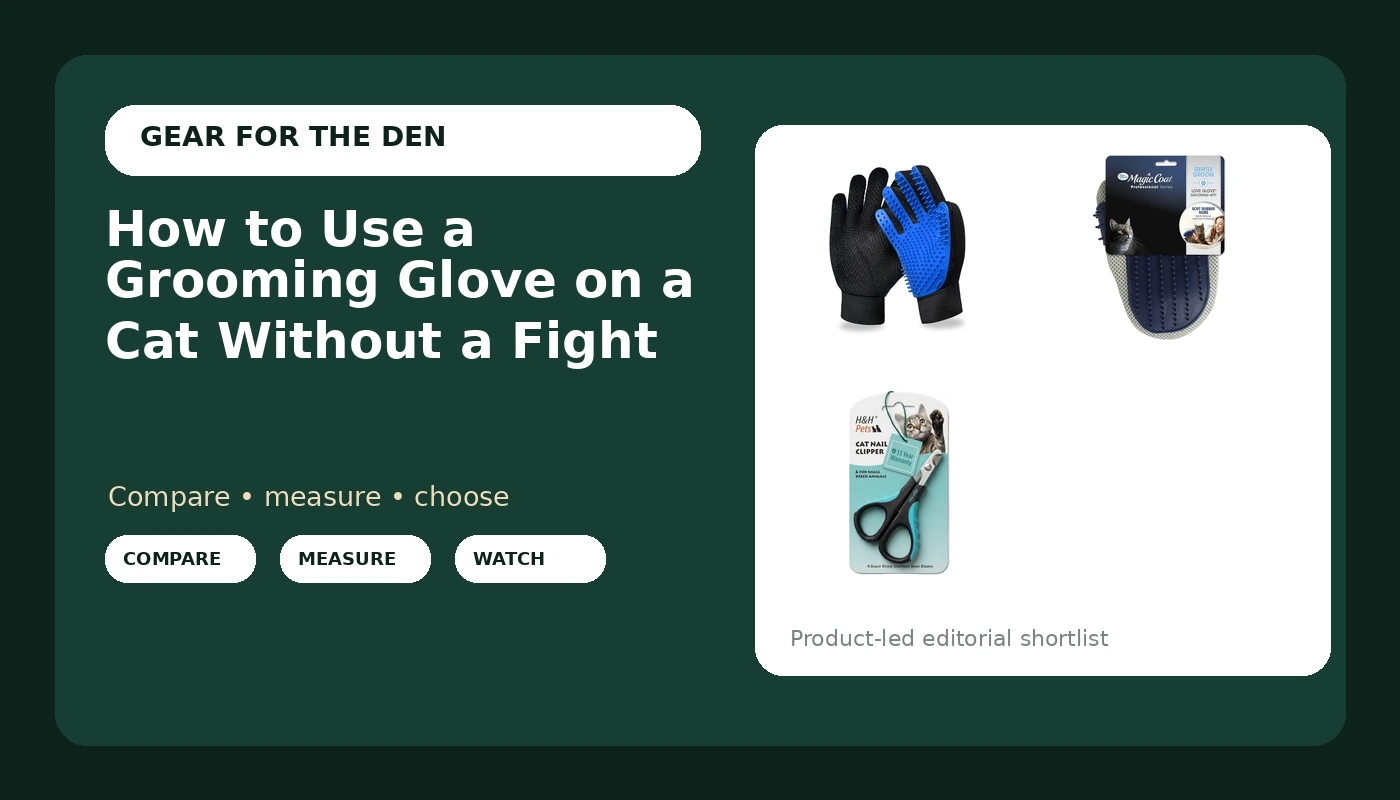
You can use a grooming glove on a cat with just one tool, but the right setup makes the job easier. Start with a glove that fits, then add a clipper for the claws. The three products below are the ones I recommend for this workflow. None of them replaces a vet visit or a professional groomer, but they cover the at-home basics.
Budget pick: GJEASE Cat Grooming Glove Brush 2-Pack, Pet Hair Remover Tool
Budget pick
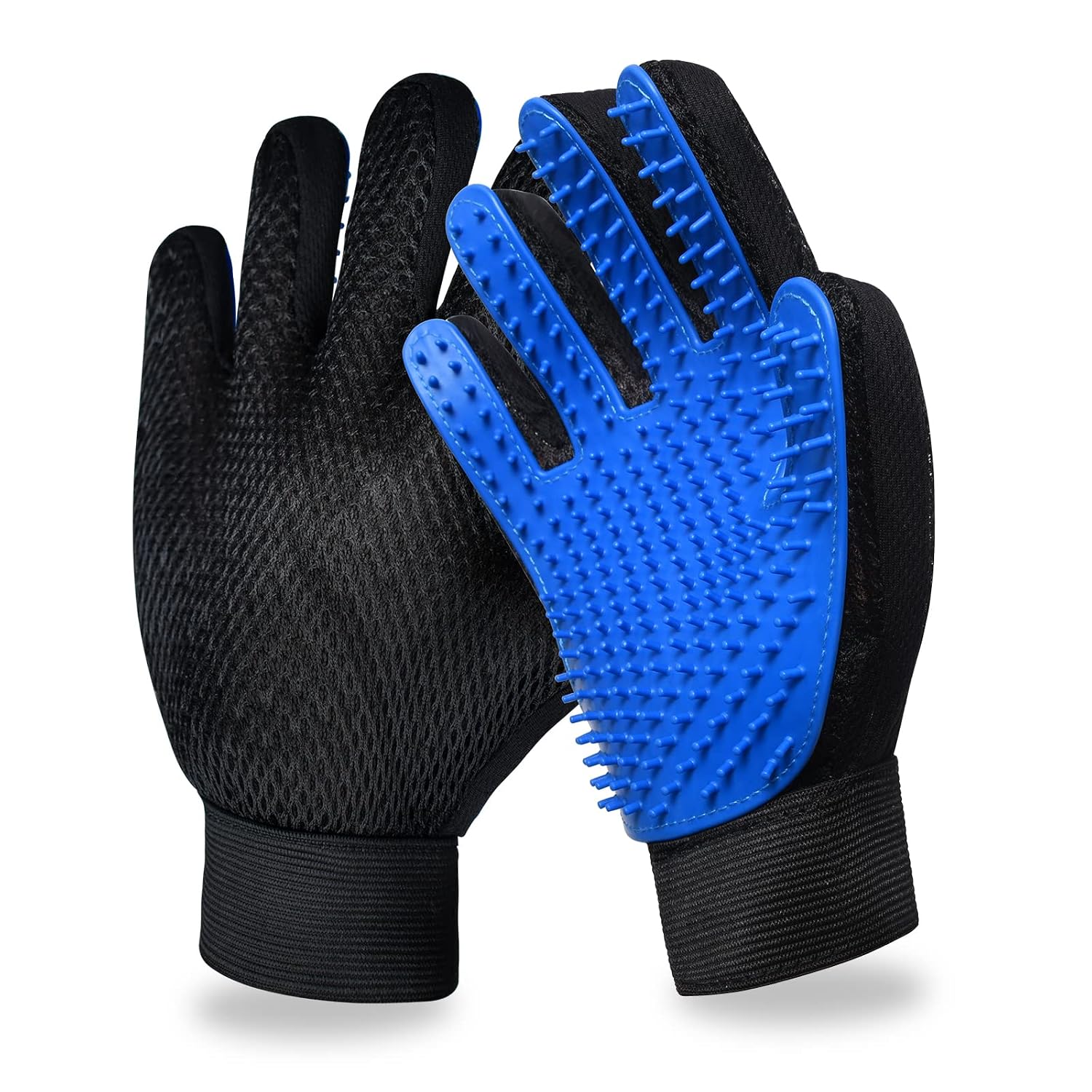
GJEASE Cat Grooming Glove Brush 2-Pack, Pet Hair Remover Tool
Check current Amazon price.
The two-pack is the value play. You get a spare for the other hand or a second cat. The bristle type is soft silicone, which is good for cats that hate stiff bristles. It works best on short coats and as a finishing pass on longer coats. The glove fit is adjustable at the wrist, but it runs small, so measure your hand before you order. The deshedding edge is gentle, so you will not strip undercoat in one pass. For cats that are new to grooming, this is the glove I would start with. The silicone is also easy to rinse, and the two-pack means you can keep one by the couch and one in the bathroom. If you have a cat that hates the sound of a brush, the quiet silicone is a real advantage.
Flaws but not dealbreakers: The silicone tips can get slick with oil, so wipe them down after each session. If you have a cat with a dense double coat, you will need a comb to follow up.
Anyone with a short-haired cat or a nervous cat should start here.
Our pick: Four Paws Love Glove Cat Grooming Glove
Our pick
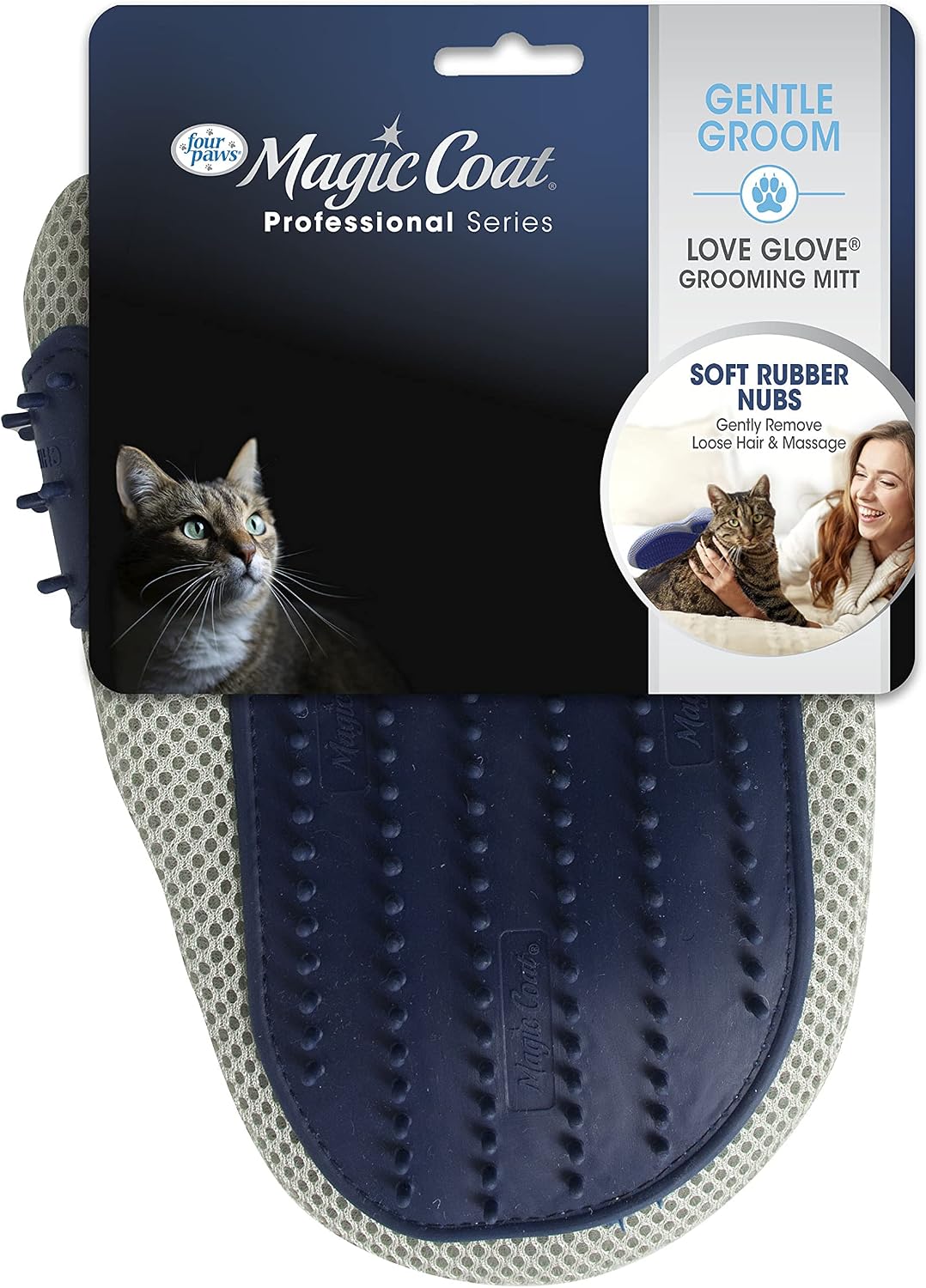
Four Paws Love Glove Cat Grooming Glove
Check current Amazon price.
The Love Glove is the one I reach for first. The bristle type is a mix of soft rubber nubs, which grabs loose hair without scratching skin. The glove fit is more generous than the GJEASE, and the wrist strap holds during a wriggle. It works on short and medium coat lengths, and it does a decent job on undercoat if you work in short strokes. The deshedding edge is not aggressive, so you will not irritate skin. It is also easy to rinse.
The Love Glove has been around for years, and the design is simple for a reason. The rubber nubs are spaced to catch hair without pulling skin. The glove fit is adjustable, and the strap stays put. I like it for cats that are already comfortable with petting. It is also useful for applying a little water or a pet wipe to the coat, though you should not use it as a substitute for a bath.
Flaws but not dealbreakers: It is not a miracle tool for a dense double coat. For that, you need a comb and patience. The rubber nubs can also grab fine hair so well that you have to peel it off, but that is a good problem.
Anyone with a cat that tolerates petting but hates brushes should try this first.
Safety companion: Cat Nail Clipper by H&H Pets – Professional Sharp Stainless Steel Claw Clipper Trimmer with Sturdy Non Slip Handles – For Small Animal & Cats Nail Cutter
Safety companion
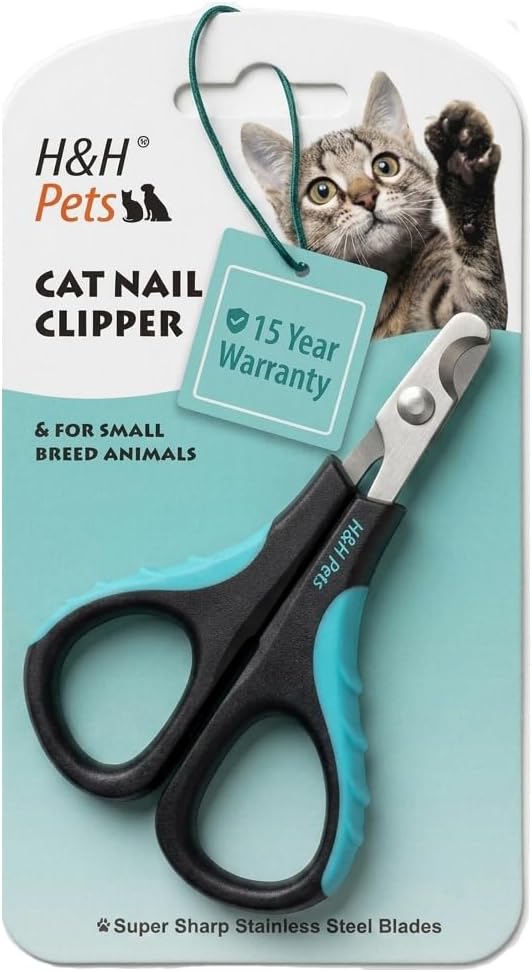
Cat Nail Clipper by H&H Pets – Professional Sharp Stainless Steel Claw Clipper Trimmer with Sturdy Non Slip Handles – For Small Animal & Cats Nail Cutter
Check current Amazon price.
A grooming glove session often ends with a claw check. This clipper has a nail guard that helps you avoid cutting the quick, and the stainless steel blade is sharp enough for a clean cut. The non-slip handles matter when your cat moves. I keep this next to the glove. It is not a glove, but it is the companion tool I recommend for a complete at-home routine.
The clipper is small enough to hold in one hand while you hold a paw with the other. The nail guard is a small piece of metal that sits over the blade, and it helps you see where the quick ends. The non-slip handles are a nice touch when your cat is wriggling. I keep this in a drawer with the glove, and I check claws once a week. If you have never trimmed a cat's claws, ask your vet or a groomer to show you once. The tool is simple, but the technique matters.
Flaws but not dealbreakers: The guard is small, so you still need good light. Some cats hate having their paws touched, so you may need to work up to this over several sessions.
Anyone who wants a complete at-home grooming kit should add this.
The actual grooming workflow
Now the part you came for. This works on most cats, but you have to read the cat and stop before it gets annoyed. The whole session should take five to ten minutes.
Step one: Set the room and the mood. Pick a quiet room with a door you can close. Let the cat come to you. Have treats within reach. Do not chase the cat. If the cat hides, stop and try again later. A cat that is already stressed will not learn to like the glove.
Step two: Check the glove fit. Put the glove on your dominant hand. The glove should be snug but not tight. If it spins, tighten the wrist strap. A loose glove means you will grip harder, and cats hate a heavy hand. Glove fit is the difference between a tool and a toy.
Step three: Let the cat sniff the glove. Place the glove on the floor. Let the cat investigate. Reward with a treat. This turns the glove into a known object instead of a strange claw. Do this before you ever put it on your hand. If the cat rubs against it, that is a good sign.
Step four: Start with the cheeks and chin. Use the back of your gloved hand or the bristle side lightly. Cats have scent glands there and often enjoy the attention. Watch the tail. A slow tail is good. A thrashing tail means stop. If the cat leans in, keep going. If the cat pulls away, pause and offer a treat.
Step five: Move to the shoulders and back. Use long, slow strokes in the direction the fur grows. Keep the pressure light. You are petting, not scrubbing. The bristle type should glide, not drag. If the glove catches, you are pressing too hard. Short strokes work better on a cat that is still deciding whether to stay.
Step six: Work the undercoat and sides. For longer coat lengths, use short strokes with the deshedding edge. Check the glove after each pass. If it is full of hair, rinse or peel the hair off. Do not keep going over the same spot. You can irritate skin. If you use a comb later, a comb with wide comb spacing is easier on a cat that hates metal pins.
Step seven: Do the belly and legs only if the cat allows. Many cats will not. That is fine. If the cat rolls over, that is not always an invitation. Read the body language. If the cat bunny-kicks, stop and end on a good note. You can always try again tomorrow.
Step eight: Finish with a claw check and a reward. If your cat tolerates it, use the nail clipper to take the sharp tip off the front claws. Use the nail guard. Then give a treat and put the glove away. A roller adhesive is handy for the hair that lands on your shirt or the couch. The session should end with the cat walking away calm, not hiding under the bed.
If you work with a grooming glove on a cat every few days, you will see less hair on the couch and fewer hairballs. This is how to work with a grooming glove on a cat when the cat is nervous: short sessions, treats, and no forcing. The glove is not a replacement for a vet visit, and it is not a cure for mats. If you find a mat, do not pull it with the glove. Use a comb or call a groomer.
The competition and why it lost
The slicker brush is the classic cat grooming tool, and it works. It lost here because many cats hate the metal pins. The pins can scratch skin if you press too hard, and a cat that hates the brush will not sit still for a glove session after a bad experience. For a cat that already tolerates a slicker, keep using it. For a cat that runs, the glove wins.
The deshedding rake is another tool that works on heavy undercoat. It lost because it is too aggressive for a first-timer. You can overdo it and leave the coat looking patchy. The glove is slower, but it is safer for a cat that is new to handling. If your cat has a thick double coat, use the rake once a week and the glove in between.
The rubber curry brush is close to a glove, but you have to hold it. That means your hand is not free to pet, and the cat notices the difference. The glove keeps your hand in a natural position, which is why it works on cats that hate tools.
The lint roller is not a grooming tool. It is cleanup. A roller adhesive will pick up hair from a couch, but it will not remove undercoat from the cat. Keep one near the door, but do not confuse it with grooming.
The Furminator-style deshedding tool can cut the coat if you use it wrong. It has a blade, and blades can slice healthy hair. I do not recommend it for a cat that is new to grooming. The glove is the safer starting point.
The nail clipper in this guide is not competition. It is the other half of the routine. A cat with sharp claws will not sit still for a glove session if every stroke ends with a claw in your arm. Trim the tips, then glove the coat.
What this all costs
The gear here is low-cost. Check current Amazon price on each listing, and you will see that the total is less than a single professional grooming appointment in most markets. The GJEASE two-pack gives you two gloves. The Four Paws Love Glove is the one I would buy first if you only buy one. The H&H Pets clipper is the add-on that makes the routine complete.
The real cost is time. You need five to ten minutes every few days, plus a bag of treats. If your cat has a dense double coat or mats, you may still need a professional groomer a few times a year. The glove reduces the frequency of those visits, but it does not replace them.
The math is simple. A glove that fits, a clipper with a nail guard, and a calm routine will save you money on lint rollers, furniture covers, and professional grooming. More importantly, it saves your cat from the stress of a brush it hates. Start with short sessions. Reward the cat. Stop before the cat stops you. That is how to use a grooming glove on a cat without a fight.
That is the job. Your cat was built to be petted. Let the glove do the work.