Most dogs pull because pulling works. The leash goes tight, the human follows, and forward motion keeps happening in whatever direction the dog picked. That is the whole lesson, repeated a few thousand times, and it is why the honest answer to how to walk a dog that pulls safely has almost nothing to do with arm strength. You break the loop, you pay the dog for the position you want, and you repeat it on boring walks until it sticks.
I have been on the other end of that leash for years, including a ninety-pound shepherd mix who treated every squirrel as a personal invitation. This is the routine I hand people now: what to put on the dog, how to hold the leash so your shoulder survives, and the eight-step progression that takes you from being dragged down the block to walking with a dog who checks in at your knee.
Why you should trust me
I am not a celebrity trainer and I do not sell a course. I am the person friends call when their rescue has learned that a taut leash is a door opener. I have walked fosters with no leash manners at all, sat on a curb with a senior dog whose back end gave out halfway through the block, and spent more evenings than I can count standing still on a sidewalk while a dog figured out that pulling gets him nowhere.
That last part is the whole job. The training advice below is the standard force-free progression that reward-based trainers use, and the gear picks are the ones that survive real walks: mud, rain, hot pavement, and a dog who leans. I have no interest in telling you a sling is the answer when a harness would do, so I will be clear about which problem each piece solves.
How I picked and how I tested
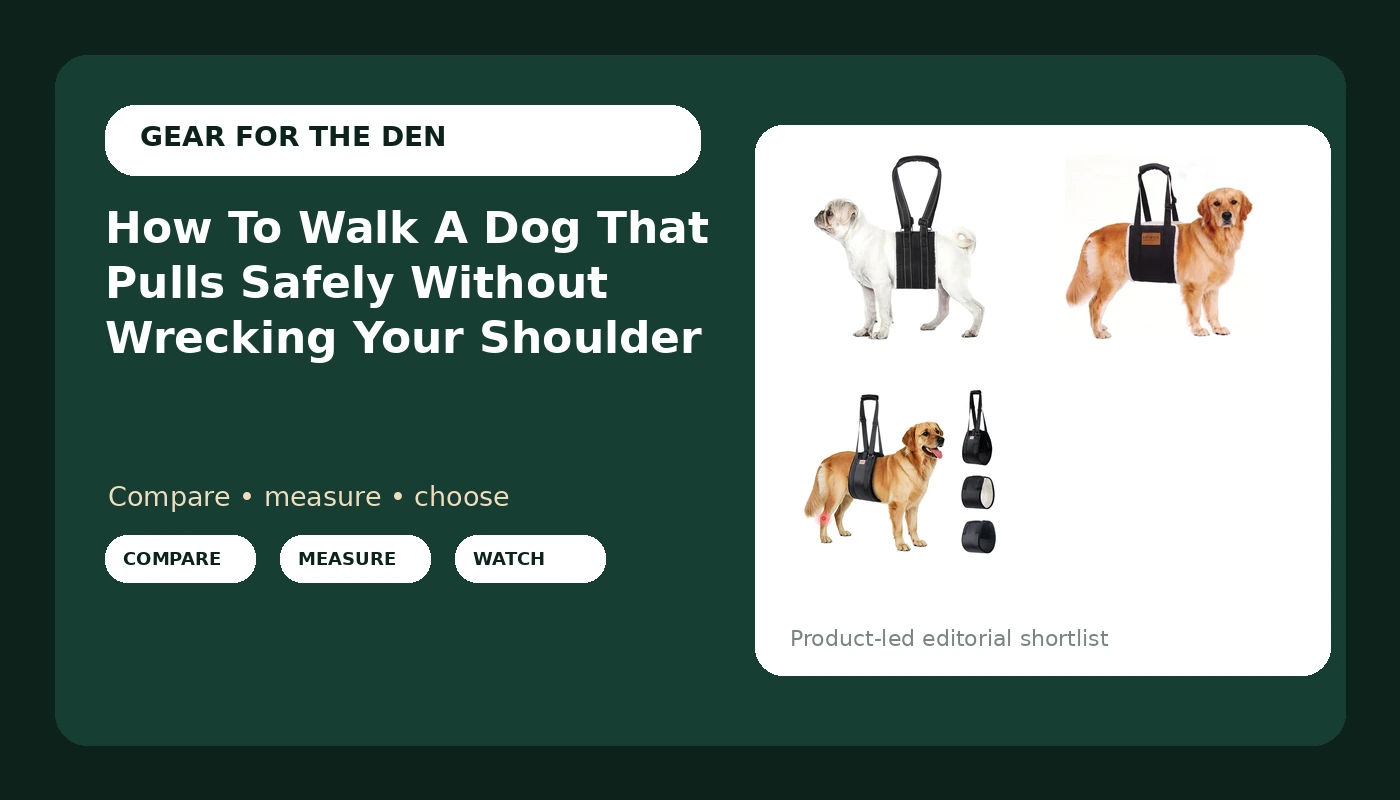
Learning to walk a dog that pulls safely is really two skills stacked together, and they need different gear. The first is a dog who pulls with a healthy body. That dog needs a harness with a front clip and a chest strap that redirects him sideways instead of forward, plus a fixed leash you can manage with one hand. The second is a dog whose pulling is powered by a weak or painful back end: a senior with arthritis, a dog recovering from surgery, a big dog with hip dysplasia who still wants his walk. That dog needs a hind-leg support sling, and that is what the three picks below are.
I judged the slings on the things that decide whether they help on a real walk: where the strap sits under the belly, how wide it is, whether the handle is long enough to spare your back, how the sizing runs, and whether the thing can be rinsed and dried without falling apart. I also looked at how each one behaves when the dog is moving rather than standing, because a sling that only works on a stationary dog is a sling that stays in the closet. For sizing on harnesses and boots I use the same approach as in my guide to fitting dog boots: measure, do not guess.
If you want the harness half of the setup, that is a separate piece of work, and I cover it in my no-pull harness picks for large dogs.
Gear that helps you walk a dog that pulls safely
None of these three replace training. They buy you the ability to keep walking while the training takes hold, which matters most for older dogs and big dogs whose handlers are losing their grip, literally.
Budget pick: lenpestia Adjustable Dog Lift Harness Portable Dog Sling for Back Legs (S)
Budget pick
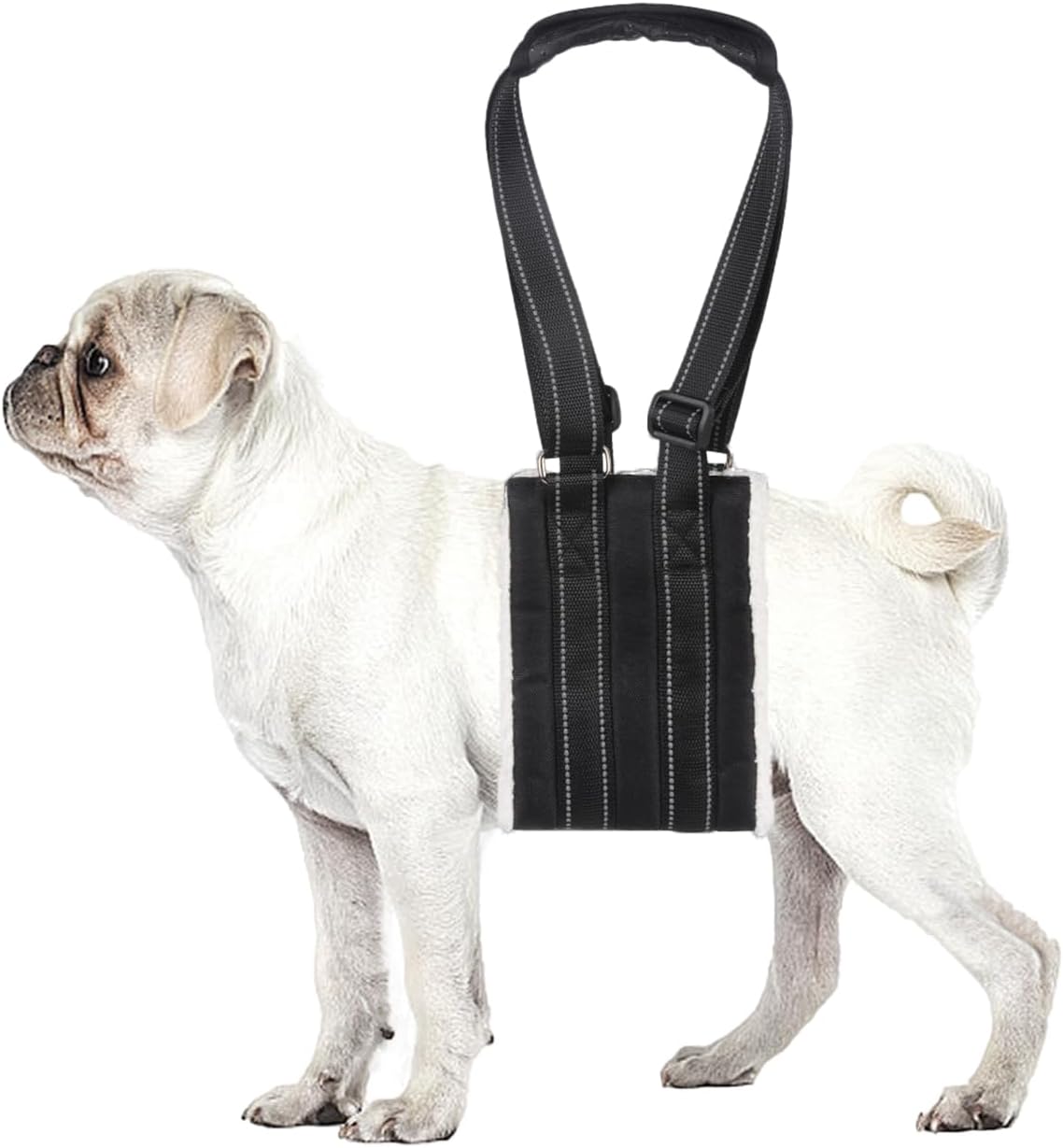
lenpestia Adjustable Dog Lift Harness Portable Dog Sling for Back Legs (S)
Check current Amazon price.
This is the size Small version of a portable lift sling, and portable is the point. It folds down small enough to live in a jacket pocket or a treat pouch, which means you can carry it on the walk and only bring it out when the dog slows down on the way home. For a small dog with a trick knee, or a medium dog who needs a hand on the last block, that is a reasonable first purchase.
Two things to know before you buy. First, sizing runs small, and a sling that is too short rides up into the groin and makes the dog hate it. Measure the widest part of the hindquarters and check the chart rather than guessing. Second, the Small is for Small. If you have a seventy-pound lab, skip to the next pick.
Flaws but not dealbreakers: A size Small sling gives you limited lift, so it works best as an assist rather than a full carry. Handlers of heavy dogs will want the wider strap and longer handle of the picks below.
Our pick: Adjustable Dog Lifting Harness, Large Dog Hind Leg Support Sling
Our pick
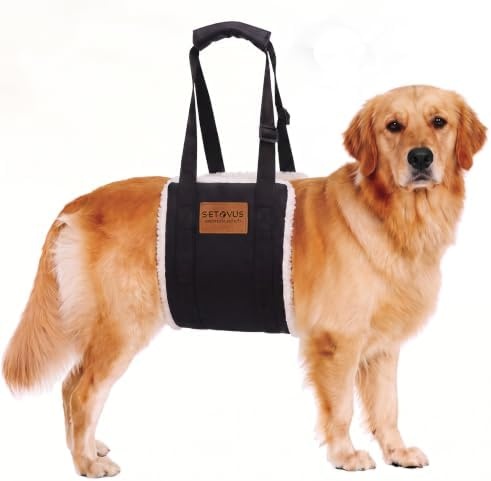
Adjustable Dog Lifting Harness, Large Dog Hind Leg Support Sling
Check current Amazon price.
This is the one I would buy first for a large dog. The name says what it does: a hind-leg support sling with adjustable straps, sized for a big frame. Adjustability is what makes it the pick, because a big dog's girth changes with age, with weight, and with a winter coat, and a sling that fit in October can be a problem by February.
The workflow is simple. You thread the strap under the belly, ahead of the hind legs, and take up the slack in the handle so the dog is doing most of the walking and you are doing just enough lifting to keep the back end level. Used that way, it lets a dog with weak hips keep the walk he loves instead of losing it.
A word on technique: do not lift a dog off his feet and carry him down the street in one of these. It is a support tool for walking, not a stretcher. Short stretches, released the moment the dog is moving well, are how these work.
Flaws but not dealbreakers: Adjustable straps mean more webbing to keep tidy, and a sling that is set too loose slides forward and bunches. Set it before you leave the driveway.
Upgrade pick: Perfitel Detachable and Replaceable Dog Sling for Dogs Hind Leg Support (L)
Upgrade pick
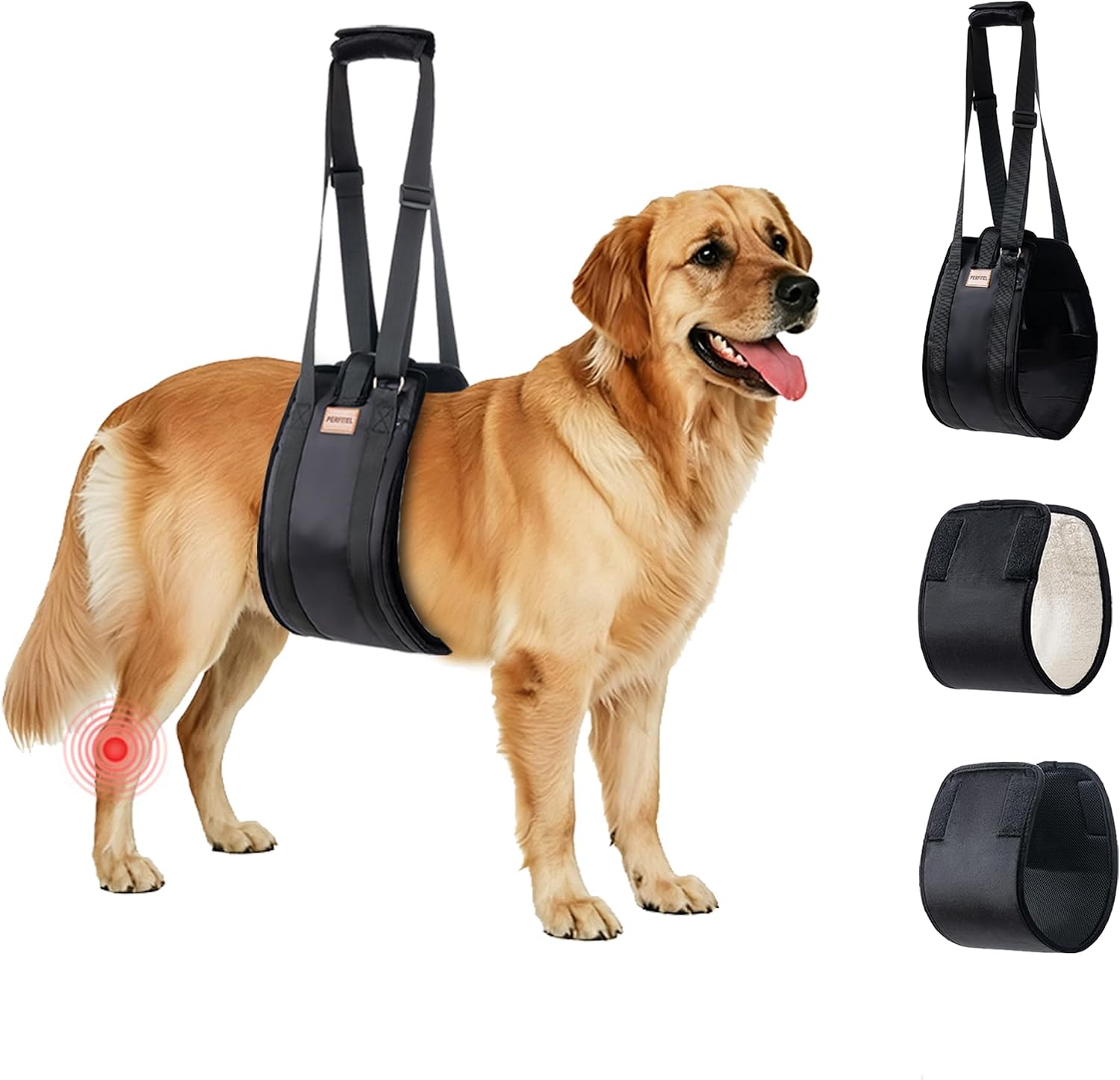
Perfitel Detachable and Replaceable Dog Sling for Dogs Hind Leg Support (L)
Check current Amazon price.
The Perfitel is the size Large option, and the detachable design is why it is the upgrade. The support section comes apart from the handle, which makes it easier to clean after a wet, muddy walk and easier to replace if one part wears out before the other. If your dog is going to use a sling every day for months, that matters more than anything on a spec sheet.
It is also the pick for a big dog with a deep chest, because the large sizing gives you more strap to work with. Same rules apply: measure the hindquarters, set the strap ahead of the rear legs, and use it as an assist.
Flaws but not dealbreakers: More pieces means more to keep track of, and a detachable sling can be misplaced one half at a time. Keep it in the same pocket every walk.
The actual walking workflow
The correct walk a dog that pulls safely starts before you leave the driveway. Gear first, then timing, then repetition. Do the steps in order, and do not move to the next one until the current one is boring.
Step one: Set the gear up correctly. Put the dog in a harness with a front clip and a chest strap, not a flat collar, and clip the leash to the front ring. Use a fixed leash between four and six feet, because that leash length is long enough for sniffing and short enough to manage. Retractable leashes teach a dog that tension is normal, so they are out.
Step two: Measure your baseline. Before you change anything, count how many steps you take before the leash goes tight. Ten? Three? Note where it happens: the front door, the first corner, the sight of another dog. That number is your before picture, and it tells you which trigger to train first.
Step three: Pay the position before the leash tightens. Load a pocket with small, smelly treats. Walk a few steps, and the moment the dog is beside your knee with a loose leash, mark it and pay. You are not rewarding pulling. You are rewarding the absence of pulling, which is a different and much better-paying job for the dog.
Step four: Stop the walk the instant the leash goes tight. This is the step people skip. The second you feel tension, stop moving. Stand still, do not yank, do not reel the dog in, do not say anything. Forward motion is the paycheck, and a tight leash means the paycheck stops. Wait for the leash to go slack, even if that means standing on the sidewalk for a full minute.
Step five: Turn and go. When the dog leans into the leash and will not soften, pivot and walk the other way. You are not punishing him, you are making the direction he chose stop working. A few of these and most dogs start watching you instead of the horizon, because you are the thing that decides which way the walk goes.
Step six: Reward every check-in. The behavior you want is a dog who looks back at you. Mark it the moment it happens and pay. This is where a treat pouch on your hip beats treats in your hand, because you can deliver fast enough to connect the reward to the choice.
Step seven: Change pace and direction on purpose. Walk briskly, slow down, turn left, cross the street. Predictable walks teach a dog to pull toward the next known thing. Unpredictable walks keep him tuned to you. The ideal walk a dog that pulls safely looks boring from the sidewalk: a loose leash, a steady pace, and a dog who checks in. Keep sessions to fifteen minutes and end on a good rep.
Step eight: Proof it in harder places. Once your driveway is boring, add distance and distraction in small doses. A long line in a fenced field is the safest place to practice loose walking at speed. If you use a GPS collar for off-leash work, check the gps range and battery life before you rely on it, because a collar that dies at the far end of the park is worse than no collar. In summer, watch the pavement: a traction sole and correct boot sizing protect the pads, and a cooling fabric bandana helps a flat-faced or heavy-coated dog stay comfortable. Hot asphalt is the one condition where you should shorten the walk rather than push through it.
The competition and why it lost
Prong collars and choke chains are the classic shortcut, and they are the reason so many people think loose-leash walking is a fight. They work by causing discomfort at the exact moment the dog pulls, which can suppress the behavior without teaching anything, and they put every correction on the dog's throat and neck. For a dog with a weak back end or a collapsing trachea, that is the wrong end of the dog to be loading. They lost this comparison on safety and on the fact that the behavior usually comes back the moment the tool comes off.
Head halters are a real tool with a real place, and they are the closest runner-up here. They give you leverage over a strong dog's head, and some dogs walk beautifully in one. They lost because the fit has to be exact and the introduction has to be slow, and a dog who hates the thing will paw at it for the entire walk. If you try one, do it with a trainer.
Back-clip harnesses, the plain ones with the ring between the shoulder blades, lost for a mechanical reason: they give the dog something to lean into, and a determined dog can pull harder in one than in a flat collar. That is why the front clip matters.
Retractable leashes lost outright. They teach the dog that the length of the leash is negotiable and that tension is the normal state of the walk, which is the opposite of everything in step one.
What this all costs
The training is free. Treats are a few dollars a week. A front-clip harness is a one-time purchase, and the slings above run from a budget pick to a heavier-duty large size. Prices move around, so check the current Amazon price on each listing rather than trusting a number you read somewhere.
What you are actually buying with a sling is the ability to keep walking a dog who would otherwise be staying home. For an older dog, that is not a gadget, it is a few more months of the route he knows. The math that matters is minutes, not dollars: fifteen minutes of structured walking a day, three weeks of consistency, and most dogs become dramatically easier to walk.
One last thing. If your dog's pulling comes with limping, stiffness after rest, or a back end that sinks when he stands, see your vet before you buy anything. A sling supports a dog with a diagnosed problem. It does not fix one.