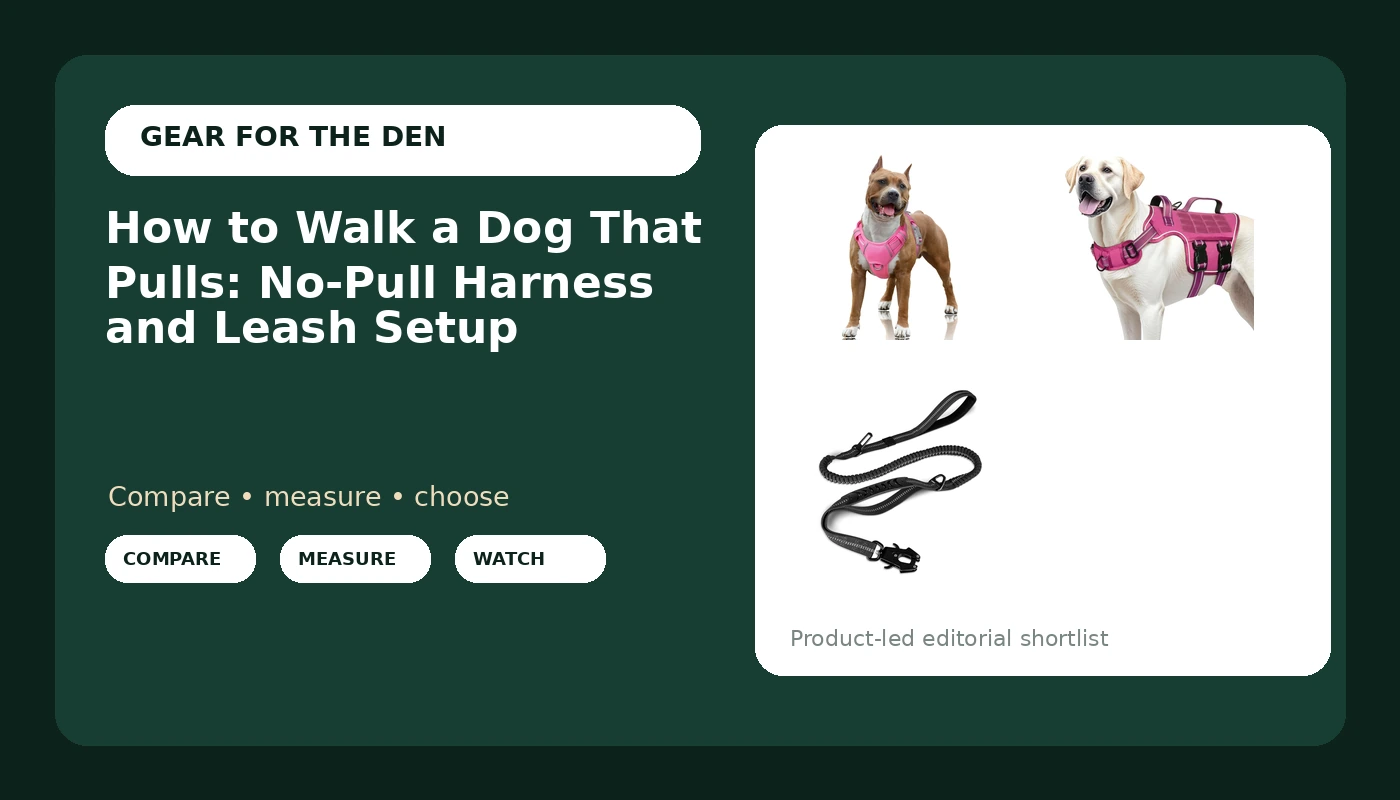
Learning how to walk a dog that pulls is not a strength contest, it is a geometry problem. A dog dragging you down the sidewalk is not out-muscling you, it is using its whole body against one of your arms, and that is a fight you lose at any weight class.
The fix is three things: a harness that turns forward motion sideways instead of backward, a leash that absorbs the first half second of a lunge, and a routine that pays the dog for staying beside you instead of in front of you.
None of it requires a choke chain, a prong collar, or a trainer who tells you to dominate your dog. It requires about twenty minutes a day for a few weeks, and gear that actually fits.
Why you should trust me
I have spent years walking other people's dogs, mostly the ones with a note on the intake sheet that says strong on leash. Adolescent shepherds, senior labs who never got taught, rescues who had never worn a harness at all. I have been dragged across ice, through a hedge, and once into a duck pond in November.
What that taught me is that pulling is rarely defiance. It is a dog that has never been shown where the edge of the sidewalk is, and gear only buys you the two seconds you need to show it. I write about the equipment that survives that job, not the equipment that photographs well.
How I picked and how I tested
Every product on this page had to answer one question: does it change the direction of a pull without hurting the dog? That rules out anything that tightens around the throat, and it rules out anything that needs a fitting tutorial longer than a coffee break.
For a harness, I looked at where the front clip sits relative to the chest strap, how many points adjust, and whether the load bearing hardware is metal or plastic. A front clip set low and centered turns a lunge into a gentle arc. A front clip bolted on as an afterthought just twists the vest sideways and rubs behind the front legs.
For a leash, I looked at leash length, handle padding, and whether the bungee is sewn into a closed loop or simply threaded through the hardware. A bungee with no hard stop stretches out over a season and stops absorbing anything.
Most of this is readable from the spec sheet and the sizing chart, which is why I tell people to measure the dog before ordering. The rest is in the pattern of owner feedback. When the same complaint shows up walk after walk, it is not one unhappy dog, it is the design.
Gear you'll need before you walk a dog that pulls
You need two pieces of hardware: a harness with a front clip, and a leash short enough to keep the dog in your peripheral vision. Everything below is what I would buy for a puller, in the order I would buy it. Sizing is the one thing you cannot fix later, so measure chest girth and neck before you order.
Budget pick: BARKBAY Dog Harness for Large Dogs No Pull Dog Vest ID Tag Pocket
Budget pick
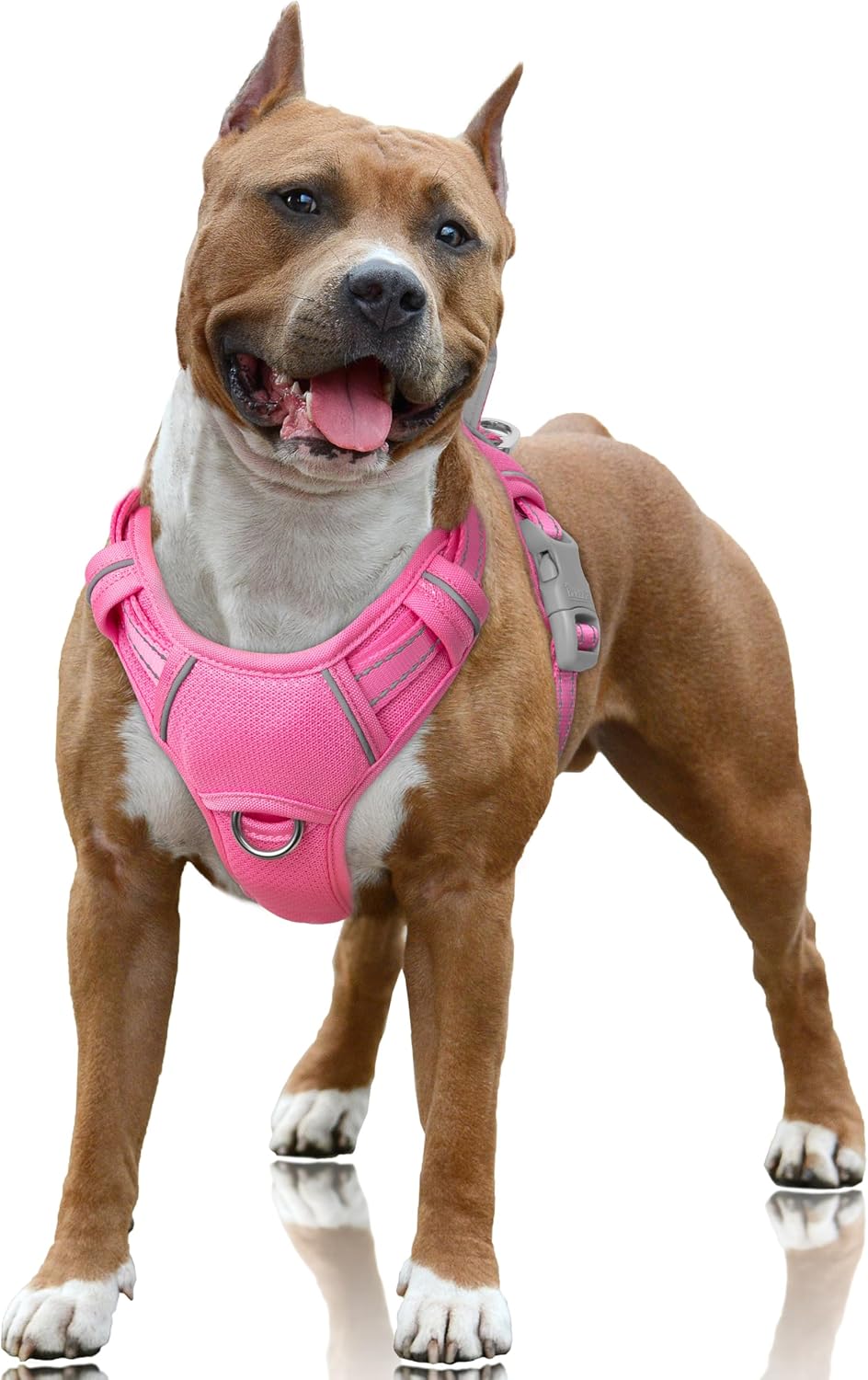
BARKBAY Dog Harness for Large Dogs No Pull Dog Vest ID Tag Pocket
This is the harness I hand to someone who has never used a front clip and does not want to spend much finding out whether it works. It is a padded vest with a metal front clip at the chest, a second clip on the back for sniffy walks, and a chest strap that adjusts on both sides, which is the detail that matters on a deep chested dog. There is an ID tag pocket on the back, which sounds like a gimmick until your dog slips a collar in a parking lot.
Check current Amazon price and compare it against the fit you need, because the low price shows up in the hardware. The buckles are plastic and the webbing is lighter than the tactical vests below.
Flaws but not dealbreakers: The padding is thin where the chest strap crosses the sternum, so a determined puller can rub a little hair off in the first week. Loosen it a notch and the rubbing stops.
This is for the owner of a medium or large dog who wants to test front clip walking without committing much money.
Our pick: RunFido Dog Harness for Large Dogs, No Pull Tactical Vest with Front Clips
Our pick
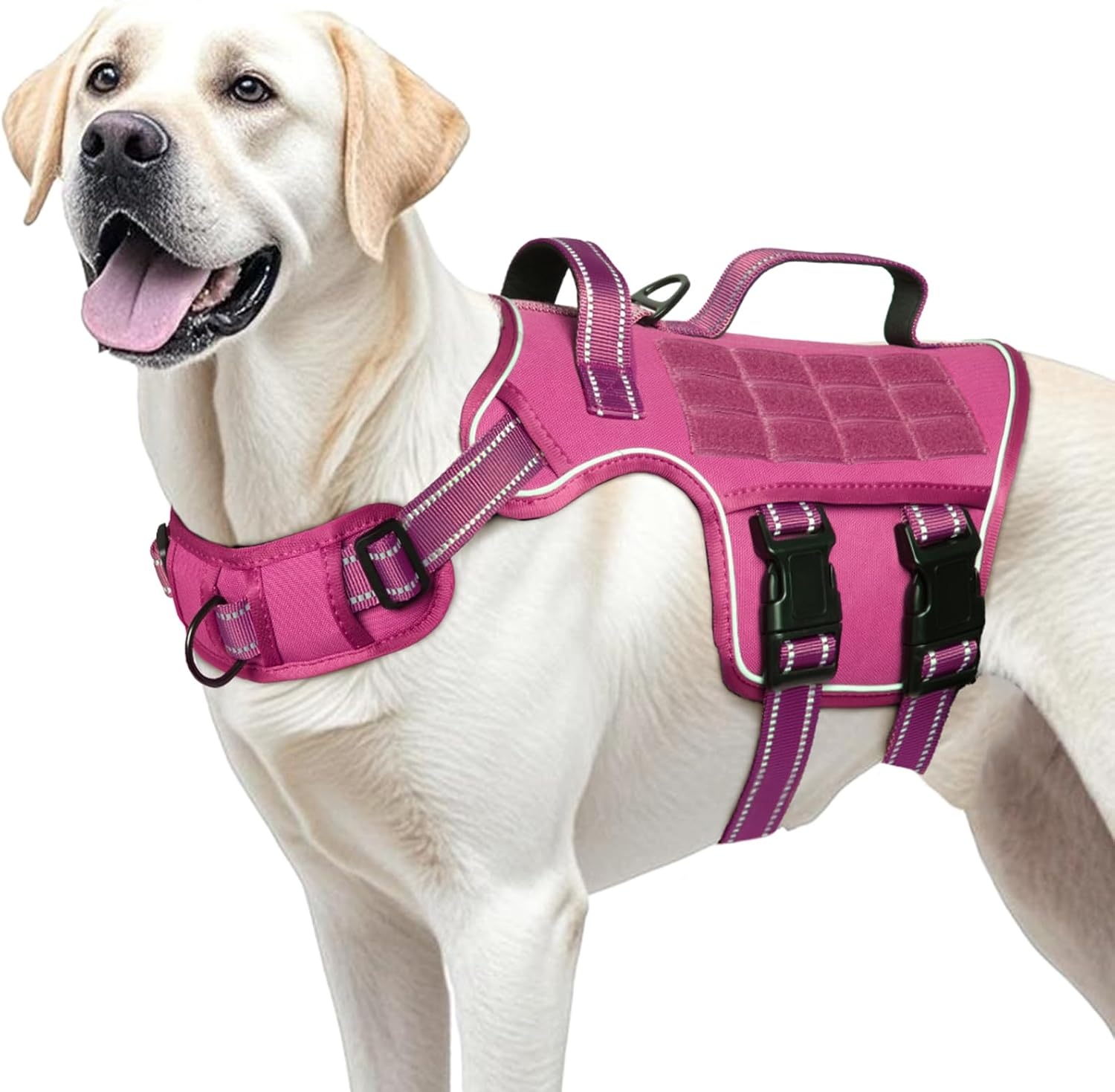
RunFido Dog Harness for Large Dogs, No Pull Tactical Vest with Front Clips
If you already know a front clip works and you have a dog that leans into the harness, this is the one I would buy. The RunFido is a tactical vest with front clip points at the chest, so you can run a double ended leash or move the clip as the dog's shoulders change through a growth spurt. The straps are wider, the hardware is heavier, and the adjustment range is longer, which is the difference between a harness that fits a seventy pound adolescent and one that only fits a seventy pound adolescent with an average chest.
Check current Amazon price and read the sizing chart twice. A vest with this much adjustment is unforgiving if you order a size down.
Flaws but not dealbreakers: It is more harness than a calm senior needs, and the extra webbing takes a few walks to soften. On a hot day the coverage is warm.
Anyone with a strong adolescent, a working breed, or a dog that has backed out of a step in harness should start here.
Upgrade pick: Joytale Tactical Bungee Dog Leash, Shock Absorbing No Pull, Black
Upgrade pick
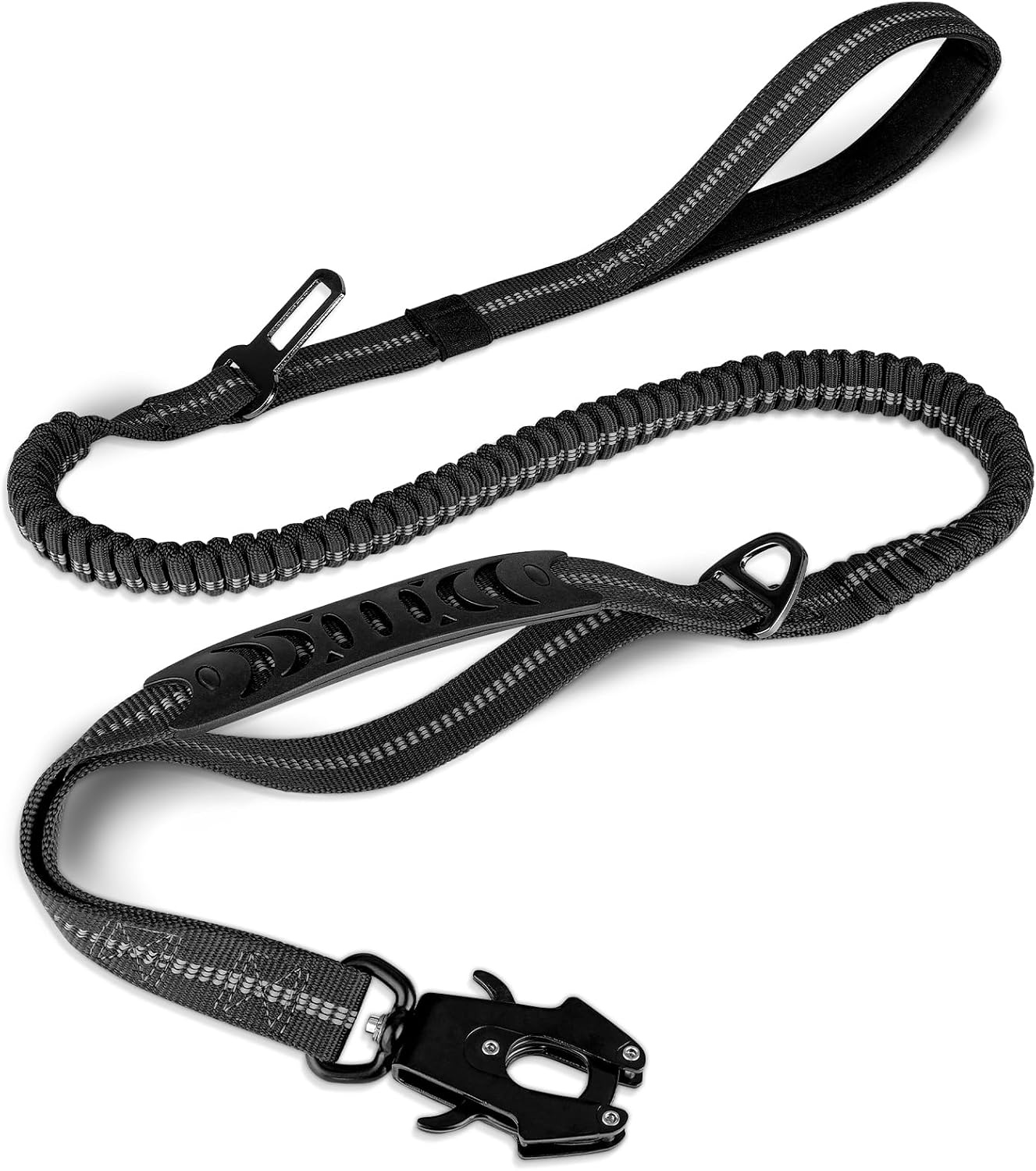
Joytale Tactical Bungee Dog Leash, Shock Absorbing No Pull, Black
The piece most people skip is the leash, and it is the piece that changes how the walk feels in your shoulder. The Joytale is a bungee leash with a padded handle, a second traffic handle near the clip, and shock absorbing stretch sewn into a closed loop so it does not creep longer over time.
The traffic handle is the part I care about. When a dog lunges at a squirrel, you grab the lower handle and the dog is suddenly on a short leash without you reeling in slack. The bungee takes the first jolt, which is the jolt that yanks your shoulder.
Check current Amazon price. A leash is the least expensive thing on this page and the one that decides whether you enjoy the walk.
Flaws but not dealbreakers: When the bungee stretches, leash length grows, which is fine in a park and annoying on a narrow sidewalk. It is also not a chew toy. Hang it up.
The actual workflow when you walk a dog that pulls
Now the part that matters more than the gear. This routine works with any front clip harness. It takes about twenty minutes a day, and the first two weeks look boring, which is exactly the point. There is no single ideal walk a dog that pulls, because a nine month old shepherd and a twelve year old lab want different things from the same sidewalk.
Step one: Fit the harness before you leave the driveway. You should be able to slide two fingers under every strap. The chest strap crosses the chest, not the throat, and the front clip sits at the sternum. A harness that slides is a harness that rubs, and a rubbing harness is one your dog will fight.
Step two: Clip the leash to the front. Front clip for training walks, back clip for decompression sniff walks. Switching mid walk teaches the dog that tension sometimes works, which is the one lesson you cannot afford to teach.
Step three: Set your leash length. Handle in one hand, traffic handle in the other, with leash length short enough that your dog is beside your leg, not at the end of your arm. A long leash teaches a dog to pull into the slack, and slack is the reward you are trying to protect.
Step four: Stand still the second the leash goes tight. Do not yank back. Stop, plant, wait. The walk resumes when the leash is loose. This is the whole method in one sentence, and it is the step people quit on because nothing appears to happen for three days.
Step five: Turn and walk the other way. When the dog is braced and leaning, turning is faster than pulling. Say nothing, turn, and let the front clip do the steering. Ten turns down one block is normal in week one.
Step six: Pay the dog for the position. The correct walk a dog that pulls wants looks like this: being beside you pays better than being in front. Mark and treat when the dog checks in or the leash dips. Keep treats in the harness pocket so both hands stay on the leash.
Step seven: Change the route, not the dog. A dog that pulls the same corner every day is rehearsing. New streets, sniff breaks on a loose leash, and a calm sit before crossing all break the pattern. Sniffing is not a failure, it is the payment for the loose part.
Step eight: End on a loose leash and keep it short. Fifteen to twenty minutes, ended while the dog is still thinking, beats an hour of sloppy practice. Put the harness on the hook and do it again tomorrow.
Two pieces of kit that have nothing to do with pulling show up on every long walk. If you track routes with a GPS collar or a phone app, check the gps range and battery life before you rely on it for a dog that bolts, because a tracker that dies at mile two is a decoration. For your own feet, a traction sole matters more than cushioning on wet brick, and in summer the pavement gets hot enough that boot sizing and a cooling fabric vest matter more than any training tip. Heat ends training walks early, and a dog that is too hot cannot learn anything.
The competition and why it lost
Head halters work, and plenty of trainers swear by them, but they need a slow introduction and a dog that will tolerate something across its muzzle. For a first time puller owner, a front clip harness is easier to fit correctly on day one.
Prong collars and choke chains suppress pulling with discomfort, and they teach a dog that the leash predicts pain. They also do nothing about the habit underneath, which returns the moment the collar comes off.
Retractable leashes reward pulling with more line, which is the opposite of the lesson. They also put a thin cord under tension across a sidewalk where other dogs and kids walk.
Back clip only harnesses are great for hiking and for dogs that already walk politely. For training they are useless, because a back clip hands a pulling dog a sled harness and a lever to lean into.
Step in harnesses are convenient and easy for a dog to back out of. If your dog has ever slipped one, you already know. And if your dog is older, the walking gear for senior dogs guide covers a different set of priorities entirely.
None of these are bad products. They are answers to different questions, and this article is about the dog that pulls.
What this all costs
The hardware is the cheap part. A harness and a leash together cost less than a single private training session in most cities, and they last for years if you rinse the mud off and check the stitching once a season. Check current Amazon price on each piece and you will see what I mean.
The real cost is the twenty minutes a day. Six weeks of short, boring, consistent walks will do more than any gadget on this page. If you want to stack the odds, put the money toward a group class or a session with a force free trainer, which is a better investment than upgrading a harness you already own.
Compare that with the alternative: a shoulder injury, a vet bill for a dog that bolted into traffic, or a dog that stops getting walks because the walk is miserable for both of you. The gear is the cheap insurance. The routine is the fix.
That is the short version of how to walk a dog that pulls. Buy the harness, set your leash length, and stand still on the sidewalk until the leash goes loose. Your dog was built to walk beside you. Show it how.