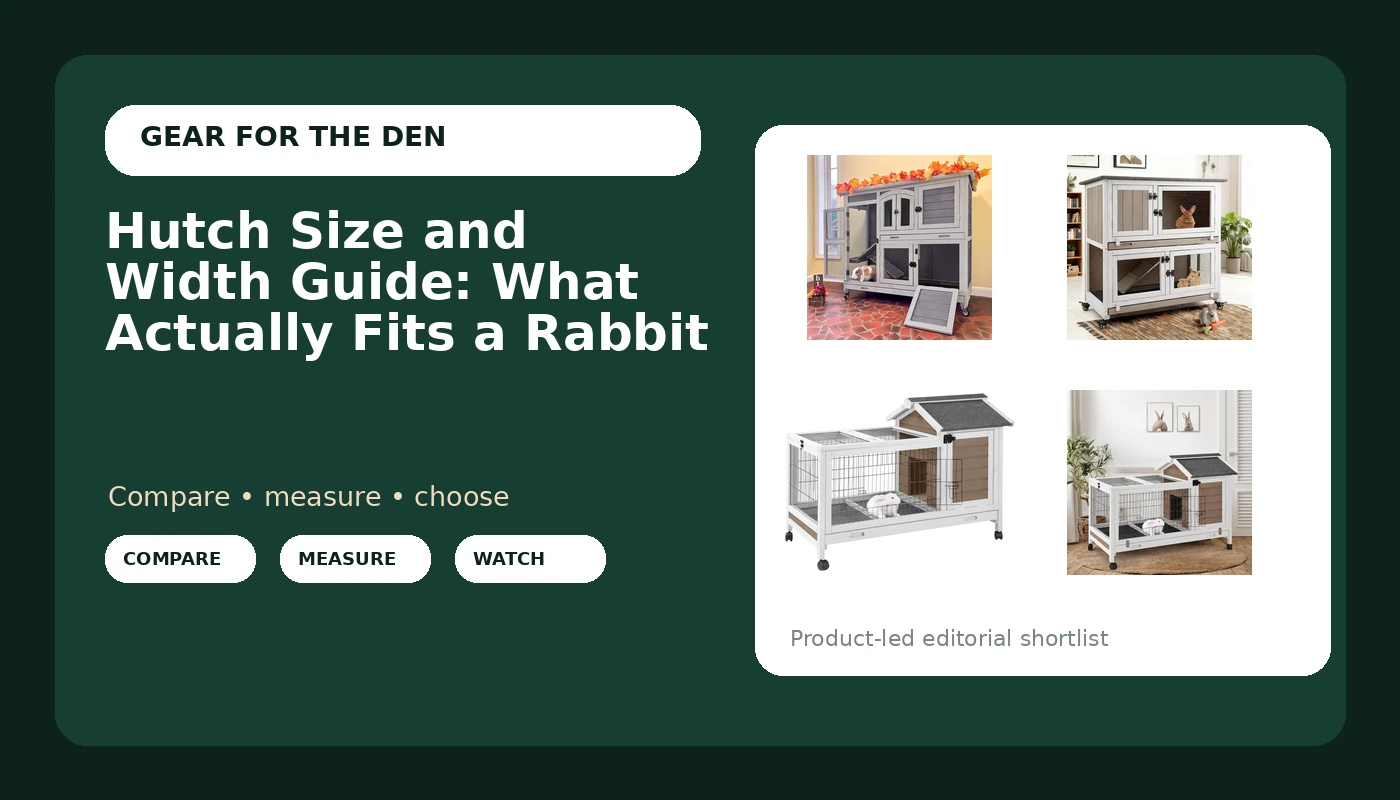
Most people shop for a rabbit hutch the way they shop for a bookshelf: they read the headline number, nod, and buy. That habit is exactly why a hutch size and width guide earns its place. The headline number is almost always the longest side of the frame, not the space the animal actually gets. A 47.2-inch hutch and a 36-inch hutch can give the same rabbit very different lives once width, height, and the number of levels are counted, and no amount of bedding or a larger hay rack rescues a footprint that is too small.
This hutch size and width guide covers four wooden hutches I keep recommending for rabbits, guinea pigs, and other small pets, and it treats the numbers as a first filter rather than a last one. Floor area per level, usable width between the walls, door count, tray access, wheel hardware, and whether a ramp earns its footprint all matter, and they matter in that order. If you are still sorting out the soft goods, my rabbit hutch bedding guide covers that side of the setup.
Best Overall: 2-Tier Indoor Rabbit Hutch Bunny House Guinea Pig Cage with Sliding Plastic Trays, Wheels & Ramp, 47.2" Multi-Door Wooden Small Animal Cage for Rabbits, Bunnies, and Guinea Pigs (Grey)
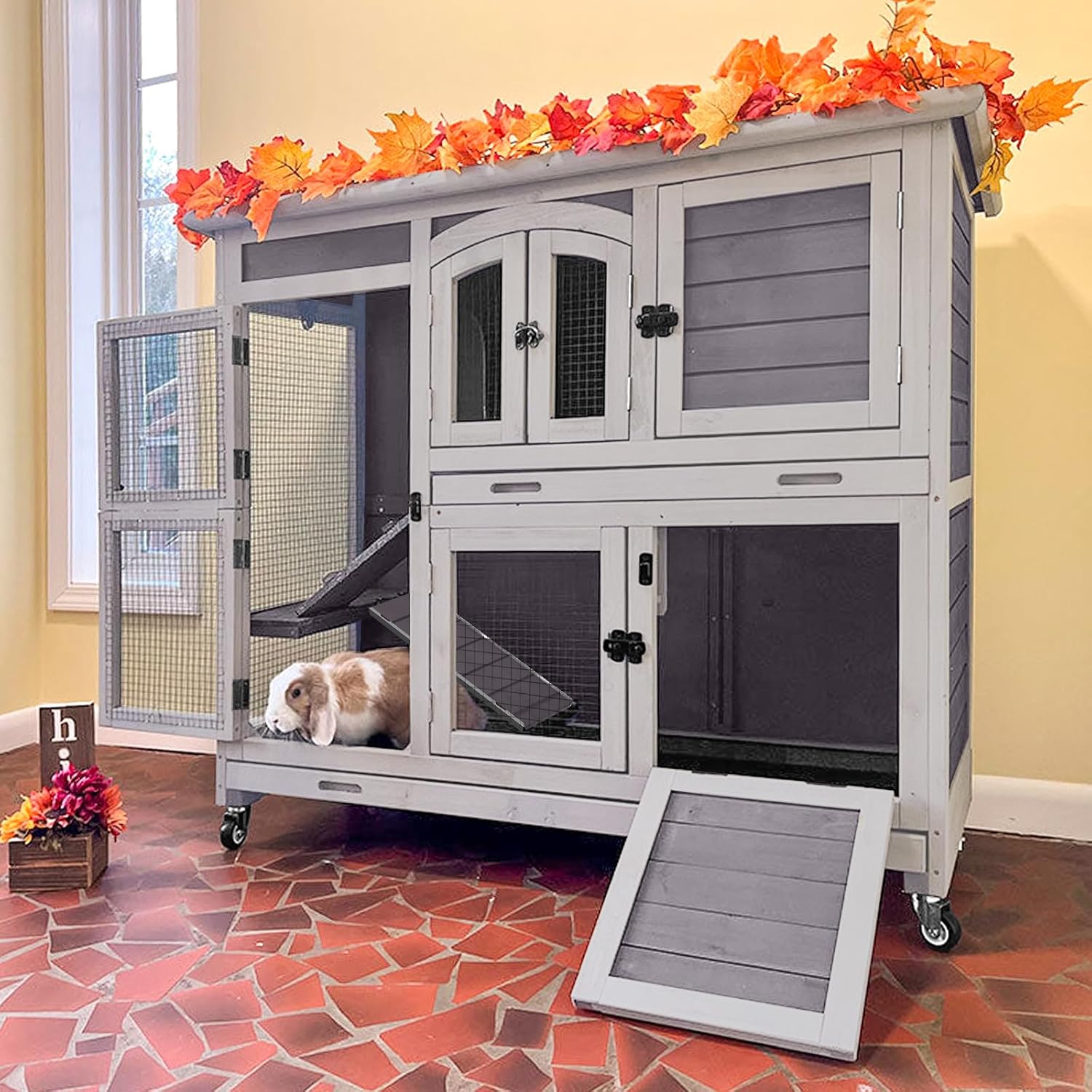
This is the hutch I point most rabbit owners to first, and the reason is width and floor area rather than any single feature. At 47.2 inches long, it has the longest run of the four here, and because the layout is two-tier, that run sits on the lower level where a rabbit actually spends its day. The upper level works as a hideout, which means the animal gets somewhere to retreat without giving up floor area downstairs.
The practical details are the ones that decide whether you keep using a hutch or start avoiding it. The sliding plastic trays pull out for cleaning, which matters more than any decorative trim once you are doing the job twice a week. The multi-door design means you can reach the far corner without unbolting a panel, and the wheels let one person move the whole thing for a sweep behind it. The ramp is built in, so you are not buying a separate one and hoping it fits the opening.
Two things to check when it arrives. First, the ramp angle. A steep ramp on a smooth surface is where small pets slip, so look at whether the cleats give enough grip before you let a rabbit use the second story. Second, the gap between the wire and the frame. Bar spacing is the number nobody prints on the box, and it is the one that decides whether a young guinea pig stays inside. Measure it yourself before you trust it. For most homes this is the correct hutch size and width to start from, and everything else in this guide is a variation on it.
Best Value: 2 Story Rabbit Hutch Indoor & Outdoor, Wooden Rabbit Cage with 2 Leak-Proof Pull-Out Trays, 4 Wheels, Ramp, Chew-Anti Metal Strip for Rabbit, Guinea Pig, Hamster (36" L x 17.8" W x 36.7" H)
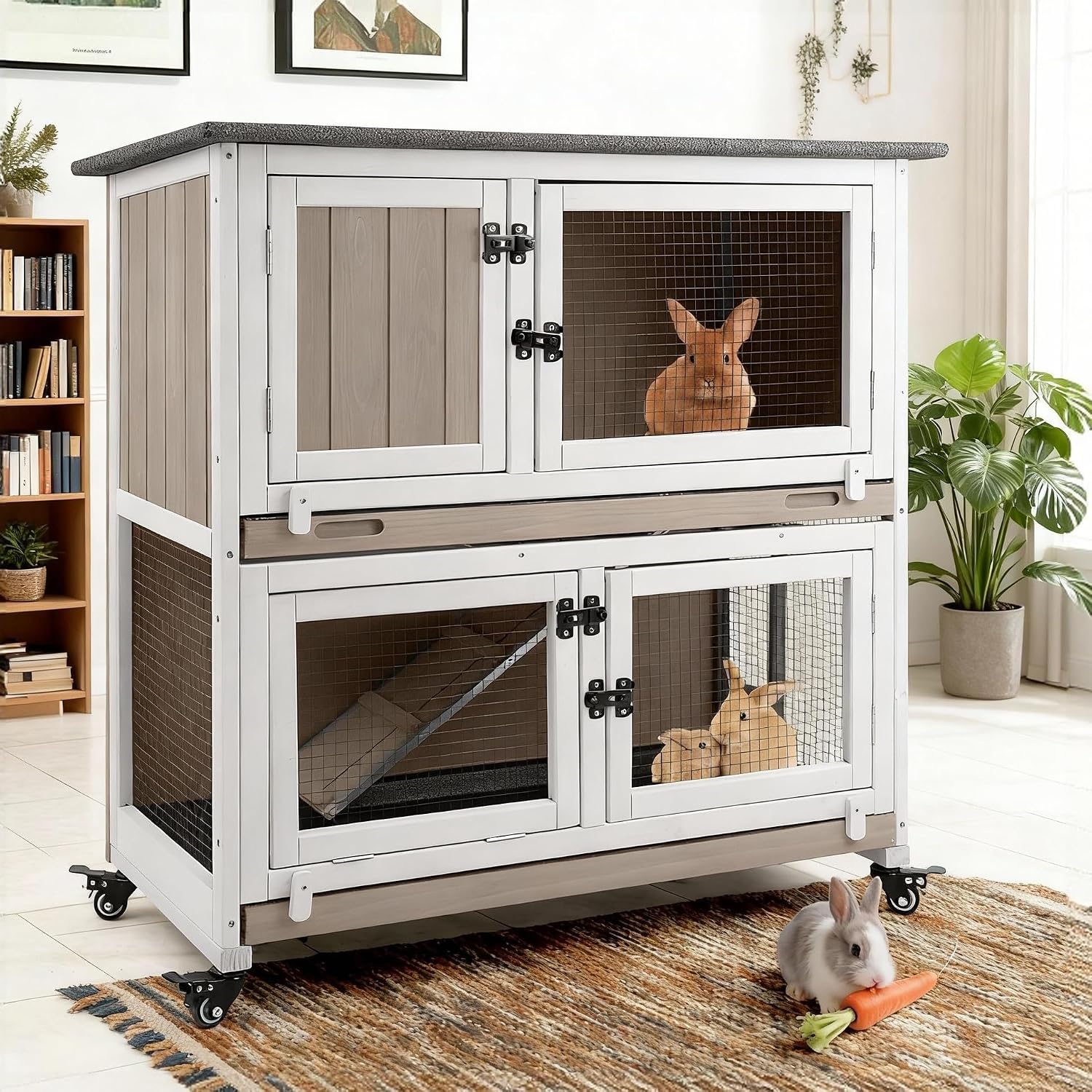
This is the one I would hand to someone with a tight corner and a tight budget. The published footprint is 36 by 17.8 inches, which works out to roughly 4.4 square feet of floor per level, and the total height is 36.7 inches across two stories. In a narrow room that footprint is a feature: it slides into a gap a wider single-level cage would never fit.
What you give up is run length. A rabbit that wants to sprint needs more than 36 inches on one straight line, so this hutch suits a smaller rabbit, a pair of guinea pigs, or a rabbit that gets supervised floor time every day. What you get back is two leak-proof pull-out trays instead of one, which means a two-story hutch that does not turn the lower level into a mess every time the upper level is used.
The chew-anti metal strip along the edges is a small thing that matters over years rather than weeks. Rabbits chew edges, and a hutch that survives its first tenant is the one that saves you money. Four wheels make it movable, the ramp connects the levels, and the two trays mean you can clean one floor while the animal waits on the other.
How I tested
I evaluate hutches on published dimensions, layout, and access, not on lifestyle photos. Every number in this guide comes from the product listing, and where a listing does not publish a dimension, I say so instead of guessing at it.
The order I work in:
- Floor area per level, because that is the number a rabbit lives in. Total floor area across two levels is not the same as one big floor, and I never let a second story count as a substitute for a run.
- Usable width, because a hutch that is 17.8 inches wide and one that is several inches wider are different homes even when the length matches.
- Access: door count, tray pull-out, and whether a wheeled frame lets you get behind the hutch for cleaning without dragging it.
- Ramp geometry, because a steep or slippery ramp turns a second level into a shelf nobody uses.
- Materials at the chewing points, especially edge strips and the base of any wire panel.
I also check the consumables the hutch has to live with. Where does a bottle mount, and does the mounting point sit high enough that the spout stays above the tray? Will a hay rack fit above the tray without blocking the door? Does a hideout actually fit on the upper level, or does it fill the platform edge to edge? Those questions decide how a hutch feels in week six, long after the box is gone.
Analysis and test results
Width is the number buyers skip, and it is the one that changes how a hutch gets used. The two-story hutch here is 17.8 inches wide and 36 inches long, which works out to about 4.4 square feet of floor on each level. That is a real amount of floor area for a pair of guinea pigs and a modest amount for a medium rabbit, which is why I will not call it the ideal hutch size and width for every animal. There is no single ideal. There is only the ideal hutch size and width for the pet you actually have, and the gap between those two ideas is the whole point of this page.
Cage size and hutch size are not interchangeable terms in practice. A wire cage is usually sold on floor area, a hutch on length and stories, and the two numbers flatter different products. A two-story hutch can win a floor area comparison and still lose on the one thing a rabbit needs, which is a straight line long enough to hop.
Bar spacing is the quiet spec. A hutch rated for rabbits can have gaps wide enough for a young guinea pig or a hamster to squeeze through, and no listing photographs that. Check the wire spacing the day it arrives, before you move an animal in. The same caution applies to hideout size on the upper level: a hideout that fills the whole platform turns the second story into a storage box, while one that takes half of it leaves room to turn around.
Bottle capacity matters less than bottle height. A large bottle that hangs too low drips into the tray, and bedding dust turns into a paste underneath it within a day. Mount the bottle so the spout sits above the bedding line, and size the bottle to how long you are willing to go between refills, not to the biggest number on the listing.
Tunnel diameter is a separate sizing decision from cage size. A run tube sized for a rabbit is a hollow log for a hamster, and a hamster tube will not pass a rabbit at all. Match the tunnel to the animal first, then match the hutch around both.
Hutch size and width reference table
These are the four hutches in this guide, with the footprint each listing publishes. Where a listing does not publish a footprint, the row says so rather than filling the gap with a guess.
| Hutch | Published footprint | Levels | Best for |
|---|---|---|---|
2-Tier Indoor Hutch, Grey | 47.2 in long | 2 | Most rabbits, longest single run |
2 Story Hutch | 36 x 17.8 x 36.7 in | 2 | Narrow spaces, smaller pets |
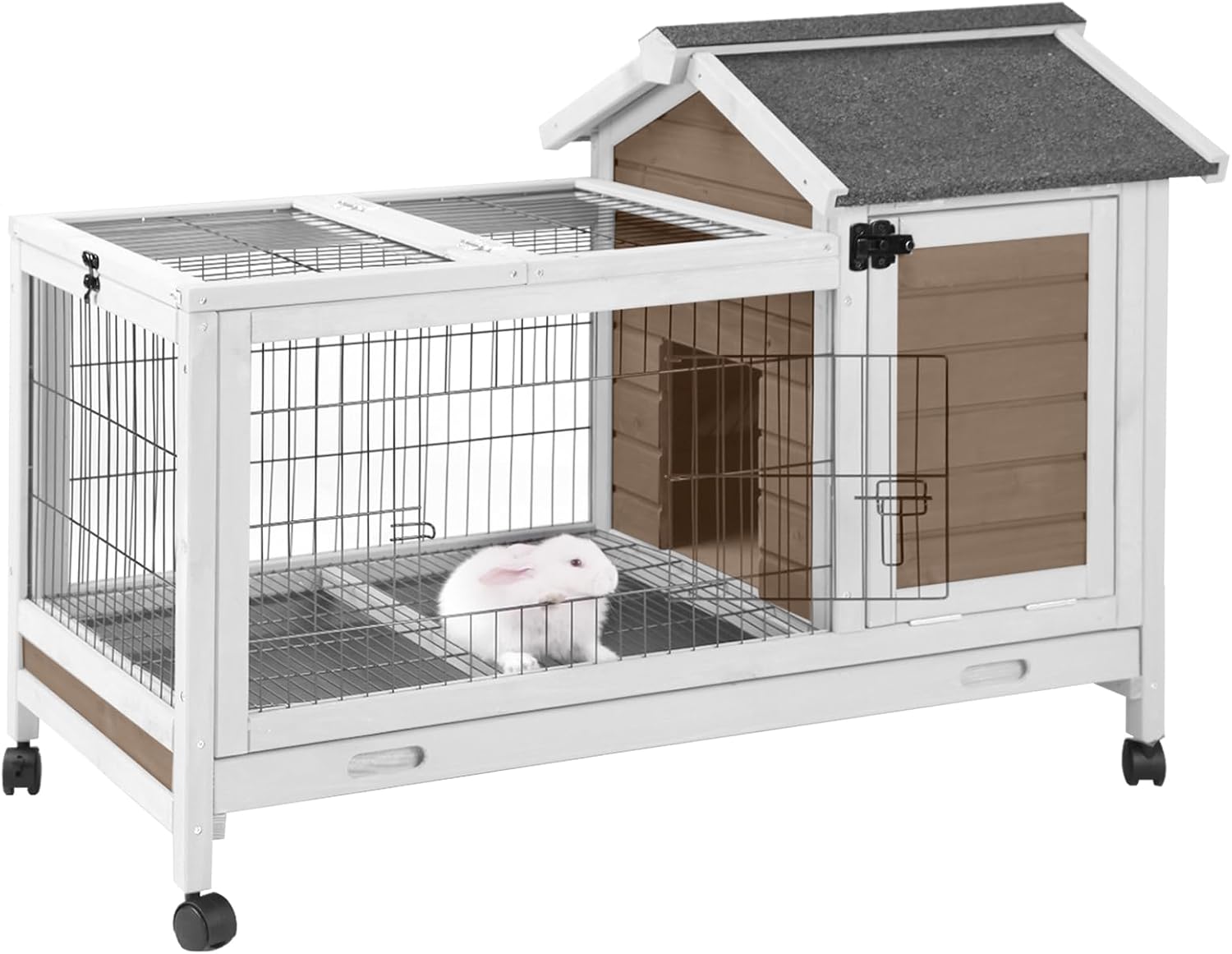 View on Amazon → Wooden Hutch, Brown | Not published | 1 | Moving between indoors and out |
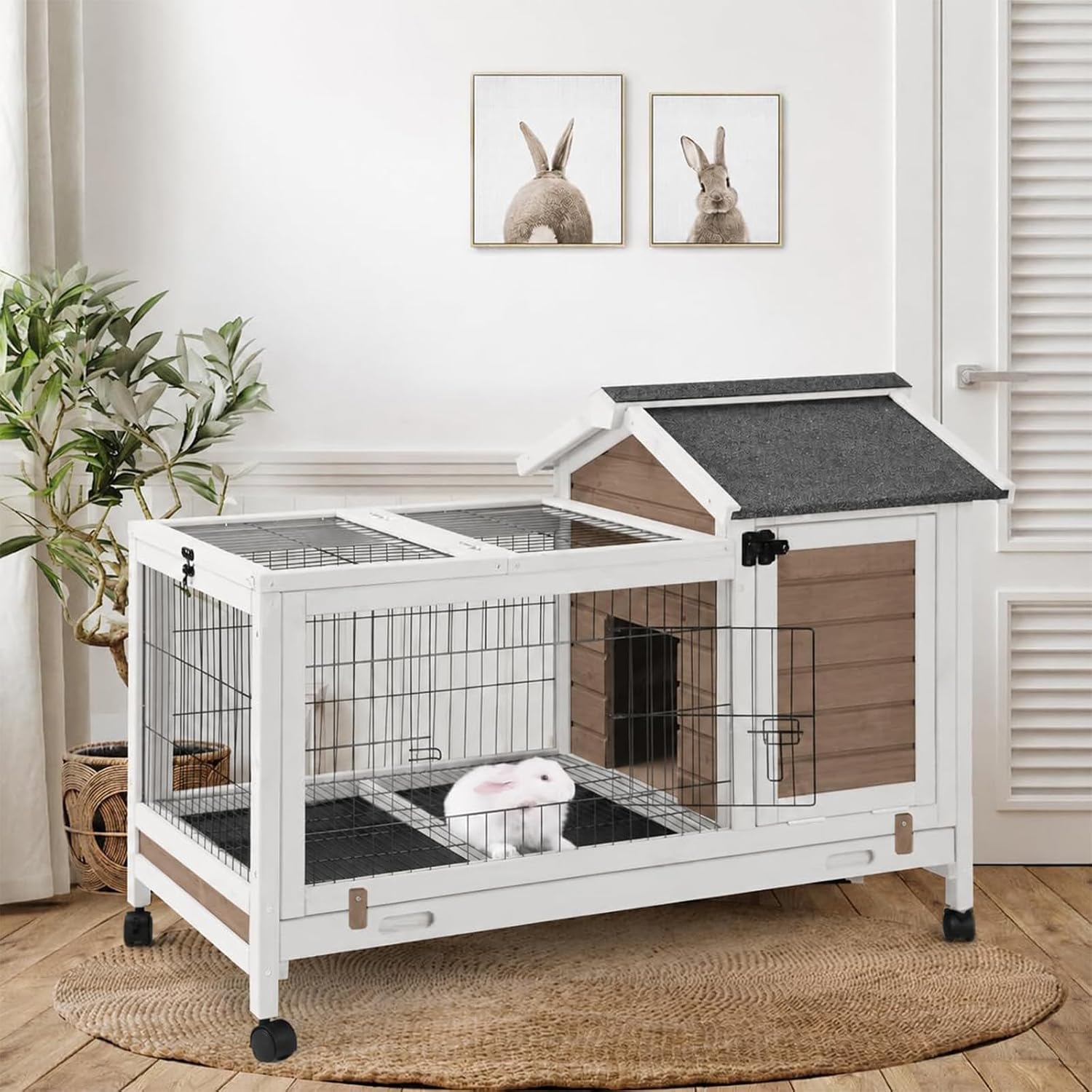 View on Amazon → Wire Mesh House, Brown | Not published | 1 | A permanent covered outdoor spot |
The removable-wire hutch for switching between indoors and out
The brown Wooden Rabbit Hutch Indoor and Outdoor is the one built around change. The wire netting comes off, so in hot weather you can strip the front down to an open frame for airflow and put it back when the season turns. The tray is leak proof, which matters if the hutch sits on a patio or a garage floor, and the wheels mean the move itself is a one-person job.
That flexibility is the whole pitch, and it comes with one obligation. Because the listing does not publish a footprint, measure the spot you plan to park it before you order, and measure the doorway it has to pass through. A mobile hutch that cannot fit through the shed door is not mobile. If your routine involves a hutch that lives outside in summer and inside in winter, this is the shape that suits it. If your rabbit stays in one room year round, the two-tier hutch above gives more floor area for the same wall space.
The wire mesh house for a permanent outdoor spot
The Rabbit Hutch Indoor Bunny Cage Outdoor Wood House with Wire Mesh is a single-level wooden house with mesh panels, and it is aimed at a placement that does not move. Mesh is the right call for outdoor use: it gives airflow on still days and keeps a solid barrier between the animal and anything outside that is curious about it.
A permanent outdoor hutch lives or dies on the setup around it, not the box. Shade, a roof overhang, and a covered run matter more than an extra few inches of interior. Before you buy, decide where the hutch sits in July at two in the afternoon, because that is the hour that decides whether an outdoor hutch works. The listing does not publish a footprint here either, so measure the pad you have in mind and compare it against the space a hideout and a hay rack will eat out of the interior.
Should you buy the 2-Tier Indoor Rabbit Hutch Bunny House Guinea Pig Cage with Sliding Plastic Trays, Wheels & Ramp, 47.2" Multi-Door Wooden Small Animal Cage for Rabbits, Bunnies, and Guinea Pigs (Grey)?
Yes, for most rabbit owners. It has the longest single run of the four, it keeps that run on the level your rabbit uses during the day, and the sliding plastic trays and multi-door access make it the easiest hutch here to clean. The wheels are a small convenience that turns into a big one the first time you need to sweep behind it.
The caveats are the usual ones for a two-tier wooden hutch. Check the ramp angle before you let a rabbit upstairs, and measure the wire spacing before you put a young guinea pig inside. Neither is a reason to skip it. Both are the kind of check that takes five minutes and saves a vet visit. If you want one hutch that covers the most animals in the most rooms, start here.
Should you buy the 2 Story Rabbit Hutch Indoor & Outdoor, Wooden Rabbit Cage with 2 Leak-Proof Pull-Out Trays, 4 Wheels, Ramp, Chew-Anti Metal Strip for Rabbit, Guinea Pig, Hamster (36" L x 17.8" W x 36.7" H)?
Buy it if your space is narrow and your pet is small. The 36 by 17.8 inch footprint fits gaps a wider hutch cannot, the two leak-proof trays keep both levels usable, and the chew-anti edge strip is the kind of detail that shows up in year three rather than week one.
Skip it if you have a medium or large rabbit that needs a straight run. Thirty-six inches is a comfortable stretch and a poor sprint, and no amount of vertical space replaces horizontal space for a rabbit. For guinea pigs, hamsters, or a smaller rabbit that gets daily floor time, this is the best value in the group and the easiest of the four to tuck into a corner.