Most perch advice online is written for one bird in one cage, which is why the natural wood perch vs rope perch question keeps coming back without a clean answer. The two surfaces do genuinely different jobs. Wood gives a bird a grip it has to work for, and the texture that wears nails down is the same texture that keeps toes from sitting flat. Rope gives a bird something it can sink into, which is why so many birds sleep on it and so few sleep on a dowel. If your bird spends twenty-two hours a day on the smooth dowel that came in the cage, replacing that dowel with either material is an upgrade. If your bird already has three perches and none of them is the right thickness for its feet, neither material fixes the real problem.
The difference between natural wood perch and rope perch is not a difference in quality. It is a difference in what the surface asks of a foot. This article compares four perch stands that are on the market right now, then works through the material question underneath them, for keepers with a parakeet, a cockatiel, or a small parrot in an apartment.
The short answer: make natural wood the everyday perch and rope the sleeping perch, because wood keeps feet exercised and nails worn while rope keeps a bird comfortable enough to actually rest. Everything else in this comparison is a variation on that split.
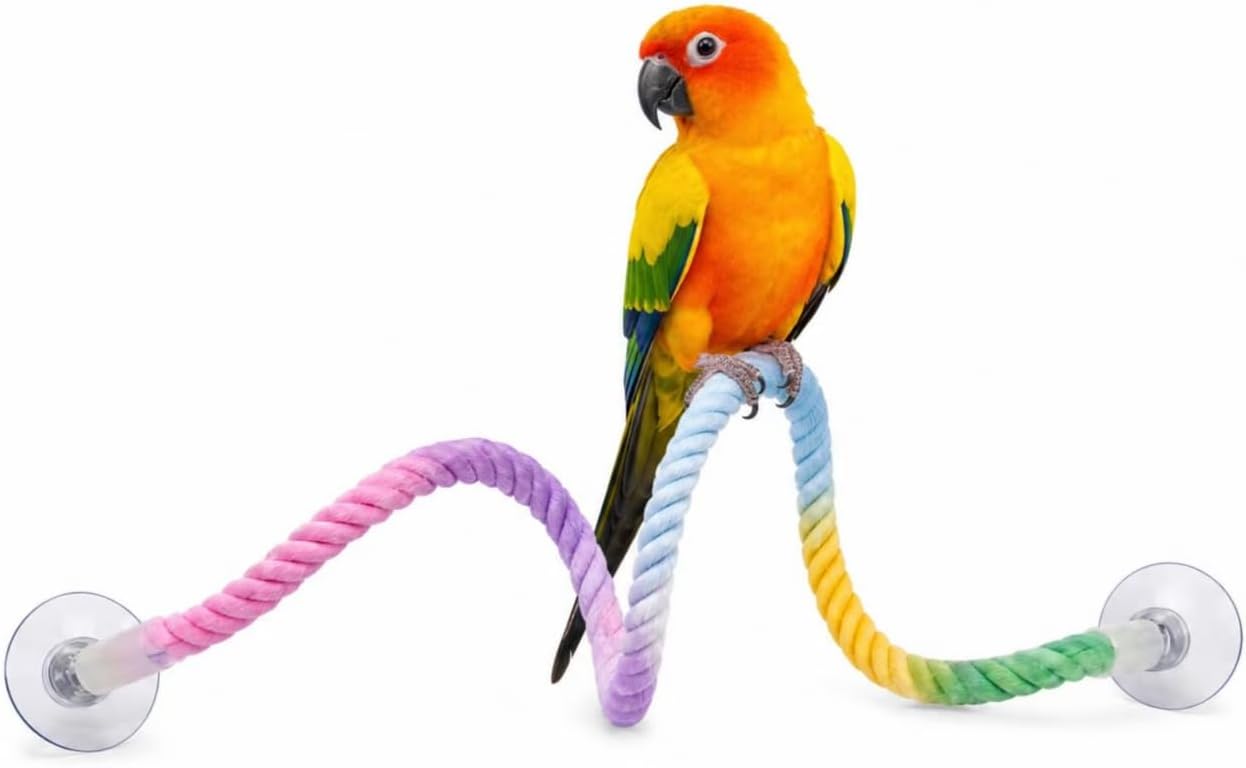
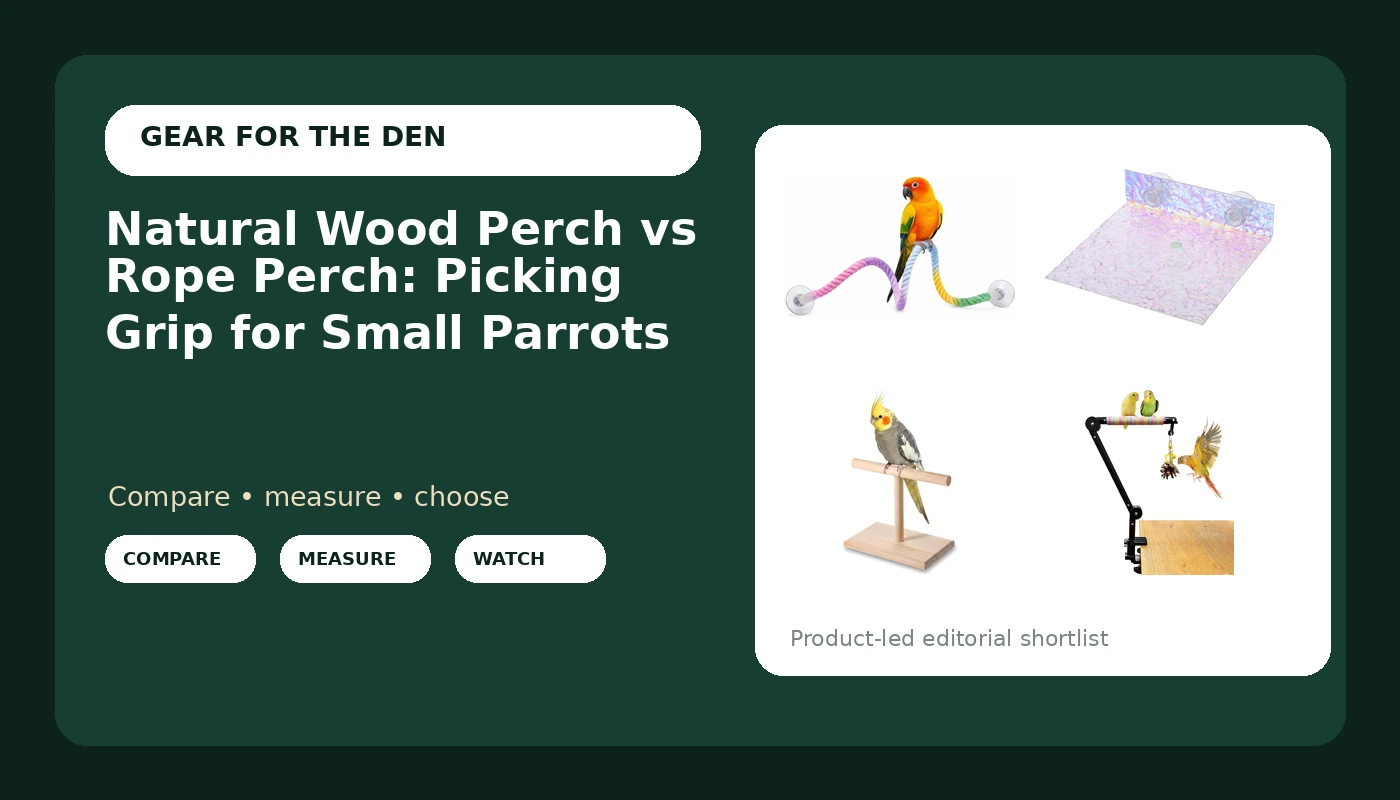
Xorabuddy Window Bird Perch Parrot Climing Rope with Suction Cups, 80cm
The only rope surface in this set: soft, long, and mounted away from the cage, which is where a bird actually wants to nap
Suction cups need clean glass, the rope needs inspecting for loose threads, and it is not a stand you can move to a desk
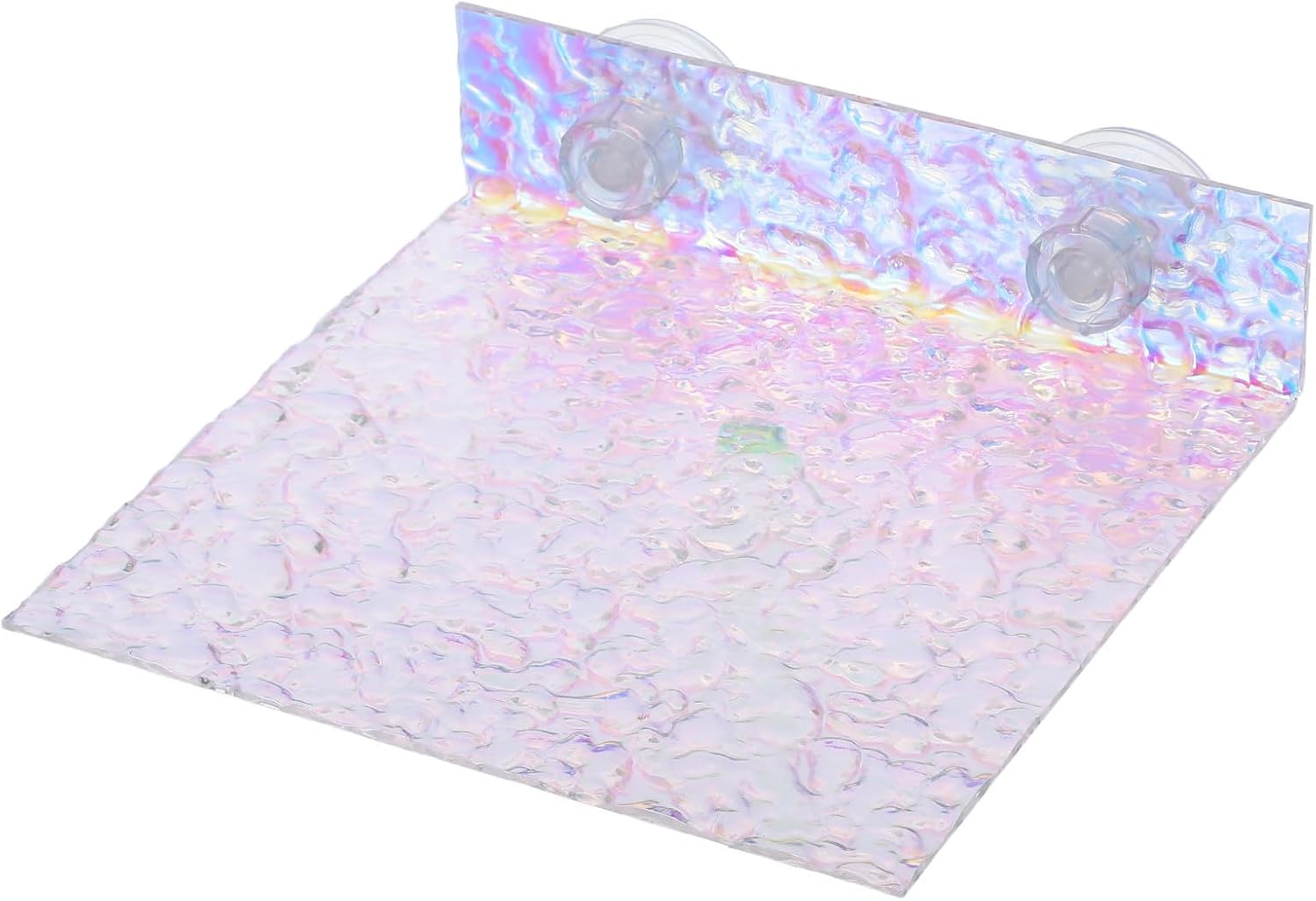
Portable Bird Perch Stand, Adjustable Height Acrylic Platform
Wipes clean in seconds and adjusts in height, so it can follow a bird from the training table to the countertop
A smooth acrylic platform gives no grip texture, so it is a station rather than an all-day perch
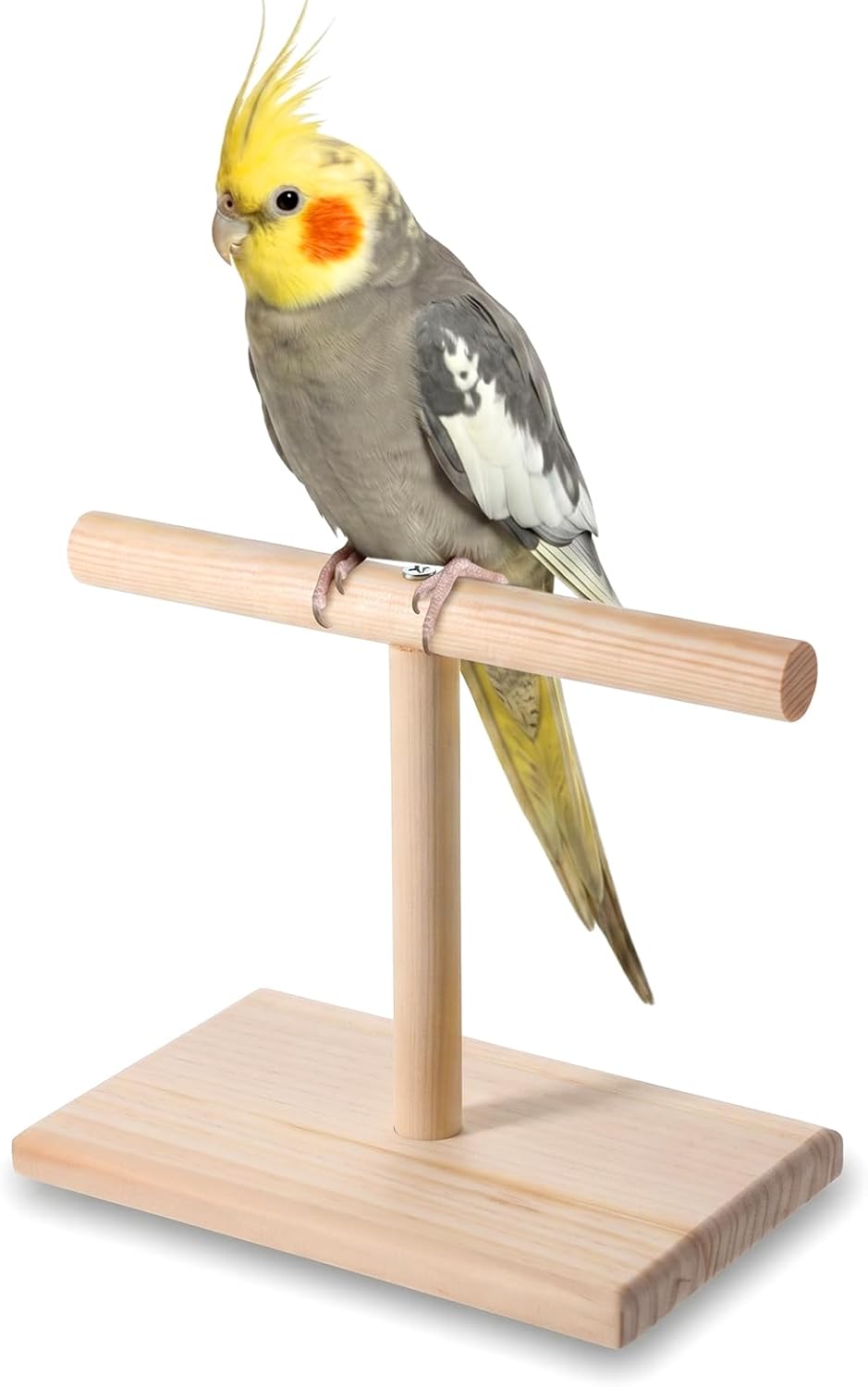
Bird Perch Stand, Bird Training Portable Tabletop Parrot Stand
The lowest entry point in this set and the simplest thing to carry from room to room
Nothing in the name promises height adjustment, so measure before you commit, and it is one surface rather than a range
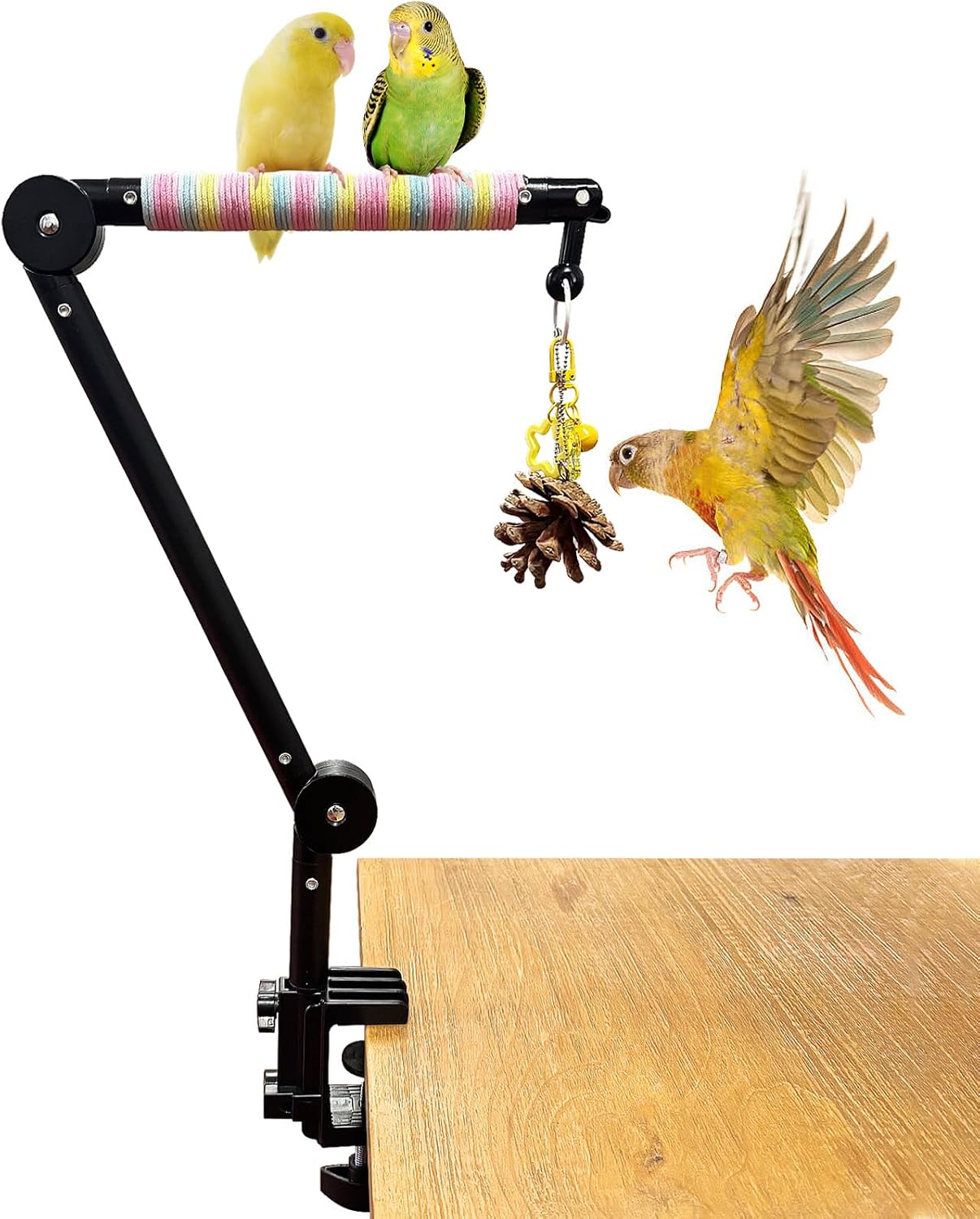
Kathson Adjustable Desktop Bird Perch Movable Parrot Training Stand
Adjustable and movable, which is the combination that makes a desk perch worth owning
It takes up desk space, and like any tabletop stand it does nothing for the bird's cage hours
Prices and availability may change.
How to judge a perch surface before you spend anything
A perch is doing four jobs at once. It has to hold a foot in a natural position, wear nails without abrading the sole, survive a beak, and clean up in under a minute. Every natural wood perch vs rope perch argument comes back to how a given surface scores on those four, and no surface scores well on all four.
Textured surfaces win on grip and nail wear. Soft surfaces win on comfort and sleep. Hard, smooth surfaces win on cleaning and lose on nearly everything else. That is why the acrylic platform in this set is a training station rather than a cage perch, and why the dowel your cage shipped with is the first thing worth replacing.
The other half of the judgment is mechanical. Where does the perch attach, how much does it move, and what does it drop underneath? A swing mount that pivots under a bird's weight is fine for play and useless for sleep. A food cup size that matters on a training stand is irrelevant on a cage perch. And a tray liner or a sheet of paper under the perch is the cheapest diagnostic tool in bird keeping, because droppings change before a bird looks sick.
Natural wood perches: grip, nail wear, and the honest downsides
Hand a small parrot a branch with bark still on it and the first thing it does is chew. That is not a side effect, it is half the value. A wood perch that doubles as a chew outlet keeps a beak busy, and busy beaks cause fewer problems than bored ones.
Grip is the second argument. Bark and irregular contours mean toes close around an uneven surface instead of resting flat on a dowel. Flat-footed perching is how birds end up with pressure sores on the soles, and it is almost always a perch problem rather than a bird problem. Nail wear follows from the same texture: a rough surface takes off a little nail every day, which is easier than a monthly trim with a towel and a bird that has opinions.
The downsides are real. Wood splits. Cracks and bark pockets hold droppings, and a perch you cannot scrub clean is a perch you have to throw away, which makes it a consumable rather than an investment. Not every branch is safe either: softwoods with sticky sap, painted wood, and anything treated with a finish has no business in a cage.
Foraging difficulty is where wood earns extra credit. A bird that has to lean, reach, and shift its weight to get around a branch is working for its balance. A bird on a straight dowel is not. That small daily effort is the difference between a perch and a piece of furniture.
Rope perches: comfort, flexibility, and the fraying problem
Rope is the surface birds choose when they are tired. Braided cotton or sisal gives a foot something to sink into, and the give in the material lets a bird settle into a hunch that no rigid perch allows. If you have watched a bird sleep flat on its belly on a rope, you have already seen the argument for it.
The clearest example here is the rope perch with suction cups, which mounts to a window rather than the cage and gives a bird a lookout spot away from everything else. Visit on Amazon It is a rope perch doing the second of the two jobs a perch can do: resting, not exercising.
The problems with rope are hygiene and wear. Loose fibers eventually catch a nail, and a bird that has panicked on a rope perch can end up tangled in a thread that should have been trimmed weeks earlier. Rope soaks up droppings and stays damp, which in a humid apartment is a bacterial problem rather than a cosmetic one. Inspection is the whole maintenance routine and it takes ten seconds: run the perch through your hand, feel for fraying, and cut anything loose before your bird finds it.
There is also a claim worth correcting. Rope is not automatically softer on a bird's feet than wood just because it feels softer in your hand. A foot that sinks all the way in without resistance is a foot that is not gripping anything. Rope works best as one perch in a set rather than the only perch in the cage.
The natural wood perch vs rope perch decision, by bird and by cage
If you searched rope perch vs natural wood perch hoping for a single winner, the honest answer is that the winner is a mix, and the mix changes with three things: bird size, cage, and where the bird spends its day.
Bird size decides diameter more than material does. A small parrot needs a perch it can wrap its toes around without meeting its own foot on the other side. A bird that cannot close its grip will shift and shuffle all night, and a bird that shuffles is a bird that is not sleeping.
Cage decides how much of each you can fit. A tall cage with vertical space can take a wood perch high and a rope perch low, which turns cage height into a feature rather than a number on a box. A wide, low cage does better with one long textured perch and one rope perch angled into a corner, because a rope perch in a corner gives a bird something to lean into. Bar spacing is the constraint that decides where a perch can actually mount, so measure it before you order anything that clamps.
Where the bird spends its day decides the rest. A bird that is out of the cage on a desk for two hours a day is using a training stand, not a perch. A bird that lives in a cage and comes out for shoulder time needs the cage set up properly, and the stand is optional. That split is why this comparison includes tabletop stands at all: for a lot of apartment keepers, the stand is where the bird spends its out-of-cage time, and the perch inside the cage is what the bird sleeps on.
Whether you go natural wood perch or rope perch at that point, one rule does not change: never let the only perch in the cage be a smooth dowel, and never let it be a single diameter either.
Diameter, bar spacing, and the numbers people skip
Perch diameter is the most underrated measurement in bird keeping, and it is the one thing you cannot fix after the fact. The working rule is that a bird's toes should wrap roughly two thirds of the way around the perch, with the nail tips clear of the underside. If your bird's toes meet underneath, the perch is too thin. If the bird sits on top of the perch like a plate with feet, it is too thick.
Variety matters as much as the measurement. A cage with three perches of the same diameter gives a bird three identical stretches of floor. A cage with a thick textured perch, a thinner one, and a rope perch gives a bird choices, and choices are what keep feet healthy over years rather than months.
Bar spacing enters here because it limits mounting. A clamp that will not fit between bars is a clamp you cannot use, whatever the diameter. Cage height enters because it decides how many levels you can build: a perch near the top for sleeping, a perch at mid height for eating and chewing, and a perch near the door for coming out.
The last number is cleanup time. Time yourself once: how long does it take to wipe down each perch in your cage? If the answer is more than a minute per perch, the setup is too complicated, and complicated setups get skipped, and skipped setups get birds living on dirty perches.
Mounts, trays, and the small hardware questions
A swing mount is the mount that moves. Rope perches on a swivel or a clip swing when a bird lands, which is fine for play and bad for sleep, so a swinging perch belongs in the play half of the cage rather than the sleep half. Fixed clamps and suction cups are the alternative: less motion, more predictability.
Suction cups deserve their own warning. They hold well on clean glass and poorly on dusty glass, they fail in heat, and they fail more often in winter when indoor air dries out. The rope perch in this set hangs on cups, which makes it a great window perch and a poor choice for a spot you cannot easily check. Press it back on whenever you walk past.
Trays and liners are the unglamorous half of the same decision. A tabletop stand over a tray liner is the easiest setup to keep clean, because everything under the bird comes up in one sheet. Under a cage perch, a liner tells you whether the perch is positioned where the bird actually sits, which is a common mistake in cages arranged for how they look rather than how a bird uses them.
Two smaller numbers people forget: food cup size on a training stand, which decides whether you can put a whole meal on the stand or just a treat, and carrier size, which decides whether the stand travels with you or stays home.
Should you buy a starter stand before you commit?
Yes, if your bird's out-of-cage time is currently a shoulder and a windowsill. A tabletop stand gives a bird a place to be that is not your hand, which is the first step toward a bird that can entertain itself while you work.
Two stands here fit that job. The portable tabletop stand is the simplest version, at the lowest entry point in this set, and it is the one to buy if you just want to find out whether your bird will use a stand at all. Visit on Amazon The adjustable desktop perch from Kathson is the version to buy if you already know the bird will use it, because height adjustment is what makes a stand work for both training and hanging out. Visit on Amazon
The acrylic platform sits between the two. It is the one to look at if your bird is a messy eater or you want the fastest possible wipe down, since a flat acrylic surface has no texture to trap anything. Visit on Amazon What it does not do is give a foot anything to grip, so it is a station rather than a perch, and it should not be the surface a bird sleeps on.
The order I would buy them in: one textured perch for the cage first, one rope perch for sleeping second, and a tabletop stand third. The stand is the accessory. The perches are the habitat.
What I would check before buying any of these
Two things I would verify on any perch listing, whatever the material. First, whether the perch is described by diameter or only by length, because length tells you how much perch you get and diameter tells you whether your bird can use it. Second, whether the mount is described at all, because a perch that cannot be fixed to your cage ends up on a shelf.
Then the material question one last time. The natural wood perch vs rope perch choice is not really a choice, because the two surfaces answer different needs and a good cage has both. Wood is the work surface. Rope is the bed. A training stand is the desk. Get the first two right and the third one is easy, and your bird will spend its nights on something better than a dowel.