A useful bird cage size guide does not start with a single number. It starts with three: the interior width your bird can actually fly across, the bar spacing its head cannot pass through, and the perch diameter its feet can wrap around. Get those three wrong and the prettiest cage in the room becomes a hazard, no matter what it cost.
I judge cages the way I judge crates for large dogs, with a tape measure on the inside, the door closed, and the perches mounted where they will actually live. That is how the chart below was built. It covers the species most people in this hobby actually keep, from finches and parakeets up through cockatiels, conures, and African greys. Around it I have gathered the accessories that decide whether a cage is workable at all: perches, platforms, swings, food cups, and tray liners.
Best Overall: KATUMO Bird Playground – Natural Wooden Perches Parakeet Ladder Conure Swing Bird Cage Accessories with Removable Tray & 2 Stainless Steel Cups
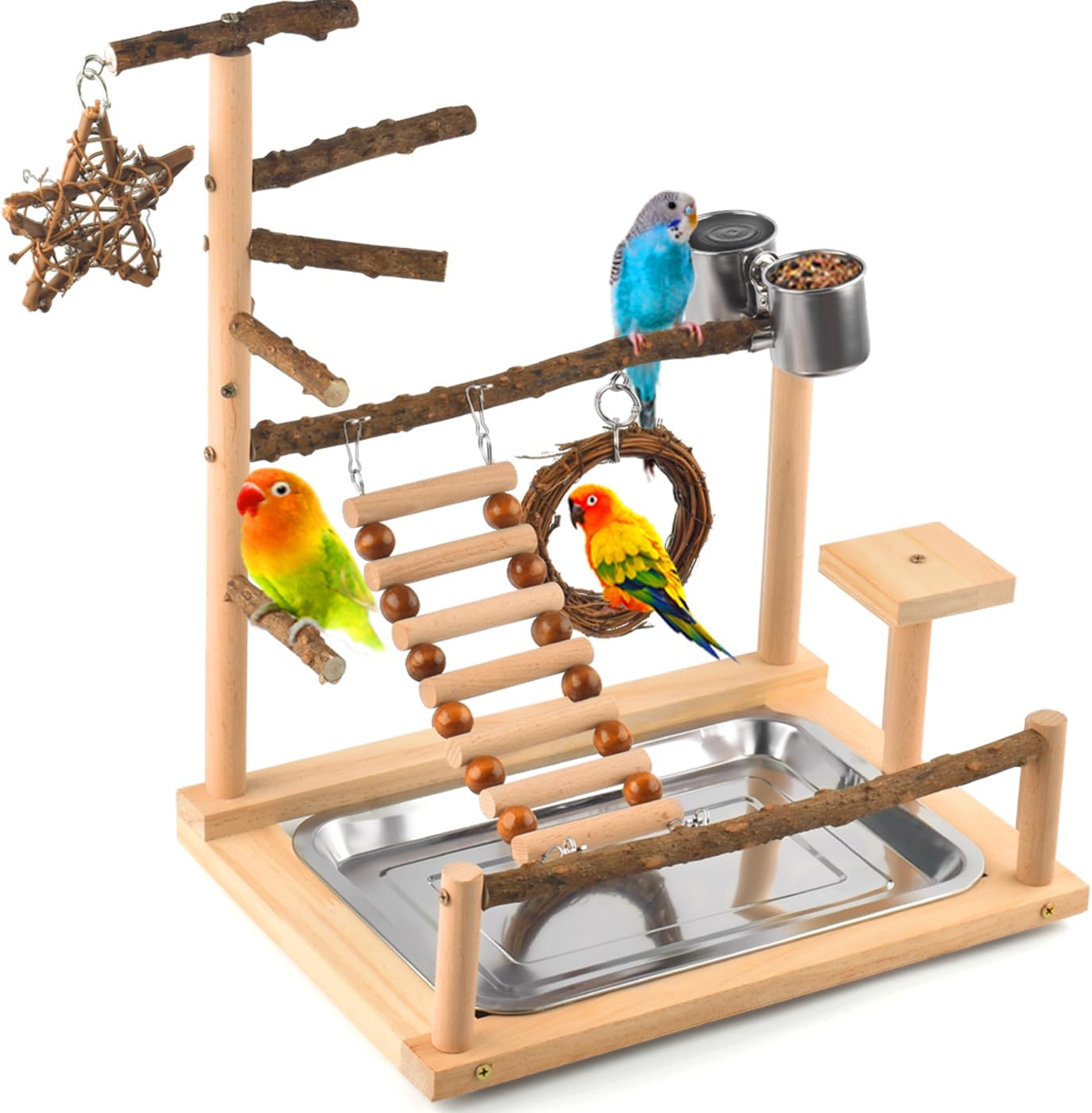
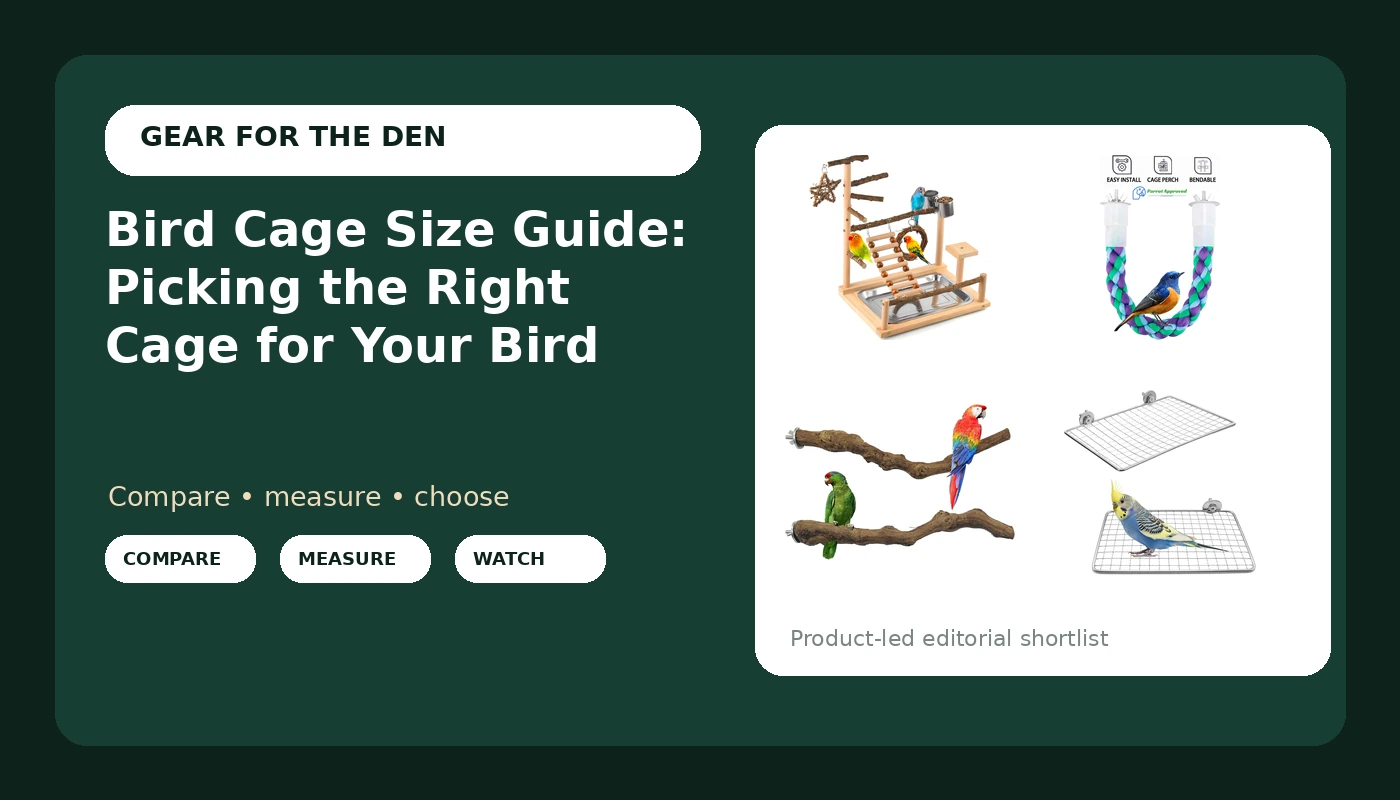
This is the piece I would hand someone whose bird lives in a cage that is one size too small. It is a playground rather than a cage: natural wooden perches at several heights, a ladder, a swing mount, a removable tray that slides out for cleaning, and two stainless steel cups for food and water. Set it on top of a cage or on a table and a small parrot gets the vertical room a low cage cannot give it.
The wooden perches vary in diameter along their length, which is what you want, because a bird's feet should not grip the same thickness all day. The two cups are stainless, and food cup size plus material decides how often you refill and how easily you scrub. The tray liner situation is simple here: the tray lifts out, so you can rinse it instead of rebuilding the whole setup.
Where it falls short: this is not a substitute for a correctly sized cage, and it is not built for a macaw. For a cockatiel, a green cheek conure, or a lovebird whose cage is fine but whose out-of-cage space is not, it does real work.
Check current Amazon price | Visit on Amazon
Best Value: 2Pcs 11.8’’Bird Rope Perches,Bendable Climbing Standing Chew Cage Toys Unique&Simulate Natural Color Bungee Toys for Small to Regular Size Birds
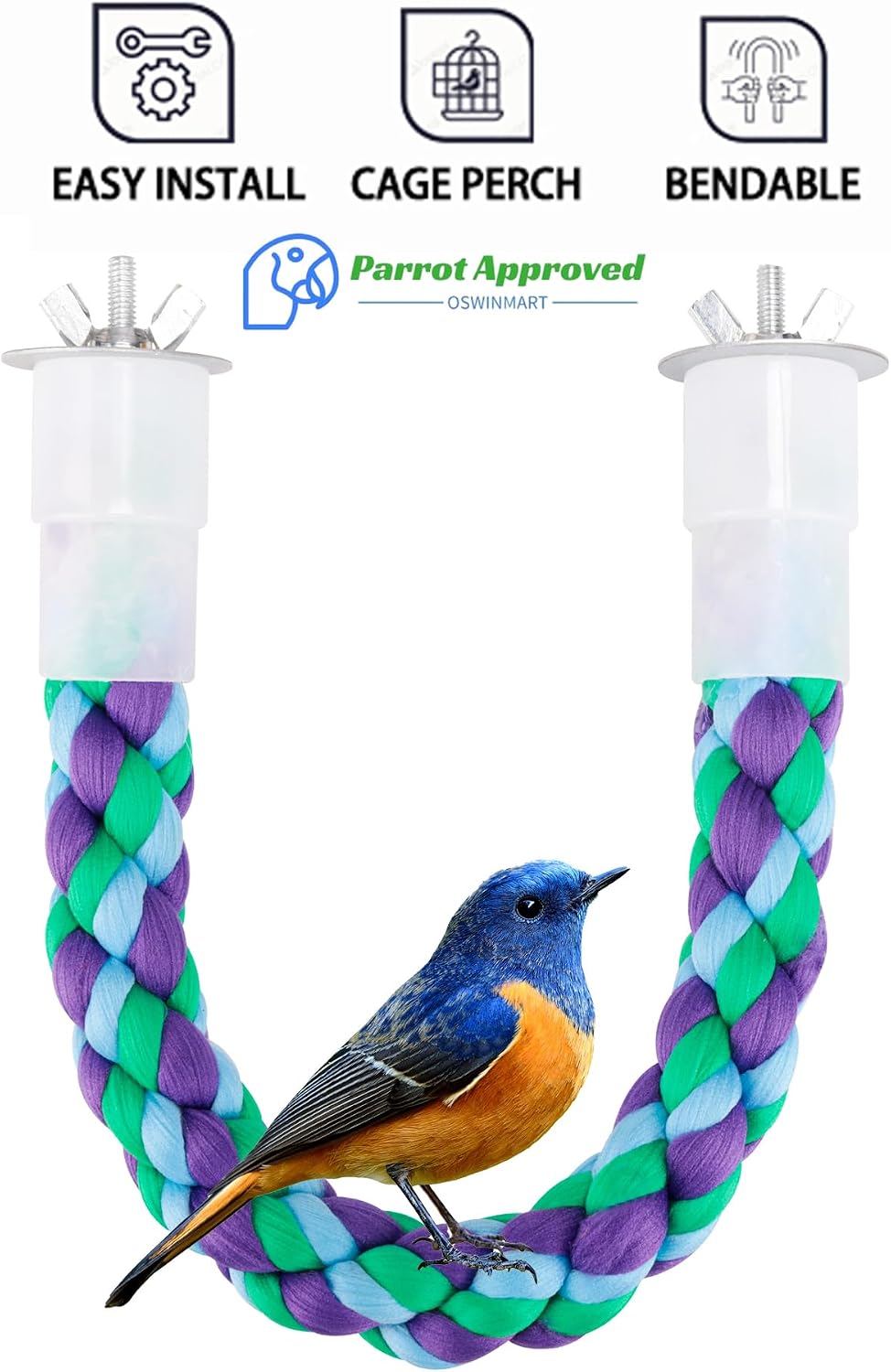
Rope perches are the cheapest way to add usable space to a cage you are not replacing. This two pack gives you about a foot of bendable perch each, and you can shape them into a U, a ramp, or a straight run across the middle of the cage at whatever cage height you choose. They are rated for small to regular sized birds, so parakeets, cockatiels, lovebirds, and conures are all in range.
The rope is soft on feet that spend all day on dowels, and it is chewable, which matters because a bored bird will chew something whether you want it to or not. Bend one into a corner and you have created a flight path in a cage that had none.
The trade-off is hygiene. Rope holds grime, so it needs washing or replacing more often than wood or stainless. If you want a perch that lasts forever, this is not it. If you want to make a small cage feel bigger for the price of a couple of coffees, this is the least expensive way I know to do it.
Check current Amazon price | Visit on Amazon
How I tested
I do not trust a cage's marketing copy, so I check the same five things on every cage and every accessory that goes inside it.
First, the interior. Tape measure inside the cage, door closed, minus the space the food cups steal. A cage listed at 24 inches is often 21 inches of usable width, and that difference is a bird's tail.
Second, bar spacing. I check it at the widest gap, not the average, because manufacturing tolerance is where heads get stuck. Bar spacing is the single number that decides whether a cage is safe for a given species, and it is the number most often left off a listing.
Third, perch diameter and placement. I look at whether the perches that come with a cage vary in thickness, whether they sit above the food cups, and whether the highest perch is high enough that the bird uses the full cage height instead of camping on the floor.
Fourth, the boring parts: does the tray slide out without a fight, does the tray liner stay put, does the swing mount hold weight, and can I reach every surface with a sponge.
Fifth, I run the same checklist on carriers and on perches, because a ten dollar perch can undo a two hundred dollar cage.
Analysis and test results
The pattern that shows up over and over is that bar spacing and cage size are not the same decision. A finch needs a wide, low cage with bar spacing no greater than half an inch. An African grey needs a cage nearly three feet across with bar spacing around an inch. Buy the wrong spacing and the cage is dangerous. Buy the wrong dimensions and the cage is merely cramped, which is a slower problem but still a problem.
The second pattern is that height beats floor space for some species and loses to it for others. Parrots climb and hang, so cage height matters. Finches and canaries fly horizontally, so width matters more. There is no single ideal bird cage size, only the size that fits how your species moves, plus everything you can add inside it.
The correct bird cage size for a green cheek conure, for example, is roughly double what most starter kits provide. That gap is exactly why accessories carry so much weight. A rope perch bent into a corner adds a flight path. A platform adds a resting spot at a height a dowel cannot reach. A playground on top adds a whole second room without adding a single inch to the cage.
Two things I have stopped trusting: advertised dimensions, which are almost always exterior, and the "for small birds" label, which covers everything from a finch to a Quaker. Check the interior and the spacing yourself.
Carrier size follows the same logic on a smaller scale. A carrier should be tall enough that your bird stands without ducking and snug enough that it does not slide around during a car ride.
Foraging difficulty is the last piece, and it is free. A cage with perches at three heights and food cups at two of them forces a bird to move for its dinner, which is the cheapest enrichment you can install.
The bird cage size chart
These are starting minimums for one bird, measured on the inside of the cage with the door closed. Bar spacing is the number that keeps a bird safe. The dimensions are the number that keeps it sane. If you keep two birds of the same species, add roughly a third to the width.
| Species | Minimum interior size (W x D x H) | Bar spacing | Perch diameter | Notes |
|---|---|---|---|---|
| Finch, canary | 30 x 18 x 18 in | 3/8 to 1/2 in | 3/8 to 1/2 in | Wide beats tall, they fly rather than climb |
| Budgerigar (parakeet) | 18 x 18 x 24 in | 1/2 in | 1/2 in | Horizontal bars on at least two sides |
| Lovebird | 18 x 18 x 18 in | 1/2 in | 1/2 in | Chews everything, expect to replace perches |
| Cockatiel | 20 x 20 x 24 in | 5/8 in | 5/8 to 3/4 in | Long tail, so depth and height both matter |
| Green cheek conure | 24 x 24 x 30 in | 3/4 in | 3/4 in | Uses a swing mount and a platform daily |
| Quaker, Senegal | 24 x 24 x 30 in | 3/4 in | 3/4 to 1 in | Food cup size matters, they dunk their food |
| African grey | 32 x 24 x 36 in | 1 in | 1 to 1.5 in | Needs a tray liner you can change in seconds |
| Cockatoo, macaw | 36 x 48 x 48 in and up | 1 to 1.5 in | 1.5 to 2 in | Only a floor aviary or walk-in really works |
Read the chart as a floor, not a target. A cage that clears the minimum by two inches in every direction is a better purchase than one that clears it by an inch in width and nothing in height.
Allazone natural grapevine perches
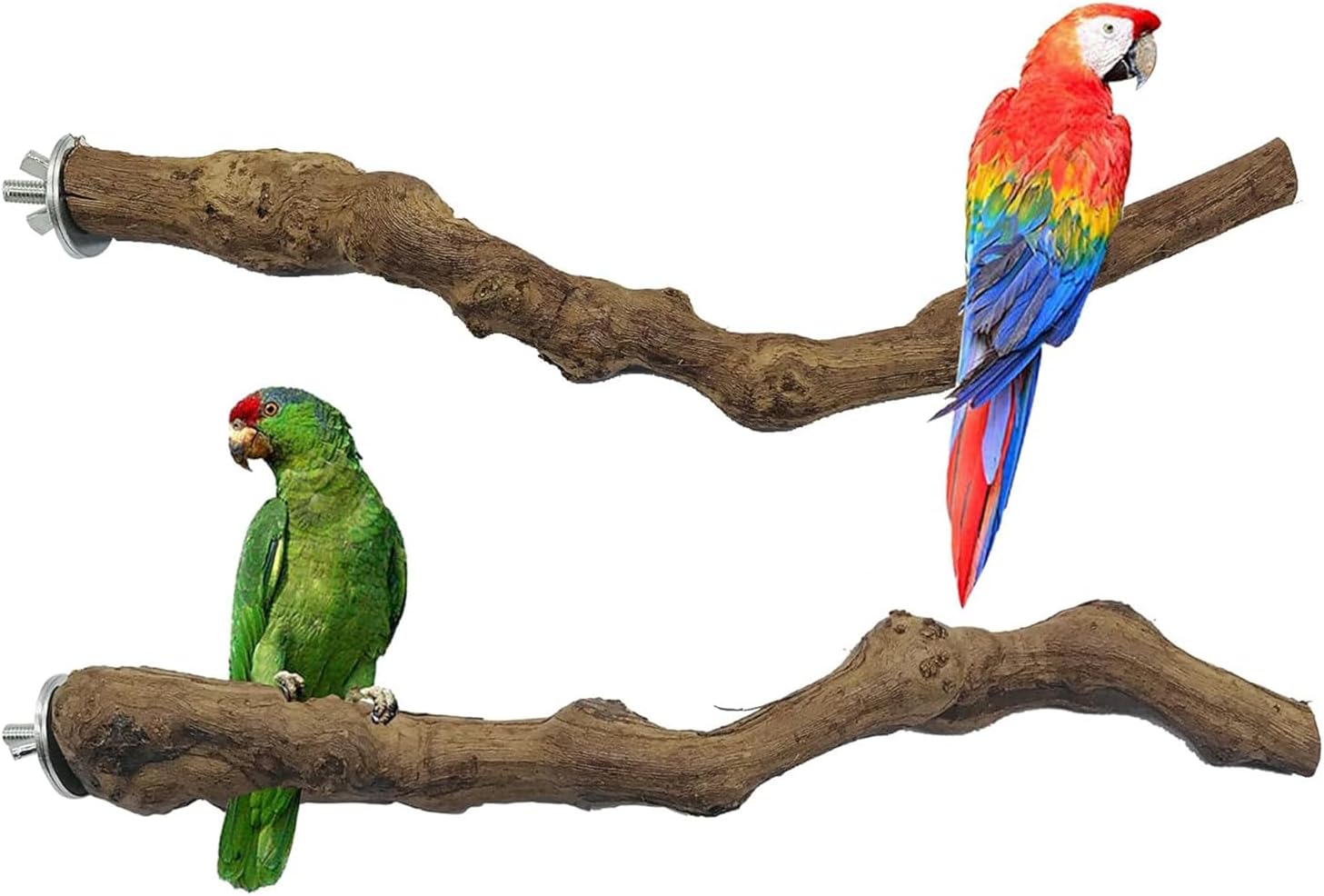
Natural grapevine is the answer to the dowel problem. Dowels are one uniform thickness, and a bird that stands on the same diameter all day is a bird on its way to sore feet. These two sticks are irregular by nature, with forks and bends that give feet something to grip and give a beak something to destroy. Cockatiels, parakeets, and finches are the target sizes here.
Because the shape is irregular, placement takes a minute. You are looking for a mounting angle where the fork becomes a step rather than an obstacle, and where the perch does not sit directly under another perch. Wood is easy to scrub and does not hold odor the way rope does, but it will not outlast a stainless platform either.
Check current Amazon price | Visit on Amazon
Stainless steel perch platforms
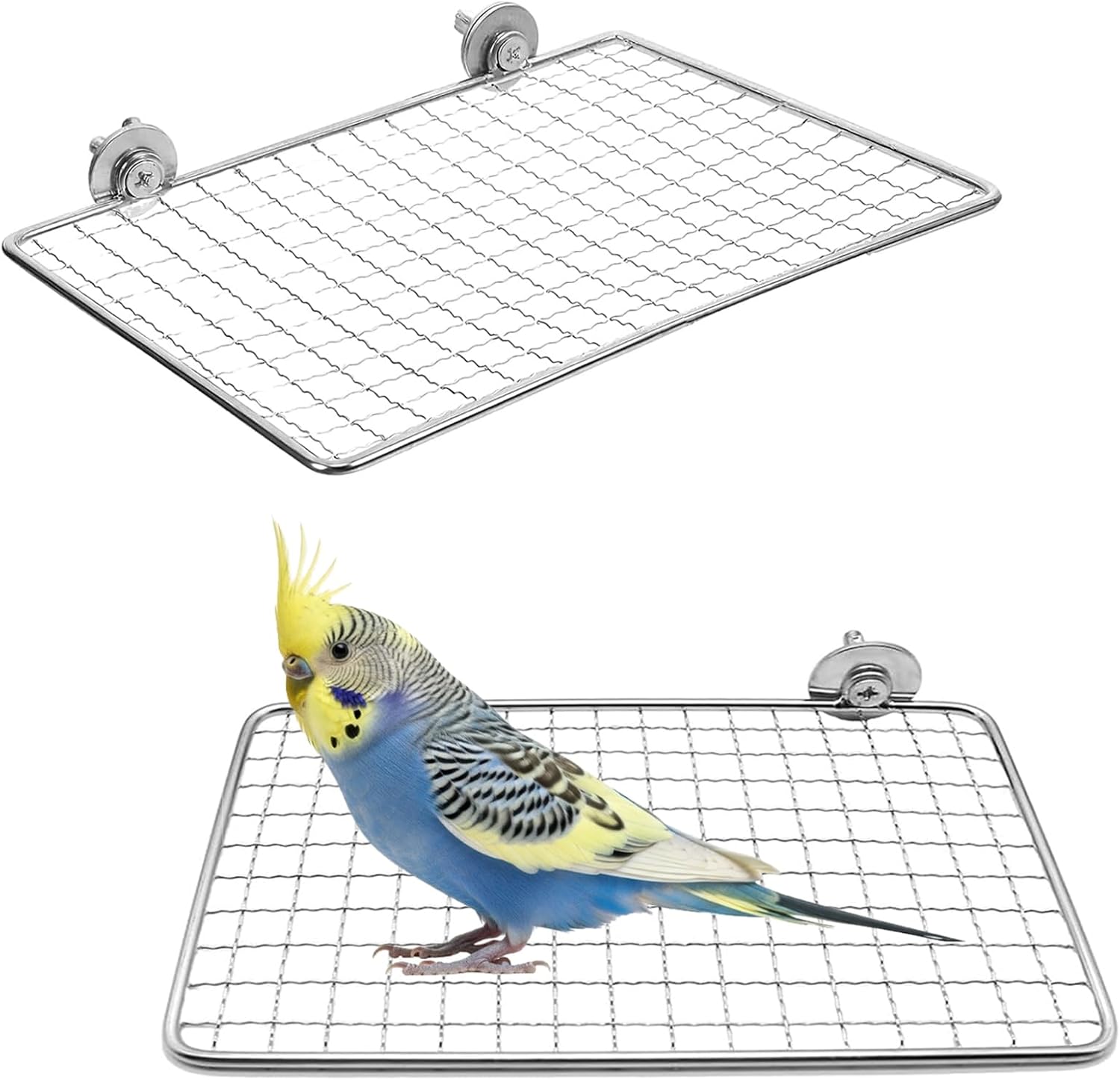
A platform is the one piece of cage furniture that changes how a bird uses the space. This two pack gives you a 6.3 by 4 inch wire mesh resting stand that bolts to the cage bars, and it is sized for conures, cockatiels, lovebirds, and small parrots. The mesh matters: droppings fall through instead of pooling under your bird.
Platforms are the closest thing to a fix for foot problems, and they give a bird somewhere flat to eat a messy piece of fruit. They also solve a layout problem, because a platform at mid cage height breaks up a column of dowels and forces a bird to hop rather than shuffle. Check that the mounting hardware clears your bar spacing before you buy, since a platform that rattles is a platform your bird will avoid.
Check current Amazon price | Visit on Amazon
Should you buy the KATUMO Bird Playground?
Yes, if the honest problem is that your bird's cage is a size too small and you are not ready to buy a bigger one. The playground adds cage height that a low cage cannot offer, plus a swing mount, two stainless steel cups, and a removable tray, which is more usable space than a slightly wider cage would give you for the same money.
It is not a fix for wrong bar spacing, and it is not built for a macaw or a cockatoo. But for a cockatiel, a conure, or a lovebird, this is the difference between a bird that sits in one spot and a bird that moves around its room.
Check current Amazon price | Visit on Amazon
Should you buy the 2Pcs 11.8’’Bird Rope Perches?
For the money, yes. Two bendable rope perches are the least expensive way to add a flight path near the top of a cage, and they suit the species that need it most: parakeets, cockatiels, lovebirds, and conures.
Go in knowing what rope is. It holds grime, it frays, and it will need washing and eventually replacing. If you want one perch that survives a decade, buy wood or stainless instead. If you want a cage that feels twice as big by the weekend, buy these.
Check current Amazon price | Visit on Amazon