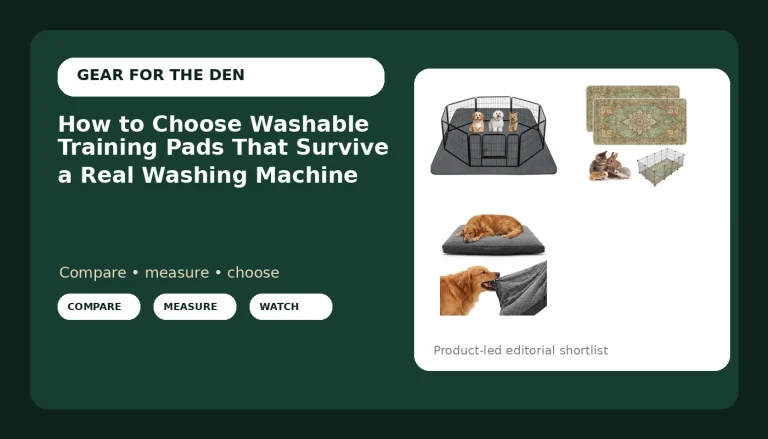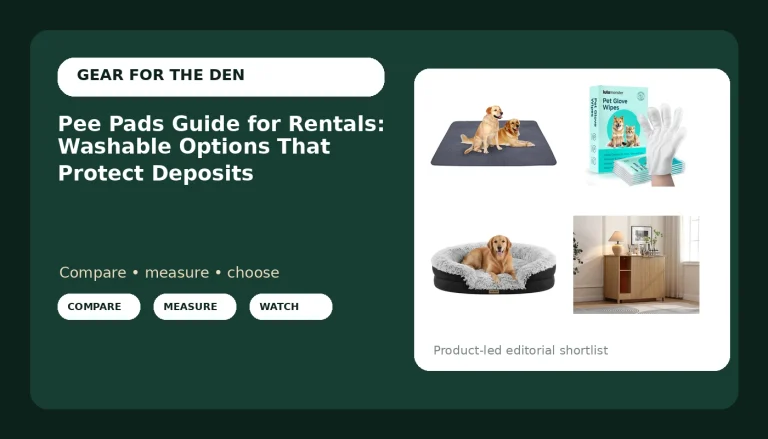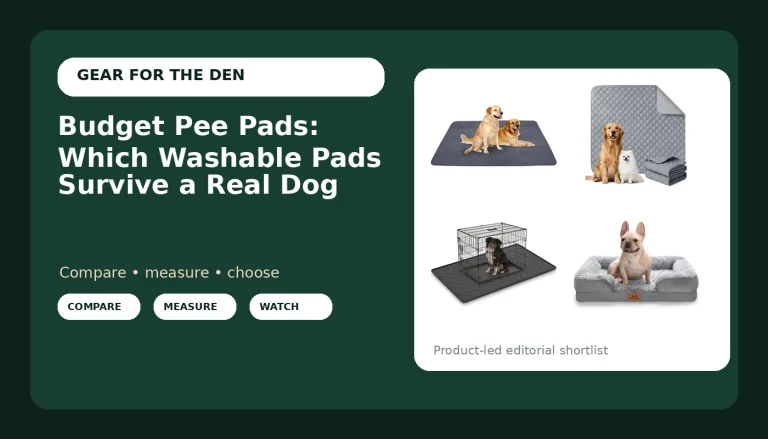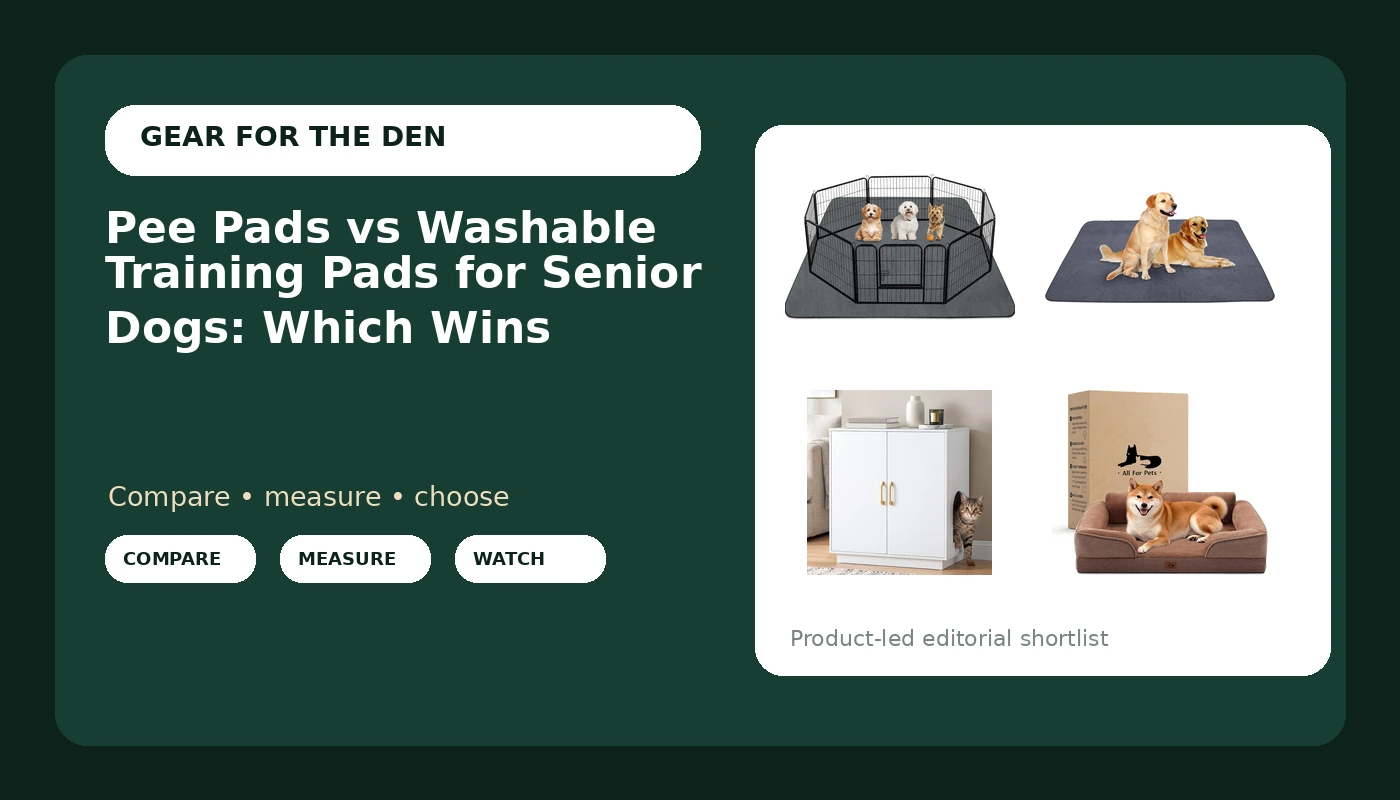
The short answer to pee pads vs washable training pads for senior dogs is that both keep urine off the floor, and the deciding variable is how much laundry your household will genuinely run. Disposable pads trade money for convenience. Washable pads trade convenience for money, plus a washer load and a drying rack. That is the whole argument compressed into a single line, and everything below is the detail that decides which side wins for one specific dog.
The best pick for most senior-dog households is the INVENHO washable pad in the 72 by 72 inch size, because that square footage matches how an older dog actually moves: it stands up slowly, drifts a step or two, and rarely lands in the middle of a small pad. It is also the only item in this roundup that replaces a consumable you would otherwise buy every month for the rest of your dog's life.
Two things to know before you spend anything. A 72 by 72 inch pad is a large piece of fabric, so it needs a washing machine that can take it without balling up, and a place to dry that is not the middle of your kitchen floor. And no pad, disposable or washable, fixes a floor that has already absorbed urine, which is why the enzyme discussion further down matters as much as the pad itself.
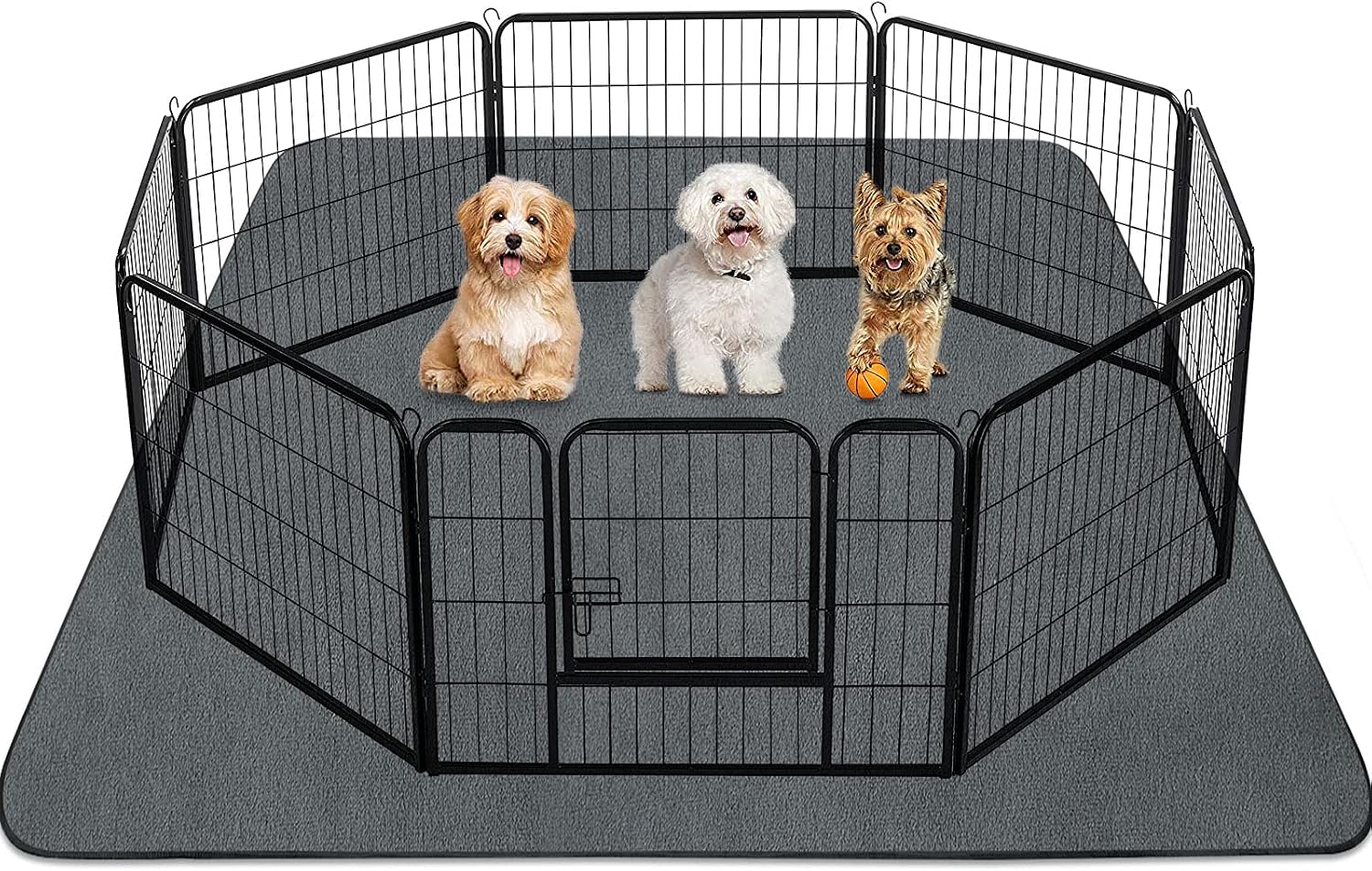
INVENHO Washable Pee Pads for Dogs 72"x72" Reusable
Largest coverage of the reusable options, heavy absorbency core, non-slip backing, quick-dry top layer
A pad this size is a real laundry commitment and needs a big machine
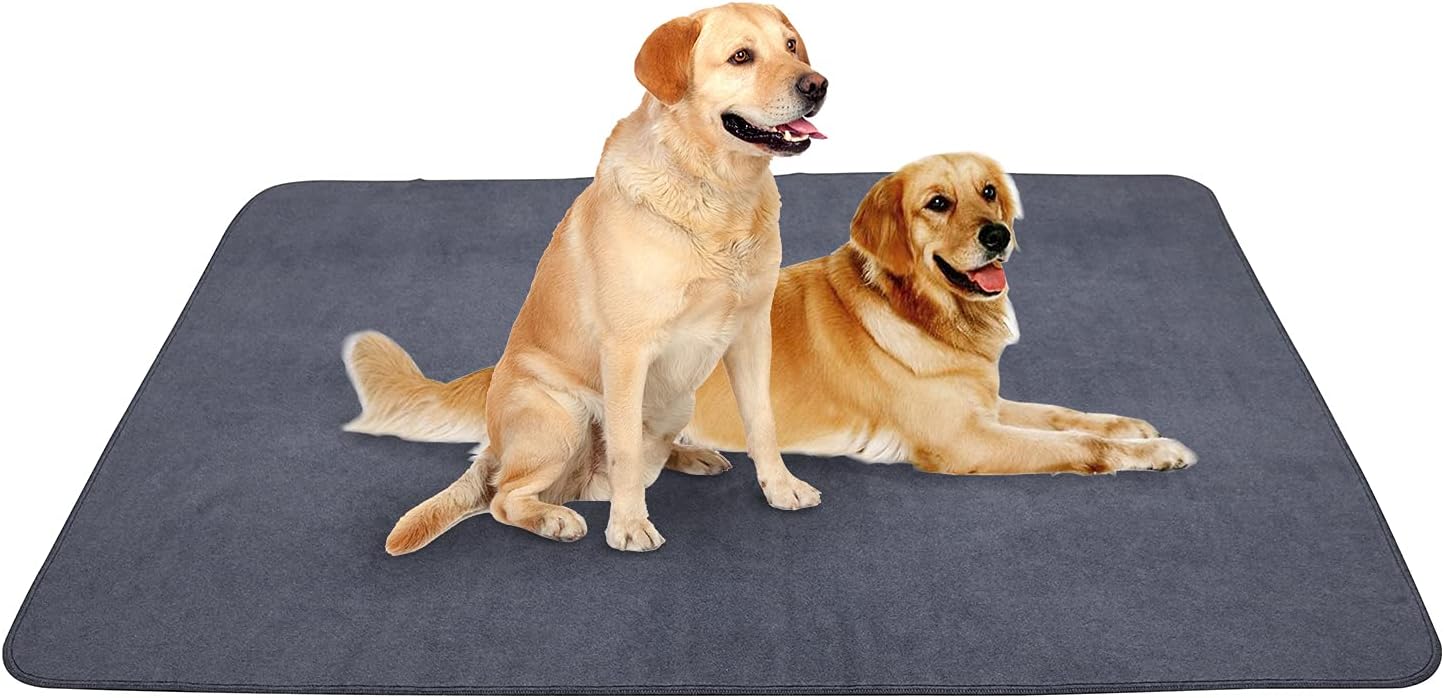
Peepeego Non-Slip Dog Pad 72"x72", Washable Pee Pad Waterproof for Training, Whelping
Same 72 by 72 footprint, waterproof training surface, ideal as the rotation spare
Different build than the INVENHO, so wash results are not identical
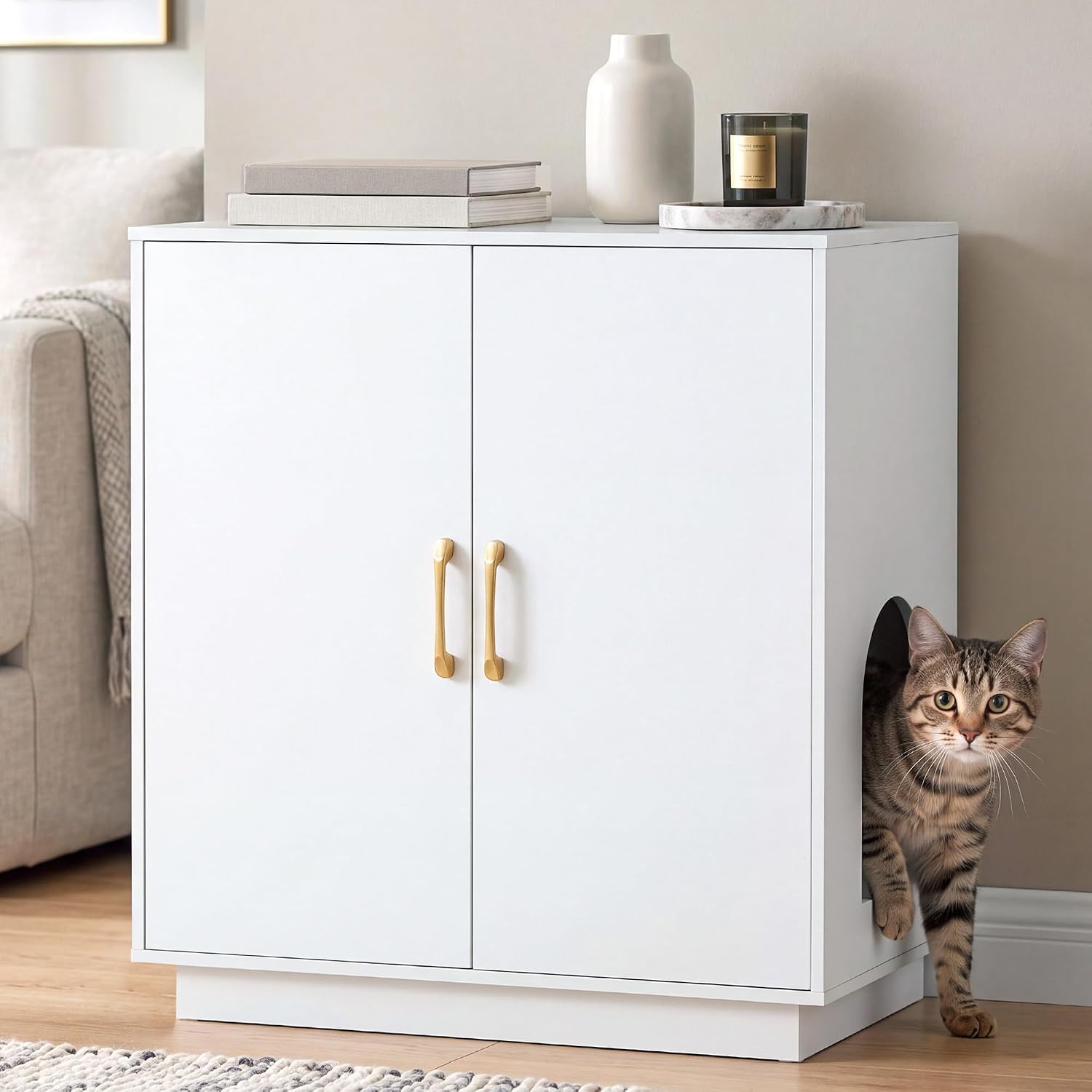
Gitelsnour 30.9'' Litter Box Enclosure Furniture, Hidden Storage
Hides the cat box and adds storage, which keeps a curious dog out of the litter corner
Not a pad, and it does nothing about urine on the floor
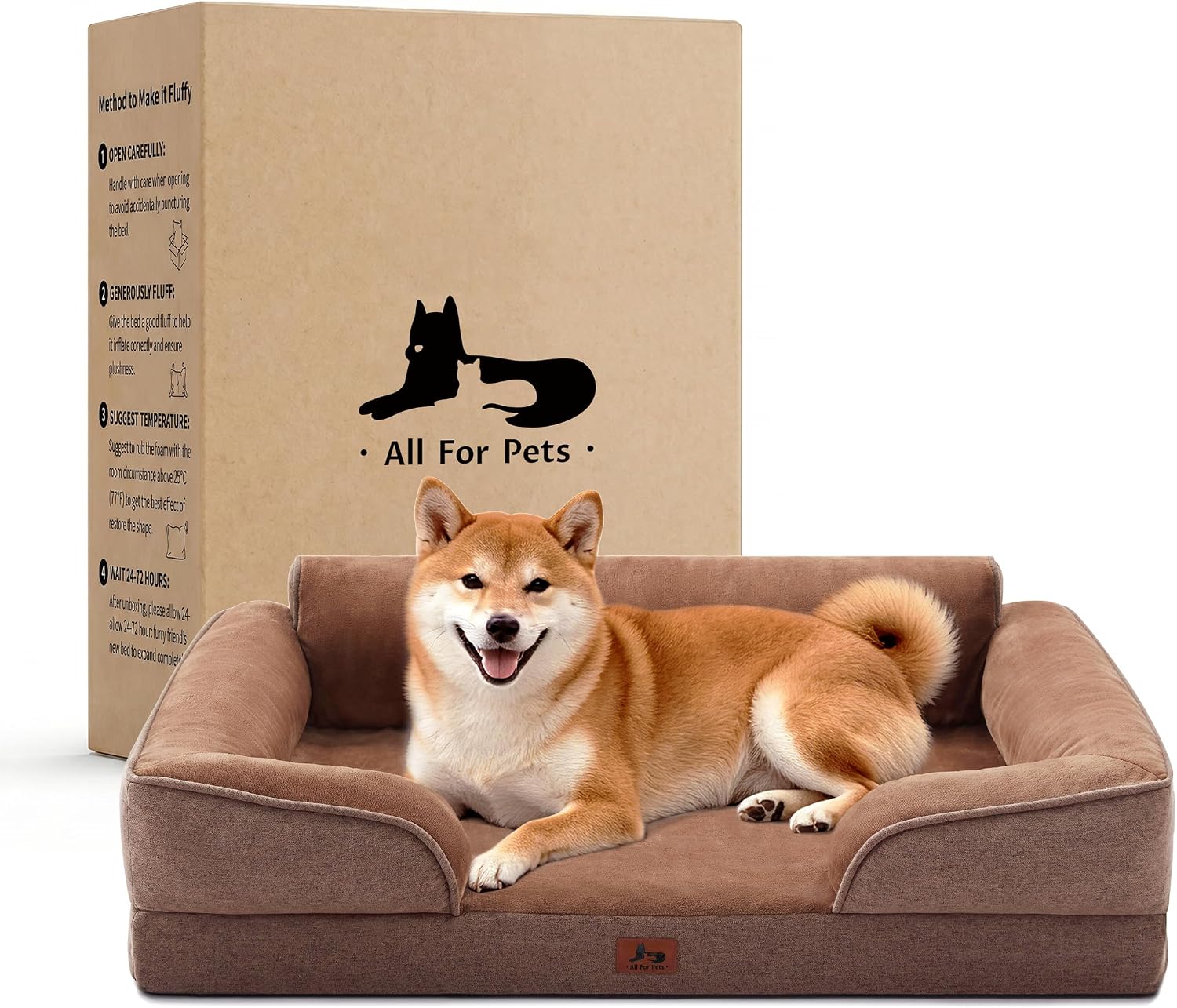
Warmrest Large Orthopedic Dog Bed for Medium Dogs Removable Washable, Brown
Supportive rest spot with a removable washable cover, so the accident zone is also the easy-to-clean zone
Comfort does not contain a single accident
Prices and availability may change.
What pee pads vs washable training pads for senior dogs really cost
The difference between pee pads and washable training pads for senior dogs is not the material. It is the timing of the cost and the timing of the work. Disposable pads front-load nothing: you pay per use, you throw the mess away, and your involvement ends at the trash can. Washable pads front-load the purchase and then ask for a small amount of labor every day or two, forever.
That difference matters more with a senior dog than with a puppy, because the volume and the frequency change. An older dog with a weakening bladder may dribble several times a day rather than produce one big puddle, and dribbles are the case where a large reusable pad beats a small disposable one. A small pad gets saturated at the edges and leaks. A large pad spreads the same volume across more surface.
The washable training pads for senior dogs vs pee pads question also comes down to storage. A case of disposables occupies a closet and runs out at the worst possible moment. Three or four reusable pads occupy the same closet and never run out, as long as you keep up with the wash.
If you are choosing between pee pads or washable training pads for senior dogs for a dog with real incontinence, the honest answer is usually both. Washables as the base layer under the dog's usual resting spot, disposables for travel, the vet, and the nights when you cannot face another load.
How I compare these pads
Five things decide whether a pad is worth owning, and none of them are the marketing copy on the listing.
Pad size comes first. Square footage is the spec that matters most for a senior dog, because a dog that cannot move quickly cannot be asked to hit a small target. The two reusable pads here are both 72 by 72 inches, which is roughly the footprint of a large crate tray and enough to cover the area around a bed.
Pad absorbency is second, and it is a function of the core, not the surface. A pad with a thin core holds one voiding and then wicks sideways into the floor.
Liner waterproofing is third. The backing is what stands between the pad and your subfloor, and it is also the part that degrades fastest in a hot dryer.
Then there is the top layer. A quick-dry surface keeps the dog from tracking urine into the rest of the house, and a non-slip backing keeps the pad from sliding when the dog steps on it with weak rear legs.
Finally, machine washable construction, which sounds binary but is not. A pad that survives forty washes without delaminating is a different product from one that survives ten. Carpet safe and fabric safe are the two labels to look for if you plan to use the pad on rugs or over furniture.
Disposable pee pads: the convenience baseline
Disposables are the default because they are simple, and their advantages are real. Nothing to launder. Nothing to store after the fact. A soiled pad goes in a bag and out of your life, which matters on a bad day.
Their weaknesses show up in three places.
Coverage is the first. Most disposable pads sold for large dogs are still small relative to how a senior dog positions itself. You end up taping two together, and tape on a floor is its own small failure.
Volume is the second. A single voiding is fine. A second one ten minutes later, before you have swapped the pad, is not.
The third is financial, and it is the one people underestimate. A dog that needs a pad every day turns disposables into a subscription, and a subscription that runs for years costs far more than a stack of washables bought once.
Where disposables genuinely win: travel, the vet, the car, and the first week after a surgery or a new medication when you do not yet know the pattern. Keep a small pack for those cases even if you go reusable for the daily routine.
Washable training pads: where they earn their keep
The INVENHO washable pad is the one I would start with. The 72 by 72 inch size, the non-slip backing, and the heavy absorbency core are the three features that matter for a senior dog, and the quick-dry top layer means a wet pad is less likely to be tracked across the room.
The Peepeego pad is the same size with a slightly different build and a waterproof training surface, and it is a reasonable alternative if the INVENHO is out of stock or you want two pads in rotation. Two pads is not a luxury. It is the minimum for a household that wants to wash on a schedule rather than on demand.
What you give up is speed. A reusable pad has to be rinsed, washed, and dried, and a thick 72 inch pad takes a full cycle. If your dog has accidents at 6 a.m. and again at 7 a.m., you are down to one pad for the day unless you own a spare.
The other trade-off is the wash itself. Hot water and a hot dryer are hard on liner waterproofing. Warm water and a low dryer setting keep the backing intact longer, and a second rinse cycle helps if you are washing a pad that sat for a few hours.
Size, absorbency, and liner waterproofing
These three specs are worth pulling apart, because they fail in different ways and you fix them differently.
Pad size failures look like puddles just outside the edge. If you are finding wet spots six inches past the pad, the pad is too small, and no amount of absorbency will fix it. Go bigger before you go thicker.
Pad absorbency failures look like a pad that feels dry on top and leaves a damp ring underneath. That is a saturated core, and it usually means the pad needs to be changed more often than you assumed, or that you need a heavier core for overnight.
Liner waterproofing failures look like a wet subfloor after the pad has been washed twenty times. This is the slow failure that catches people out, because the pad still looks fine. If the backing starts to crinkle or peel, the pad is done as a floor protector even if the top still works.
Two smaller details round it out. A non-slip backing keeps the pad planted on tile and hardwood, which matters for a dog with weak rear legs. And a quick-dry top layer reduces tracking, which is the difference between a pad that protects one corner of the room and one that protects the whole floor.
The home-protection extras that solve the other half of the problem
Two of the four products here are not pads, and they belong in this comparison because a senior dog's accidents are rarely the only problem in the room.
The Gitelsnour litter box enclosure is furniture that hides a cat box and adds storage. In a house with both a cat and a senior dog, it does something a pad cannot: it keeps the litter box out of the dog's path, which cuts down on scattered litter and on the temptation for a dog to investigate a box it should not.
The Warmrest orthopedic dog bed is the other half. A senior dog that is comfortable on a supportive bed with a removable, washable cover spends its resting hours in one predictable place, and a predictable place is exactly where you put the pad. A removable cover is also far easier to keep clean than a fixed one, which matters when accidents happen at night.
Neither replaces a pad. Both reduce how often the pad is tested.
What the trade-offs cost over a year
I am not going to quote prices here, because they move and because the comparison is not really about the sticker. It is about the shape of the spending.
Disposables are a repeating cost. You buy a box, you use it, you buy another. The cost per month is predictable and it never stops, and it continues for as long as the dog needs it.
Washables are a one-time cost with a maintenance cost attached: water, detergent, electricity, and your time. If you own two or three pads and rotate them, the per-use cost drops with every wash, and after a few months the reusable side is usually cheaper in cash even before you count the trips to the store.
There is one hidden cost on the washable side that people forget. A pad that is not washed properly stops being carpet safe, because residue left in the core keeps working on the floor underneath. That means a real detergent, a full cycle, and enough drying time, not a quick rinse and a hang.
Odor is the other variable. An odor neutralizer in the wash cycle helps, but the heavy lifting is done by enzyme concentration in the detergent you use on the pad. A pad that smells clean out of the dryer but still carries residue will keep drawing the dog back to the same spot, which is how a small problem becomes a permanent one. A dedicated enzyme cleaner for pet stains handles the floor underneath the pad, and the two products do different jobs.
What I would buy first, and what I am watching next
If I were setting up for a senior dog tomorrow, the order would be simple. One INVENHO pad as the base layer in the dog's usual spot. One Peepeego pad as the rotation spare so a wash day does not leave the floor bare. A small pack of disposables for the car and the vet. Then, once the routine settles, the home-protection extras: the enclosure if there is a cat in the house, and the orthopedic bed if the dog is spending more time lying down than it used to.
The thing I am watching next is pad construction. Quick-dry tops and heavier cores are becoming standard at this size, and the gap between a budget reusable pad and an expensive one is narrowing. If a cheaper pad holds its backing through fifty washes, the premium tier loses its main argument. That test takes months, not weeks, so it is a note for a future update rather than a verdict today.
What will not change is the basic shape of the answer. Pads handle the accidents. Enzyme cleaning handles the residue. Comfort handles the reason the dog is lying in that spot in the first place, and the pee pads vs washable training pads for senior dogs decision gets easier once you treat those three jobs as separate purchases.