Most rabbit hay rack guide posts show a rack bolted to a wall and stop there. The rack is the easy part. Everything around it is the hard part: how high it hangs, what catches the hay that falls, what sits beside it, and what enclosure holds all of it. Hang it too low and a rabbit soils the hay inside a day. Hang it too high and the rabbit has to stretch for every strand, so it eats less. Both problems look like a picky rabbit. Neither one is.
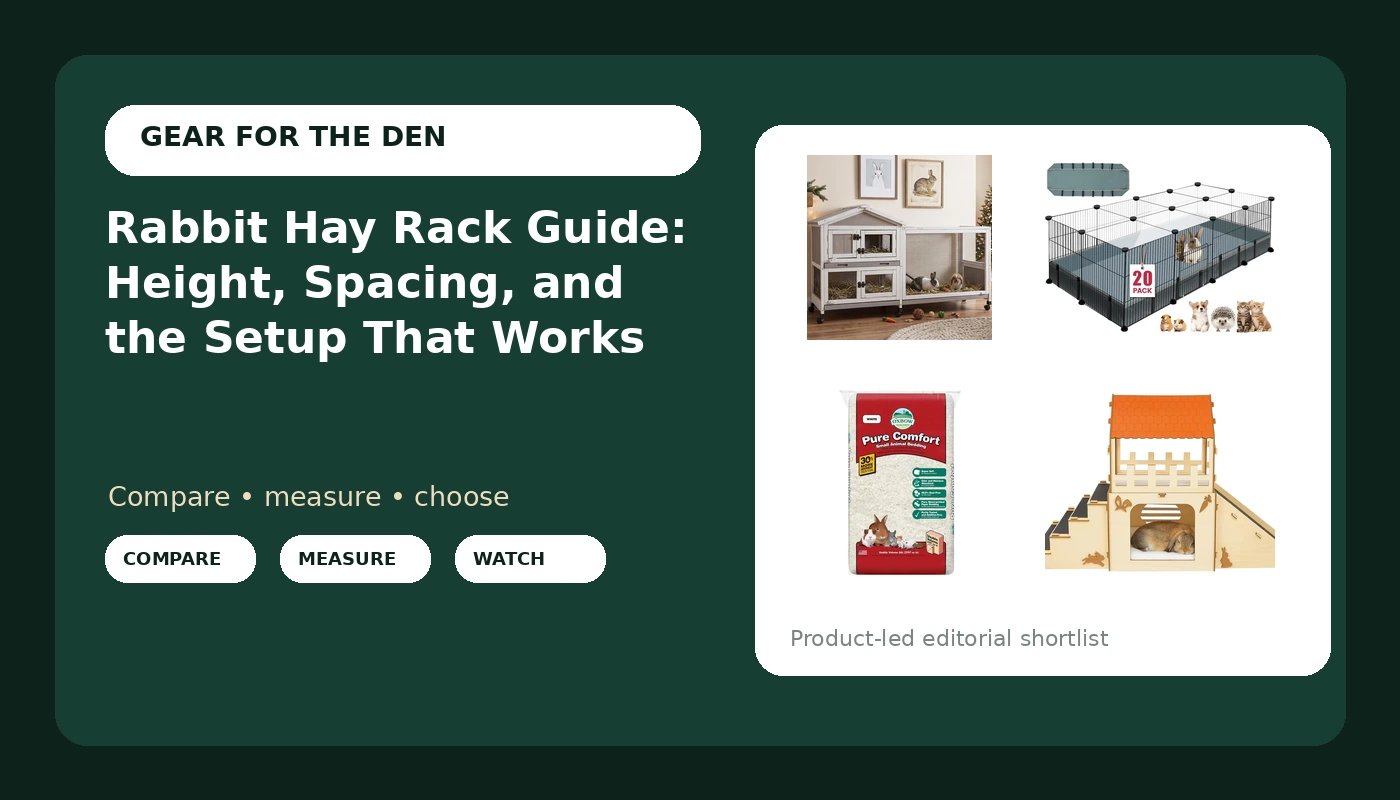
Four pieces of gear answer the four questions in that setup. The PetsCosset hutch is the enclosure I would start from. The VISCOO playpen is the cheapest way to add floor area to a room that already has a cage. The OtterPets hideout is what turns a hay corner into somewhere a rabbit wants to sit. And the Oxbow bedding is what catches everything the rack drops. The rack itself is a cheap piece of metal. These four are what make it work.
Best Overall: PetsCosset 60.2" L Expandable Rabbit Hutch, Mobile Bunny Cage with 6 Wheels
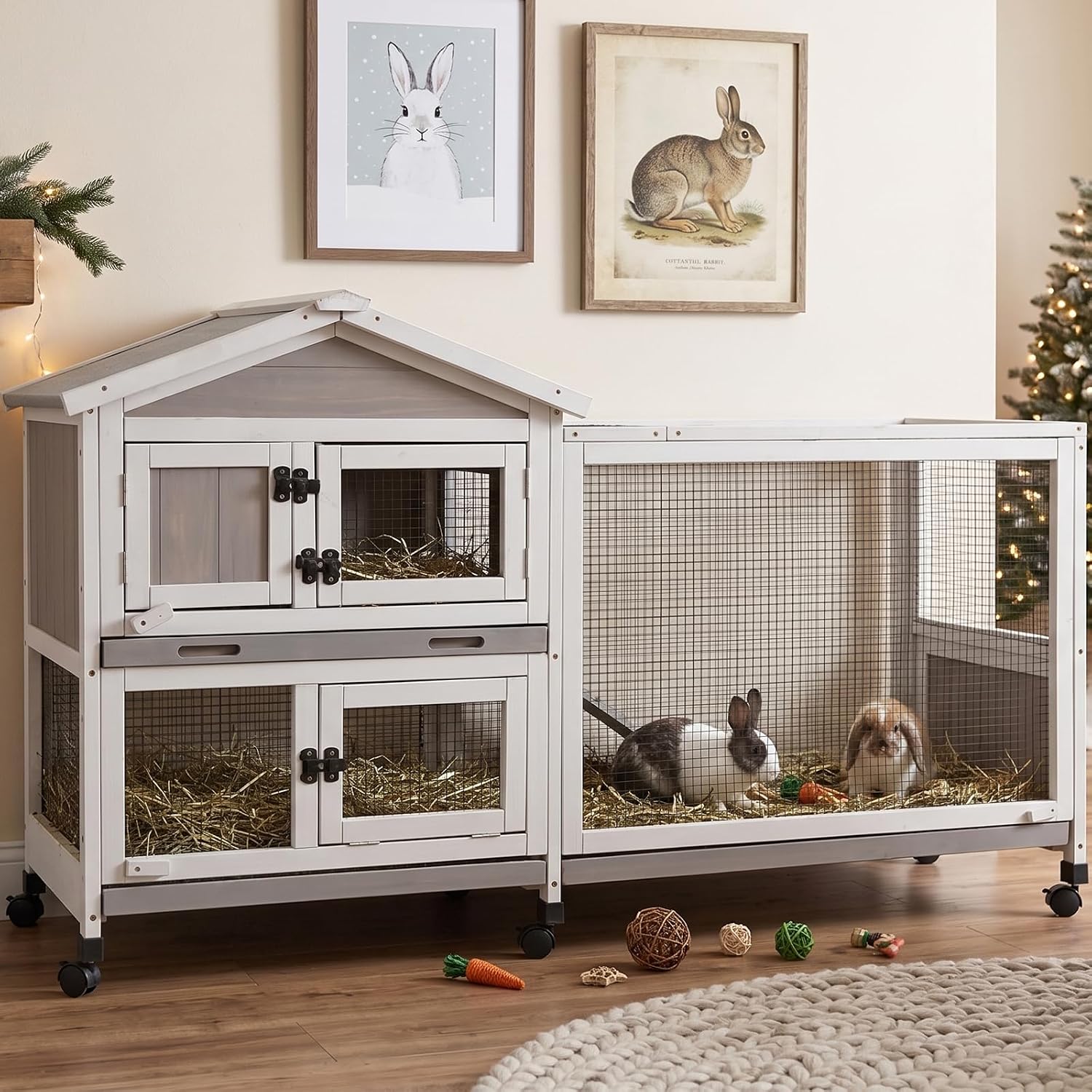
This is the enclosure I would build the whole hay station around. It runs 60.2 inches long, it expands, and it rolls on six wheels. That last part matters more than it sounds. A hay rack produces a steady rain of chaff, and a hutch you can roll to the vacuum is a hutch you will actually keep clean.
Length is the real argument. Floor area is what lets you put the hay rack, the water bottle, and the litter corner far enough apart that they stop contaminating each other. Bottle capacity belongs in that same conversation, because a bottle that runs dry by mid-afternoon means a rabbit that drinks less, and a rabbit that drinks less eats less hay. Keep the bottle at the opposite end from the rack so drips never reach the hay.
The expandable section is where the hideout goes. That leaves the rack side open and the resting side dark, which is how a rabbit uses a hutch when it gets to choose. The rabbit hay rack itself goes on the open panel, at nose height, with nothing under it except the litter corner.
The wheels are not a gimmick on hard flooring. On thick carpet they drag and you end up lifting one end. That is the honest trade for a cage one person can move alone.
Best Value: VISCOO 20 Panels Small Animal Playpen, 48" x 24" x 16" Rabbit Cage
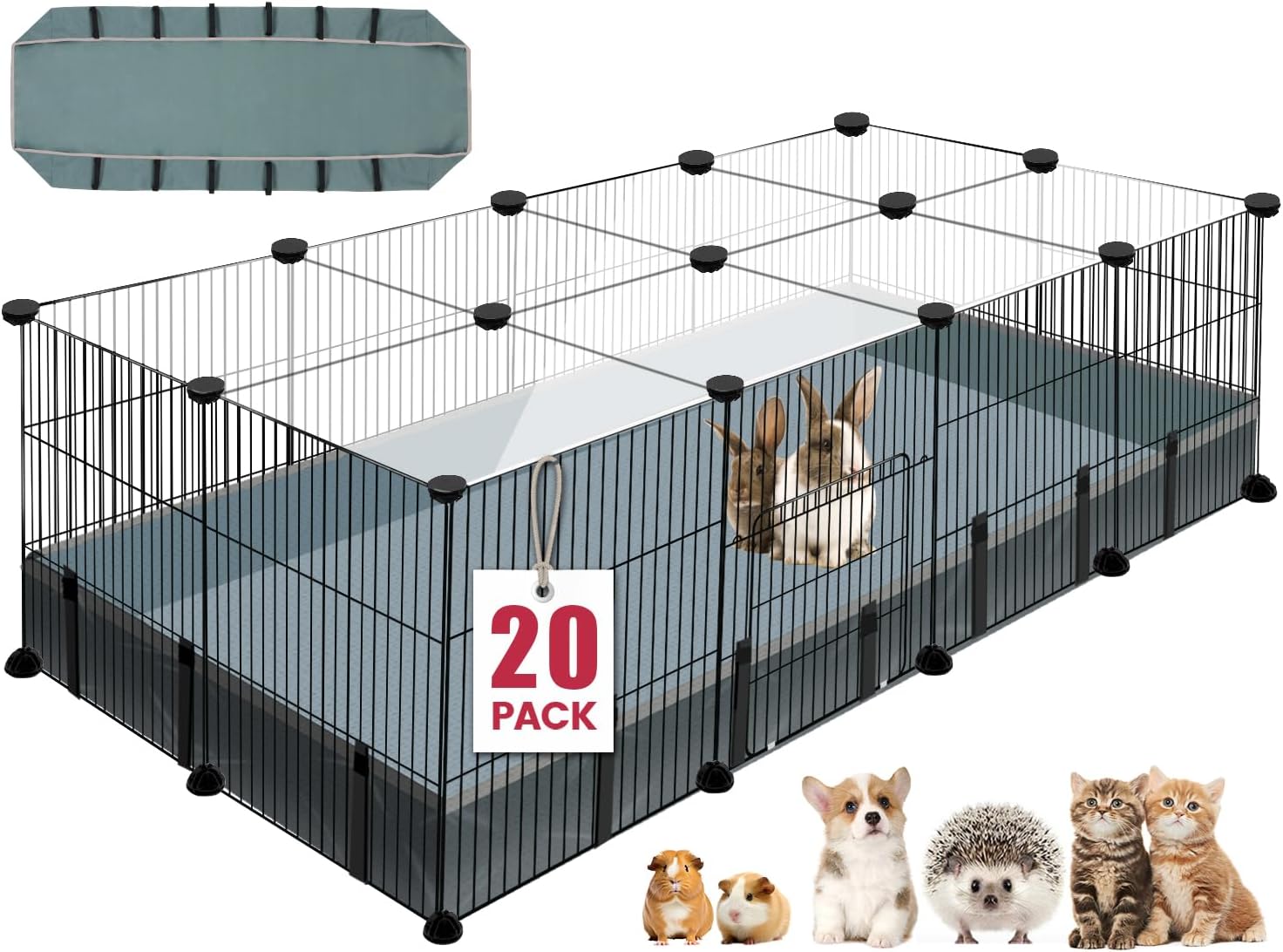
Twenty panels for a fraction of what a second cage costs, and the panel count is the point. A fixed cage gives you one shape. A playpen gives you whatever shape your room and your hay station need, and you can rebuild it in five minutes when your rabbit decides the corner it loved last month is now lava.
The listed footprint is 48 by 24 by 16 inches as a rectangle, but twenty panels bend into an L, a U, or a wide oval that wraps a hay rack and a litter box into the same space. Floor area you can reshape is floor area you will actually use.
Tunnel diameter is the detail that makes a playpen setup more than a fence. Rabbits run through things, and an enclosure that wraps a tunnel, a hay rack, and a litter box together gets used far more than one that just adds empty square feet.
What it is not is a chew-proof cage. The panels are light, and a determined rabbit will work the joints. Treat it as supervised floor time or as an extension clipped onto a solid hutch, not as the only thing between your rabbit and your baseboards.
Bar spacing is the number to verify against your rabbit's size, and the gap that matters most is the one at the corner where two panels meet.
How I tested
I do not test this gear in a lab. I test it in a living room with hay on the floor, and every piece gets the same checks.
The height test. Mount the rack, then watch a rabbit eat from it. If the rabbit lifts its chin above shoulder height to reach, the rack is too high. If hay drags through the bedding on the way out, it is too low.
The drop test. Fill the rack and sweep under it after 24 hours. Some racks lose a handful of strands. Some lose half the load. The floor tells you which one you own.
The dust test. Shake a handful of bedding over a dark surface and look at what lands. Bedding dust is not a marketing problem, it is an upper respiratory problem, and it is the most common reason a rabbit starts sneezing in a clean cage.
The space test. Measure usable floor area, not the listed footprint, and check whether the rack, the bottle, and the litter box fit with room to walk between them. If you have to step over one thing to reach another, the enclosure is too small.
The chew test. I check every joint, every clip, and every edge a rabbit can get its teeth around. Cheap panels fail this one first, and the failure is never cosmetic.
Then I live with it for a month. I refill the rack daily, I clean the litter corner, and I write down what annoys me on day 20 that did not annoy me on day one. That last note usually decides whether a product stays.
Analysis and test results
In every setup I have run, the failures trace back to four numbers: mounting height, floor area, bar spacing, and hideout size. Get those right and everything else is preference.
Mounting height comes first. A hay rack at nose height keeps hay off the bedding and keeps the rabbit eating. Raise it another four inches and consumption drops, because a rabbit works for food up to a point and then loses interest. Lower it and the hay picks up moisture from the litter corner.
Floor area comes next. A hutch listed at 60 inches is 60 inches of outside length, not 60 inches of usable run once a hideout and a litter box are inside it. The PetsCosset expandable section earns its place here, because it lets you separate the wet end of the cage from the dry end. The VISCOO playpen does the same job for less money when you already own a solid cage and only need more floor area.
Bar spacing decides whether a playpen is a playpen or a fence with a door in it. Small rabbits fit through wide gaps, and the gap that matters is at the panel joint, not in the middle of a panel.
Hideout size is the number people skip. A hideout is correct when the rabbit can stand up, turn around, and stretch out, and no bigger. Oversized, it stops reading as a burrow, so the rabbit stops using it and sleeps in the hay rack instead. The OtterPets hideout runs large on purpose, which is why the fleece mats matter: they shrink the usable floor inside it without a second purchase. Check current Amazon price
Bedding dust and bottle capacity are the two quiet numbers. Bedding dust shows up as sneezing weeks after a switch. Bottle capacity shows up as a rabbit that drinks less than it should, which turns into a rabbit that eats less hay, which turns into teeth problems six months later. Neither one is dramatic on the day. Both are expensive later.
Tunnel diameter is the last check on a playpen setup. A rabbit wants to run through something, and a tunnel that is too tight gets used once and abandoned.
The rabbit hay rack setup reference table
This is the table I keep when I set up a hay corner. The four products are the ones I would actually put in the room, and the specs are the starting points I check before anything gets mounted.
| Item | Role in the setup | What to check | Notes |
|---|---|---|---|
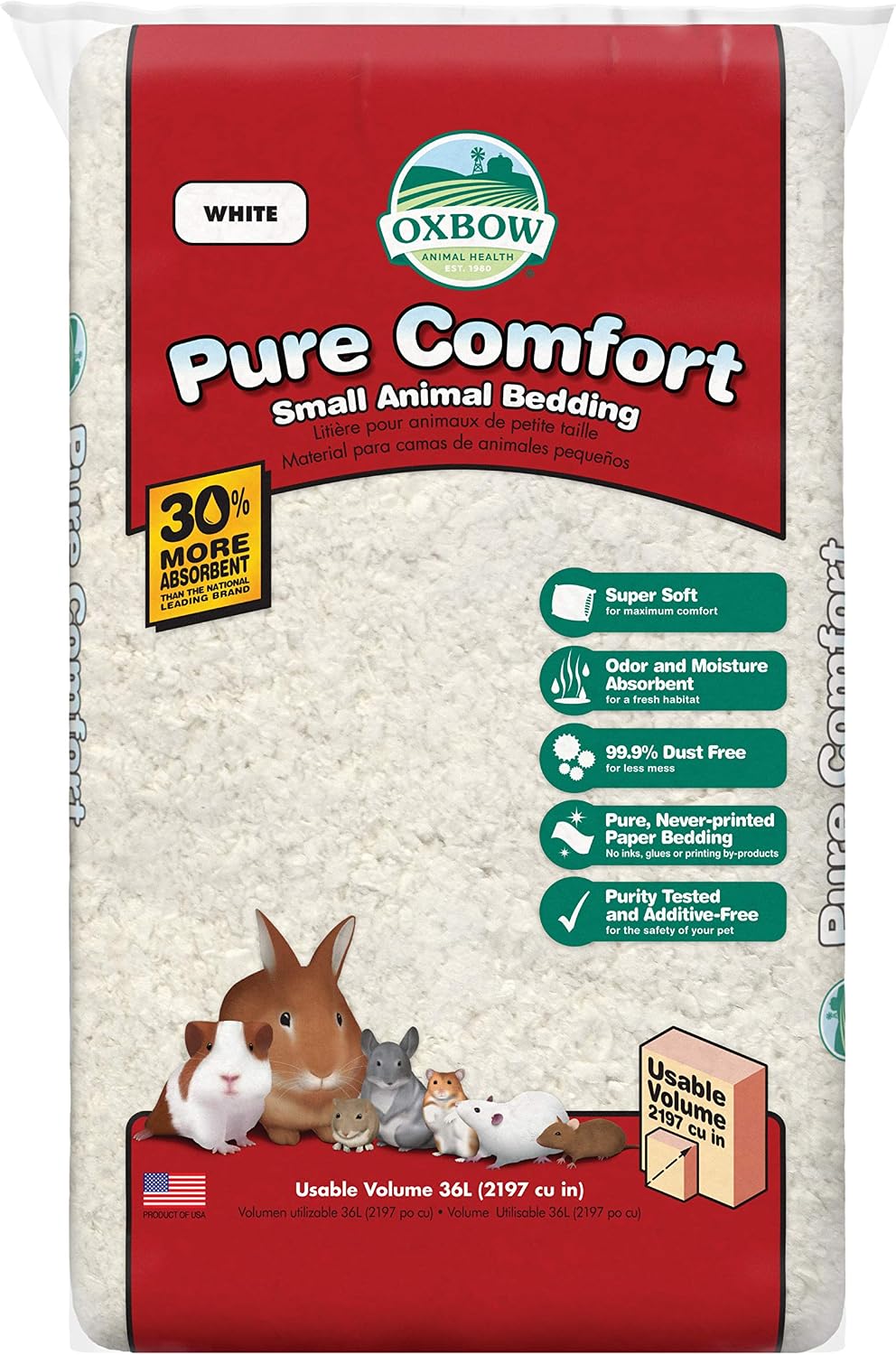 View on Amazon → Oxbow Small Animal Bedding, 36 L | Litter corner and floor cover | Bedding dust | Kiln dried, low dust, 36 L |
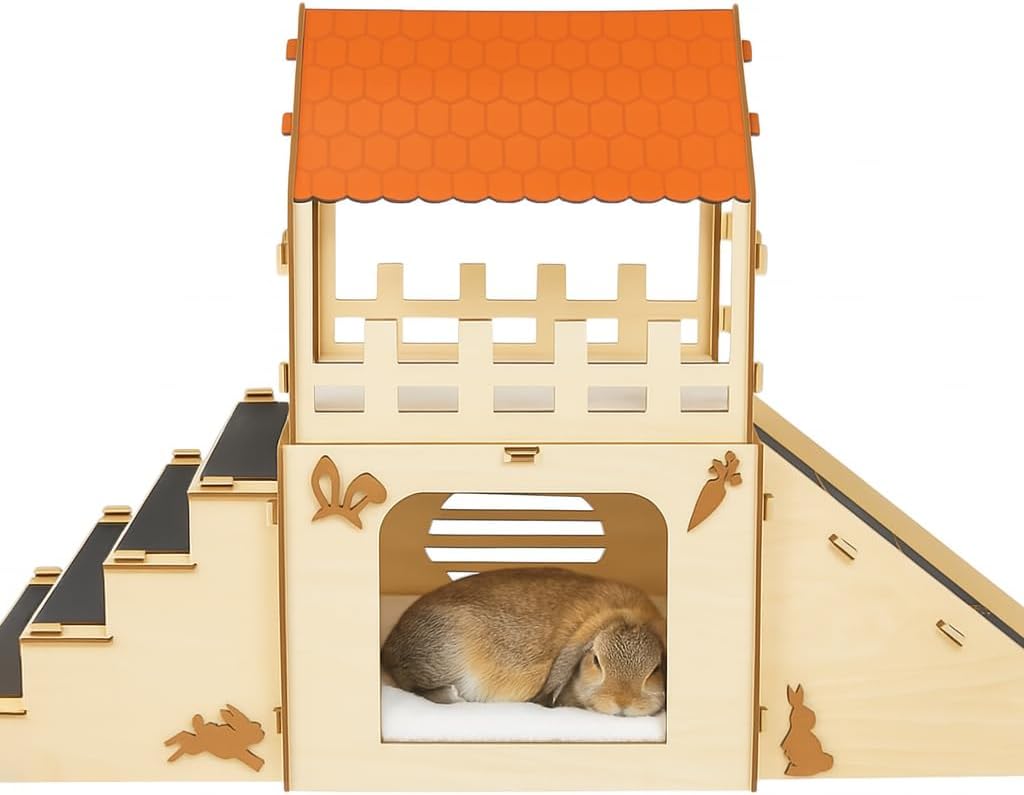 View on Amazon → OtterPets Extra Large Bunny Hideout | Rest spot beside the rack | Hideout size | Fleece mats shrink the interior |
PetsCosset Expandable Rabbit Hutch | Main enclosure | Cage size, floor area | 60.2 in, expandable, 6 wheels |
VISCOO 20 Panels Playpen | Exercise floor area | Bar spacing, tunnel diameter | 20 panels, 48 x 24 x 16 in |
| Hay rack mounting height | Keeps hay clean and eaten | Height | Nose height, raise as the rabbit grows |
| Water bottle placement | Hydration beside the hay | Bottle capacity | Opposite end from the rack |
The table is not a shopping list. It is the order I check things in, because mounting height ruins more setups than a bad rack ever does.
Mounting height and bar spacing: the two numbers that matter
Height first. The correct rabbit hay rack height puts the opening at nose level for the rabbit standing flat on all fours. From there, adjust upward as the rabbit grows and downward if you see hay being pulled through bedding. There is no single ideal rabbit hay rack for every animal, because a Netherland dwarf and a Flemish giant do not eat at the same altitude.
Bar spacing is the second number. On a playpen or a hutch, measure the gap between bars and the gap at the corner joint, where two panels meet and the spacing is usually widest. If a rabbit can push its head through, it can get stuck. Ten seconds with a tape measure prevents the worst version of that afternoon.
Bedding dust and the floor under the rack
Every hay rack drops something. What you put under it decides whether that is a sweep or a scrub. A shallow layer of bedding catches the chaff and the droppings, and a litter corner under the rack turns two chores into one. Low-dust small pet bedding is worth the extra few dollars, because dust settles in the same lungs that breathe it all day.
The Oxbow bedding is the one I keep on hand for this corner. It is a 36 liter bag, it is kiln dried, and it does not throw the cloud that cheaper paper and wood blends do when you pour it. Check current Amazon price, because a bag that size goes further than it looks in a litter corner changed twice a week.
Should you buy the PetsCosset 60.2" L Expandable Rabbit Hutch?
Yes, if you want one enclosure that holds a hay rack, a hideout, a litter corner, and a water bottle without turning into a maze. The 60.2 inch length is what buys you that separation, and the six wheels mean you can roll it to the vacuum instead of carrying bedding across the room. Check current Amazon price and compare it against a cage plus a separate run.
The trade is the wheels. They roll beautifully on hard floors and drag on deep carpet. That is a real annoyance, not a deal breaker.
Should you buy the VISCOO 20 Panels Small Animal Playpen?
Yes, if you already own a cage and the actual problem is floor area. Twenty panels for a fraction of a second cage is the best value in this setup, and the shape flexibility is what makes a hay station work in an odd room. Check current Amazon price before you buy, and count panels against the shape you have in mind.
The trade is security. Light panels and clip joints are not chew-proof, so this is supervised space or an extension on a solid hutch, not a full-time enclosure for a rabbit that tests everything.