The hay rack height is the one cage measurement almost nobody writes down, and it is the number that decides whether hay stays in the rack or ends up mashed into the bedding. Hang the rack too low and every strand drags through the soiled corner of the cage. Hang it too high and your guinea pig has to brace its front feet on the wire to eat food it should be able to reach standing flat. This hay rack height guide covers the height that works, how bedding depth changes it, and how the rack fits around everything else in the setup, from floor area and hideout size to bar spacing and bottle capacity.
I have kept guinea pigs, one very opinionated rabbit, and a rotating pair of hamsters in the same small apartment, and I have re-hung more cage racks than I care to admit. My first mistake was mounting a rack where it looked tidy instead of where the animal actually eats. My second was bedding the cage so deep that the rack opening disappeared below the surface overnight. Once I started measuring from the settled bedding line instead of the cage floor, the cage stopped smelling like a barn by day three. Bedding depth and rack height are two halves of one decision, and choosing them separately is how most setups go wrong.
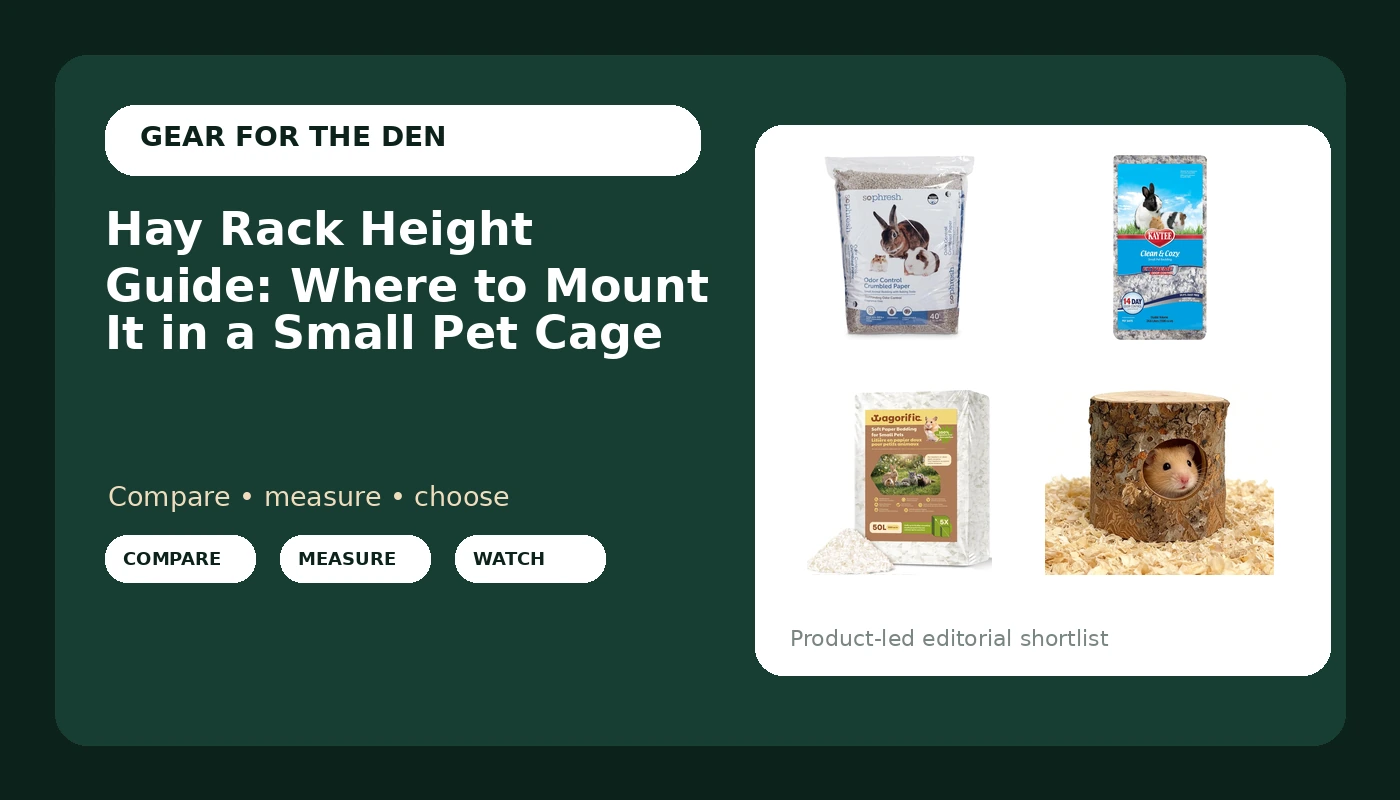
Best Overall: SO PHRESH by Petco Crumbled Paper Small Animal Bedding 40 Liter
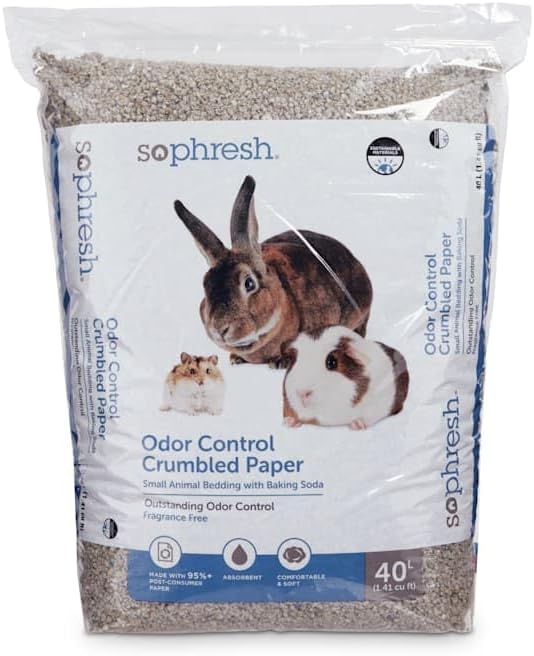
The 40 liter bag is the one I keep under the cage stand. Crumbled paper holds a tunnel and holds its shape, and that is the quality that matters under a hay rack: when the bedding keeps a level surface, the gap between the rack opening and the bedding stays where you set it instead of collapsing into a crater on the second night.
For my hay rack height, this is the bedding I plan around. I fluff it, let it settle, then mount the rack so the lowest opening sits roughly 2 to 3 inches above the settled surface. Because the crumbles knit together, that measurement survives a night of digging better than a loose paper fluff does, and I am not re-hanging the rack every morning.
Dust is the other reason paper belongs under a rack. Hay sits in one place for hours, so anything airborne in the bedding below ends up in the hay your animal is eating. Paper keeps bedding dust down compared with shavings, and the crumbled format keeps it down compared with loose fluff.
The bag is large, which sounds like a boring thing to praise until you bed a cage deep enough to make a rack work properly. Deep bedding drinks volume, and a small bag runs out mid-change.
Best Value: Kaytee Clean & Cozy Classic Hamster Bedding, 24.6 Liters
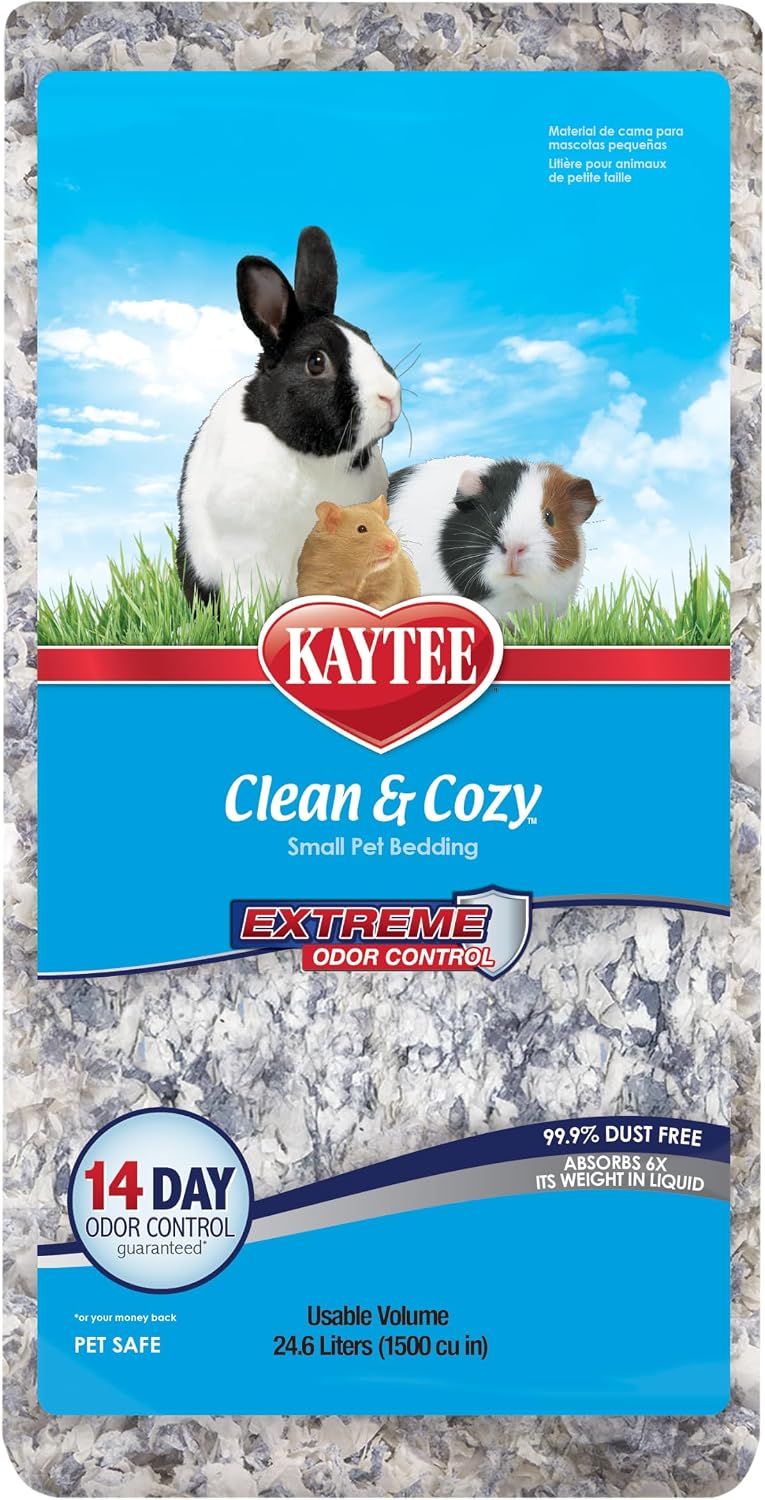
This is the bag I reach for when the cage is small and the rack is low. The 24.6 liter size suits a hamster cage or a single small tray, and the bedding is soft enough to pile under a low rack without shoving the opening shut.
A rack in a hamster cage does a different job than a rack in a guinea pig cage. Hamsters are not big hay eaters, and most of what goes in the rack is forage and a little hay to keep the teeth busy. That means the ideal hay rack height for a hamster is barely a height at all: 1 to 2 inches above the bedding, low enough that a dwarf hamster can reach it standing on its hind legs without climbing the bars.
Clean & Cozy works for that because it is light and easy to level. You can press it flat under the rack with the back of your hand, measure once, and the surface stays put long enough to matter. It is also forgiving about depth, so 2 to 4 inches is plenty and you do not have to bury the whole cage to make the rack function.
The tradeoff is volume. A 24.6 liter bag is a spot-cleaning and top-up size for a bigger cage, and if you keep a guinea pig in a deep bed you will go through it quickly.
How I tested
I did not test rack heights in a lab. I tested them in cages, over about a year, with three guinea pigs, one rabbit, and two hamsters, and I measured one thing every morning for a week after each cage change: the distance from the settled bedding surface to the lowest opening of the rack.
Then I watched what the animals did. Did hay end up trampled into the bedding? Did the animal brace its front feet on the wire to eat? Did the hooks hold on the cage's bar spacing, or did the rack slide down the wall overnight? Could I still reach the refill opening with the cage bedded deep?
For the bedding itself I looked at three things that change rack height more than any spec sheet does: how much the surface settles after a night of digging, how much dust comes off when you fluff it, and whether the surface under the rack stays level enough to keep the measurement honest.
I also checked each bedding around a hideout, because a rack above a roof behaves differently than a rack in an open corner. Airflow changes, digging changes, and hay that lands on a roof instead of in the bedding changes how often you clean.
Analysis and test results
There is no single ideal hay rack height, because the right number is a relationship, not a value. The rack has to sit above the bedding and below the animal's reach limit, and both ends of that window move with the species, the cage size, and how deep you bed.
The rule that survived every setup: mount the rack so the lowest opening sits at about the shoulder height of the animal standing flat on the settled bedding, then take off half an inch if the bedding is deep and soft. For a guinea pig that usually lands at 2 to 3 inches above a settled paper bed. For a rabbit, 4 to 6. For a hamster, 1 to 2, mostly so it does not have to climb.
Too low is the more common mistake. When the opening sits at or below the bedding line, hay wicks moisture out of the bedding and the corner turns sour fast. Too high is the quieter mistake. The animal still eats, but it eats standing on its hind legs or with its front paws hooked on the wire, and over months that is hard on the joints and hard on the rack.
Bar spacing decides whether the rack stays where you put it. Wire hooks need to catch the cage bars, not rest on them. If the spacing is wide, the hooks drop through and the whole rack slides down the wall overnight, which is how people end up with a rack sitting on top of a hideout.
Position matters as much as height. Do not hang a rack over the water bottle. Hay falls, sits against the bottle, and wicks water into the spout area, and bottle capacity means nothing if the animal will not drink from it. Keep the rack clear of the hideout roof and away from the tunnel entrance, so a dropped strand does not block a doorway.
Finally, floor area. A wall-mounted hay rack costs no floor space, which is why it beats a floor hay box in any cage where floor area is already tight. If the rack eats into the run, mount it higher on a wall the animal does not sprint past.
The hay rack height reference chart
The correct hay rack height depends on the animal, the bedding, and how deep you bed. The heights below are measured from the settled bedding surface to the lowest opening of the rack, not from the cage floor. Fluff the bedding, let it settle overnight or press it flat by hand, then measure. These are starting points, not gospel.
| Product | Best for | Bedding depth to pair with it | Rack height above the settled bed | Where to buy |
|---|---|---|---|---|
SO PHRESH by Petco Crumbled Paper Small Animal Bedding 40 Liter | Deep bedding under a rack | 4 to 6 inches | 2 to 3 inches | Check current Amazon price |
Kaytee Clean & Cozy Classic Hamster Bedding, 24.6 Liters | Small cages and shallow trays | 2 to 4 inches | 1 to 2 inches | Check current Amazon price |
 Wagorific Hamster Bedding Odor Control, Small Animal Paper Bedding 50L | Odor control in a busy cage | 3 to 5 inches | 2 to 3 inches | View on Amazon → |
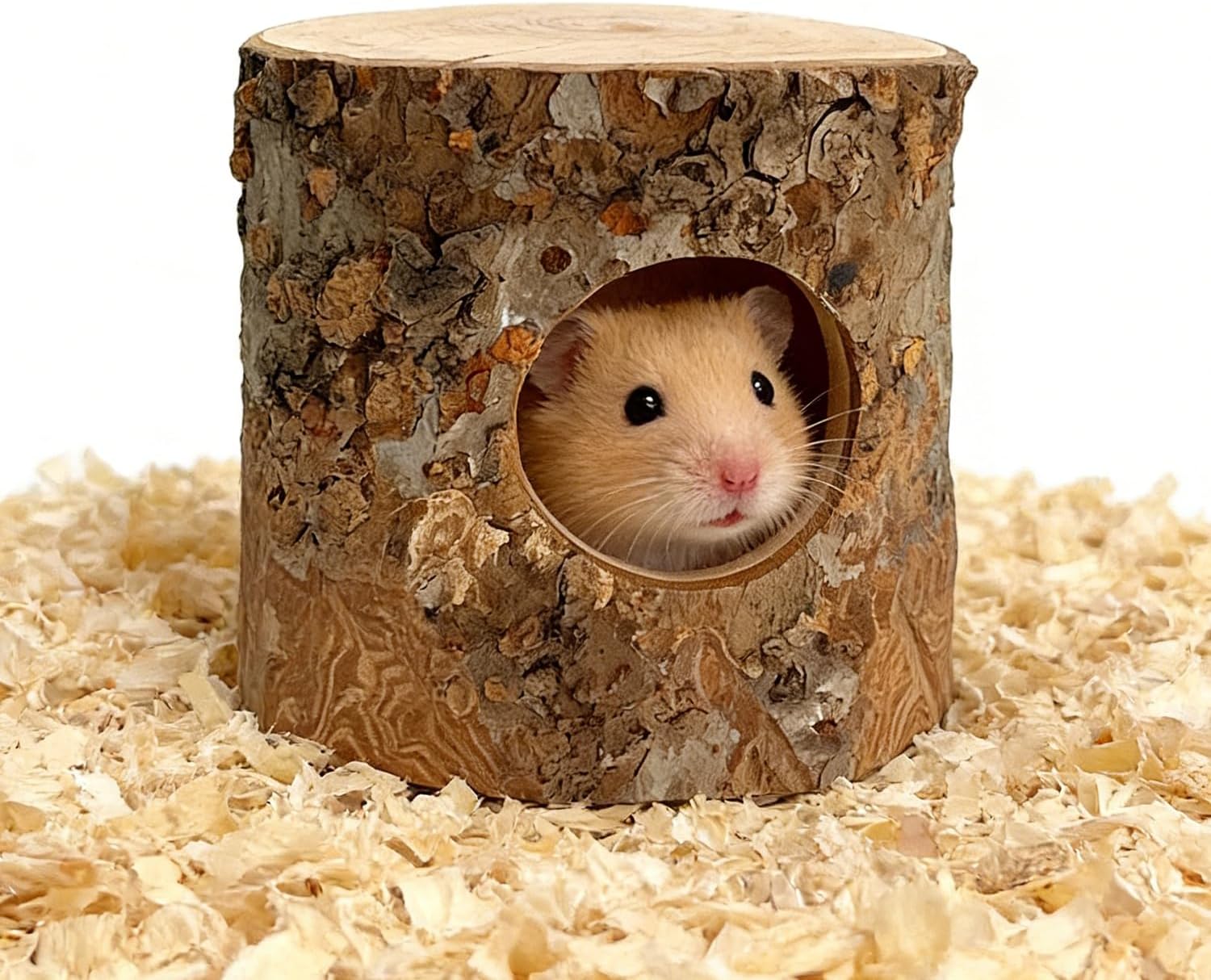 Obantrsz Hamster Hideout, 3.14" x 2.75" Natural Wooden Habitat House | A floor-level hideout under the rack | Sits on the floor | Keep the rack clear of the roof | Check current Amazon price |
Two adjustments cover most cages. If you bed deeper than the chart says, raise the rack by the same amount, because the bedding line is what the animal stands on. If your animal is young, elderly, or long in the back, take the rack down an inch and accept slightly dirtier hay. Clean hay in a reachable rack beats perfect hay in a rack nobody can use.
Obantrsz Hamster Hideout, 3.14" x 2.75" Natural Wooden Habitat House
A hideout is the one piece of cage furniture that changes rack placement just by existing. This wooden house is small, which is exactly what a dwarf hamster wants: a low roof it can sit under and a footprint that does not eat the floor area the animal needs to run.
Because it sits on the cage floor, hideout size and bedding depth have to agree. If you bed 4 inches deep under a house with a low roof, you have not built a hideout, you have built a mound. Push the base down into the bedding so the entrance stays clear, or bed shallower around the house and deeper in the digging corner.
For rack placement, keep the rack off the roof. Hay that lands on a wooden roof sits there, gets damp, and mats, and you end up brushing it off every day. Hang the rack on the wall beside the house instead, at the same height you would use in an open corner, and let the animal eat facing its own doorway.
Hay rack height for guinea pigs, rabbits, and hamsters
The species sets the window. Guinea pigs are grazers with short legs and heavy bodies. They do not climb, and they should not have to stretch, so their rack sits low, usually 2 to 3 inches above a settled bed. A guinea pig that has to hook its front teeth on the wire to pull hay is a guinea pig with a rack that is too high.
Rabbits are taller and stronger. They can pull hay from 4 to 6 inches above the bedding without strain, and a higher rack keeps the hay cleaner in a big cage with a lot of floor area to cover.
Hamsters are the exception. Hay is a small part of the diet, so the rack works more like a forage station, and it should sit 1 to 2 inches above the bedding. Some hamsters ignore it entirely. If yours does, a scatter feed on the bedding surface does the same job.
Tunnel diameter and bottle capacity belong in the same planning pass. A rack hung low over a tunnel entrance gets blocked by fallen hay, and a rack hung beside a bottle gets the spout damp. Measure all three before you drill.
Should you buy SO PHRESH by Petco Crumbled Paper Small Animal Bedding 40 Liter?
Yes, if you bed deep and you want the rack height you set to still be there in the morning. The crumbled paper holds a level surface, it keeps bedding dust down compared with shavings, and the large bag means a deep bed does not empty your supply in a week. It is the bedding I would build a hay rack setup around, and it is the one I rebuy.
If you keep a single hamster in a shallow tray, you do not need this much bedding. Buy the smaller bag and put the difference into a better rack.
Should you buy Kaytee Clean & Cozy Classic Hamster Bedding, 24.6 Liters?
Yes, if your cage is small and your rack is low. It is easy to level, soft enough to pack under a low rack without pushing the opening shut, and 2 to 4 inches of depth is all a hamster setup needs. It is the value pick for a first cage, a hospital cage, or a top-up bag between full changes.
If you keep guinea pigs in a deep bed, this bag will not last long. Buy the bigger format and spend the difference on bedding rather than replacing it twice a month.